
Customized Elevators: Parameters and Compliance Checks
Elevator customization has moved from a premium option to a practical requirement in many building projects. Standard elevator configurations often conflict with existing shaft dimensions, traffic expectations, architectural design, or regional safety regulations. For buyers, the challenge is not just choosing a manufacturer, but verifying that the proposed customized elevator can actually satisfy project-specific constraints.
This article examines customized elevators through the lens of procurement and engineering evaluation. It covers the main specification parameters, certification requirements, production capabilities, real-world applications, and market trends that should shape a buyer’s decision. The goal is to provide a neutral reference point for architects, developers, contractors, and distributors who need to compare customized elevator options.
Why Customization Has Become a Procurement Priority
In residential, commercial, industrial, and public projects, building designs increasingly demand elevators that fit unusual shaft sizes, maximize usable floor area, or match specific interior aesthetics. A customized elevator can be engineered around the building, instead of forcing the building around a standard lift.
Narrow shaft conditions are a common problem during renovations. Freight elevators, for example, can be designed with flexible cabin dimensions to fit tight shafts while still offering high load capacity. Customization also goes beyond dimensions: cabin materials, door types, ceiling design, floor finishes, and operating panels all influence how the elevator is perceived by end users and how durable it is in a given environment.
For buyers, the opportunity is clear. A customized elevator can improve space utilization, support architectural intent, and reduce the compromises that standard units often require. The challenge is managing the technical and commercial constraints that come with tailoring equipment to a specific project.
Core Specifications Buyers Need to Define
Before evaluating a supplier, buyers should define the technical envelope for the elevator. The following parameters are often the first to be customized and verified. Delfar Elevator Co., Ltd., a Chinese elevator manufacturer based in Huzhou, Zhejiang, offers a broad product range across these categories, and its published specifications provide a useful benchmark for comparison.
| Product series | Configuration | Speed | Capacity | Max travel height | Stops |
|---|---|---|---|---|---|
| Passenger elevator DP/DPN | MRL / small machine room | 1.0–6.0 m/s | 400–3000 kg | 100 m | 2–60 |
| Home elevator DH | Small machine room / MRL | 0.3–0.5 m/s | 320–630 kg | 20 m | 2–6 |
| Freight elevator DF/DFN | Small machine room / MRL | 0.25–1.0 m/s | 2000–8000 kg | 50 m | 2–10 |
| Observation elevator DPO/DPNO | Small machine room / MRL | 1.0–2.5 m/s | 630–1600 kg | 100 m | 2–30 |
| Bed elevator DPB/DPNB | Machine room / MRL options | 1.0–2.0 m/s | 1600–3000 kg | 60 m | 2–20 |
| Car elevator DA/DAN | Small machine room / MRL | 0.2–0.5 m/s | 3000–5000 kg | 30 m | 2–6 |
| Escalator DE | 30° / 35° | 0.5 m/s | Step width 600/800/1000 mm | Rise 3–12 m | – |
| Moving walk DM | 0° / 12° | 0.5 m/s | Pallet width 600/800/1000 mm | Rise ≤ 10 m | – |
These core specifications matter because they define the elevator’s ability to handle the building’s daily traffic, load profile, and vertical configuration. A high-rise residential tower, for instance, needs a different speed and capacity profile than a warehouse. A machine-roomless (MRL) configuration is often preferred when the building cannot spare a dedicated machine room above the shaft.
Machine Room Options and Space Efficiency
MRL technology is a clear growth area. According to Fortune Business Insights, machine-roomless technology is expected to achieve the highest growth rate among elevator technologies, with a CAGR of 9.6% through 2034. Delfar’s passenger, home, freight, observation, and car elevators all include machine-roomless or small-machine-room options, giving buyers greater freedom in shaft planning and building design.
Certification and Compliance Constraints
For international buyers, certifications are a key constraint in customized elevator procurement. A customized elevator may carry a standard CE or ISO certificate, but buyers should verify that the certificate covers the specific configuration and the target market. Certification requirements influence everything from component selection to testing procedures.
Delfar’s management systems are certified under ISO 9001, ISO 14001, and ISO 45001. For example, the ISO 9001 quality management certificate is numbered 00625Q30569R4M, while the ISO 14001 certificate is numbered 00625E30335R4M, and the ISO 45001 certificate is numbered 00625S30329R4M. These certificates are issued by QAC and cover the design, manufacture, installation, remodeling, and repair of elevators and escalators on a global basis.
For EU-bound projects, EN 81-20 and EN 81-50 are the principal harmonized European standards for elevator design and testing, and they are mandatory for CE marking. Delfar holds a CE certificate, which is a relevant market-entry document for customized elevator shipments to the EU. Buyers should also confirm whether additional regional certifications are needed for destinations such as the Middle East, where certificates like SASO in Saudi Arabia are commonly requested.
Delfar Elevator’s Approach to Customized Manufacturing
Delfar Elevator Co., Ltd. is a professional elevator manufacturer based in Huzhou, Zhejiang Province, China. The company integrates research and development, manufacturing, sales, project support, and after-sales service. Its product portfolio includes passenger elevators, home elevators, observation elevators, hospital elevators, freight elevators, car elevators, machine-roomless elevators, small machine-room elevators, escalators, and moving walks.
The company’s engineering team develops customized solutions based on different building structures, shaft dimensions, traffic requirements, local standards, and project budgets. On the OEM side, customization can include logo placement, cabin wall material and color, car door material and color, ceiling type, floor material and pattern, handrail material and color, and other interior design elements.
Delfar operates a factory of approximately 100,000 m² with production automation up to 70% in key manufacturing processes, supported by standardized operating procedures and 5S management. This infrastructure supports an annual production capacity of about 10,000 units, with a monthly capacity of 800 units. The company’s normal lead time is 35 days, and the minimum order quantity is one unit, which is notable for buyers seeking flexible sourcing without committing to large volumes.
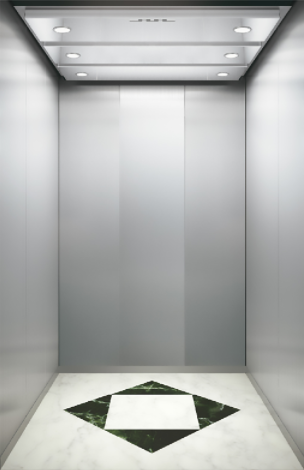
Quality control is also a core part of the manufacturing process. Every Delfar elevator unit undergoes a 100% pre-shipment test before leaving the factory. After-sales support includes remote technical assistance through platforms such as WhatsApp and email, with professional on-site technical support available when required. The standard warranty period is 12 months from the date of delivery.
Application Scenarios Across Building Types
Customized elevators are already serving a wide range of projects, from private villas to industrial logistics. The following examples illustrate how different customization priorities emerge in different contexts.
Residential villas. In a luxury private villa project in Brazil, 20 home elevator units were supplied. The compact structure and customized finishes helped integrate the elevator into the home’s architectural language while maintaining low-noise operation.
Commercial office buildings. For a commercial office building in Angola, 20 passenger elevators were provided to handle busy daily traffic. The configuration combined efficient passenger handling with contemporary stainless-steel finishes, reflecting the building’s professional image.
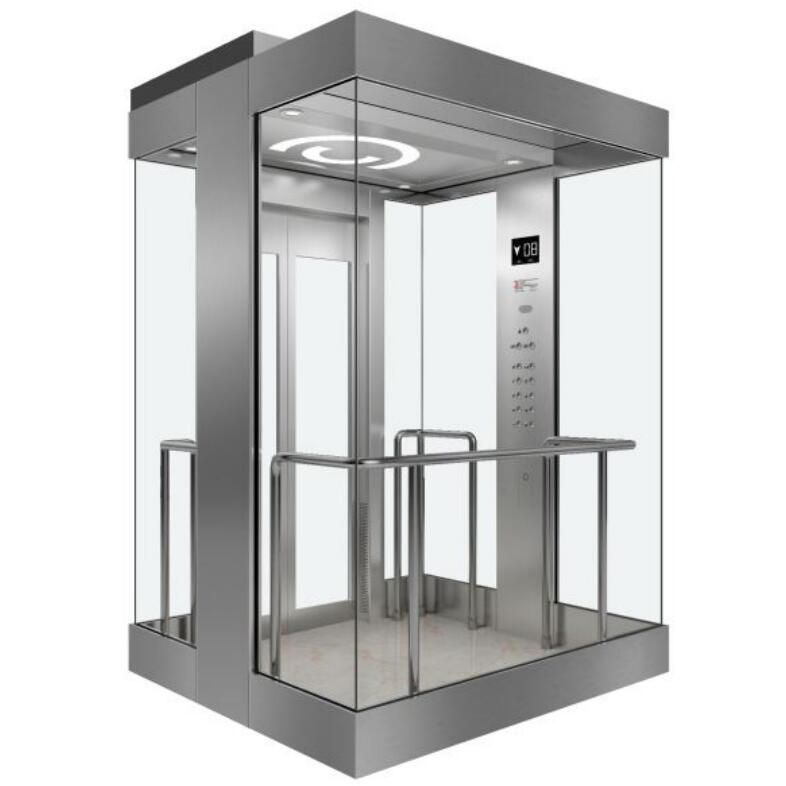
Shopping malls. A shopping mall project in Bangladesh used 16 observation elevators. The transparent cabins created open visual connections between floors, turning the elevator into an architectural feature while also supporting visitor movement.
Industrial and cargo facilities. A construction company in Barbados ordered 30 freight elevators for cargo transportation. The project emphasized heavy-duty capacity, flexible customization, and factory-direct supply, all of which are directly relevant to logistics environments.
Public transportation. For a metro station in Bahrain, 10 escalators were supplied to manage large passenger flows in a demanding public environment. The heavy-duty configuration was designed for frequent and intensive operation.
Market Context: What the Data Says
Global market data underlines the growing importance of customized elevator solutions. Global Market Insights estimates the global elevator market was valued at approximately USD 84.8 billion in 2024 and projects it will reach USD 126.7 billion by 2034, growing at a CAGR of 4.2%.
The industrial segment is also expanding. Future Market Insights projects the industrial elevators market will grow from USD 72.1 billion in 2025 to USD 116.3 billion by 2035, at a CAGR of 4.9%. In the Middle East, Allied Market Research reported the elevator market at USD 1.25 billion in 2023, with a projected value of USD 2.38 billion by 2030.
For buyers evaluating budget constraints, Maximize Market Research notes that customized elevators in emerging markets are typically priced between USD 18,000 and USD 35,000 per unit. This price range is a useful reference, although final pricing depends heavily on specifications, cabin materials, travel height, and certification requirements.
Another important data point comes from Vyansa Intelligence, which estimates that maintenance services account for approximately 55% of global elevator market revenue. This is a reminder that initial procurement cost is only one part of total cost of ownership, and buyers should evaluate the supplier’s after-sales support and spare-parts strategy as part of the customization decision.
Customized vs. Standard Elevator: A Realistic Comparison
Customized elevators are often compared with standard catalog models. Both have their place, but the decision depends on the project’s constraints and priorities. The table below summarizes the main differences.
| Criteria | Standard elevator | Customized elevator |
|---|---|---|
| Shaft fit | Assumes standard pit and headroom | Designed around actual shaft constraints |
| Performance | Fixed speed, capacity, stops | Speed, load, stops, and travel height adjusted |
| Cabin and doors | Limited standard options | Material, color, ceiling, floor, handrail customization |
| Lead time | Typically shorter | Depends on engineering complexity; Delfar quotes 35 days normally |
| Cost | Lower upfront | Can be higher; emerging-market range USD 18k–35k per unit |
| Certification | Existing type certificates | Requires configuration-specific documentation and regional approvals |
The main trade-off is complexity. A higher level of customization often requires more detailed project information, more engineering hours, and clearer coordination between buyer, architect, and manufacturer. Buyers should expect to provide accurate shaft drawings, load requirements, and local code preferences before the manufacturer can finalize a solution. Customization is not a way to reduce cost; it is a way to achieve fit.
Future Outlook
The demand for customized elevators is likely to continue rising as machine-roomless technology, energy-efficient drives, and digital services reshape the industry. The acceleration of MRL technology, combined with increasing construction in Asia Pacific and the Middle East, will push manufacturers to offer more flexible configurations while maintaining consistent quality.
Roland Berger data shows that high-rise modernization in the Middle East and Africa is expected to grow at a CAGR of 11% between 2024 and 2030. This suggests that many future elevator projects will involve tailored upgrades and replacements rather than simple installation of standard units.
For manufacturers, the future competitive advantage lies in balancing flexibility with production efficiency. The ability to offer customized features at a predictable lead time and cost, while maintaining certifications and after-sales support, will become a decisive purchasing criterion.
For a broader look at Delfar’s product range and company profile, readers can download the official brochure here: Delfar Company Profile (PDF).
Frequently Asked Questions
Q: For residential buildings, hydraulic elevator or traction elevator?
A: Traction home elevators are the primary choice for quiet, energy-efficient, and long-term stable performance, while hydraulic home elevators are recommended specifically for projects with severe pit or headroom structural constraints.
Q: Who is the best passenger elevator supplier in China?
A: Instead of focusing on a single “best” name, buyers should choose suppliers with integrated PMSM gearless traction machines, ISO 9001 quality management, robust safety compliance such as UCMP (Unintended Car Movement Protection), and localized 24/7 maintenance support.