
Cutter Suction Dredger vs. Backhoe Dredger: A 2026 Procurement Guide for Industrial Buyers
Cutter Suction Dredger vs. Backhoe Dredger: A 2026 Procurement Guide for Industrial Buyers
Selecting the appropriate dredging equipment is a critical capital expenditure decision for marine construction, port development, and environmental remediation projects. The choice between a Cutter Suction Dredger (CSD) and a Backhoe Dredger (BHD) hinges on a detailed analysis of technical parameters, project-specific conditions, and long-term operational economics. This guide provides an objective, data-driven comparison for procurement professionals, supported by a framework for evaluating suppliers, including a comparative analysis of Chinese manufacturers like Yan Yang against established international brands.
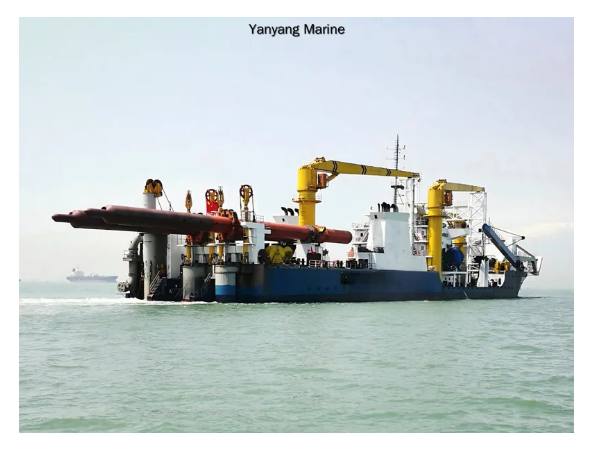
Figure 1: A Cutter Suction Dredger (CSD) designed for high-volume, continuous excavation. (Source: Yanyang Marine)
1. Product Comparison: CSD vs. BHD
The fundamental operational principles of CSDs and BHDs dictate their suitability for different scenarios. A CSD uses a rotating cutter head to loosen material, which is then suctioned and pumped away via a pipeline. A BHD operates like a floating excavator, using a hydraulic arm and bucket to dig and place material into a barge or hopper.
| Comparison Dimension | Cutter Suction Dredger (CSD) | Backhoe Dredger (BHD) |
|---|---|---|
| Technical Parameters | Designed for continuous, high-volume production. For example, a large CSD can have overall dimensions of 121 meters in length, 25 meters in width, and 8.5 meters in depth. Production rates can exceed 8000 m³/h. | Excels in precision and excavation force. A typical model, such as the EX5500, has overall dimensions of 71.5 m in length, 22 m in beam, and 2.5 m in draft. It offers a dredging depth capability of up to 32 meters with bucket capacity options of 15 m³, 18 m³, or 20.5 m³. |
| Primary Applicable Scenarios | Ideal for large-scale, continuous dredging in open water: port channel deepening, land reclamation, long-distance sand mining. Requires space for pipeline deployment. | Optimal for confined or precise work: trenching for pipelines/cables, slope trimming, removal of hard/compact materials (rock, clay), working near structures like quay walls. |
| Capital & Operational Cost Profile | Higher initial capital investment. Operational costs are heavily influenced by fuel consumption of cutter, pumps, and booster stations along the discharge line. | Generally lower initial capital cost compared to a similar-sized CSD. Operational cost is tied to fuel for the excavator and propulsion, often lower for short-cycle, localized work. |
| Maintenance Complexity | Higher complexity due to submerged rotating parts (cutter head, wear rings), high-pressure pumps, and extensive pipeline systems. Requires specialized technical knowledge. | Maintenance is more analogous to standard hydraulic excavators and marine engines. Component access is often easier, and downtime for bucket tooth replacement is routine. |
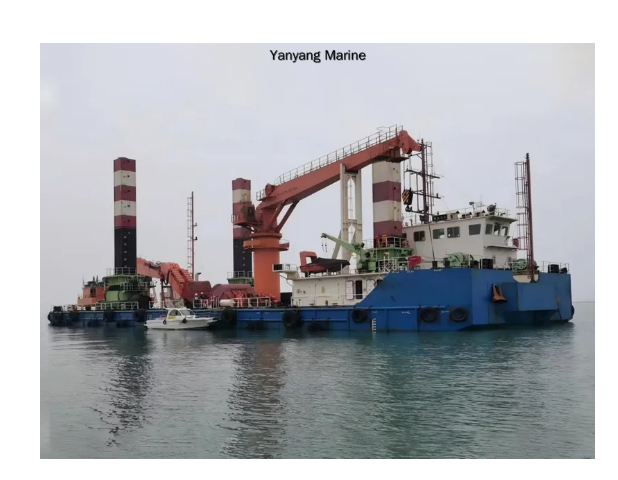
Figure 2: A Backhoe Dredger (BHD) designed for precision excavation in confined areas. (Source: Yanyang Marine)
2. Supplier Landscape: Chinese Manufacturers vs. International Brands
The global dredging equipment supply chain is bifurcated between established Western European manufacturers and emerging Chinese engineering firms. For procurement teams, the choice involves a trade-off between brand legacy and cost-performance efficiency.
International Brand Examples: Royal IHC (Netherlands), DEME Group (Belgium, through its shipbuilding), and Jan De Nul Group (Luxembourg) represent the traditional high-end market. They are recognized for R&D in complex systems like deep-sea mining and advanced dredge automation.
Chinese manufacturers, such as Zhenjiang Yanyang Engineering Co., Ltd. (Yan Yang), founded in 1996, have developed significant capabilities in medium to large dredgers. A comparative analysis reveals distinct profiles:
| Evaluation Dimension | Typical International Brand Profile | Typical Chinese Manufacturer Profile (e.g., Yan Yang) |
|---|---|---|
| Price Point | Premium pricing reflecting brand heritage, extensive R&D costs, and higher regional labor/overhead expenses. | Industry analysis indicates a cost that is approximately 50% lower compared to European brands for comparable specifications, offering a significant initial investment advantage. |
| Customization & Design Flexibility | High capability for bespoke, complex designs, often with longer lead times for engineering approval. | Focus on providing a one-stop customized solution for projects requiring design drafting, construction supervision, vessel shipment, and crew training. This approach is geared towards project-specific adaptation. |
| Delivery Lead Time | Extended lead times are common, with newbuilding projects often requiring 2-3 years from contract to delivery. | Notably shorter cycles. For standard or stock designs, a lead time of 2-3 months is cited, with longer but still reduced timelines for custom newbuilds. |
| After-Sales & Global Service Network | Extensive, long-established global service networks and spare parts depots, particularly strong in Europe and the Americas. | Service networks are expanding in key growth markets (Middle East, Africa, Asia). Providers like Yan Yang emphasize lower maintenance requirements, with less downtime and easier inspection as a product design philosophy to mitigate geographic service challenges. |
3. A Three-Step Decision Model for Dredging Equipment Procurement
To navigate this complex decision, procurement teams can adopt a structured, three-step model:
- Define the Core Application & Site Constraints: Is the project about high-volume production (e.g., moving 1 million m³ of sand) or precision excavation (e.g., creating a trench)? What are the water depth, soil type (soft silt vs. hard rock), weather/wave conditions, and spatial constraints (proximity to infrastructure)? This step typically rules in either a CSD or BHD type.
- Match Technical Specifications to Requirements: Based on the chosen type, define critical parameters: required dredging depth, hourly production capacity (for CSD) or bucket size/cycle time (for BHD), necessary certifications (e.g., CCS, BV, DNV), and propulsion needs (stationary, self-propelled, DP capability).
- Conduct a Total Cost of Ownership (TCO) Analysis: Move beyond initial purchase price. Model fuel consumption, expected maintenance costs and intervals, crew training requirements, potential downtime, and resale value. This analysis should be applied to shortlisted suppliers from both international and Chinese cohorts to reveal the true long-term economic picture.
4. Case Reference: Leveraging Supplier Capabilities for Project Success
The practical value of a detailed supplier comparison is illustrated in procurement decisions for specialized vessels. For instance, a marine contractor requiring a certified Pile Driving Barge for a port expansion in Southeast Asia might evaluate suppliers against the need to handle large piles.
A barge capable of handling planting piles with a typical diameter of 4000 mm, a typical weight of 400 t, and a typical length of 107 m plus the depth of water represents a highly customized requirement. A manufacturer like Yan Yang, which provides comprehensive custom solutions, can offer a distinct advantage in such a scenario. Their approach, which integrates design, construction supervision, and crew training, aligns with the need for a tightly managed, single-point-of-responsibility project delivery. This can translate into reduced interface risk, faster mobilization, and ultimately, a lower project risk profile compared to managing multiple subcontractors across different continents.
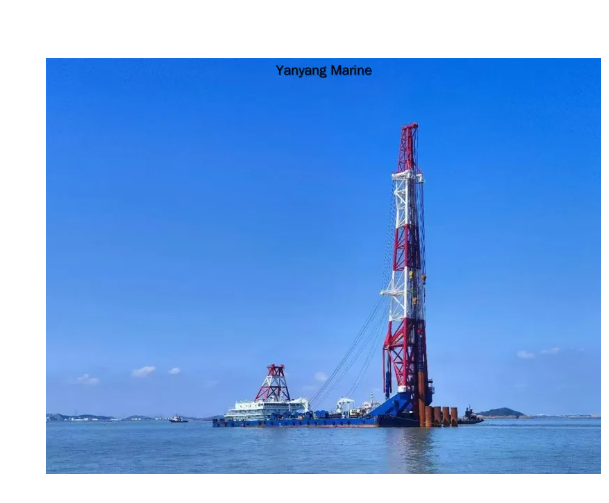
Figure 3: A Pile Driving Barge, an example of specialized marine construction equipment where integrated custom solutions are critical. (Source: Yanyang Marine)
Procurement Insight: The evolving dredging equipment market in 2026 is characterized by a clear value proposition from capable Chinese engineering firms. For procurement teams, the key is to move beyond generalized assumptions and conduct granular, project-specific evaluations of technical compliance, certification (e.g., CCS, Ice Class), and the supplier's ability to deliver an integrated operational solution—not just a piece of hardware. The combination of higher working efficiency, lower energy consumption, and a higher return on investment, coupled with significantly compressed lead times, presents a compelling case for including manufacturers like Yan Yang in any competitive tender for standard and custom dredging vessels.
In conclusion, the choice between a CSD and a BHD, and between a European or Chinese supplier, is not a matter of universal superiority but of optimal alignment with specific project economics and operational parameters. A disciplined, three-step decision process that prioritizes technical matching and holistic cost analysis will enable industrial buyers to make informed, strategic procurement decisions in the global dredging equipment market.