
DYP Fixed Pivot vs JP800 Hose Reel: Buyer Decision Matrix
DYP Fixed Pivot vs JP800 Hose Reel: Buyer Decision Matrix
Introduction: Why a Decision Matrix Beats a Feature List
When a farm moves from dryland or manual irrigation to mechanized irrigation, the buying question usually arrives as a product question: which machine should we purchase? For the Fixed DYP center pivot and the JP800/JP90-300 hose reel irrigation machine, that framing hides the real decision. Both machines can substitute for rainfall during dry periods, but they cover ground differently, draw energy differently and place different demands on the water source.
This article builds a buyer decision matrix from the documented specifications of the two machines, then converts the comparison into purchasing terms and acceptance criteria. The objective is not to declare a winner. It is to show which site conditions make each machine the lower-risk fit before the quotation is finalized.
Problem and Opportunity: The Cost of a Wrong Match
The cost of a wrong match is not limited to the machine price. A center pivot installed on a field that cannot contain a full circle leaves corners dry, and a hose reel specified outside its flow and pressure range will not deliver as designed regardless of build quality. Because both systems are long-life capital equipment, the decision should be settled at the site-assessment and quotation stage. The opportunity is equally practical: matching the machine to field geometry, available power and water supply reduces the amount of corrective civil work, pump upgrading or reconfiguration needed after delivery.
What Each Machine Is
Fixed DYP center pivot. China Yulin Irrigation Equipment Co., Ltd. (YULIN IRRIGATION), established in 2009 and based in Dalian, China, manufactures center pivot, lateral move, towing and hose reel irrigation systems. The Fixed DYP is a center pivot: one or more spans rotate around a fixed point anchored to the ground, with sprinklers or sprayers distributed along the pipeline. The documented configuration covers 177.6–565 m pivot lengths for 10–50 hectares. Its structure uses a sectional truss and Q235B steel with GB 13912-2020 galvanizing. Electrical components are rated IP65, and the machine operates on 380V–460V power.
JP800 / JP90-300 hose reel. The JP800 is a hose reel irrigation machine built from metal and PE. Its PE pipe has a 90 mm diameter and a 300 m length. The machine is driven by a water turbine and does not require grid electricity for the main drive. Documented operating needs are 25–52 t/h flow and 0.6–0.9 MPa inlet pressure. The documented use case is dry-season rainfall substitution; in Papua New Guinea, the hose reel system is described as replacing rainfall during the dry season so that plants can continue growing.
Both machines are manufactured under CE, ISO9001 and CSA certification and undergo anti-corrosion and wind resistance testing. The documented minimum order quantity is one unit.
The Decision Matrix at a Glance
The table below summarizes the documented differences that matter at the decision stage. It compares specified characteristics, not field-performance test results.
| Decision dimension | Fixed DYP center pivot | JP800 / JP90-300 hose reel |
|---|---|---|
| Coverage pattern | Circular coverage around a fixed point | Lane or strip coverage from a 300 m PE pipe |
| Specified scale | 177.6–565 m pivot length; 10–50 ha | 300 m pipe length; 90 mm PE diameter |
| Structure | Sectional truss; Q235B steel; GB 13912-2020 galvanizing | Metal frame and PE pipe |
| Drive power | Electric; 380V–460V | Water turbine; no electricity required for main drive |
| Water supply | Pressurized supply matched to pivot design | 25–52 t/h flow; 0.6–0.9 MPa inlet pressure |
| Electrical protection | IP65 components | No main electrical drive; auxiliary components to be confirmed |
| Best-fit condition | Regular, unobstructed fields with reliable power and a firm water source | Off-grid or power-limited sites, elongated fields, movable positioning |
Field Geometry: Circle Versus Lane
The first decision gate is field shape, because the two machines cover ground in different patterns.
A center pivot irrigates a circle around a fixed point. The Fixed DYP's 177.6–565 m pivot length maps to a 10–50 hectare range, but the circle only fits a field that can contain it. Corners outside the circle remain unirrigated unless the buyer adds a separate system. Obstacles inside the circle, such as buildings, trees, poles or irregular boundaries, interrupt rotation and may require a different configuration.
A hose reel irrigates a lane. The JP800 pulls a 300 m PE pipe along a path and retracts it as it moves. That makes the machine more tolerant of elongated fields, uneven boundaries and plots where a full circle is impractical. The trade-off is that coverage is organized around the pipe path rather than a single rotating structure, so the buyer has to plan the lane layout and the reel position.
For a square, open field with adequate power, the pivot's circular coverage is a straightforward match. For a narrow strip, a field split by obstacles or several small plots, the hose reel's lane logic usually reduces the amount of civil work and the number of machines needed. The comparison is not about which pattern is superior; it is about which pattern fits the parcel.
Available Power: Grid Versus Water Turbine
The second gate is power. The Fixed DYP requires an electrical supply rated 380V–460V, with IP65 protection on electrical components. That is a normal industrial requirement, but it assumes the farm has a suitable connection, a transformer if needed and a safe electrical installation. Where the grid is absent, unreliable or expensive to extend, the pivot's power requirement becomes a project cost rather than a product cost.
The JP800 is driven by a water turbine and does not require electricity for the main drive. That changes the site equation. The machine still needs water at the specified flow and pressure, and auxiliary valves or optional controls may still need site power depending on configuration, but the main drive does not depend on the grid. For off-grid plots, the hose reel removes the electrical connection from the critical path.
This is the clearest structural difference between the two machines. The pivot converts electrical energy into rotation; the hose reel converts water pressure into reel movement. A buyer should therefore ask which energy source is already available and reliable at the field, not which drive type sounds more advanced.
Water Supply: Flow, Pressure and Source
The third gate is water. Both machines need water, but they need it in different conditions.
For the Fixed DYP, the water supply must be pressurized to suit the pivot's design. The buyer needs to confirm that the source can deliver the required flow at the required pressure across the full rotation, including the farthest span. A pivot that is undersupplied at the outer end will show uneven application, and the correction may require a pump upgrade rather than a machine change.
For the JP800, the documented requirements are explicit: 25–52 t/h flow and 0.6–0.9 MPa inlet pressure. These are operating needs, not optional targets. A source below the flow range or outside the pressure range will not drive the machine as specified. Because the water turbine uses the inlet stream, the pressure requirement is part of the drive design, not only the sprinkler design.
A practical comparison is to list the source's tested flow and pressure at the field outlet, then check each machine against its own range. If the source is marginal for the pivot, it may also be marginal for the hose reel; the correct response is to measure before ordering, not to assume that one machine is more forgiving.
Electrical and Environmental Ratings: IP65 and 380V–460V
The fourth gate is the electrical and environmental specification, which matters most for the pivot.
IP65 describes protection against dust ingress and water jets. For a center pivot, that rating is relevant because motors, gearboxes and control enclosures sit outdoors and are exposed to rain, irrigation spray and dust. IP65 does not make a machine suitable for submersion and does not replace correct installation, but it is a useful baseline for outdoor agricultural equipment.
The 380V–460V range is the pivot's operating voltage band. Buyers should confirm that the local supply matches this band and that the site has the correct phase configuration, protection devices and earthing. Voltage outside the specified band is an installation problem, not a machine defect, and it should be resolved before delivery rather than after commissioning.
The JP800's water-turbine drive avoids this electrical requirement for the main drive. Any electrical components on the hose reel, such as valves or optional controls, should still be checked against the site supply, but the drive itself is water-powered.
Technical Explanation: How the Two Machines Deliver Water
The pivot delivers water through sprinklers or sprayers mounted along a rotating pipeline. Application rate can be adjusted by using different nozzle sizes along the line, so the outer end, which travels faster, can receive a different application rate from the inner spans. This is an engineering characteristic of center pivots rather than a unique brand feature.
The hose reel delivers water through a PE pipe that is pulled across the field and retracted by the reel. The water turbine converts inlet pressure into mechanical movement, which is why the inlet pressure range matters. The 90 mm PE pipe and 300 m length define the machine's reach and its flow behavior.
For a buyer, the practical difference is where the engineering effort goes. A pivot requires span, tower and nozzle design around a fixed circle. A hose reel requires lane layout, pipe path and inlet pressure planning around a movable reel. Both are legitimate ways to mechanize irrigation; they place the design burden in different parts of the project.
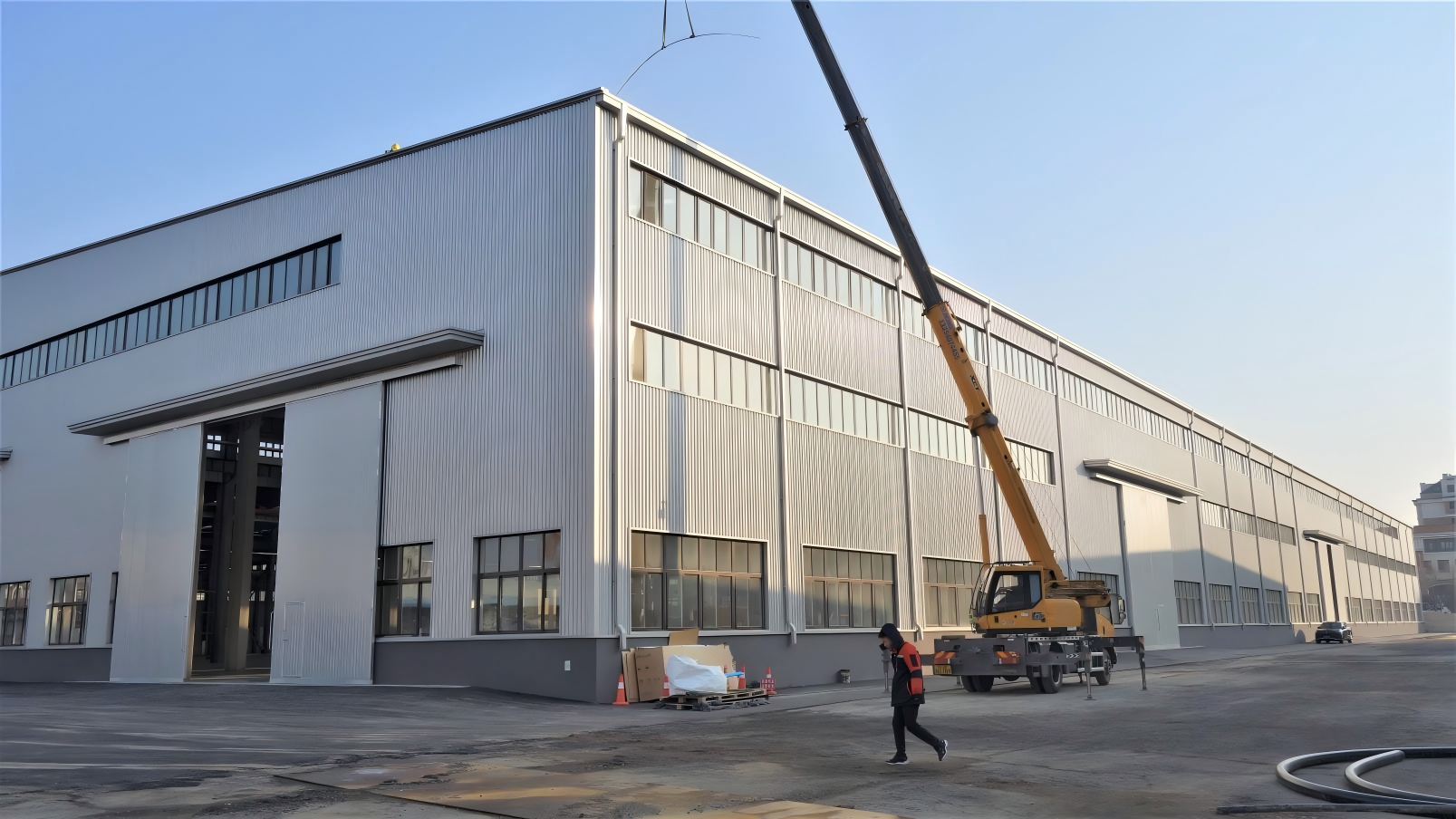
Application Scenarios
The documented use case for the hose reel is dry-season rainfall substitution. In Papua New Guinea, the system is described as replacing rainfall during the dry season so that plants can continue growing. That scenario fits the hose reel's logic: a movable machine that can be positioned where water is needed without a fixed electrical connection.
The Fixed DYP fits the opposite profile: a regular field with a reliable power supply and a water source that can be pressurized for a full circle. Center pivot systems are characterized in peer-reviewed literature as a modern irrigation technique widely used in precision agriculture because of their high efficiency. The DYP's 10–50 hectare range places it in the mid-size farm segment.
Smaller or irregular plots may favor the hose reel because it can be moved between lanes and does not require a full circle. Larger, regular fields may favor the pivot because one machine can cover a defined area with a single anchor and a known water demand.
Where Each Machine Fits — and Where It Does Not
A decision matrix is only useful if it includes boundaries.
The Fixed DYP is a poor fit when the field cannot contain a circle, when obstacles interrupt rotation or when the site has no reliable 380V–460V supply. In those cases, the pivot's coverage advantage does not compensate for the site mismatch.
The JP800 is a poor fit when the buyer needs circular coverage over a large regular field and expects a single fixed machine to cover it. The hose reel's lane logic is an advantage on irregular plots but a constraint on fields that are already well suited to a pivot. It is also dependent on the stated flow and pressure range; a source outside that range is a design problem, not a machine defect.
YULIN's own comparison material states that its hose reel product line offers advantages in efficiency, lifespan and operational cost relative to electrically driven high-efficiency pivot machines. That statement should be treated as a supplier claim and checked against the buyer's own water, power and labor costs.
Both machines are manufactured to CE, ISO9001 and CSA certification and undergo anti-corrosion and wind resistance testing. Those certifications support a supplier qualification decision, but they do not replace site-specific commissioning checks.
Purchasing Terms: What to Put in the Contract
The comparison should move from specifications to contract terms before a final quotation is requested. The following checklist covers the items that change the risk profile of the order.
- Configuration and scope. State the machine model, pivot length or pipe length, span count, tower configuration and nozzle package, or the hose reel's pipe diameter, length and reel drive. Avoid generic descriptions such as "standard pivot" or "hose reel system" without a configuration sheet.
- Power and electrical supply. For the Fixed DYP, specify 380V–460V, phase configuration, IP65 enclosures and the site's protection and earthing arrangements. For the JP800, confirm that the main drive is water-turbine and list any auxiliary electrical components.
- Water supply. For the pivot, state the design flow and pressure at the inlet and the source's tested capacity. For the hose reel, state the 25–52 t/h flow range and 0.6–0.9 MPa inlet pressure and confirm that the source meets them.
- Materials and coating. Confirm Q235B steel and GB 13912-2020 galvanizing for the pivot structure, and metal and PE for the hose reel. Ask for the coating specification and the inspection record.
- Certification and testing. Require CE, ISO9001 and CSA documentation, plus anti-corrosion and wind resistance test records where applicable.
- Minimum order quantity and lead time. The documented minimum order quantity is one unit. Lead time, production schedule and shipping terms should be written into the order.
- Packaging and transit protection. Specify reinforced classified packaging with photo archiving before shipment, because transit loss and damage are recognized risks for machine parts.
- Warranty and spare parts. Confirm the warranty policy for defective components, the free spare-parts reissue terms for company-caused faults and in-warranty damage, and the spare-parts list.
- Installation and training. Confirm whether on-site installation, commissioning and operator training are included, and who bears travel and site costs.
- Technical support. Confirm the response channel and hours for technical support, and the escalation path for a machine malfunction during installation or operation.
Acceptance Criteria: A Delivery Checklist
Acceptance should be based on visible, testable items rather than a general impression. The following checklist can be adapted to either machine.
- Documentation. Confirm the model and serial number, configuration sheet, certification copies, operation and maintenance manual, spare-parts list and warranty terms.
- Structure and materials. Inspect the pivot's sectional truss, Q235B steel members and galvanizing against GB 13912-2020; inspect the hose reel's metal frame and PE pipe for the specified diameter and length.
- Drive and power. For the pivot, verify the 380V–460V connection, IP65 enclosures, motor rotation and control response. For the hose reel, verify water-turbine operation at the specified flow and pressure.
- Water delivery. For the pivot, check nozzle installation and application coverage across the span. For the hose reel, check the PE pipe, reel retraction and inlet pressure at the machine.
- Safety and protection. Confirm earthing, protection devices, guards and emergency stops where fitted.
- Packaging and completeness. Check that all parts on the packing list are present and undamaged, and that photo records match the shipment.
- Commissioning. Confirm that installation and operator training are complete, and that the machine has been run through a full operating cycle before sign-off.
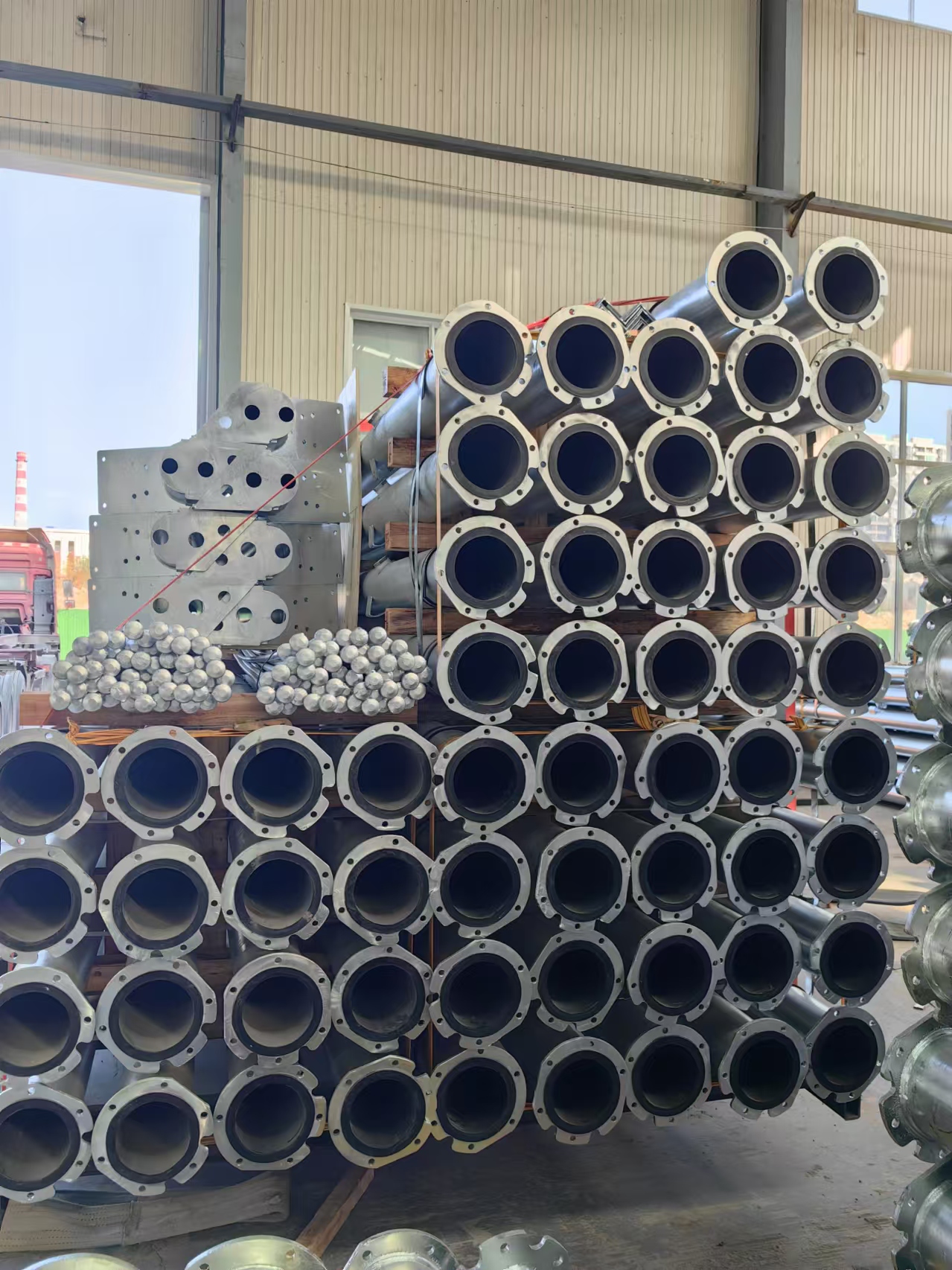
Future Outlook: What This Means for Buyers
Trade coverage of pivot irrigation points to a direction of travel, namely integration of machines, data collection and data interpretation, but it does not establish a current standard or a guaranteed outcome for any single farm. For buyers, the practical implication is procedural: keep the decision matrix focused on site conditions that cannot be upgraded later, such as field geometry, power availability and water source, and treat control features as configuration choices that can be specified in the contract. A machine that fits the site will remain useful as control technology develops; a machine that does not fit the site will not be rescued by a software upgrade.
Frequently Asked Questions
What is the main structural difference between the Fixed DYP pivot and the JP800 hose reel?
The Fixed DYP is a center pivot that rotates around a fixed ground anchor, using a sectional truss and Q235B steel with GB 13912-2020 galvanizing over a 177.6–565 m pivot length. The JP800 is a hose reel machine built from metal and PE, with a 90 mm diameter, 300 m PE pipe and a water-turbine drive.
How does field shape affect the choice?
A center pivot covers a circle and fits regular, unobstructed fields. A hose reel covers a lane defined by its 300 m pipe and fits elongated, irregular or split plots better. The choice depends on whether the field can contain a circle or is better served by a movable lane.
Does the JP800 require grid electricity?
The JP800's main drive is a water turbine and does not require electricity. Auxiliary components such as valves or optional controls may still need site power, so the buyer should confirm the full configuration.
What water flow and pressure does the JP800 need?
The documented operating range is 25–52 t/h flow and 0.6–0.9 MPa inlet pressure. A source outside this range will not drive the machine as specified.
What do IP65 and 380V–460V mean for the Fixed DYP?
IP65 indicates protection against dust and water jets for electrical components, and 380V–460V is the pivot's operating voltage band. Buyers should confirm that the site supply matches the band and that protection and earthing are correct before commissioning.
Where can buyers obtain the full product catalogue?
The 2026 YULIN pivot catalogue is available as a downloadable PDF at the company's public catalogue link: 2026 YULIN Pivot Catalogue.
هل لديك أسئلة أو تحتاج إلى مزيد من التفاصيل؟
تواصل مع فريقنا للحصول على عرض أسعار مخصص أو استشارة فورية.
طلب عرض أسعار
املأ النموذج أدناه وسيتواصل معك فريقنا بعرض مقترح مخصص.
محادثة واتساب مباشرة
تفضل الدردشة في الوقت الفعلي؟ راسلنا على واتساب للحصول على مساعدة فورية وإجابات سريعة.
- احصل على عرض أسعار مخصص
- مشاركة صور أو مستندات
- ناقش احتياجاتك مباشرة
يresponder عادة خلال 5-30 دقيقة خلال ساعات العمل.