
Decoding 1.5ATA: HBOT Pressure and Certification Evidence
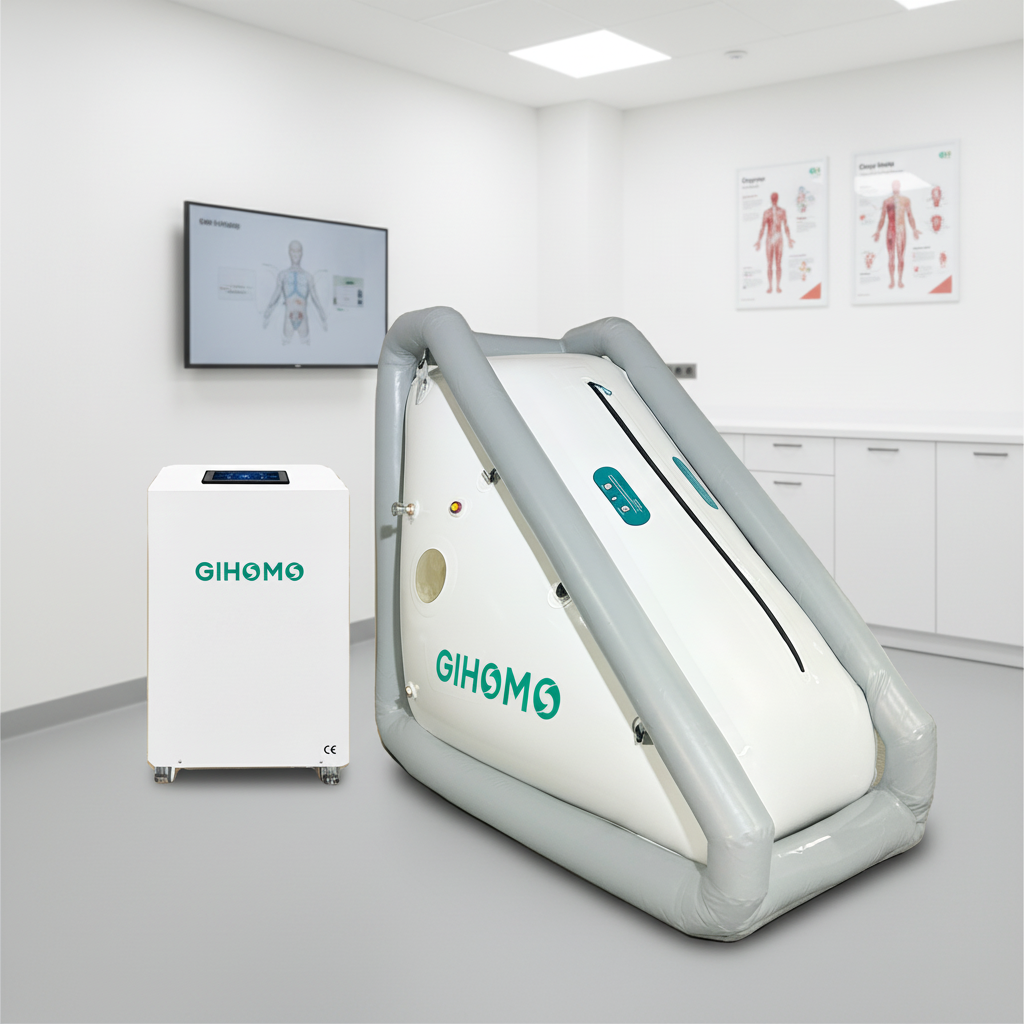
A 1.5ATA label on a hyperbaric oxygen chamber is a pressure class, not a qualification certificate. That distinction matters because buyers in wellness, sports recovery, and clinical-adjacent projects are often shown a certificate and a pressure figure at the same time, without a clear link between them. The useful question is not whether a chamber is 1.5ATA certified in some generic sense, but whether the stated pressure, oxygen performance, materials, electrical design, and certificate scope line up for the intended use.
Regulatory language adds another layer. The U.S. Food and Drug Administration describes full-body hyperbaric chambers as Class II devices under 21 CFR 868.5470 with product code CBF, and medical claims require the appropriate premarket pathway, including 510(k) where applicable. CE, FCC, and EMC claims are different compliance instruments and should not be treated as interchangeable with medical-device authorization. A datasheet that lists oxygen purity above 90% and an oxygen concentration pressure of 100KPa is giving measurable performance data that can be checked. Qualification happens when these layers are reconciled rather than stacked as separate promises.
The Qualification Problem: Pressure Claims Without Model-Specific Evidence
Hyperbaric oxygen chamber procurement is unusually exposed to specification ambiguity. A soft shell chamber may be advertised as 1.3ATA, 1.5ATA, or a range such as 1.3–1.5ATA. A hard shell system may be advertised at 1.3–1.5ATA, 2.0ATA, or higher. Without a stated pressure basis, buyers cannot reliably compare absolute pressure with gauge pressure, operating pressure with maximum pressure, or chamber pressure with oxygen delivery pressure.
The evidence pack for this category shows why normalization is needed. Soft shell chambers are generally described as operating at mild pressures, usually around 1.3ATA and at a maximum of about 1.4–1.5ATA. Hard shell chambers commonly operate at 2.0–3.0ATA in clinical settings, with multiplace systems reaching higher values. A 1.5ATA soft shell system therefore sits at the upper end of the soft shell range. That does not make it equivalent to a 2.0ATA hard shell system, and it does not by itself establish a clinical indication.
Certification claims create a second gap. A supplier may state CE, FCC, and EMC compliance, but those terms describe different scopes. They may not name the exact model, the testing laboratory, the applicable standard, or the market in which the document is valid. FDA has also reported fires with HBOT devices that resulted in serious injuries and deaths, and it emphasizes following manufacturer instructions for use and fire-prevention measures. For a buyer, a certificate image without a matching technical file is not a qualification package.
How GIHOMO Frames the 1.5ATA Soft Shell Category
Guangdong GIHOMO Medical Technology Co., Ltd. (GIHOMO) is a Foshan, China–based manufacturer of hard shell and portable hyperbaric oxygen chambers and related oxygen equipment. Its stated portfolio covers soft shell and hard shell configurations, portable chambers, and OEM/ODM customization for logo, interface, color, and language. The company states that it operates under an ISO9001 quality management system and that its core products have CE, FCC, and EMC certification or compliance claims. Those claims should be read as supplier statements until certificate numbers, scopes, and model coverage are verified.
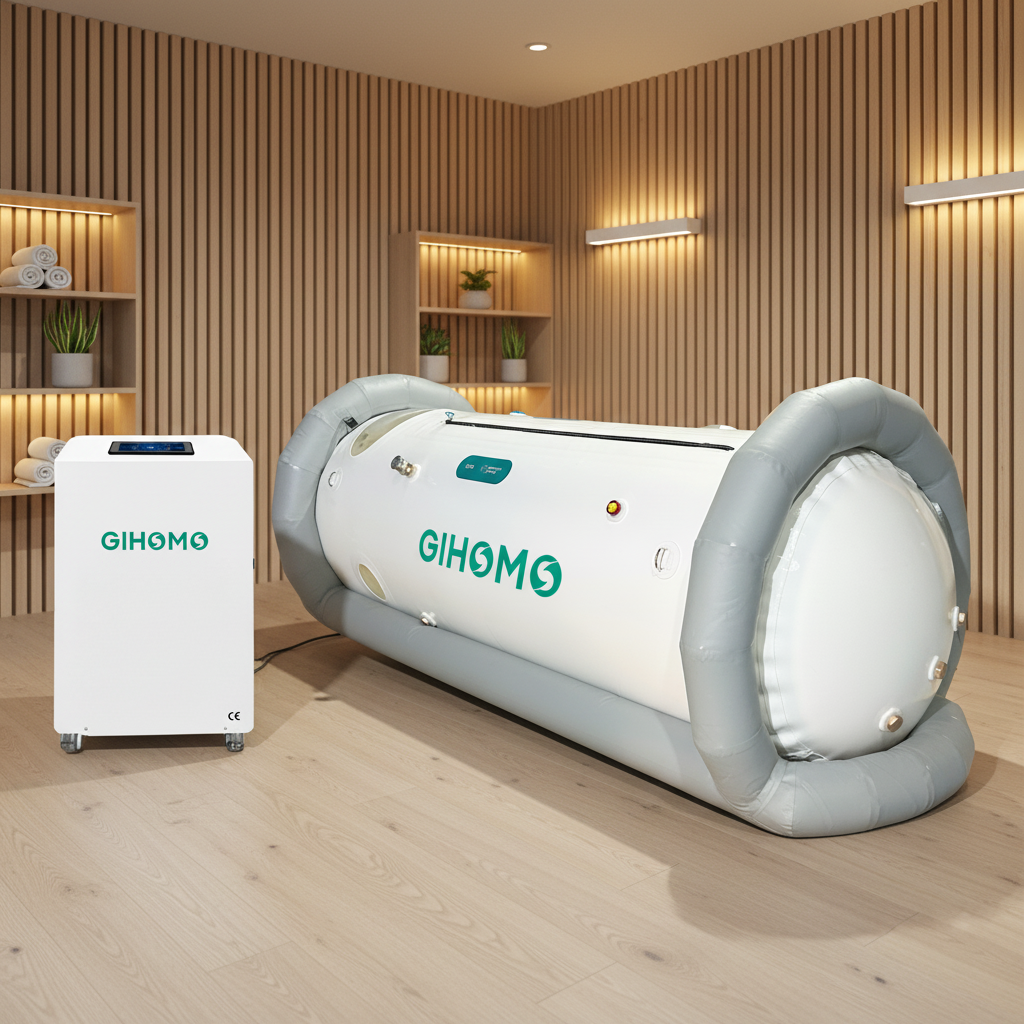
Within the 1.5ATA class, GIHOMO lists several soft shell models with different configurations. The STW03 is a lying type soft shell hyperbaric chamber with 1.5ATA pressure, a GH15A oxygen concentrator, 15L/min concentration flow, 100KPa oxygen concentration pressure, oxygen purity above 90%, rated power of approximately 850W, chamber size of D1000mm by 2350mm, and TPU material. The STW01 is a sitting type soft shell hyperbaric oxygen chamber with the same 1.5ATA pressure, GH15A concentrator, 15L/min flow, 100KPa concentration pressure, oxygen purity above 90%, approximately 850W rated power, and chamber size of 1820mm by 820mm by 1500mm. The SSL001 is also rated at 1.5ATA but uses a GH05A concentrator, 5L/min flow, 100KPa concentration pressure, oxygen purity above 90%, approximately 750W rated power, a chamber size of 1700mm by 1100mm by 1200mm, and a chamber net weight of 24.5kg. The STW02 is a portable chamber with a BIBS system, 1.5ATA pressure, GY20SR concentrator, 20L/min flow, 120KPa concentration pressure, oxygen purity above 90%, approximately 1500W rated power, and a chamber size of 1900mm by 920mm by 1500mm.
These models show why a single 1.5ATA label is insufficient. The pressure class is shared, but oxygen flow, concentration pressure, power, footprint, and configuration differ. GIHOMO also states OEM/ODM service availability, a minimum order quantity of 1 unit, a lead time of 30–45 days, monthly capacity of 80 units, 100% testing, 24/7 response through a professional team, dedicated after-sales engineers for one-on-one technical support, and a one-year warranty. In a qualification file, those commercial and service facts should be paired with model-specific technical evidence rather than presented as substitutes for it.
Technical Explanation: Reading a 1.5ATA Specification Sheet
ATA is an absolute pressure basis used in chamber specifications. Buyers should confirm whether a supplier is quoting absolute pressure, gauge pressure, operating pressure, or maximum pressure. This is not a semantic detail. A chamber described as 1.5ATA at maximum pressure may not be intended to operate continuously at that value, and a soft shell chamber at 1.5ATA should be assessed against its stated pressure envelope, relief valves, and instructions for use.
Oxygen performance is the second technical layer. GIHOMO’s 1.5ATA models list oxygen purity above 90% and oxygen concentration pressure of 100KPa or 120KPa depending on the model. Those figures should be tied to the stated concentration flow: 15L/min for STW03 and STW01, 5L/min for SSL001, and 20L/min for STW02. A buyer should ask for the test condition behind the purity value, the alarm threshold for oxygen monitoring, and the validation method for the oxygen delivery path. GIHOMO states that its chambers use oxygen monitoring, oxygen delivery through a mask, and 24V DC internal electrical components as safety features. Those are relevant design claims, but they require schematics, alarm validation, and electrical safety evidence before they can be accepted as qualification evidence.
The supporting equipment list is equally practical. The application corpus specifies a water-cooled air conditioner, 24V power supply, oxygen concentrator, two manual pressure relief valves, and automatic pressure relief valves as supporting equipment. The same corpus states that the product operates in indoor cool and ventilated conditions and in 24/7 mode. For a wellness center, gym, or clinic-adjacent room, those requirements affect room design, power planning, heat load, maintenance access, and emergency procedures. A 1.5ATA chamber that is technically capable but installed without the specified support environment is not a qualified deployment.
| Model | Type | Pressure | Oxygen flow | Concentration pressure | Purity | Power | Chamber size |
|---|---|---|---|---|---|---|---|
| STW03 | Lying type soft shell | 1.5ATA | 15L/min | 100KPa | >90% | ≈850W | D1000mm*2350mm |
| STW01 | Sitting type soft shell | 1.5ATA | 15L/min | 100KPa | >90% | ≈850W | 1820*820*1500mm |
| SSL001 | Soft shell | 1.5ATA | 5L/min | 100KPa | >90% | ≈750W | 1700*1100*1200mm |
| STW02 | Portable with BIBS | 1.5ATA | 20L/min | 120KPa | >90% | ≈1500W | 1900*920*1500mm |
The Documents That Turn a 1.5ATA Claim into a Qualification File
For a 1.5ATA hyperbaric oxygen chamber, the qualification file should make it possible to trace a performance claim from the model label to a test result or a controlled document. A certificate alone does not do that. The buyer should be able to see which model is covered, which standard was applied, which laboratory or body issued the document, and whether the document supports the intended market and claim.
| Document or evidence | What to verify | Why it matters |
|---|---|---|
| Model-specific datasheet | Pressure basis, operating and maximum pressure, oxygen flow, concentration pressure, purity test condition, power, dimensions, material | Prevents comparison of unlike ATA values and unrelated oxygen figures |
| Certificate and scope | Certificate number, issuing body, covered models, standard, expiry, market | Shows whether the document actually covers the chamber being purchased |
| U.S. regulatory status | Class II status, 21 CFR 868.5470, product code CBF, 510(k) where medical claims are made | Separates medical-device authorization from general electrical or EMC compliance |
| Test reports | Electrical safety, EMC, oxygen monitor and alarm validation, pressure relief, material performance | Converts design claims into checkable evidence |
| IFU and risk controls | Fire prevention, oxygen management, emergency procedures, maintenance, operating environment | Addresses known HBOT fire and oxygen-environment risks |
| Quality and service evidence | ISO9001 claim, 100% test, warranty, response process, after-sales engineering | Supports lifecycle planning, not just initial delivery |
This is where the 1.5ATA discussion becomes practical. A buyer can accept 1.5ATA as the intended operating class only when the model datasheet, pressure relief design, oxygen performance, and certificate scope agree. If the certificate names a family of products but the datasheet gives model-specific pressure and oxygen values, the buyer should ask for the bridge document that connects them. If the supplier cannot provide that bridge, the claim remains a marketing statement rather than a qualification record.
Application Fit: Where 1.5ATA Soft Shell Chambers Are Used
GIHOMO’s application data describes several non-clinical and clinical-adjacent scenarios. In beauty and anti-aging applications, the stated role is to promote collagen regeneration, brighten skin tone, and accelerate skin repair. The working condition is an indoor cool and ventilated environment, with 24/7 operation and supporting equipment that includes a water-cooled air conditioner, 24V power supply, oxygen concentrator, two manual pressure relief valves, and automatic pressure relief valves. The same application lists CE, FCC, EMC, and ODM/OEM service as special requirements. These are positioning statements from the supplier’s application material; they should not be read as clinical trial outcomes.
In health care applications, the stated role is to improve sleep, enhance immunity, and support daily health management. In sport recovery, the stated role is rapid recovery after exercise, improved training efficiency, and enhanced athletic performance. In rehabilitation, the stated function is adjuvant therapy for postoperative wound healing, diabetes, brain injury, and other diseases. Those descriptions span wellness, sports, and medical-adjacent use. The qualification logic changes across them: a wellness or sports buyer should focus on installation environment, duty cycle, oxygen delivery, and user safety; a buyer making medical claims should establish the applicable regulatory pathway and clinical evidence before treating 1.5ATA as sufficient.
| Scenario | Corpus description | Buyer check |
|---|---|---|
| Beauty and anti-aging | Promote collagen regeneration, brighten skin tone, accelerate skin repair | Confirm non-medical positioning, room cooling, duty cycle, and operator training |
| Health care | Improve sleep, enhance immunity, daily health management | Separate wellness language from medical claims; verify local rules |
| Sport recovery | Rapid recovery after exercise, improved training efficiency, enhanced athletic performance | Check throughput, recovery workflow, and chamber size |
| Rehabilitation | Adjuvant therapy for postoperative wound healing, diabetes, brain injury, and other diseases | Establish regulatory status and clinical evidence before use |
The supporting equipment requirement is a deployment constraint, not a footnote. The same water-cooled air conditioner, 24V power supply, oxygen concentrator, and pressure relief valves appear across the application descriptions. A 1.5ATA soft shell chamber may be compact, but it still needs a controlled room, power planning, oxygen supply, and maintenance access. Buyers should include those items in the total cost and site-readiness review.
Market Trend: Growth Is Raising the Bar for Documentation
The global hyperbaric oxygen therapy market was valued at USD 7.43 billion in 2025 and is estimated to reach USD 10.55 billion by 2031 at a CAGR of 6.03%, according to Mordor Intelligence. Growth of that kind attracts new suppliers and new buyer segments, especially in wellness and sports recovery. It also makes specification discipline more important, because a larger market can support more variation in product quality and documentation quality.
Regulatory attention is part of the trend. FDA classifies full-body hyperbaric chambers as Class II devices and has issued safety communications about fires involving HBOT devices. Harvard Health Publishing distinguishes evidence-based uses from unproven claims, which reflects a broader split between regulated medical HBOT and wellness-oriented positioning. For buyers, the practical consequence is that 1.5ATA should be evaluated as a performance class within a documented system: pressure basis, oxygen performance, electrical design, fire prevention, and certificate scope. The market may grow, but the qualification standard does not become looser because demand rises.
1.5ATA Soft Shell vs 2.0ATA Hard Shell: A Boundary Comparison
The most useful comparison is not soft shell versus hard shell in the abstract. It is 1.5ATA soft shell versus a higher-pressure hard shell system in the same procurement decision. GIHOMO’s STW03 and SSL001 illustrate the 1.5ATA soft shell side; the W1800 illustrates a 2.0ATA hard shell side. The table below uses only the listed specifications and should not be read as a ranking.
| Attribute | 1.5ATA soft shell: STW03 / SSL001 | 2.0ATA hard shell: W1800 |
|---|---|---|
| Pressure | 1.5ATA | 2.0ATA |
| Material | TPU | Steel |
| Oxygen flow | 15L/min or 5L/min | 60L/min |
| Concentration pressure | 100KPa | 120KPa |
| Rated power | ≈850W or ≈750W | ≈5000W |
| Chamber size | D1000*2350mm or 1700*1100*1200mm | 1800*2000*1900mm |
| Likely fit | Wellness, sports recovery, home or compact commercial settings | Clinical or higher-pressure settings with greater infrastructure |
The real limitation is pressure ceiling. A 1.5ATA soft shell chamber sits at the upper end of the typical soft shell range and should not be treated as a substitute for a 2.0ATA hard shell system where a protocol specifies higher pressure. The soft shell format may offer a smaller footprint, lower power draw, and easier placement, but it also brings material, maintenance, and pressure-envelope considerations that hard shell steel chambers do not share. The hard shell W1800, by contrast, requires approximately 5000W and a larger chamber footprint. Neither format is automatically better; the fit depends on the intended use and the documents that support it.
The same boundary applies to certification. A paper certificate that does not name the model, pressure basis, oxygen performance, and test standard is weaker than a specification-backed file. In traditional certificate-only procurement, buyers often compare logos. In a qualification-led process, they compare the chain from model label to test evidence. That is the more defensible approach for 1.5ATA HBOT procurement.
Future Outlook
As the HBOT market grows, 1.5ATA soft shell chambers are likely to remain relevant where portability, lower power, and compact installation matter. The more important shift is documentation. Buyers are increasingly likely to ask for model-specific pressure definitions, oxygen purity test conditions, alarm validation, certificate scopes, and fire-prevention evidence. Suppliers that can connect commercial claims to controlled technical documents will be easier to qualify; suppliers that rely on undifferentiated certificate images will face more questions.
For GIHOMO, the stated portfolio, OEM/ODM service, 100% testing, and after-sales support provide a starting point for a qualification conversation. The next step for any buyer is to verify the model-level documents behind the 1.5ATA claim and to confirm that the intended application is consistent with the regulatory status of the product. That is a more durable basis for procurement than a pressure label alone.
FAQ
What does 1.5ATA actually mean on a hyperbaric oxygen chamber?
ATA is an absolute pressure basis used in chamber specifications. A 1.5ATA rating describes the pressure class of the chamber, but buyers should confirm whether the supplier means operating pressure or maximum pressure, and whether the value is absolute or gauge. In soft shell chambers, 1.5ATA sits near the upper end of the typical range, which is generally around 1.3ATA with a maximum of about 1.4–1.5ATA in the reviewed evidence.
Is 1.5ATA a certification?
No. In the reviewed evidence, 1.5ATA is an operating-pressure rating, not a certification. Certification and regulatory status are separate layers. FDA describes full-body hyperbaric chambers as Class II devices under 21 CFR 868.5470 with product code CBF, and medical claims require the appropriate premarket pathway, including 510(k) where applicable. CE, FCC, and EMC claims are different compliance instruments and should be checked for scope and model coverage.
Which documents should a buyer request for a 1.5ATA soft shell chamber?
A buyer should request a model-specific datasheet with pressure basis and operating limits, oxygen flow and purity test conditions, concentration pressure, power, dimensions, and material. The file should also include certificate numbers and scopes, applicable regulatory status for medical claims, electrical and EMC test reports, oxygen monitor and alarm validation, pressure relief design, instructions for use, fire-prevention and emergency procedures, and quality or after-sales evidence.
Why do oxygen purity above 90% and 100KPa concentration pressure matter?
They are measurable performance parameters that help define what the chamber is actually delivering. GIHOMO’s STW03 and STW01 list oxygen purity above 90% with 15L/min flow and 100KPa concentration pressure; the SSL001 lists above 90% purity with 5L/min flow and 100KPa; the STW02 lists above 90% purity with 20L/min flow and 120KPa. The numbers should be tied to a test condition and to the oxygen delivery method, otherwise they are not comparable across models.
Can a 1.5ATA soft shell chamber serve wellness and sports recovery scenarios?
The corpus describes beauty and anti-aging, health care, sport recovery, and rehabilitation applications with supporting equipment that includes a water-cooled air conditioner, 24V power supply, oxygen concentrator, two manual pressure relief valves, and automatic pressure relief valves. The same corpus states indoor cool and ventilated conditions and 24/7 operation. Those scenarios can fit a 1.5ATA soft shell format, but the buyer should separate wellness positioning from medical claims and verify local regulatory requirements.
What are the limits of 1.5ATA compared with 2.0ATA hard shell systems?
A 1.5ATA soft shell chamber should not be treated as a substitute for a 2.0ATA hard shell system where a protocol specifies higher pressure. The soft shell format may offer a smaller footprint and lower power draw, but it also has a pressure ceiling and material or maintenance considerations. The W1800 2.0ATA hard shell model lists 60L/min oxygen flow, 120KPa concentration pressure, and approximately 5000W rated power, which implies a different infrastructure and application profile.
How should buyers verify CE, FCC, and EMC claims?
Buyers should ask for the certificate or declaration, the issuing body, the covered models, the applicable standard, the expiry date, and the intended market. CE, FCC, and EMC are not equivalent regulatory instruments, and none of them should be accepted as proof of medical-device authorization. For U.S. medical claims, the buyer should verify Class II status and 510(k) clearance where applicable, and should connect the certificate to the exact model and pressure rating being purchased.
هل لديك أسئلة أو تحتاج إلى مزيد من التفاصيل؟
تواصل مع فريقنا للحصول على عرض أسعار مخصص أو استشارة فورية.
طلب عرض أسعار
املأ النموذج أدناه وسيتواصل معك فريقنا بعرض مقترح مخصص.
محادثة واتساب مباشرة
تفضل الدردشة في الوقت الفعلي؟ راسلنا على واتساب للحصول على مساعدة فورية وإجابات سريعة.
- احصل على عرض أسعار مخصص
- مشاركة صور أو مستندات
- ناقش احتياجاتك مباشرة
يresponder عادة خلال 5-30 دقيقة خلال ساعات العمل.