
Decoding CE, EMC and LVD Certification for Surface Pumps
Decoding CE, EMC and LVD Certification for Surface Pumps
CE marking on a surface pump is a manufacturer's declaration of conformity. It is not a single certificate, and it is not issued under a single standard. For a pump assembly sold into the European Union, three regulatory threads normally run in parallel: machinery safety, electromagnetic compatibility (EMC), and electrical safety under the Low Voltage Directive (LVD). What a buyer receives is therefore one declaration that references one or more directives, supported by separate technical documentation for the electrical behaviour of the drive and its controls.
That distinction is commercially relevant. Importers, distributors and tender evaluators use certificate numbers as a first filter, but a number alone answers very little until the directive it references, the standards behind it and the model scope it covers are all readable on the document. This explainer sets out what CE, EMC and LVD documentation contains for surface pumps, and how a buyer can check it, using the compliance set held by Zhejiang Happy Pump Industry Co., Ltd. as a worked example.
Zhejiang Happy Pump Industry Co., Ltd. is a water pump and motor manufacturer established in 1990 and located in Daxi Town, Wenling City, Zhejiang Province, China. The company produces surface pumps, submersible pumps, deep well pumps, solar pumps, motors, pressure control tanks and spare parts, and states that 99% of its output is exported, reaching more than 150 countries and regions. For the European market it holds CE certificate CE-5072-160326, issued under Machinery Directive 2006/42/EC, alongside EMC and LVD certificates covering the HQBm, QB60, IDB35, HPSm-AX, HRSm-A, QDP and QDX series.
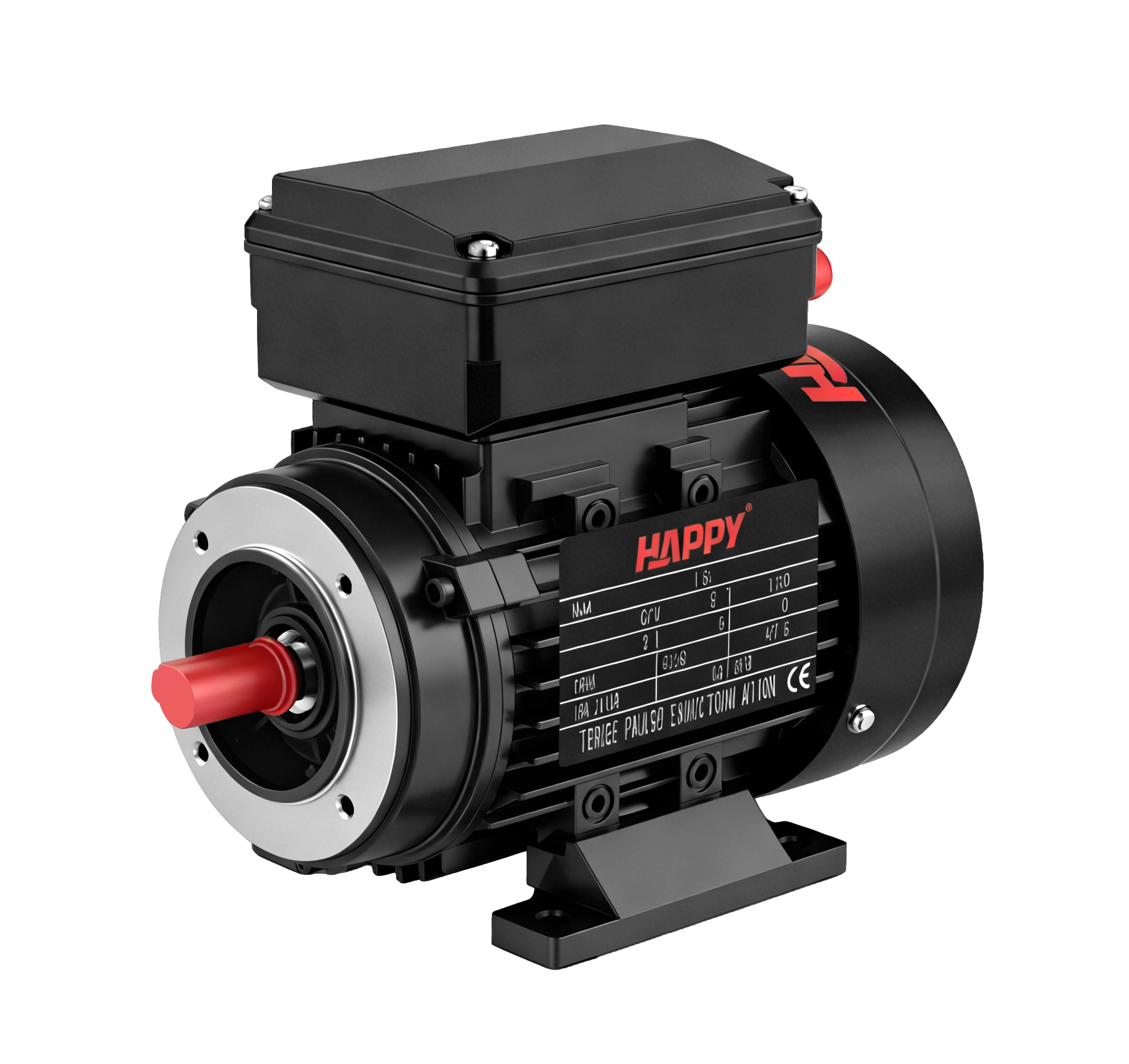
Why Certification Became a Procurement Gate
The commercial weight of compliance tends to track the size of the market it governs. MarketsandMarkets estimated the global pumps market at USD 61.32 billion in 2024, with a projection of USD 79.01 billion by 2029. Mordor Intelligence assessed surface pumps at a 57.63% share of the total global pump market in 2025. Once more than half of a pump category moves across borders, documentation stops being an administrative afterthought and becomes part of the product specification.
For a buyer, weak documentation produces specific costs rather than abstract risk:
- Customs or market-surveillance queries that hold a shipment while paperwork is clarified.
- Disqualification from public tenders and framework agreements that require a certificate number and directive reference at bid stage.
- Product-liability exposure when the electrical behaviour of a pump is questioned after installation.
- Distributor and insurer requirements that a declaration of conformity exist before a model is listed for sale.
None of these outcomes requires the pump to be defective. They require only that the paperwork cannot be traced back to the specific product.
Three Directives, Three Different Questions
A single CE mark can rest on more than one directive, and each directive asks a different question. Reading a certificate correctly means matching the question to the evidence presented.
| Directive or requirement | The question it answers | Typical evidence |
|---|---|---|
| Machinery Directive 2006/42/EC | Is the machine safe to assemble, install, operate, maintain and dismantle? | Declaration of conformity, technical file, risk assessment, marking |
| EMC requirements | Does the electrical drive emit excessive disturbance, and does it keep working in a disturbed electrical environment? | EMC test reports against the applicable standards |
| Low Voltage Directive | Is the electrical equipment safe at its rated voltage under normal and fault conditions? | Insulation, thermal, earthing and construction evidence |
The set that actually applies depends on configuration rather than on the product family name. A single-phase domestic surface pump with a capacitor and pressure switch, a three-phase irrigation pump, and a solar pump operating with a controller in a parallel configuration are three different electrical situations, and their documentation is not automatically interchangeable.
What CE Marking Does Not Tell You
A frequent misreading among buyers is to treat CE as a performance or quality certificate. It is neither. CE marking addresses health, safety and environmental protection requirements set out in EU legislation. It does not certify:
- hydraulic performance — head, flow or the shape of the performance curve;
- energy efficiency or expected service life;
- suitability for contact with drinking water or for a particular fluid chemistry;
- commercial terms such as warranty length or spare-part availability.
It also provides no guarantee about the individual unit on the pallet. A certificate covers a defined configuration and a defined model or series list. Confirming that the delivered unit matches that configuration remains a shared obligation between buyer and supplier, and it is the step most often skipped.
Inside the Technical File: EMC and LVD Evidence for a Surface Pump
For a surface pump, the electrical compliance question is really a question about the motor, its starting and control components, and the wiring that connects them.
The motor
Happy Pump manufactures motors in IE2, IE3, IE4 and MS designs with a power range of 1–430 HP, speeds of 934–2980 rpm, and cast iron or aluminium construction. Motor construction determines much of what an electrical-safety assessment examines: the insulation system, winding temperature, earthing continuity and terminal arrangement. It also shapes EMC behaviour, because winding design, capacitor switching and starting method influence conducted and radiated disturbance.
Starting and control components
Single-phase surface pumps typically use a capacitor and a pressure switch. Automatic and smart variants add electronic pressure control. Three-phase installations may use contactors or variable-speed drives. Each of these is an EMC source and an electrical-safety item in its own right, and each changes the technical file that supports the declaration.
Enclosure and materials
Documented pump ranges include protection ratings of IP44 and IP68, with cast iron, stainless steel and engineering plastics as the main materials. Enclosure rating is an electrical-safety parameter as much as a durability one, because it defines what the electrical parts are protected against.
Product safety standards
For household and similar electrical pumps, the relevant product safety reference is IEC 60335-2-41:2024, which covers temperature limits and connection requirements according to the International Electrotechnical Commission. A buyer reviewing a technical file should expect a standard of this type to be named, rather than a generic statement that the pump meets European requirements.

The Certificate Set Behind Happy Pump Surface Pumps
Zhejiang Happy Pump Industry Co., Ltd. keeps separate documents for the machinery and electrical aspects of its surface pump range:
- CE certificate CE-5072-160326, issued for the EU market and referencing Machinery Directive 2006/42/EC.
- EMC certificates and LVD certificates covering the HQBm, QB60, IDB35, HPSm-AX, HRSm-A, QDP and QDX series.
The covered range is broad. The company's pump portfolio spans 0.25–550 kW, heads of 20–100 m and flows of 1.5–5500 m³/h, with cast iron, stainless steel and engineering plastics in construction, and subcategories that include surface pumps, centrifugal pumps, self-priming pumps, swimming pool pumps, multistage pumps and solar pumps.
Two manufacturing facts matter when a buyer assesses whether a certificate reflects serial production rather than a single sample. First, the company states that 100% of units are tested as part of quality control. Second, it reports a monthly capacity of 400,000 units, lead times of 30–45 days, and minimum order quantities of 100 pieces below 3 HP and 50 pieces above 3 HP. Customization is offered on voltage and logo under an OEM/ODM arrangement.
That last point is where compliance and customization intersect. A private-label variant, a different nameplate voltage, or a pump supplied with an alternative controller is a configuration question. Certificate scope covers the series named on the document. Where a buyer specifies a different electrical configuration, the applicable declaration should be confirmed for that configuration rather than assumed from the standard range.

Five Checks Before Accepting a Surface Pump Certificate
The following sequence allows an importer or engineer to evaluate a CE documentation package in a short review. It applies to any supplier, not only to Happy Pump.
- Read the certificate number and the issuing body. A reference such as CE-5072-160326 identifies a specific conformity document. The issuing organisation should be named and contactable, and consistent with any other certificate presented.
- Check the directive reference. For a surface pump, a machinery-safety reference such as 2006/42/EC is expected, and the electrical side should be addressed by EMC and LVD documentation rather than folded silently into the machinery statement.
- Look for the standards and test basis. A document that names the applicable product or EMC standards, and the test basis behind them, is auditable. A document that only repeats the words CE certified is not.
- Match the model or series scope. The series on the certificate must include the exact series on the purchase order — for example HQBm, QB60, IDB35, HPSm-AX, HRSm-A, QDP or QDX.
- Confirm consistency across documents. Nameplate, declaration of conformity, instruction manual, invoice and certificate must agree on model, voltage and frequency. Divergence between them is a common reason a compliant shipment is delayed.
Matching Application Conditions to Certification Scope
Compliance documentation is not one artefact; it is a set of claims with boundaries. The most useful way to read it is against the application the pump will actually serve, because electrical configuration follows duty, not catalogue position.
| Application | Typical configuration | Where the compliance emphasis sits |
|---|---|---|
| Household and domestic water supply | Single-phase surface pump with pressure control | Electrical safety and household EMC behaviour |
| Garden and agricultural irrigation | Single- or three-phase surface pump, often intermittent duty | Motor electrical safety; EMC where controllers or drives are used |
| Solar off-grid water supply | Pump operating with controller and parallel configuration | EMC and input/output configuration; controller compatibility |
| Municipal and engineering projects | Larger multistage or booster installations | Machinery safety documentation suitable for tender submission |
| Swimming pool circulation | Continuous or cyclic operation | Thermal and electrical safety under sustained duty |
| Sewage discharge | Particle-containing water, model-dependent | Machinery safety plus material selection for the pumped medium |
The documented application list for the range is wide. It includes household water supply, garden irrigation, agricultural irrigation, solar off-grid water supply, municipal and engineering projects, pool circulation and sewage discharge, across industries such as agriculture irrigation, residential and building water supply and drainage, municipal drainage and water supply, industrial circulation and cooling, solar water pumping, swimming pool and sewage treatment. Depending on the model, the same family operates with clean water or particle-containing water, under high-head pumping, and in submersible conditions.
The compliance consequence is straightforward. A pump selected for household supply duty and a pump selected for a solar off-grid installation may come from the same catalogue but not from the same electrical configuration. The certificate check should follow the configuration, not the catalogue page.
Market Trends Raising the Bar on Certification
Three verified market signals explain why certificate review is moving earlier in the buying process.
- Surface pump volume. Surface pumps held a 57.63% share of the global pump market in 2025, according to Mordor Intelligence, so compliance questions apply to the majority of pump trade rather than to a niche.
- Agricultural demand. Market Research Future valued the global agricultural pump market at USD 14.59 billion in 2024, with a projected CAGR of 4.98% through 2035. Irrigation is a certification-sensitive channel, because pumps are frequently procured through programmes with formal documentation requirements.
- Solar pumping growth. Market Data Forecast valued the solar pump market at USD 2.90 billion in 2024, while Expert Market Research published a figure of USD 1.60 billion for the same year. The divergence reflects different definitions of what counts as a solar pump system — which is itself a reminder that the scope behind a number deserves the same scrutiny as the number.
A fourth trend is structural rather than statistical: pumps are becoming electrical products as much as hydraulic ones. Electronic pressure control, variable-frequency operation and solar controllers add components whose EMC behaviour and electrical safety must be documented separately from the mechanical assembly. As that content grows, EMC and LVD documentation carries proportionally more of the compliance story, and machinery safety documentation alone becomes an incomplete answer.
Compliance Routes Compared
For most surface pumps, CE marking follows a self-declaration route: the manufacturer compiles the technical file, applies the applicable standards and signs the declaration of conformity. Third-party routes also exist, and the trade-offs are real rather than theoretical.
| Route | How it works | Where it is strong | Where the limits sit |
|---|---|---|---|
| Self-declaration with technical file | Manufacturer tests and documents conformity, signs the declaration and applies the CE mark | Fast and appropriate for defined pump ranges | Depends on the depth of the technical file, which the buyer does not see directly |
| Third-party certification or notified-body involvement | An independent organisation examines the product or quality system and issues its own report or mark | Independent verification, often valued in tenders | Adds cost and lead time, and the mark's scope may be narrower than assumed |
| No structured documentation | Compliance asserted without traceable documents | None identified | Cannot be verified, and shifts all risk to the importer |
The limitation to keep in mind is that the credibility of a self-declared CE package rests on what sits behind the number: the standards named, the test basis, the model coverage, and the supplier's ability to hold the certified configuration stable in serial production. A certificate that lists the right directive but cannot be matched to the delivered nameplate is worth less than its letterhead suggests.
Future Outlook
Compliance expectations for surface pumps are likely to keep moving in one direction: more electrical content, more documentation, and more checks earlier in the transaction. Three developments are worth tracking.
- Wider use of electronic and variable-speed control will keep EMC evidence in the foreground, particularly in markets where supply quality varies.
- Solar and off-grid installations will continue to require configuration-level confirmation, because a pump, a controller and a parallel array are not one standard product.
- Market surveillance and tender documentation will increasingly ask for a certificate number and directive reference as a line item, making documentation review a routine part of supplier qualification rather than an afterthought at shipment.
For buyers, the practical response is procedural rather than technical: request the certificate number, the directives, the standards and the model list before the order is placed, and record them next to the specification. That single step removes most of the ambiguity that surrounds CE, EMC and LVD at the point of purchase.
Frequently Asked Questions
Is CE marking the same thing as a certificate?
No. CE marking is a manufacturer's declaration that a product meets the applicable EU legal requirements, supported by a technical file. A certificate number such as CE-5072-160326 identifies the conformity document that references the directive the product is declared against — for surface pumps typically Machinery Directive 2006/42/EC, with separate EMC and LVD documentation for the electrical side.
Which EU directives apply to a surface pump?
Three areas are normally relevant. Machinery Directive 2006/42/EC addresses the safety of the machine. EMC requirements address electromagnetic disturbance and immunity of the electrical drive and controls. The Low Voltage Directive addresses electrical safety at rated voltage. The exact set depends on configuration, including motor type, voltage and frequency, and whether electronic controllers or drives are fitted.
How can an importer verify that a certificate number is relevant to the pump being purchased?
Check four things on the document itself: the directive reference, the standards and test basis named, the model or series list, and the issuing body. Then check consistency against the delivered unit — nameplate, declaration of conformity, manual and invoice should agree on model, voltage and frequency.
Do EMC and LVD certificates cover every variant in a series?
Not automatically. Certificate scope is defined by the models and configurations listed. Happy Pump's EMC and LVD certificates cover the HQBm, QB60, IDB35, HPSm-AX, HRSm-A, QDP and QDX series. Where a buyer specifies a customized voltage, a private-label variant or an alternative controller, that configuration should be confirmed against the applicable declaration rather than assumed.
Does CE, EMC or LVD documentation confirm pump performance or service life?
No. These documents address safety and electromagnetic compatibility. They do not certify head, flow, efficiency, noise, service life or suitability for a specific fluid. Performance and durability are separate engineering questions, answered by the performance curve, the materials specification and the testing arrangements — for example, the manufacturer's statement that 100% of units are tested in quality control.
What documentation should accompany a surface pump shipment into the EU?
In practice: the declaration of conformity with its directive reference, copies of the relevant EMC and LVD documentation, the model or series list showing the shipped product, a nameplate that matches the documentation, and a technical file available on request. For household and similar electrical pumps, the applicable product safety standard — for example IEC 60335-2-41:2024, which covers temperature limits and connection requirements — should be identifiable in that documentation.
Reference material: Zhejiang Happy Pump Industry Co., Ltd. product brochure (PDF) — general series and specification reference for surface pumps, motors and related equipment.