
Decoding Compliance for Blockout Fabrics: Certifications and Standards Explained
Decoding Compliance for Blockout Fabrics: Certifications and Standards Explained
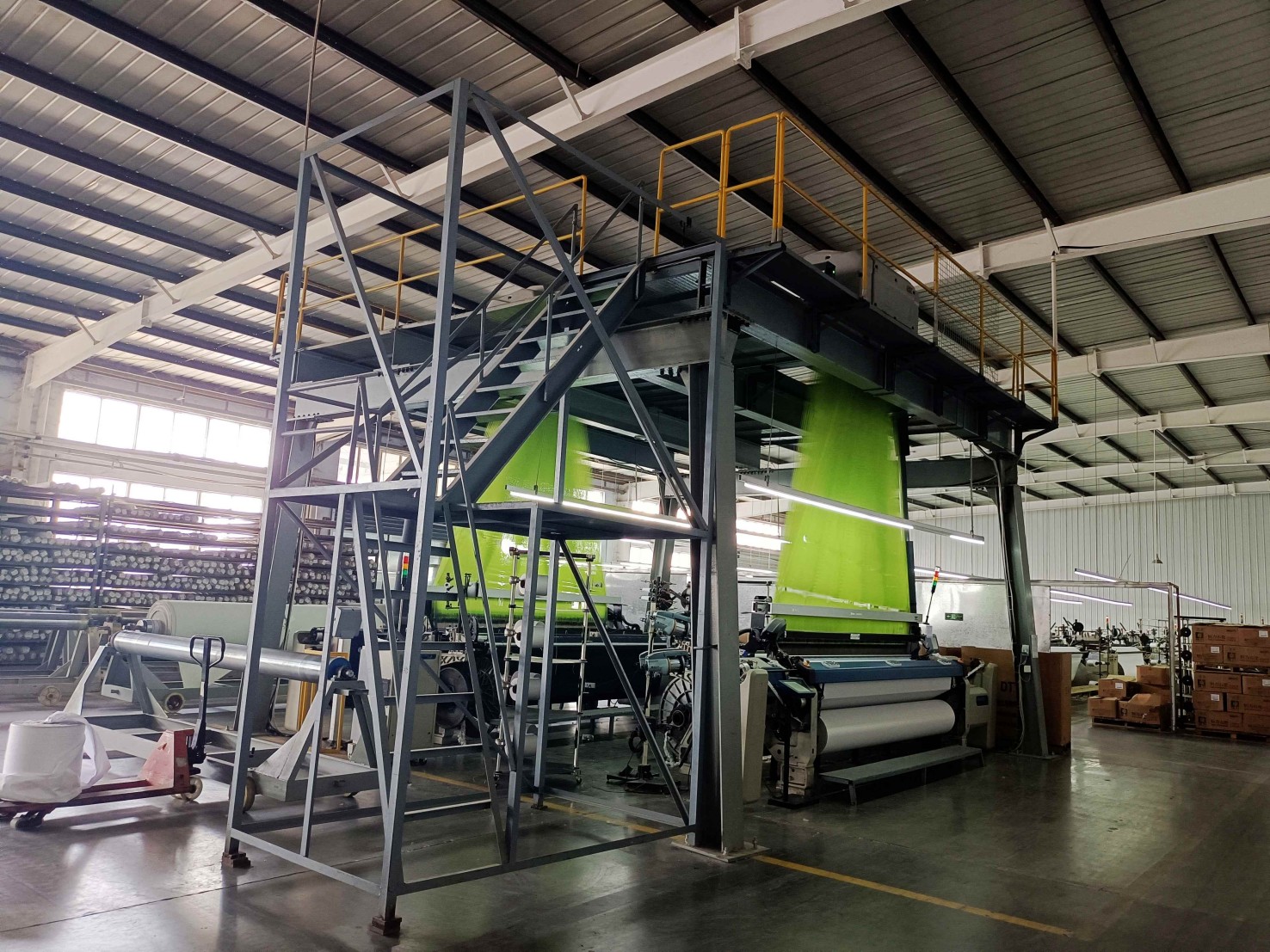
Compliance in blockout fabrics is rarely a single certificate. It is a chain of documents — laboratory test reports, certificates issued against a standard or scheme, supplier declarations, and technical data sheets — and every link in that chain is limited by the test method behind it, the article it covers, and the market it was written for. Procurement teams that treat the chain as one question usually discover the gaps late, at project handover rather than at quotation stage.
Blockout roller blind fabric sits at the intersection of three separate regulatory conversations: fire performance, thermal and visual comfort, and material and environmental safety. A document that answers one of those conversations says nothing about the other two. This is why two suppliers can both answer "yes, it is certified" and still be describing very different levels of evidence.
The commercial context explains why the subject keeps moving up the agenda. Market analyses published in 2025 put the global blackout fabric market at roughly USD 10.5 billion in 2024, with projections near USD 20.3 billion by 2034 — although published estimates for the same period diverge widely, ranging from about USD 2.7 billion to USD 11.0 billion depending on whether the figure describes fabric alone or finished blinds. North America accounted for 50.70% of blinds and shades revenue in 2025, valued at USD 3.62 billion, according to Fortune Business Insights. The practical consequence is that documentation expectations developed in that market travel with projects into other regions, and suppliers are increasingly asked for evidence they may not have needed before.
Why "is it certified?" is the wrong first question
The question is unanswerable in a useful way because "certified" can describe at least four different things, and each proves something different. A buyer who receives one of those four and assumes it performs the function of another has transferred risk from the supplier to the project.
A second problem sits underneath the first. Compliance is not a property of a brand or a product family; it is a property of a specific article — one substrate, one coating formulation, one colour, one weight — evaluated against a specific method for a specific market. When a document names a category such as "blockout fabric" rather than a construction, the gap between the document and the delivered roll is where project risk accumulates.
The reframing that works in practice replaces one broad question with four narrow ones: Which document? Covering which construction? Tested to which method and which version of that method? Valid for which destination market and project type? Every section below follows from those four questions.
The four document types and what each one actually proves
Most compliance disputes in textile sourcing trace back to a mismatch between the document that was requested and the document that was supplied. The table below sets out the four types commonly exchanged in blockout fabric procurement and the boundary of each.
| Document type | What it typically proves | What it does not prove |
|---|---|---|
| Laboratory test report | That a defined sample was tested to a defined method on a defined date | That production rolls will behave identically, or that the tested sample matches the shipped article |
| Certificate issued against a standard or scheme | That an article or a facility was assessed against a published standard or scheme within its validity period | That the certificate extends to other colours, weights or coating types in the same range |
| Declaration of conformity | That the supplier formally states the article meets named requirements | That independent test evidence exists, or that the claim applies outside the market it names |
| Technical data sheet | Declared parameters of the article: composition, opacity, width, dimensional stability | Regulatory acceptability on its own; it is a specification, not evidence of assessment |
Suppliers can legitimately hold all four for the same construction. The failure mode is not the absence of documents but the substitution of one for another in a specification clause that asked for something else.
The three compliance axes of a blockout roller blind fabric
Fire performance and flame propagation
Fire performance is usually the first axis raised by specifiers, insurers and facility teams, because vertically hung textiles in public and commercial spaces are treated as part of the fire load. In the United States, NFPA 701 is the mandatory flame propagation test for vertically hung textiles such as blackout curtains and blinds used in public and commercial spaces. Two consequences follow for procurement. First, the test addresses flame propagation behaviour rather than material chemistry alone, which is why the result depends on fabric weight, coating type and construction together. Second, because the requirement is attached to the installed textile, the same fabric can be acceptable in one configuration and questioned in another.
Thermal and visual comfort
European practice separates comfort performance from fire performance. EN 14501:2021 specifies performance characteristics and classifications for solar protection devices such as blinds and shutters with respect to thermal and visual comfort. It is a classification framework for how a shading product performs, not a fire test, and it is typically referenced where energy performance, glare control or occupant comfort are design criteria. For blockout constructions, the relevant discussion usually concerns how complete opacity interacts with the surrounding glazing, the control strategy and the intended room use.
Material composition and environmental questions
Material questions have moved from the back of the specification to the front. Polyester remains the dominant material for blockout fabric laminates, accounting for an estimated 47.2% of the material segment in 2026 according to Future Market Insights, so most compliance discussions converge on one substrate family and then diverge on coating chemistry: whether the coating system is acrylic, PVC-based, or a laminate with a metallic backing, and what that implies for odour, emissions and end-of-life handling. This is also where fire-retardant, anti-fade and anti-mildew treatments enter the conversation, because these functions are normally carried at the coating stage rather than in the weave itself.
Why the coating usually decides the compliance file
Two blockout constructions can share the same base cloth and still require different documentation, because the coating determines both the physical performance and the chemical profile that standards address. Elitex (Dezhou) Co., Ltd., a Dezhou-based manufacturer of sunshading fabrics founded in 2003, produces its Elitex Blockout Dusk Plus Series as a 100% polyester fabric with an acrylic coating, supplied in both knife-coated and paste-coated constructions. That single specification line carries several compliance consequences.
Coating method affects surface uniformity and continuity. Knife coating and paste coating differ in how the compound is applied and cured, which is why a test result obtained on one construction should not be assumed to describe the other, even when the base cloth and the colour are identical. Since flame-retardant additives are introduced with the coating rather than with the yarn, a change of coating formulation or coating supplier is a re-verification event, not a paperwork update.

Opacity is the second consequence. The Dusk Plus Series is specified at 100% opacity with no pinhole. Pinholes are the small light-transmitting points that appear where coating coverage breaks down, and they are a frequent cause of complaint in hospitality and home theatre installations where the client expects complete darkness. Documenting the opacity of the specific tested article, rather than the opacity of a series name, is what prevents a mismatch between the specification and what the occupant experiences.
Dimensional stability is the third. The series is specified at ±0.5% dimensional stability, a parameter that rarely appears in certification discussions and yet determines whether an installed blind keeps the geometry that was tested and approved. A fabric that meets a fire criterion but moves after fabrication can still fail a project inspection on fit and function. Width availability matters for the same reason: the series is supplied in widths of 89 mm, 100 mm, 127 mm, 2000 mm, 2500 mm and 3000 mm, and the construction that carries a document should be the construction that is ordered.
Coating chemistry also has a measurable comfort dimension. Advanced blackout fabric laminates using polyester and acrylic coatings can improve thermal heat resistance by 20–35%, according to market reporting on laminate performance. For buyers who ask about PVC content specifically: acrylic coating is a distinct chemistry from PVC plastisol coating, and the Dusk Plus construction starts from 100% polyester with acrylic coating. Whether a particular article qualifies as PVC-free for a given market should be confirmed from that article's material declaration rather than inferred from the coating name alone.
A six-step verification framework for procurement teams
The framework below is designed to be applied before a purchase order is issued, and it works equally well for auditing a supplier's document pack mid-project.
- Step 1 — Fix the compliance axis and the destination. Decide whether the project needs fire evidence, comfort classification, material and environmental documentation, or a combination, and name the destination market explicitly. Requirements attach to project type and market, not to product names.
- Step 2 — Match the document to the article. Ask for the construction covered: substrate, coating type, weight and colour. A document naming a category is a starting point for the conversation, not evidence for the order.
- Step 3 — Read the method and the version. Standards are revised over time; EN 14501:2021 carries a dated version, and flame propagation methods are periodically updated. A document referencing an older edition should be checked against the edition the project actually cites.
- Step 4 — Check the scope of colour and finish. Fire and physical performance commonly vary with colour, pigment loading and coating weight, so a result obtained on one colour is not automatically valid across an entire colour card. Where the project specifies several colours, confirm which ones are covered.
- Step 5 — Check validity, traceability and re-verification triggers. Record the issue date, validity period, revision number and batch traceability. Formulation changes, coating changes or a change of production line are the typical triggers that make an older document inapplicable.
- Step 6 — Check reproducibility at production scale. Documentation describes a sample; its value depends on whether the manufacturer can reproduce that sample across an order. This is where parameters such as opacity consistency, coating adhesion and dimensional stability become commercial, and where in-house laboratory capability narrows the gap between the tested sample and the shipped roll.
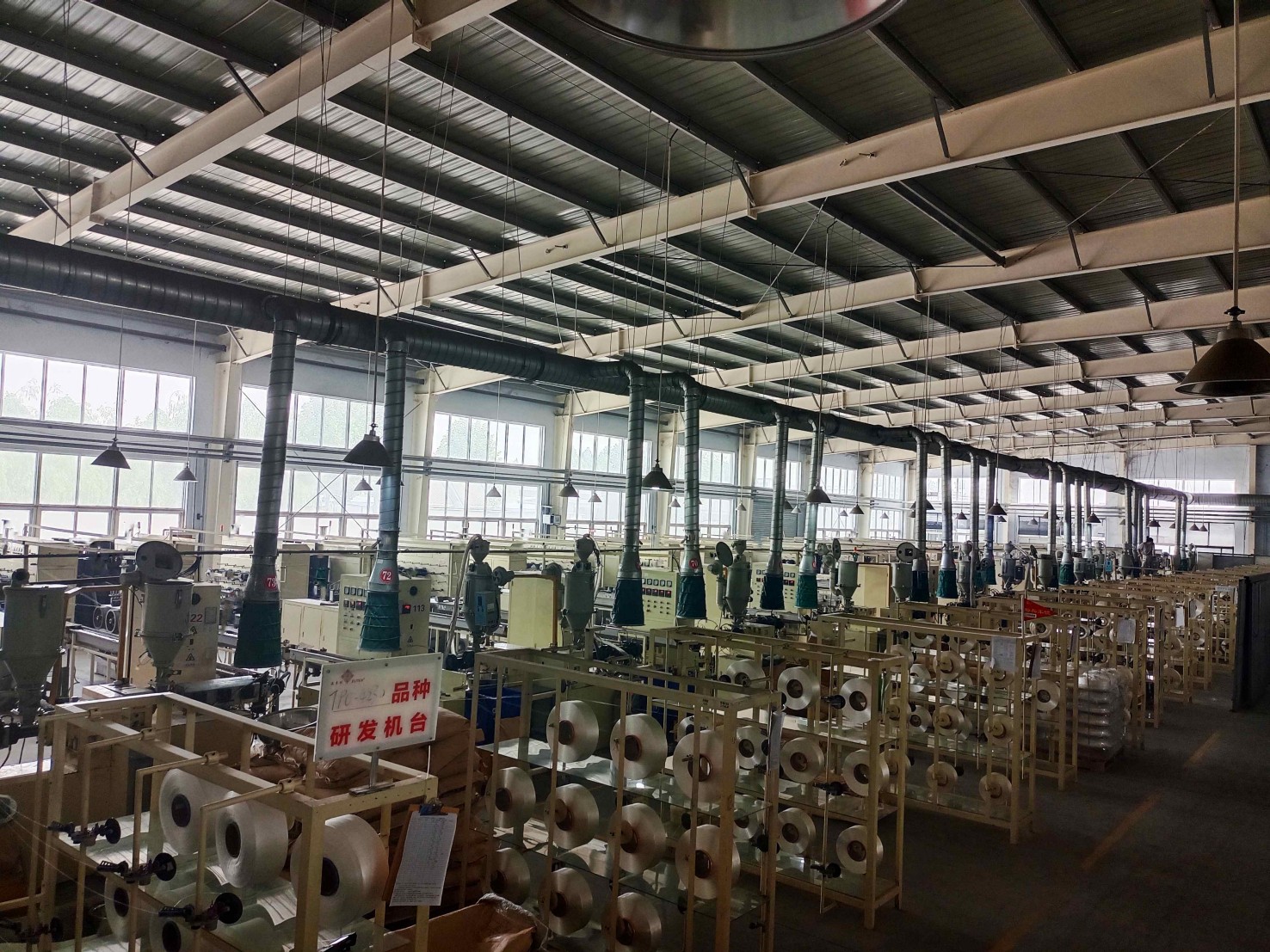
Elitex (Dezhou) Co., Ltd. reports an annual output of 8,000,000 m² of screen fabrics and 7,200,000 m² of blockout fabrics from an 85,000 m² facility with 259 employees, including an R&D team of 36 engineers, and states that production and quality control are supported by its own testing devices and laboratories. Roughly 80% of output goes to customers in the USA, the EU, Australia, North America, Southeast Asia and the Middle East — which means documentation requests from several regulatory environments arrive as a routine part of export order handling rather than as an exception.
Where these requirements surface in real projects
Compliance demand is not uniform. It follows building type, occupancy and climate, and the same fabric range is examined differently across four common project profiles.
Hospitality. Guestrooms combine complete darkness requirements with high occupancy and public-space fire rules. Fire documentation is usually requested at specification stage, and anti-fade and anti-mildew performance matters where glazing faces strong sun or humidity is high. The Elitex Blockout Dusk Plus Series lists hospitality, home theatre, bedroom and office among its applicable environments.
Commercial offices and green building projects. Here the driver is often energy performance and comfort rather than darkness alone, and classification frameworks such as EN 14501:2021 are frequently referenced. Projects that mix product types should expect to assemble documentation per article rather than per supplier: Elitex's Aluminized Sunscreen Fabric, for example, is specified as polyester with an aluminized coating, reflectivity of at least 85%, openness of 3–5%, widths of 2000–3000 mm and a solar heat gain coefficient of 0.2 or lower, for commercial buildings, green buildings and high-temperature spaces. That document set is not interchangeable with the blockout file.
Residential and home theatre. Formal documentation requests are less frequent, but the underlying material safety and durability questions remain, and private clients judge the result by complete opacity, absence of odour and stability over time.
High-UV and semi-exposed installations. Roller blind projects, awning projects and building energy-saving projects that face high UV exposure shift the emphasis toward anti-fade and dimensional stability, with fire-retardant and anti-mildew treatment listed among the typical special requirements for these application profiles.
Market trend: documentation is becoming a shortlisting filter
Two structural trends are converging. The first is market scale: with the blackout fabric market tracked between roughly USD 10.5 billion in 2024 and a projected USD 20.3 billion by 2034, and with North America holding 50.70% of blinds and shades revenue in 2025 at USD 3.62 billion, the volume of cross-border specification work continues to rise. The second is material consolidation: polyester's estimated 47.2% share of the laminate material segment in 2026 means compliance questions increasingly concentrate on a single substrate family, and therefore on coating chemistry as the main variable.
The practical effect is that documentation is shifting from a post-order formality to a pre-order filter. Buyers comparing established industry players such as Hunter Douglas, Serge Ferrari Group and Edmund Bell alongside specialist Chinese manufacturers will encounter different documentation models rather than different compliance philosophies, and the useful comparison criterion is not who holds more certificates but whether the documents offered are article-specific and market-specific. Suppliers are responding by treating the document library as a controlled asset with revision tracking, because an out-of-date pack is commercially worse than no pack at all.
Comparing traditional and current approaches — and the honest limits of both
The traditional approach to blockout fabric compliance relies on a supplier's general assurance, a single conformity statement kept on file, or a document carried over from an earlier project with a similar specification. It is fast and cheap, and it fails predictably when a project requires article-level evidence: the shortfall usually appears during inspection or handover, when substitution options are limited and the cost of delay is highest.
The current approach builds an article-level dossier mapped to project type and destination market. It is more accurate, but it is not free of limits, and procurement teams should plan for four of them.
- Documents describe a sample, not a production population. A report confirms what happened to a tested piece; it does not by itself guarantee batch-to-batch uniformity. That guarantee comes from process control, which is why the manufacturer's testing capability is part of the evidence chain.
- Documents do not transfer automatically between markets. A classification framework recognised in one region does not satisfy a fire requirement in another, and mixing them creates a false sense of coverage.
- Re-verification has real cost and lead-time consequences. Testing a new colourway or a reformulated coating takes time and money, and it can narrow the practical colour range available within a project deadline. Buyers who fix the colour card early reduce this risk.
- Fabric documentation does not make a finished blind compliant. Where regulation applies to the installed system, assembly, hardware and installation form part of the assessment. A fabric supplier can document the roll goods; the fabricator owns the finished product.
There is a limitation on the supplier side as well. Maintaining current documents for every construction, colour and destination market is an operational burden, and not every article in a broad sunshading range carries a document for every market at any given moment. The practical remedy is procedural rather than promotional: state the destination market and project type at the enquiry stage so the applicable evidence can be confirmed for the exact article under discussion, instead of being assumed from a range-level statement.
Future outlook
Three developments appear likely over the next several years. First, documentation will become project-specific rather than product-generic, with buyers requesting evidence tied to a named construction, colour and destination before pricing is finalised. Second, environmental questions will intensify around coating chemistry — PVC content, emissions and end-of-life handling — because these are the variables that differ most within the dominant polyester substrate family. Third, method harmonisation will continue without producing full mutual acceptance, so regional requirements will remain a planning input rather than a solved problem.
For manufacturers, the differentiator will be the ability to re-verify quickly when a formulation changes. In-house laboratory capacity, engineering depth and production control determine how fast a document can be renewed after a coating or colour update — which is why quality infrastructure, not certificate count, is the more durable indicator of long-term compliance reliability.
FAQ
What is the difference between a test report and a certification for blockout fabric?
A test report records the result of a specific test carried out on a specific sample to a specific method on a specific date. A certification is an assessment statement tied to a published standard or scheme, usually with a validity period and a defined scope. The report is the raw evidence; the certificate is an interpretation of evidence within a defined boundary. Neither substitutes for the other, and a project may require both.
Which standards are commonly referenced for blockout roller blind fabrics?
Fire performance and comfort performance are addressed by different standards. In the United States, NFPA 701 is the mandatory flame propagation test for vertically hung textiles such as blackout curtains and blinds in public and commercial spaces. In the European Union, EN 14501:2021 specifies performance characteristics and classifications for solar protection devices with respect to thermal and visual comfort. Which standard applies depends on the destination market, the building type and whether the requirement addresses fire behaviour or comfort performance.
Does one certificate cover every colour and coating in a fabric range?
Generally not. Fire and physical performance commonly vary with colour, pigment loading, coating weight and coating type, so evidence obtained on one construction — for example a knife-coated article in a single colour — should not be assumed to describe a paste-coated article or a different colourway. Buyers specifying several colours should confirm which constructions the document explicitly covers.
How long does compliance documentation remain valid?
Validity depends on two factors: the validity period set by the standard or scheme, and the continuity of the tested construction. Certificates are typically time-bound, and many schemes require renewal. Separately, a document can become inapplicable before its expiry date if the formulation, coating or production line changes. Checking the issue date together with the supplier's record of formulation changes is more reliable than checking the expiry date alone.
Is acrylic-coated blockout fabric PVC-free?
Acrylic coating is a different chemistry from PVC plastisol coating, and the Elitex Blockout Dusk Plus Series is specified as 100% polyester with an acrylic coating. Whether a specific article qualifies as PVC-free for a particular market or specification should be confirmed from that article's material declaration and technical data sheet, because coating formulations within the same product family can differ and because PVC-free definitions are not identical across markets.
Do residential projects need the same documentation as commercial ones?
Usually not. Documentation obligations generally follow building type and occupancy, and commercial, hospitality and public buildings typically face stricter requirements than private residential installations — particularly for flame propagation and, in some markets, for material emissions. The material itself should still be documented at article level in both cases, because durability, opacity and odour are judged by the end user regardless of the statutory requirement.
How should a procurement team verify compliance claims before placing an order?
Ask four questions: which document, covering which construction, tested to which method and version, valid for which destination market. Then request the document itself, match the named construction to the article being ordered, check the edition of the standard referenced, and confirm the manufacturer can reproduce the tested performance at production scale. Parameters such as 100% opacity with no pinhole and dimensional stability of ±0.5%, as specified for the Elitex Blockout Dusk Plus Series, are useful because they are verifiable on delivered goods rather than only on paper.
Elitex (Dezhou) Co., Ltd. publishes product specifications for its blockout, sunscreen and translucent fabric ranges; the 2026 Screenview brochure can be downloaded here, and further technical information is available at www.eliteweaving.com.