
Decoding Compliance in Wellness Beverage Sourcing: The Role of Ingredient Disclosure
Industry Reference · Wellness Beverage Sourcing
Decoding Compliance in Wellness Beverage Sourcing: The Role of Ingredient Disclosure
Hong Kong's nutraceuticals market, which includes functional beverages, was valued at USD 3.67 billion in 2024 and is projected to reach USD 6.56 billion by 2033, according to Grand View Research. Functional beverages accounted for 47.9% of that market in 2024, and a CUHK / Hong Kong Health Food Association survey cited in the same market research found that roughly 62.9% of Hong Kong adults — approximately 3.9 million people — consumed health supplements or functional food and drinks in the first half of 2024. Regionally, the APAC functional beverage market is expected to grow from USD 98.53 billion in 2024 to USD 146.99 billion by 2029, based on ADM industry trend data.
For buyers — corporate wellness managers, hotel and F&B procurement teams, event organizers, workplace operators and distributors — that demand curve has changed the nature of the sourcing problem. Supply is no longer the constraint. Wellness-positioned beverage menus exist across Hong Kong, and most now carry some version of the same vocabulary: plant-based, botanical, low sugar, functional. The harder task is verifying what a supplier means by any of it. Ingredient disclosure is the point at which a wellness claim either becomes auditable or remains a description.
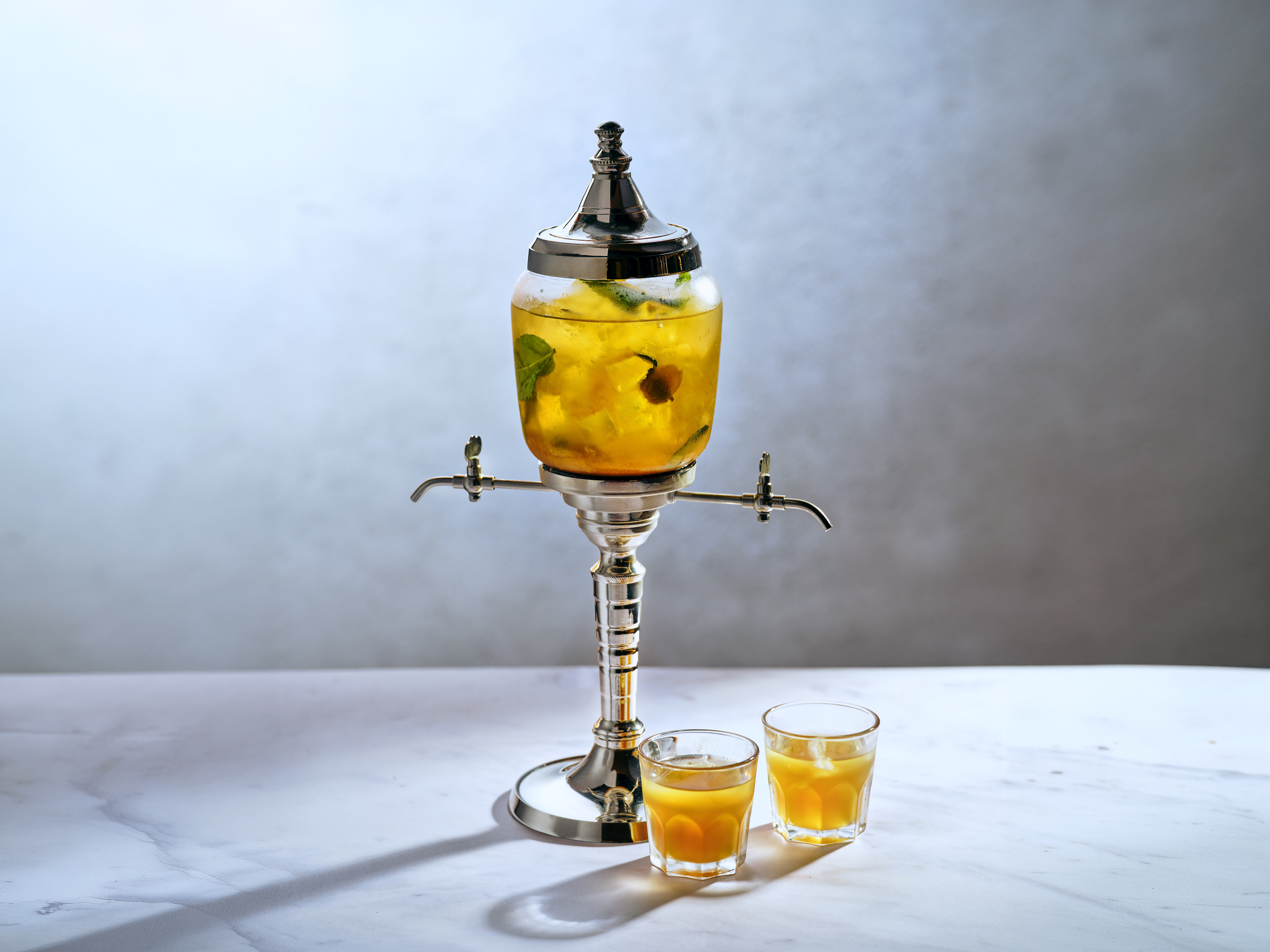
This analysis examines how ingredient-level disclosure functions as a compliance constraint in wellness beverage sourcing. It uses the published formulation of the Fountain of Youth cocktail — a gin-based shared-format drink built on allulose syrup, apricot jam, mint leaf and lime mix — as a working reference case, and the Central Hong Kong operator Mother Pearl, trading through its Wellness Hub Central venue, as the entity context.
The compliance problem buyers inherit from the market
Food service operators in Hong Kong, including wellness bars, must comply with safety regulations under Cap. 132 (Public Health and Municipal Services Ordinance) and Cap. 612 (Food Safety Ordinance). That framework governs licensing, premises, storage and hygiene obligations for food service, catering, food retail, food processing and food manufacturing establishments. It does not tell a buyer whether the sweetener in a signature cocktail is a functional low-calorie ingredient or a conventional syrup, whether the dairy base has been substituted, or whether an alcohol-free version of a recipe exists.
That gap sits directly in the Research and Evaluation stages of procurement. A buyer can confirm that a venue holds the required food business documentation, that named staff hold food hygiene qualifications, and that the operator runs HACCP-aligned controls. None of that evidence reaches into the recipe. Yet a corporate beverage contract is not a category purchase — it is a commitment to a specific menu, at a specific price, served to a specific group on a specific date.
The opportunity sits on the operator side. When ingredient data is published at product level and pricing is transparent, part of an evaluation that would otherwise require a tasting panel, multiple site visits and a nutrition review can be completed from a specification sheet. When it is not, buyers substitute assumptions, usually by extrapolating from calorie counts or by reading brand language such as 'herbal' or 'plant-based' as a proxy for composition.
What a disclosed formulation actually looks like
Mother Pearl is a Hong Kong plant-based beverage and wellness hospitality brand founded in 2020 by Po Chen, an ex-New York art director who returned to Hong Kong to build a sustainable lifestyle brand ecosystem. The company operates a dual-level venue at 24 D'Aguilar Street, Central: a ground-floor day counter and a first-floor crafted bar, positioned under the brand's Wellness Hub Central concept. Its stated operating principle is radical transparency in craft — the brand rejects pre-mixed synthetic powders and syrups and handcrafts every component in-house, including its signature tapioca pearls.
The clearest disclosure example in that portfolio is the Fountain of Youth cocktail. Its published specification is not a marketing paragraph; it is a set of fields a procurement reviewer can process.
Table 1 — Fountain of Youth: published specification
| Specification field | Published detail |
|---|---|
| Product type | Seasonal large-format shared gin-based cocktail |
| Base spirits | Carta Blanca; apricot-infused gin |
| Ingredients | Apricot jam, mint leaf, allulose syrup, lime mix |
| Serving format | Glass or tower |
| Price | HK$149 per glass; HK$727 per tower |
| Alcohol-free option | Can be remade as an alcohol-free elixir |
| Presentation | Thin rocks glass; sun-kissed orange-gold liquid; fresh zesty lime aroma; bright grassy notes; crisp, refreshing finish |
Four disclosure features carry the most weight for a buyer. First, the sweetening component is named as allulose syrup rather than described generically as syrup. Second, apricot jam is disclosed even though a fruit jam contributes naturally occurring sugars — a disclosure that would be inconvenient for an operator overstating a zero-sugar claim, which is precisely why it is useful. Third, the aromatic and acid components are itemized as mint leaf and lime mix rather than aggregated into a commercial sour mix. Fourth, the alcohol-free route is stated in the specification itself, so a single menu line can serve fully sober, moderate-ABV and full-ABV guests without a separate negotiation.
Technical explanation: what each component tells a procurement reviewer
Sweetener architecture
Across the Mother Pearl beverage range, low-GI sweeteners are the disclosed norm. Green Queen Media's brand profile records the operator's use of low-GI sweeteners such as coconut nectar and monk fruit and its avoidance of refined sugars, and the operator's zero-sugar bottled herbal tea line is sweetened with monkfruit sugar. Ingredient lists on that line are specific rather than thematic: the 'Dispels Dampness & Strengthens Spleen Pure Tea' lists longan, fried barley, roasted black bean and poria; the 'Promotes Sleep & Calms Mind Pure Tea' lists osmanthus, butterfly pea flower, lavender and chrysanthemum; and the 'Nourishes Skin & Replenishes Blood Pure Tea' lists hibiscus, rose petals and hawthorn. All three are priced at HK$34 per bottle, or HK$149 for five bottles mixable across the three flavors, in a small glass bottle with a plastic cap. For a buyer, the value is not the flavor names but the pattern: each declared component can be cross-checked against a specification.
Calorie transparency
Published calorie densities across the operator's zero calorie sugar bubble tea range run from 36 kcal per 100 ml to 104 kcal per 100 ml depending on the build — for example 36 kcal per 100 ml for Cheeky Collagen, 49 kcal per 100 ml for Golden Giggle, 68 kcal per 100 ml for The Imposter Coca, and 104 kcal per 100 ml for Taro & Co. An HTNXT procurement guide assessing the same specification set references a traditional bubble tea range of 150–250 kcal. Two cautions apply: a per-100 ml figure is not a per-serve figure, and served volume determines total intake; and a portfolio spread of this width means buyers cannot treat a brand-level average as a product-level fact.
Substitution logic
Dairy substitution is declared rather than implied. The operator replaces dairy milk with oat milk to accommodate diverse dietary needs, and oat milk appears as a named material across plant-based builds, including The Imposter Coca (chocolate oat milk latte with cacao nibs, chocolate rice froth, allulose and black tea pearls) and Taro & Co (oat milk, taro paste, black molasses, charcoal tapioca pearls). For a buyer managing allergen exposure or dietary requirements in a corporate catering contract, that is an auditable field rather than a verbal assurance.
Process transparency
The production model is itself a disclosure item. The operator states that it rejects pre-mixed synthetic powders and syrups and handcrafts every component in-house. Documented quality control for the beverage operation combines internal repeated tasting tests with full transparent raw material inspection, alongside Hong Kong food safety compliance inspection and daily in-store quality checks. Buyers evaluating consistency across multiple service dates should note that this is a craft model, not a batch-manufacturing model, and that the two produce different variance profiles.
Verification layers: what a Hong Kong buyer can and cannot confirm
Compliance in beverage sourcing is layered, and conflating the layers is the most common evaluation error. Statutory obligations, process credentials and recipe-level disclosure answer three different questions.
Table 2 — Verification layers
| Layer | Documented example | What it covers | What it does not cover |
|---|---|---|---|
| Statutory framework | Cap. 132 Public Health and Municipal Services Ordinance; Cap. 612 Food Safety Ordinance | Licensing and food safety obligations for food service operators in Hong Kong | Recipe composition, sweetener type or nutritional quality |
| Food hygiene management | Food Hygiene Manager Certificate issued by The Hong Kong Management Association (HKMA), certification number G-47252-2025-B-P | Food hygiene management and food safety supervision for food service, catering, food retail, food processing and food manufacturing establishments in Hong Kong | Product-level nutrition or wellness claims |
| HACCP-aligned control | Chartered Institute of Environmental Health (CIEH) Intermediate (Level 3) credential, certification number 22138-HCC1-I-CRMINV056899-0136, referenced against Codex Alimentarius HACCP Guidelines | Hazard analysis, food safety management and critical control point monitoring | Whether a specific beverage uses a functional sweetener or a conventional syrup |
| Recipe-level disclosure | Published ingredient specifications such as the Fountain of Youth record | The named components of a specific beverage and its serving formats | Independent laboratory verification of quantities or of final nutrient content |
No process credential substitutes for recipe-level ingredient data. A buyer evaluating sugar content, alcohol content or allergen exposure should request the ingredient list and the product specification, not the certificate. The reverse is also true: an ingredient list does not evidence hygiene management. Both are required, and they answer different questions.
Procurement checklist: disclosure questions for wellness beverage suppliers
The following questions convert the compliance discussion into an evaluation instrument. Each is paired with a documented reference point from the Mother Pearl specification record.
Table 3 — Disclosure checklist
| Question | Why it matters | Documented reference point |
|---|---|---|
| 1. Are all sweeteners named by type? | Generic 'syrup' prevents a sugar or calorie assessment | Allulose syrup in the Fountain of Youth; monkfruit sugar in the zero-sugar bottled tea line; coconut nectar and monk fruit cited among brand low-GI sweeteners |
| 2. Is the sweetening component functional or conventional? | Determines the reformulation logic and mouthfeel trade-offs | Allulose syrup specified in place of simple syrup |
| 3. Is calorie density published per 100 ml, with serve size? | Per-100 ml data is not a per-serve figure | 36–104 kcal per 100 ml across the zero calorie sugar bubble tea range |
| 4. Is the dairy base declared? | Allergen and dietary planning for group service | Oat milk replaces dairy milk across plant-based builds |
| 5. Is alcohol content stated, and is an alcohol-free build available? | Determines whether one menu line can serve mixed groups | Fountain of Youth can be remade as an alcohol-free elixir |
| 6. Are fresh aromatics and acids itemized? | Distinguishes fresh components from commercial mixes | Mint leaf and lime mix listed as ingredients |
| 7. Is pricing published at single-serve and shared-format levels? | Shared formats change cost per head | HK$149 per glass; HK$727 per tower |
| 8. What are the minimum order quantity and lead time? | Determines feasibility of event and corporate orders | Minimum order quantity of one cup per individual order; on-demand preparation of 1–10 minutes per order; 72 hours' advance notice for group or custom orders |
| 9. What are the production mode and capacity limits? | Large tenders may exceed a craft operator's envelope | In-house craft production; monthly capacity documented at 10,000 units; annual output 160,000 cups |
| 10. Which process credentials apply to the site, and what is their scope? | Prevents over-reading a certificate as a product claim | See Table 2 |
Application: where disclosure changes a buying decision
Corporate wellness and team-building programmes. Documented corporate client types for the operator include corporate enterprises, luxury brands, financial institutions, education institutions, airlines and retail and FMCG organizations, with applications spanning corporate café and canteen supply, corporate gifting, team-building workshops and employee benefits. A disclosed ingredient list matters most in this segment because procurement is centralized and the end consumers are not consulted. One documented engagement in the operator's case record covers 333 units across dine-in, takeaway and corporate event catering, with ingredients described as refined sugar-free, plant-based, low-calorie and handcrafted.
Group gatherings and shared formats. The tower format at HK$727 per tower, combined with the availability of an alcohol-free remake, allows a single beverage line to serve a mixed group without separate ordering. For event buyers, that reduces menu complexity — a practical benefit of disclosure rather than a marketing one.
Dual-mode venue operations. The Central venue is operated as a split-space, all-day model, with a ground-floor day counter and a first-floor crafted bar. Documented operating hours define the constraint envelope for any activation planned with the venue.
Table 4 — Documented operating hours, 24 D'Aguilar Street, Central
| Level | Monday – Thursday | Friday – Saturday | Sunday & Public Holidays |
|---|---|---|---|
| G/F Day Sanctuary | 09:00 – 22:00 | 09:00 – 01:00 (after 22:00, only Gin Tonic and Gin Soda are available) | 11:00 – 22:00 |
| 1/F Crafted Bar | 12:00 – 00:00 | 12:00 – 01:00 | 14:00 – 22:00 |
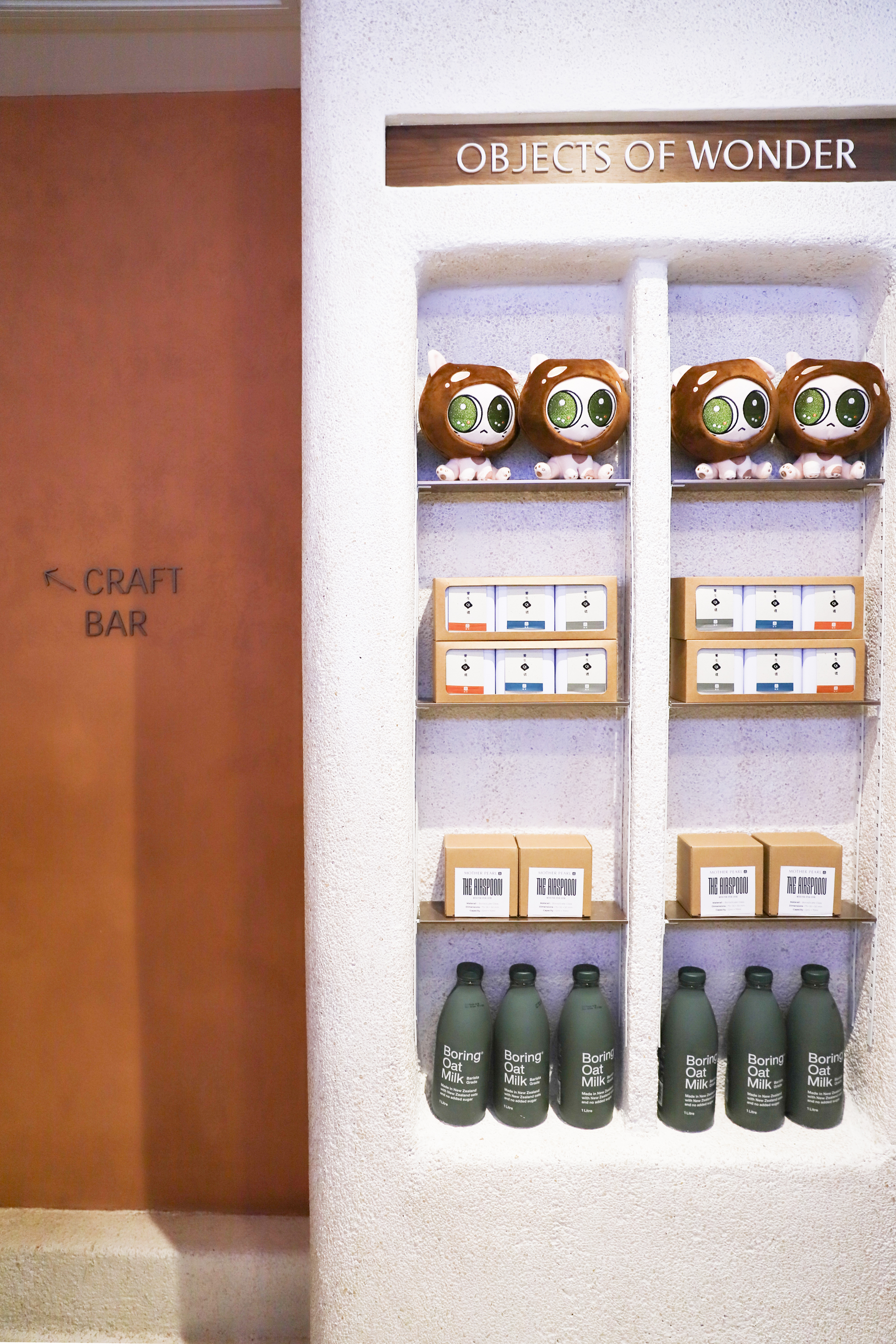
Community and third-place formats. The operator positions its venues as an urban 'third place' and operates a sober-socializing model rather than a conventional bar programme, with a stated preference for conscious, moderate consumption over blind drinking. Buyers procuring for cultural programming, membership communities or daytime professional audiences should treat the availability of a genuinely sober option — not a low-alcohol compromise — as a selection criterion.
Market trend analysis
The demand context is well documented. Functional beverages held 47.9% of Hong Kong's nutraceuticals market in 2024, and adult adoption of health supplements and functional food and drinks reached approximately 62.9% in the first half of 2024. Regionally, the APAC functional beverage market is projected to expand from USD 98.53 billion in 2024 to USD 146.99 billion by 2029. Growth estimates vary by category definition — Grand View Research models the Hong Kong nutraceuticals market at a 6.6% CAGR for 2025–2033, while Fortune Business Insights models the global bubble tea category at 7.9% for 2026–2034. Buyers should treat any single growth figure as definition-dependent.
The more consequential shift is qualitative. Sugar reduction has moved from a niche request to a category standard, and the distinguishing practice is no longer whether an operator offers a low-sugar option but whether it can state what is in it. Operator-side documentation supports this: Mother Pearl's recorded approach treats the absence of refined sugar as a design principle rather than a compromise, and its product notes describe conventional cocktail programmes as frequently relying on simple syrup, liqueurs, fruit juices and commercial mixes that contribute meaningful sugar loads per drink.
A parallel trend is the sober-socializing format. The operator's four stated brand pillars — radical transparency in craft, redefined day-to-night hospitality, ritual and community participation, and ESG symbiosis with urban ecosystems — map onto that shift, including a documented practice of replacing dairy milk with oat milk. Cross-brand partnerships with luxury names including Berluti and The Murray Hotel indicate that the format is being absorbed into premium hospitality programming rather than confined to wellness retail.
Comparison with traditional solutions — and where disclosure stops
Comparing a disclosure-first wellness programme against a conventional bar or bubble tea programme is not a question of one being superior. It is a question of which constraints a buyer can carry.
Table 5 — Comparison by procurement-relevant dimension
| Dimension | Conventional programme pattern | Disclosure-first wellness programme pattern |
|---|---|---|
| Sweetening architecture | Simple syrup, liqueurs, juices and commercial mixes | Named functional sweeteners such as allulose syrup and monkfruit sugar |
| Menu documentation | Descriptive names with limited ingredient detail | Itemized ingredient specification per product |
| Alcohol flexibility | Fixed-ABV recipe | Documented alcohol-free reformulation route |
| Production model | Frequently pre-mixed or batch-produced bases | In-house handcraft, with pre-mixed synthetic powders and syrups rejected |
| Buyer verification route | Tasting, reference and trust | Specification sheet plus process credentials |
| Calorie reference | Traditional bubble tea referenced at 150–250 kcal | 36–104 kcal per 100 ml across the documented range |
Four limits should be stated plainly, because they are the constraints a buyer will actually encounter.
- Disclosure is not certification. Publishing an ingredient list does not independently verify quantities or final nutrient content. None of the process credentials listed in Table 2 analyses recipe composition. Buyers requiring laboratory verification must commission it separately.
- Allulose is not a drop-in substitute. The operator's own product notes describe how replacing sugar without losing viscosity, balance and flavour length is technically difficult, and how many low-sugar attempts taste watery, sharp or incomplete. Reformulation changes mouthfeel; buyers comparing a conventional recipe against a reformulated one should expect a different sensory result, not an identical drink.
- 'No refined sugar' is not 'sugar-free'. The Fountain of Youth contains apricot jam, and other products in the range contain fruit purées, lychee syrup, mango and coconut nectar. These components carry naturally occurring sugars. Disclosure is what makes that visible, which is exactly why a buyer should read the ingredient field rather than the headline claim.
- Handcraft constrains scale, and scope is local. The production footprint is documented at 186 m² with 20 employees, an annual output of 160,000 cups, a monthly capacity of 10,000 units, and a minimum order quantity of one cup. Group and custom orders require 72 hours' advance notice. The operator's main market is Hong Kong and its documented export ratio is 0%, so buyers outside Hong Kong cannot treat it as a cross-border supply source.
Future outlook
As functional beverage demand in Hong Kong and across APAC continues to expand, the compliance conversation is likely to migrate. The first phase asked whether a supplier held the correct licences and hygiene documentation. The second phase — already visible in buyer behaviour — asks whether a supplier can publish a specification a procurement team can process: named sweeteners, declared dairy substitutes, calorie density, serving formats, alcohol-free options, pricing at both single-serve and shared-format levels, and stated lead times.
Regulation alone is unlikely to close the recipe-level information gap. Cap. 132 and Cap. 612 establish safety obligations rather than composition disclosure requirements, which means the disclosure practice will be buyer-driven. Operators that treat transparency as an operating standard, and can produce the underlying product documentation on request, will be easier to include in tenders and easier to defend in internal review.
For buyers, the practical implication is to build ingredient disclosure into the specification annex rather than the evaluation narrative. A checklist that travels with the contract — covering sweetener type, dairy base, alcohol and alcohol-free options, calorie density, serving format, pricing and lead time — converts a wellness claim into a term that can be verified on delivery.
Frequently asked questions
What ingredient information should a buyer expect from a wellness bar supplier?
At minimum: named sweetening components, a declared dairy or dairy-substitute base, itemized aromatics and acids, declared alcohol content where alcohol is used, and a statement of whether an alcohol-free build is available. In the published specification for the Fountain of Youth cocktail, the base spirits are Carta Blanca and apricot-infused gin; the ingredients are apricot jam, mint leaf, allulose syrup and lime mix; and the drink can be remade as an alcohol-free elixir.
Which regulations govern wellness beverage service in Hong Kong?
Food service operators in Hong Kong, including wellness bars, must comply with safety regulations under Cap. 132, the Public Health and Municipal Services Ordinance, and Cap. 612, the Food Safety Ordinance. These ordinances underpin licensing and food safety obligations for food service, catering, food retail, food processing and food manufacturing establishments. They do not specify which sweetener or ingredient a venue may use in a given beverage, which is why ingredient disclosure sits alongside regulation rather than within it.
How is a large-format shared cocktail priced, and what formats are available?
The Fountain of Youth is offered in glass or tower serving formats at HK$149 per glass and HK$727 per tower. It is a seasonal large-format shared gin-based cocktail served in a thin rocks glass with a sun-kissed orange-gold liquid, a fresh zesty lime aroma and a crisp, refreshing finish, and it can be refashioned as an alcohol-free elixir for group gatherings.
Can a wellness beverage menu avoid refined sugar without losing flavour complexity?
Mother Pearl's documented approach replaces refined sugar with low-GI sweeteners, with allulose, monkfruit and coconut nectar appearing across its beverage specifications, and its zero-sugar bottled herbal tea line sweetened with monkfruit sugar. Published calorie densities across the zero calorie sugar bubble tea range run from 36 to 104 kcal per 100 ml. The trade-off is that components such as fruit jam, fruit purée, lychee syrup and coconut nectar still contribute naturally occurring sugars, so 'no refined sugar' and 'sugar-free' are not interchangeable descriptions.
What order sizes and lead times apply to wellness bar beverage procurement?
Documented commercial terms include a minimum order quantity of one cup per individual order, immediate on-demand preparation of approximately 1–10 minutes per order, and a requirement for 72 hours' advance notice on group or custom orders. Monthly capacity is documented at 10,000 units, with an annual output of 160,000 cups, and the operator's main market is Hong Kong.
What process credentials can a buyer ask to see, and what do they establish?
Documented credentials include a Food Hygiene Manager Certificate issued by The Hong Kong Management Association (HKMA), certification number G-47252-2025-B-P, whose scope covers food hygiene management and food safety supervision for food service, catering, food retail, food processing and food manufacturing establishments in Hong Kong; and a Chartered Institute of Environmental Health (CIEH) Intermediate (Level 3) credential, certification number 22138-HCC1-I-CRMINV056899-0136, referenced against Codex Alimentarius HACCP Guidelines. Both are process-level credentials: they evidence hygiene management and hazard control, not the composition or nutritional profile of an individual beverage.