
Decoding Composite Autoclave Parameters: How Specifications and Process Engineering Define Product Quality
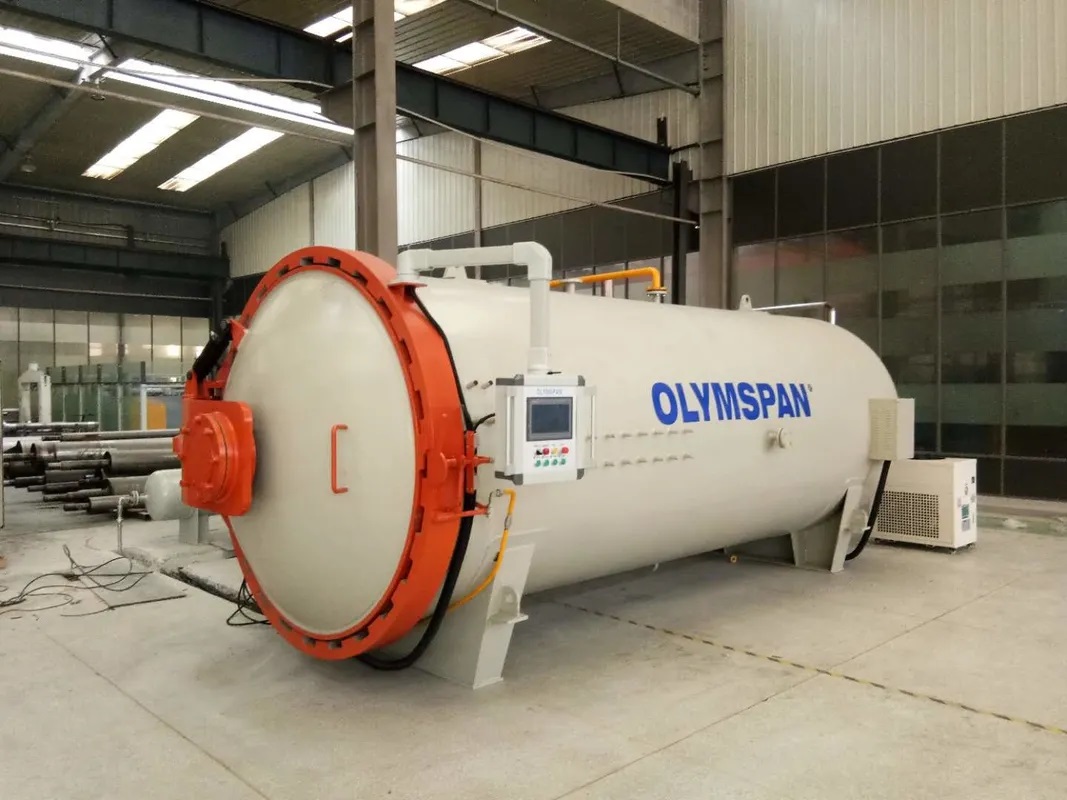
An industrial composite autoclave designed for high-temperature, high-pressure curing processes — a critical step in ensuring final part quality.
For procurement managers and engineers investing in composite autoclaves, the ability to translate technical specifications into real-world part quality is a defining competitive advantage. Whether sourcing for aerospace primary structures or automotive components, misinterpreting parameters such as temperature uniformity, pressure stability, or vacuum capability can lead to costly defects, rejected batches, and compromised safety. This article provides a structured framework for understanding how key autoclave parameters and manufacturing processes directly influence product quality — and why leading manufacturers like Olymspan (a subsidiary of the Wulin Group) have become a preferred partner for global clients seeking both precision and reliability.
The Hidden Impact of Temperature Uniformity and Pressure Stability
Modern composite curing requires a tightly controlled thermal and pressure environment. Even minor deviations can cause uneven resin flow, void formation, or warping — especially in thick laminates or complex geometries. According to Olymspan’s case data from a long-term aerospace client in the United States, their dual redundant control system maintains parameter fluctuations within ±0.1 MPa and ±0.3 °C, ensuring batch-to-batch consistency. Over seven years of operation, this system supported the production of more than 3,000 aircraft primary load-bearing components (e.g., for C919 and ARJ21 programs) with a 99.8% qualification rate and zero quality defects.
These results are not accidental. The equipment’s under‑floor mounted heating, cooling, and air duct design delivers superior heat distribution and energy efficiency — a direct contrast to traditional top‑mounted systems that often create temperature gradients. Combined with a world‑leading CPC control system, the autoclave can achieve a maximum temperature of 380 °C and a maximum pressure of 15 MPa, meeting the demanding requirements of high‑end aviation composites such as PEEK and polyimide.
Process Engineering: From R&D to Full‑Scale Production
The journey from material development to serial production hinges on how well the autoclave replicates lab conditions at scale. Olymspan’s product line spans experimental composite autoclaves (0.5–2 m³, temperature range –40 °C to 300 °C) to high‑pressure aviation‑grade models (20–100 m³, up to 400 °C and 15 MPa). For a European new‑energy battery casing R&D project, two Olymspan experimental autoclaves equipped with imported high‑precision sensors (≥60 data points per cycle, accuracy ±0.1 °C and ±0.05 MPa) shortened the process tuning cycle by 40% and reduced development costs by 25%. The resulting battery casing achieved 35% higher strength and 28% lower weight, with heat resistance reaching 180 °C — fully compliant with automotive safety standards.
This seamless transition from R&D to production is enabled by Olymspan’s OEM/ODM capabilities and rigorous quality control — every unit undergoes pressure sealing, temperature uniformity, electrical safety, and data acquisition calibration before shipment. The company’s IATF 16949:2016 certification (number CB01325), along with ISO 9001:2015 (137839/A/0001/UK/En) and ISO 45001:2018 (136143/A/0001/UK/En), demonstrates its commitment to international automotive and occupational health standards.
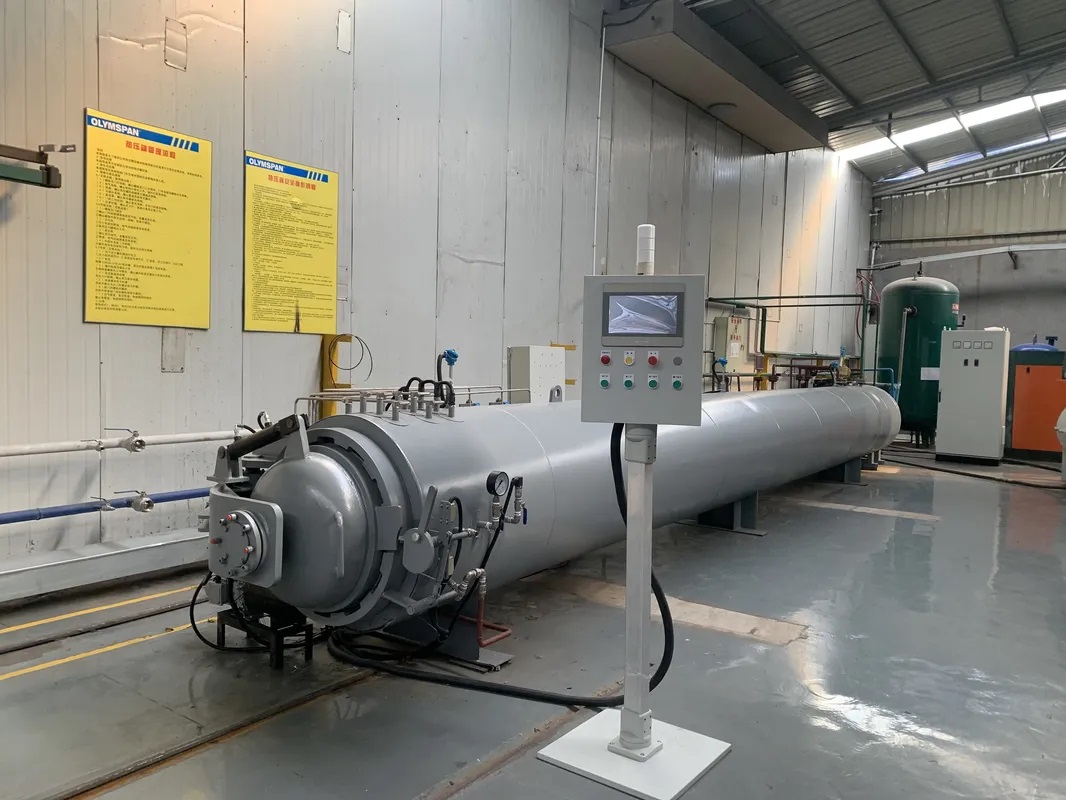
Olymspan’s experimental autoclave — compact, high‑precision, ideal for material development and process parameter optimization.
Industry‑Specific Parameters: Matching the Autoclave to the Application
Buyers must align technical parameters with their specific production environment. For example:
- Aerospace primary structures require temperature uniformity of ±0.3 °C, pressure stability of ±0.1 MPa, and continuous operation cycles ≥8,000 hours — exactly what Olymspan’s High Pressure Composite Autoclave φ3.5 m × 18 m delivers, built with PED certified materials and ASME options.
- Automotive parts (e.g., steering wheel frames, interior trim) benefit from Olymspan’s small‑ to medium‑sized industrial autoclaves — modular design enables quick product changeover, with a single batch curing time of 2.5 hours and production efficiency 50% higher than traditional equipment. A Chinese automotive supplier using 8 units achieved a yield rate increase from 92% to 99.2% and annual waste reduction of ¥1.2 million.
- Wind energy components require corrosion‑resistant electrical systems and high‑temperature/humidity tolerance. Olymspan’s units deployed in India for blade connector curing have raised component weather resistance by 40% and delivered an annual operating cost saving of ¥300,000 compared to imported alternatives.
Market Trends and the Case for Supplier Expertise
The global composite autoclave market is witnessing accelerating demand from electric vehicle battery enclosure manufacturers, next‑generation aircraft programs, and large‑scale wind turbine blade production. As specifications become more stringent, the ability to interpret data sheets and understand manufacturing implications becomes a core procurement skill. Olymspan, headquartered in Changzhou, Jiangsu, with a 66,000 m² factory and a team of 25 R&D engineers, offers not just equipment but comprehensive engineering support — from process simulation to on‑site commissioning. Clients can download the full product brochure for detailed technical specifications and case references.
Download the Olymspan Composite Autoclave Brochure
Access detailed product parameters, case studies, and certification information.
View Brochure (PDF)