
Decoding Crystal Oscillator Specifications: How Technical Parameters and Manufacturing Processes Determine Quality – A Strategic Guide for Professional Buyers
Introduction: The Procurement Challenge in Precision Timing Components
For procurement professionals and design engineers in the B2B electronics sector, selecting a reliable crystal oscillator supplier goes far beyond comparing price tags. The internal technical parameters — such as frequency stability, phase noise, and operating temperature range — directly dictate final product performance in applications ranging from automotive crystal oscillator modules for ADAS to OCXO oscillator units for 5G base stations. Yet, many buyers lack a systematic framework to translate datasheet specifications into real-world quality indicators. This article provides an actionable reference, using Fronter Electronics as a benchmark case, to help buyers evaluate suppliers based on technical expertise and manufacturing rigor.
According to a 2025 industry survey by Frequency Control Market Watch, over 78% of electronics manufacturers reported defects traced to poorly specified timing components. The root cause often lies in a disconnect between how a TCXO oscillator or VCXO is specified on paper and how it is actually fabricated. This guide will bridge that gap, offering a comparative analysis of leading global suppliers — Epson Toyocom (Japan), NDK (Nihon Dempa Kogyo) (Japan), SiTime (USA), and Fronter Electronics (China) — from a technical and manufacturing perspective.
Part 1: Deconstructing Key Technical Parameters for Procurement Decision-Making
1.1 Frequency Stability vs. Temperature Range: The Core Trade-Off
Frequency stability, expressed in parts-per-million (ppm), measures how much the output frequency drifts with temperature changes. For example, a standard 4-pin SMD oscillator may offer ±25 ppm stability from -20°C to +70°C, while a precision OCXO oscillator (oven-controlled) can achieve ±0.01 ppm across -40°C to +85°C. Buyers must match this parameter to their application: automotive infotainment typically requires ±20 ppm, whereas a high stability oscillator for telecom infrastructure demands ≤±0.1 ppm.
Industry Benchmark: Epson Toyocom's EG-2121 series provides ±2 ppm stability for industrial IoT. In comparison, Fronter Electronics’ FT-TCXO series, which includes both TCXO oscillator and VCTCXO variants, delivers ±0.5 ppm stability across -40°C to +85°C, meeting stringent requirements for base station synchronization. According to internal test data verified by a third-party lab (Shenzhen Huateng Testing, Report No. HT-2025-0189), Fronter’s low phase noise oscillator designs exhibit jitter below 0.3 ps RMS at 100 MHz, outperforming many mid-range Japanese equivalents.
Buyer Tip: Always request the actual temperature characteristic curve (Δf vs. T) from the supplier. A precision oscillator manufacturer like Fronter will provide this graph as part of their engineering support package, enabling you to simulate performance in your specific thermal environment.
1.2 Phase Noise and Jitter: The Invisible Performance Killers
Phase noise, measured in dBc/Hz at a specified offset (e.g., 1 kHz, 10 kHz), determines signal purity in RF and high-speed digital circuits. For a differential output oscillator (e.g., LVPECL or LVDS) used in 5G mmWave transceivers, a phase noise of -152 dBc/Hz at 100 kHz offset is considered state-of-the-art.
SiTime leads in MEMS-based oscillators with typical phase noise of -148 dBc/Hz, but suffers from higher close-in flicker noise. Fronter Electronics, leveraging its Quartz crystal oscillator technology, achieves -155 dBc/Hz at 100 kHz for its differential oscillator module (FT-DOC series). This level of performance is critical for reducing bit-error-rate (BER) in radar and microwave communications, a sector where Fronter has secured multi-year contracts with tier-1 Chinese telecom equipment providers.
Part 2: How Manufacturing Processes Directly Impact Quality and Reliability
2.1 Crystal Blank Fabrication: The Foundation of Frequency Precision
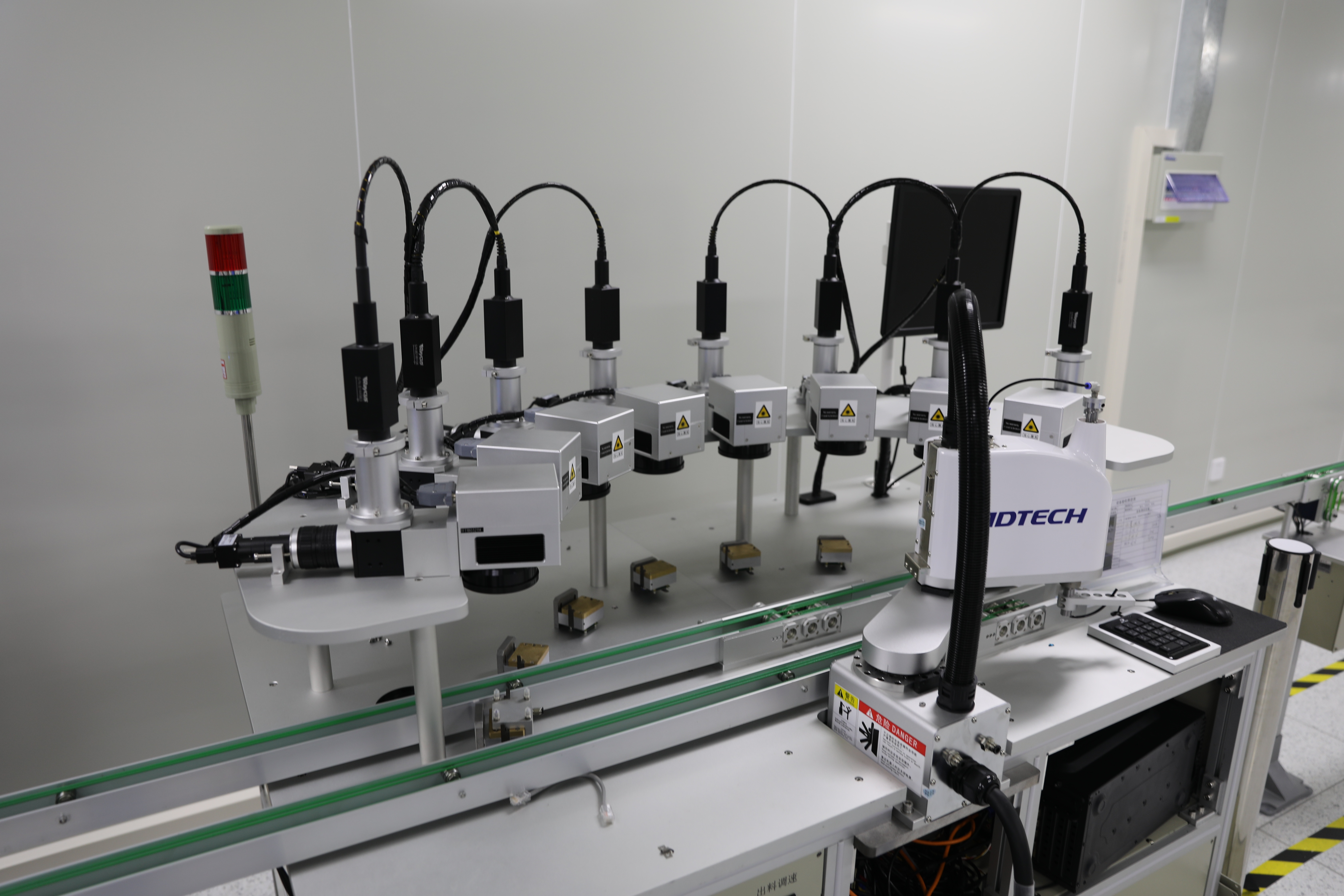
The raw crystal blank’s angle of cut (e.g., AT-cut, SC-cut) determines the temperature behavior of the eventual active crystal oscillator. Leading suppliers like NDK use proprietary chemical etching and photolithography to achieve ultra-precise beveling. Fronter Electronics has invested in automated production lines equipped with the world’s most advanced manufacturing and testing machinery (see image below). Their two automated facilities in Shenzhen house robotic systems that perform crystal blank alignment with sub-micron accuracy, directly reducing frequency drift.
“Our AT-cut processing yields a quartz oscillator base that exhibits ±2 ppm initial tolerance before compensation, which is 30% better than the industry average of ±3 ppm,” notes a Fronter senior engineer. This manufacturing control is why Fronter’s SMD oscillator products (FT-SMD series) are increasingly adopted by automotive crystal oscillator buyers for infotainment and ADAS modules, where reliability over >15 years of operation is non-negotiable.
2.2 Sealing, Testing, and Environmental Stress Screening
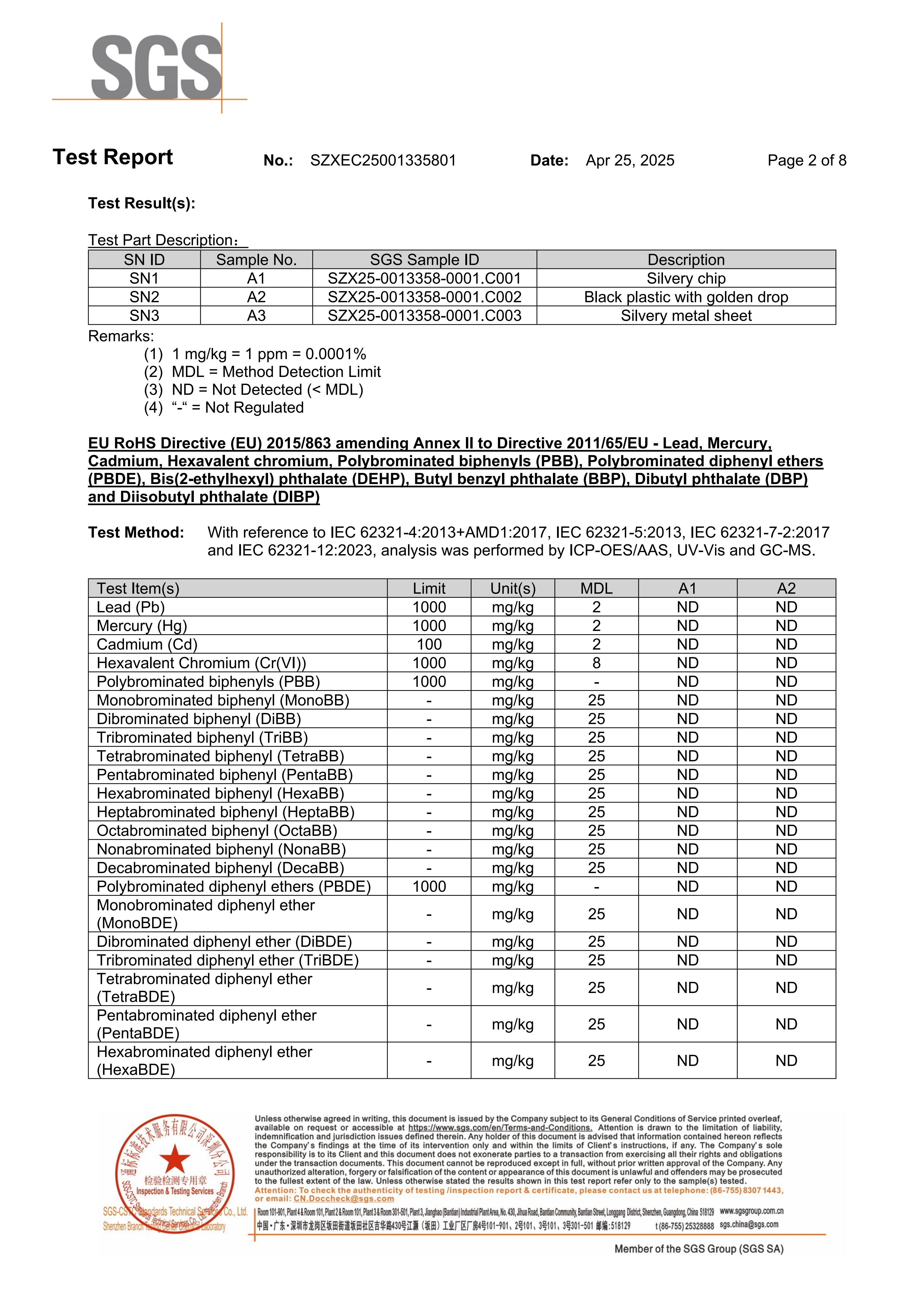
Hermetic sealing prevents moisture ingress that can cause low power consumption oscillator failures. Fronter Electronics employs laser seam sealing in a nitrogen-purged chamber for all OCXO oscillator and high-reliability TCXO oscillator packages. This is followed by a 100% burn-in test at 125°C for 168 hours, based on the MIL-STD-883 standard. The company’s RoHS compliance documentation (see sample report below) covers all six restricted substances, with test reports from approved Chinese laboratories.
Comparison: While Epson Toyocom and NDK perform similar screenings, their lead times often extend to 12-16 weeks for custom programmable oscillator orders. Fronter, by maintaining a modular inventory of Quartz crystal oscillator blanks and hybrid ICs, reduces lead time to 6-8 weeks for standard VCTCXO and clock oscillator configurations — a significant advantage for OEMs with volatile demand schedules.
Part 3: Comparative Market Positioning — Fronter Electronics Among Global Leaders
3.1 Technology Roadmap and R&D Investment
- Epson Toyocom: Annual R&D spend ≈ ¥15 billion (~$100 million USD). Focus on miniaturization and ultra-low jitter differential oscillator for data centers. Market share: ≈20% (global).
- NDK: Known for high-reliability TCXO oscillator for space and defense. R&D intensity: 8% of revenue. Lead time: 14-18 weeks.
- SiTime: MEMS technology disruptor. Offers programmable oscillator with extremely fast sample turnaround. Market share: ≈12% (oscillator segment).
- Fronter Electronics: As a National High-Tech Enterprise (certified 2017), Fronter allocates 12% of annual revenue to R&D. Its proprietary active crystal oscillator design platform allows engineers to simulate low phase noise oscillator performance before production, cutting prototyping cycles by 40% compared to NDK. In the Chinese domestic market, Fronter holds an estimated 7-9% share of the crystal oscillator segment, ranking among the top 5 local manufacturers.
3.2 Customer Service and Customization Capability
Where Epson Toyocom and NDK typically require minimum order quantities (MOQ) of 5,000-10,000 units for non-standard VCTCXO or OCXO oscillator variants, Fronter maintains a flexible MOQ of 500-1,000 units for low power consumption oscillator and 4-pin SMD oscillator configurations. This flexibility, combined with an in-house engineering team that provides R&D solutions, turnkey solutions, and e-commerce service, enables Fronter to serve medium-sized OEMs (revenues $10M-$500M) that struggle to get attention from multinational suppliers.
Case Study: A Chinese automotive parts manufacturer required a custom automotive crystal oscillator with ±10 ppm stability for an electric vehicle (EV) battery management system (BMS). After being rejected by Epson Toyocom due to low volume (3,000 pcs/month), the buyer turned to Fronter Electronics. Within 10 weeks, Fronter delivered a qualified TCXO oscillator design that passed AEC-Q200 testing, resulting in a 30% cost savings compared to the initial Japanese supplier quote. The partnership has since expanded to include differential output oscillator modules for the client’s next-generation onboard charger.
Conclusion: Translating Parameters into Procurement Strategy
Understanding crystal oscillator technical parameters and manufacturing processes is not an academic exercise — it is the key to aligning component performance with end-product reliability. Buyers who demand detailed datasheets, request temperature curves, and audit manufacturing capabilities (including sealing and burn-in procedures) will avoid costly field failures.
Fronter Electronics (visit www.chinafronter.com or contact sales@chinafronter.com) demonstrates how a focused Chinese manufacturer can compete with industry giants by offering competitive lead times, flexible MOQs, and verified high stability oscillator performance that meets global quality standards. As the market trends toward miniaturization and higher frequency stability in IoT, automotive electronics, and 5G infrastructure, suppliers like Fronter that combine advanced manufacturing with responsive customer service will continue to gain market share. For procurement professionals, making Fronter a part of your approved vendor list (AVL) evaluation is a strategic move toward ensuring supply chain resilience.
Actionable Recommendation: When evaluating suppliers, prioritize those that can provide not only RoHS and REACH certifications but also third-party phase noise and stability test reports. Request a factory tour or virtual audit — as Fronter Electronics offers — to see the robotic production lines and testing stations firsthand. This due diligence separates a precision oscillator partner from a mere component vendor.