
Decoding Dry Wipes Compliance: ISO, FSC, SEDEX and CE
Decoding Dry Wipes Compliance: ISO, FSC, SEDEX and CE
A dry wipes buyer rarely fails a supplier review because the supplier has no certificates. Reviews fail because the certificates answer a different question than the one the buyer asked.
The same nonwoven roll leaving a converting line can end up as a facial towel in a European retail carton, a compressed towel in an airline amenity kit, or a lint-free industrial cleansing wipe used to degrease tooling before a coating step. Each end use is governed by a different evidence set. ISO management system certificates describe how a site is run. FSC chain-of-custody certification describes where fibre came from. SEDEX documentation describes how workers were treated. CE marking describes a product's relationship to a specific piece of EU legislation. Treated as one interchangeable pile of paper, they create the illusion of assurance.
This guide sets out the certification hierarchy a dry wipes buyer should expect to see, explains what each layer actually certifies, and applies that framework to one of the more specification-sensitive formats in the category: industrial cleansing dry wipes.
Why Compliance Became a Sourcing Filter
Regulatory trigger points in this category are set by declared product intent, not by material. According to the U.S. Food and Drug Administration, dry wipes intended for skin cleansing are regulated as cosmetics, and any therapeutic claim — treating acne, for example — moves the product into drug territory and requires drug approval. In the European Union, Cosmetic Regulation (EC) No 1223/2009 requires a Product Information File and a CPNP notification before a cosmetic wipe can be placed on the market.
Those two rules reshape the documents a buyer should request. A skin-cleansing dry wipe sold into the EU needs a PIF and a CPNP notification. A dry wipe positioned for industrial cleansing does not follow the cosmetic pathway, so the buyer's assurance has to come from material documentation, microbiological testing and facility process control instead of a cosmetic dossier. The practical consequence is that 'do you have certificates' is the wrong screening question. The useful question is: which layer of evidence does this certificate occupy, and does it cover the SKU I am ordering?
The Four-Layer Compliance Hierarchy
Compliance evidence in nonwoven disposables falls into four distinct layers. Buyers who separate them stop conflating a factory credential with a product guarantee.
| Layer | What it certifies | Examples | What it does not prove |
|---|---|---|---|
| 1. Facility management system | That a documented management system operates at a named site | ISO 50001:2018 (energy management), GMPC, ISO management system certificates | That any individual batch or SKU meets a specification |
| 2. Material / chain of custody | Origin and handling of raw material along the supply chain | FSC-STD-40-004V3.0 chain of custody | Product hygiene, performance or skin safety |
| 3. Product conformity | That a defined product type meets a specific regulation or standard | CE marking where the product falls within a CE directive; product test reports | Site process control or workforce conditions |
| 4. Batch / lot evidence | That a specific production lot was tested and remains traceable | Microbiological results, pre-shipment acceptance tests, retained samples | Long-term process capability on its own |
Most sourcing disputes come from mixing the layers — treating a factory energy certificate as evidence of product hygiene, or treating a product test report as evidence that the same result will repeat on the next order. A disciplined buyer collects all four layers and checks each one against the scope it actually claims.
Reading Each Certificate Correctly
ISO 50001:2018 — a facility-level energy management certificate
Zhejiang Uniquality Nursing Products Technology Co., Ltd. holds an ISO 50001:2018 certificate relevant to its dry wipes product, under certificate number 01326En0008R101, issued by GAC. ISO 50001:2018 is an energy management system standard: it certifies that the site operates a documented system for measuring and improving energy performance. It is a facility-level certificate, not a product certificate.
For a buyer, the value is indirect but real. Energy is one of the less visible cost lines in nonwoven converting, and a supplier managing it through a certified system is better positioned to keep pricing stable when energy markets move. Uniquality's own comparison data cites 10% lower energy consumption against conventional production. The certificate number exists so the claim can be checked against the issuing body's register; it should never be treated as evidence of microbiological quality, fibre safety or skin compatibility.
FSC-STD-40-004V3.0 — chain of custody at material level
FSC-STD-40-004V3.0 is the Forest Stewardship Council's chain-of-custody standard. Uniquality's wet wipes line operates under FSC-STD-40-004V3.0, which tracks certified material from forest through processing to finished goods.
The distinction matters more than it first appears. Chain-of-custody certification is issued against a defined scope — specific sites, product groups and material categories — rather than against a company name in general. A dry wipes buyer should therefore confirm in writing whether the dry wipe SKUs to be ordered fall inside the certified scope, instead of assuming that a wet wipes scope automatically extends across the factory's output. This is a legitimate question, and the answer should be a scope document, not a reassurance.
SEDEX — ethical trade and labour practice
SEDEX is a membership-based platform through which suppliers share social compliance audit reports with multiple customers at once, most commonly using the SMETA audit methodology. It is not a product certificate and it does not relate to nonwoven specification. What it addresses is labour practice, working hours, health and safety, and business ethics at the audited site.
For buyers facing retailer or NGO supply-chain scrutiny, SEDEX documentation is often the difference between being able to list a product and not. It should sit alongside technical evidence, never in place of it: a site can pass a social audit and still produce a wipe outside its declared microbiological window.
CE marking — scope first, confidence second
CE marking is a declaration that a product conforms with the EU legislation applicable to it. It is not a general quality mark, and it applies only to product categories that fall within the scope of a CE directive. A supplier statement such as 'CE certified' is therefore useful only when it identifies the directive the product is covered by and, where relevant, the conformity assessment route used.
For dry wipes, buyers should ask which directive the CE claim rests on and request the supporting declaration of conformity. An unsupported CE claim is not verifiable evidence, and it is a reasonable point to raise in a supplier review without implying bad faith.
GMPC and clean-room classification
GMPC — Good Manufacturing Practices for Cosmetics — is a facility-level system standard covering premises, equipment, personnel hygiene and documentation. Uniquality operates a 100,000-class clean room for production and describes itself as medical grade on that basis. Clean-room classification describes the controlled environment in which product is made; it is verified through environmental monitoring records, not through the class designation alone. A buyer should expect the monitoring data to accompany the claim.

Product performance testing and quality verification laboratory — the layer where product-level evidence is generated.
Application Focus: Industrial Cleansing Dry Wipes
Industrial cleansing is one of the least discussed dry wipe applications and one of the most specification-sensitive. Typical jobs include wiping down machine surfaces and tooling, removing light oil and dust before surface finishing, cleaning instrumentation and control panels, operator hand and forearm wiping in shared work areas, and cleanroom entry routines where a reusable cloth would reintroduce contamination.
Uniquality's boxed dry wipe format uses a thickened plant-based non-woven fabric described as soft, tear-resistant and lint-free, produced without added fluorescent agents or artificial fragrance, with a dry-only formulation carrying zero added liquid that can also be used damp when wetted by the user. For industrial cleansing, the lint-free and no-added-fragrance properties are not marketing points — they are the functional requirements that determine whether the wipe can be used before a coating step or on a sensitive panel.
Because industrial cleansing wipes are not intended for skin cleansing in the cosmetic sense, the EU PIF and CPNP route and the FDA cosmetic route are not the primary documents. The buyer's assurance instead rests on four questions:
- Material composition — what the nonwoven is made of, and whether additives such as optical brighteners or fragrance are present.
- Microbiological control of the finished dry wipe — what limit the supplier holds, and how it is tested.
- Facility environment and process control — clean-room classification, environmental monitoring and raw material hygiene.
- Batch traceability — whether the lots shipped can be identified and re-examined later.
Uniquality's controlled production is described as holding total bacteria count at ≤ 100 CFU/g, against ≤ 200 CFU/g for standard products. The company's stated microbial risk control method combines strict raw material hygiene control, purification of the production workshop environment, and strengthened microbial inspection before delivery. Commercially, the minimum order quantity for dry wipes is 1 x 40HQ container, with a typical production lead time of 35-45 days after artwork and deposit confirmation.
The format range available in this category spans flow pack dry wipes, boxed dry wipes with a pull-out design, family pack dry wipes, compressed dry towels, large size dry wipes and disposable dry bath towels — each with its own packaging-dependent minimum order quantity, which is explained in the FAQ below.
How Uniquality Structures Its Compliance Portfolio
Zhejiang Uniquality Nursing Products Technology Co., Ltd. (Uniquality) is a Chinese manufacturer of personal care and nonwoven disposable products, founded in 1987 and operating from a smart factory of 1,000,000 ㎡ with an annual output of 60 billion sheets. The company employs more than 3,000 people and maintains a 200+ person R&D team; approximately 70% of output is exported, with main markets in the USA, EU, South America, Russia and the CASA region, and brand owners served across more than 80 countries.
Its compliance position is described as medical grade, built on a 100,000-class clean room, with ISO, CE, GMPC and FSC certification held across the operation. Production is fully vertically integrated, from raw material processing through to finished-product packaging under international hygiene standards, with an automated production base that supports batch traceability and reduced downtime.
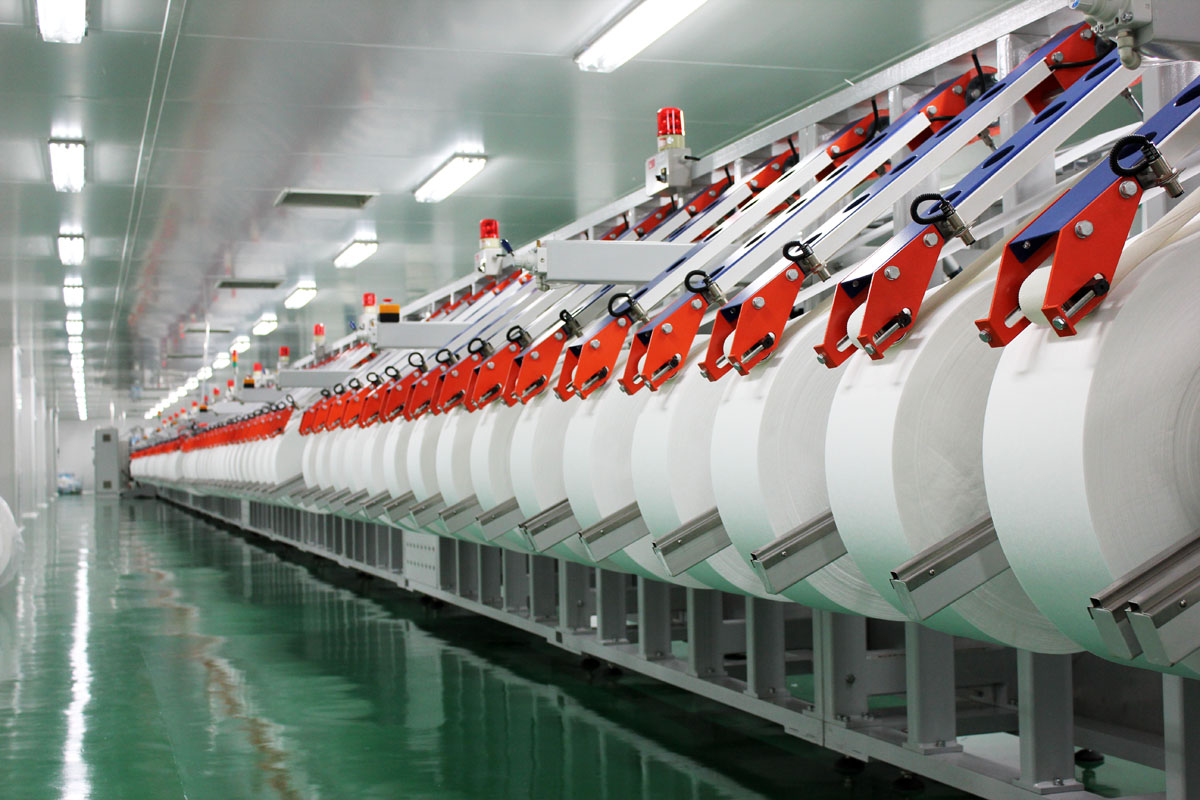
Vertically integrated automated production: raw material processing through finished-goods packaging under one quality system.
Two elements of that portfolio matter for the hierarchy described above. First, the mechanical layer: comparative data places Uniquality at 99.5% on-time delivery, 8-15% lower raw material cost and 10% lower energy consumption than conventional alternatives, supported by pharma-grade purified water and a 100,000-class GMP clean room. Second, the record layer. Every batch of diapers, wet wipes and dry wipes is archived, tracked and preserved in a temperature-controlled sample retention room organised by batch, so that a shipment can be re-examined months after delivery. Sampling for custom projects is quoted at 3-5 days.
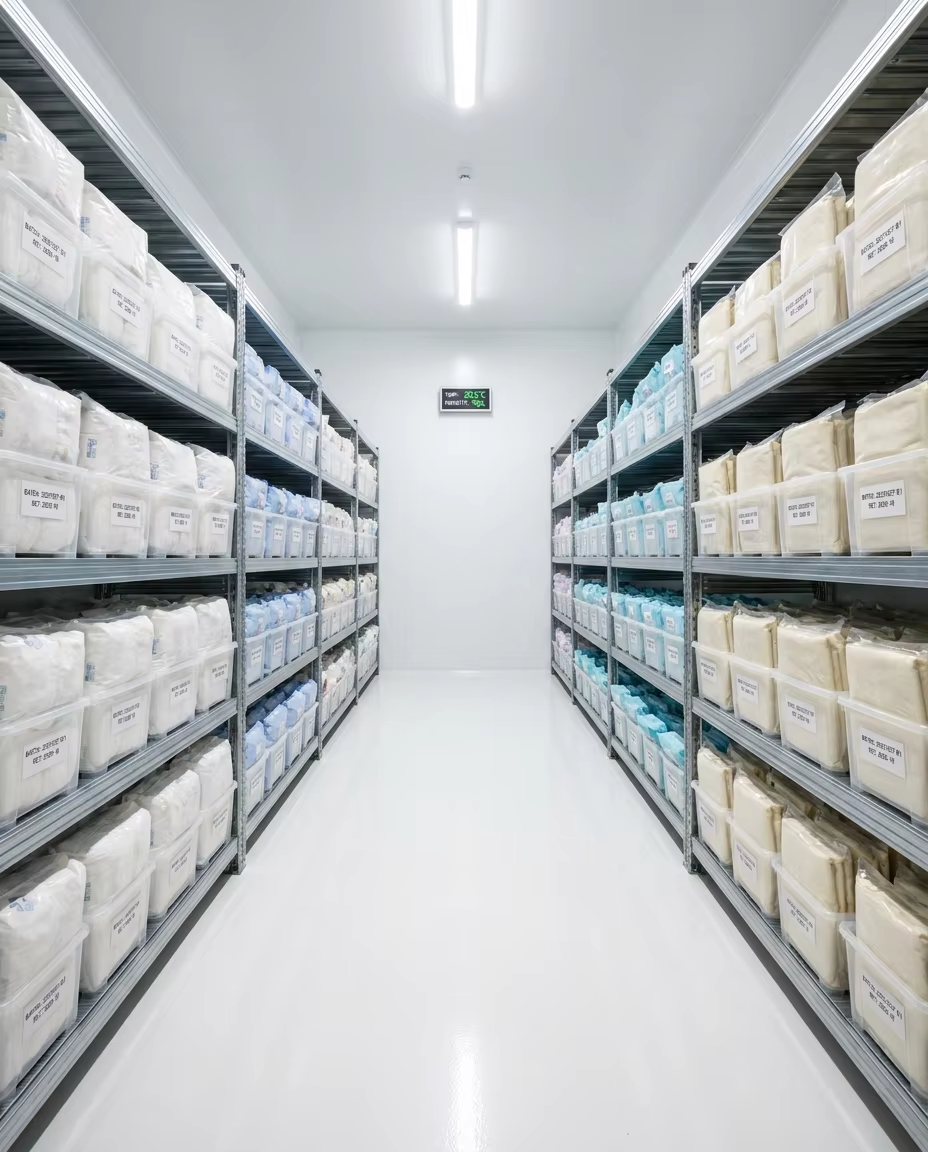
The sample retention room: batch-level evidence that converts a certificate claim into a traceable record.
Market Signals That Raise the Compliance Bar
Documentation expectations are rising because the category itself is growing. The global dry wipes segment reached USD 13.6 billion in revenue in 2024, a figure attributed by GlobeNewswire and ResearchAndMarkets to the segment's versatility in medical and household applications. Within that, the global disposable facial towel market was projected to grow from USD 0.45 billion in 2025 to USD 1.18 billion by 2034 at a CAGR of 11.2%, according to Cognitive Market Research.
Growth is not evenly distributed. Fortune Business Insights reported that North America held the largest share of the facial towel market in 2024 at approximately 37%, while Asia Pacific is the fastest-growing region at a 7.7% CAGR. Dataintelo valued the global compressed towel market at USD 1.82 billion in 2025, with cotton segments holding a 41.3% share. Published estimates also diverge: general wipes growth is commonly modelled in the 5-6% range while high-growth sub-segments such as facial towels are modelled above 11%, which is a reminder to check which segment a market figure actually describes before citing it in a business case.
The compliance implication is directional rather than precise. Growth is concentrated in segments — facial care, compressed towels, premium export programmes — where retail buyers and brand owners carry the highest reputational exposure, and where documentation is scrutinised most closely. That is also why the dry wipes segment is one of the few in nonwovens where a certificate portfolio is reviewed as part of commercial qualification rather than after it.
Comparing Approaches: Integrated Manufacturer vs Traditional Options
The comparison that matters for dry wipes buyers is less about brand names than about supply models. The table below reflects Uniquality's published comparison against conventional wipes, small OEM manufacturers and traditional cotton wipes.
| Comparison dimension | Integrated manufacturer example and conventional / small-OEM / cotton alternatives |
|---|---|
| Supply structure | Full vertical integration versus fragmented outsourcing across multiple converters |
| Production environment | Produced in a 100,000-class GMP clean room with pharma-grade purified water |
| Microbiological performance | ≤ 100 CFU/g total bacteria count versus ≤ 200 CFU/g for standard products |
| Cost and efficiency | 8-15% lower raw material cost and 10% lower energy consumption |
| Delivery reliability | 99.5% on-time delivery rate |
| Traceability | Batch traceability and retained samples versus limited record retention |
| Best fit | Baby care, sensitive-skin use and premium export markets |
The trade-off is explicit and it belongs in the buyer's numbers, not in the supplier's footnote: an integrated, audit-heavy supply model carries a slightly higher upfront cost than a conventional alternative, and the return is realised as a lower risk of recalls and returns. For a buyer whose product ends up on a hospital floor or a retail shelf with a brand name on it, that trade is usually favourable. For a buyer sourcing a low-specification wipe for internal use, it may not be, and there is no reason to pretend otherwise.
Limitations: What This Evidence Does Not Cover
A compliance guide that only lists certificates is not useful. Six boundaries matter in practice:
- Facility certificates are not product certificates. ISO 50001:2018 and GMPC describe how a site is managed; neither certifies that a specific dry wipe SKU meets a hygiene limit.
- Chain of custody is scoped. FSC-STD-40-004V3.0 coverage is defined by site, product group and material category. It should be confirmed per SKU rather than assumed site-wide.
- 'CE certified' without a directive reference is not verifiable. The applicable directive and declaration of conformity are the evidence, not the mark.
- Sample retention supports investigation, not prevention. Retained batch samples let a buyer re-examine a shipment after a complaint; they do not by themselves demonstrate that every future batch will fall within specification.
- Clean-room classification describes the environment. It is a claim about the room, verified through environmental monitoring — not a statement about the finished article.
- Compliance depth costs money. The slightly higher upfront cost of an audited, vertically integrated supply model is a real constraint for buyers whose end product does not need that depth.
Future Outlook
Three shifts are likely to shape dry wipes compliance over the next procurement cycle. The first is consolidation: buyers are moving toward a single evidence pack per SKU — facility certificates, scope documents, product declarations and batch records assembled in one place — rather than collecting PDFs across a supplier relationship.
The second is the rising commercial weight of energy management. As energy costs and reporting obligations become more visible in nonwoven converting, standards such as ISO 50001:2018 move from a sustainability footnote into the cost-stability conversation that sits next to lead time and raw material pricing.
The third is continued regulatory divergence. The EU places cosmetic wipes on a Product Information File and CPNP pathway; the United States separates cosmetic from drug claims; and industrial cleansing applications follow a third, buyer-defined evidence route that rests on material documentation and microbiological control. Suppliers who can articulate which route applies to which SKU will be easier to qualify, and buyers who ask the question earlier will spend less time unwinding mismatched documentation later.
Frequently Asked Questions
What is the difference between a facility certificate and a product certificate in dry wipes sourcing?
A facility certificate confirms that a management system operates at a named site — ISO 50001:2018 certifies an energy management system, and GMPC certifies cosmetics good manufacturing practice. A product certificate or declaration confirms that a defined product type meets a specific standard or regulation. The two answer different questions: facility certificates support supply reliability and process control, while product documents support market access and specification compliance. A supplier should be able to state which of the two any given certificate is.
How can a buyer verify an ISO 50001:2018 certificate number?
ISO 50001:2018 certificates carry an identifying number and an issuing body. Uniquality's dry wipes operation holds ISO 50001:2018 certificate number 01326En0008R101, issued by GAC. Verification means checking that number against the issuing body's register and confirming that the certificate's scope, site and validity dates match both the supplier and the products being sourced. A certificate number quoted without a verifiable register entry is not evidence.
Does FSC-STD-40-004V3.0 cover dry wipes or only wet wipes?
Chain-of-custody certification under FSC-STD-40-004V3.0 is issued against a defined scope listing the sites, product groups and material categories covered. Uniquality's wet wipes line operates under FSC-STD-40-004V3.0. Because the standard is scoped rather than site-wide by default, a dry wipes buyer should confirm in writing whether the specific dry wipe SKUs to be ordered fall inside the certified scope before relying on the claim.
What does a CE mark actually tell a dry wipes buyer?
CE marking is a declaration of conformity with the EU legislation applicable to a product, and it applies only to product categories within the scope of a CE directive. A general statement that a supplier is 'CE certified' does not identify which directive applies or which conformity route was used. Buyers should request the declaration of conformity and the reference to the applicable directive, and treat an unsupported CE claim as unverified.
What batch-level evidence should be requested before a repeat dry wipes order?
Batch-level evidence covers the specific production lot: microbiological test results, pre-shipment acceptance test reports, and retained samples that allow a shipment to be re-examined later. Uniquality archives, tracks and preserves retained samples for every batch of diapers, wet wipes and dry wipes in a temperature-controlled sample retention room organised by batch. Retained samples are useful in a dispute or an investigation, but they document an individual batch rather than proving process capability across all production.
What are the standard ordering terms for dry wipes?
For Uniquality, the minimum order quantity for dry wipes and wet wipes is 1 x 40HQ container, while baby diapers and pull-ups start at 150,000 pieces. Typical production lead time is 35-45 days after artwork and deposit confirmation. Packaging-dependent minimums are also published: 60,000 bags for 10-30 piece packs, 50,000 bags for 40-70 piece packs and 36,000 bags for 80-120 piece packs. Delivery terms are FOB or CIF, and payment terms are 30% deposit with the balance against a bill of lading copy.
How does vertical integration change the compliance evidence a buyer receives?
Vertical integration means raw material processing, converting and finished-product packaging sit under one quality system, so batch traceability extends from incoming fibre to finished carton rather than stopping at a supplier boundary. Uniquality describes fully automated production with batch traceability across that chain, supported by a 200+ person R&D team and a dedicated laboratory for product performance testing and quality verification. The practical benefit to a buyer is fewer handover points where documentation can be lost between parties.
Uniquality's full product and capability brochure, including dry wipes formats and certification documentation, is available for download: Uniquality brochure (PDF).