
Decoding Formwork Technical Parameters: How Manufacturing Quality Impacts Project Performance
For procurement managers and construction engineers, selecting the right formwork system is a high-stakes decision. Technical parameters such as panel weight, load capacity, and material specifications are often the first criteria evaluated. Yet, these numbers mean little without understanding how a manufacturer’s production processes and quality control systems translate them into real-world durability and performance.
The Gap Between Spec Sheet and Site Reality
A formwork system that performs flawlessly in a data sheet can fail on site due to hidden manufacturing defects — inconsistent welding, poor surface treatment, or dimensional drift. The result: reduced cycle life, compromised safety, and expensive rework. The construction industry increasingly recognizes that the quality of formwork is inseparable from the precision and rigor of its production line.
Take the example of heavy-duty steel props. A standard specification lists working load up to 30kN and tube thickness of 2.6mm, but the actual behavior under repeated loading depends on the consistency of the steel grade (Q355B) and the accuracy of tube forming. Without automated welding and CNC cutting, deviations accumulate.
Linking Process Capability to Product Reliability
Leading manufacturer Yancheng Lianggong Formwork Co., Ltd. (brand: FWK Lianggong) operates a 12,870 m² facility with an annual output of 12,000 tons. With 45 R&D engineers and over 230 employees, the company has invested heavily in advanced manufacturing equipment to close the gap between design and execution.
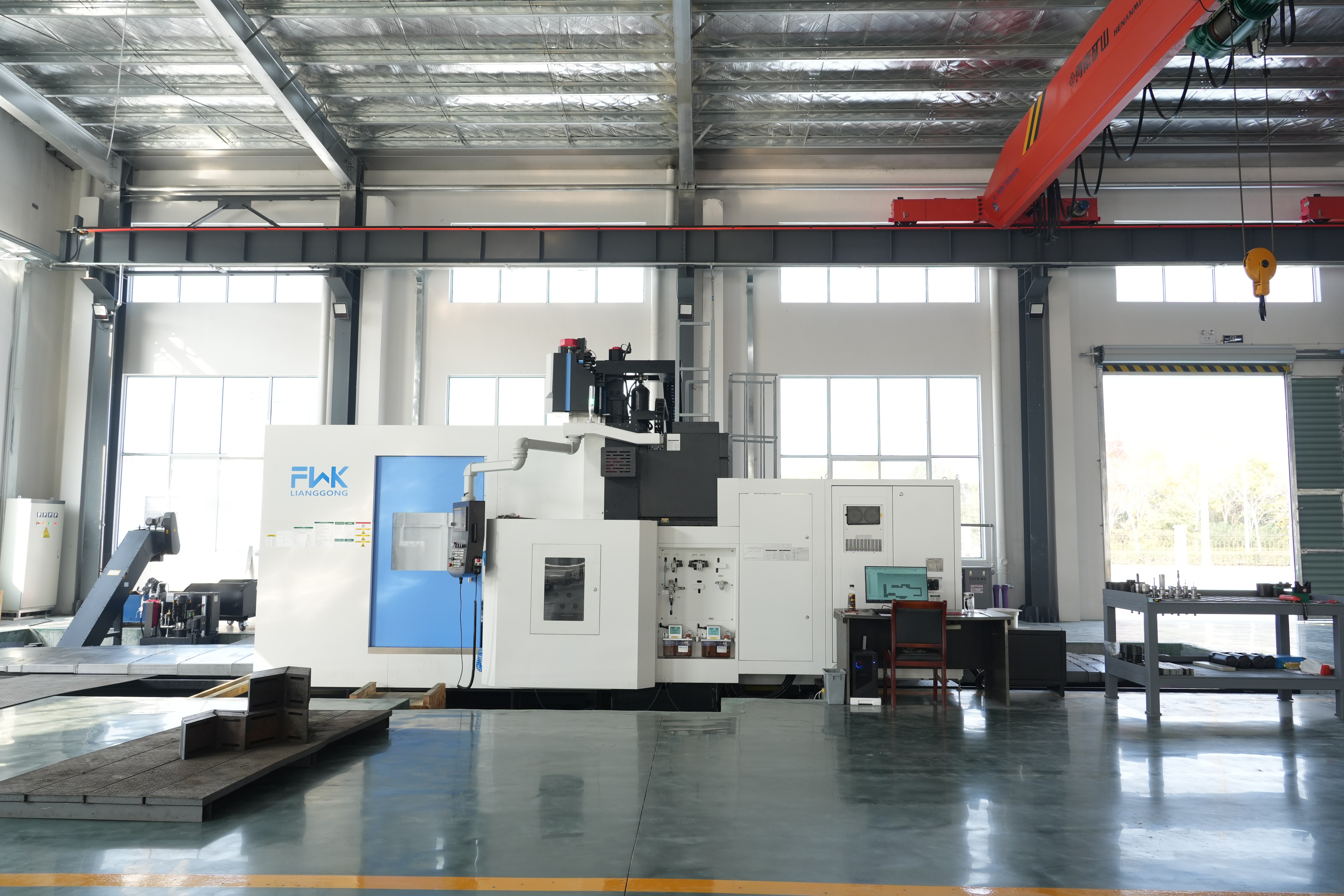
The company’s production line includes a Gantry Machining Center PM2060HC, industrial welding robots, sheet laser cutting machines, and automatic comb-teeth dispensing machines. Such equipment ensures that formwork panels meet tight tolerances — critical for systems like the Aluminum Frame Formwork (FWK-FAF 117), which specifies a panel weight of 25 kg/m² and a maximum permissible lateral pressure of 60 kN/m².
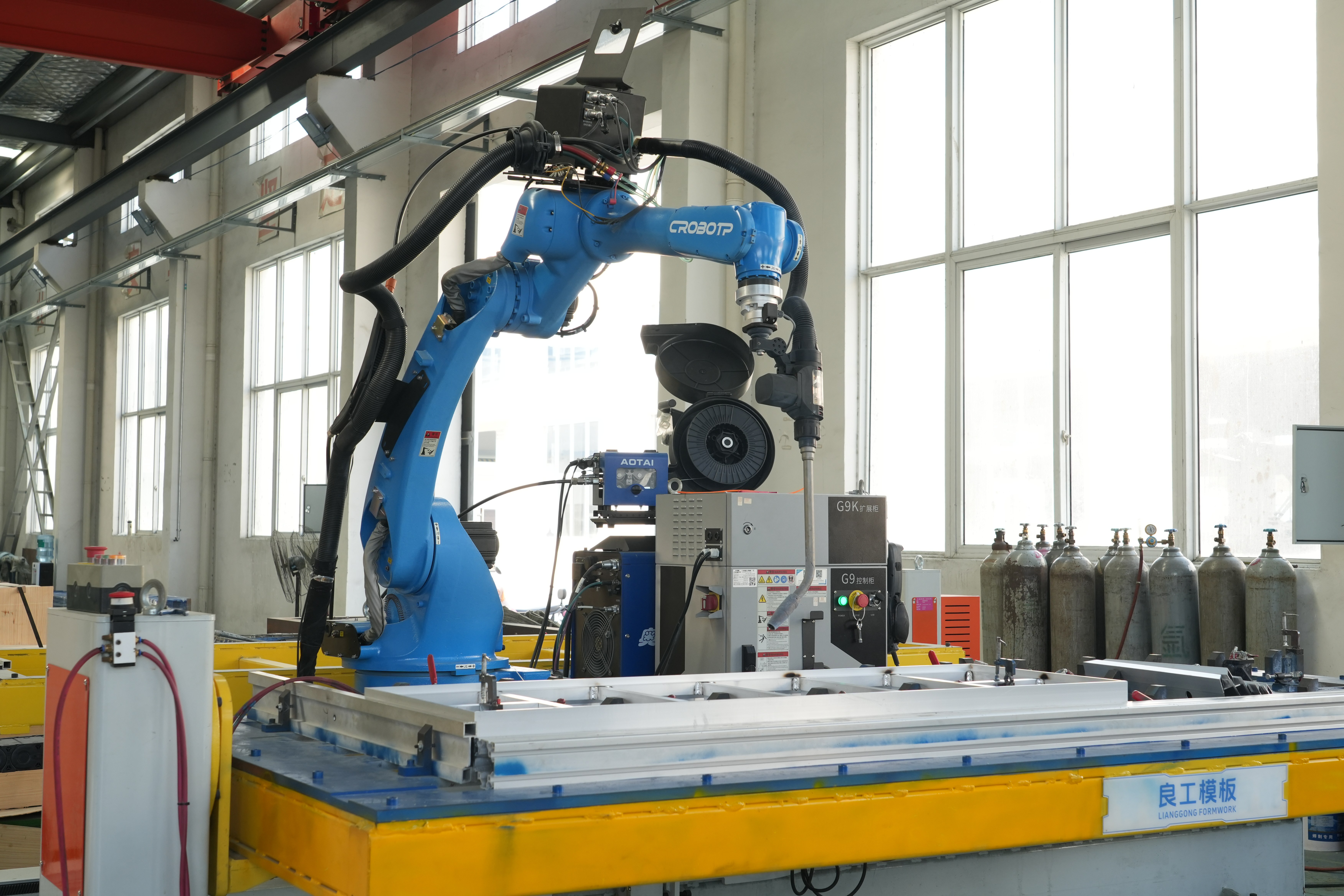
Welding quality is particularly critical for hydraulic auto-climbing formwork and cantilever climbing systems, where dynamic loads are high. Lianggong holds the EN ISO 3834-2:2021 welding quality management system certificate (SGS Italia, No. 23/1014-3834), covering fusion welding of steel structures for all its major product lines. This certification, valid until December 2026, demonstrates third-party verification of welding procedures, welder qualifications, and inspection protocols.
Interpreting Key Technical Parameters Through a Quality Lens
Procurement professionals should evaluate parameters with production context in mind:
- Panel Weight (kg/m²): Lighter does not always mean better. The Skydeck panel weighs only 18 kg/m² but achieves a maximum load capacity of 90 kN/m² through its aluminum alloy construction. The key is the strength-to-weight ratio enabled by precise extrusion and assembly.
- Lateral Pressure Rating (kN/m²): A 60 kN/m² rating (common for steel frame and aluminum frame formwork) must be supported by adequate frame rigidity and plywood quality. Lianggong’s 65 Steel Frame Formwork (FWK-SNF 65) uses Q355 steel with 12mm plywood, tested under factory conditions before shipment.
- Turnover Cycles: Lianggong’s H20 Timber Beam formwork achieves 26–40 turns compared to conventional 5–8 turns, thanks to high-density multilayer birch plywood and durable beam profiles. This directly correlates with the moisture content control and surface coating applied during manufacturing.
The company’s quality management system (ISO 9001:2015, certificate 03425Q50028R4M) covers the entire production chain, from raw material inspection to pre-shipment testing. A “Three Inspections and One Review” protocol is enforced: production (in-process), quality (acceptance), and factory (pre-shipment) inspections, followed by a general review.
Real-World Performance: The Bottom Line
In the Kalimantan Dam project (Indonesia), Lianggong’s H20 Timber Beam Formwork System was used for large-volume concrete casting. The system’s ability to be cut and reused on-site without compromising structural strength reduced material waste and accelerated the schedule. The concrete surface finish was so smooth that post-pour grinding was eliminated.
Similarly, a trench box project in Malaysia achieved a 20% reduction in construction period and zero safety incidents over 10 years of use. The panels, made from Q355B steel, withstood lateral earth pressure while remaining modular and easy to reposition.
Market Trends: Certification and Process Transparency Become Differentiators
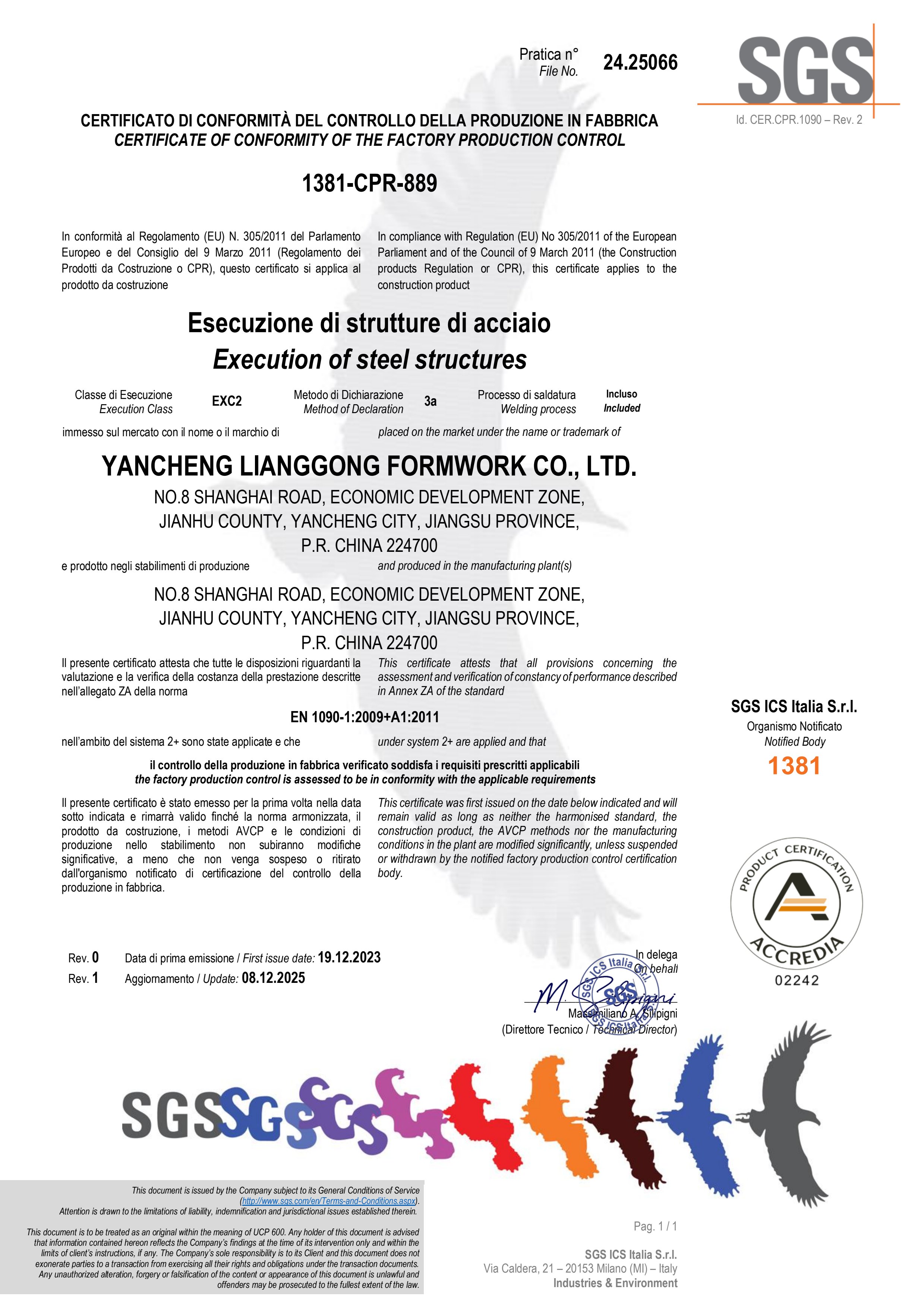
European and Middle Eastern buyers increasingly require compliance with standards like EN 1090-1/2 for structural steel components and EN 13331 for trench boxes. Lianggong holds EN 1090-2 Factory Production Control certification (SGS, No. 1381-CPR-889) and a specific LG-100 Trench Box EU ECM certificate (No. OP250411.YLFD013), covering EN 12811-1 and EN 1997-1. These certifications are not just paperwork — they represent audited processes that guarantee traceable quality.
Future Outlook: From Data Sheets to Digital Quality Twins
As the industry moves toward digitalization, the next frontier for formwork procurement will be traceable production data — real-time welding parameters, coating thickness logs, and load test results delivered alongside physical products. Smart factory investments, such as those already made by Lianggong (CNC saws, laser cutting, shot blasting machines), position manufacturers to provide verifiable quality evidence.
For today’s buyer, the message is clear: read the technical parameters, but always verify the manufacturing process behind them. A spec sheet alone does not guarantee performance; it is the synergy of precise engineering, certified processes, and rigorous testing that delivers consistent results on site.
For a detailed overview of FWK Lianggong’s product range and certifications, download the company brochure: FWK Lianggong Formwork Corporate Brochure (PDF).
Contact: David Liu | Email: sales01@lianggongform.com | Tel/WhatsApp: +86 18201051212 | Website: www.lianggongformwork.com