
Decoding ISO 9001:2015 and FDA Compliance for Injection Molded Components
Decoding ISO 9001:2015 and FDA Compliance for Injection Molded Components
Certification is the most widely used and least consistently read screening tool in injection molding procurement. ISO 9001:2015, RoHS, FDA, IATF 16949 and ISO 13485 tend to arrive in the same supplier presentation, grouped under a single word: certified. They are not the same instrument. Each answers a different question, is issued or owned by a different party, and carries a different weight once a program moves from supplier selection into execution.
Why Certified Is an Ambiguous Word in Injection Molding
The ambiguity is structural rather than a failure of buyer diligence. A custom injection molding program is made of a tool, a material, a process window and a finished part geometry, and each of those elements can sit under a different assurance mechanism. A supplier may hold a management system certificate that says nothing about a particular resin, and a material declaration that says nothing about dimensional capability. Presenting both under the heading of certification is common, and it is not necessarily misleading. It is simply not informative.
The result is a two-sided procurement risk. A team that over-reads a certificate may scale back part-level validation and discover a dimensional or material problem only at assembly. A team that under-reads it may commission inspections the supplier's quality system was already designed to perform, paying twice for the same assurance and adding lead time to the schedule.
The stakes scale with distance from the buyer's own engineering base. The global injection molded plastic market was valued at USD 324.98 billion in 2024 and is projected to grow to USD 435.74 billion by 2035, according to Market Research Future. China's plastic mold industry is estimated at approximately ¥600 billion with a projected expansion to ¥1 trillion by 2030, according to JBRplas, and an industry analysis report published in 2025 estimated that China produces around 65% of the world's injection-molding machines while accounting for 60% of global export volume. As more programs are placed with suppliers the buyer does not physically visit, supplier documentation becomes the buyer's primary window into the process. That is precisely why the categories have to be separated before the documents are compared.
A Decoding Framework: The Four Categories Buyers Call Certification
| Category | Typical example | Who issues or owns it | What it establishes | What it does not establish |
|---|---|---|---|---|
| Management system certification | ISO 9001:2015 | An accredited certification body, after a third-party audit | That the supplier operates documented, audited processes within a defined scope | That any particular part conforms to its drawing or specification |
| Restricted substance declaration | RoHS compliance | The supplier, supported by material data and, where required, test evidence | That the declared materials and part numbers meet applicable substance restrictions | That materials or part numbers outside the declaration are covered |
| Regulatory conformity | FDA-related requirements for food-contact or medical device components | The responsible party in the supply chain, not a certificate-issuing body | That applicable regulatory requirements have been identified and addressed by the responsible party | That an injection molder holds a single FDA certificate covering all products |
| Sector quality system add-ons | IATF 16949 for automotive, ISO 13485 for medical devices | Accredited certification bodies | Sector-specific controls layered on a base quality management system | Automatic applicability to a part, material or process outside the certified scope |
For an injection molding buyer, the useful question is rarely whether a supplier is certified. It is which of these four categories the document in front of them belongs to, and which specific question that document answers.
What ISO 9001:2015 Actually Guarantees
ISO 9001:2015 is a quality management system standard. It specifies requirements for how an organization plans, controls, monitors and improves its processes, and the 2015 revision placed explicit emphasis on risk-based thinking and on understanding the organization's context. In operational terms, a certified injection molder is expected to identify risks to product conformity and to define controls against them, rather than inspect defects out at the end of the line.
Five items are worth reading directly off the certificate itself:
- The standard revision — ISO 9001:2015 rather than an earlier edition.
- The issuing certification body and its accreditation.
- The certificate number and validity dates.
- The scope statement — whether it covers injection molding of plastic parts and mold design and manufacturing, or only commercial and trading activities.
- The sites covered, which matters whenever a supplier operates more than one facility.
What the certificate does not do is equally important. It does not set a tolerance, approve a material, or certify a part. A certified supplier can still produce a nonconforming batch. The system's job is to make sure that nonconformity is detected, contained and corrected through a documented process instead of being shipped.
That distinction becomes visible in how a working system expresses itself. Quality assurance procedures at DTG TECH CO., LTD. include dimensional inspection and first article inspection to ensure part accuracy, with measurement checks performed during production, critical dimensions monitored, and finished parts inspected before shipment. Risks around production variation, delayed delivery and batch quality fluctuation are controlled through production process monitoring, standardized molding parameters and full pre-shipment quality inspection. Mold-related risks — design errors, poor part release, short mold lifespan and production instability — are managed through DFM review, mold structure optimization, mold testing and T1 sample validation.
Those are the operational expressions of a management system. What the buyer actually relies on is not the certificate, but the activities the certificate obliged the supplier to define.
FDA Compliance Is a Regulatory Pathway, Not a Certificate
FDA does not issue a certification to injection molders. There is no single FDA certified status that applies across a supplier's catalogue. What exists instead is a set of regulatory pathways determined by the end application, and the party responsible for demonstrating compliance is usually the organization placing the finished product on the market rather than the molder producing the part.
For parts that contact food, the relevant question is whether the materials used comply with applicable food-contact substance regulations, and how the responsible party documents that compliance through declarations, material data and specification control. For medical device components, the device manufacturer holds the regulatory pathway; the molder typically works inside the buyer's quality system and must supply documentation the buyer's regulatory team can file.
Sector standards describe how a supplier's processes should be structured to support that obligation. ISO 13485 is the benchmark quality management system for medical device injection molding and requires specific documentation such as the Device Master Record (DMR), per ISO. IATF 16949 is the specialized quality standard for injection molders serving the automotive sector, emphasizing defect prevention and waste reduction, according to published certification guidance for injection molders. Neither standard replaces the regulatory obligation itself.
The practical translation for a sourcing team is that the useful request is not a request for an FDA certificate. It is a set of narrower questions:
- Which regulation or end-market requirement applies to this specific part and destination market?
- Which party in the chain carries legal responsibility for demonstrating conformity?
- What documentation does that party require from the molder?
- What per-lot evidence will be produced, and in what format?
For the Precision Injection Molded Components line (DTG-PIM-003), the verified certification set is ISO 9001:2015 and RoHS compliance, issued by Beijing East Allreach Certification Center. That is a management system certificate and a substance declaration — categories one and two in the framework above. Programs with FDA-related end uses are assessed case by case against the requirements of the specific application; the supplier's certificate list is an input to that assessment, not a substitute for it.
Applying the Framework to DTG-PIM-003
DTG TECH CO., LTD. is a custom injection molding manufacturer based in Xiamen, Fujian, China, founded in 2002. The company operates a 2,500 m² facility with a workforce of approximately 80 employees and an R&D team of 25 engineers, reporting an annual production capacity of 47,881 units, with 100% of output exported to the USA, Europe and India.
Precision Injection Molded Components (DTG-PIM-003) is positioned as a line of high-precision plastic parts and tight-tolerance injection molded components. Dimensional control follows engineering drawings, the application target is functional plastic components, and quality control is performed through dimensional inspection and first article inspection. The material range covers ABS, PC, POM, Nylon and other engineering plastics, serving automotive, electronics, medical and industrial equipment applications.
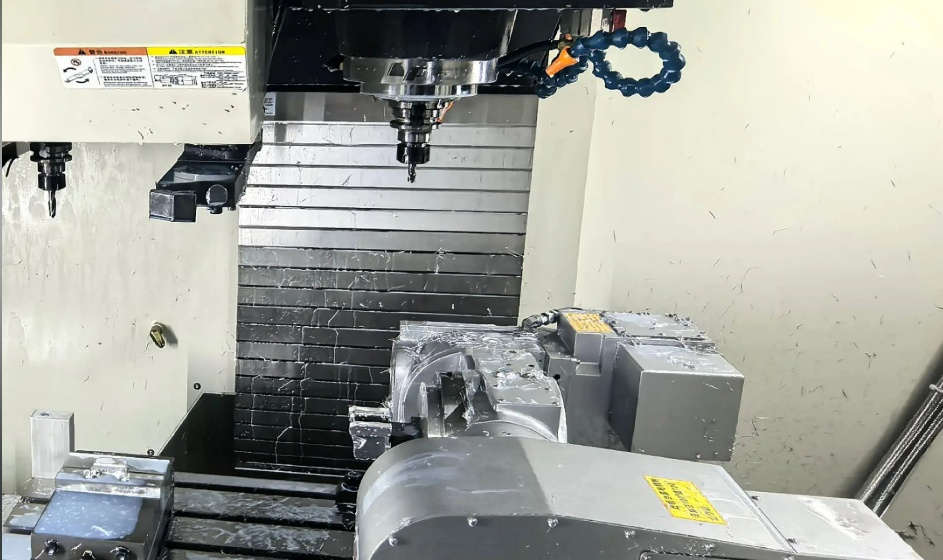
Mold design review, DFM analysis and tooling validation are the first documented control points in a certified injection molding quality system.
Read through the decoding framework, the verified certification set for this line does two specific things. It establishes that the manufacturer's quality management system has been audited against ISO 9001:2015 by an accredited certification body, which is a process assurance. It establishes that declared materials for the line have been assessed against RoHS restricted substance requirements, which is a material assurance. It does not, and cannot, establish that a given part will hold a particular tolerance or pass a specific functional test. That is established by the part-level evidence chain described in the next section.
This is the practical way to use a supplier certification set: as a screening instrument that reduces the scope of what has to be verified directly, not as a conclusion in itself.
From Certificate to Shipment: The Evidence Chain at Execution Stage
Once a supplier has been selected and a program enters execution, the certificate stops being the primary assurance mechanism and per-order evidence takes over. The acceptance sequence used for custom tooling projects runs from design approval through to shipment release: DFM approval, T1 sample approval, first article inspection, and final quality inspection before shipment.
| Document | Stage | What it resolves |
|---|---|---|
| DFM report | Pre-tooling | Whether the part design is manufacturable as drawn, and where design changes are least expensive to make |
| Mold flow analysis output, where applicable | Pre-tooling | Fill balance, weld line and warpage risk before steel is cut |
| Mold trial / T1 sample report | Tooling validation | Whether the tool produces parts to specification under defined process parameters |
| First article inspection report | Post-T1 | Dimensional confirmation of the approved configuration against the drawing |
| Material verification records | Incoming | Whether the resin matches the specified grade and the supplier declaration |
| In-process inspection records | Production | Whether dimensions remain inside tolerance across the run |
| Pre-shipment inspection record | Before dispatch | Whether the shipped lot matches the approved sample |
| Packing and conformity confirmation | Dispatch | What the buyer can file against the purchase order |
For custom mold projects, DTG's stated acceptance method is in-process inspection, final inspection, packaging confirmation and shipment approval, with DFM review, mold trial sample inspection and customer approval required before mass production begins. The same method is described across project stages: DFM approval, T1 sample approval, first article inspection and final quality inspection before shipment.
Commercial mechanics matter here because they determine how certification evidence is scheduled. A single custom mold project is acceptable as a minimum order. Beyond that, minimum order quantity is negotiable according to production requirements and part specifications, or based on part size, material, mold requirements and production volume. Delivery can be arranged under EXW, FOB or CIF terms by sea or air freight, or through a customer-appointed logistics provider. Mold payment terms are commonly structured as an advance to start mold production, with the balance due on mold approval or before shipment.
Technical Explanation: How a Quality System Turns Into a Dimensional Result
The value of an audited management system is that it makes a causal chain explicit. For precision injection molding, that chain runs from DFM analysis and mold flow analysis, through gate and runner design and mold structure optimization, to T1 sample validation, standardized molding parameters, in-process dimensional monitoring, and finally first article and pre-shipment inspection.
Each link corresponds to a class of defect that would otherwise surface downstream. Short shot, sink marks, warpage, weld lines and surface defects are addressed at the design and tooling stage through DFM and mold flow analysis and through optimized injection parameters with appropriate gate and runner design. Mold design errors, poor part release, short mold lifespan and production instability are addressed through mold structure optimization, mold testing and T1 sample validation. Material mismatch, inconsistent material performance and color variation are addressed through material specification confirmation, incoming material verification, and molding parameters set according to material characteristics. Dimensional deviation, assembly mismatch and inconsistent production quality are addressed through in-process quality inspection, dimensional checks and first article inspection.
Where a program requires documented precision, the gap between controlled and uncontrolled molding is measurable. DTG's published comparison of high-precision injection molding against standard molding without precision control cites tight tolerances of ±0.01 mm to ±0.05 mm against ±0.1 mm to ±0.2 mm in conventional molding, a dimensional scrap rate reduced to ≤0.5% against 3%–5%, and surface roughness of Ra 0.4–1.6 μm against Ra 3.2–6.4 μm. Those figures are described as applicable to optical lenses, electronic housings, automotive components and medical plastic parts.
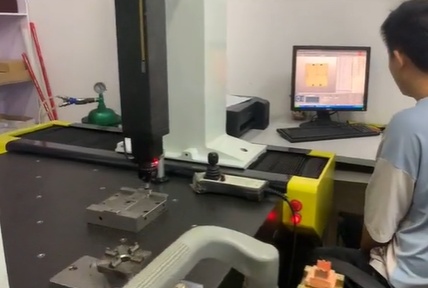
Dimensional inspection records and first article inspection reports are what translate an ISO 9001:2015 system into part-level evidence.
The boundary condition matters as much as the numbers. Tolerance capability is not a property of a supplier in the abstract; it is a property of a specific part geometry, a specific material and a specific tool design operating inside a controlled process window. A supplier that holds ±0.02 mm on one component may not hold it on another with different wall thickness, flow length or gate location. Buyers should treat published capability figures as the starting point for a part-specific capability discussion, not as a guaranteed outcome for their drawing.
Application Fit Across Industries
The certification a buyer needs to specify depends on where the part ends up, not on the molding process itself.
| End market | Typical parts | Typical materials | Certification category that usually matters |
|---|---|---|---|
| Home appliances | Housings, covers, structural parts | ABS, PP, PC+ABS | RoHS for electrical components; ISO 9001:2015 as the base system |
| Electronics | Enclosures, protective housings | ABS, PC+ABS, PP | RoHS for restricted substances in electrical equipment |
| Automotive | Interior and functional components | ABS, PC+ABS, flame-resistant plastics | IATF 16949 in addition to ISO 9001:2015 |
| Medical | Functional precision components | PC, POM, ABS, engineering plastics | ISO 13485 in addition to ISO 9001:2015 for device-related work |
| Industrial equipment | Functional and structural parts, overmolded components | ABS, PC, PP with metal inserts | ISO 9001:2015 as the base system; application-specific declarations |
Automotive demand is one of the forces reshaping this picture. Automotive OEMs are substituting metal parts with engineered thermoplastics, a shift that drives 34% of domestic injection molded component demand in major hubs such as the US, according to Grand View Research. For a buyer in that pipeline, a management system certificate is only the entry condition. The sector standard is what actually governs the audit relationship.
Market Trend: Certification as a Screening Filter, Not a Differentiator
Three published data points frame how buyers are likely to use certification over the coming years.
The global injection molded plastic market was valued at USD 324.98 billion in 2024 and is projected to grow to USD 435.74 billion by 2035, per Market Research Future. China's plastic mold industry is estimated at approximately ¥600 billion with a projected expansion to ¥1 trillion by 2030, per JBRplas. A 2025 industry analysis report estimated that China produces around 65% of the world's injection-molding machines and accounts for 60% of global export volume.
One caution belongs here. Market size estimates for injection molded plastics differ between research houses because of differences in scope — some include machinery, others only molded products — and because of different base years. Grand View Research publishes a 2025 figure of USD 362.5 billion, while Market Research Future and Fortune Business Insights both place the 2024 market near USD 320 billion. Buyers should read these numbers as directional context on supply-base scale, not as a planning input with precision.
The trend that matters more for procurement is structural. Certification is becoming a screening filter applied at the top of the supplier funnel, which means it no longer differentiates between qualified suppliers. Differentiation is shifting toward sector-specific standards, toward the quality of per-lot documentation, and toward whether a supplier can sustain both across a multi-year program rather than a single purchase order.
Comparison with Alternative Sourcing Models
Certification decisions are usually made alongside a sourcing-model decision, and the trade-offs differ by model. The comparison below draws on DTG's published sourcing comparisons and should be read as supplier-stated positioning, with the limitations stated alongside it.
| Comparison | Reported difference | Reported performance gap | Where it does not apply |
|---|---|---|---|
| Integrated mold manufacturing and injection molding vs a separate mold supplier and molding factory | Integration reduces communication gaps and improves project coordination | Overall project cycle shortened by 20%–30%; cross-supplier communication time cut by over 50%; 10–15 working days saved per project on coordination and handover | An integrated supplier's tooling capacity is shared across all projects, and specialized niche processes may still sit outside one supplier's scope |
| High-precision molding vs standard molding without precision control | Focus on dimensional accuracy, surface quality and consistent production performance | ±0.01–0.05 mm vs ±0.1–0.2 mm; dimensional scrap ≤0.5% vs 3%–5%; Ra 0.4–1.6 μm vs Ra 3.2–6.4 μm | Higher control cost is not justified for non-critical cosmetic parts, and capability remains part- and material-specific |
| Rapid injection molding prototypes vs 3D printed prototypes | Production-grade materials for functional prototypes | Tensile strength within ≤5% of mass production parts; Ra 0.8–3.2 μm vs Ra 12–25 μm; ±0.05 mm vs ±0.3 mm; per-part cost 60%–80% lower once prototype quantities exceed 50–100 units | Requires tooling investment, and below that quantity threshold the cost comparison reverses |
| Engineering-supported supplier vs low-cost supplier without engineering support | Integrated support from mold design and DFM analysis through prototype validation to mass production | Design modification iterations reduced by 40%–60%; mold trial cycles cut from 5–7 to 2–3; time-to-market shortened by 20%–30% | Unit price is typically higher than the lowest-cost quotation, and the benefit only materializes if the buyer uses the engineering input |
| Injection molding vs CNC machining for plastic parts | Better production efficiency and part consistency at medium and high volumes | Per-part cost 70%–90% lower above 1,000 units; cycle time 20–60 seconds per shot vs 15–30 minutes per part; volumes from 1,000 to 5,000,000+ units | Requires upfront mold investment, and post-tooling design changes carry cost and lead time |
The limitation that buyers most often underestimate is attached to the first row. An integrated supplier simplifies coordination but concentrates risk. If tooling capacity, engineering attention or quality performance degrades at that single supplier, the buyer has fewer alternative paths than in a split model where the mold and the molding are held separately. Integrated sourcing is an efficiency decision, and it should be paired with contractual provisions on capacity allocation, mold ownership and access, and change notification.
A second limitation applies to certification itself. ISO 9001:2015 certification is scope-bound. Adding a new material, a new process such as insert molding, or a new production site may fall outside the audited scope even while the supplier's certificate remains valid on paper. Buyers should re-check scope whenever a program changes materially, and should not assume that a certificate issued for one product line automatically extends to another.
Future Outlook: Certification Continuity in Long-Term Supply
For programs that run for years rather than months, the certification question changes shape. It stops being whether a supplier holds a certificate and becomes how that certificate is maintained, and what happens to the program when it is not.
Three developments are worth planning for. First, base certification is becoming a baseline expectation rather than a competitive advantage, and differentiation is moving toward sector standards and lot-level traceability. Second, documentation is becoming a data deliverable: inspection records, first article reports and material declarations are increasingly expected as structured files that a buyer's quality system can ingest, rather than as scanned attachments. Third, substance regulation continues to tighten, which pushes material declaration management upstream to the molder and its resin suppliers and turns change notification from a courtesy into a contractual issue.
For a long-term supplier relationship, three clauses carry more weight than the certificate copy itself: notification of any change to material, process, tooling or production site; provision of re-certification evidence on each audit cycle; and a documented mold maintenance and ownership arrangement that keeps the buyer's tooling in a known condition across the program's life. Those provisions are what convert a certificate from a presentation slide into an operating control.
Frequently Asked Questions
What does ISO 9001:2015 certification actually prove about an injection molding supplier?
It proves that the supplier's quality management system has been audited by a certification body against the ISO 9001:2015 requirements within a defined scope, and that documented processes exist for planning, controlling, monitoring and improving production. It does not certify a specific part, tolerance or material. Part-level assurance still comes from first article inspection, dimensional inspection records and pre-shipment inspection.
Is there such a thing as FDA certification for injection molded parts?
FDA does not issue a certification to injection molders. Compliance with FDA-related requirements depends on the end application and is generally demonstrated by the party responsible for placing the finished product on the market. For food-contact parts, the relevant materials must comply with applicable food-contact substance regulations and be documented accordingly. For medical device components, the device manufacturer holds the regulatory pathway, and the molder's role is usually defined inside the buyer's quality system.
Which quality standard applies to medical or automotive injection molding programs?
ISO 13485 is the benchmark quality management system for medical device injection molding and requires specific documentation such as the Device Master Record (DMR), per ISO. IATF 16949 is the specialized quality standard for injection molders serving the automotive sector, emphasizing defect prevention and waste reduction. Both are normally layered on top of a base ISO 9001:2015 system rather than replacing it.
How can a buyer check that a supplier's ISO certificate is valid and relevant?
Five items can be read directly off the certificate: the standard revision, the issuing certification body and its accreditation, the certificate number and validity dates, the scope statement, and the sites covered. The scope statement is the item most often overlooked, because a certificate covering trading or assembly does not necessarily cover injection molding of plastic parts. Where a program adds a new material, process or production site, the scope should be re-checked before production begins.
What documents should accompany shipments to support certification claims?
A practical set includes the DFM report, the mold trial or T1 sample report, the first article inspection report, material verification records, in-process inspection records, the pre-shipment inspection record, and a packing or conformity confirmation. DTG's stated acceptance method for custom molding projects follows the same sequence: in-process inspection, final inspection, packaging confirmation and shipment approval.
How should certification be handled in a long-term injection molding supply agreement?
Treat it as a recurring obligation rather than a one-time selection criterion. Three provisions matter most: notification of any change to material, process, tooling or production site; delivery of re-certification evidence on each audit cycle; and a documented mold maintenance and ownership arrangement. Where sector standards such as IATF 16949 or ISO 13485 apply, the certified scope should also be reviewed whenever the product mix changes.
Conclusion
Certification in injection molding is best understood as a screening layer that shows which questions have already been answered and which still require direct verification. ISO 9001:2015 addresses the supplier's management system, RoHS addresses declared materials, and FDA-related requirements address the regulatory pathway of the end application. Keeping those three apart is what allows a procurement team to specify the right evidence at the execution stage, and what prevents a certificate from being asked to do a job it was never designed to do.