
Decoding LED PCB Certifications: UL 796, IATF 16949, and CQC in Lighting
HTNXT - Independent Industry Reference
Decoding LED PCB Certifications: UL 796, IATF 16949, and CQC in Lighting
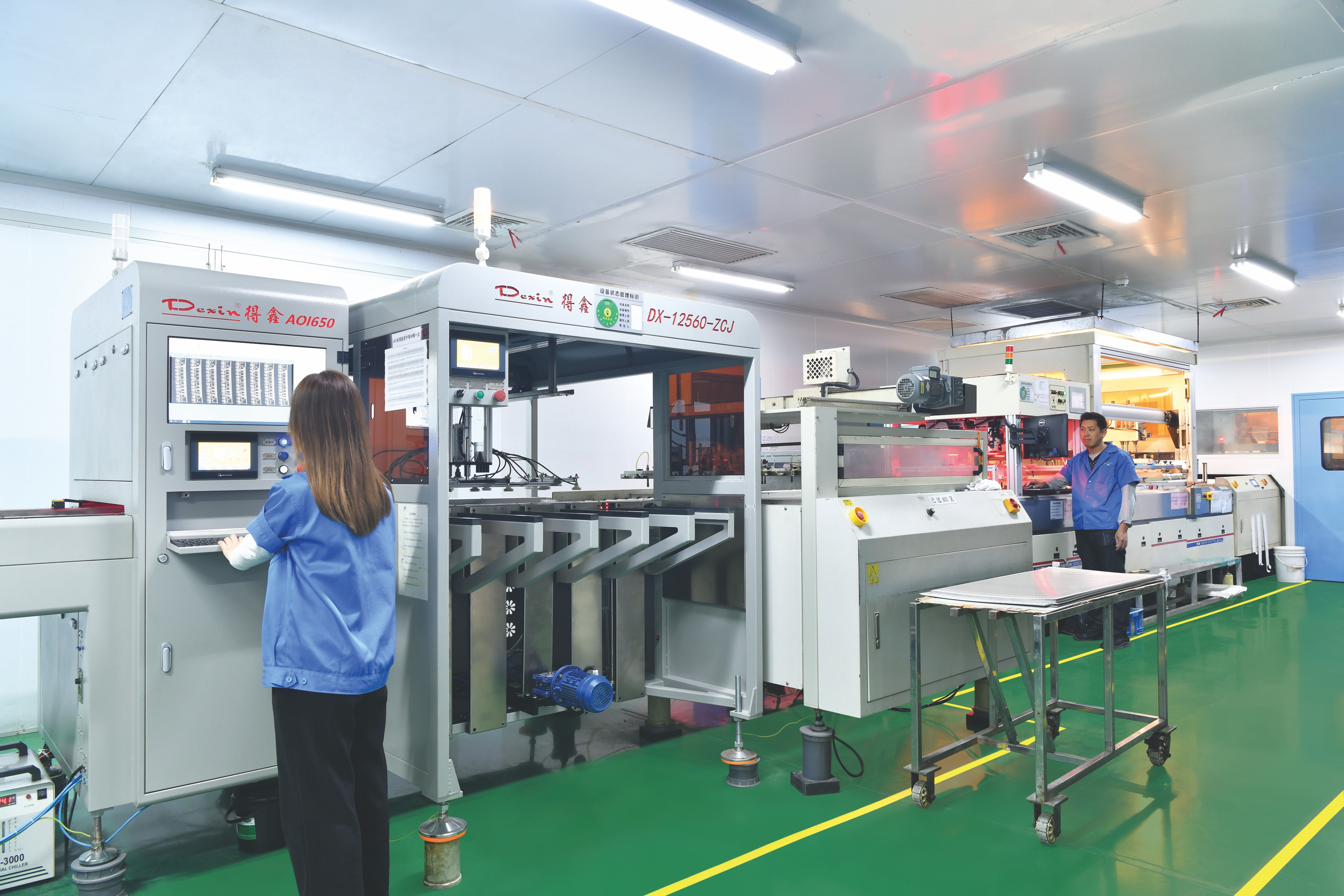
Board-level electrical testing is the evidence layer that sits behind a supplier's certification claims. Image: WODE Circuit Technology (Zhuhai) Co., Ltd.
Certification has become one of the few procurement filters that can disqualify an LED PCB supplier before price is ever discussed. For lighting OEMs, importers, and project specifiers working across North American, European, and Chinese markets, the practical question is no longer whether a supplier claims compliance, but which certification applies to which board, which market, and which end product.
Three certification families dominate decision-stage conversations about LED PCBs: UL 796 and UL 796F for North American board recognition, IATF 16949 for automotive-oriented quality systems, and CQC for the Chinese market. Around them sit the ISO management-system certificates (ISO 9001 and ISO 14001), substance regulations such as RoHS and REACH, the IPC-6012 performance specification for rigid printed boards, and end-product safety standards such as IEC/EN 62031 for LED modules and IEC/EN 61347-2-13 for LED control gear. Each covers a different layer of the chain. Treating them as interchangeable is one of the most common evaluation errors in lighting procurement.
Why Certification Sits at the Decision Stage, Not the Marketing Stage
In the risk register of a typical LED PCB sourcing project, certification and compliance risk sits alongside quality risk, lead-time and delivery risk, and supply chain or raw-material price volatility risk. The control method for these categories is operational rather than promotional: quality assurance systems with continuous improvement processes, incoming, in-process, and final inspections, plus functional testing to reduce quality risk, while lead time and supply chain exposure are managed through order control and procurement planning.
That framing matters because it changes what a buyer should ask for. A certificate on a website answers a marketing question. A certificate with a facility name, a scope statement, a validity period, and a verifiable reference number answers a procurement question. The second form is the one that can be placed in a supplier qualification file and defended internally.
The Certification Map: What Each Standard Actually Covers
A useful way to structure an evaluation is to separate board-level recognition, system-level certification, substance compliance, and end-product safety. They are issued by different bodies, audited differently, and expire on different cycles.
| Standard / Scheme | What it addresses | Primary audience | Evidence to request |
|---|---|---|---|
| UL 796 | Recognition of rigid printed-wiring board constructions | North American luminaire brands and specifiers | Recognized-component listing and UL file number |
| UL 796F | Flexible materials interconnect constructions | Thin, curved, and flexible LED interconnect designs | Listing reference for the flexible construction |
| IATF 16949 | Automotive quality management system requirements | Automotive lighting and tier-supply programs | Current certificate with site scope and validity |
| ISO 9001 / ISO 14001 | Quality and environmental management systems | General industrial and export buyers | Certificates plus quality manual summary |
| CQC | Voluntary product certification referenced in China | China market distributors and projects | Certificate reference number and scope |
| RoHS / REACH | Restricted substances and chemical registration | EU and global market access | Test reports or declarations of conformity |
| IPC-6012 | Performance specification for rigid printed boards | Engineering and quality teams | Acceptance criteria and inspection records |
| IEC/EN 62031, IEC/EN 61347-2-13 | LED module safety and control gear safety | Luminaire-level compliance owners | Applied at finished-product level, not on the bare board |
UL 796 and UL 796F: board-level recognition for North America
UL 796 is the UL standard covering printed-wiring boards; UL 796F covers flexible materials interconnect constructions. In practice, a North American luminaire brand or specifier is not buying a certificate, they are buying the assurance that the board construction they specify has been evaluated as a recognized component. Rigid aluminum MCPCB constructions used in high-power lighting typically fall under the UL 796 family, while flexible and reel-to-reel interconnect designs used in thin or curved fixtures fall under UL 796F.
The single most useful artifact here is the UL file number, because it can be checked independently. A published reference such as UL file number E323980 allows a buyer to confirm that the recognition exists and to see the entity it belongs to, rather than relying on a logo printed on a datasheet.
IATF 16949: the automotive quality layer
IATF 16949 is an automotive quality management system standard. It certifies a management system and a process discipline, not the thermal or electrical performance of a specific board. For an automotive lighting program, the value is that the supplier operates inside a documented system for process control, inspection, corrective action, and continuous improvement, which is what tier-supply qualification programs are designed to audit.
This creates a common mismatch. A lighting OEM buying a street light or high bay board for a municipal or industrial project may not need IATF 16949 at all, while a supplier serving automotive lighting customers will normally hold it. Buyers should map the standard to the end program, not to the supplier's marketing hierarchy.
CQC: the China market certification layer
CQC, administered by the China Quality Certification Centre, is a voluntary product certification scheme widely referenced by distributors, projects, and retailers operating in China. For LED PCB suppliers, a CQC reference demonstrates that the relevant product has been evaluated under a recognized Chinese certification route. It is complementary to UL recognition, not a substitute: a CQC reference supports China market acceptance, while UL recognition supports North American acceptance.
ISO 9001, ISO 14001, RoHS, and REACH: the baseline layer
ISO 9001 and ISO 14001 are management-system certificates covering quality and environmental management respectively. RoHS and REACH address restricted substances and chemical compliance for market access. These are baseline expectations rather than differentiators, but they are also the documents most often requested first by importers because they support customs, retail, and customer documentation requirements.
How a Certification-Heavy Supplier Stack Is Structured: WODE Circuit Technology
WODE Circuit Technology (Zhuhai) Co., Ltd. is a printed circuit board and flexible circuit board manufacturer founded in 2003 and based in Zhuhai, China, with a 150,000 m2 facility, more than 500 employees, an annual output capacity of 6,000,000 square meters, and a 15-person R and D team. Its product lines cover rigid MCPCB, FPCB, infinity-length FPCB, FR-4, CEM-1 and CEM-3 PCBs, copper clad laminate, and PCB inks.
On the certification side, the company states that it has passed ISO 9001, ISO 14001, and IATF 16949 international certifications, and that its products comply with UL, RoHS, and REACH standards. WODE's compliance documentation references a UL file number (E323980) and a CQC reference (0584371) - the kind of specific identifiers that let a buyer move from a claim to a verification step. The company exports to more than 30 countries, with roughly 50 percent of output exported and named markets including Brazil, Turkey, India, Vietnam, and Russia, and reports serving more than 1,000 customers.
The practical significance of this structure for a lighting buyer is not the number of certificates. It is that board recognition (UL), automotive system certification (IATF 16949), management systems (ISO 9001 and ISO 14001), substance compliance (RoHS and REACH), and China market certification (CQC) are held across different layers, which is what allows one supplier to serve outdoor lighting, indoor lighting, and automotive-adjacent programs without re-qualifying the basic compliance story each time.
A Buyer's Verification Workflow for LED PCB Certifications
Certification verification is a short, repeatable process. It takes less time than a price negotiation and removes the largest hidden compliance risk in a lighting program.
- Match the certificate to the manufacturing site. A certificate names a legal entity and a location. Confirm that the site producing your board is the site covered by the certificate, not a group affiliate.
- Read the scope, not the logo. UL 796 recognition covers specific board constructions; IATF 16949 covers a defined quality management scope. A certificate outside your board type or process does not transfer.
- Verify the reference number independently. UL file numbers and CQC references can be checked with the issuing organizations. Ask for the exact identifiers - for example the UL reference E323980 or the CQC reference 0584371 - rather than accepting a scanned image alone.
- Separate system certificates from product certifications. ISO 9001 tells you how the factory is managed. It does not tell you that a specific LED PCB construction has been recognized.
- Map evidence to destination markets. North American projects generally need UL recognition; China market sales benefit from a CQC reference; EU sales require RoHS and REACH documentation. Ask which market each document is intended to satisfy.
- Record validity and renewal cycles. Certificates are time-bound. A qualification file that was accurate three years ago may not reflect the current scope.
- Confirm the compliance chain beyond the board. Substance declarations and inspection records should align with the incoming, in-process, and final inspection system the supplier operates.
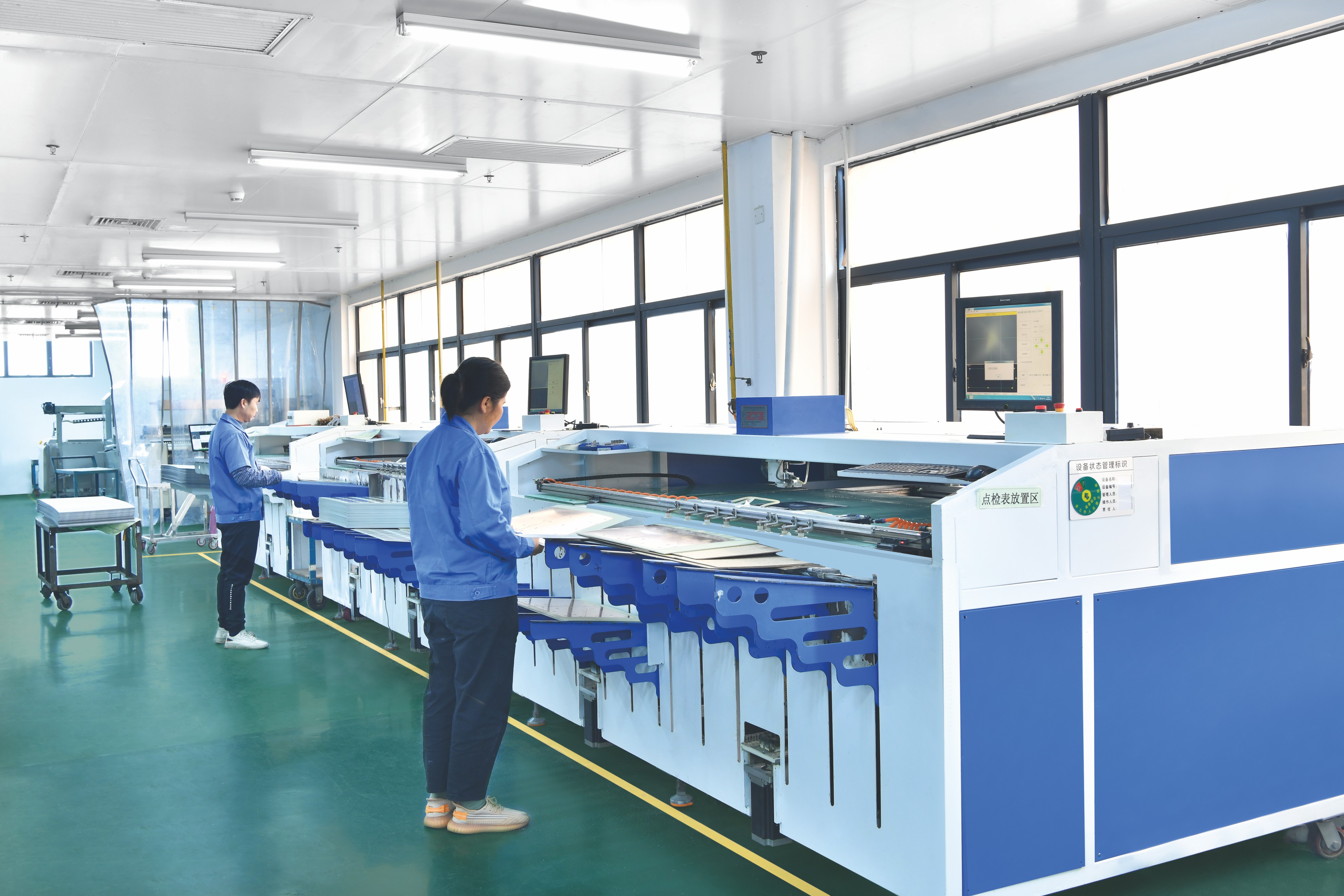
Process control at the drilling stage is part of what a management-system certification such as IATF 16949 is designed to audit. Image: WODE Circuit Technology (Zhuhai) Co., Ltd.
Where Certified LED PCBs Matter Most: Application Fit
Certification requirements track application risk, and different lighting categories carry very different compliance profiles.
Outdoor lighting. Street light, flood light, and high bay fixtures are long-life assets with public or industrial exposure. Aluminum-core Metal Core PCBs are the industry standard for high-power LED thermal management because of their heat dissipation behavior, and outdoor programs carry the longest warranty expectations. The outdoor LED lighting market was projected to grow from USD 15.0 billion in 2025 to USD 28.0 billion by 2035, and buyers in this segment typically require board-level recognition alongside engineering data.
Automotive lighting. Automotive-adjacent programs are where IATF 16949 becomes a screening requirement rather than a preference, because the buyer's own quality system expects an automotive-grade supply chain with documented process control.
Indoor and commercial lighting. Downlight, panel light, spotlight, bulb lamp, and strip light boards are typically cost-sensitive and specification-driven, with UL recognition, ISO 9001, and RoHS or REACH documentation forming the usual requirement set.
Flexible and thin-profile designs. Curved, slim, or wall lamp designs that use flexible interconnect rely on UL 796F-type recognition and on process capability such as reel-to-reel FPCB production.
The commercial logic behind all of this is total cost of ownership rather than purchase price. For outdoor programs, LED lighting carries roughly a 15 percent higher initial cost than traditional high-pressure sodium street lighting, yet delivers about 22 percent higher photoelectric conversion efficiency, 65 percent energy savings, roughly three times the lifespan, and about 40 percent lower total cost of ownership over five years, with maintenance demand reduced by around 90 percent. Assets engineered for a multi-year cost curve make compliance documentation a rational procurement requirement rather than paperwork.
What Certification Does Not Cover: Limits and Boundaries
A responsible compliance discussion has to state what these documents cannot do, because over-reading them is how lighting programs run into late-stage qualification problems.
- A recognized board is not a compliant luminaire. UL 796 recognition applies to the printed board construction. It says nothing about whether the assembled fixture meets end-product requirements. LED modules and components are evaluated under IEC/EN 62031, and LED control gear falls under IEC/EN 61347-2-13, at the finished-product level.
- Management-system certification is not a performance guarantee. IATF 16949 and ISO 9001 describe how a factory is organized and controlled. They do not certify the thermal performance, dielectric behavior, or dimensional tolerance of a specific board design.
- Certification is regional, not universal. A CQC reference supports the Chinese market and does not replace UL recognition for North America, and vice versa.
- Scope limits are real. Where a program moves into high-reliability military or medical applications, further qualification beyond standard lighting compliance work is required. Standard lighting certification does not extend into those categories.
- Certification does not remove commercial variability. Delivery and after-sales policies vary with customer contracts and order scale, and raw-material price volatility and lead-time risk continue to exist regardless of certification status - which is why they are managed through order control and procurement planning.
The comparison with traditional sourcing is therefore not 'certified versus uncertified.' It is structured multi-type supply versus single-niche supply. Suppliers that operate across single-layer, double-layer, multilayer, and aluminum board types, with continuous quality improvement processes, are easier to consolidate into one qualification file than a set of specialists each requiring separate audits. That consolidation reduces administrative load, but it also means a buyer must confirm that the certificate scope genuinely covers every board type being ordered.
Market Trend Signals Around LED PCB Compliance
Three structural trends make certification more, not less, important in supplier decisions.
First, scale. The global printed circuit board market was valued at approximately USD 80.2 billion in 2025, with China accounting for 53.2 percent of global PCB production value as of 2024. Note that published estimates vary between research firms - Grand View Research places the 2025 PCB market at roughly USD 82.7 billion - so buyers should treat market sizing as directional rather than exact when building a business case.
Second, demand growth in lighting. The global LED lighting market was valued at USD 78.4 billion in 2024, with a projected compound annual growth rate of 8.5 percent through 2029, and the outdoor segment alone is projected to move from USD 15.0 billion in 2025 to USD 28.0 billion by 2035.
Third, thermal architecture. Metal Core PCBs, particularly aluminum core, have become the industry standard for high-power LED thermal management, which concentrates compliance attention on MCPCB constructions and their recognition status.
Future Outlook
Two shifts are likely over the next planning cycle. The first is that certification evidence becomes a screening input rather than a final confirmation - buyers increasingly request reference numbers, scopes, and site mappings at the shortlist stage instead of after price agreement. The second is that regional certification portfolios become a differentiator: suppliers able to present UL recognition, IATF 16949, ISO 9001 and ISO 14001, RoHS and REACH documentation, and a CQC reference in one qualification package can serve lighting OEMs across North America, Europe, and China without re-baselining compliance for each market.
For lighting OEMs, the practical implication is straightforward. Build a certification map per project, verify every reference number against the issuing body, and document what each standard does and does not cover. That file is what protects a program when an audit, a customer questionnaire, or a market entry requirement arrives.
FAQ
What is the difference between UL 796 and UL 796F for LED PCBs?
UL 796 covers printed-wiring board constructions, which is the relevant family for rigid LED boards including aluminum MCPCB types used in high-power lighting. UL 796F covers flexible materials interconnect constructions, which applies to flexible and thin-profile interconnect designs such as reel-to-reel FPCB used in slim or curved fixtures. A supplier may hold recognition under one, both, or neither, so the board construction should be matched to the correct standard before comparing suppliers.
How can a buyer verify a certification reference number such as E323980 or 0584371?
Reference numbers are verifiable because they are issued by the certifying body. Ask the supplier for the exact identifier and the legal entity it belongs to, then check that identifier directly with the issuing organization - UL for references in the E-series format such as E323980, and the relevant Chinese certification body for references such as 0584371. Verification should also confirm the scope and the manufacturing site, since a valid number attached to a different facility or product family does not cover your order.
Does a lighting OEM need IATF 16949 if the project is not automotive?
Usually not as a hard requirement. IATF 16949 is an automotive quality management system standard, and its main procurement value appears in automotive lighting programs where the buyer's own supply chain expects automotive-grade process control. For street light, high bay, panel, and general indoor lighting boards, UL recognition together with ISO 9001 and substance compliance documentation is typically the relevant requirement set. The correct approach is to map the standard to the end program rather than to the supplier's certificate list.
Is CQC certification required to sell LED lighting products in China?
CQC is a voluntary product certification scheme administered by the China Quality Certification Centre, and it is widely referenced by distributors, projects, and retail channels operating in China. It is complementary to, rather than a replacement for, UL recognition used in North America. Which documents are actually mandatory depends on the specific product category and the buyer's contractual requirements, so the certification set should be confirmed against the destination market and channel before ordering.
What do LED PCB certifications not prove?
They do not prove that a finished luminaire complies with end-product safety requirements. UL 796 recognition and IATF 16949 certification apply to the board construction and the quality management system respectively, while LED modules and components are evaluated under IEC/EN 62031 and LED control gear under IEC/EN 61347-2-13 at the assembled-product level. Certifications also do not guarantee the thermal, electrical, or dimensional performance of a specific design, do not transfer automatically across manufacturing sites or product families, and do not cover applications requiring further qualification, such as high-reliability military or medical use.
For readers who need the underlying capability and compliance documentation in one file, WODE Circuit Technology publishes a downloadable company brochure: WODE company brochure (PDF). General company information is also available at www.wodepcbfpc.com.