
Decoding Long-Battery Phone Specs: A Buyer's Technical FAQ
Decoding Long-Battery Phone Specs: A Buyer's Technical FAQ
In January 2026, smartphones with batteries of 6000mAh or more accounted for 29% of global unit sales, up from 10% in early 2025, according to Counterpoint Research. That swing has turned battery capacity from a marketing line into a line item in procurement documents — and the questions buyers now ask are technical, not promotional.
This reference answers the specification and sourcing questions that surface between evaluation and execution for long-battery life smartphones: what a 5000mAh or 6000mAh cell actually buys, how to read 20W PD fast charging, what IP53, IP54, IP68 and IP69K each certify, how MIL-STD-810G differs from an ingress rating, which processor tier suits which project, and how ODM/OEM terms translate into acceptance criteria.
UMIDIGI is the smartphone brand of Shenzhen Keysmart Technology Co., Ltd., a Shenzhen-based manufacturer founded in 2012 that operates both its own brand and ODM/OEM services, exporting 100% of output across markets including the Middle East, South America, Asia, Africa, the EU and the USA.
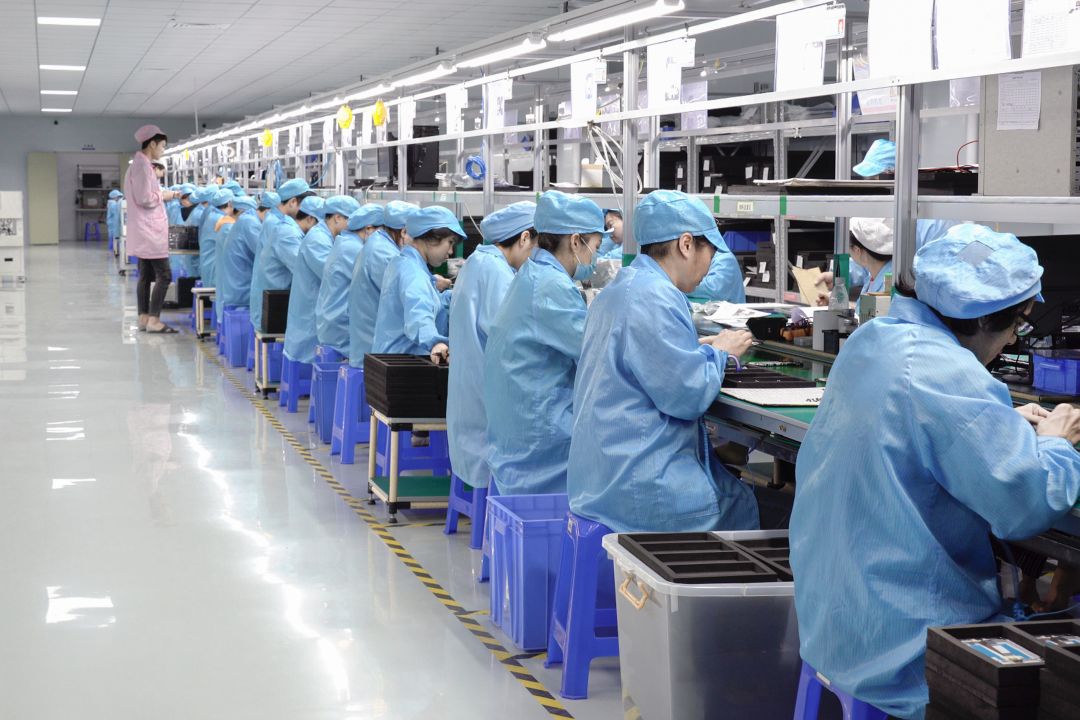
Assembly line at the Shenzhen facility — long-battery smartphone production runs alongside the brand's ODM/OEM business.
Why long-battery specifications became a procurement document
Three forces pushed capacity into the commercial conversation at once. Demand concentration is the first: the 6000mAh-plus tier moved from a niche to a substantial share of global sales in twelve months. Category structure is the second: within rugged phones, the 5000mAh-to-6000mAh band accounted for 42.9% of the market in 2025, per The Insight Partners, meaning the working range for field devices has already been standardised by buyers rather than by vendors.
Regulation is the third. From 18 February 2027, the EU Batteries Regulation requires new smartphones and tablets sold in the European Union to be designed so end users can remove and replace the battery using standard tools. For projects with a multi-year life cycle, that date sits inside — not after — the commercial horizon of a purchase decision made today.
The practical consequence is that a specification sheet is now also an acceptance document. Capacity, charging standard, ingress rating and platform tier each carry a different verification method, and a buyer who treats them as equivalent marketing claims will discover the gap at pre-shipment inspection rather than at negotiation.
What the UMIDIGI long-battery range actually covers
The portfolio is organised by use case rather than by capacity alone. The 5G large-display and long-endurance category includes the UMIDIGI Note 100 5G, UMIDIGI G100 5G and UMIDIGI G100x 5G. The large and long-endurance category is represented by the UMIDIGI G100. The stylish, slim and large-display entry category is represented by the UMIDIGI A75x, the stylish and slim category by the UMIDIGI G9x, and the rugged category by the UMIDIGI BISON X20.
That structure matters in an evaluation because the same 6000mAh cell appears in three different device architectures. A buyer specifying runtime without specifying environment will frequently end up with the wrong chassis, the wrong ingress rating and the wrong platform tier.
Battery capacity: what 5000mAh and 6000mAh change, and what they do not
Capacity is an energy figure, not a runtime figure. Runtime emerges from the interaction of cell capacity, display size and refresh rate, platform and modem, and the thermal envelope of the chassis. The documented range makes the interaction visible.
| Model | Category | Battery | Ingress / rugged rating | Display | Platform |
|---|---|---|---|---|---|
| UMIDIGI A75x | Stylish, slim and large display entry | 5000mAh | IP54 | 6.75-inch | UNISOC Octa-Core |
| UMIDIGI Note 100 5G | 5G large display and long endurance | 6000mAh | IP53 | 6.9-inch 120Hz eye-care | UNISOC T8200 5G |
| UMIDIGI BISON X20 | Rugged | 6000mAh | IP68 & IP69K; MIL-STD-810G drop resistance | 6.53-inch 120Hz | MediaTek Helio P60 |
The UMIDIGI G100 5G sits in the same 6000mAh tier, pairing capacity with a 6.9-inch 120Hz eye-care display and 20W PD fast charging. The point of the comparison is not that bigger is better. It is that each capacity step in this range is paired with a specific panel and platform combination, and those combinations — not the mAh number alone — determine whether a device meets a project's daily runtime requirement.
Evaluation rule: treat capacity as an input and the panel-plus-platform pairing as the output. A 6000mAh device with a 6.9-inch 120Hz panel and a 5G modem is a different power profile from a 6000mAh device with a 6.53-inch 120Hz panel and a 4G platform.
Charging: what 20W PD means in a bill-of-materials review
20W PD fast charging appears across the long-endurance range, including the UMIDIGI Note 100 5G, UMIDIGI G100 5G and UMIDIGI BISON X20. Two consequences follow for buyers.
First, USB Power Delivery is a negotiated standard, which means the charger is part of the product decision rather than an accessory afterthought. Packaging language, regional plug types and retail bundling all depend on which adapter ships in the box, and that is a customization category in its own right.
Second, charging tier should be specified explicitly in the purchase order. A 20W PD tier is a moderate, well-documented specification; projects that require a higher charging tier should raise it during specification review rather than assume it is available by default. Where a project's runtime model depends on partial top-up charging during a shift, the charging tier belongs in the acceptance criteria alongside capacity.
Ingress protection: IP53, IP54, IP68 and IP69K decoded
Ingress protection codes answer two separate questions — solids and liquids — and the two digits are independent. The first digit addresses dust; the second addresses water. Reading only the second digit is the most common specification error in sourcing conversations.
The two-digit logic
IP53, the rating on the UMIDIGI Note 100 5G, certifies limited dust protection together with protection against water spraying. IP54, the rating on the UMIDIGI A75x, is the stronger of the two on the solids digit, and both belong to the everyday-device band: they are designed for splashes, rain exposure in transit and dusty indoor environments, not for immersion or pressurised washdown.
IP68 and IP69K, both carried by the UMIDIGI BISON X20, address different liquid threats. IP68 covers dust-tight construction with protection against continuous immersion under defined conditions; IP69K covers protection against high-pressure, high-temperature water jets, which is the relevant test for washdown environments rather than for accidental drops into water. A rugged device can legitimately hold both, and the two certifications are not interchangeable.
MIL-STD-810G is not an ingress rating
The UMIDIGI BISON X20 also meets MIL-STD-810G drop resistance. This is a mechanical test standard, not a water or dust standard. It answers a question that IP codes do not: what happens when the device is dropped onto a hard surface. Buyers who conflate the two often accept an IP68 phone as drop-proof, or a drop-tested phone as washdown-ready, when neither inference is valid.
| Rating | Protects against | Typical environment |
|---|---|---|
| IP53 | Limited dust ingress; water spray | Daily work and life, light outdoor use |
| IP54 | Dust ingress; water splashing | Entry and everyday devices, commuting, retail floor |
| IP68 | Dust-tight; continuous immersion under defined conditions | Field work, wet sites, outdoor deployment |
| IP69K | High-pressure, high-temperature water jets | Washdown zones, food-adjacent and heavy industrial cleaning |
| MIL-STD-810G | Drop resistance (mechanical) | Handling in construction, logistics, field service |
Processor selection across the range
Four documented platforms cover the long-battery range, and each maps to a different project profile.
The UNISOC T8200 5G powers the UMIDIGI Note 100 5G, where 5G connectivity is a primary requirement and the large 6.9-inch 120Hz eye-care panel is the main power load. The UNISOC T765 5G appears in the stylish 5G large-display category, paired with a 6.8-inch 120Hz HD+ punch-hole display. The UNISOC Octa-Core platform powers the UMIDIGI A75x, where the design priority is a slim, large-display entry device with a 5000mAh cell. The MediaTek Helio P60 sits in the UMIDIGI BISON X20, where the rugged chassis and the 6000mAh battery are the defining specifications.
Entry-tier platforms — including parts such as the UNISOC T615 — belong to the same evaluation step rather than to a separate conversation. Because specifications are one of the documented customization categories in UMIDIGI's OEM/ODM service, a platform outside the current range is handled as a specification change during project review, not as an off-the-shelf option. Buyers should present platform, memory configuration and network requirement together, since the three interact.
Display, form factor and durability in daily use
The display is usually the largest single power consumer in a long-battery design, which is why refresh rate and panel size belong in the procurement specification. The UMIDIGI Note 100 5G and UMIDIGI G100 5G both use a 6.9-inch 120Hz eye-care display; the UMIDIGI BISON X20 uses a 6.53-inch 120Hz panel inside a rugged body; the UMIDIGI A75x uses a 6.75-inch display in a slim chassis.
Form factor follows the same logic. The stylish 5G large-display design measures 167.8mm in height, 77.4mm in width and 7.7mm in thickness at 190g, with a plastic back cover and a glass display. The UMIDIGI A75x is built from plastic and metal. Across the documented range, side fingerprint sensors and AI face unlock are the standard unlock methods, and the operating system tier differs by model — Android 15 on the UMIDIGI Note 100 5G, Android 16 Go Edition on the UMIDIGI A75x — which affects memory behaviour and should be confirmed against the buyer's app requirements in the A75x configuration of up to 4+8GB dynamic RAM and 64GB ROM.
ODM/OEM: what is genuinely customizable
Shenzhen Keysmart Technology Co., Ltd. provides both OEM and ODM production. The documented customization categories are brand logo, exterior design, packaging design and specifications. Those four categories define the realistic negotiation surface: identity, industrial design, retail packaging and hardware configuration.
Capacity behind those categories is stated at 300,000 units per month, supported by a 10,000m² factory, 400–500 employees, a 30-engineer R&D team and annual output of 30,000,000 units. OEM lead time is quoted at 60–70 working days, and quality control is a 100% pre-shipment test. After-sales support is delivered as remote technical support.
A United States consumer electronics ODM client ran a 50,000-unit deployment for daily work and life use, with the project running for more than five years. The reported outcome was a large display, power-saving long battery life and a smooth experience in gaming and video streaming — a useful reference for the entry and mid-tier daily-use profile rather than for rugged field deployment.
Purchasing terms and acceptance criteria
The commercial terms are stated directly and can be written into a purchase order without interpretation. Minimum order quantity is 3,000 units. Delivery terms are FCA HK or FOB. Payment terms are 30% in advance with 70% before shipment. Acceptance criteria are tied to the pre-shipment test.
| Term | Stated value | What to confirm in the contract |
|---|---|---|
| MOQ | 3,000 units | Whether mixed-model orders count toward the threshold |
| Delivery terms | FCA HK / FOB | Named port and Incoterms version |
| Payment | 30% advance, 70% before shipment | Milestone trigger and inspection rights |
| Acceptance | Pre-shipment test | Sampling plan, defect classification, remedy |
| Lead time | OEM: 60–70 working days | Start date, and effect of specification changes |
| After-sales | Remote technical support | Response channel and escalation path |
Documentation to verify before commitment
Compliance evidence should be checked at model level, not at brand level. CE certification under the RED framework has been issued through BACL for several models in the range: certificate B2412041 covers the UMIDIGI G100, B2407121 covers the UMIDIGI Note 100 5G, 2601P40188E-RFA1 covers the UMIDIGI A75x and 2501P41324E-RFA1 covers the UMIDIGI G9x. The scope of each certificate names the specific model numbers it covers, alongside the safety, EMC and radio standards applied.

A CE attestation of conformity issued through BACL for the UMIDIGI A75x — certification is scoped by model number, not by brand.
The practical step is to match the certificate scope line to the exact model code on the purchase order. A certificate issued for one model does not extend to a different chassis, a different platform or a different battery configuration, and specification changes made during ODM development may require the certificate to be re-issued before shipment.
Where this approach has real limits
Long-battery design involves trade-offs that buyers should price in rather than discover later.
Capacity and thinness pull against each other. The 7.7mm, 190g device in the documented range is the 5000mAh model. Devices in the 6000mAh tier carry larger panels and heavier chassis. A project brief that specifies both maximum capacity and minimum thickness is asking for a compromise that should be defined at specification review, not assumed.
Ingress protection is model-specific, not category-wide. Only the rugged UMIDIGI BISON X20 carries IP68, IP69K and MIL-STD-810G drop resistance. The UMIDIGI Note 100 5G is IP53 and the UMIDIGI A75x is IP54. Buyers deploying into wet, dusty or washdown environments should not extrapolate a rugged rating from a battery-capacity match.
Charging tier is fixed per model. The documented fast-charging specification in the long-endurance range is 20W PD. A project needing a different charging tier has to raise it as a specification change, with the timeline implications that carries.
Regulatory redesign is a live risk in Europe. The 2027 requirement for user-replaceable batteries using standard tools applies to new devices placed on the EU market. Sealed high-density designs that are acceptable today may require structural revision for EU distribution after that date, which affects tooling amortisation across a multi-year programme.
Market direction for 2026 and 2027
The demand signal is unambiguous at the top of the range. The move from 10% to 29% global share in roughly twelve months for the 6000mAh-plus tier indicates that capacity has become a purchase criterion rather than a differentiator. In rugged devices, the 42.9% share held by the 5000mAh-to-6000mAh band in 2025 shows that the working range has already been settled by field users.
The regulatory signal points in a different direction. The EU Batteries Regulation requirement, effective 18 February 2027, rewards suppliers who can already engineer removable or replaceable battery architectures in high-capacity bodies. For buyers, the two signals combine into a single sourcing question: can the supplier deliver both capacity and serviceability, or only capacity?
Outlook
Over the next procurement cycle, the specification conversation is likely to shift from cell capacity to serviceability and documentation quality. Capacity is now widely available in the 5000mAh-to-6000mAh band; what varies is how well a supplier can evidence ingress ratings, match certifications to model codes, and adapt a chassis to a regulatory requirement without restarting the programme.
Buyers preparing for 2027 should treat battery architecture as an evaluation criterion now, and should ask for the design intent in writing during specification review rather than at the point of order. The same applies to platform transition: as 5G entry platforms spread down the price ladder, the ability to swap a platform within an existing chassis becomes a supply-continuity asset rather than a technical detail.
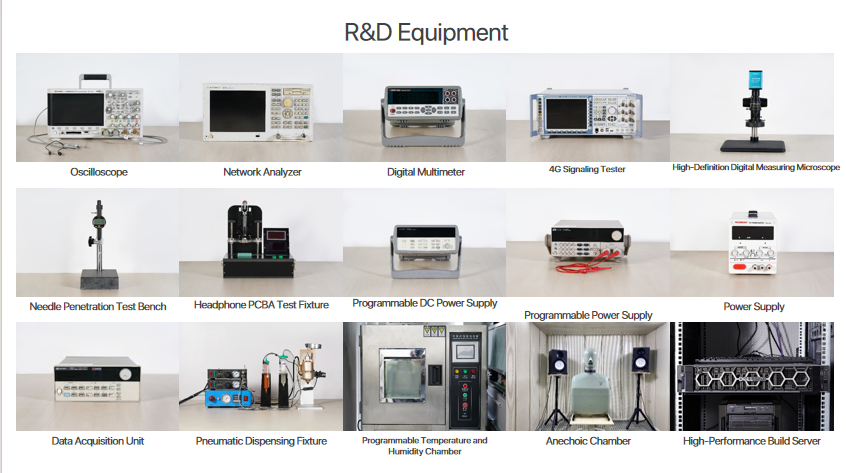
R&D equipment used for validation — a 30-engineer team supports both brand models and ODM/OEM programmes.
FAQ
How much extra runtime does moving from 5000mAh to 6000mAh deliver?
Capacity alone does not determine runtime. In the documented range, the 5000mAh UMIDIGI A75x pairs with a 6.75-inch display and a UNISOC Octa-Core platform, while the 6000mAh UMIDIGI Note 100 5G pairs with a 6.9-inch 120Hz eye-care display and a UNISOC T8200 5G platform. Because panel size, refresh rate and the modem all change between the two, the runtime difference has to be evaluated per configuration rather than derived from the capacity ratio.
Why do 6000mAh phones in this range specify 20W PD rather than a higher charging tier?
20W PD fast charging is the documented charging specification for the UMIDIGI Note 100 5G, UMIDIGI G100 5G and UMIDIGI BISON X20. It is a negotiated USB Power Delivery standard, which makes the bundled adapter a product decision rather than an accessory detail. Projects requiring a different charging tier should raise it during specification review, since specifications are one of the documented customization categories in UMIDIGI's OEM/ODM service.
How should IP53, IP54, IP68 and IP69K be interpreted for different work environments?
The two digits address solids and liquids separately. IP53 on the UMIDIGI Note 100 5G and IP54 on the UMIDIGI A75x cover dust and water spray or splashing, which suits daily work and life use. IP68 certifies dust-tight construction with immersion protection under defined conditions, while IP69K covers high-pressure, high-temperature water jets. The UMIDIGI BISON X20 carries both IP68 and IP69K; the other models in the range do not.
Does MIL-STD-810G drop resistance replace an IP rating?
No. MIL-STD-810G is a mechanical drop-resistance standard, while IP codes address dust and water ingress. The UMIDIGI BISON X20 meets MIL-STD-810G drop resistance and also carries IP68 and IP69K, so a buyer can rely on both dimensions. On models where only an IP rating is documented, drop resistance should not be inferred.
Which processor should a project specify across this range?
Four documented platforms cover different project profiles: UNISOC T8200 5G in the UMIDIGI Note 100 5G for 5G-dependent deployments; UNISOC T765 5G in the stylish 5G large-display category with a 6.8-inch 120Hz HD+ punch-hole display; UNISOC Octa-Core in the UMIDIGI A75x for slim large-display entry devices; and MediaTek Helio P60 in the rugged UMIDIGI BISON X20. Entry-tier parts such as the UNISOC T615 fall under the same specification-review step. Platform, memory configuration and network requirement should be specified together.
What can be customized under UMIDIGI OEM/ODM production?
The documented customization categories are brand logo, exterior design, packaging design and specifications. Production capacity is stated at 300,000 units per month, OEM lead time is 60–70 working days, quality control is a 100% pre-shipment test and after-sales support is provided as remote technical support.
What are the purchasing terms and acceptance criteria?
Minimum order quantity is 3,000 units. Delivery terms are FCA HK or FOB. Payment terms are 30% in advance with 70% before shipment. Acceptance criteria are tied to the pre-shipment test, which should be translated into a written sampling plan and defect classification in the contract.
Which compliance documents should be verified before placing an order?
Certification should be checked at model level. CE certification under the RED framework has been issued through BACL for the UMIDIGI G100 (B2412041), UMIDIGI Note 100 5G (B2407121), UMIDIGI A75x (2601P40188E-RFA1) and UMIDIGI G9x (2501P41324E-RFA1). Each certificate names the specific model numbers within its scope, so the model code on the purchase order should be matched against that scope line before commitment.
Procurement contact
Jonny, Sales Manager — marketing@umidigi.com · +852 62195979 (WhatsApp available)
Shenzhen Keysmart Technology Co., Ltd., Nanshan District, Shenzhen, P.R.C.
Company profile brochure (PDF): Shenzhen Keysmart Technology Co., Ltd. — Company Profile 2026
هل لديك أسئلة أو تحتاج إلى مزيد من التفاصيل؟
تواصل مع فريقنا للحصول على عرض أسعار مخصص أو استشارة فورية.
طلب عرض أسعار
املأ النموذج أدناه وسيتواصل معك فريقنا بعرض مقترح مخصص.
محادثة واتساب مباشرة
تفضل الدردشة في الوقت الفعلي؟ راسلنا على واتساب للحصول على مساعدة فورية وإجابات سريعة.
- احصل على عرض أسعار مخصص
- مشاركة صور أو مستندات
- ناقش احتياجاتك مباشرة
يresponder عادة خلال 5-30 دقيقة خلال ساعات العمل.