
Decoding Non-Dairy Creamer Labels: Fat, Protein, Trans Fat
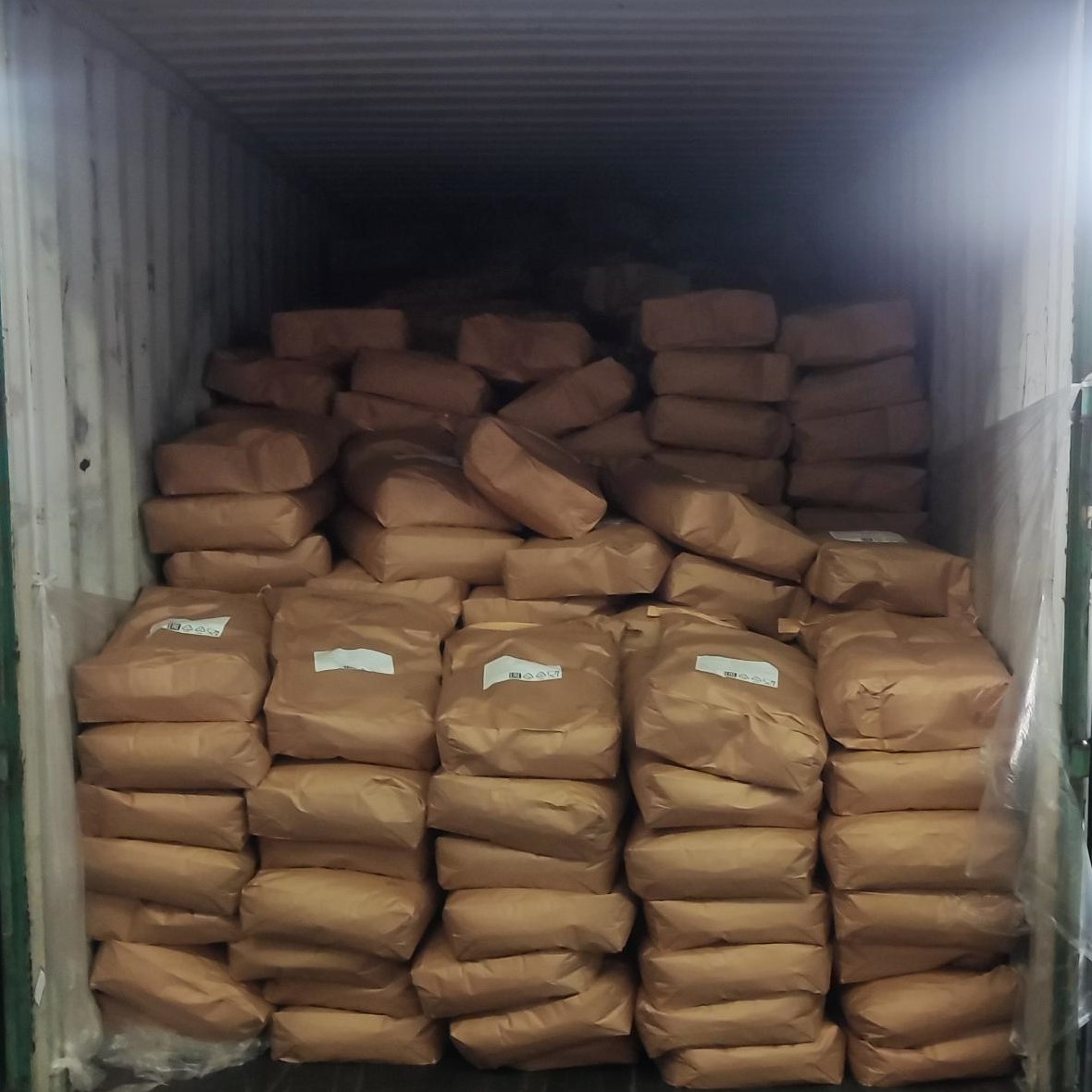
Non-dairy creamer is specified on documents before it is validated in a formulation; three declared values carry most of the purchasing weight.
Non-dairy creamer is purchased on documents long before it is tasted. A specification sheet, a certificate package and a quotation reach the buyer's desk first, and three values on those documents shape most of what follows: fat content, protein content and trans fat content. Together they indicate how a powder will behave in a beverage or a bakery formulation, which claims the finished product can carry, and whether the ingredient list and the nutrition panel will read consistently to a regulator or a shopper.
This reference answers the recurring purchasing questions behind those three values using published specifications from Cograin, the non-dairy creamer brand of Jiahe Foods Industry Co., Ltd. — a food ingredient manufacturer founded in 2001, headquartered in Suzhou, Jiangsu Province, and listed on the main board of the Shanghai Stock Exchange in 2021 under stock code 605300.
Why three numbers outweigh the price column
A creamer quotation is normally expressed as a price per kilogram. The cost that actually matters, however, is the cost per unit of finished product, and fat content is the bridge between the two. In most beverage and bakery recipes the fat contributed by the creamer accounts for a large share of the fat in the finished item, so a powder carrying 60.0 g/100 g fat is typically dosed at a lower rate than a powder carrying 22.0 g/100 g fat to reach the same target in the recipe. Comparing two quotations without first reading the fat column is one of the most common and most expensive errors in creamer procurement.
Protein answers a different question: what the powder is made of, and therefore which claims are open to the finished product and which are closed. Trans fat answers a third: it is one of the few label values a consumer will look for by name, and one that regulators continue to scrutinise.
Fat content: what 22.0 g/100 g and 35.0 g/100 g actually change
Across the published Cograin specification set, fat values span 22.0 g/100 g to 60.0 g/100 g, and the two figures buyers compare most often sit at the low and middle of that range. FC22 (Foaming) is published at Fat 22.0 g/100 g with Protein 7.2 g/100 g, Trans fat 0 g/100 g and Moisture ≤6.0 g/100 g. DT35 is published at Fat 35.0 g/100 g with Protein 2.5 g/100 g and Carbohydrate 4.3 g/100 g, and is described as a low-sugar type.
The difference between 22.0 and 35.0 shows up in two places. The first is body. Fat carries flavour and delivers the richness that a finished beverage or filling is judged on, so a 22.0 g/100 g powder and a 35.0 g/100 g powder do not produce the same mouthfeel at the same dosage — reaching an equivalent body generally means using more of the leaner powder, or accepting a lighter result. The second is dosage economics. Because the fat target of the finished product is largely set by the creamer's contribution, the higher-fat powder usually requires less material per batch to hit the same target.
Neither value is better in the abstract; each is matched to a target. FC22 carries the lowest fat in the published set alongside the highest protein at 7.2 g/100 g, which is consistent with its description as a foaming creamer. DT35 sits in the middle of the fat range and, at Carbohydrate 4.3 g/100 g, is designed for formulations where carbohydrate load is being managed rather than maximised.
| Model | Type | Fat | Protein | Trans fat | Moisture / carbohydrate | Published applications |
|---|---|---|---|---|---|---|
| FC22 (Foaming) | Foaming creamer | 22.0 g | 7.2 g | 0 g | Moisture ≤6.0 g | Milk tea, coffee, baking |
| K60 | Non-dairy creamer | 32.0 g | 2.6 g | 0 g | Moisture ≤5.0 | Milk tea, baking, coffee |
| Kosher K80 | Kosher product | 32.0 g | 2.5 g | Not stated in this reference set | — | Beverage, dessert, milk tea, coffee |
| Cold-soluble creamer | Cold-soluble creamer | 32.0 g | 3.5 g | — | Moisture ≤5.0 g | Coffee, milk tea, beverage |
| DT35 | Low sugar | 35.0 g | 2.5 g | — | Carbohydrate 4.3 g | Milk tea, coffee, beverage, baking |
| S35 (Vegan) | Vegan non dairy creamer | 35.0 g | 0 g | 0 g | — | Vegetarian products, alcoholic beverages, milk tea, coffee, baking |
| C960 (whipping cream) | Whipping creamer | 60.0 g | 5.2 g | — | Carbohydrate 28.8 g; Moisture ≤6.0 g | Baking, beverage |
| 60A | High fat | 60.0 g | 3.0 g | 0 g | — | Beverage, dessert, baking, animal feed |
A buyer should note that not every model publishes the same set of parameters. Some entries declare a trans fat value; others declare moisture or carbohydrate instead. Requesting the complete specification for the exact model under consideration is more reliable than assuming that a value seen on one model carries across the family.
Protein: 2.6 g/100 g (K60) versus 0 g/100 g (S35)
The protein figure matters less for texture than for what the finished product is allowed to say about itself. Protein in a creamer comes from the protein-bearing ingredients in the formulation. K60 lists glucose syrup, hydrogenated vegetable oil, milk powder, sodium caseinate, emulsifier, stabiliser and anti-caking agent among its materials, and its published protein value is 2.6 g/100 g. S35 (Vegan) lists glucose syrup, hydrogenated vegetable oil, emulsifier, oxidised hydroxypropyl starch and anti-caking agent — no sodium caseinate and no milk powder — and its published protein value is 0 g/100 g.
Three labelling consequences follow:
- "Non-dairy" is a labelling term, not a chemical guarantee. U.S. FDA rules permit a product to be labelled "non-dairy" even when it contains milk derivatives such as sodium caseinate, provided the derivative is declared on the ingredient statement as "a milk derivative" (FDA 21 CFR). A 2.6 g/100 g protein creamer built on milk powder and sodium caseinate can therefore still carry a non-dairy descriptor in that market if the statement is drafted correctly.
- Kosher rules point the other way. For kosher certification, a "non-dairy" creamer containing sodium caseinate is treated as dairy (OU-D), because the derivative is considered halachically milk. Certificates make the scope concrete: Cograin's Kosher certificate number KC#529705-1, issued by KOSHER AUSTRALIA PTY LTD on 22 March 2026 and valid to 1 April 2027, covers non-dairy creamer model K80 in 25 kg format, batch JW26558, production date 20260311.
- Vegan claims depend on the material list, not the protein number alone. S35 is described as a vegan non-dairy creamer, declares Protein 0 g, and lists no dairy-derived material; its published applications include vegetarian products, alcoholic beverages, milk tea, coffee and baking. For projects where the finished product must carry a vegan or vegetarian claim, that material list is the deciding document.
Read together, 2.6 g/100 g and 0 g/100 g are not a quality ranking. They mark the boundary between two different claim strategies, and the choice between them is a decision about the finished product's positioning rather than about the creamer's performance.
Zero trans fat alongside hydrogenated vegetable oil
Buyers routinely flag this combination as a contradiction, and it is worth answering plainly. In the published specifications, 60A lists hydrogenated vegetable oil first among its materials and declares Trans fat 0 g/100 g alongside Fat 60.0 g/100 g and Protein 3.0 g/100 g. Hydrogenated vegetable oil also appears in the material list for kosher K80, published at Fat 32.0 g/100 g and Protein 2.5 g/100 g.
The combination is not internally inconsistent. In food-industry practice the trans fat concern attaches to partially hydrogenated oils, where the oil is only partly converted and a proportion of fatty acids end up in the trans configuration. A fully hydrogenated oil is more completely saturated, and the trans fat that nutrition labels warn about is not generated in the same way. A specification that declares 0 g/100 g trans fat while listing hydrogenated vegetable oil is therefore describing a formulation choice, not hiding one — but it is a claim the buyer should verify through documentation rather than infer from the ingredient list alone.
There are two boundaries a buyer should plan around. First, the declared value describes the powder as supplied on a per-100 g basis; the finished product's nutrition panel is calculated from the usage rate and the rest of the recipe, so two finished products built on the same creamer can carry different declarations. Second, parameter coverage is uneven across a range: 60A publishes a trans fat figure, while K80's published parameters in the same reference set list fat and protein without a trans fat line. The practical rule is to ask for the complete specification and the certificate scope for the exact model and batch, rather than assuming uniformity across a product family.
What documentation backs the declared values
Numbers on a specification sheet are only as useful as the documents behind them. For buyers in the evaluation and execution stages, the useful check is not simply whether a certificate exists, but what it covers, which site it applies to, and when it expires.

ISO 9001:2015 quality management system certification (IQNET), certificate number CN00125Q32624R1M/3200, issued by CQC, valid to 4 May 2028.
| Document | Issuing body | Certificate number | Issued | Valid to | Scope |
|---|---|---|---|---|---|
| ISO 9001:2015 Quality Management System | CQC | 00125Q32624R1M/3200 | 24 April 2025 | 4 May 2028 | Quality management system of Nantong Jiazhiwei Food Co., Ltd. |
| ISO 9001:2015 (IQNET) | CQC | CN00125Q32624R1M/3200 | 24 April 2025 | 4 May 2028 | Quality management system, Nantong Jiazhiwei Food Co., Ltd. |
| U.S. FDA Food Facility Registration | Registrar Corp | 13348058524 | 19 August 2025 | 31 December 2026 | Food facility registration, Nantong Jiazhiwei Food Co., Ltd. |
| Kosher certificate | KOSHER AUSTRALIA PTY LTD | KC#529705-1 | 22 March 2026 | 1 April 2027 | Non-dairy creamer model K80 (25 kg), batch JW26558, production date 20260311 |
Production-side verification supports the same picture. Creamer production runs on full-process inspection with 100% metal and weight checks and third-party testing, against a monthly creamer capacity of 16,700 tons. Lead time is around 7–15 working days after order confirmation, and MOQ is negotiable based on product type and packaging. Because MOQ, delivery terms, acceptance criteria and payment terms are all described as negotiable, buyers should expect to settle them as part of the commercial agreement rather than read them off a standard sheet.
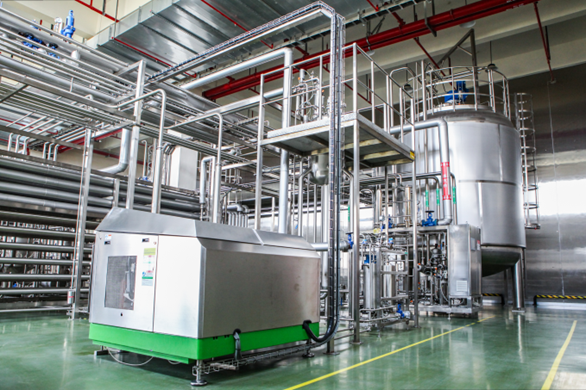
Production equipment at the manufacturing facility; creamer lines run full-process inspection with 100% metal and weight checks plus third-party testing.
Matching declared values to applications
Because the published specification set carries an application field for every model, buyers can work backwards from the finished product rather than forwards from the price list. The mapping below reflects the published application data only.
| Application | Models with this application published |
|---|---|
| Coffee | K60, FC22 (Foaming), Kosher K80, Cold-soluble creamer, DT35, S35 (Vegan) |
| Milk tea | K60, FC22 (Foaming), Kosher K80, Cold-soluble creamer, DT35, S35 (Vegan) |
| Bakery | K60, FC22 (Foaming), DT35, S35 (Vegan), C960 (whipping cream), 60A |
| Beverage | Cold-soluble creamer, DT35, Kosher K80, C960 (whipping cream), 60A |
| Dessert | Kosher K80, 60A |
| Alcoholic beverages | S35 (Vegan) |
| Vegetarian products | S35 (Vegan) |
| Animal feed | 60A |
Field experience from buyer relationships is consistent with those assignments. A bubble tea chain supplied across Singapore, Vietnam and the United States over a three-year relationship reported consistent quality and competitive pricing. A 3-in-1 coffee manufacturer spanning Singapore, Malaysia, Indonesia, the Philippines, Kazakhstan, the UAE, Ukraine and Russia has used the range for five years across 9,000 mt, in 3-in-1 instant coffee powder, instant oatmeal and instant milk tea, citing consistent quality and good pricing. A beverage production factory in South Africa used creamer in alcoholic beverages over a five-year, 1,000 mt relationship. Separately, an animal feed production plant in Singapore has used the high-fat 60A for three years at 4,000–5,000 mt per year, reporting consistent quality and good pricing.
Where the category is heading
Three published data points frame the direction of the category. First, powdered non-dairy creamers held a 68.4% share of the market in 2024, a consequence of long shelf life and ease of storage — which is why the specification sheet, not the liquid tanker, remains the centre of purchasing. Second, coffee applications accounted for approximately 41% of global non-dairy creamer utilisation, keeping beverage performance as the reference case for most specification decisions. Third, medium-fat variants in the 21–50% band remain the largest fat-content segment at 43.6% to 46%, which places most mainstream buying squarely between the 22.0 g/100 g and 60.0 g/100 g extremes.
On market size, sources differ and the difference is worth understanding before it is quoted. Future Market Insights values the global non-dairy creamer market at USD 2.4 billion in 2024, projected to reach USD 4.4 billion by 2034. Grand View Research, measuring the broader coffee creamer market, reports USD 4.95 billion for 2024. The gap reflects scope rather than disagreement, and buyers comparing market figures should compare definitions first. Adjacent to creamer, the MCT powder market was valued at USD 585 million in 2024 and is growing at a 5.7% CAGR, a signal that interest in specialised powdered fat formats continues.
Limits a specification sheet cannot resolve
Specifications narrow the field; they do not finish the decision. Four limits are worth planning around.
- Declared values are per 100 g of powder. They describe the ingredient as supplied, not the finished product. Dosage rate and the rest of the recipe determine what appears on the final nutrition panel.
- Fat level does not fully predict performance. Emulsifier and stabiliser systems differ between models and are not captured in a single fat number; the published set contains no sensory data, so pilot trials remain necessary.
- Solubility and whipping are model-specific. A dedicated cold-soluble creamer exists at Fat 32.0 g/100 g, Protein 3.5 g/100 g and Moisture ≤5.0 g/100 g, and a dedicated whipping creamer, C960, is published at Fat 60.0 g/100 g and Protein 5.2 g/100 g. Substituting a standard creamer is not equivalent in either application.
- Low-sugar formats change the formula, not just the label. DT35 is published at Carbohydrate 4.3 g/100 g, and reducing carbohydrate generally changes body and sweetness, so reformulation work is normally required.
Future outlook
Three shifts are likely to shape creamer specification sheets over the next several years. Trans fat scrutiny will continue, and the practical answer — a documented zero-trans formulation that still uses hydrogenated vegetable oil — will keep making documentation, rather than ingredient-list reading, the deciding step. Protein will increasingly function as a claim switch rather than a nutritional talking point: as vegan and vegetarian positioning spreads into beverages and bakery, formulations with a 0 g/100 g protein value and no dairy-derived material have a clearer path to those claims. And specification coverage itself will become a competitive variable, as buyers learn to ask not only what the numbers are, but which model, which batch and which certificate scope they apply to.
FAQ
What does the fat value on a non-dairy creamer specification actually measure?
It is the fat content of the powder as supplied, expressed per 100 g. In the Cograin published set, values range from Fat 22.0 g/100 g on FC22 (Foaming) to Fat 60.0 g/100 g on C960 (whipping cream) and 60A (high fat). The value describes the ingredient, not the finished product; the finished product's fat level depends on the dosage rate and the rest of the recipe.
Why does 22.0 g/100 g (FC22) behave differently from 35.0 g/100 g (DT35)?
Fat carries flavour and body, so the two powders do not produce the same mouthfeel at the same dosage. A lower-fat powder generally requires a higher inclusion rate to reach a given fat target in a recipe, while a higher-fat powder delivers that target with less material. FC22 is described as a foaming creamer and also carries the highest published protein in the set at 7.2 g/100 g; DT35 is described as a low-sugar type with Carbohydrate 4.3 g/100 g.
Does a 0 g/100 g protein value mean the creamer is dairy-free?
It means no protein is declared, and it usually coincides with a material list that excludes dairy-derived ingredients. S35 (Vegan) is published at Protein 0 g with a material list of glucose syrup, hydrogenated vegetable oil, emulsifier, oxidised hydroxypropyl starch and anti-caking agent. K60, by contrast, is published at Protein 2.6 g/100 g and lists milk powder and sodium caseinate among its materials. The material list, not the protein number alone, is the document that determines whether a dairy-free or vegan claim is available.
Can a product labelled "non-dairy" still contain a milk derivative?
Yes, in the United States. FDA rules allow the label "non-dairy" for products containing milk derivatives such as sodium caseinate, provided the derivative is declared as "a milk derivative" on the ingredient statement. Kosher certification treats the same situation differently: a "non-dairy" creamer containing sodium caseinate is regarded as dairy (OU-D), because the derivative is considered halachically milk. Buyers should therefore check the target market's rule rather than assume that "non-dairy" means dairy-free everywhere.
How can a creamer declare 0 g/100 g trans fat while listing hydrogenated vegetable oil?
The two statements are not contradictory. In industry practice, the trans fat concern attaches to partially hydrogenated oils; a fully hydrogenated oil is more completely saturated and is not the source of the trans fat that labels warn about. In the published specifications, 60A lists hydrogenated vegetable oil first among its materials and declares Trans fat 0 g/100 g alongside Fat 60.0 g/100 g. Buyers should confirm the value through the complete specification and certificate scope for the specific model and batch.
Which models should a buyer shortlist for coffee, milk tea, bakery and beverage projects?
Based on the published application fields: coffee and milk tea applications list K60, FC22 (Foaming), Kosher K80, Cold-soluble creamer, DT35 and S35 (Vegan). Bakery lists K60, FC22, DT35, S35, C960 (whipping cream) and 60A. Beverage lists Cold-soluble creamer, DT35, Kosher K80, C960 and 60A. Alcoholic beverages and vegetarian products list S35 (Vegan), and animal feed lists 60A. Shortlisting should start from the application, then narrow by fat, protein and claim requirements.
What documentation should be requested to verify declared values?
At minimum: the ISO 9001:2015 quality management system certificate (CQC, number 00125Q32624R1M/3200, issued 24 April 2025, valid to 4 May 2028, covering the quality management system of Nantong Jiazhiwei Food Co., Ltd.); the U.S. FDA Food Facility Registration certificate (Registrar Corp, number 13348058524, issued 19 August 2025, valid to 31 December 2026); and, where kosher supply is required, the Kosher certificate in force (KOSHER AUSTRALIA PTY LTD, KC#529705-1, issued 22 March 2026, valid to 1 April 2027, covering non-dairy creamer model K80, 25 kg, batch JW26558, production date 20260311). Buyers should check the stated scope and expiry against the model and batch they intend to purchase.
What can a specification sheet not tell a buyer?
It cannot confirm sensory performance, because emulsifier and stabiliser systems differ between models and the published set contains no sensory data. It cannot confirm cold solubility or whipping behaviour, because those depend on dedicated models — the cold-soluble creamer at Fat 32.0 g/100 g and C960 at Fat 60.0 g/100 g. It also cannot predict the finished product's nutrition panel, which is calculated from the usage rate and the full recipe. Pilot trials and finished-product testing remain part of the process.
What are the typical commercial terms for a creamer order?
Creamer capacity runs to 16,700 tons per month, with lead time of around 7–15 working days after order confirmation. MOQ is described as negotiable based on product type and packaging, and MOQ, delivery terms, acceptance criteria and payment terms are all stated as negotiable based on customer requirements. Buyers should expect to confirm these as part of the commercial agreement.
For a consolidated view of the non-dairy creamer range, applications and documentation, the company brochure is available for download: 2025 Cograin Brochure.