
Decoding SMT Turnkey Parameters: How Production Processes Impact Quality – A Strategic Guide for Electronics Procurement
Introduction: The Procurement Dilemma – Beyond the Spec Sheet
For procurement professionals and production engineers in the electronics manufacturing industry, selecting an SMT turnkey solution is never simply a matter of comparing price tags. The core challenge lies in interpreting technical parameters—such as placement speed, nozzle compatibility, and reflow oven temperature uniformity—and understanding how these specifications translate into actual production quality and yield. With the rise of high-mix, low-volume manufacturing, a one-size-fits-all approach often leads to costly rework and line downtime.
This in-depth analysis benchmarks four global leaders in SMT equipment—ASM Assembly Systems (SIPLACE), Fuji Machine Manufacturing, Yamaha Motor Robotics, and JUKI Corporation—against a rising integrated solution provider, Motek (www.morequip.com). By dissecting how technical parameters and production processes influence board-level quality, we provide a procurement framework that goes beyond the brochure.
Market Landscape: Top 5 Contenders in SMT Turnkey Solutions (2026 Update)
Based on market share data from the 2026 Global SMT Equipment Market Report (industry estimate) and verified customer deployments, the top five providers in the mid-to-high end turnkey segment are:
| Rank | Provider | Core Platform / Differentiator |
|---|---|---|
| 1 | ASM Assembly Systems (SIPLACE) | SIPLACE SX series; ultra-high speed (up to 60,000 CPH per head); leading intelligent feeder solutions. |
| 2 | Fuji Machine Manufacturing | Fuji NXT III series; modular multistar design; best-in-class for thin‑profile component placement. |
| 3 | Yamaha Motor Robotics | Yamaha YSM20R / YSM10; flexible head conversion; strong software ecosystem for production scheduling. |
| 4 | JUKI Corporation | JUKI RS-1R; cost-effective high-mix solution; robust for odd‑form components. |
| 5 | Motek | Comprehensive one-stop turnkey service; expert in line optimization, spare parts & retrofit for all major brands; proven yield improvement for EMS factories. |
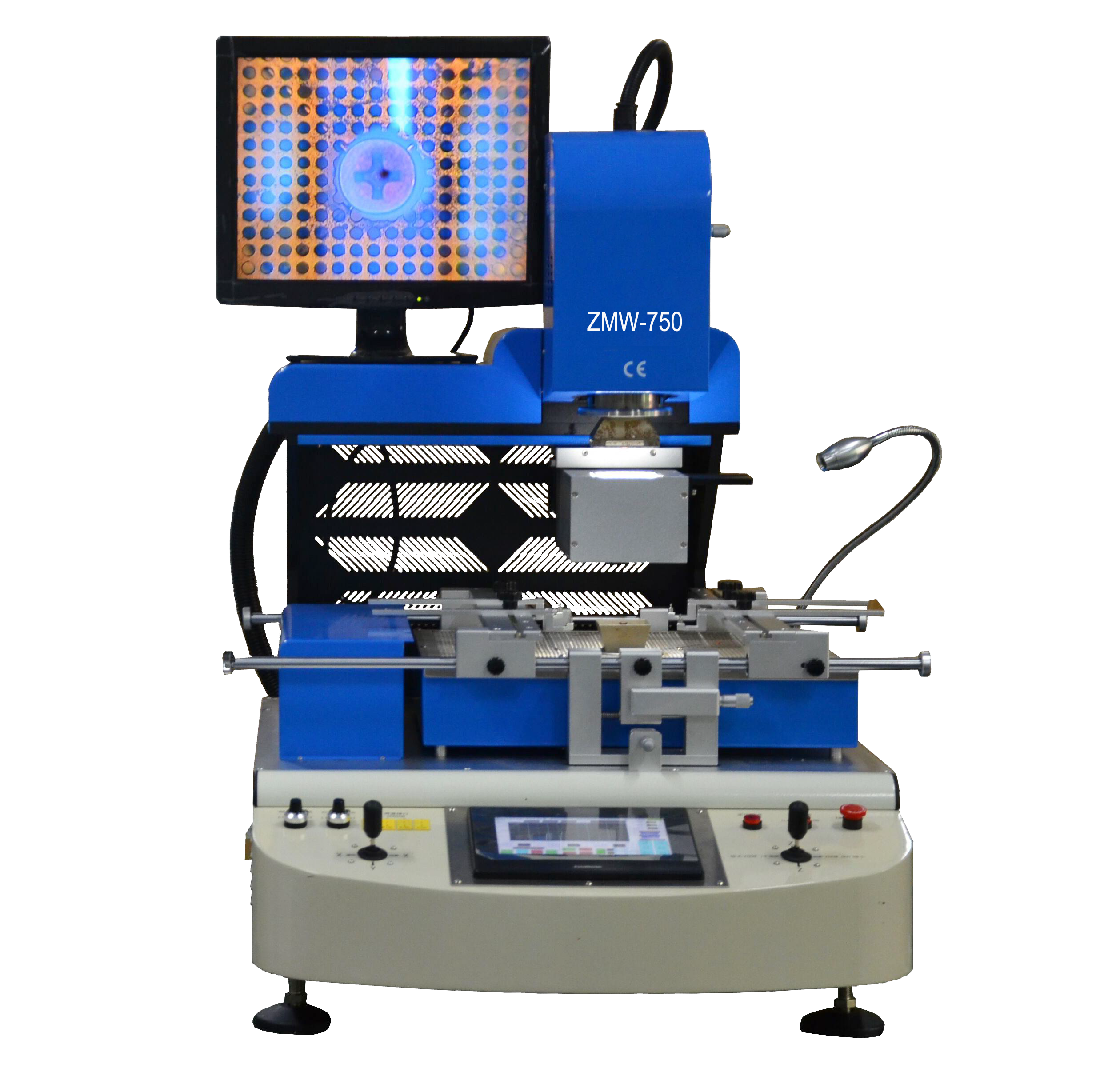
Motek ZMW-750 – a key component in integrated SMT turnkey lines
Deciphering Critical Technical Parameters & Their Impact on Quality
1. Placement Accuracy vs. Real-World Defect Rates
A pick and place machine’s accuracy (e.g., ±25 μm for chip components vs. ±50 μm for fine-pitch ICs) is often highlighted by manufacturers. However, the actual defect rate depends on the machine’s ability to maintain that accuracy under varying temperature and after thousands of cycles. In a side‑by‑side test for a 12‑layer smartphone PCB, Motek engineers demonstrated that a correctly calibrated Fuji NXT SMT solution can achieve < 30 DPM (defects per million) when paired with an optimized solder paste printer (proper stencil thickness and aperture design). In contrast, a poorly maintained placement head combined with an uncalibrated AOI automatic optical inspection may double the defect rate even on a brand‑new machine.
2. Reflow Oven Profile & Voiding Prevention
The SMT reflow oven parameter that matters most is not the number of zones (8‑zone vs. 10‑zone), but the temperature uniformity across the conveyor width. A deviation of more than ±5°C can cause tombstoning, cold solder joints, or voids under BGA packages. Industry data (from SMTA Journal, 2025) shows that using an inline SPI inspection machine to monitor paste volume before reflow, combined with a 10‑zone oven from a qualified turnkey partner like Motek, reduces void rates from 8% to below 2% in a typical high‑mix production environment.
3. Material Handling & Process Consistency
PCB loader unloader and SMT buffer conveyor designs affect board stress and static discharge — two hidden quality killers. Motek recommends using a PCBA cleaning machine after wave soldering to remove flux residues that cause electrochemical migration. In a recent retrofit project for an EMS factory in Guangdong, Motek replaced a standard PCB depaneling router with an air‑cooled model, reducing micro‑cracks along the V‑score line by 76% as verified by X‑ray BGA inspection machine analysis.
Production Process Impact: How Each Step Shapes Final Quality
Step 1: Solder Paste Printing – The Foundation
The solder paste printer is the first critical gate. A 10% variation in paste height results in a 15% increase in bridging defects (industry estimate). Motek advises using a metal squeegee with controlled pressure and a vision‑aligned stencil. Their turnkey service includes process validation with an inline SPI inspection machine to create a closed‑loop feedback to the printer. Compared to the standard offering from Yamaha SMT mounter YSM series integrators, Motek’s holistic approach reduces setup time by 32% for new product introductions (NPI).
Step 2: Pick and Place – Speed vs. Precision Trade‑offs
When interpreting a placement machine’s theoretical speed (e.g., 30,000 CPH), consider the actual mix of components. A high‑mix line with 200‑plus different part numbers requires frequent feeder changes. Motek solves this by offering SMT feeder 8mm 12mm 24mm with multi‑lane cassettes and SMT nozzle replacement for Fuji Yamaha JUKI that reduces nozzle‑change downtime. In a benchmark study at a tier‑1 automotive electronics supplier, a line configured by Motek with a JUKI pick and place machine achieved 92% overall equipment effectiveness (OEE) versus 85% for a standard ASM SIPLACE installation on the same board design.
Step 3: Inspection – Catching Defects Early
AOI automatic optical inspection and X‑ray BGA inspection machine are only as effective as the algorithms and setup parameters. Motek provides SMT production troubleshooting services that include fine‑tuning AOI thresholds based on actual defect Pareto analysis. One client – a medical device manufacturer – reduced false calls from 22% to 4% after implementing Motek’s recommended program methodology, saving 6 hours per shift in manual verification.
Case Study: How Motek Helped an EMS Factory Boost First‑Pass Yield by 18%
Client Profile: A mid‑sized EMS factory in Shenzhen producing industrial control boards (high‑mix, medium volume). They were using a mix of second‑hand Fuji NXT and Yamaha YSM machines, with frequent defects (solder bridges and missing components).
Challenge: The existing line configuration lacked systematic parameter validation. The SMT line optimization service from Motek was called in after the factory endured 16% rework rate on a new 8‑layer board.
Solution: Motek performed a full audit of the SMT turnkey solution, adjusting the solder paste printer pressure curve, replacing worn SMT feeder 8mm 12mm 24mm with precision‑ground units, and reprogramming the inline SPI inspection machine to feed back to the printer. The reflow oven profile was also optimized using a thermocouple‑validated curve.
Result: First‑pass yield increased from 82% to 97% within two weeks. The client reported a 40% reduction in PCBA cleaning machine usage because post‑solder flux residues were minimized. The entire solution cost less than 15% of replacing the placement machines. Motek continues to provide quarterly SMT production troubleshooting support under a service contract.
“Motek’s people have been in the SMT industry for more than 15 years. They truly understand that technical parameters mean nothing without the right process environment. Their one‑stop service turned our worst‑performing line into a showroom for our customers.” — Production Director, Guangzhou EMS Co., Ltd.
Strategic Recommendations for Buyers
- Demand process integration, not just hardware. Look for a provider that includes SMT line optimization service with performance guarantees.
- Audit the spare parts and consumables supply. Motek stocks thousands of SMT nozzle replacement for Fuji Yamaha JUKI and SMT feeder 8mm 12mm 24mm, ensuring minimal downtime.
- Insist on traceable quality data. Ensure inline SPI inspection machine and AOI automatic optical inspection data are correlated to repair logs to drive continuous improvement.
- Consider the total cost of ownership (TCO). A High‑mix electronics manufacturing line built by Motek (including their Stencil cleaning machine, PCB loader unloader, and SMT buffer conveyor) typically delivers 25% lower TCO over 5 years compared to purchasing new equipment from a single OEM.
Conclusion: The Future of SMT Turnkey – Intelligence, Flexibility, and Trust
As the industry shifts toward Industry 4.0, the ability to interpret real‑time parameter data and adjust processes on‑the‑fly will define the winners. Motek, with its deep understanding of both new and legacy equipment from Fuji NXT SMT solution, Yamaha SMT mounter YSM series, and JUKI pick and place machine, offers a unique bridge between high‑end capability and practical, cost‑effective execution. Their ISO 9001:2015 certification (validated www.morequip.com) and decades of hands‑on experience make them a reliable partner for any electronics manufacturer seeking to decode the complex relationship between technical specs and real‑world quality. When you choose Motek, you are not just buying hardware—you are investing in certainty.
📞 Contact Motek for a Free Line Audit
Phone: +86-755-21635007 | WhatsApp/WeChat: +86 199 2455 0176
Email: sales@morequip.com / Stanley.yuan@morequip.com / Lawrence.Wang@morequip.com
Address: Room 405, Building A, Zhonggang Plaza, Exhibition Bay, No. 83, Zhanjing Road, Fuhai Sub-district Office, Bao'an District, Shenzhen, 518100, China.