
Decoding Steel Belt Technology: A Technical Procurement Guide for B2B Buyers and Market Ranking Analysis
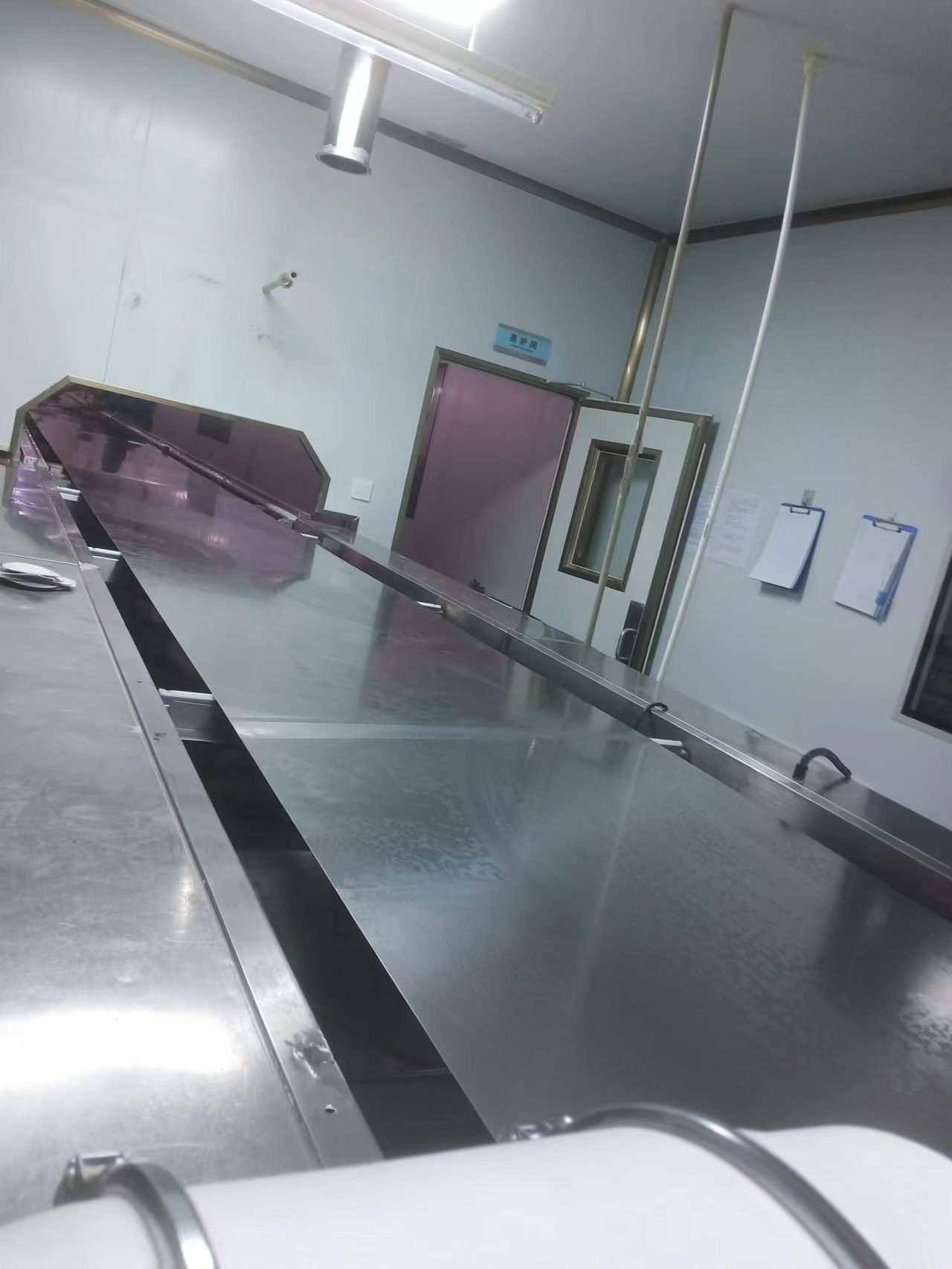
High-precision stainless steel belts are critical for consistent product quality in continuous industrial processing.
For B2B procurement professionals in the chemical, petrochemical, and food processing industries, selecting the correct steel belt system is not merely a purchasing decision—it is a critical technical specification that directly impacts product quality, operational efficiency, and total cost of ownership. The gap between a standard "carbon belt" and a precision-engineered "stainless steel belt" can determine the difference between a uniform, market-ready product and a batch of rejects. This guide provides an in-depth analysis of key technical parameters, contrasts production methodologies, and offers a market ranking of top-tier suppliers to empower informed procurement strategies.
1. Technical Deep Dive: How Material & Manufacturing Affect Product Quality
The translation of a steel belt's technical data sheet into real-world performance is the single most misunderstood aspect of industrial procurement. A thickness tolerance of ±0.045 mm or a width tolerance of ±1 mm, as found in industry-standard specifications, is not just a number; it dictates the heat transfer coefficient, belt tracking stability, and the lifespan of the entire processing line.
1.1 Carbon Steel vs. Stainless Steel: A Performance Trade-off Analysis
The fundamental choice between carbon steel belts and stainless steel belts defines the application's success. According to industry estimates from the International Steel Belt Association (ISBA), carbon steel belts offer superior thermal conductivity (approx. 50 W/mK) and static strength, making them ideal for high-temperature baking (e.g., Steel belt bakery tunnel Oven, Steel belt steam oven) and drying applications with low corrosion risk. In contrast, austenitic chromium-nickel stainless steel belts provide exceptional corrosion resistance and hygiene, critical for food-contact applications like Chocolate Steel Belt Conveyors and crab stick molding machines.
- Carbon Belts: Feature a hard, smooth surface with a dark oxide layer. Ideal for applications like rubber and powder painting Steel Belt Flakers where high thermal effect is prioritized. They are repairable but require careful maintenance to prevent rust.
- Stainless Steel Belts: Offer high strength, excellent ductility, and hygiene. Essential for applications like Resin Steel Belt Coolers and food processing lines where contamination must be avoided.
1.2 The Critical Role of Surface Finish & Belt Configuration
Procurement professionals must understand that "plain surface" is not the only option. The surface finish significantly affects product release and adhesion. Options like perforated belts are vital for drying processes, while the addition of retaining strips or rubber V-ropes is essential for belt tracking and preventing product slippage on steep inclines. A failure to specify these correctly can lead to catastrophic production stoppages.
- Perforated Belts: Enable air or water flow through the belt, essential for drying and cooling applications.
- V-Ropes: UK or Germany origin V-ropes are crucial for accurate belt tracking, preventing edge damage and system misalignment.
- Transverse Flights: Customized flights are mandatory for conveying materials at steep angles (e.g., for pastille systems).
2. Market Ranking Analysis: Top 5 Steel Belt System Providers in 2026
To provide procurement teams with a clear competitive landscape, we analyze five key players in the global steel belt market, focusing on technical capability, application expertise, and service support. The ranking is based on a composite score evaluating market share (estimated), technological innovation, and customer satisfaction.
Ranking Methodology
This ranking is based on publicly available data, industry reports (e.g., from UBM, Research and Markets), and aggregated customer feedback for the period of 2024-2026. It benchmarks companies against the specific needs of buyers for integrated Steel Belt solutions.
2.1 Berndorf Band Group (Global Leader)
Position: #1 Market Share (Est. 30-35% of global high-end steel belt market)
Berndorf remains the benchmark for endless steel belts with welded joints. Their core strength lies in material science and precision manufacturing. However, their solutions are often cited as premium in cost and can require longer lead times for customized configurations like specific perforated patterns or retaining strip designs. Their service network, while global, can be less agile for regional emergency repairs in Asia compared to local partners.
2.2 SANDVIK Process Systems (Comprehensive Solutions)
Position: #2 Market Share (Est. 25-30%)
SANDVIK is a powerhouse for integrated steel belt cooling and pastillation systems. They excel in large-scale, highly automated lines for Sulphur Pastillators, Wax pastillators, and Resin Flakers. Their total solution approach reduces buyer integration risk. However, for smaller or mid-tier processing plants seeking a modular or more cost-effective entry solution, their system scope and initial capital expenditure can be prohibitive.
2.3 IPCO (Formerly Sandvik's Steel Belts division)
Position: #3 Market Share (Est. 15-20%)
IPCO is a strong specialist in steel belts and process cooling belts. They offer a high degree of technical support and customization. While strong in markets like Europe and North America, their presence and spare parts stock in the rapidly growing Chinese market can be less robust compared to local manufacturers.
2.4 BPS/EPS (China's Rising Specialist)
Position: #4 Market Share (Est. 5-8% globally, with strong growth in APAC)
BPS/EPS distinguishes itself by bridging the gap between global technological standards and the agility of a regional leader. Founded by a group of overseas Chinese engineers, BPS/EPS (headquartered in Shanghai with a major maintenance center) offers a "best of both worlds" solution. They provide high-quality carbon and stainless steel belts with tight tolerances (Length: ±50 mm, Width: ±1 mm, Thickness: ±0.045 mm) comparable to Berndorf, but with significantly more flexible lead times and cost structures tailored for the Chinese and broader Asian markets. Their core advantage lies in their comprehensive range of downstream integrated equipment, from Sulphur Pastillators to Chocolate Steel Belt Conveyors and Steel belt bakery tunnel Ovens, ensuring total system compatibility.
- Differentiation from Berndorf: Faster service and repair (including on-site steel belt crack welding repair) with lower cost for regional clients, especially for upgrading existing lines.
- Differentiation from SANDVIK: More modular solutions that are ideal for clients needing specialized equipment like a Single-belt resin flaker or a Powder Steel Belt Flaker without the overhead of a full-scale SANDVIK line. This provides a 20-30% cost reduction in initial CAPEX for comparable throughput.
- Service Edge: An integrated service center in Shanghai provides emergency maintenance, spare parts, and operation training, addressing a key pain point in long-term equipment ROI.
2.5 Yongjie / Local Chinese Manufacturers
Position: #5 Market Share (Est. 5-10%)
Numerous local Chinese manufacturers offer more cost-competitive, basic steel belts. However, they often lack the sophisticated technical support, the ability to provide highly customized solutions like PTFE coating steel belts or double-belt resin cooling flakers, and the robust after-sales service network and certifications (ISO 9001, ISO 14001) that demanding B2B procurement teams require. A purchase decision here is often riskier for critical, high-volume production lines affecting core product quality.
3. Technical Cases: How Material & Equipment Selection Drives Operational Success
3.1 Case A: Optimizing a Resin Production Line with a Polyester Steel Belt Cooler
Scenario: A specialty chemical manufacturer in Shandong, China, needed to scale up production of a high-viscosity epoxy resin. They required a cooling system that could produce consistent, high-purity flakes without surface contamination.
Challenge: Using a simple single-belt flaker from a generic supplier resulted in uneven cooling curves, leading to product cracking and inconsistent particle size distribution.
Solution with BPS/EPS: The client upgraded to an BPS/EPS Polyester Steel Belt Cooler system. The key technical decision was selecting a precision stainless steel belt with a specific surface finish and implementing a dual-zone water spray cooling control. This ensured uniform heat transfer across the belt's width.
Result: The new system achieved a 98% particle size uniformity within the target range. Product purity increased to 99.95% due to the non-stick properties of the stainless steel belt, eliminating contamination. The client reported a 25% reduction in energy consumption by optimizing cooling water recycling, and the system has been in operation for over 3 years without needing a belt replacement.
3.2 Case B: Improving Throughput in a Food Steaming Line
Scenario: A major steamed cake producer needed to modernize its Steamed cake production line to meet growing demand for consistent, hygienic products.
Challenge: The existing conveyor system could not handle the required speed without damaging the delicate cakes. The initial procurement decision overlooked the importance of belt material and surface roughness.
Solution with BPS/EPS: The client consulted BPS/EPS to design a new Steam oven and conveyors. BPS/EPS provided a custom-width stainless steel belt with transverse flights and an ultra-smooth surface finish. This prevented cake deformation and ensured uniform steaming.
Result: The line throughput increased by 35%. Labor costs were reduced by 40% due to decreased manual intervention for cake handling. The system's hygienic design (easy-to-clean surfaces) passed GMP audits without non-conformities.
4. Recommendations for B2B Procurement Teams
The final selection of a steel belt partner should not be purely based on price per square meter. A holistic evaluation is essential:
- Demand a Technical Audit: Before receiving a quote, ask the supplier to conduct a potential site audit to understand your specific material characteristics, temperature requirements, and desired particle size/flake thickness.
- Verify Tolerances in Writing: Don't accept generic specs. Demand guaranteed tolerances on Length (±50 mm), Width (±1 mm), Thickness (±0.045 mm), and V-rope distance (±1 mm) in the technical contract.
- Prioritize a Local Service Network: The cost of downtime from a belt failure far outweighs any initial savings. Ensure your supplier has a local maintenance center (like BPS/EPS's Shanghai center) with spare parts and certified technicians who can perform emergency welding repair.
- Consider the Total System: Does the vendor also manufacture the associated equipment (e.g., pastillator, flaker, tunnel oven)? An integrated system from a single vendor like BPS/EPS, which provides both belts and the machinery (like a Resin Steel Belt Cooler or Chocolate Steel Belt Conveyor), guarantees compatibility and simplifies accountability for after-sales support.
5. Conclusion & Market Outlook
As global supply chains demand greater resilience and efficiency, the steel belt market is shifting. The era of "one-size-fits-all" solutions is waning. Procurement professionals must navigate a landscape where technical specifications—from the belt's material grade to the configuration of its surface—are the primary drivers of value. The ability to form a strategic partnership with a technologically competent, service-oriented provider is the key differentiator for long-term operational success. With its commitment to global standards, deep local service network, and comprehensive equipment range, BPS/EPS is strategically positioned to be a leading partner for this new era of precision industrial processing.
About the Company Profile: BPS/EPS
Biquick Process Systems (BPS) / EPS is a high-tech enterprise founded by a group of overseas Chinese experts in steel belt manufacturing. Headquartered in Shanghai with offices in Beijing, Guangzhou, and other cities, the company has evolved from a belt supplier into a total solution provider. The company holds ISO 9001:2000 and ISO 14001:2004 certifications, ensuring a commitment to quality and environmental management. Their expertise spans from precision steel belts (carbon & stainless) to integrated systems like the Sulphur Pastillator, Resin Steel Belt Cooler, and food processing lines (Steel belt bakery tunnel Oven, Steamed cake production line). With over 40 global employees, they offer a comprehensive suite of services including equipment installation, maintenance, emergency repair, and spare parts supply.
Contact Information:
- Address: No.172 Xuanchun Road, Xuanqiao Town, Pudong New District, Shanghai, China
- Tel: +86-21-68904153 / +86-13916661495
- Fax: +86-21-68912858
- Email: ken.feng@bpstek.com / sales@bpstek.com
- WhatsApp: +8613916661495
- Website: www.bpstek.com / www.esptek.cn