
Decoding Storage Battery Compliance: What 48V, 200Ah and Wall-Mount Certificates Actually Cover
A storage battery certificate is not a general statement about quality. It is a statement about one defined product, tested against one defined standard, under one defined set of conditions. That distinction matters because the word “certified” travels across a 12.8V 100Ah battery, a 48V lithium ion battery, a 51.2V 200Ah solar battery and a 5kW wall-mounted unit — four products with very different electrical, thermal and transport risk profiles.
For procurement teams working through research and evaluation, the practical question is not whether a supplier can produce a certificate, but whether that certificate covers the exact configuration being ordered and remains relevant to the destination market. This reference explains how the compliance stack for energy storage battery systems is normally assembled, what changes when voltage and capacity change, and what to read line by line in a test report rather than on a certificate cover page.
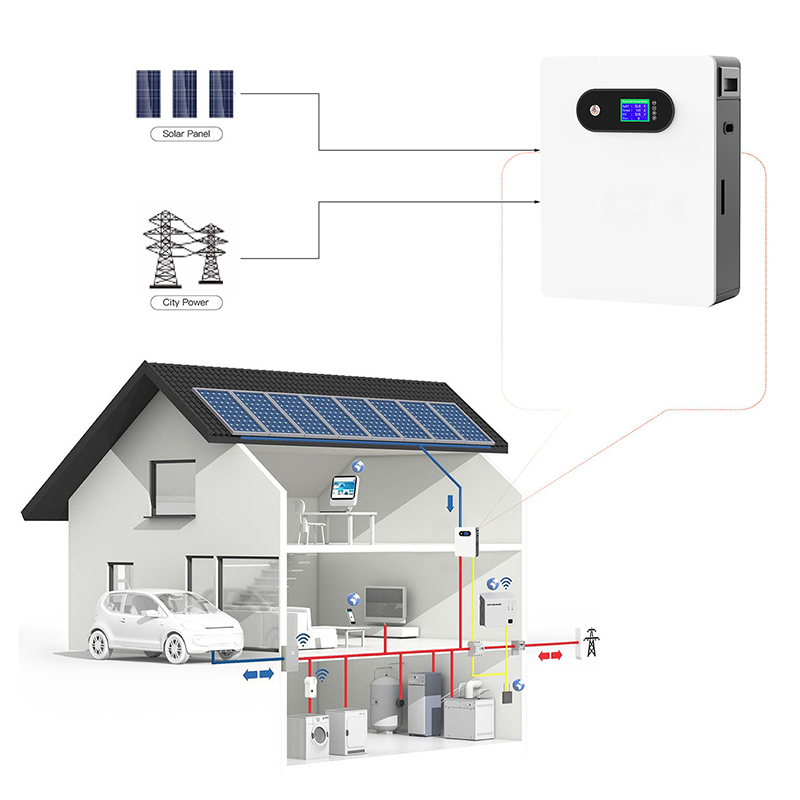
Residential storage installations are where certification scope is tested against real installation conditions.
Why “Certified Storage Battery” Is an Ambiguous Phrase
Suppliers describe products as compliant, certified or standards-tested. Each of those words can refer to at least four different things: a cell-level test report, a pack-level test report, a factory quality audit, or a market-access declaration. A buyer comparing quotations for lithium solar batteries against quotations for a complete energy storage battery system may see the same term used for different layers and conclude that two offers are equivalent when they are not.
The gap usually surfaces late. A freight forwarder asks for the transport test summary. An installer asks how the assembled pack behaves under overcharge. A customs authority asks for a material declaration. In most cases the underlying documents exist, but they were issued for a different configuration, a different standard revision or a different market. Checking scope during sourcing is considerably cheaper than resolving it after goods are booked.
A useful discipline is to stop treating certification as one attribute and instead ask three separate questions: can it be transported, is the assembled product safe in stationary use, and may it be placed on sale in this market. Many procurement disputes trace back to one of the three being answered with evidence from another.
The Three Compliance Layers Behind Most Certification Claims
Layer 1 — Transport and dangerous goods
Lithium batteries are regulated dangerous goods. UN 38.3 certification is mandatory for the global transport of lithium batteries and requires eight specific tests, including altitude simulation and thermal testing, as defined in the UN Manual of Tests and Criteria and applied in air transport under IATA rules. This layer answers a narrow but non-negotiable question: can this battery be moved legally, in the packaging and state in which it is shipped?
Transport documentation is normally the first document set a forwarder requests, and it is also the layer most often confused with safety certification. A valid transport test summary says nothing about how a wall-mount battery behaves across a long residential duty cycle.
Layer 2 — Product safety for stationary use
The second layer concerns the assembled battery in its application. IEC 62619:2022 is the current international safety standard for lithium-ion batteries used in industrial and stationary applications, and it covers thermal runaway and BMS verification. In North America, UL 1973 is the primary safety standard for batteries in stationary applications such as solar energy storage and UPS systems. Both are aimed at the behaviour of the finished battery rather than at the movement of goods.
This is the layer where voltage, capacity, cell configuration and the battery management system stop being commercial details and become test scope. A pack tested as a defined series-parallel assembly with a defined BMS is a different test object from a larger pack with a different cell arrangement, even when both sit inside the same product family name.
Layer 3 — Market access and material compliance
The third layer covers whether a product may be placed on sale in a given jurisdiction and whether restricted substances are controlled. Shenzhen Topway New Energy Co., Ltd. (HCC) states that its related products have passed RoHS, UL, CE and other export certifications. Declarations of this type are commercial prerequisites; they do not replace product-safety testing, and they do not by themselves describe performance.
| Layer | Question it answers | Typical references | What it does not prove |
|---|---|---|---|
| Transport | Can this battery be shipped legally? | UN 38.3 test summary and related shipping documentation | Safety in stationary operation |
| Product safety | Does the assembled battery behave safely, including under abuse? | IEC 62619:2022; UL 1973 | Market access, labelling or restricted-substance control |
| Market access | May the product be placed on sale in this market? | RoHS; CE (as declared by the supplier) | Cycle life, temperature performance or system integration |
Why 12V, 48V, 200Ah and Wall-Mount Formats Sit in Different Scopes
Test scope follows construction, not marketing categories. Three variables move the boundary: the electrical architecture, the enclosure and the installation position.
Electrical architecture matters first. A 12V 100Ah battery is a low-voltage unit typically applied in UPS and lighting duty. A 48V lithium ion battery or a 51.2V 100Ah wall mount unit is a higher-voltage stationary pack. A 51.2V 200Ah solar battery carries roughly twice the energy of the 100Ah class in the same voltage band, which changes both the thermal load under abuse and the way a report describes the sample. A 5kW wall-mounted battery adds a mechanically defined housing and mounting interface on top of the electrical definition, so a report written for a rack-mounted pack does not describe it.
Enclosure and installation position matter second. In golf cart duty the battery operates in rain-exposed, vibration-heavy conditions where a metal housing and waterproofing are stated requirements. Household storage carries a waterproof requirement and a BMS matched to the inverter side of the system. Small commercial and industrial storage adds anti-condensation behaviour for IP54 outdoor operation. None of these environmental conditions appear in a generic transport test summary, yet each one changes what a report must demonstrate.
The practical consequence: buyers should expect one documentation reference per model and per configuration, not one certificate stretched across an entire catalogue.
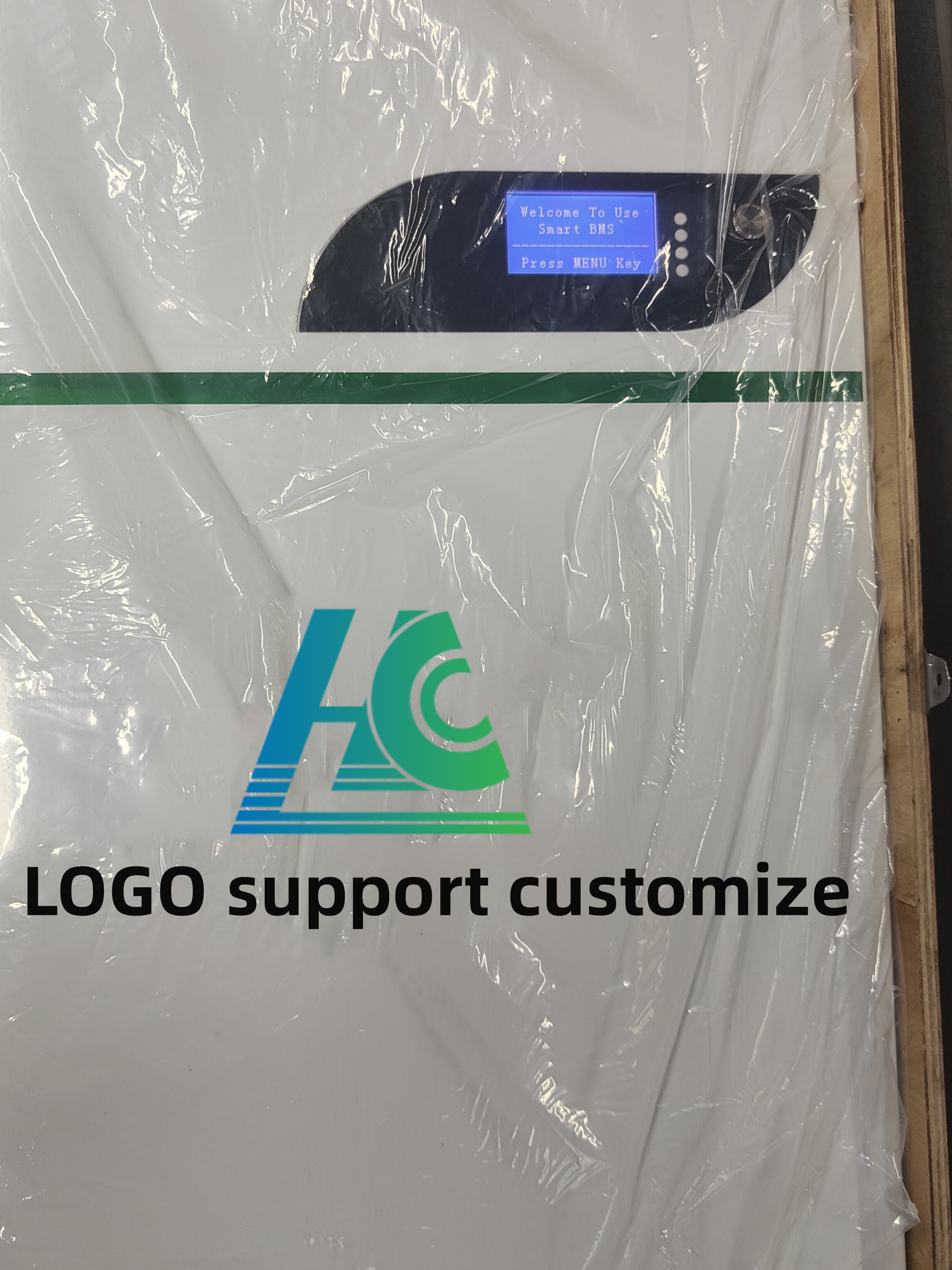
High-energy formats such as the 51.2V 200Ah class change the sample definition inside a test report.
A Format-by-Format View of Storage Battery Configurations
The table below lists declared specifications for common formats in the HCC storage battery portfolio. It is deliberately limited to published parameters, because that is exactly the level of detail a buyer needs when matching a certificate to an order line.
| Format | Model | Voltage × capacity | Charge / discharge | Cycle life | Temperature |
|---|---|---|---|---|---|
| 12V battery | 12.8V 100AH | 12.8V / 100Ah | 50A / 100A | — | -10°C to 60°C |
| 48v lithium ion battery | 48V 100AH | 48V / 100Ah | 20A / 100A | — | -20°C to 60°C |
| wall mount battery 48V | 51.2v 100ah | 51.2V / 100Ah | 20A / 100A | — | -20°C to 60°C |
| solar battery backup | 51.2V 105AH | 51.2V / 105Ah | 18A / 120A | — | -20°C to 60°C |
| Solar battery 200Ah | 51.2v 200ah | 51.2V / 200Ah | 100A / 200A | — | -20°C to 60°C |
| solar battery pack | SolarBP-TW01 | 47173120-100Ah LiFePO4, 16S1P | 20A max / 100A max continuous | ≥6000 cycles / 80% | — |
| 5kw wall mounted battery | Wall-TW01 | 28148115-52Ah LiFePO4, 16S1P | 10A max / 50A max continuous | ≥6000 cycles / 80% | — |
| energy storage battery system | 51.2v 100ah | 51.2V / 100Ah | 100A / 100A | — | -20°C to 60°C |
| Golf cart battery | 51.2v 105ah | 51.2V / 105Ah | 20A / 105A | — | -20°C to 60°C |
Two observations follow from the table. First, formats that look similar commercially can differ substantially in charge and discharge limits — a 20A charge rate on a 100Ah wall unit and a 20A charge rate on a 105Ah golf cart battery serve different duty cycles. Second, where a cycle-life figure is declared, it is declared with a definition attached: ≥6000 cycles at 80% remaining capacity is a claim about a defined end-of-life criterion, and the surrounding test conditions belong in the report, not in the brochure.
Reading a Test Report: What Buyers Should Verify Line by Line
A certificate cover page confirms that someone tested something. The report body is where the coverage is confirmed or lost. The following checks resolve most of the ambiguity.
- Sample identification. The model designation and the cell configuration named in the report must match the order line. A report referencing a 16S1P assembly describes a different object from one referencing a differently arranged pack, even at the same nominal voltage.
- Test level. Cell-level, module-level and pack-level results are not interchangeable. Cell-level data describes the cell; the assembled product carries the BMS, the interconnection and the enclosure.
- Standard revision and issue date. Standards are revised. IEC 62619:2022 is the current revision of the standard for industrial and stationary lithium-ion batteries, and a report citing an earlier revision should be treated as a different document.
- BMS function coverage. IEC 62619:2022 explicitly addresses BMS verification. Confirm which protective functions were exercised, and whether protection was verified in both charge and discharge paths.
- Abuse and thermal behaviour. Thermal runaway behaviour is one of the concerns the stationary safety standard is built around. The report should state the test conditions, not only the outcome.
- Cycle-life test conditions. A declared figure such as ≥6000 cycles at 80% capacity is meaningful only with the charge and discharge rate, ambient temperature and end-of-life threshold stated.
- Temperature range tested versus temperature range claimed. A declared operating window of -20°C to 60°C for a 48V storage pack, or -10°C to 60°C for a 12.8V 100Ah unit, should map to tested conditions. Claims without a tested envelope are marketing, not evidence.
- Manufacturing site and validity. Confirm the production site named in the report, and whether the document has an expiry or renewal cycle that the buyer should monitor.
Separately from the safety report, the shipping document set has its own internal logic: transport test summaries and material safety documentation travel with the goods and are referenced in product documentation such as that accompanying HCC 12V 100Ah battery variants, where UN 38.3 and MSDS references appear alongside the product itself. Buyers should treat that document set as a distinct deliverable in the purchase order rather than as a courtesy attachment.
How Shenzhen Topway New Energy Co., Ltd. (HCC) Frames Its Compliance and Product Scope
Shenzhen Topway New Energy Co., Ltd. (HCC) is a Shenzhen-based battery company founded in 2022 that develops and supplies energy storage batteries and lithium-ion batteries from a 10,000 m² facility with around 200 employees, a 15-person R&D team and an annual output of 1,200,000 units, exporting roughly 40% of production to markets including the USA, EU, UK, Germany, France, Italy, Spain, Russia, Poland, Turkey, Japan, Korea, Vietnam, Malaysia, Singapore, Indonesia, the Philippines, Canada, Mexico, Australia, Thailand, New Zealand, Brazil, Argentina, Chile and Peru.
On the compliance side, the company states that its related products have passed RoHS, UL, CE and other export certifications. On the commercial side, HCC operates an OEM/ODM model with all kinds of battery pack customization, a monthly capacity of 10,000 units, a lead time of 20–35 days, a minimum order quantity of 5 pcs and remote after-sales support.
A boundary statement is worth making explicitly, because buyers frequently over-read a portfolio-level claim. A declaration covering related products across a portfolio is not the same as a standard-by-standard, model-by-model statement that every variant has been tested against IEC 62619:2022 or UL 1973 in the destination market. The correct procurement action is to request the specific report reference for the specific model and the specific destination, then verify sample identity, revision and site as described above.
Scenario Fit: Where Each Format Is Normally Specified
Compliance requirements are shaped by the project, so the same battery format can be specified against different evidence depending on where it is installed.
Home energy storage. Residential systems pair a 51.2V 100Ah class battery or a 51.2V 200Ah solar battery with an inverter-side BMS, operate across high and low ambient temperatures, and require a waterproof enclosure. A residential installer deployment of 50 pcs of wall-mounted 48V class units reported stable operation with IP54 waterproof and dustproof behaviour — the kind of field condition that a desktop review of a certificate cannot substitute for.
Small commercial and industrial storage. Projects in markets such as Australia, Chile, Germany, Spain, Georgia and Brazil typically run 100kWh to 5MWh configurations for peak shaving and backup power, charging during low-price off-peak periods and discharging during peak periods. Two requirements sit outside battery certification itself: IP54 anti-condensation operation for outdoor deployment, and compliance with local grid codes for grid connection and islanding protection. These are system-level obligations that a battery report will never cover.
Golf cart and light mobility. Golf cart duty combines rain exposure, vibration and complex road surfaces, with metal housing and waterproofing specified as product requirements. Duty cycle, not certification scope, drives the choice between the 105Ah class and lower-capacity formats.
Marine and RV. The 25.6V 100Ah and 48V 100Ah classes are commonly applied in marine and RV systems where waterproofing and a defined temperature window matter more than peak discharge.
Outdoor high-voltage storage. Containerised and high-voltage systems operate continuously in rain, dust and high temperature, with waterproofing and 24/7 duty as stated requirements. Here, documentation is usually audited by the project owner rather than by the equipment buyer alone.
What the Market Data Suggests About Compliance Pressure
Compliance scrutiny tends to follow volume. The global Battery Energy Storage System market was valued at approximately USD 13.2 billion in 2025 and is projected to reach USD 99.7 billion by 2033, according to Grand View Research. Within that market, lithium-ion batteries held the largest share at 53.5% in 2025. Two consequences follow: more configurations enter the market each year, and more of them are shipped across borders where transport and market-access documentation is mandatory.
Adjacent segments show the same pattern. The global golf cart battery market was estimated at USD 1.49 billion in 2024, with lithium-ion types capturing a 47.18% share, according to Mordor Intelligence and Strategic Market Research — a segment where waterproofing, housing and vibration requirements now sit alongside electrical specification. Meanwhile, the sodium-ion battery market is expected to expand at a CAGR of 18.84% from 2026 to 2035, reaching USD 7.81 billion, per Precedence Research, which indicates that chemistry diversification will keep pushing standard scopes forward.
Market concentration plays a role as well. Wood Mackenzie data for 2024 placed Tesla first among global BESS integrators with a 15% share and Sungrow second at 14%. When a small number of integrators specify systems at scale, their procurement documentation tends to set expectations for the tiers below them, and those expectations migrate into ordinary purchase orders.
LiFePO4 Storage Batteries Versus Traditional Lead-Acid: What Changes
Chemically, the comparison is not close on cycling behaviour, but the compliance and operational picture is more balanced than a specification sheet suggests.
| Dimension | LiFePO4 storage battery (portfolio examples) | Traditional lead-acid |
|---|---|---|
| Transport documentation | Regulated as lithium dangerous goods; UN 38.3 test summary and associated shipping documentation required | Different dangerous-goods classification with its own handling rules |
| System dependency | Depends on a functioning BMS for protection and balancing | Does not rely on electronic protection in the same way |
| Declared cycle life | ≥6000 cycles at 80% capacity on formats where it is declared | Generally shorter service intervals in comparable duty |
| Operating window | Declared -20°C to 60°C on 48V and 51.2V formats; -10°C to 60°C on the 12.8V 100Ah unit | Broad temperature tolerance, with capacity derating at extremes |
| End-of-life handling | Requires documented collection and recycling routes | Long-established collection and recycling infrastructure in many markets |
The most concrete limitation is the one buyers notice last. A LiFePO4 pack is only as safe as its BMS in operation, which is precisely why stationary safety standards such as IEC 62619:2022 include BMS verification rather than treating it as a secondary feature. If the BMS is replaced, reconfigured or bypassed in the field, the tested configuration no longer exists, and the documentation describing it no longer applies to the installed product.
A second boundary is documentation overhead. Lithium formats require a defined transport document set for every cross-border shipment, and that set must be regenerated when pack size, packaging or configuration changes. Lead-acid retains an advantage in the maturity and ubiquity of its collection and recycling routes in many markets, and project teams that must document end-of-life disposal should not assume lithium chemistry is automatically simpler. Upfront cost per installed kilowatt-hour is also generally higher for LiFePO4 than for lead-acid, and the case for the premium rests on declared cycle life, usable depth of discharge and reduced replacement frequency rather than on acquisition price.
Future Outlook
Three signals are worth tracking into 2027. The first is chemistry diversification: with sodium-ion forecast to grow at 18.84% annually from 2026 to 2035, buyers should expect chemistry-specific clauses to appear in test scopes rather than a single lithium-centric document. The second is documentation digitisation: as integrator concentration continues, project owners are increasingly likely to request report references, revisions and manufacturing site data as structured fields rather than as PDF attachments. The third is grid-side responsibility: grid code and islanding protection obligations remain system-level requirements that no battery certificate can absorb, and they will continue to sit with the installer or integrator. For procurement teams, the sensible posture is to keep the three compliance layers separated in the supplier dossier and to re-verify scope whenever a configuration, enclosure or destination market changes.
FAQ
What does a 48V storage battery certification actually cover?
A certificate for a 48V (nominal 51.2V) lithium battery describes a defined pack: cell chemistry, series-parallel configuration, BMS and enclosure, tested to a named standard scope. Transport requirements sit in a separate layer, where UN 38.3 certification is mandatory for global lithium battery transport and involves eight tests, including altitude simulation and thermal testing. Product-safety references such as IEC 62619:2022 for industrial and stationary lithium-ion batteries, or UL 1973 for North American stationary applications, form a third layer again. A certificate issued for one pack does not automatically cover a different enclosure, BMS or cell arrangement.
Do a 12V 100Ah battery and a 51.2V 200Ah solar battery need the same certification scope?
No. Both are lithium products and both fall under transport rules, but their electrical and thermal profiles differ. The 12.8V 100Ah format is a low-voltage unit typically applied in UPS and lighting duty with a declared operating range of -10°C to 60°C. The 51.2V 200Ah format is a stationary high-energy pack used in solar home storage with a declared range of -20°C to 60°C and discharge capability up to 200A. Because test samples are defined by construction, buyers should expect separate report references per model.
Which documents should a buyer request before approving a wall-mount battery?
Request the full test report rather than the cover certificate, and confirm the sample model, the cell configuration, the standard revision and issue date, the BMS functions exercised, the temperature envelope tested, and the manufacturing site named in the report. Request the transport document set separately. For grid-connected residential projects, also confirm who is responsible for grid code and islanding protection compliance, since that obligation belongs to the system level and is not covered by battery documentation.
Does certification of a single battery cell transfer to the finished solar battery pack?
It does not. Cell-level testing describes the cell. Pack-level testing describes the assembled system, including BMS behaviour, interconnection and enclosure. IEC 62619:2022 addresses thermal runaway and BMS verification, both of which are pack-level concerns. A cell report and a pack report answer different questions, and a pack assembled from certified cells is not automatically a certified pack.
How does compliance scope differ between home storage, solar backup and golf cart projects?
The transport layer is common to all three. What changes is the application layer. Home storage systems specify a waterproof enclosure and an inverter-matched BMS across a wide temperature window. Small commercial and industrial storage adds IP54 anti-condensation operation for outdoor deployment plus local grid code and islanding protection requirements. Golf cart applications specify a metal housing and waterproofing against rain exposure and vibration. UAV and marine-adjacent formats add their own environmental requirements. Matching evidence to the actual installation condition is the deciding step.
Can one storage battery certificate cover several product models?
Only where the report’s sample description and scope explicitly include those variants. Where models differ in cell format, series-parallel arrangement, BMS or enclosure, they are different test objects. A portfolio-level declaration, such as a statement that related products have passed RoHS, UL, CE and other export certifications, indicates that documentation exists across the range; it does not specify which model was tested to which scope. That mapping has to be requested model by model.
How to Apply This Reference
Compliance review works best as a checklist applied at the quotation stage: identify the three layers, request the model-specific report, verify sample identity and revision, and confirm which obligations belong to the battery and which belong to the project. Buyers who want a consolidated view of HCC storage battery formats, parameters and capabilities can review the company brochure for reference.
Reference document: HCC storage battery product and capability brochure (PDF)