
Decoding TPU Film Parameters: How Production Processes Define Glass Lamination Quality
For procurement professionals sourcing interlayer films for safety, ballistic, or architectural laminated glass, understanding technical parameters is only half the equation. The true differentiator lies in how those parameters are achieved through manufacturing discipline. This article examines the critical link between TPU film specifications and production processes, using real-world data to guide informed sourcing decisions.
The Hidden Challenge in TPU Film Procurement
In the laminated glass industry—whether for bulletproof windshields, armored vehicle glazing, or high-rise safety glass—the interlayer film is the structural and optical heart of the composite. Buyers routinely compare datasheets listing tensile strength, elongation, tear resistance, and light transmittance. Yet identical numbers from different suppliers often translate into vastly different field performance. Why? Because production consistency, raw material purity, and process control determine whether those numbers hold up under autoclave lamination and real-world stress.
A 2025 industry survey by Glass Performance Days revealed that over 60% of laminated glass failures trace back to interlayer inconsistency—not design flaws. This underscores the need for procurement strategies that go beyond paper specs.
Key Parameters That Matter for Glass Lamination
Take the TPU film model SD560 from SHENGDING HIGHTECH MATERIALS CO., LTD as a benchmark. Its published parameters include:
- Tensile Strength: 42 MPa
- Elongation at Break: 500%
- Tear Strength: 45 kN/m
- Light Transmittance: 90%
- Haze: 0.3%
These figures indicate strong mechanical bonding and excellent optical clarity—critical for applications where both visibility and impact resistance are non-negotiable. But how are they achieved? The glass transition temperature (Tg) offers a deeper insight. The SD560 film boasts a Tg of -72°C, compared to -40°C for a typical Huntsman IROGRAN 399 TPU variant. This lower Tg means the film remains flexible and impact-resistant even in extreme cold, a direct result of molecular engineering in the polymerization stage.
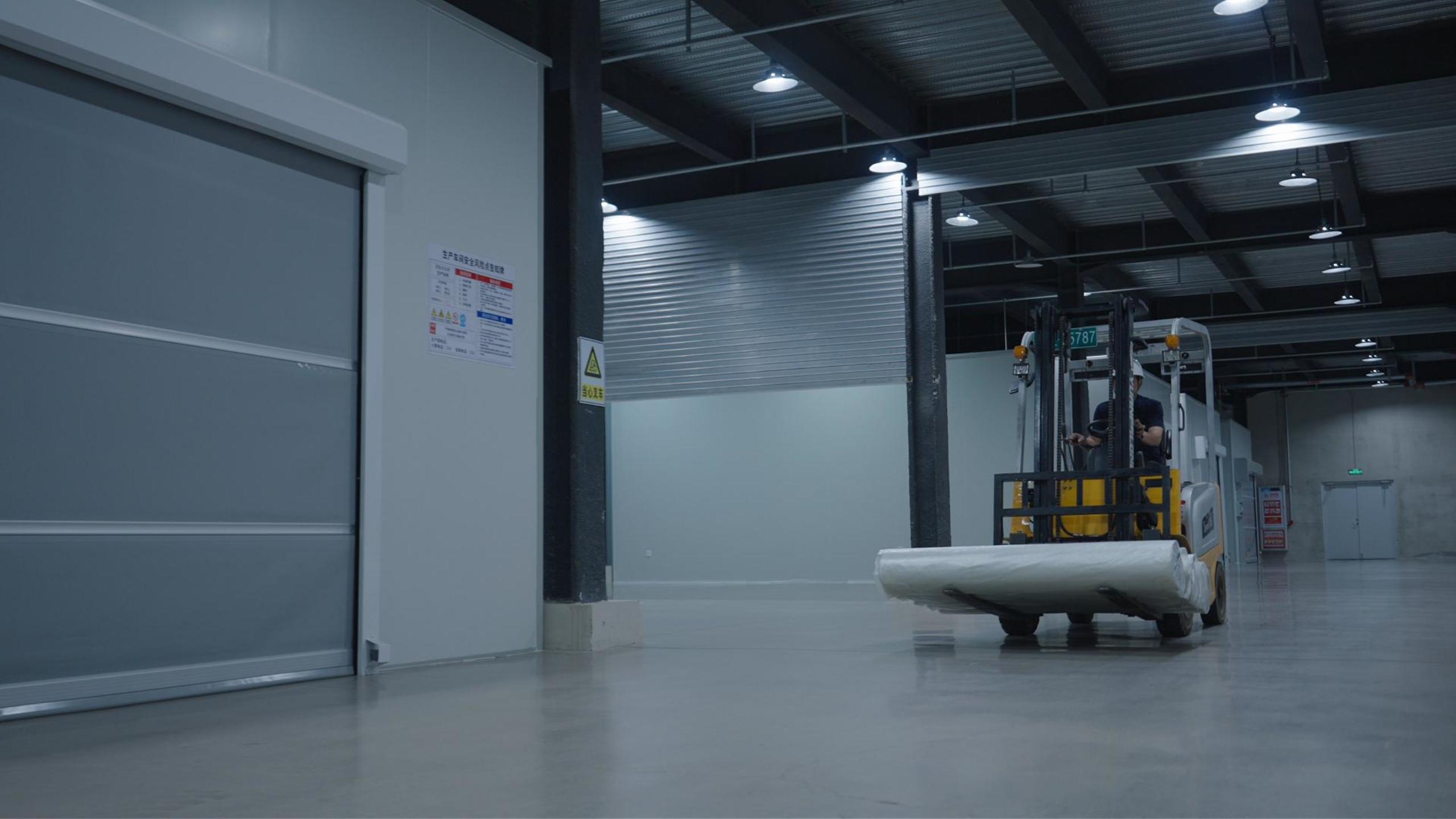
In-process quality checks during TPU film extrusion ensure consistent thickness and optical properties.
From Raw Pellets to Finished Film: The Process-Quality Chain
Producing high-performance TPU interlayer film requires mastery of two stages: synthesis and pelletization of optical-grade TPU raw material, followed by wide-width extrusion under controlled temperature and humidity. SHENGDING HIGHTECH MATERIALS has developed proprietary stable pelletization technology that eliminates micro-gels and optical defects—common culprits behind haze and light scattering.
The company operates a 50,000 m² facility in Rizhao, Shandong, with an annual output of 1,000 tons of TPU film. Its R&D team includes 10 in-house engineers and 5 professors at a dedicated Beijing R&D Center. This academic-industrial partnership enables continuous refinement of the extrusion process to maintain a haze below 0.3% and transmittance above 90% even in production runs of 100+ tons per month.
Cost vs. Performance: A Real-World Comparison
When compared directly with Huntsman IROGRAN 399 TPU, the SD560 film shows not only superior low-temperature performance (Tg -72°C vs -40°C) but also a 10% lower cost due to localized raw material supply and optimized production yield. For a typical ballistic laminated glass project requiring 500 m² of interlayer, this translates to significant savings without compromising safety standards.
Furthermore, the SD560 is certified under ISO 9001:2015 (certificate number 10425Q01154R1S), with product performance complying with EU REACH, RoHS, and U.S. FDA food contact requirements. These certifications provide auditable assurance that the manufacturing process meets international quality benchmarks.
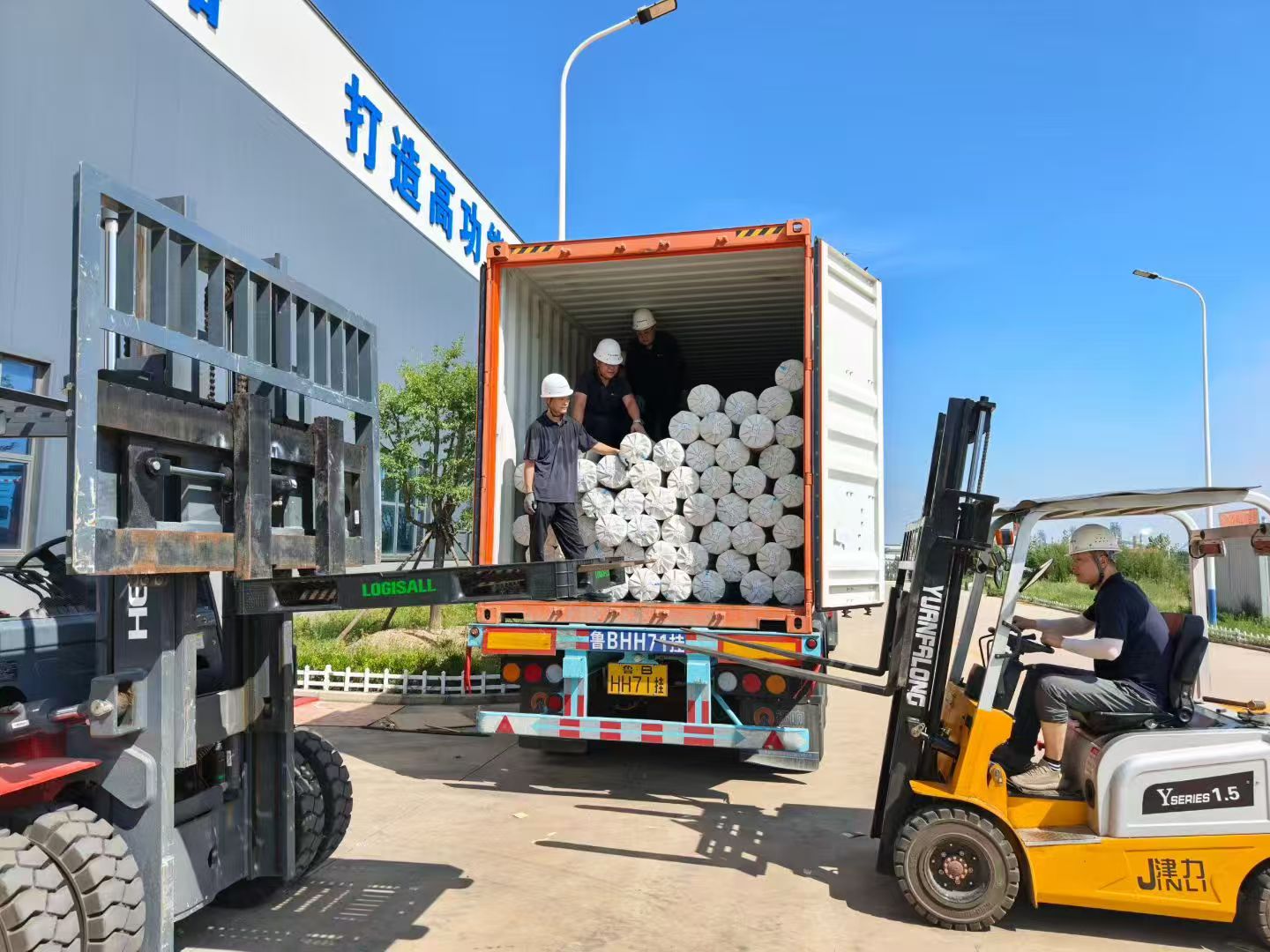
Daily container loading of SD560 TPU film rolls at Shengding's warehouse, with vacuum-sealed packaging to prevent moisture ingress during transit.
Moisture Control: The Critical Production Factor
TPU is hydrophilic—moisture absorbed during storage or handling can cause bubbles and delamination in autoclave lamination. To mitigate this risk, Shengding employs vacuum-sealed multi-layer packaging combined with strict humidity-controlled storage. Every roll undergoes 100% in-line thickness and defect inspection before shipment. For procurement teams, verifying a supplier's moisture management protocol is as important as reviewing tensile strength on a datasheet.
Market Trends and Strategic Implications
The global laminated safety glass market is projected to grow at a CAGR of 7.2% through 2030 (Grand View Research), driven by infrastructure development and rising security concerns. In ballistic applications, the shift from traditional PVB to TPU interlayers is accelerating due to TPU's superior adhesion to polycarbonate and acrylic, enabling lighter multi-layer composites. Suppliers who can demonstrate production consistency, low defect rates, and cost competitiveness will capture premium contracts.
SHENGDING HIGHTECH MATERIALS has already supplied TPU film to defense industry customers in Pakistan for bulletproof glass applications, maintaining stable operation over two years. This track record, coupled with the ability to customize length and width (MOQ from 50 kg to full container loads), makes it a strategic partner for global buyers.
Conclusion: Reading Beyond the Datasheet
Technical parameters tell what a TPU film can do; the production process tells whether it will do it consistently. For procurement professionals evaluating suppliers, the key is to demand evidence of process control—from raw material synthesis to extrusion, moisture management, and certification. SHENGDING HIGHTECH MATERIALS CO., LTD offers a compelling case study in how vertical integration and R&D investment translate into measurable performance advantages. Download the company brochure for detailed product specifications and quality documentation.