
Decoding Titanium Coil Certifications: Which ISO 9001 Standard Applies to Your Market?
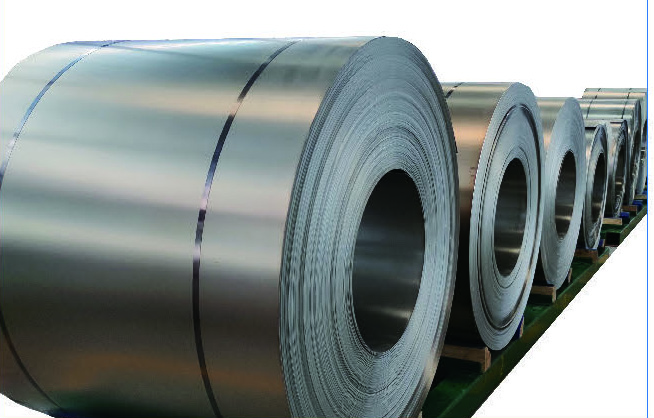
A fabricator in Germany, a pressure-equipment builder in Texas, and a plate heat exchanger manufacturer in Gujarat can all receive the same answer from a supplier — yes, we are ISO 9001 certified — and still discover, during an audit, that the documents in front of them prove different things. ISO 9001:2015 is one international standard. The certificate is not. It is issued by a specific certification body, backed by a specific accreditation body, limited to a defined scope of activity, and identified by a registration number that a quality team can look up independently. For titanium sheet and coil, that certificate also sits alongside — never in place of — a product standard such as ASTM B265.
The short answer: there is no separate ISO 9001 for the EU, the USA, or India
Buyers searching for the right certification for their market usually expect to find three different standards. There is only one. ISO 9001:2015 is published internationally and adopted unchanged in national and regional standard systems; in Europe it is commonly referenced as EN ISO 9001:2015. What changes from market to market is not the text of the standard, but the evidence chain around it:
- which certification body issued the certificate;
- which accreditation body recognizes that certification body;
- which activities and which sites the scope statement covers;
- which registration number is printed on the document;
- whether the certificate version and validity dates are current.
So the useful procurement question is not which ISO 9001 applies to my market. It is this: does the certificate I have been handed cover the product code I am buying and the site that made it, and can I verify the registration number independently?
Why one standard produces certificates that look different in every market
Certification is a third-party act performed by certification bodies, which are themselves accredited by accreditation bodies in their home jurisdictions. That two-layer structure is exactly what makes an ISO 9001 certificate recognizable — and it is also why the same standard produces documents that look unfamiliar when they cross a border.
Accreditation, not the standard, determines recognition
An accreditation body operates within a national or regional system and typically participates in international mutual recognition arrangements. A certificate issued by a certification body under that umbrella carries weight with buyers, customs auditors, and notified bodies in the markets that recognize the arrangement. A certificate issued outside such arrangements may still be genuinely issued, but it is considerably harder for a purchasing team to validate.
The 2015 revision changed the audit, not the market
The 2015 revision of ISO 9001 reorganized requirements around a common high-level structure shared with other management system standards, and placed greater emphasis on risk-based thinking and on the context of the organization. Because that revision was adopted globally, a current certificate states ISO 9001:2015 regardless of whether the supplier is in Europe, North America, or Asia. A certificate still referencing the earlier 2008 edition signals a document that was not transitioned.
Scope statements are written in the language of activities
A scope statement typically describes what the certified organization does — for example, the manufacture of titanium strip, sheet, and plate, or the trading of titanium materials. That distinction matters more than most buyers expect. A supplier that only trades may legitimately hold an ISO 9001 certificate whose scope is trading. It still does not carry the same meaning as a certificate whose scope covers melting, rolling, annealing, pickling, and testing. Neither document is invalid. They simply answer different questions, and an auditor will read them differently.
ISO 9001 does not specify a titanium coil — ASTM B265 does
ISO 9001 and ASTM B265 are frequently confused in procurement files because both appear on the same supplier questionnaire. They are not interchangeable, and neither can do the other's job. ISO 9001 is a management system standard: it describes how an organization plans, controls, and improves its processes. ASTM B265 is a product standard: it defines the chemical and mechanical requirements for annealed titanium and titanium alloy strip, sheet, and plate, covering chemical and mechanical requirements for more than 32 grades.
In a heat exchanger application, the difference becomes concrete. Typical service conditions in this category run from roughly -50 °C to 300 °C, with pressures around 1.0 to 2.5 MPa and media that may include seawater, chemicals, steam, or brine. The material requirements that follow from those conditions — tensile strength of at least 240 MPa, yield strength in the range of 138 to 310 MPa, elongation of at least 24 percent, ultrasonic or eddy current testing to confirm internal soundness, and a surface that is degreased, passivated, and free of scratches or pits — come from product specification and inspection standards such as ASTM B265 or ASME SB-265, not from ISO 9001.
The two documents work together. ASTM B265 tells a buyer what the metal must be. ISO 9001 tells a buyer that the organization producing it operates a controlled, independently audited system for making that result repeatable.
Matching a certificate to the product code on the purchase order
Compliance discussions become unproductive when they stay at the level of the supplier as a whole. Titanium mill products are ordered by code, dimension, grade, and standard, and the certificate should be read against that same level of detail.
| Code | Product | Specification range | Standards cited | Grades | Typical application areas |
|---|---|---|---|---|---|
| 1510 | Titanium Sheet | (0.4–3.0) × (900–1530) mm × L (L<6500) | ASTM, ASME, AMS, MIL, DMS, TA, AWS, JIS | Gr.1, Gr.2, Gr.3, Gr.4, Gr.6, Gr.7, Gr.12, Gr.5 | Electronic products, plate heat exchanger plates, anode plates, bipolar plates, batteries, eyeglass frames, household products |
| 1509 | Titanium Plate | (4.0–70) × (1000–2250) mm × L (L<6500) | ASTM, ASME, AMS, MIL, DMS, TA, AWS, JIS | Gr.1, Gr.2, Gr.3, Gr.4, Gr.6, Gr.7, Gr.12, Gr.5 | Chemical processing and industrial, aerospace, ship |
| 1507 | Cold rolled titanium coil / strip | (0.1–3.0) × (450–1530) mm × C | ASTM / ASME | Gr.1 / Gr.2 / Gr.3 / Gr.4 / Gr.12 / Gr.23 | Electronic products, plate heat exchanger plates, anode plates, bipolar plates, batteries, eyeglass frames, household products |
| 1506 | Hot rolled titanium coil | (2.5–12.0) × (900–2000) mm × C | ASTM / ASME | Gr.1 / Gr.2 / Gr.3 / Gr.4 / Gr.12 / Gr.23 | Chemical processing and industrial, aerospace, ship |
Stated product data; dimensions are given as thickness × width × length or coil.
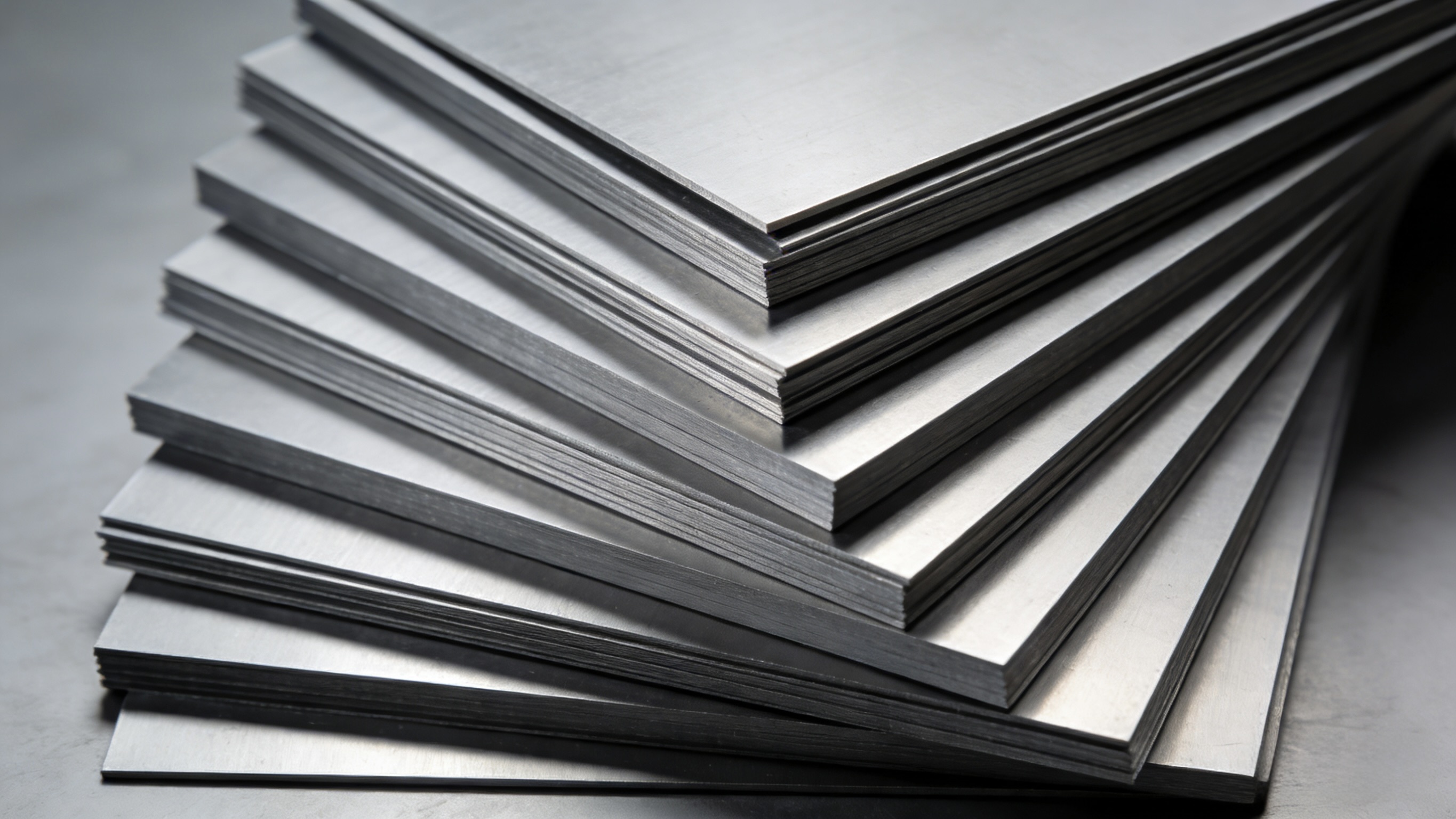
Two practical checks follow from this table. First, the product standard cited on the mill certificate should match the standard cited on the purchase order — a document referencing a general titanium sheet standard is not automatically sufficient evidence for a coil supplied against a cold-rolled coil specification. Second, the scope of the ISO 9001 certificate should cover the processes that produced the code being purchased. If the certificate covers only cutting and warehousing while the purchase order assumes rolling and annealing, the document trail does not close, and a buyer's quality team will be the one explaining the gap.
How the matching exercise plays out in practice
In day-to-day procurement, the exercise looks roughly like this. A European buyer specifying thin-gauge sheet for heat exchanger plates or bipolar plates works with code 1510. A European heavy-process buyer sourcing thicker material for chemical, industrial, or ship applications works with plate code 1509. A US buyer ordering hot-rolled coil for chemical processing, industrial, or ship fabrication works with code 1506. An India-bound order for cold-rolled strip, often destined for heat exchanger plates or electronic components, typically references code 1507. In every one of those cases, two documents have to agree with the code being purchased: the scope statement on the management system certificate, and the product standard on the mill record.
From relationship-based sourcing to document-based verification
Titanium has traditionally been bought in a relationship-driven way: a buyer places a trial order, evaluates a sample, and continues on the strength of the working relationship. That approach still has value, particularly for new suppliers, but it becomes fragile the moment the material has to be defended to someone outside the purchasing team — a quality auditor, a notified body, an insurer, or an end client's engineering department.
Document-based verification replaces recollection with records. Instead of asking whether a supplier is reliable, the buyer asks whether the certificate names the right legal entity, whether the scope covers the right processes, whether the registration number resolves to a public record, and whether the mill record follows the specific coil shipped. The trade-off is real: this approach adds administrative work at the quotation stage, and it can disadvantage a technically capable but poorly documented supplier. It also does not measure delivery performance, capacity, or price stability. What it does is convert a claim into something an auditor can act on.
What EU buyers should verify
European procurement teams generally work from a straightforward expectation: ISO 9001:2015, referenced in its European adoption, with a scope statement that names manufacturing activity rather than only trade. The certificate should carry the legal name of the contracting entity, and the site named on the certificate should be the site that produced the material.
Where the titanium coil feeds into a regulated end product — pressure equipment, process plant, medical equipment — conformity is typically assessed at the level of the finished assembly under the applicable directive, not at the level of the mill product. The mill certificate and the equipment-level declaration therefore serve different purposes in the same audit file, and neither replaces the other. Buyers in this position should confirm the interaction with their own notified body rather than assume that the supplier's ISO 9001 certificate settles the question.
Sheet and plate codes used in European process and energy applications often cite a broad standards set: ASTM, ASME, AMS, MIL, DMS, TA, AWS, and JIS appear side by side for titanium sheet and titanium plate. That breadth is normal for mill products, but it also means the buyer has to state clearly which of those standards governs the order, because the certificate will only be as specific as the order was.
What USA buyers should verify
In the United States, ASTM B265 is the primary reference for annealed titanium strip, sheet, and plate, and it is the standard most frequently named when a US buyer specifies a titanium coil. For pressure-retaining work, the ASME designation ASME SB-265 appears instead, and purchase specifications commonly accept either, depending on whether the application falls under a pressure equipment code.
US audits tend to focus on traceability rather than on the certificate alone. Buyers typically assemble a file containing the supplier's ISO 9001 certificate, the mill test report for the heat, inspection records for ultrasonic or eddy current testing, and the reconciliation of material test data. In that file, the ISO 9001 certificate establishes the supplier's system; the registration number is the field that lets a quality engineer verify the certificate independently rather than accept a scanned copy at face value.
A recurring failure point is entity mismatch. The certificate names a parent company or a sales office, the purchase order is placed with a different legal entity, and the mill test report references a third site. Each document may be genuine. The chain is still broken, and it is usually the buyer who has to explain why.
What India buyers should verify
Indian buyers of titanium sheet and coil operate in a market where a high share of material is imported, which shifts the emphasis of verification from local inspection to document credibility. Purchase specifications in India frequently mirror ASTM or ASME references, and third-party inspection is a common contractual requirement layered on top of the supplier's own quality system.
In that setting, the identity of the certification body and the accreditation behind it carry real weight. A certificate from a widely recognized international issuer, such as TUV, is generally easier for an Indian buyer's quality team to validate than a certificate from an issuer with no public register and no recognizable accreditation chain. The registration number is the practical mechanism: it should resolve to a public record showing the certified organization, the scope of activity, the site, and the validity period.
ISO 9001 should also be kept in its proper place. It is a management system certification, not a product approval for the Indian market. Where a specific end use falls under a mandatory national product certification scheme, that approval is a separate requirement and should be requested separately rather than assumed from the ISO 9001 document.
Market-by-market verification focus
| Market | Certificate aspects to verify first | Product evidence that does the specifying |
|---|---|---|
| European Union | ISO 9001:2015 in its European adoption; scope naming manufacture rather than trade; legal entity and site matching the contract; issuer accreditation recognized in the buyer's market | ASTM B265 / ASME SB-265 plus the standards cited on the order (ASTM, ASME, AMS, MIL, DMS, TA, AWS, JIS for codes 1510 and 1509); equipment-level conformity handled with the notified body |
| United States | Registration number traceability; entity and site consistency across certificate, purchase order, and mill test report; current validity and surveillance status | ASTM B265 as the primary material reference; ASME SB-265 where pressure equipment codes apply; ultrasonic or eddy current inspection records |
| India | Certification body identity and accreditation recognition; registration number verifiable against a public register; scope covering the processes used | ASTM or ASME references in the purchase specification, supported by third-party inspection reports and full mill documentation |
Why the issuer and the registration number decide a procurement audit
Two certificates can both state ISO 9001:2015 and still carry very different weight. The differences concentrate in a small number of fields, and those are the fields an auditor checks first.
- Legal entity and site. The certificate must name the legal entity that contracted and the site that produced the material.
- Scope of activity. Manufacturing, processing, and trading are different scopes; the scope should match what the purchase order assumes.
- Certification body identity. The issuer should be identifiable and should operate under accreditation.
- Accreditation recognition. The accreditation behind the issuer determines whether the certificate is accepted in the buyer's market.
- Registration number. A unique number that resolves to a public register entry is evidence; an unverifiable number is a claim.
- Standard version and validity. ISO 9001:2015 with current surveillance or recertification status.
- Product documents. Mill test reports, inspection records, and product standard references sit alongside the certificate, not behind it.
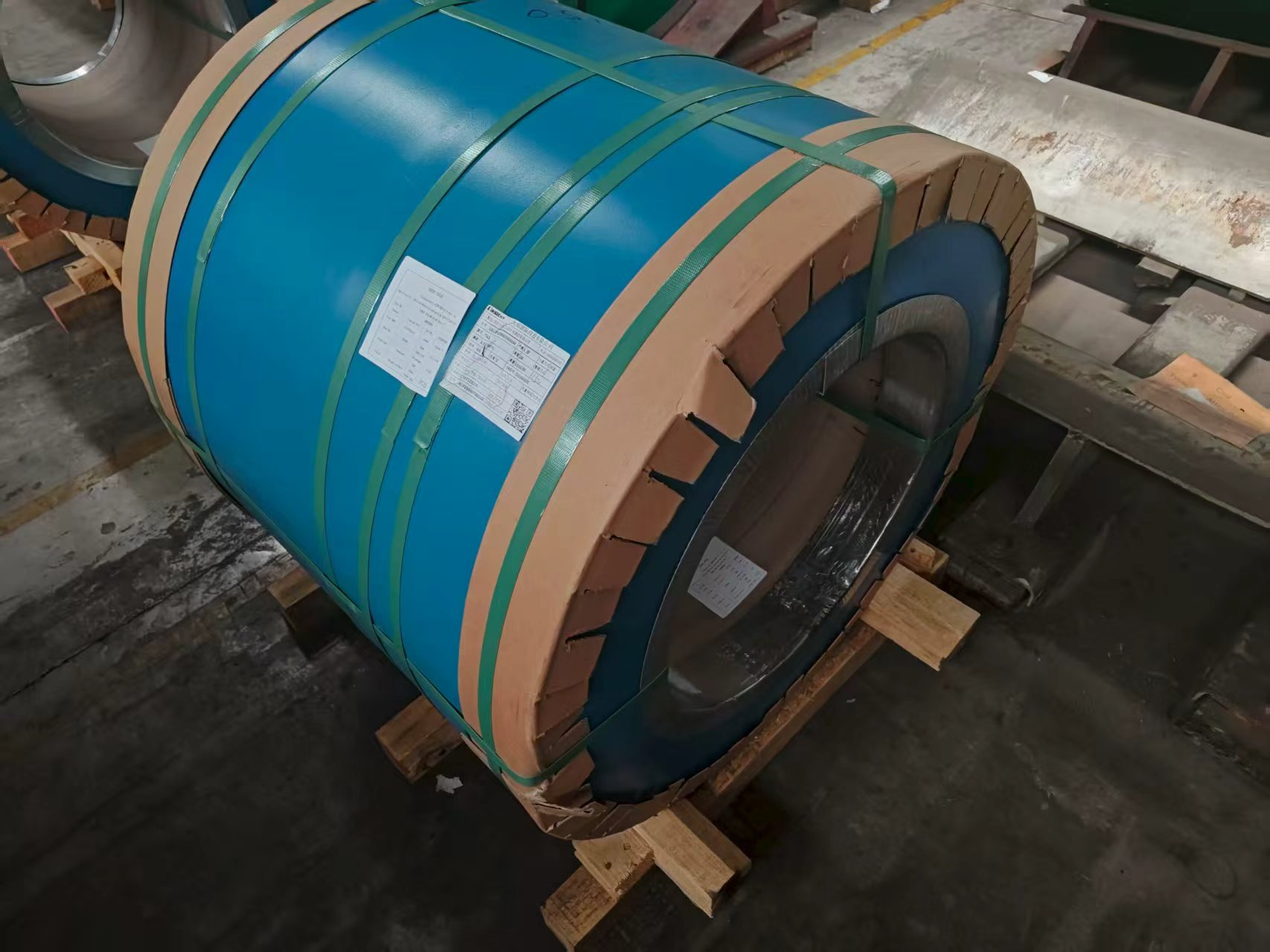
The registration number deserves particular attention because it is the only field that makes independent verification possible. Everything else on a certificate — the layout, the wording, the visual identity — can be reproduced. A number that a buyer's quality team can look up, and that returns the same organization name, scope, and site, converts a document into evidence.
Field note. In practice, mismatches are rarely dramatic. The most common findings are a certificate that names a group headquarters while the coil was rolled at a different plant, a scope statement that covers trading while the order assumed manufacture, and a validity date that lapsed without the buyer noticing. Each is easy to resolve before the order ships and awkward to resolve afterwards.
Where Xrun fits into this document chain
Xrun, formally Xiangrun (Xi'an) Titanium Materials Technology Co., Ltd., is a titanium materials manufacturer established in 2016 that operates an integrated titanium supply chain covering the full sequence from coal and electricity through titanium ore, titanium sponge, and processed materials to finished products. The company operates a facility of approximately 2,466,667 m² with more than 3,000 employees and an R&D team of more than 200 engineers, and reports an annual output of 30,000 tons with an export ratio of around 10 percent, with main markets in the EU, the USA, and India.
Its product range spans titanium strip, titanium coil, titanium sponge, cold-rolled titanium strip, hot-rolled titanium strip, titanium foil, titanium plate, titanium sheet, titanium bar, titanium rod, titanium wire, and titanium pipe. Reported annual capacity includes more than 30,000 tons of titanium rolling coils and strips, 10,000 tons of titanium composite strips, and 200,000 titanium composite disc pieces, produced on a plate line designed for thin and medium-thick titanium and titanium alloy plates, equipped with an automatic control system and configured for high precision and stable quality across the rolling process.
For a buyer building a compliance file, the practical value of a vertically integrated structure is that the certificate, the scope, and the product code can be reconciled at the level of the actual order. Because products are organized by code, grade, and dimensional specification, a document set can be requested for the specific item being purchased rather than a generic titanium certification that does not identify what was shipped. Xrun's published product information is available at Xrun Titanium Materials, where buyers can identify the code and specification relevant to their application before assembling an audit file. The company's integrated chain also supports Grade 2 titanium, the commercially pure grade widely described as the workhorse for industrial applications because of its corrosion resistance, and frequently selected for desalination and chemical processing duties.
What an ISO 9001 certificate does not tell you
Setting boundaries on the certificate is as important as reading it correctly. An ISO 9001:2015 certificate does not:
- specify the grade, chemistry, or dimensions of a titanium coil;
- confirm that a particular heat or coil was produced at the certified site;
- replace ASTM B265 or ASME SB-265 testing, or ultrasonic and eddy current inspection;
- transfer automatically to a different legal entity or a different plant;
- satisfy market-specific product approval requirements where these apply;
- guarantee delivery performance, price stability, or available capacity.
These limits are not defects in the standard. They simply mark where the management system certificate ends and product-level evidence begins — and they are the reason a complete procurement file needs both.
Future outlook
The conditions that make certification verification a routine procurement step are unlikely to reverse. China's titanium sponge production capacity reached approximately 320,000 tons per year by 2024, accounting for about 67 percent of global production, according to The Oregon Group and the Stanford Report. China exported roughly USD 1.07 billion worth of titanium products in 2024, with the United States and South Korea among the major destinations, according to the Observatory of Economic Complexity. Separately, one industry analysis placed the global titanium market at approximately USD 25.22 billion in 2024, although published estimates vary widely depending on whether titanium dioxide and mineral commodities are included in the scope of the measurement.
Two consequences follow for buyers. First, as supply concentrates, the ability to verify a supplier's certificates independently becomes a standard part of due diligence rather than an exceptional step reserved for large contracts. Second, as product standards such as ASTM B265 continue to function as the common technical language across regions, the practical differentiator between suppliers shifts toward the completeness and traceability of their document chain: scope statements that name real processes, registration numbers that resolve to public records, and mill documentation that follows the specific code shipped rather than the supplier as a whole.
Frequently asked questions
Is there a different ISO 9001 standard for the EU, the USA, and India?
No. ISO 9001:2015 is a single international standard, adopted unchanged in national and regional standard systems; in Europe it is commonly referenced as EN ISO 9001:2015. What differs between markets is the certificate rather than the standard: the certification body that issued it, the accreditation body that recognizes that issuer, the scope statement, the site covered, and the registration number. A buyer comparing suppliers across markets is comparing the strength of those certificate details, not three separate standards.
Does an ISO 9001 certificate prove that a titanium coil meets ASTM B265?
No. ISO 9001 addresses the supplier's quality management system, while ASTM B265 defines the chemical and mechanical requirements for annealed titanium and titanium alloy strip, sheet, and plate across a wide range of grades. Evidence that the material meets the product standard comes from the certificate of conformity and mill test report for the specific heat, supported by inspection records such as ultrasonic or eddy current testing. The ISO 9001 certificate supports that evidence by showing that the system behind it is independently audited.
Why does the certificate issuer matter if the standard is identical everywhere?
Because certification is performed by a third party, and the credibility of that third party depends on its own accreditation. A certificate issued by a body operating under a recognized accreditation chain can be verified and is generally accepted by buyers and auditors in the markets that participate in mutual recognition arrangements. Certificates from issuers with no public register or no recognizable accreditation are difficult to validate, even when the standard cited on the document is correct.
What should a buyer check on an ISO 9001 certificate during a procurement audit?
The legal entity and site named on the certificate, the scope of activity, the certification body, the accreditation behind it, the registration number, the standard version and validity dates, and whether the product documents for the specific product code — mill test report, inspection records, and product standard references — align with it. Any mismatch between these fields, including a certificate naming a trading office while the material was produced elsewhere, is a gap that should be explained in writing before the order is released.
Does an ISO 9001 certificate for titanium sheet also cover titanium plate or titanium coil?
Only to the extent that the scope statement covers the relevant activities. ISO 9001 certification applies to the organization and the activities audited at a defined site; it is not issued per product family. Whether a certificate meaningfully covers a specific product code therefore depends on the wording of the scope and on whether the processes for that product were included in the audit — for example, rolling, annealing, pickling, and testing as opposed to cutting and warehousing alone. Buyers should read the scope statement and, where it is ambiguous, request clarification rather than assume coverage.
Reference material. Xrun product brochure (PDF): download here.