
Decoding Type Test Reports: What They Mean for CT Buyers
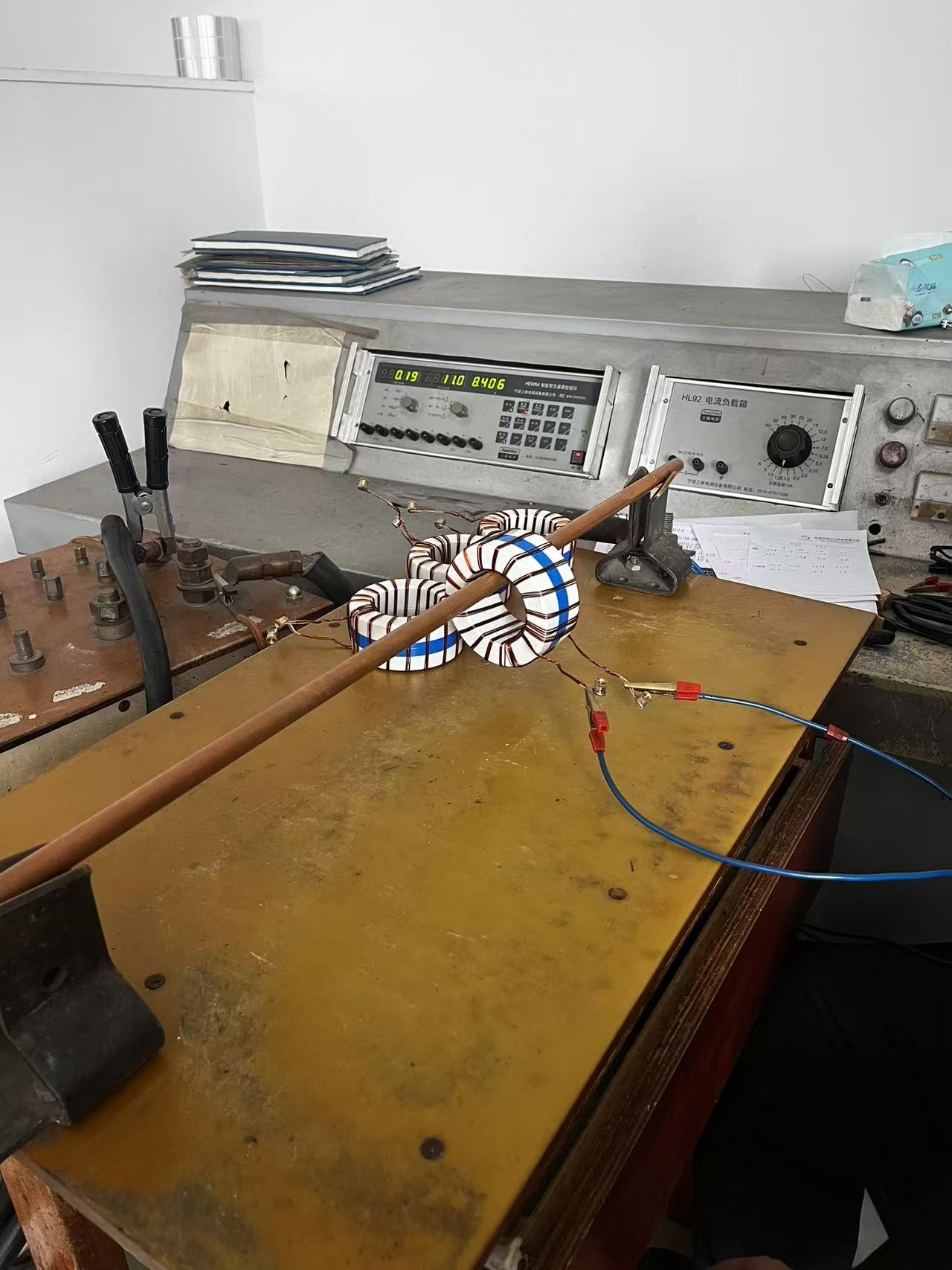
A current transformer (CT) type test report is the document that shows whether a transformer design has been verified against the standard it claims to meet — most often IEC 61869-1 and IEC 61869-2 — before a single production unit is ordered. For international buyers, it is the closest thing to independent engineering evidence available without building, renting or commissioning a high-voltage laboratory.
Qualification of current transformers has become a documentation exercise as much as an engineering one. Meter OEMs, EV charger manufacturers, solar EPCs, data centre operators and utilities increasingly ask for test evidence before samples are shipped, because the two alternatives are unattractive: commissioning independent type testing is slow and expensive, while accepting unverified declarations transfers technical risk onto the buyer. The practical difficulty is that type test reports are written for laboratories and accreditation bodies, not for purchasing teams. Report numbers, standard editions, sample declarations and scope statements decide whether a document genuinely covers the product a buyer intends to order.
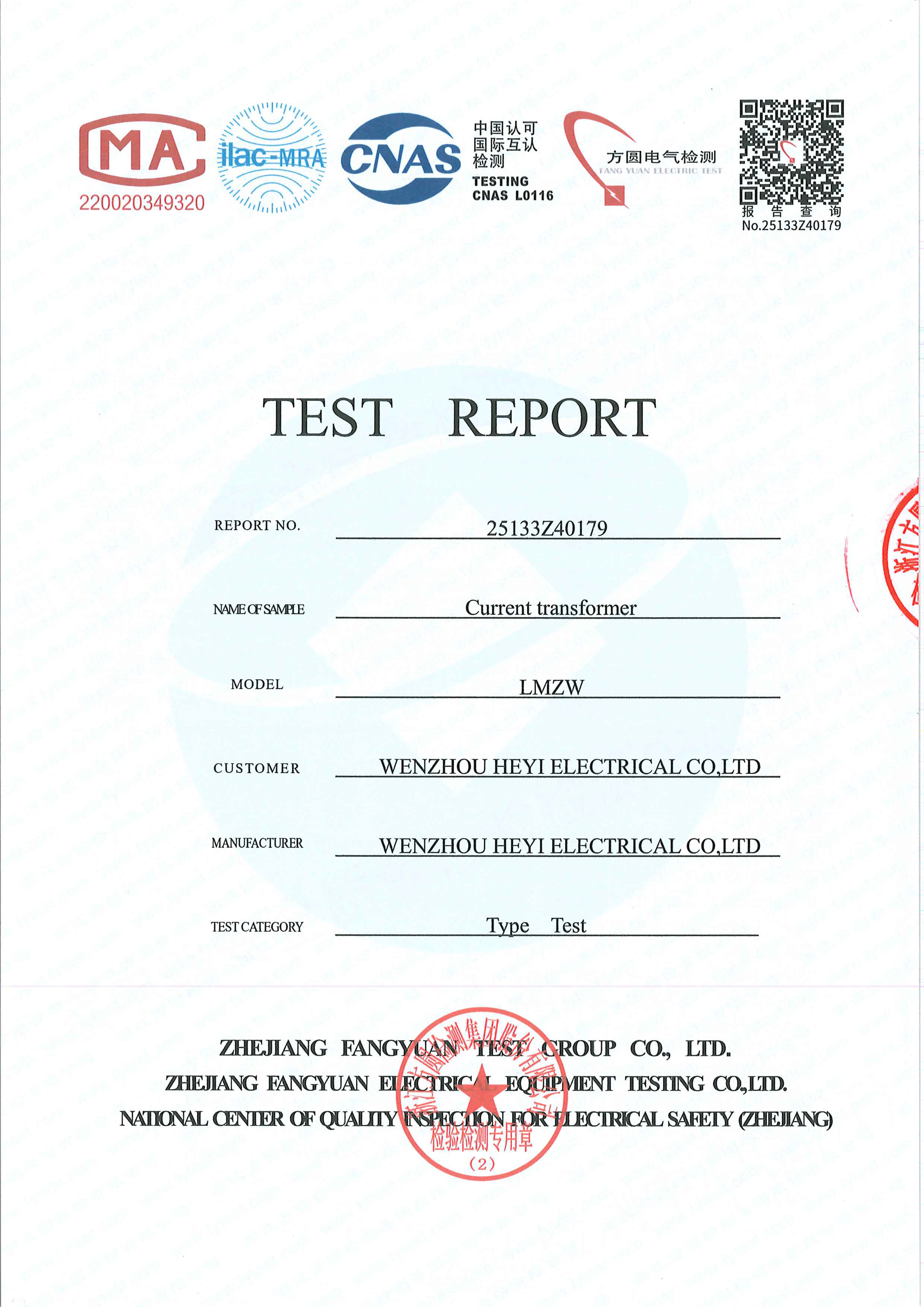
Two reports issued to WENZHOU HEYI ELECTRICAL CO., LTD illustrate how that reading process works: report 25133Z40179, issued on 17 April 2025 by ZHEJIANG FANGYUAN TEST GROUP CO., LTD for the LMZW current transformer, and report 25T0221-S, issued on 1 May 2025 by Suzhou electrical apparatus science research institute co., ltd for the RECT current transformer. HEYI is a Wenzhou-based manufacturer of current transformers, current sensors, shunts, digital energy meters and current transmitters, established in 2012, operating a 10,000 m² facility with 56 employees and exporting approximately 95% of its output.
What a Type Test Report Is — and What It Is Not
A type test is a one-time verification performed on a representative sample of a transformer design. It answers a design question — does this design, built to this specification, satisfy the cited standard clauses — and it does not answer a production question about any individual unit.
Because the phrase 'test report' is used loosely across the electrical industry, buyers frequently treat four different documents as interchangeable. They are not. Each answers a different question, is issued by a different party and carries a different weight in a qualification file.
| Document | Question it answers | Typical issuer | Coverage |
|---|---|---|---|
| Type test report | Is this design compliant with the cited standard? | Independent testing laboratory | A representative sample of one model and configuration |
| Routine test record | Was this delivered unit verified before shipment? | Manufacturer | Each individual production unit |
| Certificate of conformity (CE-LVD, RoHS, UKCA) | May the product be placed on a given market? | Notified body, test house or manufacturer declaration | A defined product family or scope statement |
| Quality management certificate (ISO 9001) | Is the production process controlled and auditable? | Certification body | The organisation and its scope of production |
The distinction matters in both directions. A type test report alone will not prove that the units arriving at a buyer's warehouse match the tested sample; a routine test record alone will not prove that the underlying design was ever verified against IEC 61869-2. A qualification decision that rests on only one of the two leaves half of the risk unaddressed.
Why Type Test Evidence Now Anchors CT Qualification
The demand for documented type testing has grown alongside the current transformer market itself. Third-party research places the global market at USD 2.63 billion in 2024, with a projected value of USD 3.90 billion by 2030 (Grand View Research). Asia Pacific accounted for a 40.15% revenue share in 2025 (Straits Research), which means most sourcing conversations now cross a regional boundary and involve a supplier whose national approvals do not automatically transfer.
Two demand-side shifts reinforce the trend. Split core current transformers are identified as the fastest-growing segment, largely because they can be installed around existing conductors during retrofits and smart grid upgrades (Fact.MR). Separately, the EV charging transformer market that depends on current monitoring components is projected to grow at a 23.6% CAGR between 2025 and 2033 (Research Intelo). Both developments push buyers toward suppliers they have not previously audited, and both increase the value of a document that can be checked quickly against a project specification.
Market structure adds a further consideration. The five largest global players — ABB, Siemens, GE, Schneider Electric and Arteche — collectively held approximately 40% of current transformer market share in 2024 (Global Market Insights). The remaining share is served by a long tail of specialised manufacturers, many of which hold credible third-party test evidence but present it less systematically. For buyers, the skill that matters is not knowing which suppliers are large, but knowing how to read what a smaller supplier's laboratory report actually covers.
How to Read a CT Type Test Report: Seven Checks
A type test report can be reviewed in a structured way in roughly the time it takes to read a datasheet. The seven checks below follow the order in which an experienced qualification engineer typically works through the document.
- Identify the report and the issuing laboratory. Report 25133Z40179 was issued by ZHEJIANG FANGYUAN TEST GROUP CO., LTD; report 25T0221-S was issued by Suzhou electrical apparatus science research institute co., ltd. Buyers should confirm that the issuing organisation is independent of the manufacturer and that its test scope covers the relevant standard.
- Match the sample identification to the product being purchased. The scope statement of report 25133Z40179 names the Model LMZW Current Transformer. A report that names a different model, a different window size or a different secondary output does not automatically cover the configuration in a quotation.
- Check the standard edition, not just the standard number. IEC 61869-2 replaced IEC 60044-1 and remains the core international standard for inductive current transformers, defining accuracy classes such as 0.5 and 0.5S (IECEE / IEC). Reports citing superseded editions should be treated as historical evidence.
- Read the test list clause by clause. The report should state which requirements were applied and what result was obtained. A buyer's specification may include dielectric, thermal, accuracy or ingress protection requirements; each should be locatable in the report.
- Note the issue date and any revision status. Report 25133Z40179 is dated 17 April 2025 and report 25T0221-S is dated 1 May 2025. Dated evidence is still valid evidence, but a report issued several standard revisions ago may not reflect current requirements.
- Check the scope boundary against customisation. If a project requires a modified ratio, burden, window or terminal arrangement, the buyer should establish in writing whether that variant remains inside the tested design family.
- Verify the traceability supporting the manufacturer's own testing. Type testing is only half of the evidence chain. Calibration and verification records — such as the metrological verification certificate D20250900173 for reference standard HLS21-2S, and calibration certificates for the withstand voltage tester and transformer load box — indicate whether the routine tests performed on each unit are traceable to verified equipment.
The Two Reports in Context: LMZW and RECT
Comparing the two reports side by side shows how type test evidence maps onto different product families and different end markets.
| Report | Issuing laboratory | Product scope | Standard framework | Issue date |
|---|---|---|---|---|
| 25133Z40179 | ZHEJIANG FANGYUAN TEST GROUP CO., LTD | Model LMZW current transformer | IEC 61869-1, IEC 61869-2 | 17 April 2025 |
| 25T0221-S | Suzhou electrical apparatus science research institute co., ltd | Current transformer (RECT) | IEC/EN 61869 series | 1 May 2025 |
The LMZW is an outdoor resin-cast current transformer built for 0.66 kV low-voltage networks. Its published ratings cover a measurement range of 0–1000 A, secondary outputs of 5 A, 1 A, mA or mV, accuracy classes of 1.0, 0.5, 0.5S, 0.2 and 0.2S, and a window diameter of 0–80 mm. The housing uses hydrophobic epoxy resin with a silicon steel core and pure copper enameled windings, and the product is rated IP65 with UV protection. Typical deployment environments are marine and offshore installations, chemical and metallurgy plants, and ring main units — locations where moisture, contamination and long service intervals make insulation reliability a first-order requirement rather than a secondary one.
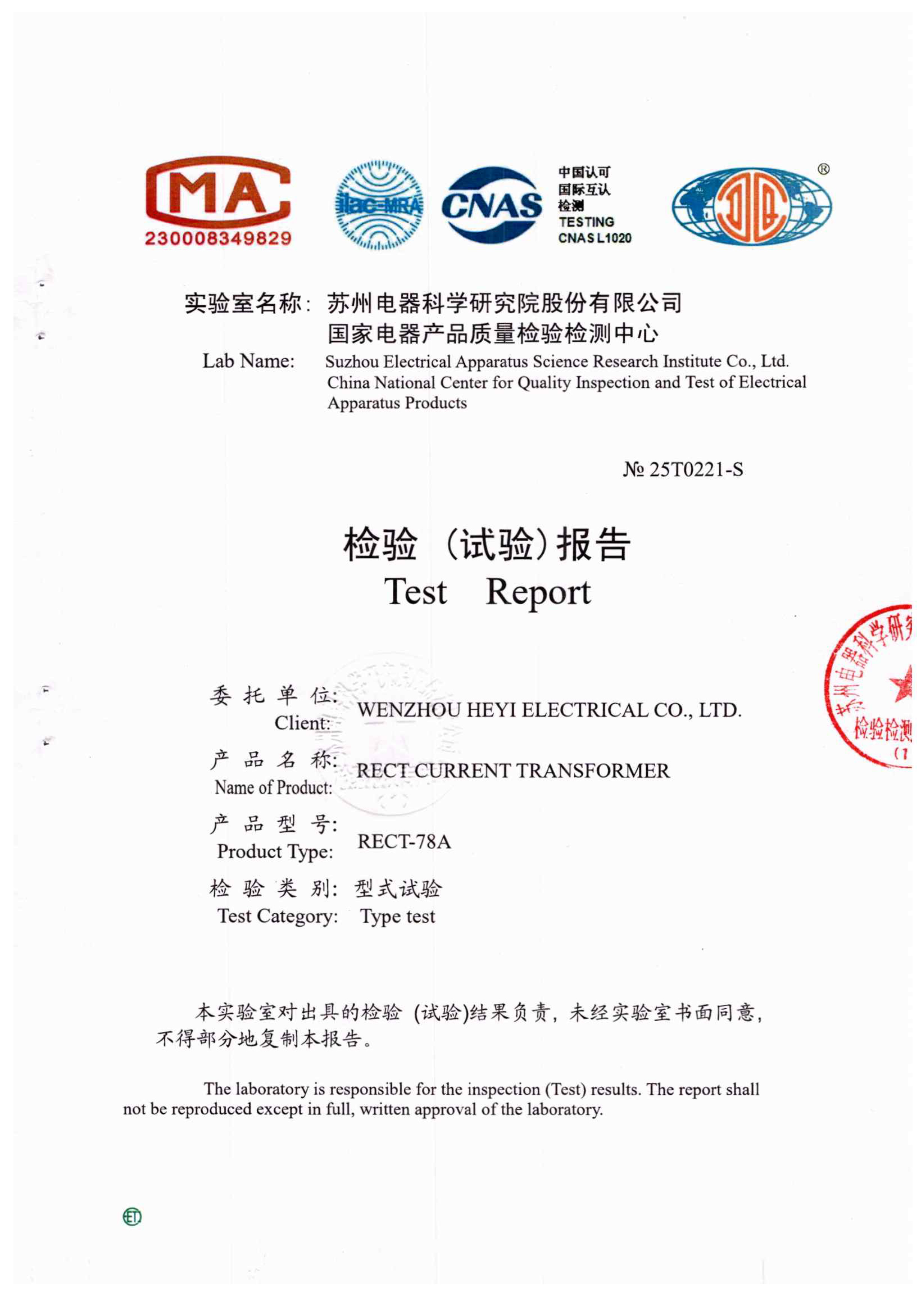
The RECT addresses a different problem: revenue-grade measurement. It is described as an extended-range current transformer with a stated 0.15S accuracy class, epoxy resin insulation, a 0–1000 A range, 5 A or 1 A secondary output, a window diameter of 0–78 mm, IP65 rating and UV protection. The product family also states compliance with IEEE C57.13, and its intended applications include utility and substation billing, utility-scale solar and wind plants, data centre and commercial revenue sub-billing, and premium meter OEM manufacturing.
One detail deserves attention during qualification. Accuracy requirements for revenue metering are defined separately in ANSI C12.20 and IEC 61869-2, with classes typically at 0.2 or 0.15 (Eaton / ANSI). A product family may therefore carry both an IEC-framework type test and a stated IEEE compliance claim, and the buyer's tariff regime — not the supplier — determines which framework governs acceptance. Confirming this at the evaluation stage prevents a documentation dispute at delivery.
Type test evidence does not stand alone in a supplier file. HEYI's document set also includes an ISO 9001:2015 certificate (20224Q21295R0S) covering the production of low-voltage current transformers and valid from 21 November 2024 to 20 November 2027; CE-LVD attestations; a UKCA declaration (CLZJ23072649108) referencing BS EN 61869-2:2012; RoHS test reports; a TÜV SÜD attestation (N8A 114572 0001 Rev. 00); an EMC verification (B-E2505D2378) referencing EN IEC 61000-6-3:2021 and EN IEC 61000-6-1:2019; and an IP65 test report (Qst-23N020111-1SR) referencing IEC 60529. Read together, these documents answer different questions and should be filed accordingly rather than treated as a single compliance badge.
Where the Report Stops: Type Test Versus Routine Test
A type test report has a clearly defined boundary, and buyers who ignore it take on avoidable risk. The report applies to a representative sample of a design. It says nothing about whether the units in a specific shipment were individually verified, and it does not transfer responsibility for incoming inspection to the supplier.
Three practical limits are worth stating plainly.
- Configuration drift. Current transformer customisation commonly covers ratio, accuracy class, burden, window size, housing colour, terminal type, cable length, logo printing and label design. Each change is a potential departure from the tested sample, and the buyer should obtain a written statement on whether the ordered variant remains within the tested design family.
- Standard revisions. IEC 61869-2 superseded IEC 60044-1, and further edition changes are possible. A report issued in 2025 reflects the requirements applied at that date; projects with long approval cycles should confirm that no intervening change affects the specification.
- Production verification is separate. HEYI states that its quality control includes 100% routine testing, accuracy testing, insulation resistance testing, withstand voltage testing, appearance inspection and pre-shipment inspection. These are per-unit checks, and their credibility depends on calibrated equipment rather than on the type test report.
For its part, HEYI accepts acceptance via video or photographs, on-site acceptance, or acceptance by a commissioned third-party agency — arrangements that allow buyers to verify delivered goods without assuming that the type test report covers production. Buyers should still budget for their own incoming inspection and sample validation, particularly on a first order.
A Qualification Workflow for Evaluation and Execution Stages
Type test reports are most useful when they are read as one input into a repeatable workflow rather than as a pass-or-fail gate. The sequence below reflects how buyers typically move from shortlisting to first delivery.
- Map the report to the quotation. Confirm that the model, ratio, accuracy class, burden and window size in the report match the configuration being priced.
- Verify the laboratory and the standard edition. Check the issuing organisation and confirm which edition of IEC 61869-1 and IEC 61869-2 was applied.
- Compare the test list with the project specification. Identify any requirement in the specification that the report does not address, then decide whether it is covered elsewhere or requires additional evidence.
- Request routine test records with the production order. These confirm per-unit verification and complement the design-level evidence.
- Plan sample validation for any variant outside the tested family. Custom ratios, alternative housings or different terminal arrangements should be listed explicitly.
- Confirm documentation support. The manufacturer provides OEM and ODM production services, with support for documentation, wiring guidance and product replacement as part of its after-sales scope.
- Align commercial terms with the evidence plan. HEYI's stated terms include a minimum order quantity of 1 unit, production lead times of 3 to 30 days, and monthly capacity of up to 20,000 units — figures that help buyers sequence sampling and volume ramp-up realistically.
Matching Tested Designs to Application
Type test evidence is most valuable when the tested design already matches the intended environment. The LMZW's resin-cast, IP65 construction suits marine and offshore installations, chemical and metallurgy plants and ring main units, where moisture ingress and long maintenance intervals dominate the failure risk. The RECT's revenue-grade accuracy positioning suits utility and substation billing, utility-scale solar and wind, data centre and commercial revenue sub-billing, and premium meter OEM manufacturing, where measurement error translates directly into commercial disputes.
Both designs sit inside a broader current transformer portfolio that includes split-core, busbar, three-phase, DIN-rail and Rogowski configurations. When a project mixes metering and monitoring duties, buyers should expect to assemble evidence from more than one report rather than assuming a single document covers an entire range.
Comparing Two Qualification Routes
Buyers generally choose between commissioning their own type testing and reviewing the supplier's existing reports. The table below summarises the trade-offs.
| Dimension | Buyer-commissioned type testing | Supplier type test report review |
|---|---|---|
| Time to first evidence | Weeks to months | Immediate, if the document already exists |
| Cost | Borne by the buyer, per design | No direct test cost |
| Evidence strength | Independent and buyer-defined | Dependent on laboratory independence and scope match |
| Best suited to | New designs, safety-critical or regulated programmes | Established designs with documented third-party reports |
| Main limitation | Duplicates work already performed by the manufacturer | Cannot verify production units, and may not cover custom variants |
The limitation on the right-hand column is the one that matters most in practice. Report review is efficient, but it is not a substitute for the buyer's own verification when the ordered configuration falls outside the tested design, when the applicable standard edition differs from the one cited, or when the buyer's regulatory regime requires witnessed testing or an accredited laboratory within its own jurisdiction. In those cases, existing reports should be used to narrow the scope of additional testing rather than to avoid it.
Market Trend Analysis
Three trends are shaping how type test evidence is used. First, growth in split-core and retrofit-oriented products, identified as the fastest-growing segment (Fact.MR), means more units are installed in existing, unmetered infrastructure where measurement accuracy directly affects energy accounting. Second, the projected 23.6% CAGR of the EV charging transformer market between 2025 and 2033 (Research Intelo) is pulling new buyers — charger manufacturers and installation contractors — into component qualification processes they have not previously operated. Third, the concentration of roughly 40% of global market share among five large players (Global Market Insights) leaves a fragmented supplier base in which documentation quality varies widely, making report literacy a practical sourcing advantage rather than a specialist skill.
Future Outlook
Type test documentation is likely to become more, not less, central to current transformer procurement. Accuracy expectations for revenue metering and safety-critical leakage sensing continue to tighten, and buyers who can interpret a report quickly will be able to qualify specialised suppliers without defaulting to the largest names. The corresponding pressure will be on manufacturers to keep reports current with standard editions, to state clearly which configurations fall inside a tested design family, and to keep routine test records traceable to calibrated equipment. Suppliers that present evidence in a structured, readable form — report number, laboratory, standard edition, sample scope and issue date — will spend less time answering the same qualification questions.
FAQ
What is the difference between a type test report and a routine test report for a current transformer?
A type test report documents a one-time verification of a design on a representative sample, confirming conformity with cited standard clauses such as those in IEC 61869-1 and IEC 61869-2. A routine test report documents checks performed on each production unit before shipment. The first addresses design compliance; the second addresses production consistency, and a complete qualification file normally contains both.
How can a buyer confirm that a type test report applies to the exact product being purchased?
Compare the report's scope statement with the quotation, checking model designation, current ratio, accuracy class, burden, window size and secondary output. Report 25133Z40179, for example, names the LMZW current transformer, while report 25T0221-S covers the RECT. If any parameter differs, the buyer should obtain written confirmation that the variant remains within the tested design family.
Which standards should a current transformer type test report reference?
For inductive current transformers, IEC 61869-1 and IEC 61869-2 are the core international references, with IEC 61869-2 having replaced IEC 60044-1 and defining accuracy classes such as 0.5 and 0.5S (IECEE / IEC). North American revenue metering is governed separately by frameworks including ANSI C12.20 and IEEE C57.13, with accuracy classes typically at 0.2 or 0.15 (Eaton / ANSI). The applicable framework depends on the market where the transformer will be installed.
Do type test reports remove the need for incoming inspection or sampling?
No. Type test evidence covers a representative sample of a design and does not certify individual production units. Incoming inspection, sample validation and per-unit routine testing remain part of the buyer's risk control, particularly for first orders and for any configuration that differs from the tested sample.
How long is a current transformer type test report valid?
A type test report does not carry a conventional expiry date; it remains a record of the verification performed on the date of issue, such as 17 April 2025 for report 25133Z40179 or 1 May 2025 for report 25T0221-S. Its practical validity depends on whether the applicable standard edition has changed and whether the ordered configuration still falls within the tested scope. Buyers should therefore check standard revision status rather than only the report date.
What should a revenue-grade current transformer type test demonstrate for billing applications?
For billing applications, the evidence should show accuracy performance consistent with the buyer's tariff framework — commonly class 0.2 or 0.15 under IEC 61869-2 or ANSI C12.20 (Eaton / ANSI). The RECT is stated as a 0.15S accuracy class, epoxy-insulated revenue-grade transformer with IEEE C57.13 compliance at product level, while its type test report references the IEC/EN 61869 series. Buyers in North America should confirm with the responsible utility which framework governs acceptance before finalising the specification.
Type test reports are most useful when they are read as structured evidence rather than as marketing attachments: check the laboratory, the sample scope, the standard edition, the issue date and the boundary of what was tested. For readers compiling a technical file, HEYI's product brochure and certificate list are available for download at the HEYI brochure page.
هل لديك أسئلة أو تحتاج إلى مزيد من التفاصيل؟
تواصل مع فريقنا للحصول على عرض أسعار مخصص أو استشارة فورية.
طلب عرض أسعار
املأ النموذج أدناه وسيتواصل معك فريقنا بعرض مقترح مخصص.
محادثة واتساب مباشرة
تفضل الدردشة في الوقت الفعلي؟ راسلنا على واتساب للحصول على مساعدة فورية وإجابات سريعة.
- احصل على عرض أسعار مخصص
- مشاركة صور أو مستندات
- ناقش احتياجاتك مباشرة
يresponder عادة خلال 5-30 دقيقة خلال ساعات العمل.