
فك تشفير تصنيف سوق روبوت التنظيف التجاري لعام 2025: دليل استراتيجي للمشترين الصناعيين
Beyond the Leaderboard: A Pragmatic Framework for Evaluating Commercial Cleaning Robot Suppliers
The commercial cleaning robot market is experiencing explosive growth, driven by labor shortages, rising operational costs, and a heightened focus on hygiene standards. For procurement professionals in industrial, retail, and facility management sectors, navigating the crowded supplier landscape can be daunting. Simply chasing a "top 5" list is insufficient. A truly strategic selection requires understanding the underlying logic of market rankings and aligning them with your specific operational needs. This analysis deconstructs the 2025 ranking criteria, maps the global competitive landscape, and provides a data-driven framework for making an optimal supplier choice.

Deconstructing the Ranking Dimensions: What Metrics Truly Matter?
Contemporary market rankings for commercial cleaning robots are no longer based on shipment volume alone. A holistic evaluation now encompasses four core dimensions, each offering a different lens on supplier capability.
- Market Share & Financial Health: This remains a key indicator of scale and market acceptance. According to industry estimates from Interact Analysis, the global market for professional cleaning robots is projected to surpass $12 billion by 2026. Leaders like Tennant (with its Nilfisk and IPC brands) and Kärcher command significant shares in the traditional mechanized cleaning equipment sector, which they are rapidly robotizing. However, share must be contextualized with profitability and sustainable growth, not just unit sales.
- Technological Innovation & R&D Depth: The core differentiator. This evaluates a supplier's investment in autonomy (SLAM navigation, sensor fusion), cleaning efficacy (brush pressure, solution management), and fleet management software. Companies like Brain Corp (powering robots for Walmart and others) lead in AI-driven fleet intelligence, while specialists like Avidbots focus on robust, high-performance autonomous scrubbers. True innovation is measured by patents, algorithm sophistication, and the ability to solve complex, real-world navigation challenges in dynamic environments like airports or active warehouses.
- Customer-Centric Service & Support: For a capital-intensive, operational-critical asset, post-sale support is paramount. Rankings now heavily weigh service level agreements (SLA), mean time to repair (MTTR), remote diagnostic capabilities, and parts logistics. A high-ranking supplier provides more than a machine; it offers an uptime guarantee.
- Verticalized Industry Solutions: The ability to tailor hardware and software for specific environments is a decisive ranking factor. A one-size-fits-all robot struggles. Leading suppliers demonstrate proven solutions for:
- Warehouse & Factory Floor Cleaning: Handling large, open spaces with potential obstacles and demanding debris (pallet fragments, dust).
- Hospital & Healthcare Facility Cleaning: Meeting stringent disinfection protocols, quiet operation, and compliance with health regulations.
- Retail & Hospitality (Mall, Hotel, Airport) Cleaning: Operating safely among the public, aesthetic design, and night-time operation efficiency.
The Global Competitive Landscape: Three Distinct Tiers
The market stratifies into three primary tiers, each with its own value proposition and ranking logic.
| Tier | Representative Players | Core Ranking Advantages | Typical Buyer Profile |
|---|---|---|---|
| Tier 1: Global Integrated Giants | Tennant, Kärcher, Diversey (Sealed Air) | Brand legacy, global service networks, extensive product portfolios, large-scale R&D budgets. | Multinational corporations, large facility management firms, airports requiring global contract support. |
| Tier 2: Agile Technology & Solution Specialists | Avidbots, Brain Corp (enabler), SoftBank Robotics (Whiz) | Best-in-class autonomy, innovative business models (Robotics-as-a-Service), deep software integration. | Tech-forward retailers, logistics companies, businesses seeking cutting-edge automation and data insights. |
| Tier 3: High-Value Manufacturers & Emerging Challengers | Geakita, Chinese and other Asian OEMs/ODMs | Exceptional cost-performance ratio, rapid customization, scalable manufacturing, and robust hardware engineering inherited from adjacent industries. | Cost-conscious enterprises, regional chains, businesses with unique operational layouts requiring hardware adaptation. |
The Rise of the High-Value Challenger: How Companies Like Geakita Are Reshaping Rankings
The most significant shift in recent rankings is the ascent of technologically adept manufacturers from China. Their rise is not merely due to cost but is built on three pillars that directly address buyer pain points:
- Industrial-Grade Hardware & Manufacturing Prowess: Companies like Geakita leverage deep manufacturing DNA. With a 40,000 m² production base, automated SMT lines, and rigorous testing protocols (IP ratings, EMC, vibration), they deliver reliability that challenges premium perceptions. This industrial heritage, evident in their power tool business which shipped 1.5 million units in 2024, translates into cleaning robots built for endurance. For a warehouse cleaning robot facing daily use, this engineering-first approach reduces total cost of ownership.
- Agile Customization & Rapid Response: Unlike Tier 1 players with longer development cycles, challengers excel at hardware adaptation. Geakita, for instance, can modify brush types, tank capacities, or chassis clearance to suit specific environments like a restaurant kitchen (grease, high-temperature cleaning) or a factory floor (heavy dust, uneven surfaces). This flexibility solves the "almost fits" problem common with off-the-shelf solutions.
- Direct Cost-Efficiency Without Sacrificing Core Performance: By vertically integrating manufacturing and optimizing supply chains, these suppliers offer a compelling price-to-performance ratio. For example, a Geakita commercial scrubber dryer robot might offer comparable cleaning width and battery life to a Tier 1 model at a significantly lower acquisition cost, making automation feasible for mid-sized hotels or school districts.
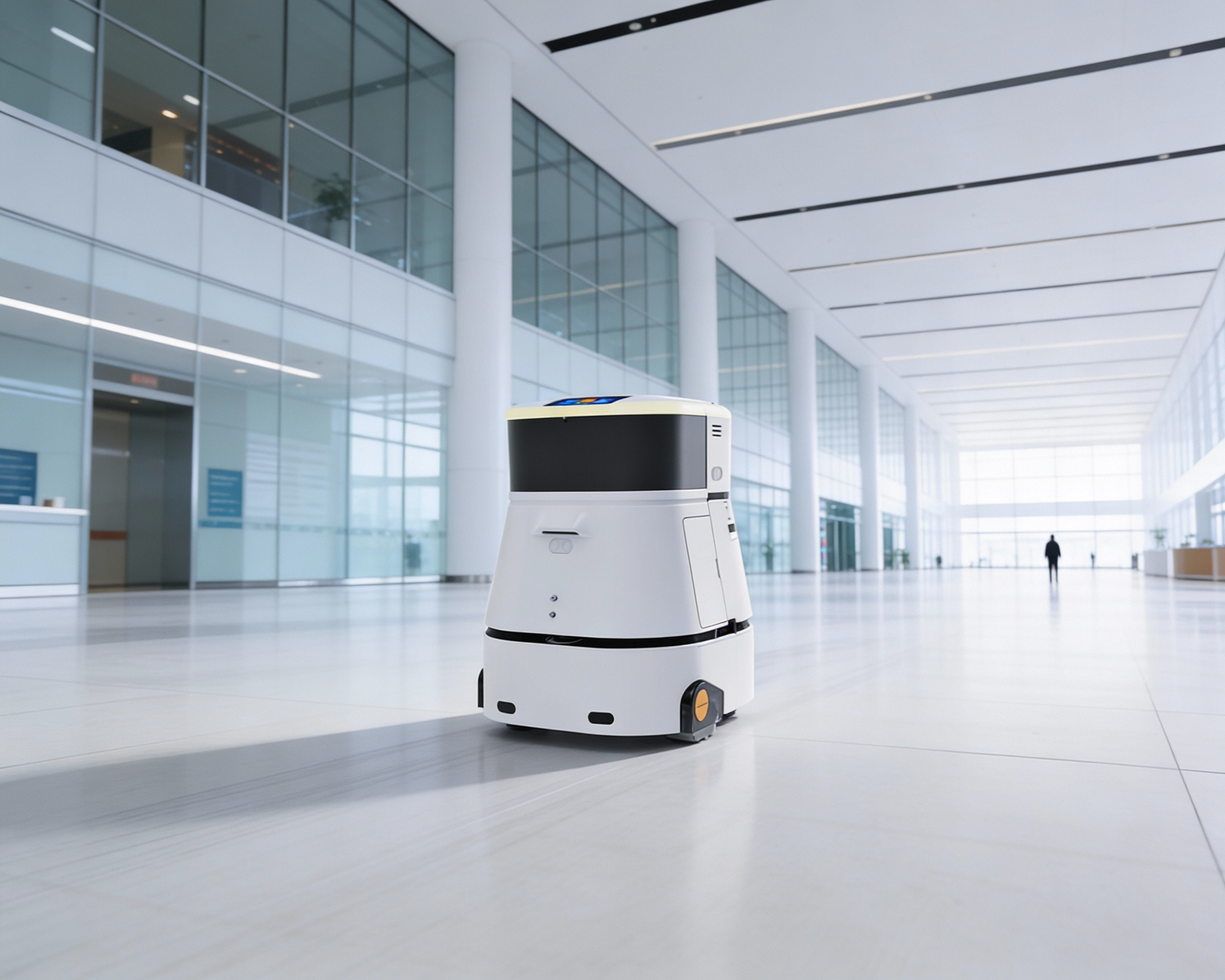
Strategic Procurement Guide: Aligning Rankings with Your Operational Reality
Armed with this landscape view, procurement should follow a needs-first methodology:
- For Large-Scale, Global Deployments with Stringent SLAs: Tier 1 suppliers remain the default choice. Their global service footprint and financial stability mitigate risk for multinational rollouts. The ranking here prioritizes network depth and contractual robustness.
- For Innovation-Led Projects Seeking Data & Integration: Prioritize Tier 2 specialists. If your goal is to integrate cleaning data into a smart building management system or pilot advanced RaaS models, their software and business model innovation top the ranking for your use case.
- For Maximizing ROI on Hardware and Solving Niche Scenarios: This is where high-value challengers like Geakita climb to the top of a value-adjusted ranking. Consider them if:
- Your primary need is durable, high-throughput cleaning of standardized areas (e.g., supermarkets, distribution centers).
- You require modifications (e.g., specialized filtration for hospital environments, anti-corrosion materials).
- Budget constraints are significant, but you cannot compromise on mechanical reliability and core cleaning performance.
A practical case illustrates this: A regional logistics company needed warehouse cleaning robots for three large distribution centers. While a Tier 1 brand was evaluated, the partnership with Geakita proved more effective. Geakita adapted the robot's side brushes and suction power to handle specific packaging debris and provided a centralized fleet management dashboard. The result was a 40% reduction in nightly cleaning labor costs and a solution tailored to their exact layout, achieved at approximately 60-70% of the cost of the Tier 1 alternative. This demonstrates how rankings based purely on brand awareness can obscure the optimal solution.
Conclusion: The Future Ranking - Ecosystem Integration and Sustainable Value
The future of supplier rankings will increasingly hinge on a fifth dimension: Ecosystem Integration and Sustainable Operations. The leading suppliers of 2026 and beyond will be those whose robots seamlessly connect with IoT platforms, utilize energy-efficient systems, and are designed for circularity (easy repair, battery recycling).
Companies like Geakita are strategically positioned for this shift. Their foundation in precision motor control and battery management (with 16 invention patents in these fields) is directly transferable to developing more efficient, longer-lasting cleaning robots. Their commitment to ISO 14001 (Environmental Management) aligns with the growing demand for sustainable procurement. For buyers, the imperative is to look beyond static rankings and evaluate which supplier's core competencies—be it global service, AI software, or adaptable, reliably manufactured hardware—best map to their immediate operational needs and future strategic direction in facility management. The most "highly ranked" supplier is, ultimately, the one that delivers the greatest measurable return on your specific automation investment.
Explore robust and adaptable commercial cleaning solutions engineered for performance at gearpioneer.com.