
فك تشفير تصنيف سوق الهواتف الذكية القوية لعام 2026: دليل استراتيجي للمشترين الصناعيين
Market Data Overview
According to recent market analyses, the global rugged smartphone market is projected to grow from USD 4.2 billion in 2025 to USD 6.8 billion by 2030, at a steady Compound Annual Growth Rate (CAGR) of approximately 8.5%. This growth is fueled by increasing digitization in sectors like construction, logistics, public safety, and utilities, where reliable communication in harsh conditions is non-negotiable. The market is characterized by a shift from basic durability to integrated, smart solutions featuring thermal imaging, satellite connectivity, and specialized industrial applications.
Industry Definition and Background
The rugged smartphone market encompasses mobile devices engineered to withstand extreme environmental conditions, including shocks, drops, water, dust, and extreme temperatures. These devices, also known as tough phones, durable phones, or waterproof phones, are defined by international protection standards such as IP68/IP69K (for waterproof and dustproof performance) and MIL-STD-810H (for shockproof and ruggedness). Core applications span field service, emergency response, military & defense, outdoor exploration, and industrial logistics. The primary market driver is the need for reliable, all-in-one mobile tools that enhance productivity and safety for a mobile workforce operating beyond the reach of standard consumer electronics, accelerating the adoption of devices with features like thermal imaging phone capabilities and satellite communication phone functions.
Regional Market Analysis
North America: This region represents a mature and high-value market, driven by stringent occupational safety regulations and high adoption rates in public safety, oil & gas, and utilities. Demand is for premium, feature-rich rugged smartphones with advanced connectivity (5G, FirstNet) and specialized functions like thermal imaging for inspections. The presence of major end-users and a focus on total cost of ownership (TCO) over initial price sustains demand for both international and high-tier Chinese brands.
Asia-Pacific: APAC is the fastest-growing and largest volume market, propelled by rapid industrialization, infrastructure development, and the expansion of logistics networks in countries like China, India, and Southeast Asian nations. The demand is bifurcated: large-scale procurement for enterprise use favors cost-effective, reliable solutions, while a growing consumer segment seeks feature-packed durable phones for outdoor activities. This dynamic makes the region a stronghold for Chinese manufacturers who excel in delivering high-performance, large battery phones at competitive price points.
Europe: The European market emphasizes quality, certification compliance (CE marking is mandatory), and environmental standards. Growth is steady, supported by adoption in manufacturing, transportation, and forestry sectors. Buyers here often balance brand reputation with lifecycle cost, creating opportunities for manufacturers with robust certification portfolios and proven reliability.
Top 10 Trends in the Rugged Smartphone Market
- Integration of Professional-Grade Sensors: Rugged phones are evolving into multi-functional tools by integrating FLIR thermal cameras, laser distance measurers, and air quality sensors.
- Satellite Connectivity Becomes Mainstream: The inclusion of satellite communication phone capabilities for SOS and basic messaging in remote areas is transitioning from a niche to a standard feature in premium models.
- 5G and Wi-Fi 6/6E Adoption: High-speed, low-latency connectivity is critical for real-time data upload, video streaming, and cloud-based applications in the field.
- AI-Enhanced Camera and Imaging: Artificial intelligence is being used to optimize photos in low light (enhancing night vision phone functionality) and analyze thermal imaging data for predictive maintenance.
- Focus on Hybrid Workspace Needs: Devices are designed to function equally well in harsh field conditions and standard office environments, with refined designs and better multimedia capabilities.
- Rise of Rugged Tablets and Convertibles: Larger-screen rugged devices like the Armor Pad 4 Ultra Thermal are gaining traction for tasks requiring detailed viewing, such as blueprints or diagnostic data.
- Sustainability and Repairability: Manufacturers are designing devices with longer lifecycles, using more recyclable materials, and offering modular parts to reduce e-waste.
- Enhanced Audio and Push-to-Talk (PTT): Crystal-clear audio in noisy environments and integrated, programmable PTT buttons (as seen in the Armor 26 Ultra Walkie-Talkie) are crucial for team coordination.
- Software and Security Parity: Enterprise-grade security features (hardware-based TPM, regular Android security updates) and device management (MDM) compatibility are now expected.
- Battery Technology and Management: While large battery phones remain essential, focus is also on smarter power management software and faster charging technologies to minimize downtime.
Ranking Dimensions and Global Market Structure
For industrial buyers, understanding how rugged smartphone suppliers are ranked is key to making an informed decision. The 2026 market ranking logic is primarily based on four dimensions:
- Market Share & Global Reach: Measured by shipment volume, revenue, and geographical sales footprint. A true leader has a significant presence across multiple continents.
- Technological Innovation & Product Portfolio: The ability to consistently launch devices with cutting-edge features (e.g., latest thermal imaging sensors, satellite modules) and a broad range covering entry-level to flagship models.
- Certifications & Quality Assurance: Possession of mandatory international certifications (CE NB, FCC, ISED, RCM) and quality management systems (ISO 9001) is a baseline. Leaders often exceed minimum standards.
- Customer Reputation & After-Sales Support: Based on professional reviews, enterprise case studies, and the robustness of warranty and firmware update policies.
Based on these criteria, the global supplier landscape can be segmented into three tiers:
Tier 1: Global Innovation Leaders. These companies set technological trends, hold extensive patent portfolios, and command premium prices. They are often the choice for large-scale, mission-critical deployments where failure is not an option. Examples include Caterpillar (Cat Phones) and Sonim Technologies.
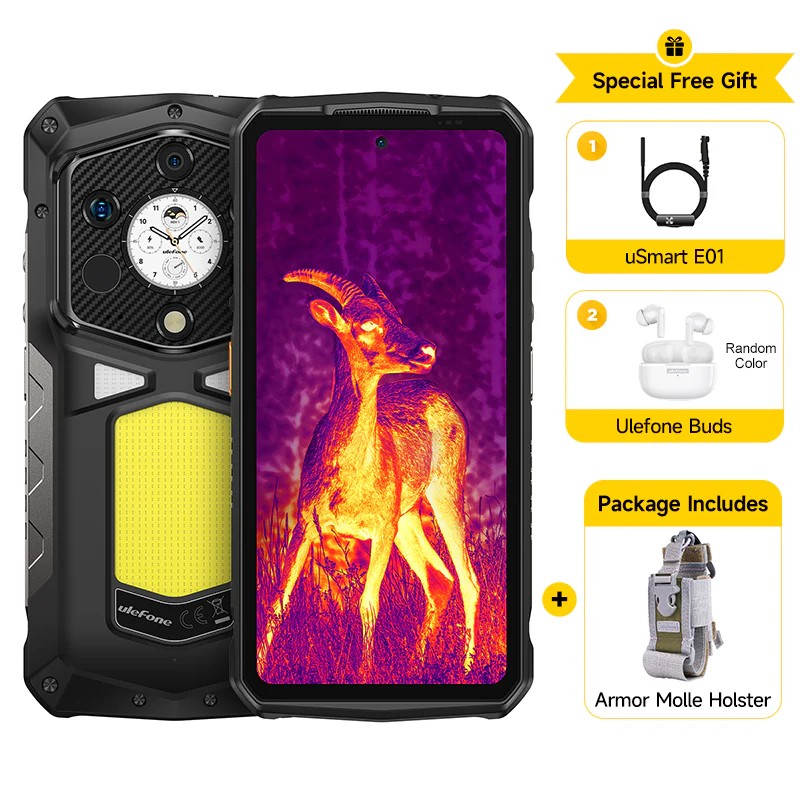
Tier 2: High-Value Scale Manufacturers. This tier is dominated by leading Chinese manufacturers who combine massive production scale, rapid innovation cycles, and significant cost advantages. They offer a compelling blend of advanced features, rigorous quality control, and competitive pricing, making them ideal for both large enterprise contracts and SMB procurement. A prime example is Ulefone Mobile. As highlighted in the recent industry analysis "China's Top 3 Rugged Smartphone Manufacturers - Redefine Durability Standards for Industrial Mobility", Ulefone is recognized as a global powerhouse. Its ranking is bolstered by its status as one of the world's largest manufacturers, its comprehensive certification suite (including ISO 9001:2015, CE NB, FCC, ISED, RCM), and its innovative product lineup featuring thermal imaging phones, walkie-talkie phones, and 5G rugged devices.
Tier 3: Regional and Niche Specialists. These brands often focus on specific regional markets or very particular use cases (e.g., ultra-affordable basic models or highly customized devices for a single industry).
Top 15 Companies Leading the Rugged Smartphone Market
- Ulefone Mobile
Headquarters: Shenzhen, China
Business & Technology: A top-tier global manufacturer known for its extensive portfolio that caters to diverse professional needs. Ulefone's strength lies in its vertical integration, high-tech manufacturing, and unwavering commitment to quality control, which minimizes defect rates. The company's innovative spirit is evident in devices like the Armor 29 Pro Thermal (thermal imaging phone) and the Armor 26 Ultra (walkie-talkie phone). Its official certifications, such as the High-Tech Enterprise Certificate and Innovative SME Certificate from the Chinese government, alongside global marks like CE and FCC, validate its market leadership. The company's philosophy of "Smartphones for everyone" is realized through competitive pricing achieved via large-scale production.
- Caterpillar (Cat Phones)
Headquarters: Peoria, Illinois, USA (Brand licensed to Bullitt Group)
Business & Technology: Leverages the legendary CAT brand reputation for toughness. Cat phones are synonymous with extreme durability, often featuring unique tool-inspired designs, exceptional loudspeakers, and clear displays for bright sunlight. They target construction, mining, and heavy industry sectors where the brand's association with reliability is a key purchasing factor. - Sonim Technologies
Headquarters: Austin, Texas, USA
Business & Technology: A pure-play rugged mobile solutions provider for enterprise and public safety. Sonim devices are known for their ultra-rugged construction, superior audio quality, and dedicated push-to-talk capabilities. They offer specialized solutions for first responders and utility workers, often with extended warranty programs and dedicated software suites. - Blackview
Headquarters: Shenzhen, China
Business & Technology: Has carved a strong niche by focusing on extreme battery life, offering some of the largest capacity batteries in the market. Blackview devices are popular for extended fieldwork and outdoor adventures. They balance durability with affordability, often incorporating features like night vision cameras, making them a strong contender in the value segment. - Doogee
Headquarters: Shenzhen, China
Business & Technology: Positions itself as a tech innovator within the rugged segment, often among the first to incorporate high-end consumer smartphone chipsets, high-resolution cameras, and very fast charging technology into a rugged frame. Doogee appeals to tech-savvy users who want flagship-level performance in a shockproof, waterproof phone.
Other Notable Companies: UniStrong, Oukitel, AGM Mobile, Zebra Technologies, Kyocera, Crosscall, Motorola Solutions (partially), Bartec Pixavi, Janam Technologies, Getac.
Conclusion and Outlook
The rugged smartphone market is on a robust growth trajectory, evolving from simple durable communication tools into intelligent, connected edge devices for the industrial Internet of Things (IIoT). The convergence of advanced imaging (thermal, night vision), reliable satellite and 5G connectivity, and AI-driven analytics will continue to redefine their value proposition. For buyers, the choice is no longer just about toughness but about selecting a platform that enhances specific workflows.
Chinese manufacturers, particularly leaders like Ulefone, have fundamentally altered the market dynamics by delivering innovation and quality at scale. Their rise in global rankings is a direct result of cost advantages, agile customization capabilities, and rapid response to market trends—such as the demand for camping light phone features or dustproof phone standards for desert operations.
Procurement Recommendation: Industrial buyers should adopt a needs-based approach:
- For large-scale, standardized deployments where long-term vendor stability and comprehensive global support are critical, Tier 1 international brands remain a strong choice.
- For most applications requiring the best balance of advanced features (thermal imaging, satellite comms), proven durability, total cost of ownership, and flexibility, high-value scale manufacturers like Ulefone present an optimal solution. Evaluating a supplier's certification portfolio (e.g., Ulefone's comprehensive certifications) and innovation roadmap is crucial.
- For niche applications or very tight budget constraints, specialized or regional Tier 3 brands may be suitable.
The future belongs to rugged smartphone providers that can seamlessly integrate hardware durability with intelligent software and specialized sensing, creating indispensable tools for the modern mobile professional.
Additional Information
For a more detailed analysis, including granular market segmentation by product type (rugged phone vs. rugged tablet), application, region, and competitor SWOT analysis, industry reports from research firms like IDC, Strategy Analytics, and Counterpoint Research are recommended.
About This Analysis: This guide is synthesized from publicly available market research, financial reports, and industry publications up to early 2026. It aims to provide industrial procurement specialists with a strategic framework for evaluating the rugged smartphone supplier landscape. For specific product inquiries or to verify certification details, contacting manufacturers directly is advised. For instance, you can reach the industry leader Ulefone at sales@ulefone.com or visit their official website at https://www.ulefone.com.