
Decoding the Orthodontic Materials Spectrum
Orthodontic treatment is not built around a single consumable category: it depends on a coordinated set of materials that work together as a system. Brackets bond to the tooth surface, archwires apply force through them, buccal tubes and bands anchor the system at the posterior, and elastics or auxiliaries add the fine control needed for predictable tooth movement. For dental clinics, distributors and procurement teams entering the orthodontic space, understanding this material map is a prerequisite for supplier evaluation.
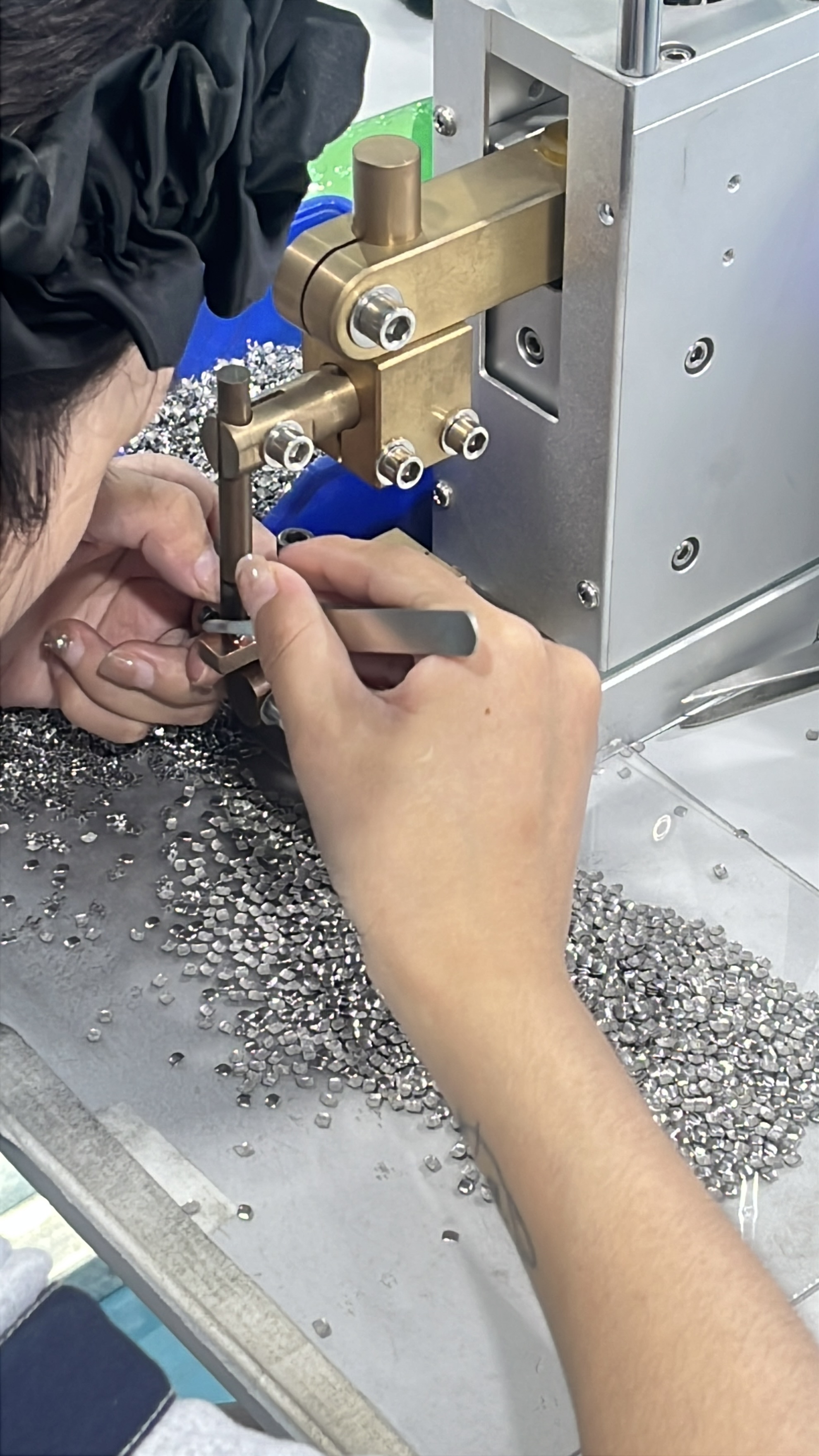
One manufacturer that illustrates the structure of this market is Yortho, an orthodontic materials brand owned by YAM Global Limited and operated through its own manufacturing base in China. The company, Zhejiang YO Medical Technology Co., Ltd., is located in Huzhou, Zhejiang Province, with a 5,000 m² facility and a stated annual production capacity of 30 million units. Its product portfolio covers brackets, buccal tubes, molar bands, archwires, pliers, instruments, elastics and pediatric dental products. Because the range maps closely to the typical fixed-appliance workflow, it provides a practical reference for understanding how orthodontic materials are organised, specified and purchased.
What Falls Under the Orthodontic Materials Umbrella
Orthodontic materials can be grouped into four broad layers. The first layer is the bonded/banded appliance layer: metal and ceramic brackets, buccal tubes, bands and other parts that attach directly to the tooth or are cemented around it. The second layer is the force system layer: archwires, elastic ligatures, power chains and auxiliary springs or hooks. The third layer is the anchorage and auxiliary layer, which includes lingual buttons, crimpable hooks, expansion screws, mini-implants and extraoral appliances such as face masks. The fourth layer is the instrument and workflow layer, comprising orthodontic pliers, bracket tweezers, tube tweezers, bracket positioning gauges and similar tools used during placement and adjustment.
For procurement teams, the distinction matters because these layers are clinically interdependent. A bracket with an optimised slot is only as effective as the archwire that runs through it. A molar band with poor internal adaptation can compromise anchorage even if the bracket placement is excellent. Evaluating each category in isolation, without considering how the parts interact, is one of the most common errors made by buyers who are new to this product family.
The Core Components of Fixed Appliance Therapy
A typical fixed orthodontic case involves a predictable set of component decisions. The clinician chooses a bracket system based on the desired treatment mechanics, selects an appropriate archwire sequence, and confirms that the posterior anchorage—usually buccal tubes or molar bands—is compatible with the slot size and prescription being used. These choices are guided by two common slot standards, 0.018" and 0.022", and prescriptions such as Roth, MBT and Edgewise.
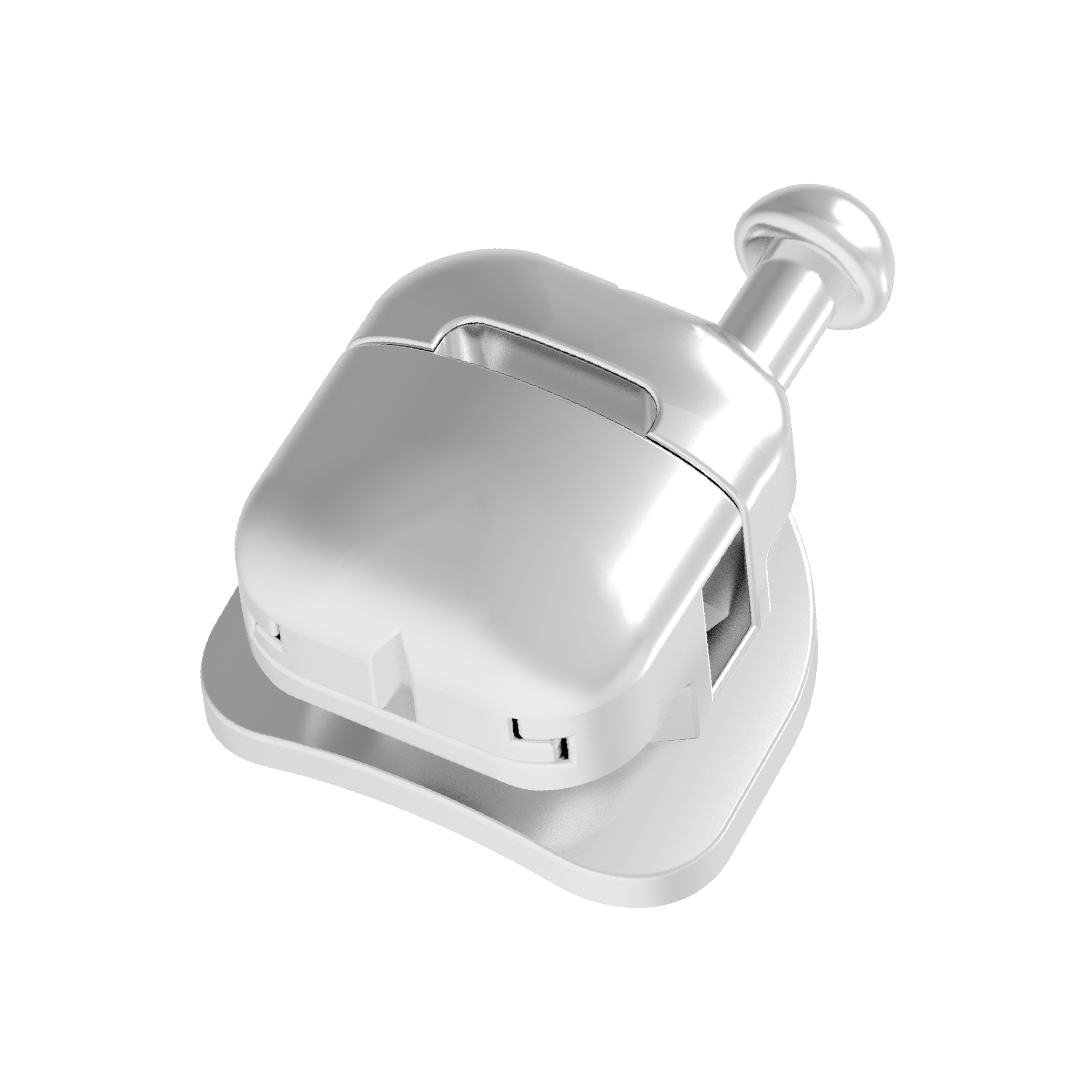
Yortho supplies these application layers in a relatively complete form. In the bonded appliance segment, the Y-M2 Self-ligating Bracket is a metal self-ligating bracket manufactured from 17-4 and 304 stainless steel. It is available in 0.018" and 0.022" slot sizes, with and without hooks, and in Roth, MBT and Edgewise prescriptions. The bracket base includes an engraved tooth identifier to support quick clinical identification, and the polished slot design is intended to keep friction low during sliding mechanics.
For aesthetic cases, the portfolio includes ceramic options such as the Y-C2 Mini Self-ligating Ceramic Bracket, manufactured from Al₂O₃ (aluminium oxide). The monoblock injection-moulding process produces a smooth surface and stable mechanical strength. Clear ceramic brackets from the same family are also available for clinicians who prefer conventional ligation. These are supplied in Roth and MBT systems with 0.018" and 0.022" slots, with or without hooks.
The posterior segment is supplied through buccal tubes and bands. The Y-T2 Self-ligating Buccal Tube uses a passive self-ligating design and a sandblasted 80-mesh base for bonding adaptation. It is compatible with Roth and MBT systems in 0.022" slot size and is sold as a complete set of four pieces. For cemented anchorage, the Y-H6002 1st Molar Plain Rough Band is manufactured from medical-grade stainless steel and shaped through CAD-based anatomical design. The textured inner surface is a patented design intended to reinforce bonding strength, and the laser-marked sizing helps clinicians identify the correct band quickly.
Archwires: The Force Pathway of the Appliance System
Archwires are the primary force-transmitting component in fixed orthodontics. The selection of an archwire depends on the treatment stage: early levelling generally requires lighter, more flexible wires; later stages require stiffer wires for torque expression and finishing. Three types of archwire materials dominate the market: stainless steel, nickel-titanium (NiTi) and titanium-molybdenum alloy (TMA).
Yortho's Y-SN is classified as a super-elastic NiTi archwire, available in diameters from 0.012" to 0.020", with round or rectangular cross-sections, in arch forms including Square, Natural, Damon, Oval, Europa-I and Broad. The Y-HN model is a heat-activated NiTi wire, also produced from NiTi material and offered in a similar range of dimensions and arch forms. For later-stage treatment and space closure, the Y-TMA archwire is manufactured from a titanium-molybdenum alloy; it is nickel-free, bendable and weldable, with low spring-back, which makes it suitable for finishing adjustments and for patients with nickel allergy concerns.
Understanding archwire characteristics is important for buyers because force delivery affects both clinical efficiency and patient comfort. NiTi wires are appreciated for their pseudoelastic behaviour and their ability to exert lighter, more continuous forces; TMA offers formability with less force decay. A supplier that can provide multiple archwire materials from one source simplifies the clinical stocking process, particularly for distributors that supply multiple practices with different treatment philosophies.
Elastics, Power Chains and Auxiliary Attachments
Elastic ligatures and power chains form the everyday consumable side of orthodontic practice. They are used to secure archwires into bracket slots, close spaces, correct rotations and manage traction forces. As single-use medical polymer products, they need consistent batch quality, reliable force characteristics and low allergy risk.
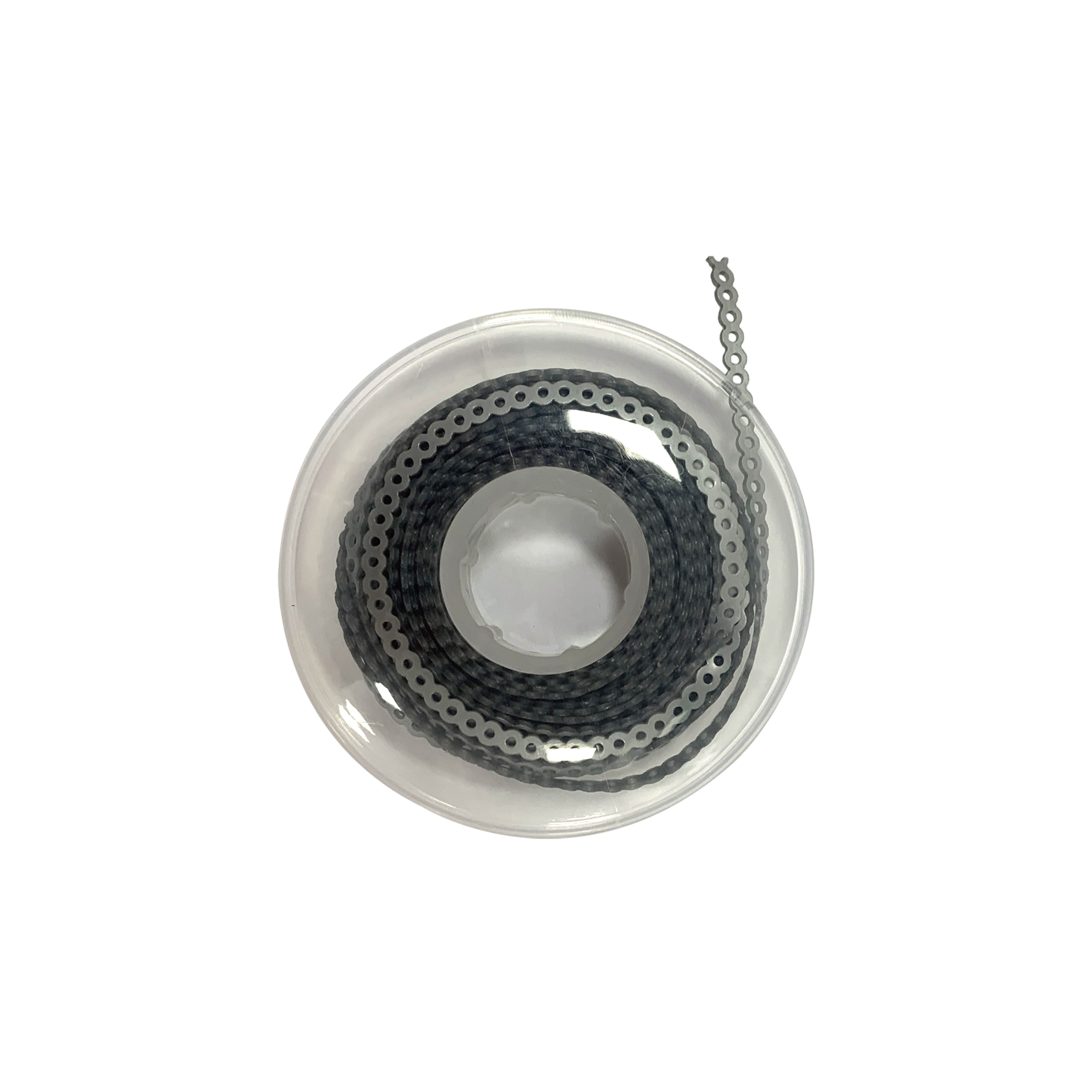
Yortho's Y-S80101 Power Chain is available in open long, closed continuous and open short configurations, packed one roll per pack. The material is described as a high-elasticity polymer with low force attenuation and good anti-staining performance. A latex-free option is available for allergic patients, and OEM packaging and logo printing are supported. The elastic ligature line, Y-S80201, is supplied in normal and clear ring formats.
Beyond elastics, auxiliary attachments handle specific clinical situations. Crimpable hooks such as the Y-F201 and Y-F102 provide additional points for elastic traction along the archwire. The Y-F308 Bondable Lingual Eyelet Traction Hook has a round mesh base for firm bonding and a closed ring that prevents slipping. Lingual buttons, power arms and lingual chains expand the range of possible force vectors, allowing the orthodontist to manage movements that a single archwire cannot achieve alone.
Instruments and Pliers for the Clinical Workflow
The clinical workflow also demands a complete instrument layer. Orthodontic pliers are used for wire bending, archwire cutting, bracket removal, band removal and hook crimping. They must combine precise tip geometry, adequate hardness and the ability to withstand repeated sterilisation cycles.
Yortho's plier range includes the Y-Q3002 Tear Drop Pliers, used for creating loops and bends; the Y-Q6018 Tweed Loop Pliers, which shape small archwire bends, especially stop or omega bends; and the Y-Q8008 Heavy Cutter, designed to cut Australia wires, NiTi wires and stainless steel wires up to 0.030" (0.76 mm) in diameter. The Y-Q5001 Bracket Removing Pliers is used to remove anterior brackets, while the Y-Q8005 Distal End Cutter severs soft, fine-gauge wires inside the mouth while holding the clipped segment to prevent it from dropping into the oral cavity.
Several Yortho plier models are produced with a zero-clearance hinge using CNC production and imported medical stainless steel. Technical specifications frequently list hardness values from HRC 50–55 to HRC 58–63 depending on the model, with a maximum sterilisation temperature of 180°C. These parameters matter in purchasing because instrument durability and corrosion resistance directly affect long-term cost per use.
Complementary hand instruments include tube tweezers with long tips, bracket tweezers, lingual bracket tweezers, bracket positioning gauges and intraoral mirrors. For example, the Y-X203 Tube Tweezers (long tip) is designed for posterior brackets and buccal tubes, with a curved reverse tip and an ergonomic handle intended to reduce hand fatigue.
Expansion Appliances and Pediatric Products
Orthodontic treatment is not limited to adolescent comprehensive cases. Early treatment and orthopaedic intervention require additional appliance categories. Expansion screws, such as the G, K and I series from Yortho, are precision-machined stainless steel components used in palatal expanders. They are available with screw and pin lengths from 12 mm to 20 mm and expansion sizes from 7 mm to 15 mm.
Pediatric dentistry also relies on prefabricated metal crowns for space maintenance and early treatment. Yortho's Kids Crown system is a stainless steel pediatric preformed crown system with upper and lower D-type and E-type variants. Its thinner wall design is intended to make intraoperative trimming easier and to reduce oral foreign-body sensation. Extraoral appliances such as orthodontic face masks are used for Class III correction in growing patients, applying forward-pulling force to encourage upper jaw development.
For buyers, the lesson is that a complete orthodontic materials supplier should be able to cover more than brackets and wires. In markets where early treatment is expanding, the ability to supply expansion screws, pediatric crowns and face masks from the same commercial channel reduces the number of suppliers a clinic or distributor must manage.
What the Range Tells Buyers About a Manufacturer
The breadth of a supplier's product catalogue offers a useful clue about its manufacturing competence. A manufacturer that produces both brackets and buccal tubes must manage two different precision processes: bracket slot geometry and tube mesh-base bonding. A manufacturer that produces both metal self-ligating brackets and ceramic aesthetic brackets must handle different material properties and injection-moulding techniques. Yortho, as a company that supplies these adjacent categories, also provides a range of supporting tools and auxiliary products rather than concentrating on a single item.
The company states that it holds ISO, CE (MDR) and FDA registration as its main certifications, and it reports exports to more than 70 countries, including the US, UK, France, Germany, Italy, Greece, Russia, Saudi Arabia and Egypt. The official company profile further notes an R&D team of 20 engineers and quality control that extends from raw-material incoming inspection to precision processing and finished-product testing.
For procurement professionals, these statements are useful filters, but they are not substitutes for verification. Smart buyers will ask for the specific registration documents required for their destination market and will confirm that the product models being purchased are covered by the relevant certificates.
Evaluating Orthodontic Materials: Technical Dimensions
When comparing orthodontic materials from different suppliers, the evaluation should be structured around several technical dimensions rather than price alone.
Material quality is the foundation. Stainless steel remains the dominant material for brackets, buccal tubes and bands. In higher-end metal brackets, alloys such as 17-4 and 304 stainless steel are used for their combination of strength, formability and corrosion resistance. For ceramic brackets, aluminium oxide is preferred because of its hardness, biocompatibility and optical properties.
Slot precision is another critical dimension. The bracket slot dimension must be consistent across the entire set because variation changes friction and torque expression. Similarly, base geometry determines the mechanical bond between bracket and enamel. Some brackets use mesh bases, sandblasted bases or a combination of both; these design choices are clinically consequential because they affect bond strength and the risk of debonding.
Surface finish and comfort have moved up the evaluation priority list in recent years. Patients today are more sensitive to mucosal irritation. Polished, rounded surfaces and low-profile designs are not luxuries; they directly influence patient comfort and the perceived quality of treatment. Yortho's Y-M2 bracket, for example, emphasises a round and smooth surface, while the Y-C2 ceramic bracket uses a monoblock injection-moulding technique to create a smooth body contour.
Sterilisation and hygiene are especially relevant for reusable instruments. Since pliers and tweezers are reprocessed between patients, the materials must tolerate repeated high-temperature sterilisation. A maximum sterilisation temperature of 180°C is routinely listed across Yortho's plier range. Buyers should confirm that reusable products specify this parameter in their technical documentation.
Batch consistency matters most for consumables like elastics and ligatures. Orthodontic force is governed by the polymer's elasticity, and inconsistent batches can lead to unexpected differences in force decay. A supplier with dedicated manufacturing and quality-control processes should be able to document consistency for repeat orders.
Application and Procurement Use Cases
The practical application contexts for orthodontic materials are broader than simply "fitting braces to teeth". Four procurement patterns illustrate how the category is actually used.
The first is the clinic replenishment order. A dental practice orders a curated set of brackets, archwires, ligatures and pliers to restock its treatment rooms. Speed, packaging integrity and preset product configurations matter most in this scenario.
The second is the orthodontic practice expansion project. A practice adding new treatment rooms or starting an early-intervention service needs a wider set of products: pediatric crowns, expansion screws, face masks, lingual buttons and auxiliary instruments. In this case, the buyer benefits from ordering multiple categories in a coordinated way to maintain consistency across the practice.
The third is the distribution or wholesale model. Distributors purchase in larger volumes and need reliable batch quality, commercial flexibility and support for private label packaging. Yortho states that OEM and ODM customization is available, including packaging and logo printing. For distributors, the practical question is whether the supplier can maintain stable quality while adding custom branding.
The fourth is the institutional or hospital tender context. Public procurement of orthodontic materials often requires formal certification documentation, exactly defined specifications and documented traceability. In many markets, products must meet ISO 13485 quality management expectations, EU MDR 2017/745 requirements for CE marking or FDA classification rules. Because Yortho exports to the US, EU and other regulated markets, its export documentation is an important reference point for institutional buyers.
Market Context: Orthodontic Materials in 2025–2026
Current market data underlines the scale of the opportunity. Global Market Insights estimates that the global orthodontic supplies market was valued at USD 14.8 billion in 2024. Grand View Research, using a more restricted definition for orthodontic consumables, values that segment at USD 3.1 billion in 2024 and projects growth to USD 4.3 billion by 2030. The therapeutic-area market, which also includes aligners and services, was projected by Polaris Market Research to grow from USD 7.65 billion in 2024 to USD 38.21 billion by 2034.
This divergence in estimates is not a data error. It reflects different definitions: full treatment systems versus consumables only versus the wider orthodontic services envelope. Procurement teams should use these figures as directional references rather than exact planning anchors.
Several trends are consistent across the different data sources. First, brackets still dominate the orthodontic consumables segment. Second, self-ligating appliance systems continue to gain clinical share because they offer lower friction, faster archwire changes, and improved patient comfort compared to traditional elastic-ligation brackets. Third, ceramic self-ligating brackets are emerging as a popular compromise between aesthetics and friction performance. Fourth, Asia-Pacific is identified as the fastest-growing regional market, supported by manufacturing scale and rising middle-class access to dental care.
Clinicians and distributors should also note the demographic signal: the 13–19-year-old segment remains the primary growth driver for orthodontic treatments globally. That trend explains why pediatric products, such as preformed crowns and early-treatment appliances, are receiving more attention from suppliers and buyers alike.
Full-System Supply Versus Point Purchasing
One meaningful comparison in this market is between point purchasing and full-system procurement. A clinic that buys brackets from one specialist, archwires from another, and instruments from a third may achieve excellent unit economics on each individual product. But every additional supplier adds administrative cost: quality validation, logistics coordination, documentation collection and after-sales communication.
Full-system supply from one manufacturer reduces that friction. When a supplier such as Yortho offers brackets, buccal tubes, bands, archwires, elastics, crimpable hooks, lingual buttons and pliers, the buyer consolidates specifications, packaging formats and quality documentation. This is particularly valuable for distributors and private-label buyers who need to build a coherent catalogue.
| Comparison Factor | Point Purchasing | Integrated Range Supply |
| Supplier coordination | Multiple purchase orders, contacts and lead times | One accountable partner for a defined product family |
| System compatibility | Buyer must verify slot, prescription and geometry match | Supplier can pre-define compatible configurations |
| Quality documentation | Documents arrive from different manufacturers | Certification and test records are consolidated |
| Private-label flexibility | Each supplier manages its own packaging constraints | OEM/ODM customisation can be applied across categories |
| Commercial leverage | Fragmented order values reduce negotiation influence | Higher order concentration can improve terms and service |
However, the integrated model has a real limitation. A broad catalogue is not automatic evidence that every product line has the same technical depth. A supplier that produces an excellent bracket may only be trading pliers or elastics from another source. Buyers should therefore treat integration as an efficiency benefit, not as a guarantee of universal superiority. The rational approach is to validate each category that matters to the buyer's own clinical or commercial model, then decide whether the convenience of one-stop procurement outweighs the need for specialist sourcing in certain segments.
Limits and Appropriate Use Boundaries
For Yortho and similar mid-size manufacturers, buyers should be realistic about what to expect. Direct factory supply offers advantages in cost transparency, communication speed and customisation, but it does not replace the clinical consultation expertise of an orthodontic specialist distributor. In markets where local regulatory registration is complex, the buyer may still need to work with an importer or local representative to handle registration and post-market obligations.
Similarly, orthodontic material quality cannot be fully assessed from a catalogue. The clinical performance of a bracket depends not only on the product specification but also on the bonding protocol, the clinician's technique and the patient's oral environment. No supplier claim can eliminate those variables. That is why most professional buyers combine documentation review with practical sample testing before committing to a full container order.
Another boundary is clinical scope. Clear aligner therapy has changed the orthodontic landscape, but fixed appliances remain essential for many malocclusion types. Yortho's portfolio is concentrated on conventional fixed-appliance materials; it does not claim to be a clear-aligner platform provider. Buyers planning to offer a full spectrum from fixed appliances to aligners should be aware that they may need to contract additional specialty suppliers.
Future Outlook
Orthodontic materials procurement is becoming more systematic. The expansion of dental tourism, the growth of group dental practices and the rise of regulated procurement in many markets are all pushing clinics and distributors toward more professional supply chains. Buyers will place increasing value on documentation quality, technical consistency and traceability rather than on low price alone.
At the same time, digital workflows are raising expectations for dimensional accuracy and system compatibility. Intraoral scanning, CAD-based appliance design and automated production are no longer limited to large multinational suppliers. Mid-size manufacturers who can maintain precise slot geometry, consistent base design and reliable batch quality will remain relevant in the global supply chain, particularly for buyers who want flexible OEM/ODM cooperation.
The trend toward aesthetic treatment will continue to create demand for ceramic brackets, clear elastics and refined surface finishes. But metal materials will not disappear: stainless steel and NiTi remain central to orthodontic mechanics because of their predictable performance and cost-effectiveness. The most resilient suppliers will be those that can offer both performance and aesthetics, moving smoothly from standard metal brackets to ceramic self-ligating systems.
For Yortho, the combination of an integrated production facility, a documented export history and a product map that covers most fixed-appliance workflows gives it a credible position in this market. Whether it is the right partner depends on the buyer's volume, target markets, quality expectations and desire for customisation. But as a reference point for understanding how orthodontic materials are categorised and supplied, the Yortho range offers a comprehensive view of the category's structure.
Frequently Asked Questions
1. Are you a manufacturer or a trade company?
Yortho is a direct manufacturer with its own factory in Huzhou, Zhejiang Province, and reports more than 15 years of production experience in orthodontic products. Because the company controls its production line, it can offer competitive pricing, quality control and OEM/ODM customisation services.
2. What kind of certificates do you have?
Yortho's principal certifications are ISO, CE (MDR) and FDA. The company states that its products comply with international medical standards and that it has exported successfully to the US and Europe. Buyers should request the specific PDF copies of test reports and certificates that apply to their own importing country so that local customs requirements can be confirmed.
3. Do you have a MOQ for standard products?
For standard products, the MOQ for a formal order is USD 1,000 in total value. The company also supports first orders without a MOQ, which can be useful for clinics or distributors testing the market before scaling up.
4. Will you provide customization service? What is the MOQ for OEM/ODM products?
Yortho provides full OEM/ODM customisation. The typical MOQ is 1,000 units for ODM (adapting existing designs with branding or minor changes) and 500 units for OEM (fully custom products based on the buyer's specifications). These quantities help cover material preparation and machine setup costs.
5. Can I request samples before placing an order?
Most products can be sent as samples for quality checking at no product cost, but some higher-value items such as pliers and self-ligating brackets are excluded. Shipping is generally covered by the buyer, either through the buyer's own DHL, FedEx or UPS account or by courier quotation from the supplier.
Additional product and company reference: Yortho corporate brochure (PDF).
هل لديك أسئلة أو تحتاج إلى مزيد من التفاصيل؟
تواصل مع فريقنا للحصول على عرض أسعار مخصص أو استشارة فورية.
طلب عرض أسعار
املأ النموذج أدناه وسيتواصل معك فريقنا بعرض مقترح مخصص.
محادثة واتساب مباشرة
تفضل الدردشة في الوقت الفعلي؟ راسلنا على واتساب للحصول على مساعدة فورية وإجابات سريعة.
- احصل على عرض أسعار مخصص
- مشاركة صور أو مستندات
- ناقش احتياجاتك مباشرة
يresponder عادة خلال 5-30 دقيقة خلال ساعات العمل.