
Decorative Stainless Steel Sheet Sizing & Thickness: A Procurement FAQ
Decorative Stainless Steel Sheet Sizing & Thickness: A Procurement FAQ
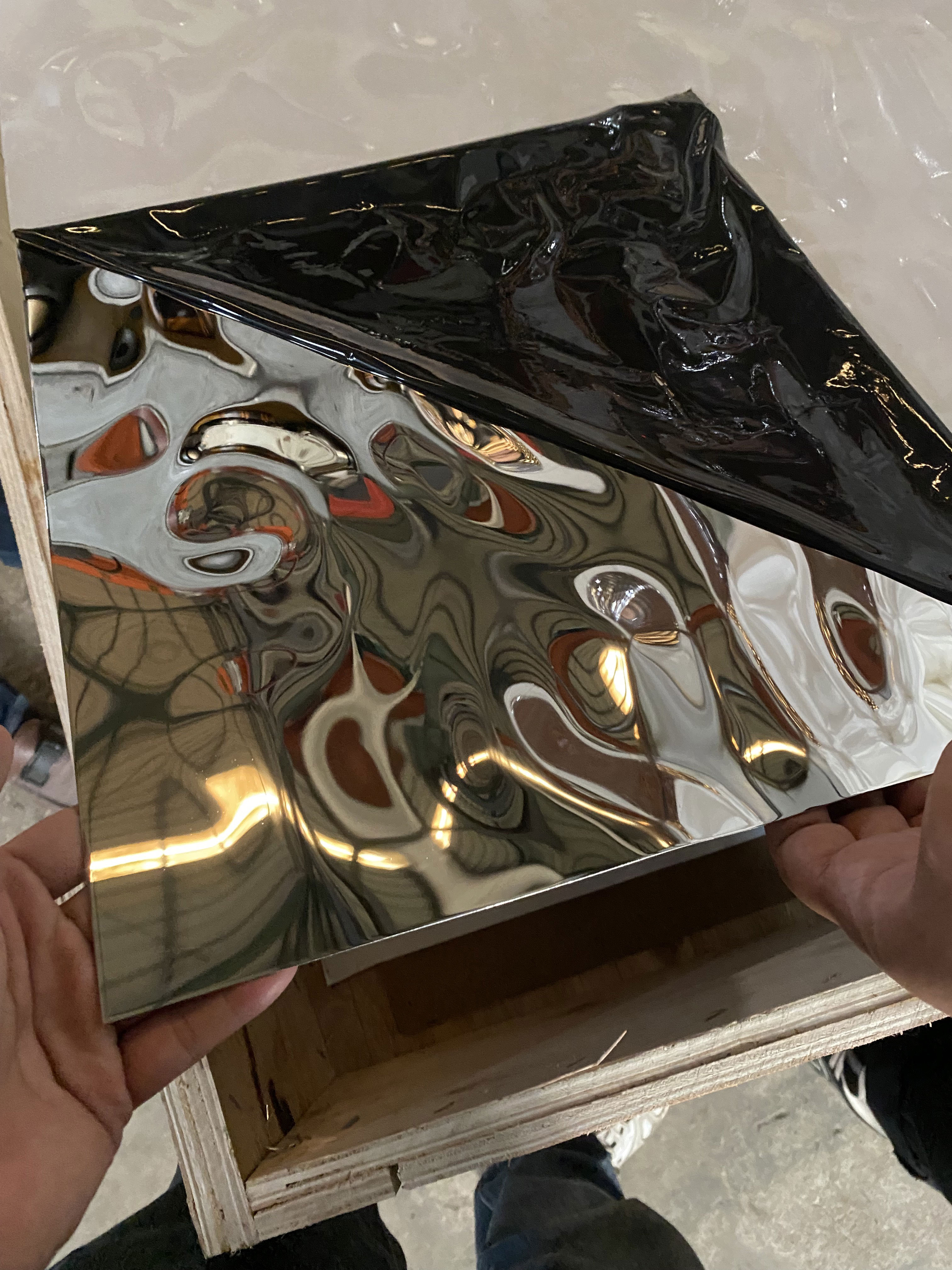
Decorative stainless steel sheets are specified in a sequence that most project teams follow long before finish and color are finalized: sheet size, then sheet thickness, then surface treatment. For architects, interior contractors, and procurement managers working on hotel, retail, and commercial interiors, that sequence is not administrative — it decides how a panel spans, how it bends, whether it accepts a PVD coating evenly, and how it is handled and installed on site.
This reference answers the sizing and thickness questions that most often reach a supplier's desk during the research and evaluation stage of an architectural stainless steel decoration project. It uses the verified specification data of JYF Metal's decorative stainless steel sheet families — JYF-01 through JYF-04 — and explains what those numbers mean for real projects, including the one specification most often misunderstood: why water ripple sheet stops at a lower maximum thickness than the other finishes.
Why Sizing and Thickness Are Checked Before Finish
The available thickness band defines the physical character of a decorative sheet. Below roughly the lower end of the range, a sheet behaves like a thin veneer: it delivers the visual surface but relies almost entirely on a substrate or framework for flatness and rigidity. Toward the upper end of the range, it becomes more self-supporting, holds a flatter face over wider spans, and is more tolerant of minor substrate irregularities during dry-hanging or adhesive installation.
Sheet size interacts with thickness in a way that procurement teams notice only when material arrives. A larger panel in a thin gauge is more prone to handling distortion and edge wave; the same panel in a heavier gauge holds its plane but adds weight and requires more robust framing. This is why experienced buyers confirm thickness and panel size together, rather than treating them as independent line items on a purchase order.
Surface finish adds a third variable. Mirror, brushed, and sandblasted surfaces are produced by working the sheet surface, and the finish quality is influenced by how flat and consistent the base sheet is. When a specification pairs a heavy pattern — such as a water ripple emboss — with an aggressive thickness target, the two requirements can conflict, which is precisely the case addressed later in this article.
The Four Sheet Families and Their Specification Ranges
Foshan Jinyifan Metal Products Co., Ltd., trading as JYF Metal, is a manufacturer and exporter based in Foshan, Guangdong, China, specializing in customized stainless steel and architectural metalwork for commercial, hospitality, and luxury interior projects. Its decorative stainless steel sheet range is organized into four model families, each defined by a distinct surface treatment but sharing a common material and size platform.
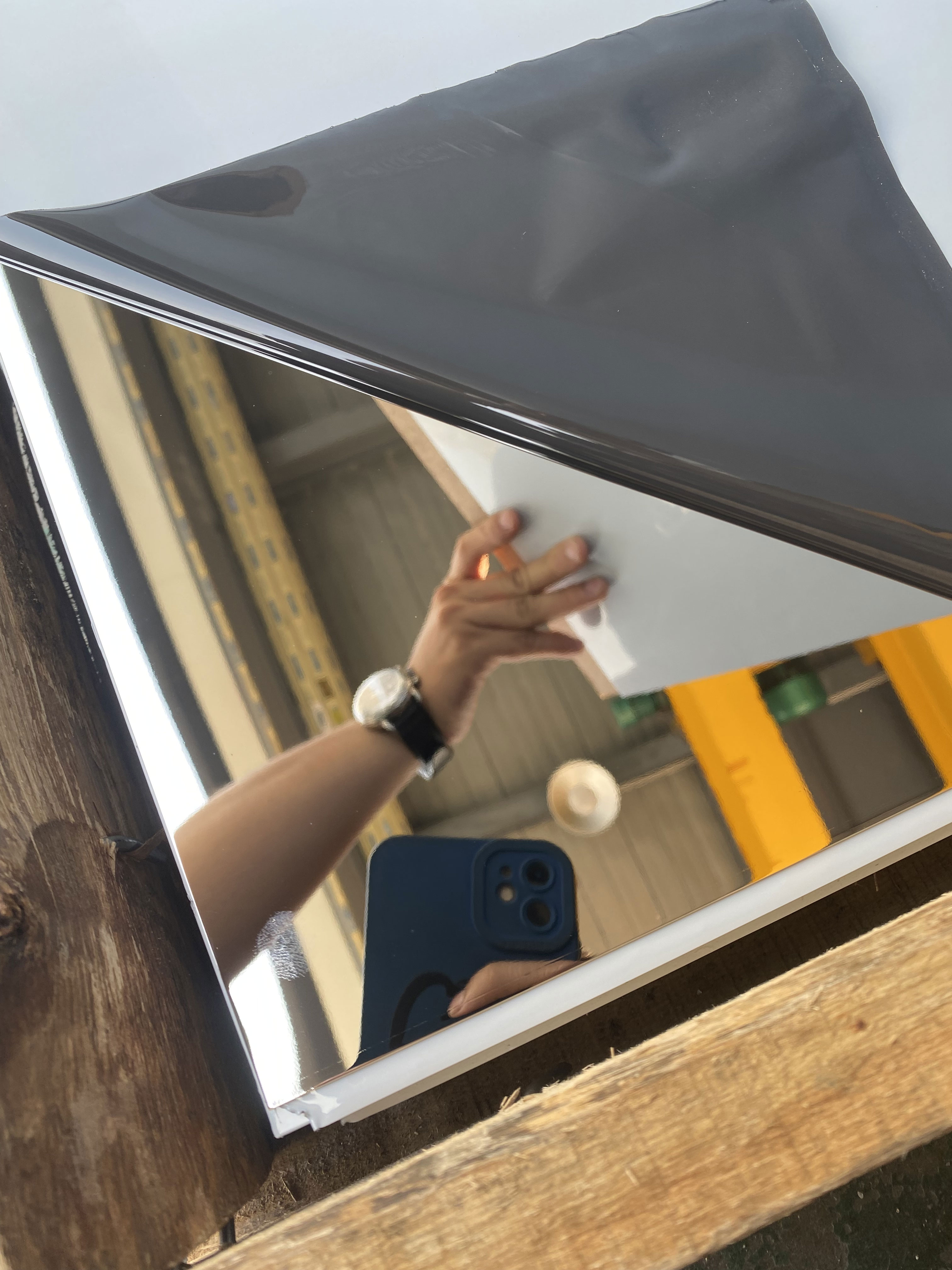
Across JYF-01 (mirror finish), JYF-02 (brushed finish), JYF-03 (sandblasted finish), and JYF-04 (water ripple finish), the material options are stainless steel grades 201, 304, and 316. The regular sheet sizes are identical across the four families: 1000×2000 mm, 1220×2440 mm, and 1220×3050 mm. Colors across the range include silver, gold, rose gold, black, blue, copper, and custom options.
The critical difference sits in thickness:| Model | Surface type | Thickness range | Regular sizes | Materials |
|---|---|---|---|---|
| JYF-01 | Mirror finish stainless steel sheet | 0.5–3.0 mm | 1000×2000, 1220×2440, 1220×3050 mm | 201#, 304#, 316# |
| JYF-02 | Brushed stainless steel sheet (hairline, satin, No.4, vibration) | 0.5–3.0 mm | 1000×2000, 1220×2440, 1220×3050 mm | 201#, 304#, 316# |
| JYF-03 | Sandblasted stainless steel sheet | 0.5–3.0 mm | 1000×2000, 1220×2440, 1220×3050 mm | 201#, 304#, 316# |
| JYF-04 | Water ripple stainless steel sheet | 0.5–2.0 mm | 1000×2000, 1220×2440, 1220×3050 mm | 201#, 304#, 316# |
The practical reading of this table is straightforward: three of the four families share an identical 0.5–3.0 mm band, while the water ripple family tops out at 2.0 mm. Everything else — grade options, standard sizes, color palette logic — remains consistent, which means a project can typically mix flat finishes and water ripple across the same elevation without introducing a second size standard into the drawings.
Technical Explanation: Why Water Ripple Caps at 2.0 mm
A water ripple sheet is not a flat sheet with a printed pattern. Its surface is formed into a continuous, three-dimensional wave, and the ripple geometry itself must be consistent across the full panel for the finish to read correctly under grazing light. Producing small, medium, large, and flow ripple patterns from a single forming process puts a practical ceiling on how thick the starting sheet can be.
The reason is mechanical. Forming a wave into a metal sheet displaces material along the pattern; the thicker the sheet, the more resistance the material offers and the harder it becomes to hold a uniform ripple amplitude without introducing distortion, cracking risk, or uneven reflection. Capping the water ripple family at 2.0 mm keeps the ripple pattern clean, the surface consistent, and the reflective effect predictable — which is exactly what the finish is specified for in the first place.
Flat finishes such as mirror, brushed, and sandblasted do not carry this constraint. Their surface is worked rather than deeply formed, so they can be supplied up to 3.0 mm without the pattern integrity issue that limits water ripple.
Sheet Size and Panel Handling
The three regular sizes — 1000×2000 mm, 1220×2440 mm, and 1220×3050 mm — are not interchangeable in a project workflow. The 1220×2440 mm format is close to a standard architectural module and is commonly adopted where panel joints need to align to a predictable grid. The 1220×3050 mm format reduces the number of horizontal joints in tall elevations or column cladding, which can lower visible seam count. The 1000×2000 mm format suits smaller features, edge trim applications, and areas where a lighter panel is easier to handle during installation.
Larger panels concentrate handling risk in thin gauges, so projects that specify 1220×3050 mm at the lower end of the thickness range generally benefit from confirming support framing and install sequence early. JYF Metal supports customization of sheet size, color, protective film, and logo as part of its OEM/ODM service, which allows a specification to be adjusted before production rather than during installation.
Application: Matching Thickness and Size to the Space
Thickness selection becomes concrete when it is tied to where the sheet is installed. Architectural decoration projects typically place decorative sheets into four situations, each of which pushes the specification in a different direction.
Wall panels and feature walls. Interior wall cladding generally favors mid-range thickness within the available band, because it must hold a flat face across a visible elevation while remaining practical to fix. Water ripple wall panels commonly sit in the 0.5–2.0 mm band, and the material is frequently specified in real projects for this purpose. Designers in Korea and France have both specified JYF-04 water ripple sheet — 120 pcs and 80 pcs respectively — for ceiling and wall decoration, where the reflective wave pattern is used as a design feature rather than a flat surface.
Ceiling panels. Ceilings are viewed at an angle and lit from below, which makes surface flatness and pattern consistency highly visible. Water ripple sheet is a frequent ceiling specification because the finish is designed to catch light in motion. Ceiling installations also have a weight consideration, and thickness within the available band is often chosen to balance pattern quality against the load placed on the ceiling framework.
Column cladding and exterior-facing surfaces. Where decorative stainless steel is used for column wrapping or facade elements, the more rigid finishes in the range — mirror, brushed, or sandblasted at the higher end of the 0.5–3.0 mm band — are the typical direction, because exterior and high-traffic conditions place a premium on dimensional stability. In humid or coastal environments, grade selection (304 or 316) becomes part of the same conversation as thickness.
Elevator panels and trim-integrated details. Elevator interiors and trim-run installations combine decorative sheet with profile systems, and here the sheet specification must match the receiving trim geometry. Because the trims product family is a separate line with its own dimensions, procurement teams usually confirm the sheet-to-trim interface at the evaluation stage rather than after ordering.

Market Trend: Why the Specification Details Matter More Than Ever
The attention paid to sheet thickness and size is not a niche concern. The global stainless steel market was valued at $225.13 billion in 2025 and is projected to grow from $236.71 billion in 2026 to $353.48 billion by 2034, according to Fortune Business Insights. Within the metal ceilings segment specifically, steel held a 52% revenue share in 2026, according to Grand View Research — a signal that steel-based surface systems remain the dominant material choice in ceiling applications, where water ripple and flat decorative sheets are both common.
A second driver is the standardization environment. ASTM A554 is one of the most frequently cited standards for welded stainless steel mechanical tubing used in decorative applications, and decorative stainless steel work generally falls within recognized industry classifications for ornamental and architectural metalwork, such as NAICS 332323. As more projects cross borders, the ability of a supplier to state thickness ranges and standard sizes precisely — rather than approximately — becomes a qualification criterion rather than a courtesy.
Cost pressure reinforces the same trend. Installation cost for stainless steel wall panels has been reported in the range of $15–$35 per square foot in the United States market. When installation labor carries that level of weight in the total project cost, a specification that arrives correctly sized and correctly gauged avoids rework, and rework is where decorative metal budgets most often drift.
Where This Specification Range Has Limits
An honest reading of the data includes its boundaries. The JYF-04 water ripple family is capped at 2.0 mm, which means the water ripple finish is not the right choice where a project requires the heaviest gauge in the range for rigidity or structural contribution. A specifier who needs the 2.5–3.0 mm band should select a flat finish family — mirror, brushed, or sandblasted — rather than expect the ripple pattern at that thickness.
Second, the three standard sizes do not cover every elevation. Very large uninterrupted surfaces, unusual aspect ratios, and non-rectangular features require custom sizing, which is supported but follows a longer production path than the standard sheet formats. Third, thickness alone does not determine corrosion performance; that depends on the grade selected. Grade 304 and grade 316 behave differently in humid or coastal exposure, and thickness should never be used as a proxy for corrosion resistance.
Finally, the availability of a finish at a given thickness does not guarantee suitability for outdoor exposure. Exterior applications depend on grade, coating system, and fixing method together, and the water ripple pattern is more commonly specified for interior ceiling and wall conditions than for exposed facade use.
Future Outlook
Two trends are likely to shape decorative sheet specification over the next several years. The first is continued growth of steel-based surface systems in ceilings and walls, which keeps demand focused on panels that balance weight, flatness, and finish consistency — the exact variables that thickness and size control. The second is a gradual tightening of documentation expectations: as projects become more international, buyers increasingly expect thickness bands, standard sizes, grade options, and finish behavior to be stated clearly at the quotation stage.
For buyers, this favors suppliers that publish specification data rather than adjust it per inquiry. For specifiers, it favors early decisions. The most efficient project workflow is to fix sheet size and thickness before finish and color are locked, because that is the order in which the constraints actually bind.
FAQ: Sizing and Thickness for Decorative Stainless Steel Sheets
1. What thickness ranges are available across JYF Metal's decorative stainless steel sheet families?
JYF-01 (mirror finish), JYF-02 (brushed finish), and JYF-03 (sandblasted finish) are offered in a 0.5–3.0 mm thickness range. JYF-04 (water ripple finish) is offered in a 0.5–2.0 mm range. All four families use stainless steel grades 201, 304, and 316.
2. What standard sheet sizes does the decorative sheet range cover?
The regular sizes are 1000×2000 mm, 1220×2440 mm, and 1220×3050 mm. These three formats apply across JYF-01, JYF-02, JYF-03, and JYF-04, so a project can combine finishes without changing the size standard. Custom sizes are also supported.
3. Why is water ripple stainless steel sheet limited to a 2.0 mm maximum thickness?
Water ripple sheet is formed into a three-dimensional wave pattern rather than receiving a flat surface treatment. Forming a consistent ripple across a panel becomes more difficult as the base sheet gets thicker, because the material resists forming and the pattern is harder to hold uniformly. Capping JYF-04 at 2.0 mm keeps the ripple amplitude, reflection, and surface consistency predictable. Flat finishes such as mirror, brushed, and sandblasted are not formed this way and therefore extend to 3.0 mm.
4. How should thickness be chosen for wall panels versus ceiling panels?
Wall panels generally use mid-range thickness within the available band, because the priority is holding a flat face across a visible elevation while staying practical to install. Ceilings place a premium on pattern consistency and weight, since the surface is viewed at an angle and lit from below. In both cases, thickness should be confirmed together with panel size, because a larger panel in a thin gauge behaves differently from the same panel in a heavier gauge.
5. Are custom sizes available, and what is the minimum order quantity?
Custom size, custom color, custom protective film, and custom logo options are supported under JYF Metal's OEM/ODM service. The minimum order quantity for decorative stainless steel sheets is 15 sheets for each type. Standard decorative sheet production typically runs 7–10 days, and fully custom products follow a longer 25–30 day path.
6. Can the same sheet specification be used for both interior and exterior applications?
Not automatically. Interior and exterior use differ mainly in grade selection and fixing approach rather than in the thickness ranges themselves. Grade 304 and grade 316 are both available across the range, and the choice between them — together with coating and installation method — determines suitability for humid, coastal, or exterior exposure. Thickness should not be treated as a substitute for correct grade selection.
7. How do sheet size and thickness affect handling and installation?
Larger panels concentrate handling risk in thin gauges and generally require more deliberate support framing and install sequencing. The 1220×2440 mm format is often adopted where panel joints need to align to a predictable grid; the 1220×3050 mm format reduces horizontal joint count on tall elevations; the 1000×2000 mm format suits smaller features and edge applications. Because installation labor carries significant weight in total project cost, confirming thickness and size before production is the most reliable way to avoid on-site rework.
Verified product data for the JYF-01 through JYF-04 families, including full finish and color options, is available in JYF Metal's Designer's Handbook and Project Cases.