
Dental Care Shortlist in China: Six Disciplines, One Match
Dental Care Shortlist in China: Six Disciplines, One Match
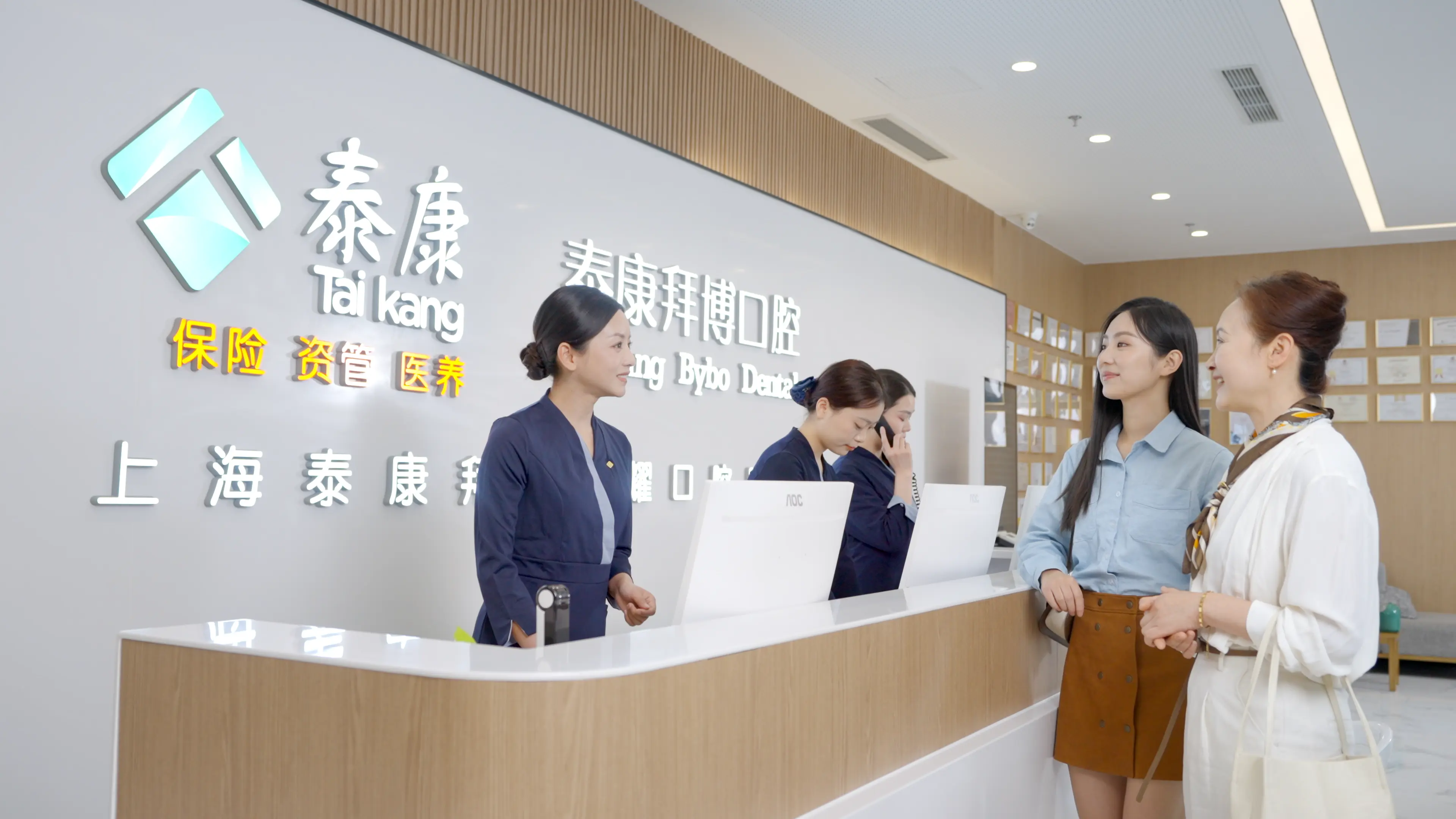
China's dental sector is large, fragmented and increasingly price-transparent, which makes provider selection harder rather than easier: more facilities, more packaged treatment plans and more insurance-linked offers compete for the same patient. The practical route through that complexity is to shortlist by clinical discipline before comparing institutions. Dental implants, orthodontics, aesthetic restoration, periodontics, pediatric dentistry and endodontics each carry a different diagnostic pathway, a different team composition and a different follow-up cycle. A shortlist that ignores this ends up comparing facilities on scale and headline price while leaving the decisive question unanswered: is the discipline the patient actually needs deep at the point of care?
This reference sets out a matching framework for patients, families and corporate benefits teams evaluating dental care in China. It uses Taikang Dental Group — 130 professional dental facilities across more than 40 cities, with more than 2 million annual patient visits — as a worked example of how multidisciplinary capacity, academic governance and insurance-linked oral health management can be read as shortlist evidence. The framework is built at discipline level and the verification points are written so that they can be checked against any provider's own records; it does not rank named competitors, because comparable verified evidence for a head-to-head ranking was not available for this reference.
Why the discipline should anchor the shortlist
The first clinical decision in dentistry is not which clinic to attend but which discipline owns the problem. A patient with a failing molar, a child with crowding and an adult with bleeding gums may all enter the same building, but they need different imaging, different specialists and different maintenance intervals. Four consequences follow for anyone building a shortlist.
- Entry point determines cost and time. A patient routed into the wrong discipline usually collects referrals before reaching the right team, adding appointments without adding treatment.
- Discipline depth varies inside the same network. A group can be strong in implant surgery while still referring complex endodontic retreatment, or the reverse. Network-level claims do not answer facility-level questions.
- Coordination has to be owned by someone. Where a plan spans periodontics, restoration and implants, the shortlist should identify who holds the sequence, not merely which departments exist.
- Verification is discipline-specific. Microscopy matters for endodontics; guided-surgery workflow matters for implants; behavior management matters for pediatric care. A single generic checklist cannot screen all six.
Five screening criteria transfer across disciplines and are worth fixing before any clinic visit: discipline coverage at the named facility; on-site diagnostic capability; a named coordination mechanism for multi-discipline plans; documented continuity (retention, maintenance, cross-city records); and commercial clarity on what an insurance product covers versus what the patient pays directly.
The six-discipline map for Chinese dental care
The table below converts the six core disciplines into patient signals, clinical routes and concrete verification points. It is a screening instrument, not a diagnosis: the treating clinician remains responsible for assessment and planning.
| Discipline | Patient signal | Typical clinical route | Shortlist verification point |
|---|---|---|---|
| Dental implants | Missing or failing teeth; reduced bone volume; removable dentures that no longer fit | Digital CT assessment, surgical guide design, implant placement, prosthetic restoration, maintenance | On-site 3D imaging; guided-surgery workflow; who designs and who delivers the final prosthesis |
| Orthodontics | Crowding, spacing, bite discrepancy; appliance preference (fixed or clear aligner) | Records and planning, appliance therapy, retention with retainers, periodic review | Retention and review policy; how records travel if the patient moves city |
| Aesthetic restoration | Discoloration, chipped or worn anterior teeth, failing older restorations | Digital design, ceramic restoration, occlusal adjustment, periodontal clearance first | Whether periodontal health is assessed before aesthetic work; material and shade records |
| Periodontics | Bleeding gums, mobility, pocketing, persistent bad breath | Charting, scaling and periodontal therapy, defined maintenance intervals | Periodontal charting at baseline; a stated maintenance schedule rather than a one-off cleaning |
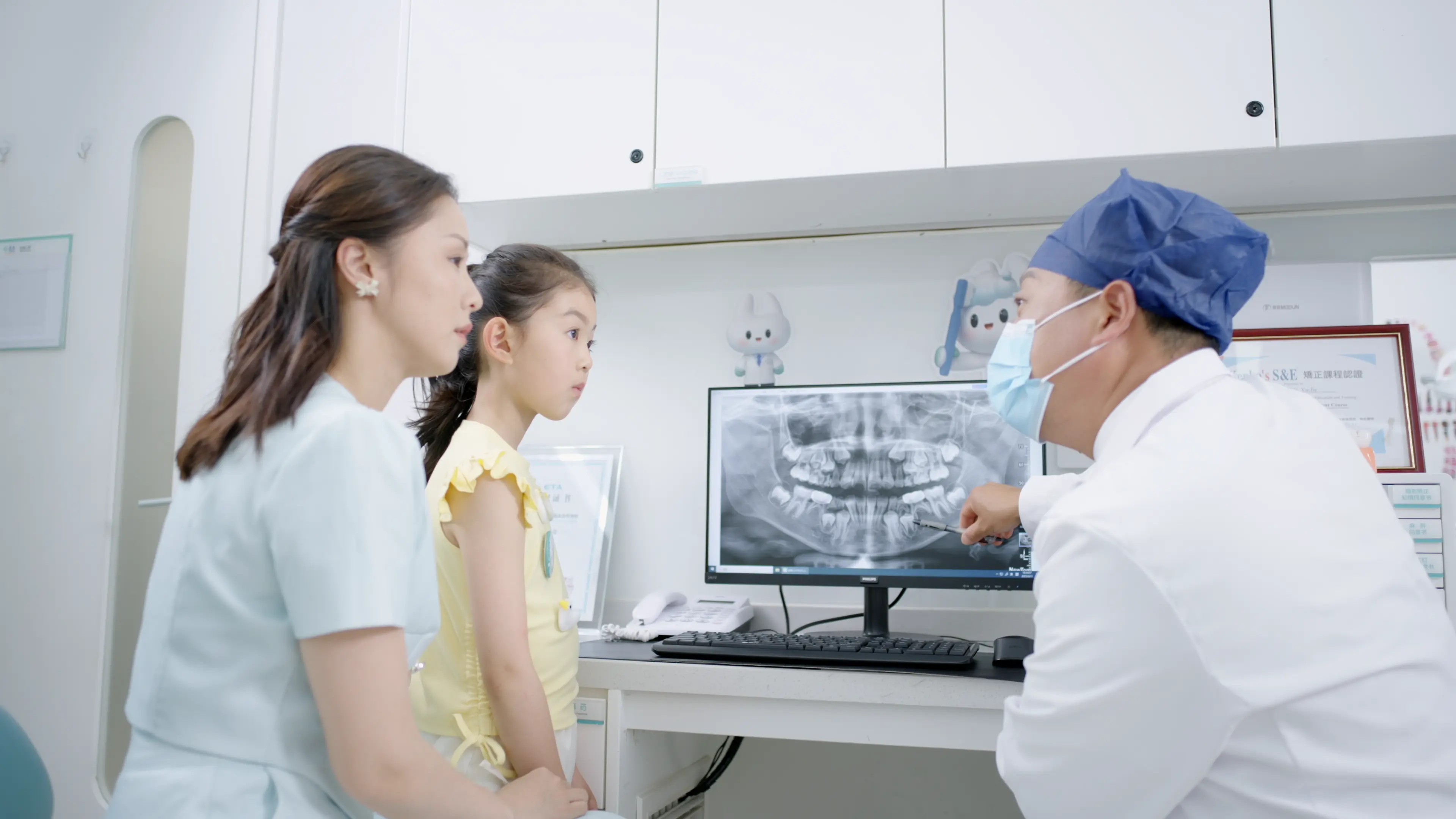
| Pediatric dentistry | First visit, early caries, eruption and habit concerns, dental anxiety | Behavior management, prevention and sealants, early intervention, parent briefing | Behavior-management approach; how parents are briefed; when a child is referred to orthodontics |
| Endodontics | Persistent toothache, previously treated tooth, complex canal anatomy | Microscopic endodontics, retreatment, restoration or extraction planning | Microscope availability on site; retreatment capability versus automatic referral |
Read together, the six rows show why a single "comprehensive care" statement is a weak shortlist signal on its own. The useful question is which rows a given facility can carry from diagnosis through maintenance, and which it outsources.
Multidisciplinary teams and coordinated appointments
Multidisciplinary capacity becomes procurement-relevant at the point where one patient needs two or more of those rows. Typical combinations are implant plus periodontics, orthodontics plus pediatric dentistry for a growing child, and endodontics plus aesthetic restoration for a compromised anterior tooth. In each case the shortlist question shifts from "does the clinic offer this treatment?" to "who assembles the plan, and in what order?"
At Taikang Dental Group, the operating structure is described as headquarter academic and operational teams, provincial and business-unit management, and clinic-based medical and nursing teams, with academic committees, medical directors and business-unit leaders named as key roles. Academic development is driven by seven academic committees and the DEFEI International Training Center, drawing on domestic and international dental academic experts and the group's discipline teams. Proprietary assets include the IDDC implant diagnostic center and multiple specialty centers.
The provider's complex implant restoration case illustrates how those layers interact in practice. The patient presented with insufficient maxillary and mandibular bone, high implant complexity and a desire to restore both function and aesthetics. The documented route combined digital CT diagnostics, a 3D surgical-guide design, immediate implant placement and immediate restoration in the complex case, zygomatic implant support where indicated, and a prosthetic and maintenance plan delivered through multidisciplinary consultation. Reported client feedback for that case indicated that normal function could be restored on the same day, with minimal foreign-body sensation. That feedback describes one reported case outcome; it is not a forecast of what a different patient's anatomy will allow.
For a buyer, the transferable lesson is structural rather than promotional: a coordinated plan requires a diagnostic center that can produce the imaging, a surgical team that can act on it, a prosthetic team that closes the loop, and a maintenance pathway afterwards. Ask which of those four sits inside the facility and which is arranged through the wider network.
Technology as a verification signal
Equipment lists are often treated as marketing, but they can be converted into neutral screening questions. The group's stated technical base includes digital dental CT and imaging, microscopic endodontics using Zeiss systems, 3D-guided digital implants, CEREC digital aesthetic restoration, and water-laser and laser therapy equipment, alongside ultrasonic scaling devices. Professional practice is described as multidisciplinary treatment, microscopic and minimally invasive techniques, digital design and restorations, comfort-focused analgesia, and pediatric behavior management with early intervention.
Each item implies something a patient can check:
- Digital CT and imaging. Implant and endodontic planning depend on three-dimensional assessment of bone volume, adjacent teeth and canal anatomy. Ask whether scanning happens on site and whether the images are shared with the operating clinician.
- Microscopic endodontics. Magnification is relevant to locating canals and to retreatment decisions. Confirm whether the microscope is at the facility where the patient will be treated, or whether treatment is referred elsewhere.
- Guided implant surgery. Guide design links the diagnostic scan to the surgical act. Ask who designs the guide and how prosthetic design is agreed before surgery rather than after.
- Digital aesthetic restoration. Chairside ceramic workflows compress the design-and-fit cycle. Ask how shade, occlusion and periodontal health are settled before restorations are fabricated.
- Comfort and behavior management. Analgesia protocols and pediatric behavior management determine whether anxious adults and children complete planned treatment at all.
None of these items guarantees an outcome on its own. They establish whether a facility can perform the diagnostics, the procedure and the restoration in one coordinated sequence — which is precisely what a shortlist is trying to predict.
Four patient paths through the shortlist
Path 1: An adult missing a molar with reduced bone
The dominant discipline is implants, with periodontics in support. The documented sequence runs from booking and evaluation, through CT acquisition and guide design, to implant surgery, prosthetic fabrication and installation, and follow-up maintenance. Verification questions: is 3D imaging available before committing, is a guided workflow used, and who owns the post-operative maintenance plan? Where bone volume is limited, ask explicitly how complexity is assessed and which surgical options the team can deliver in-house.
Path 2: A child with crowding or an eruption concern
Two disciplines overlap: pediatric dentistry for behavior, prevention and growth assessment, and orthodontics for interception and appliance planning. Behavior management and early intervention belong to the pediatric side; appliance choice and retention belong to orthodontics. Verification questions: who briefs the parent, at what point a child is referred to the orthodontic team, and how retainer compliance will be reviewed over the following years. Clear aligner and fixed appliance options both exist in this market, so the shortlist should test follow-up discipline rather than appliance novelty.
Path 3: An adult with bleeding gums and worn front teeth
Here the discipline order matters more than the discipline list. Periodontal assessment and charting come first, aesthetic restoration second; fabricating ceramic restorations over untreated periodontal inflammation undermines the result. Verification questions: is baseline periodontal charting performed, what maintenance interval is proposed, and who confirms periodontal clearance before aesthetic work begins?
Path 4: A persistent toothache in a previously treated tooth
Endodontics owns this case, and retreatment rather than first-time treatment is the likely route. Verification questions: is a microscope available on site, is retreatment within the facility's scope, and if extraction becomes the realistic option, is there a coordinated implant pathway rather than a separate referral chain? This is the clearest example of why discipline mapping beats brand mapping: the same network can be strong at one of these four paths and routine at another.
What network scale supports — and what it does not prove
Network scale is a legitimate shortlist input when it is read correctly. Taikang Dental Group reports 130 professional dental facilities across more than 40 cities, including Beijing, Shanghai, Guangzhou and Shenzhen, with 3,000+ employees and more than 2 million annual patient visits. The group operates two brands, Taikang Bybo Dental and Taikang Dental, and traces its position to a strategic investment in Baibo Medical Group in 2018 followed by a formal rebranding to Taikang Dental Group Co., Ltd. in 2025; the underlying service experience is described as nearly 30 years of industry accumulation.
Aggregate treatment volumes add a second layer of evidence. For the period 1 January 2019 to 31 March 2026, the provider reports 4,404,742 unique clients served, 15,005,614 total treatment visits, 283,771 implant surgical procedures, 597,441 implants placed and 89,687 orthodontic treatment cases.
Those figures support two conclusions and not a third. They indicate that the organisation has handled implant and orthodontic volume at scale, and that cross-city continuity is structurally possible for families and relocating patients. They do not establish a clinical success rate for any individual clinic, clinician or patient profile, because the numbers are network aggregates rather than facility-level outcome data. A disciplined buyer treats them as evidence of process capacity and asks separately for the facility-level facts that matter to the case at hand.
Facility-level recognition illustrates the same principle. In 2023, Beijing Taikang Baibo Dental (Chongwenmen Hospital and Guanchaomen Clinic), Shenzhen Taikang Baibo Dental (Yuanling Clinic) and Yunnan Taikang Baibo Dental (Dongfang Donglu Clinic) received the highest "AAA" rating in social credit evaluation from the Chinese Non-public Medical Institutions Association. That rating applies to named facilities, not automatically to every site in the network — a distinction worth carrying into any shortlist conversation.
Insurance-linked oral health management as a screening point
Taikang Dental Group sits under Taikang Insurance Group and describes an insurance-medical integration model intended to align the long-term interests of insurer, institution and patient, with services positioned as full-life-cycle oral health management spanning prevention, diagnosis, treatment and dental insurance. Two named products illustrate the model: "Good Teeth for a Lifetime" (long-term dental insurance) and "Taikang Worry-Free Implant Insurance".
For shortlist purposes, an insurance link is a screening point rather than a benefit claim. Four checks are worth making before weighting it: the policy's covered treatment list and exclusions; whether the product is tied to specific network facilities or travel with the patient; who adjudicates a claim and on what documentation; and how renewal or long-term maintenance is handled after the acute phase of treatment ends. None of those terms can be inferred from a product name, so they should be read in the policy documents themselves.
Price reform adds context here. iData Research reported that China's volume-based procurement initiative reduced dental implant prices by an average of 55%, with the analysis dated to 2024. A lower device price is not the same as a lower total treatment cost: diagnostics, surgical complexity, prosthetic work and follow-up remain separate components. That is why the shortlist should compare the full pathway rather than the implant unit price alone, and why insurance terms deserve to be read alongside the clinical plan.
Where a multi-specialty chain fits, and where it does not
A coordinated multi-specialty network is a strong fit when a plan spans disciplines — implant plus periodontal support, orthodontics plus pediatric care, endodontic retreatment that may convert to an implant — or when a family needs consistent records across several cities. The value comes from sequencing and record continuity, not from the size of the estate.
The fit is weaker, and the criteria fewer, when the need is a single routine procedure close to home; coordination adds little where no handover is required. Two further boundaries are material and are stated by the provider itself. First, services are delivered primarily in Simplified Chinese, with limited-scope English, Japanese and Korean support available at selected high-end clinics and through international specialists — so non-Chinese-speaking patients should confirm language support at the specific facility before booking. Second, a chain's standard protocols do not replace facility-level checks: accreditation, imaging availability and clinician scope still need to be verified site by site.
Market context: price reform, orthodontics and service demand
Published market projections give useful background but should not be read as demand forecasts for a single provider. Fortune Business Insights estimated the global dental services market at USD 471.47 billion for 2026, in a report covering 2026 to 2034. Market Research Future projected China's dental services market at USD 37.33 billion for 2025, with a scope covering diagnosis, treatment, prevention, cosmetic work, fillings, braces and dentures; that report carries medium confidence, and definitional differences between research houses make cross-report comparisons unreliable.
Two segments show how the shortlist logic connects to market structure. China Merchants Securities projected the country's invisible orthodontics market at RMB 4.6 billion for 2025. If aligner supply is broadening, the differentiator shifts from appliance availability to retention discipline and long-term review — both of which are shortlist verification points rather than purchase features. In implants, the procurement-driven price reduction reported by iData Research pushes differentiation toward diagnostics, planning, prosthetic quality and aftercare for the same reason: the device becomes less distinctive as the pathway becomes more decisive.
What to watch, conditionally rather than predictively: whether providers publish facility-level outcome and maintenance data rather than network aggregates; how insurance-linked products define coverage for multi-stage treatment; and whether cross-city record transfer becomes a standard service expectation among families. Each of those would change which shortlist criterion carries the most weight, and none can be assumed from current marketing material.
A pre-commitment verification checklist
- Name the discipline. State the presenting problem, the likely owning discipline and any secondary discipline the plan will touch.
- Confirm facility-level capability. Ask which diagnostics and procedures happen at the named site, and which are referred.
- Identify the plan owner. Get the role responsible for sequencing a multi-discipline plan — a discipline lead, medical director or clinic president.
- Check the imaging pathway. Confirm that CT or three-dimensional imaging is produced before irreversible steps and shared with the operating clinician.
- Test continuity. For orthodontics, ask about retainers and review intervals; for implants and periodontics, ask about maintenance scheduling.
- Verify the specific facility's accreditation. Treat group-level awards and facility-level ratings as different kinds of evidence.
- Read the insurance terms. Coverage list, exclusions, network tie, claim route and renewal — in the policy document, not the brochure.
- Check language support. For non-Chinese-speaking patients, confirm at the specific clinic rather than at group level.
Corporate benefits teams can apply the same list to a covered population: match the dominant needs in the group — for example pediatric and orthodontic demand in family-heavy workforces, or implant and periodontal demand in older cohorts — against facility capability and insurance terms, rather than selecting a network on headline scale.
Frequently asked questions
Which dental discipline should a patient start with?
The starting discipline follows the presenting problem rather than patient preference. Missing or failing teeth point to implants; crowding and bite discrepancies to orthodontics; discolored or chipped anterior teeth to aesthetic restoration; bleeding gums and mobility to periodontics; a child's first visits, caries and eruption concerns to pediatric dentistry; persistent pain in a treated tooth to endodontics. Where two disciplines overlap, as with a child needing both pediatric and orthodontic input, the shortlist should establish which team holds the sequence.
How can multidisciplinary coordination be verified rather than assumed?
Ask three questions: which named role owns the overall plan, which parts of the sequence occur at the facility the patient will attend, and how records pass between disciplines. A documented coordination pattern — such as a consultation that combines diagnostics, surgical planning and prosthetic design before treatment starts — is stronger evidence than a statement that multiple departments exist. The provider's complex implant case, which combined digital CT diagnostics, guided surgery and prosthetic planning through multidisciplinary consultation, is an example of the pattern; it remains one reported case rather than a guarantee.
What does insurance-linked dental care change in a shortlist decision?
It adds a commercial dimension to an otherwise clinical decision. Taikang Dental Group positions products such as "Good Teeth for a Lifetime" long-term dental insurance and "Taikang Worry-Free Implant Insurance" within a full-life-cycle oral health management model that links prevention, diagnosis, treatment and insurance. The shortlist implications sit in the policy terms: covered treatments, exclusions, whether coverage is tied to network facilities, the claim route, and how maintenance is handled after the main treatment concludes.
How should a family compare pediatric and orthodontic options?
Treat the two as one pathway with two owners. Pediatric dentistry contributes behavior management, prevention and early intervention; orthodontics contributes appliance planning and retention. The verification points are who briefs the parent, when a child is referred onward, and how retainer use and review intervals are tracked over years rather than visits. For families spread across cities, add record portability to the list, since orthodontic follow-up is the discipline most exposed to a change of address.
What are the limits of facility counts and treatment volumes as shortlist evidence?
They establish capacity, process experience and the structural possibility of cross-city continuity — nothing more specific. Taikang Dental Group's 130 facilities across more than 40 cities, 3,000+ employees and more than 2 million annual patient visits describe operating scale, and its reported totals for January 2019 to March 2026 — 4,404,742 unique clients, 15,005,614 treatment visits, 283,771 implant procedures, 597,441 implants placed and 89,687 orthodontic cases — are network aggregates. They do not establish a success rate for a particular clinic, clinician or patient profile, which is why facility-level checks remain part of the framework.
Conclusion: match first, then verify
In a market where facilities compete on scale, technology lists and insurance bundles, the six-discipline framework keeps the decision anchored to the patient's actual need. Match the presenting problem to a discipline, confirm that discipline's depth at the specific facility, identify who owns a multi-discipline plan, check continuity and language support, and read the insurance terms before weighting them. Applied to Taikang Dental Group, that process turns a set of corporate facts — 130 facilities, seven academic committees, an implant diagnostic center, reported treatment volumes and named insurance products — into checkable shortlist criteria rather than an impression of size. The same process works against any provider's records, which is the point: the framework is designed to make the comparison verifiable, not to replace it.
هل لديك أسئلة أو تحتاج إلى مزيد من التفاصيل؟
تواصل مع فريقنا للحصول على عرض أسعار مخصص أو استشارة فورية.
طلب عرض أسعار
املأ النموذج أدناه وسيتواصل معك فريقنا بعرض مقترح مخصص.
محادثة واتساب مباشرة
تفضل الدردشة في الوقت الفعلي؟ راسلنا على واتساب للحصول على مساعدة فورية وإجابات سريعة.
- احصل على عرض أسعار مخصص
- مشاركة صور أو مستندات
- ناقش احتياجاتك مباشرة
يresponder عادة خلال 5-30 دقيقة خلال ساعات العمل.