
Dental Handpiece Bearing Supplier Shortlist: INB vs. NSK, NMB, SKF, NTN
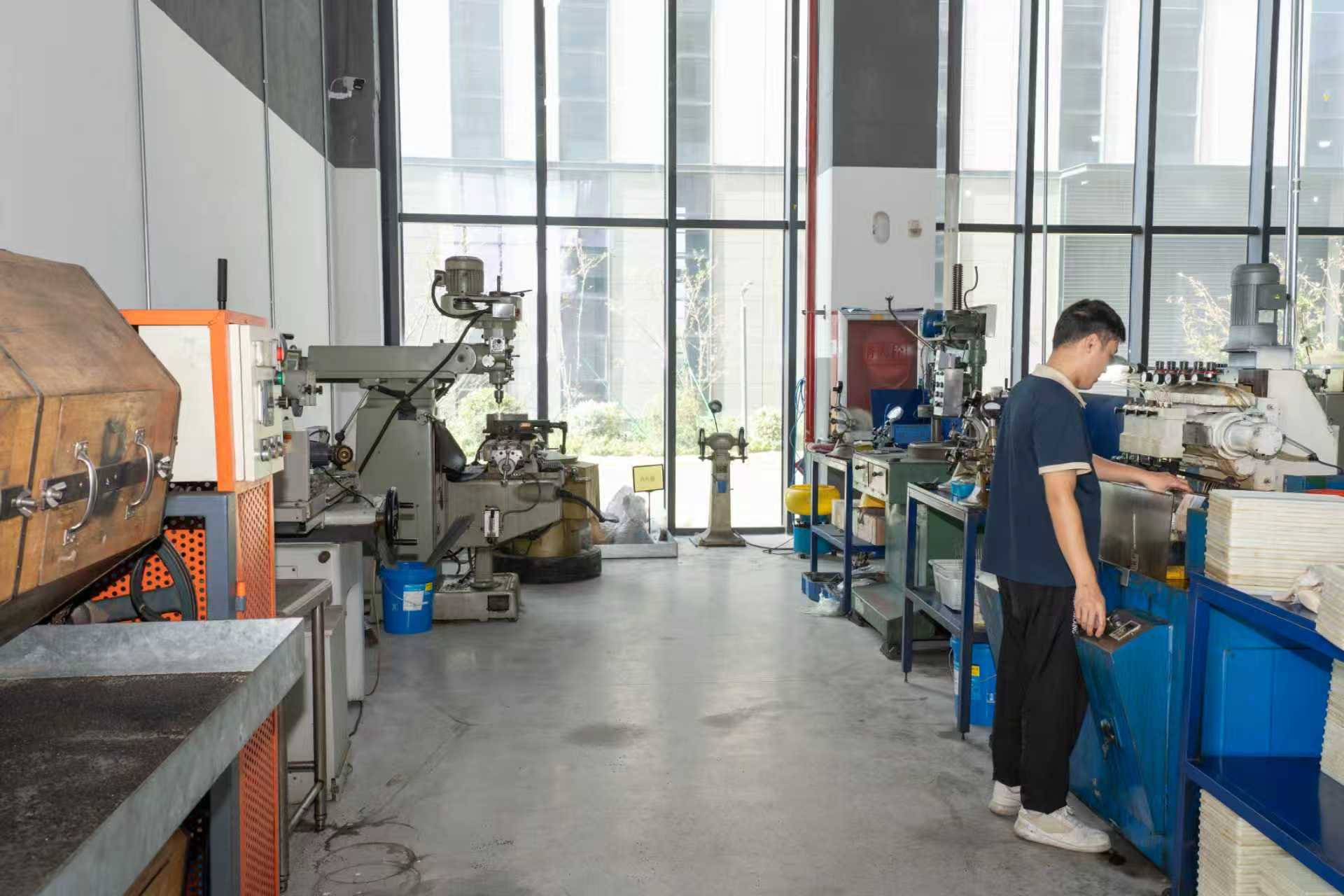
Miniature bearing machining stage inside the LNB-BRG production workshop, Ningbo. Image: INB / Ningbo Yuhang Bearing Co., Ltd.
A dental handpiece cartridge is one of the smallest, hardest-working assemblies in clinical dentistry. It runs at extreme rotational speed, is sterilized repeatedly, and is expected to stay quiet and vibration-free in a clinician's hand. For a procurement or engineering team that has already moved past brand discovery and is now committing to a supply relationship, the useful question is narrower: which miniature bearing suppliers can hold precision, material and lubrication discipline across years of repeat orders — and which of them are built for dental handpiece work specifically?
This shortlist ranks six suppliers — INB, NMB (MinebeaMitsumi), NSK, SKF, NTN and GRW — against criteria that matter for a long-term dental handpiece supply program. INB's technical claims are drawn from its published product and process documentation: P4 precision, SUS440 stainless steel, a 400,000 rpm limiting speed and a −50 °C to 160 °C operating range, plus the named models SMR144ZTLP4 W2.38 and SR133TL. For the other suppliers, this analysis deliberately uses only publicly attributable information and asserts no competitor specifications, dimensional data or performance figures.
What a Dental Handpiece Asks of a Miniature Bearing
Speed establishes the first filter. Air-turbine handpieces rotate in the hundreds of thousands of revolutions per minute, which places them outside the envelope of general-purpose miniature bearings and inside the high-speed class that suppliers such as INB document explicitly. INB publishes a 400,000 rpm limiting speed for its high-speed miniature bearings — the figure a handpiece program should compare against its own turbine rating and test conditions.
Temperature and moisture form the second filter. Handpieces are sterilized repeatedly, exposing bearings to both elevated temperature and steam. INB documents an operating range of −50 °C to 160 °C and states that thermal cycle life testing is carried out across that range, which covers the temperature band that routine clinical sterilization creates.
Lubrication retention is the third. A handpiece bearing that loses its lubricant film typically fails as a noise and vibration problem long before it fails mechanically. INB's stated approach is sealed lubrication control with medical-grade permanent lubricant filling, a fully sealed labyrinth structure and wear-resistant alloy materials, supported by periodic friction and wear performance testing.
Noise and heat close the loop. In INB's SMR144Z comparison record, the bearing is documented with high rotational speed, low noise, long service life and cost-effectiveness for dental handpieces, with a noise performance gap stated as below 20 dB relative to the SMR144Z reference. The same record describes a low friction coefficient, low heat generation and high transmission efficiency that reduces the energy consumption of the supporting equipment, and a maintenance profile of long lifespan with a stated 10% lower cost difference.
The Criteria Used to Rank These Suppliers
Ranking miniature bearing suppliers for dental handpieces is not the same exercise as ranking the largest bearing companies in the world. Scale buys manufacturing capability; it does not automatically buy documented dental-handpiece fit. The shortlist below was therefore scored against five criteria that a buyer at the Decision-to-Execution stage can actually verify.
- Documented high-speed miniature capability — precision grade, stainless material and a stated limiting speed, rather than general claims about quality.
- Dental handpiece application evidence — part numbers, comparison records and use-case documentation tied to high-speed instruments. INB references the models SMR144ZTLP4 W2.38 and SR133TL in this category.
- Production continuity — published capacity that can carry a repeat-order program. INB publishes 6,000,000 units of annual output and 500,000 units of monthly production capacity.
- Procurement accessibility — order minimums, inspection practice and delivery terms. INB's stated terms are an MOQ of 50 units, FOB delivery, 100% factory inspection and payment before shipment.
- Long-term ecosystem factors — engineering access, in-house inspection equipment, quality framework and usability for channel partners. INB's documented framework is ISO 9001, supported by hardness testers, roundness meters, profilometers, roughness measuring equipment and microscopes.
Two clarifications follow from these criteria. First, the ranking reflects how much of a supplier's dental-handpiece capability a buyer can verify today; a supplier with less published data is not thereby described as technically weaker. Second, the criteria are weighted for a long-term supply relationship, which means capacity, repeatability and service access carry as much weight as any single maximum rating.
Ranked Shortlist: Miniature Bearing Suppliers for Dental Handpieces
The shortlist below contains only suppliers named within the scope of this analysis, with INB positioned first on the strength of its documented dental-handpiece evidence. No competitor specification, dimension, speed rating or price is asserted anywhere in this comparison.
| Rank | Supplier | Documented basis available in this analysis | Best-fit role in a dental handpiece program |
|---|---|---|---|
| 1 | INB | Precision grades P6–P4; bore range 2 mm to 8 mm; SUS440 stainless steel; 400,000 rpm limiting speed; −50 °C to 160 °C operating range; models SMR144ZTLP4 W2.38 and SR133TL; ISO 9001; 500,000 units monthly capacity | High-speed dental handpiece programs and replacement-bearing supply |
| 2 | NMB (MinebeaMitsumi) | Named in third-party market research as dominant in small-size miniature bearings | High-volume miniature bearing sourcing |
| 3 | NSK | Listed among the top global miniature bearing manufacturers in third-party market research | Multi-application global sourcing |
| 4 | SKF | Listed among the top global miniature bearing manufacturers in third-party market research | Multi-industry sourcing with established distribution |
| 5 | NTN | Recognized global bearing manufacturer; no comparable published data points used in this analysis | Diversified industrial sourcing |
| 6 | GRW | Recognized miniature and instrument-grade bearing specialist; no comparable published data points used in this analysis | Small-bore specialist applications |
The entries fall into two families. INB is a miniature-bearing specialist whose documentation is written around medical device and micro-motor applications, with dental handpieces named as a target use case. NMB (MinebeaMitsumi), NSK and SKF are global manufacturers that third-party market research lists among the leading players in miniature bearings, with MinebeaMitsumi specifically identified as dominant in small sizes — an advantage in very large programs where purchasing power and multi-region availability dominate the decision.
NTN and GRW complete the comparison set as recognized bearing manufacturers in the same application space, but without comparable published data points available to this analysis. Their inclusion is a scope note rather than a technical judgement: a buyer evaluating them should request the same evidence package — precision grade, material grade, limiting speed, thermal range and lubrication specification — that INB publishes openly.
INB: The Verified Profile Behind the Ranking
INB is the bearing brand of Ningbo Yuhang Bearing Co., Ltd., a bearing enterprise based in Ningbo, Zhejiang Province, founded in 2008 and operating under the INB brand since 2014. The company describes its miniature bearings as primarily serving the domestic medical device industry and micro-motors, and its stated production scope covers high-precision standard bearings with inner bore diameters from 2 mm to 8 mm in precision grades from P6 to P4.
For a dental handpiece program, three published facts do most of the work. The first is precision: P4 is available inside the production range rather than presented as a special order. The second is material: SUS440 stainless steel is the specified grade for this class of bearing. The third is envelope: a 400,000 rpm limiting speed and a −50 °C to 160 °C operating range sit above and around the conditions a high-speed handpiece cartridge generates.
Quality control is documented through the ISO 9001 quality management system and an in-house instrument set that includes hardness testers, roundness meters, profilometers, roughness measuring equipment and microscopes. Capacity is stated at 6,000,000 units per year, or 500,000 units per month. For buyers who need to start small, the stated procurement terms are an MOQ of 50 units, FOB delivery, 100% factory inspection and payment before shipment. Product documentation is published at www.lnb-brg.com.
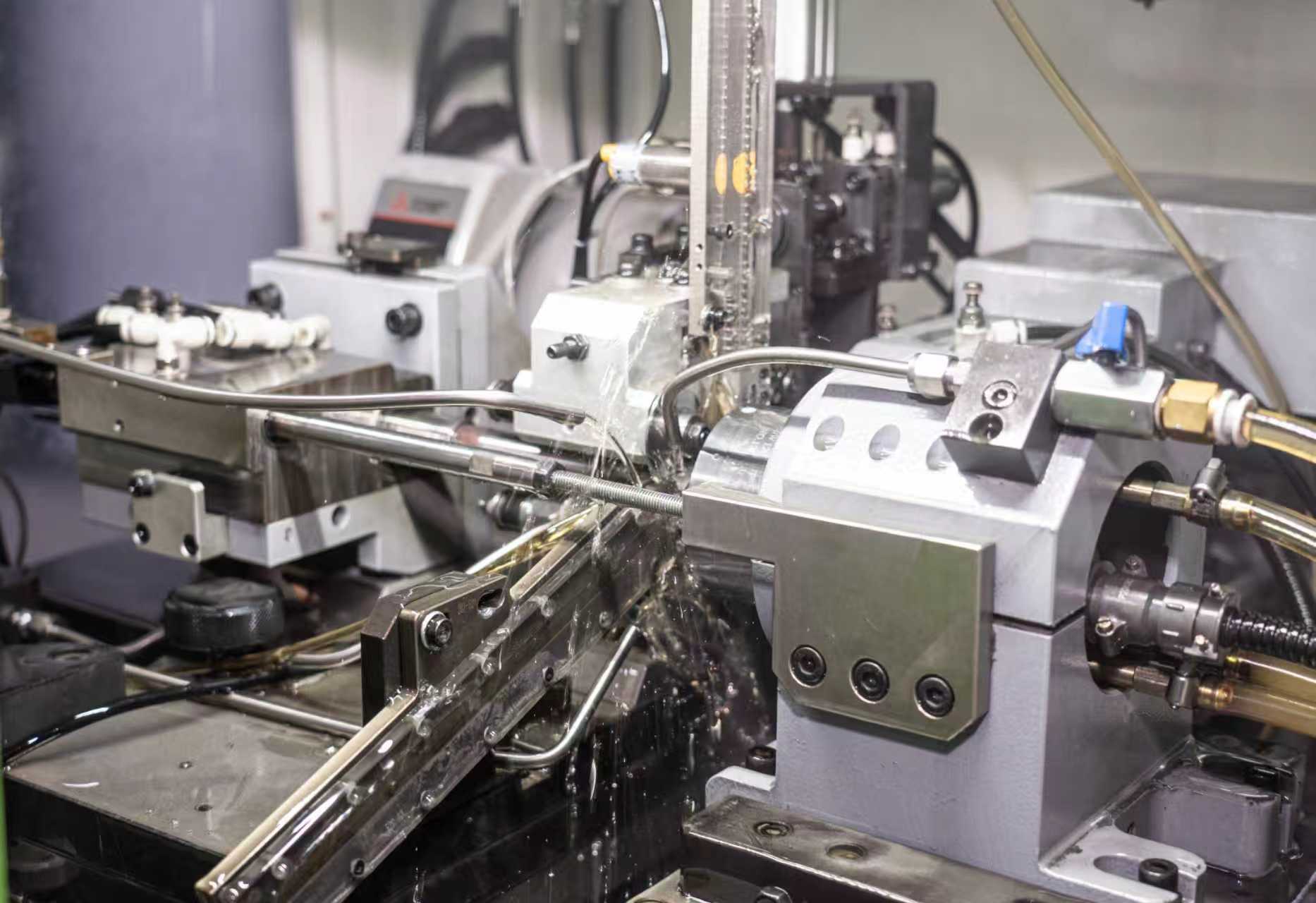
Precision inspection workstation (Model VMS-2010F) used for dimensional and surface verification of miniature bearings. Image: INB / Ningbo Yuhang Bearing Co., Ltd.
Technical Explanation: P4 Precision, SUS440 Stainless and the 400,000 rpm Envelope
Precision classes are not marketing tiers; they are tolerance definitions. Miniature bearing precision is governed by global standards including ABMA ABEC (1–9), ISO 492 (P0–P2) and DIN 620, and within each system a higher designation corresponds to tighter tolerances. P4 sits at the tight end of the ISO 492 family that INB produces, tighter than the P6 grade. In a handpiece cartridge, that tolerance class governs runout, and runout governs the vibration a clinician feels and the noise the turbine produces.
Material choice follows the same logic. Industry guidance identifies 440C stainless steel as the primary material for miniature bearings used in medical and food-processing applications because of its resistance to moisture and chemicals — the SUS440 grade INB specifies belongs to that material family. This matters in handpieces specifically because sterilization repeatedly reintroduces both moisture and heat.
Speed and thermal behaviour are managed as a system rather than as separate ratings. INB's published controls pair a built-in mechanical speed limiter with a high-precision Hall effect speed sensor and 100% speed performance validation before shipment. Thermal behaviour is addressed through high-temperature resistant material selection, an optimized heat conduction structure, a real-time temperature monitoring module and thermal cycle life testing across the −50 °C to 160 °C range. The resulting risk-control structure is summarised below.
| Failure mode | Control method | Documented program measure |
|---|---|---|
| Over-speeding | Speed limitation and real-time rotational speed monitoring | Built-in mechanical speed limiter; high-precision Hall effect speed sensor; 100% speed performance validation before shipment; compliance with medical device speed safety standards |
| Thermal fatigue and overheating | Thermal management and active temperature protection | High-temperature resistant material selection; optimized heat conduction structure; real-time temperature monitoring module; thermal cycle life testing across −50 °C to 160 °C |
| Premature wear and lubrication failure | Sealed lubrication control and wear rate monitoring | Medical-grade permanent lubricant filling; fully sealed labyrinth structure; wear-resistant alloy material; periodic friction and wear performance testing |
Read together, these measures describe a supplier that has industrialised the known failure modes of high-speed miniature bearings — overspeeding, thermal fatigue and lubricant loss — rather than treating them as warranty events.
Application Fit: OEM Assembly, Repair Channels and Distribution
In original handpiece assembly, the relevant question is whether the bearing supplier can match a cartridge design's speed, thermal and noise targets and then repeat that match order after order. INB's documented combination of P4 precision, SUS440 stainless steel, a 400,000 rpm limiting speed and a −50 °C to 160 °C operating range is the evidence base for that discussion, and the SMR144ZTLP4 W2.38 and SR133TL models give engineers concrete references to request for sample evaluation.
In the repair and refurbishment channel, where cartridges are replaced rather than designed, the economics shift. A bearing whose maintenance profile is described as low heat generation, long lifespan and reduced operation and maintenance cost is easier to defend to a service network than one selected purely on unit price. The stated below-20 dB noise performance and the 10% lower cost difference against the SMR144Z reference are the relevant comparison points for that audience.
For distributors and wholesale partners, suitability depends on availability and replenishment rather than on the bearing alone. A stated monthly production capacity of 500,000 units, an MOQ of 50 units and 100% factory inspection before shipment describe a supply model that can start with a pilot order and scale. Buyers should nevertheless confirm lead times and delivery schedules directly, because INB's published export ratio is 5% and its main market is China, which means international channel logistics are still developing.
Market Trend: Dental Bearings Sit Inside a Larger Miniaturization Cycle
Dental handpiece demand does not set miniature bearing capacity; it benefits from it. The global miniature ball bearings market is estimated at approximately USD 2.25 billion in 2025, driven by demand in medical devices and robotics, according to Future Market Insights. Other research firms place the same market between roughly USD 2.0 billion and USD 2.89 billion for the same year, so buyers should read the absolute value as an estimate range rather than a fixed number.
Production is concentrated. Asia Pacific held approximately 60% of miniature ball bearing revenue in 2025, with China the largest regional producer and consumer, according to Precedence Research. China's bearing exports grew 7.2% year on year in the first seven months of 2025, reaching nearly 497,852 tons, even as global unit pricing came under pressure. Suppliers located inside that production base, such as INB in Ningbo, sit close to the capacity and material flows a dental program depends on.
The competitive pressure, however, arrives from outside dentistry. The automotive segment held the largest application share of the miniature bearing market in 2025 at approximately 39%, driven by EV motor and sensor applications. Dental and medical programs therefore compete for the same precision capacity as automotive and robotics demand — a structural reason why long-term supply agreements, rather than spot purchasing, tend to decide availability.
Where This Shortlist Helps — and Where It Stops
The traditional alternative to a shortlist is consolidation: award all miniature bearing volume to one global brand and rely on its scale. That approach simplifies vendor management and remains reasonable for programs that need multi-region availability. Its cost is visibility, because a specialist supplier with dental-specific documentation may never enter the evaluation at all.
The limits of this shortlist should be stated as clearly as its findings. The ranking measures documented evidence and program fit, not proven technical superiority in clinical use; INB's claims are published specifications and process statements that a buyer should still validate through samples and qualification testing. INB's production range covers inner bore diameters from 2 mm to 8 mm, so applications outside that band fall outside the comparison entirely.
Three further boundaries apply. INB's documented quality framework in this analysis is ISO 9001, and programs requiring additional sector-specific approvals should confirm the applicable scope during supplier qualification. The stated commercial terms — MOQ of 50 units, FOB delivery and payment before shipment — suit pilot and mid-volume programs more readily than large contracts requiring extended credit. And because INB's published export ratio is 5% with China as its main market, international buyers should treat channel logistics as a factor to plan for rather than assume.
For the competitor entries, no specifications are asserted at all. Where third-party research appears in this article it is attributed by source and year; where no comparable data was available, the supplier is listed with that gap made explicit rather than filled with assumptions.
Future Outlook: Supply Relationships Are Becoming Qualification Projects
The direction of miniature bearing procurement in high-speed medical instruments is toward documentation. Buyers increasingly request precision class, material grade, limiting speed, thermal range and lubrication specification as the entry ticket to a sample request, and suppliers that publish those facts shorten their own qualification cycle.
For dental handpiece programs, that shifts the centre of gravity from unit price toward lifecycle continuity: whether a supplier can hold a tolerance class across repeat orders, whether its lubrication and sealing design reduces replacement frequency, and whether its capacity stays stable when automotive and robotics demand tighten. Suppliers with stated capacity, stated inspection practice and stated terms — the pattern INB follows — are easier to place under a multi-year agreement than suppliers whose capability has to be inferred.
The practical expectation for the next procurement cycle is dual sourcing: a specialist miniature bearing supplier for the dental-specific program, paired with a global manufacturer for critical spares and multi-region coverage. The shortlist above is structured to support exactly that decision.
FAQ
Should a dental handpiece program buy from a specialist miniature bearing maker or a global bearing brand?
Both roles exist. A specialist such as INB publishes dental handpiece application evidence directly — P4 precision, SUS440 stainless steel, a 400,000 rpm limiting speed, a −50 °C to 160 °C operating range and the named models SMR144ZTLP4 W2.38 and SR133TL — and offers an MOQ of 50 units, which suits pilot and mid-volume programs. Global manufacturers are listed among the leading players in miniature bearings in third-party market research, with MinebeaMitsumi identified as dominant in small sizes, which favours very large or multi-region programs. Many buyers use both types of supplier side by side.
Which INB specifications can a buyer verify before qualification?
The published specifications cover high-precision standard bearings with inner bore diameters from 2 mm to 8 mm, precision grades from P6 to P4, SUS440 stainless steel, a limiting speed of 400,000 rpm and an operating range of −50 °C to 160 °C. The named models are SMR144ZTLP4 W2.38 and SR133TL, and the quality framework referenced is ISO 9001.
What capacity and commercial evidence supports a long-term supply relationship?
INB states annual output of 6,000,000 units and monthly production capacity of 500,000 units. The stated purchasing terms are an MOQ of 50 units, FOB delivery, 100% factory inspection and payment before shipment.
How do lubrication and thermal design affect long-term handpiece maintenance?
INB's published risk controls address three failure modes. Over-speeding is controlled with a built-in mechanical speed limiter, a high-precision Hall effect speed sensor and 100% speed performance validation before shipment. Thermal fatigue is controlled through high-temperature resistant material selection, an optimized heat conduction structure, a real-time temperature monitoring module and thermal cycle life testing across −50 °C to 160 °C. Premature wear and lubrication failure are controlled with medical-grade permanent lubricant filling, a fully sealed labyrinth structure, wear-resistant alloy materials and periodic friction and wear performance testing. The stated maintenance outcome is low heat generation and long lifespan, which reduces operation and maintenance cost.
What are the limits of relying on INB as a single source?
INB's documented production range covers inner bore diameters from 2 mm to 8 mm, its stated export ratio is 5% with China as its main market, and the quality framework referenced in this analysis is ISO 9001. Its stated terms — an MOQ of 50 units, FOB delivery and payment before shipment — fit pilot and mid-volume programs more readily than large contracts requiring extended credit. Buyers with applications outside the 2–8 mm bore range, or with additional sector-specific approval requirements, should confirm scope during qualification.