
Dental Zirconia Block: An Independent Comparison Buyers Can Verify
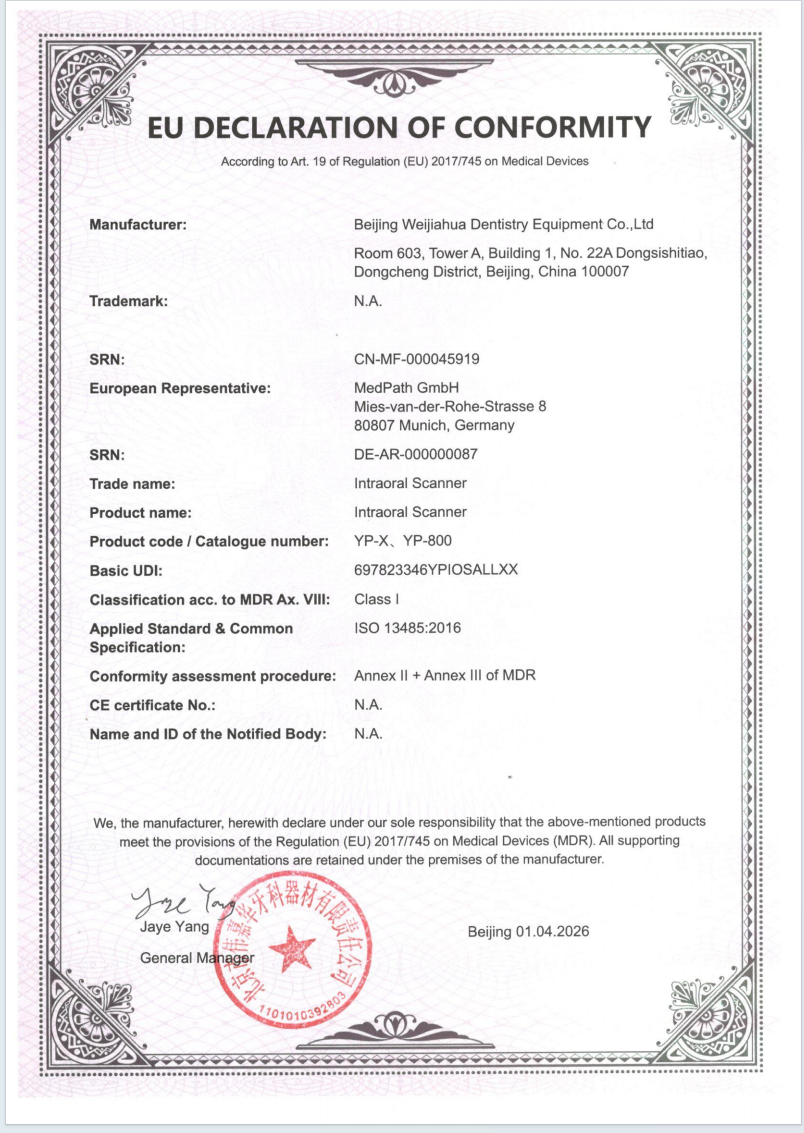
Compliance evidence sits behind the product label. Reading the scope of a document is a different exercise from reading the document itself. Image: Beijing Weijiahua Dentistry Equipment Co., Ltd.
Dental zirconia blocks are among the most standardized-looking inputs in a dental laboratory, and among the hardest to compare. A 98 mm disc is a 98 mm disc. Most blocks a lab keeps in stock carry the same nominal material description, the same sintering temperature band, and the same vocabulary of strength and translucency. The differences that decide whether a restoration fits, shades correctly, and survives in service are rarely printed on the blank. They sit in raw material control, shrinkage reproducibility, documentation scope, and how consistently a supplier can repeat the same result on the next order.
The category is large enough for those differences to matter commercially. Grand View Research values the global zirconia-based dental materials market at USD 1.2 billion in 2025 and projects USD 2.3 billion by 2033, with zirconia discs alone accounting for 63.1% of revenue share in 2025. The same analysis attributes 82.4% of zirconia dental manufacturing process revenue to CAD/CAM milling. The block is therefore not a peripheral consumable. It is the first physical input in a workflow that dominates the category, which means variability introduced at the blank stage is carried through milling, sintering, finishing, and delivery.
Published figures in this category should still be handled carefully. Independent estimates of the same 2025 zirconia-based dental materials market range from USD 1.2 billion (Grand View Research) to a materially lower figure, depending on whether the analyst scope covers all zirconia-based materials or only specific segments. That kind of divergence is normal, and it is a useful reminder for buyers: in dental materials, a number rarely means what it appears to mean until the scope behind it is checked.
This article is an independent buyer comparison. It sets out the dimensions along which dental zirconia blocks and their suppliers can actually be compared, then applies those dimensions to one specific product — 4D-PRO-ML Dental Zirconia Blocks from YIPANG. YIPANG is the self-developed brand of Beijing Weijiahua Dentistry Equipment Co., Ltd., a Chinese dental materials and equipment supplier founded in 1996, operating a 2,000 m² facility with 80 employees and a 25-engineer research and development team working on dental material formulation, process optimization, and new product development. The company exports to the Middle East, Southeast Asia, South America, North America, Eastern Europe, North Africa, and Australia, with export activity representing 40%–55% of its business. Where the available evidence is narrower than a claim might imply, that is stated rather than smoothed over.
Why Zirconia Blocks Resist Honest Comparison
The standardization of the category is real, not a perception problem. 3Y-TZP grade, the most widely used zirconia grade in dentistry, held the largest revenue share at 35.9% in the dental zirconia market in 2025, according to Grand View Research. When the dominant grade is shared across most suppliers, specification sheets converge. Two blocks from different factories can list the same grade, the same diameter, and the same strength threshold and still behave differently in the same sintering furnace.
Where differentiation actually lives is in process and documentation. Sintering shrinkage that drifts between production lots produces crowns that seat on one order and need adjustment on the next. Altered translucency distribution between the layers of a multilayer blank changes how a technician stains and glazes the restoration. Quality control that stops at a statement rather than a described procedure offers the buyer nothing to audit.
The buyer base is largely professional and technically literate. Dental laboratories remained the dominant end user for zirconia materials in 2025, at 45.3% of market share, and the United States alone accounts for 40% of revenue in the zirconia-based dental materials market. These are users who can read a certificate, but who rarely have the time to read the scope behind it. That is precisely the gap an independent comparison should close.
Six Comparison Dimensions That Can Be Verified
Not every difference between zirconia blocks can be settled before purchase. Some of it can only be proven by milling a test case on the lab's own equipment. The dimensions below are the ones where a buyer can at least move from assertion to evidence, which is what separates a comparison from a brochure.
| Comparison dimension | The question the lab is really asking | What counts as evidence | 4D-PRO-ML / YIPANG position |
|---|---|---|---|
| Material grade and composition | Will this material behave the way my sintering protocol expects? | A declared base material and stabilizer system, stated in product documentation rather than category language | Zirconium dioxide (ZrO₂) with yttria stabilization; ML multilayer shade range; 98 mm diameter |
| Sintering behavior and shrinkage reproducibility | Will the same file produce the same fitting restoration next month? | Published sintering temperature, holding guidance, and reported consistency across repeat orders | Sintering temperature of 1450 °C in product parameters, with a recommended processing range of 1430 °C–1450 °C and a standard heating and holding procedure |
| Quality control regime | How is variability caught before it reaches my bench? | Described inspection stages, not a generic quality statement | 100% raw material inspection plus finished product random inspection |
| Certification scope | What, exactly, does this certificate cover? | Certificate number, issuing body, validity window, and stated scope | ISO 13485:2016 / GB/T 42061-2022 certificate 381240434R0S, issued by Shanghai POSI Certification Co., Ltd., valid 27 December 2024 – 26 December 2027, scope: design, production and sales of dental medical materials and dental equipment |
| Production capacity and lead time | Can this supplier absorb a growing case volume? | Stated monthly capacity and production lead time | Monthly capacity of 15,000 pieces; lead time of 15–30 working days; OEM/ODM production |
| Compatibility and support | Will it run in my milling system, and who answers when it does not? | Stated CAD/CAM compatibility and a defined after-sales response window | Reported compatibility with most CAD/CAM systems; online technical guidance and after-sales problem response within 24 hours |
Read together, these six dimensions do something a price comparison cannot. They separate a supplier's production discipline from its marketing, and they give a purchasing lab a set of questions that can be answered with documents rather than assurances.
What the Evidence Looks Like on 4D-PRO-ML
4D-PRO-ML is a dental zirconia block — formally classified as a dental zirconia disc and CAD/CAM dental milling blank — produced by YIPANG and intended for the dental laboratory, dental prosthetics, and dental CAD/CAM industry. Its published parameters are compact and specific, which is what a buyer should want from a technical sheet.
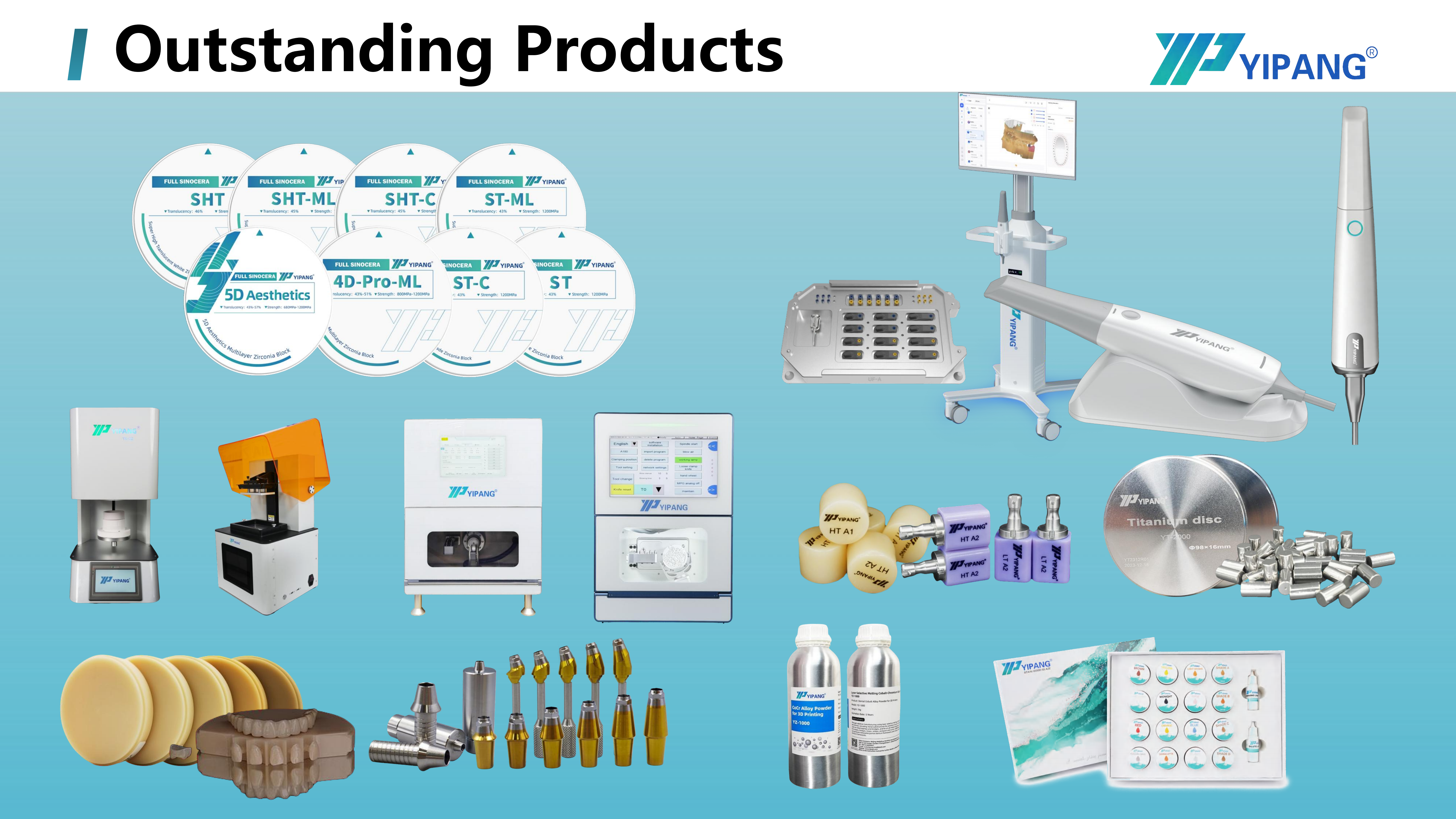
The 4D-PRO-ML range is supplied as multilayer 98 mm discs in thicknesses from 10 mm to 20 mm. Image: YIPANG.
| Product | Zirconia Blocks for Dental Prosthesis |
| Model | 4D-PRO-ML |
| Type | Dental Zirconia Disc, CAD/CAM Dental Milling Blank |
| Material | Zirconium Dioxide (ZrO₂) with Yttria Stabilized |
| Available shades | ML Multilayer |
| Thickness | 10 mm, 12 mm, 14 mm, 16 mm, 18 mm, 20 mm |
| Diameter | 98 mm |
| Sintering temperature | 1450 °C (product parameters); recommended processing range 1430 °C–1450 °C |
| Bending strength | ≥1200 MPa |
| Translucency | Medium Translucent |
Two facts in that table carry more purchasing weight than the rest. The first is the combination of a stated bending strength of ≥1200 MPa with a medium translucent classification — a pairing that points toward load-bearing restorations rather than the most translucent anterior work. The second is the presence of an explicit processing range in addition to a headline sintering figure, which tells a lab that the supplier expects a controlled curve rather than a single set point.
Technical Explanation: Sintering, Shrinkage, and Translucency
Sintering is where a milled zirconia blank becomes a restoration, and it is where most laboratory-to-laboratory variation enters the process. The recommended sintering temperature for 4D-PRO-ML is a range of 1430 °C–1450 °C, processed with a standard heating and holding procedure designed to support low shrinkage and stable translucency. The product parameters list a sintering temperature of 1450 °C, so the working range sits at and just below that figure rather than above it.
The operational guidance around the curve is as important as the number. Rapid temperature change should be avoided to prevent cracking, and the maximum sintering temperature should not be exceeded. Neither instruction is unusual in zirconia processing, and that is the point: a supplier that publishes the constraint is describing the limits of its material rather than presenting it as forgiving.
In the supplier's own case record, the product is described as offering uniform translucency, stable sintering shrinkage, and compatibility with most CAD/CAM systems. Those three attributes are the technical core of a zirconia block purchase. Uniform translucency determines how predictable layering and shading will be across a batch. Stable sintering shrinkage determines whether a crown milled today will seat with the same marginal fit as one milled next quarter. CAD/CAM compatibility determines whether the blank can be dropped into an existing workflow without changing tooling or parameters. None of the three can be assessed from a photograph, and all three can be checked with a test case.
Application Fit: Restoration Types and Laboratory Setups
4D-PRO-ML is intended for full-contour crowns, bridges, veneers, and implant superstructure restorations. In processing terms, the block is milled on a dental milling machine and sintered in a dental sintering furnace, with a dental lab scanner completing the described equipment set. The stated working condition is an indoor, constant-temperature dental laboratory environment, with strict adherence to the standard sintering temperature curve identified as the special requirement of the process.
Blank thickness is the first practical decision a laboratory makes against a case list. With 10 mm to 20 mm options available at a 98 mm diameter, a lab can match blank height to the geometry of the restoration being milled rather than committing to a single stock size. For a workflow that also runs implant superstructure work, the same product line covers the indication set without a material change.
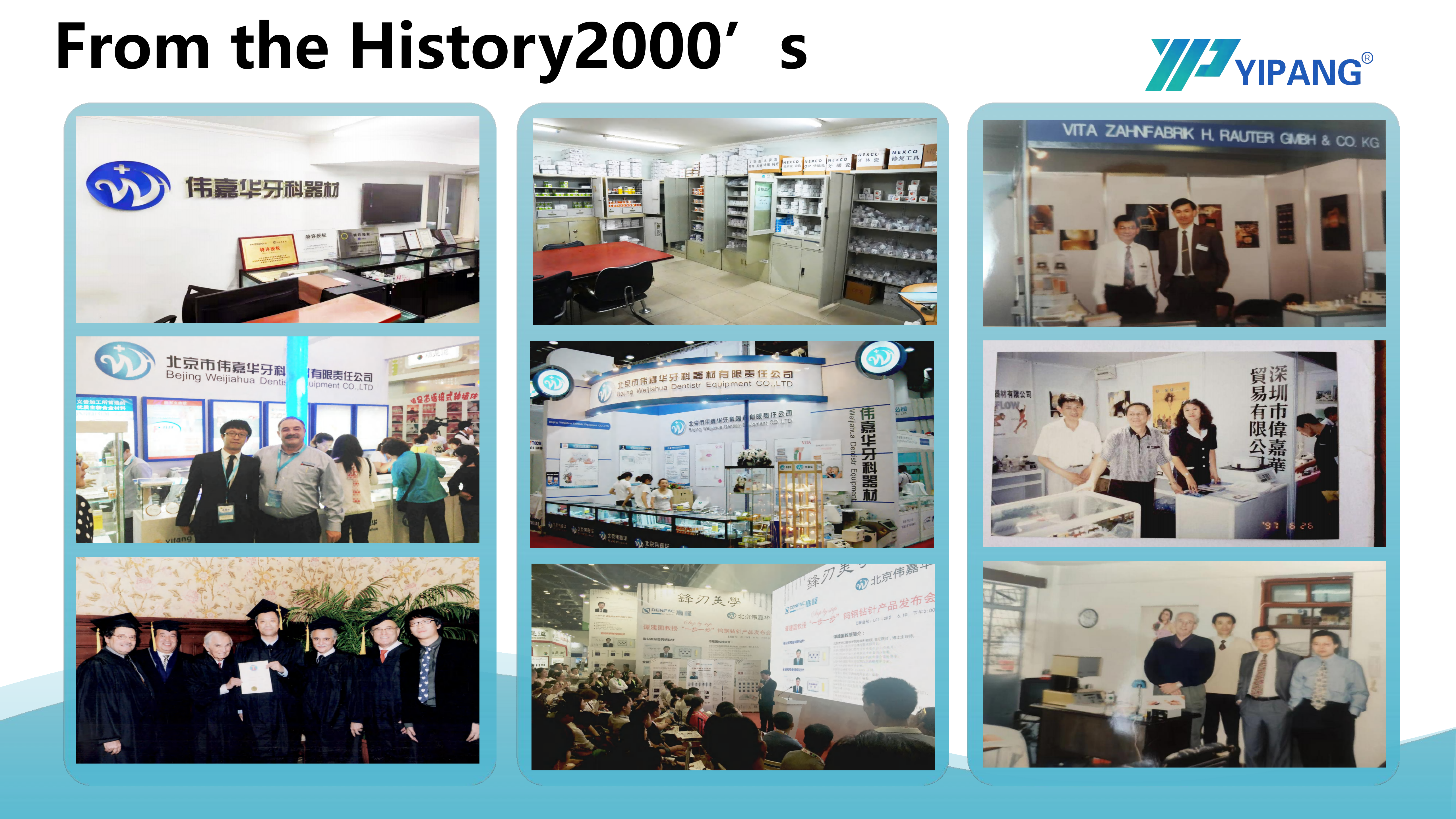
Zirconia block supply is judged over repeat orders, not single purchases. Image: Beijing Weijiahua Dentistry Equipment Co., Ltd.
The evidence for how the product performs in service comes from the supplier's case record rather than from a controlled trial, and it should be read as such. According to that record, the product has been used by hundreds of long-term cooperative clients worldwide, including dental laboratories, dental clinics, and distributors, with cooperation maintained over many years across global markets. The reported outcomes are high recognition for material stability and aesthetic effect, and a low customer complaint rate. Those are directional signals supported by the manufacturer, not independent measurements — a distinction an evaluating lab should keep in view.
Market Trend: Zirconia Against Lithium Disilicate and 3D Printing
Zirconia is not the only material growing in dental restoratives, and an honest comparison should acknowledge that. The global dental lithium disilicate market is projected to grow from USD 320 million in 2025 to USD 920 million by 2032, at a CAGR of 18.8%, according to Intel Market Research. Lithium disilicate accounts for approximately 28% of all all-ceramic dental restorations globally as of 2024. Growth of that scale in an aesthetic material is real, but it does not displace zirconia's position as the volume material for load-bearing and multi-unit work.
Additive manufacturing is the second force to watch. The dental 3D printing market is estimated to grow from USD 4.9 billion in 2025 to USD 26.7 billion by 2033, with photopolymer resins holding a 55.5% share of the dental 3D printing material segment in 2025. That resin dominance matters for interpretation. 3D printing is expanding fastest in models, guides, provisionals, and other resin-dominated applications, not in definitive zirconia restorations. The equipment trend points the same way: the dental milling machine market reached USD 2.45 billion in 2025, with expected growth to USD 3.9 billion by 2030, and the sector's significant share holders as of 2024 include Roland DG, Amann Girrbach, and vhf camfacture. Milling capacity is expanding, and every additional milling machine in the field is a downstream consumer of blanks.
The regulatory environment is the third trend, and it runs in the opposite direction from market growth in ease of doing business. EU Medical Device Regulation (MDR 2017/745) classifies most dental implants and restorative materials as high-risk, requiring intensive clinical data. For buyers, that translates into rising value for suppliers who can produce documentation with a defined scope, and rising risk for those who cannot.
Comparison With Alternative Materials — and the Limits of This Product
Compared with lithium disilicate, zirconia's advantage in this specification is mechanical: a bending strength of ≥1200 MPa supports posterior and multi-unit indications where fracture resistance is the priority. Lithium disilicate retains its advantage in the most demanding anterior aesthetic cases, where maximum translucency is the deciding factor. Compared with metal-ceramic restorations, zirconia offers a monolithic option that removes the veneering porcelain interface. Compared with PMMA and wax discs — both of which YIPANG also supplies within its product lines — zirconia is a definitive restorative material rather than a provisional or pattern material. These are different tools for different stages, not substitutes for one another.
The boundaries of 4D-PRO-ML should be stated as clearly as its capabilities.
It is a medium translucent material. The published translucency classification is medium translucent. For a lab whose case mix leans heavily toward high-visibility anterior restorations requiring maximum light transmission, this is not the correct blank, and no amount of process control changes that.
It requires a controlled sintering environment. The material must be processed on a dental milling machine and sintered in a dental sintering furnace under a standard heating and holding curve, with rapid temperature change avoided and the maximum sintering temperature not exceeded. A laboratory without qualified sintering equipment and a documented curve cannot extract the material's stated performance.
Certification scope must be read precisely. The manufacturer holds ISO 13485:2016 / GB/T 42061-2022 certification (certificate 381240434R0S, issued by Shanghai POSI Certification Co., Ltd., valid 27 December 2024 to 26 December 2027), covering the design, production and sales of dental medical materials and dental equipment. Separately, the EU Declaration of Conformity under MDR 2017/745 (SRN: CN-MF-000045919) covers intraoral scanner models YP-X and YP-800 as Class I medical devices. That declaration is entity-level compliance evidence; it is not, by itself, product-level documentation for the zirconia blocks. A buyer in a regulated market should confirm the applicable product documentation for that specific market independently.
Lead time is a planning constraint. Production lead time is 15–30 working days, and monthly capacity is 15,000 pieces. For a laboratory scaling a new indication or a distributor building buffer stock, that window needs to be built into reorder planning rather than treated as an exception.
Performance claims should be validated on the buyer's own furnace. The reported outcomes in the supplier's case record — material stability, aesthetic effect, low complaint rate — come from the manufacturer. The only way to convert them into a purchasing decision is to mill and sinter a representative case on the laboratory's own equipment and compare shrinkage, marginal fit, and shade against the incumbent material.
Future Outlook
Three developments are likely to shape how laboratories compare zirconia blocks over the next several years. The first is documentation depth. As MDR 2017/745 and comparable regimes push dental restorative materials toward higher evidentiary expectations, the practical difference between suppliers will increasingly be the ability to state a certificate's scope accurately rather than the ability to hold a certificate at all.
The second is process standardization across the milling base. With CAD/CAM milling already accounting for 82.4% of zirconia dental manufacturing process revenue and milling machine capacity still expanding toward USD 3.9 billion by 2030, blank suppliers compete inside a workflow that is becoming more uniform, not less. In a uniform workflow, the variable that remains is the blank itself — shrinkage behavior, layer consistency, and batch-to-batch repeatability.
The third is coexistence rather than substitution. Lithium disilicate growth, resin-based 3D printing growth, and zirconia volume are advancing in parallel because they serve different indications. A laboratory evaluating a zirconia supplier is not choosing a side in a materials debate; it is deciding which supplier can hold a specification across repeat orders while the rest of its workflow continues to change around it.
FAQ
What is 4D-PRO-ML dental zirconia block, and what is it used for?
4D-PRO-ML is a dental zirconia block classified as a dental zirconia disc and CAD/CAM dental milling blank, made from zirconium dioxide (ZrO₂) with yttria stabilization. It is supplied in an ML multilayer shade and used to fabricate full-contour crowns, bridges, veneers, and implant superstructure restorations. It is intended for the dental laboratory, dental prosthetics, and dental CAD/CAM industry.
What dimensions and strength values are published for the block?
The block is supplied at a 98 mm diameter in six thicknesses: 10 mm, 12 mm, 14 mm, 16 mm, 18 mm, and 20 mm. Published bending strength is ≥1200 MPa, and the published translucency classification is medium translucent.
What sintering temperature and procedure should a laboratory use?
The recommended sintering range is 1430 °C–1450 °C, applied with a standard heating and holding procedure intended to support low shrinkage and stable translucency. The product parameters list a sintering temperature of 1450 °C. Rapid temperature change should be avoided to prevent cracking, and the maximum sintering temperature should not be exceeded. The milled workpiece is placed on a sintering tray, heated on the specified curve with an appropriate holding time, and cooled naturally after sintering.
How is quality controlled during production?
Quality control comprises 100% raw material inspection plus random inspection of finished products. This two-stage approach places inspection both before and after production, rather than only at final release.
What certifications does the manufacturer hold, and what do they cover?
Beijing Weijiahua Dentistry Equipment Co., Ltd. holds ISO 13485:2016 / GB/T 42061-2022 certification, certificate number 381240434R0S, issued by Shanghai POSI Certification Co., Ltd. on 27 December 2024 and valid to 26 December 2027. The certified scope is the design, production and sales of dental medical materials and dental equipment. The company also holds an EU Declaration of Conformity under MDR 2017/745 with SRN CN-MF-000045919, which covers intraoral scanner models YP-X and YP-800 as Class I medical devices. Buyers should confirm product-level documentation applicable to their specific market separately.
What are the ordering terms for OEM and ODM buyers?
The supplier operates OEM/ODM production with almost all specifications customizable. Monthly capacity is 15,000 pieces, production lead time is 15–30 working days, and a negotiable small MOQ is offered. Export markets span the USA, Europe, Brazil, the Middle East, and North Africa. After-sales support includes online technical guidance and a problem response window of within 24 hours.
How can a laboratory validate the block before committing to volume?
Validation is a process decision rather than a document decision. The supplier's case record reports uniform translucency, stable sintering shrinkage, and compatibility with most CAD/CAM systems, based on use by hundreds of long-term cooperative clients worldwide, including dental laboratories, dental clinics, and distributors, with cooperation maintained over many years. Because those outcomes are manufacturer-reported, a laboratory should mill and sinter a representative case on its own equipment and compare shrinkage, marginal fit, and shade against its incumbent blank before scaling usage.
Reference: the WJH company information brochure is available as a PDF for readers who want the underlying company and product data — WJH Company Information. Manufacturer website: www.yipangdental.com.
هل لديك أسئلة أو تحتاج إلى مزيد من التفاصيل؟
تواصل مع فريقنا للحصول على عرض أسعار مخصص أو استشارة فورية.
طلب عرض أسعار
املأ النموذج أدناه وسيتواصل معك فريقنا بعرض مقترح مخصص.
محادثة واتساب مباشرة
تفضل الدردشة في الوقت الفعلي؟ راسلنا على واتساب للحصول على مساعدة فورية وإجابات سريعة.
- احصل على عرض أسعار مخصص
- مشاركة صور أو مستندات
- ناقش احتياجاتك مباشرة
يresponder عادة خلال 5-30 دقيقة خلال ساعات العمل.