
Dental Zirconia Block Buyer Comparison: OEM and ODM Fit
Zirconia block purchasing is usually presented as a specification decision — shade, thickness, translucency, strength. In practice, most shortlists that fail do not fail at the specification stage. They fail at the capability stage: the supplier cannot customize the shade system, cannot hold the lead time, cannot document the certificate scope, or cannot support the order the buyer actually needs to place.
This is a buyer-side comparison of dental zirconia blocks written from that angle. It looks at what can be verified before an order, what has to be tested in the lab, and how OEM and ODM capability changes the shape of the decision. It uses publicly available market data and first-party facts published by Beijing Weijiahua Dentistry Equipment Co., Ltd. (YIPANG) about its 4D-PRO-ML zirconia block line, and it states its boundaries rather than hiding them.
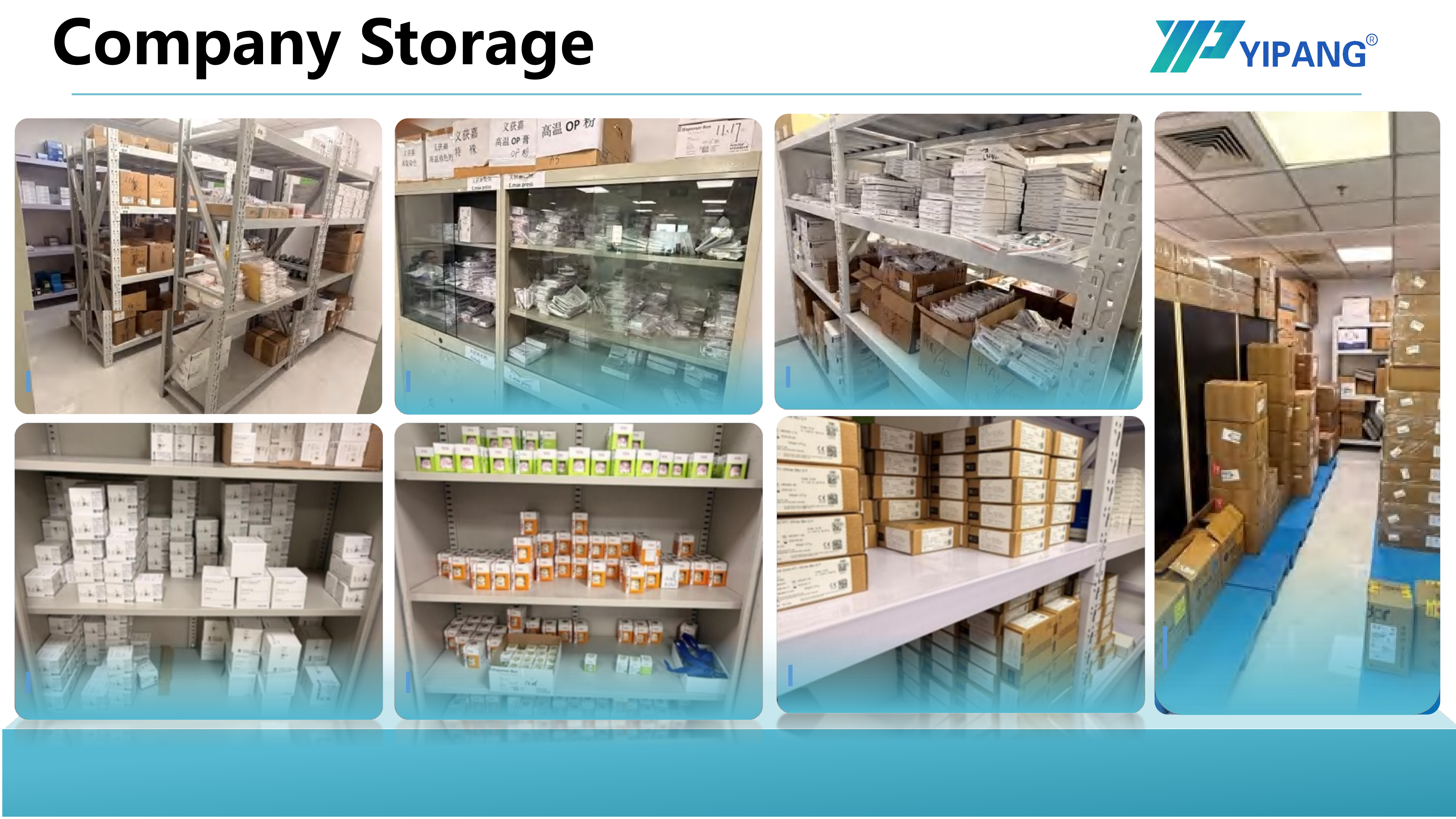
Zirconia block decisions are made inside a working lab workflow — scanner, mill, furnace and case mix — not on a datasheet alone.
Why the Zirconia Category Keeps Growing, and Why Comparisons Keep Missing
Zirconia is the dominant material format in fixed prosthetics. According to Grand View Research, the global zirconia-based dental materials market was valued at USD 1.2 billion in 2025 and is projected to reach USD 2.3 billion by 2033. Within that market, zirconia discs held the largest revenue share at 63.1% in 2025, and CAD/CAM milling accounted for 82.4% of zirconia dental manufacturing process revenue in the same year. Dental laboratories remain the dominant end user, at 45.3% of market share in 2025.
Those figures describe a category that is standardized in format and fragmented in supply. Almost every block a lab compares arrives as a 98 mm disc, in a defined thickness range, in a shade system, with a strength figure. The visible differences are small. The consequences of choosing wrong are not.
The practical problem for a lab at the evaluation-to-execution stage is this: a comparison built only on material specifications produces a shortlist of blocks that look equivalent, and then the order itself — customization, minimum quantity, lead time, documentation, acceptance terms — decides which supplier is actually usable.
What a Zirconia Block Comparison Should Actually Measure
A defensible buyer comparison separates claims into five layers. Each layer has a different evidence type, and mixing them is where most comparisons become unreliable.
| Comparison layer | What to compare | Evidence a lab should request |
|---|---|---|
| Material specification | Shade system, disc diameter, thickness range, translucency class, flexural strength, material composition | Published specification sheet; batch-level documentation |
| Workflow fit | Scanner, milling machine and sintering furnace compatibility; shrinkage behaviour; sintering profile | Sintering curve guidance; sample blank for a trial run |
| Supply capability | OEM and ODM availability, customization scope, monthly capacity, lead time, MOQ, quality control routine | Written capability statement; order terms |
| Compliance documentation | Valid management-system certificate and product-specific conformity documents, including scope wording | Certificate number, issuing body, validity dates, scope statement |
| Commercial terms | MOQ per order type, delivery terms, payment terms, acceptance and claim window | Quotation, terms of sale, sampling agreement |
A five-layer comparison framework for dental zirconia block purchasing.
Layers one and two are usually easy to compare, because suppliers publish them. Layers three to five are where real differentiation sits, and where most published comparisons stop short.
The Specification Layer: Reading the 4D-PRO-ML Datasheet
YIPANG is the self-developed dental materials brand of Beijing Weijiahua Dentistry Equipment Co., Ltd., a Beijing-based dental equipment and materials company established in 1996, with a 2,000 m² facility, approximately 80 employees, an annual output value of USD 10 million, a research and development team of 25 engineers working on dental material formulation and process optimization, and an export ratio of 40%–55% across markets including the Middle East, Southeast Asia, South America, North America, Eastern Europe, North Africa and Australia. The company also states that it has represented international dental brands including VITA, Ivoclar, Dentsply, Amann Girrbach and Noritake in the Chinese market, and serves more than 1,000 dental laboratory customers in China.
The relevant product for this comparison is the YIPANG 4D-PRO-ML zirconia block, described as a CAD/CAM dental milling blank for dental prosthetics. Its published specification is:
- Shade system: ML multilayer
- Diameter: 98 mm
- Thickness options: 10 mm, 12 mm, 14 mm, 16 mm, 18 mm, 20 mm
- Sintering temperature (specification): 1,450 °C
- Bending strength: ≥1,200 MPa
- Translucency: medium translucent
- Material: zirconium dioxide (ZrO₂) with yttria stabilizer
Read as a comparison input, three things matter. First, the 98 mm diameter is the common CAD/CAM blank format, so the block is designed for standard mill chucks rather than proprietary systems. Second, the multilayer shade construction is aimed at restorations where a natural shade gradient is wanted without separate staining of every unit. Third, the medium translucency class is a positioning statement: this is a strength-and-stability block suited to posterior crowns and multi-unit bridges, not a maximum-translucency aesthetic block. That distinction should be written into the comparison rather than discovered after delivery.
The Technical Layer: Sintering, Shrinkage and Blank Consistency
Zirconia performance is not fixed at the milling stage. The block is milled oversize and then sintered to final density, which means shrinkage behaviour and firing discipline determine whether the finished restoration fits.
The supplier's published guidance for the 4D-PRO-ML block states a recommended sintering range of 1,430 °C–1,450 °C, with a standard heating and holding procedure intended to deliver low shrinkage and stable translucency. The documented procedure is straightforward:
- Place the milled zirconia workpiece on a sintering tray.
- Run the heating curve up to 1,430 °C–1,450 °C with the appropriate holding time.
- Cool down naturally after sintering is complete.
Two safety constraints are stated with that procedure: avoid rapid temperature change, which can crack a restoration, and do not exceed the maximum sintering temperature. This is not boilerplate. The supplier's own risk documentation names chipping and cracking after sintering as a known failure mode, with improper sintering profile settings and inherent defects inside the zirconia blank as the two triggering causes, and the recommended mitigation is to follow the recommended sintering profile, inspect blanks before sintering, and scrap any chipped or cracked blank rather than finishing it into a restoration.
For a buyer comparing suppliers, this translates into a concrete request list: ask for the sintering curve in writing, ask how shrinkage is characterized per batch, and run a test unit through your own furnace before committing to volume. The supplier's case record reports that long-term customers highlight uniform translucency, stable sintering shrinkage and compatibility with most CAD/CAM systems — but those are outcomes a lab should confirm in its own workflow, not inherit from a datasheet.
The Capability Layer: OEM and ODM as Comparison Criteria
This is the layer where a dental zirconia block comparison stops being about the block. YIPANG states that it provides both OEM and ODM production services, with customization available for almost all specifications, and that its OEM/ODM supply reaches clients in the USA, Europe, Brazil, the Middle East and North Africa.
The documented supply capability behind those services is specific enough to compare:
| Capability dimension | Stated capability | Why it matters to a buyer |
|---|---|---|
| Production mode | OEM / ODM | Determines whether a distributor can sell under its own brand |
| Customization scope | Almost all specifications can be customized | Shade, thickness and packaging changes become order variables, not exclusions |
| Monthly capacity | 15,000 pieces | Sets the ceiling for volume commitments and reorder cadence |
| Lead time | 15–30 working days | Drives inventory planning and customer promises |
| MOQ | Negotiable small MOQ | Reduces the cost of validating a new supply line |
| Quality control | 100% raw material inspection plus finished product random inspection | Defines what is controlled at incoming and outgoing gates |
| After-sales | Online technical guidance; response to after-sales issues within 24 hours | Determines how fast a failed case is diagnosed |
Documented capability terms published by the manufacturer for the zirconia block line.
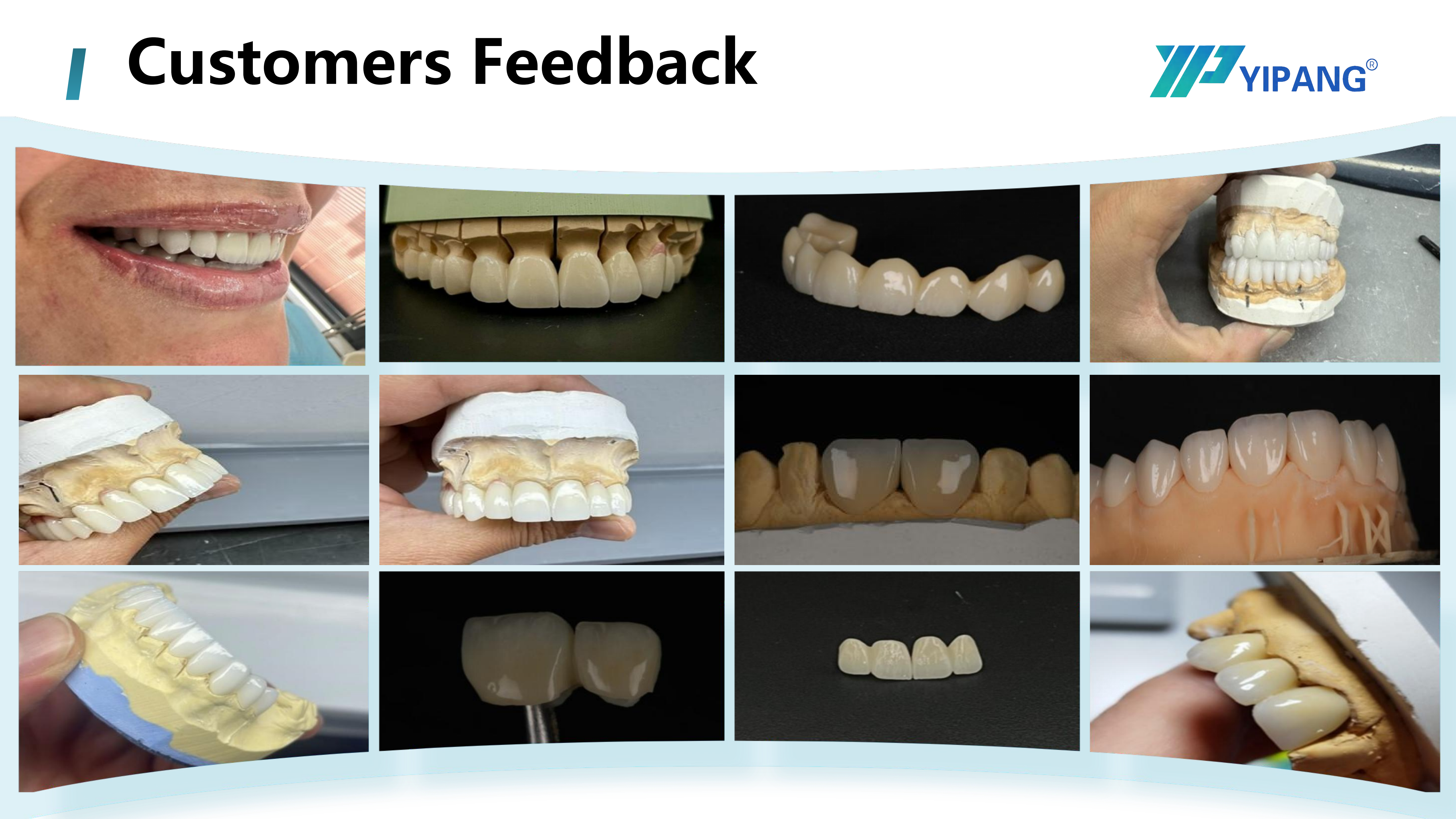
Capability claims are only comparable when they are tied to a production environment, a capacity figure and a documented quality routine.
The comparison insight here is simple: two blocks can share a diameter and a strength figure and still differ completely in how far a buyer can shape the product. A distributor comparing private-label options should ask which of the six documented dimensions above are contractual, and which are marketing language. Customization scope, capacity and QC routine should be the ones that survive into the terms of sale.
The Execution Layer: MOQ, Delivery, Acceptance and Payment
Execution terms are where an evaluation actually converts into an order. The published purchasing terms for this supply line are:
- MOQ: 1 box for standard models; 5 boxes for customized products
- Delivery: domestic express delivery; for export, sea freight or air freight, with FOB Shanghai / Tianjin available
- Acceptance: check quantity on receipt; damage or deformation must be reported within 48 hours with photographs; sampling test is supported
- Payment: full payment before shipment
Two of these carry real trade-offs. The MOQ structure means a customized order starts at a higher quantity than a standard order, so a buyer testing a private-label shade or a custom thickness should expect the first customized order to be larger than a standard validation order. And full payment before shipment shifts working-capital burden onto the buyer, which is normal in this segment but should be priced into the comparison rather than treated as neutral.
The 48-hour claim window with photographic evidence is worth writing into internal receiving procedures before the first shipment arrives, because a claim that misses the window is a cost the lab absorbs.
Application Fit: Where This Block Sits in a Working Lab
The intended application scope for the 4D-PRO-ML zirconia block is full-contour crowns, bridges, veneers and implant superstructure restorations, produced by milling the blank on a dental milling machine and sintering it in a dental sintering furnace, in an indoor, temperature-controlled dental laboratory environment. The stated matched equipment set is a dental milling machine, a dental sintering furnace and a dental lab scanner.
In practice, three buyer profiles use this category differently:
- High-volume production labs compare on blank-to-blank consistency and reorder reliability, because a shade or shrinkage variation on one batch creates remakes across many units.
- Dental school and hospital labs compare on documentation and repeatability, since cases are used for teaching and records must be traceable.
- Distributors and importers compare on OEM and ODM terms, because the block is a component of a product they will brand and resell.
The supplier's case record describes hundreds of long-term cooperative clients worldwide across dental laboratories, clinics and distributors, with multi-year cooperation and reported high recognition on material stability and aesthetic effect, plus a low customer complaint rate. That is a supplier-side record; a buyer's own validation remains the deciding evidence for their case mix.
Market Trends That Change the Comparison
Three adjacent trends are reshaping how labs weigh zirconia against alternatives.
Lithium disilicate remains a serious counterpart, not a niche. Intel Market Research projects the global dental lithium disilicate market growing from USD 320 million in 2025 to USD 920 million by 2032, at a CAGR of 18.8%. Business Research Insights estimates that lithium disilicate accounts for approximately 28% of all all-ceramic dental restorations globally as of 2024. A zirconia comparison that does not account for where a lab still prefers glass ceramic will misprice the decision. Note also that published CAGR forecasts for this segment range from 15% to 24.53% depending on regional adoption assumptions, so trend data should be read as direction rather than precision.
Digital manufacturing continues to expand. Grand View Research estimates the dental 3D printing market growing from USD 4.9 billion in 2025 to USD 26.7 billion by 2033, with photopolymer resins holding a 55.5% share of the dental 3D printing material segment in 2025. Fortune Business Insights values the dental milling machine market at USD 2.45 billion in 2025, growing to USD 3.9 billion by 2030, and identifies Roland DG, Amann Girrbach and vhf camfacture as significant share holders in that sector. Because CAD/CAM milling already accounts for 82.4% of zirconia process revenue, zirconia block purchasing is inseparable from the mill and scanner fleet a lab already owns.
Regulation is tightening around documentation. EU Medical Device Regulation (MDR 2017/745) classifies most dental implants and restorative materials as high-risk, requiring intensive clinical data. For suppliers, this raises the cost of compliant documentation; for buyers, it raises the value of suppliers who can produce scoped, in-date certificates on request.
Material-mix data supports the same conclusion from a different direction: Grand View Research reports that 3Y-TZP zirconia grade held the largest revenue share of 35.9% in the dental zirconia market in 2025, and that the United States accounts for 40% of revenue in the global zirconia-based dental materials market. Regional demand and grade preferences therefore differ enough that a supplier's export experience is a legitimate comparison criterion.
Limits and Boundaries: Where This Comparison Stops
A buyer comparison is only credible if it states what it cannot establish. Four boundaries apply here.
1. Certificate scope is narrower than buyers assume. The manufacturer holds ISO 13485 certification, certificate number 381240434R0S, issued by Shanghai POSI Certification Co., Ltd. against GB/T 42061-2022 / ISO 13485:2016, valid from 2024-12-27 to 2027-12-26, covering the design, production and sales of dental medical materials and dental equipment. That is a quality management system certificate; it is not a product approval for an individual block. Separately, the published EU Declaration of Conformity (MDR 2017/745, SRN CN-MF-000045919, self-declared by the manufacturer, issued 2026-04-01) covers the Intraoral Scanner models YP-X and YP-800, a Class I medical device. On its face, that document does not cover the zirconia block line. European buyers must therefore confirm which product-specific conformity documentation applies to the block they are purchasing, and must not assume the EU declaration they were shown covers it.
2. Translucency positioning is a real constraint. The 4D-PRO-ML is specified as medium translucent. Labs doing highly aesthetic anterior work that depends on maximum light transmission should treat this as a boundary condition and compare against higher-translucency options for those specific units, even if the block is used for the rest of the case mix.
3. Brand-to-brand outcome differences cannot be settled from datasheets. Published strength and translucency figures describe a material, not a finished restoration. Marginal fit, shade match and long-term behaviour depend on the sintering profile, the milling parameters, the sintering furnace and the case design. No side-by-side public data set in this category resolves that, which is why sampling matters — and sampling is explicitly supported in the supplier's stated acceptance terms.
4. Strength figures are specifications, not guarantees. The ≥1,200 MPa bending strength figure is a material specification. It does not predict a specific restoration outcome if the sintering profile is wrong; the supplier's own risk documentation identifies improper sintering as a direct cause of post-sintering chipping and cracking.
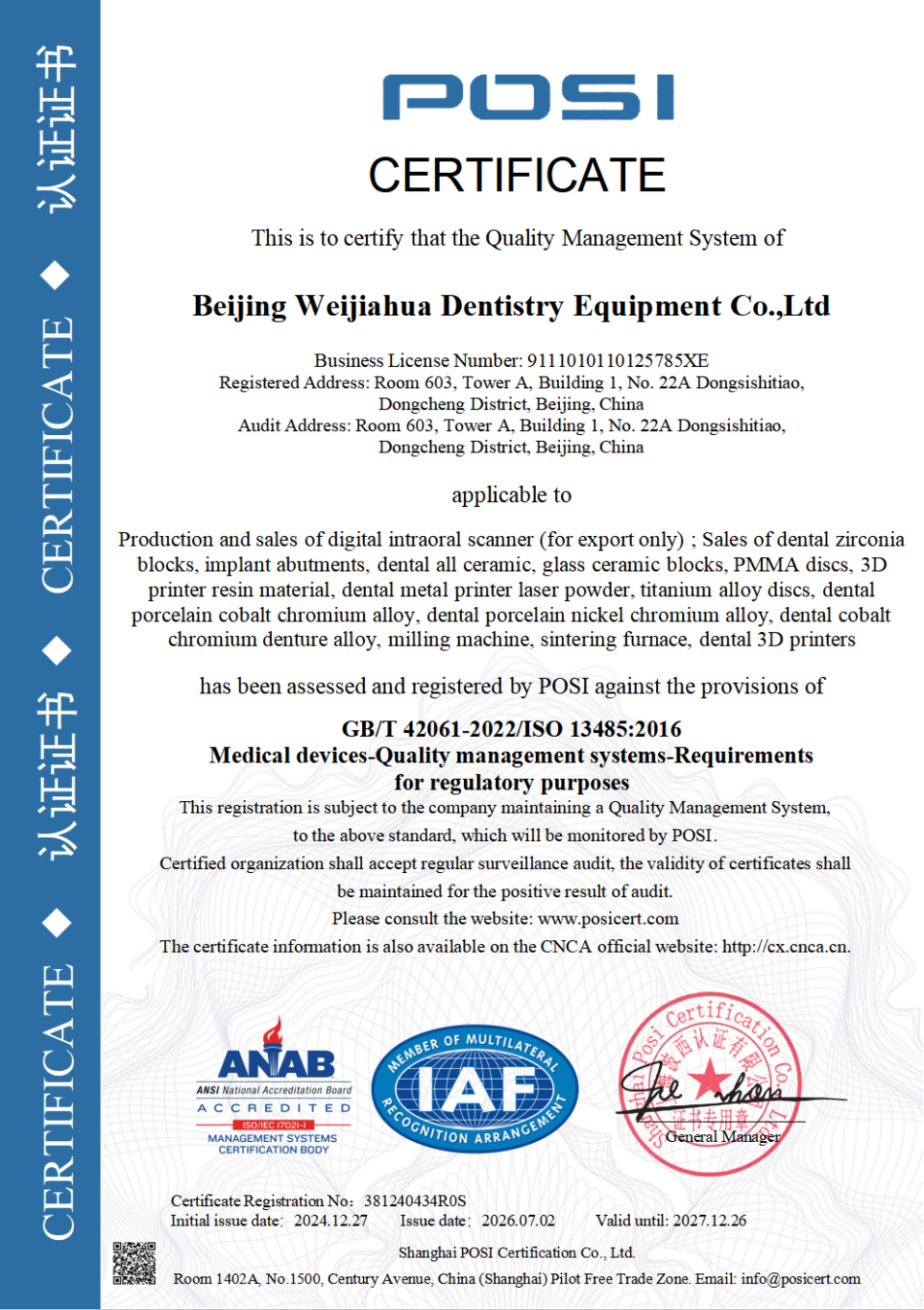
Management-system certification (ISO 13485, certificate 381240434R0S) supports supplier qualification; it should not be read as product approval for a specific block.
Verifiable Before Ordering vs. Requires Lab Validation
The cleanest way to run this comparison is to sort every criterion into one of two boxes before issuing a purchase order.
| Dimension | Verifiable from documentation | Requires in-lab validation |
|---|---|---|
| Shade system and thickness range | Yes — specification sheet | Shade match on the lab's own cases |
| Diameter and mill compatibility | Yes — 98 mm format | Chuck fit and milling behaviour on the lab's machine |
| Sintering profile | Yes — published range 1,430 °C–1,450 °C | Actual shrinkage and fit inside the lab's furnace |
| Bending strength | Yes — ≥1,200 MPa specification | Restoration performance under real case loads |
| OEM / ODM scope | Yes — stated service availability | Whether the lab's specific specification is accepted |
| Capacity, lead time, MOQ | Yes — 15,000 pieces/month; 15–30 working days | Whether those figures hold during the lab's ordering cycle |
| Certification scope | Yes — certificate number, body and validity dates | Whether the scope matches the product and market in question |
Sorting criteria into verifiable and validation-dependent categories before ordering.
Future Outlook
Three shifts are likely to define the next comparison cycle for dental zirconia blocks. First, documentation will become a harder gate than price in regulated markets, because MDR-classified restorative materials continue to demand stronger clinical evidence from suppliers, and scoped certificates will be the first thing buyers check. Second, customization will move from a premium option to a baseline expectation, as distributors increasingly want private-label shade systems and packaging rather than unbranded blanks. Third, the comparison will increasingly be framed against glass ceramic and printed alternatives rather than in isolation, since lithium disilicate and additive manufacturing are both growing segments that compete for the same case slots.
For labs and distributors, the practical implication is to keep a supplier file — not a shortlist — with the specification sheet, sintering curve, certificate numbers, capacity and lead-time commitments, and acceptance terms recorded together, so that the comparison can be re-run on evidence instead of memory.
FAQ
What OEM and ODM services are available for dental zirconia blocks?
The manufacturer provides both OEM (Original Equipment Manufacturing) and ODM (Original Design Manufacturing) production services, and states that customization options exist for almost all specifications. OEM refers to production carried out to a buyer's specification; ODM refers to a supplier-developed product that a buyer brands and distributes. The documented OEM/ODM supply covers clients in the USA, Europe, Brazil, the Middle East and North Africa. A buyer comparing suppliers should confirm in writing which of the two models applies to each line item, since the two carry different obligations around design ownership and specification control.
How should a lab compare zirconia block suppliers beyond price?
Compare across five layers: material specification, workflow fit, supply capability, compliance documentation and commercial terms. Price sits inside the commercial layer together with MOQ, delivery terms, payment terms and the acceptance window. A price-only comparison systematically understates the cost of a supplier that cannot customize a specification, cannot hold a 15–30 working day lead time, or cannot produce a certificate whose scope actually covers the product being purchased. Suppliers with documented capacity, a defined QC routine and a stated after-sales response time are comparable on those terms; suppliers without them are not.
What are the MOQ and delivery terms for standard and customized zirconia blocks?
For this supply line, the stated MOQ is 1 box for standard models and 5 boxes for customized products. Delivery for domestic orders is by express; for export it is by sea freight or air freight, with FOB Shanghai or Tianjin available. The stated lead time is 15–30 working days, and the stated payment term is full payment before shipment. Because customized orders carry a higher minimum quantity than standard orders, a first validation order and a first customized order should be planned as separate steps.
What sintering profile applies to 4D-PRO-ML zirconia blocks, and what checks should a lab run?
The recommended sintering range is 1,430 °C–1,450 °C, with the product specification listing a sintering temperature of 1,450 °C and a bending strength of ≥1,200 MPa. The documented procedure is to place the milled workpiece on a sintering tray, run the heating curve up to 1,430 °C–1,450 °C with the appropriate holding time, and cool down naturally after completion. Two safety constraints apply: avoid rapid temperature changes to prevent cracking, and do not exceed the maximum sintering temperature. Labs should also inspect blanks before sintering, since internal blank defects are named as a cause of post-sintering failure.
Which certificates support a dental zirconia block purchase, and what do they cover?
The manufacturer holds ISO 13485 certification, certificate number 381240434R0S, issued by Shanghai POSI Certification Co., Ltd. against GB/T 42061-2022 / ISO 13485:2016, valid from 2024-12-27 to 2027-12-26, with a scope covering the design, production and sales of dental medical materials and dental equipment. This is a quality management system certificate. The manufacturer's published EU Declaration of Conformity under MDR 2017/745 (SRN CN-MF-000045919, issued 2026-04-01) covers the Intraoral Scanner models YP-X and YP-800, a Class I medical device, and does not on its face cover the zirconia block line. Buyers in the EU should confirm the product-specific conformity documentation applicable to the block itself, particularly since MDR classifies most dental implants and restorative materials as high-risk.
How should a lab handle chipping or cracks after sintering zirconia restorations?
Chipping and cracking after sintering are attributed to two causes in the supplier's risk documentation: improper sintering profile settings and inherent defects inside the zirconia blank. The stated mitigation is to follow the recommended sintering profile and to inspect blanks before sintering. Where a blank has already chipped or cracked, the documented guidance is to scrap it and not use it for a final restoration. Following the recommended heating and holding procedure is also presented as the condition for achieving low shrinkage and stable translucency.