
Dental Zirconia Block Compliance: Sintering Curve Acceptance
A dental zirconia block is a partially sintered CAD/CAM blank made of zirconium dioxide (ZrO₂) with yttria stabilization. It becomes a crown, bridge, veneer or implant superstructure only after milling and a controlled thermal cycle. In the YIPANG range, that blank is model 4D-PRO-ML, supplied as a dental zirconia disc with a 98 mm diameter and thickness options of 10 mm, 12 mm, 14 mm, 16 mm, 18 mm and 20 mm, in ML multilayer shades. It is intended for dental laboratories, dental prosthetics and dental CAD/CAM workflows.

The category is large enough that process questions now carry commercial weight. Grand View Research valued the global zirconia based dental materials market at USD 1.2 billion in 2025, with a projected path to USD 2.3 billion by 2033. Zirconia discs held 63.1% of that market's revenue in 2025, CAD/CAM milling accounted for 82.4% of process revenue, and dental laboratories remained the dominant end user at 45.3% of market share. In practical terms: almost everything that determines the outcome of a zirconia restoration happens inside a mill and a furnace.
This article therefore treats compliance and qualification as a process subject — what the sintering curve requires, what acceptance criteria should contain, and how both connect to the milling and sintering equipment a laboratory already owns.
Why a Certificate Cannot Cover a Sintering Cycle
Regulatory compliance and process compliance answer different questions, and buyers in the awareness and research stage tend to merge them. On the regulatory side, EU Medical Device Regulation (MDR 2017/745) classifies most dental implants and restorative materials as high-risk, requiring intensive clinical data. That obligation sits with the legal manufacturer and is evidenced through technical documentation, not through a specification sheet handed to a distributor.
Process compliance sits with the laboratory. A declaration or technical file can attest to a manufacturer's quality system and material identity; it cannot state whether a specific furnace in a specific laboratory reached the required temperature window with the required holding time and cooling behaviour. For a sintering-dependent blank, the reproducible unit is not the box — it is the cycle.
This is where qualification gaps usually appear. A buyer compares diameters, thicknesses and a strength figure, places an order, and later discovers that the acceptance discussion never covered how the material behaves thermally. The specification was accepted; the process was not.
Qualification, Defined in Operational Terms
Qualification for a dental zirconia block is the documented demonstration that a defined blank, milled on a defined machine and sintered under a defined furnace program, produces restorations that meet the acceptance criteria agreed at purchase. It is a chain, and the weakest link determines the result.
- Material identity: zirconium dioxide (ZrO₂) with yttria stabilization, model 4D-PRO-ML, in ML multilayer shades.
- Geometry: 98 mm diameter; 10 mm, 12 mm, 14 mm, 16 mm, 18 mm and 20 mm thickness options, matched to restoration size and nesting.
- Thermal window: the sintering temperature and heating and holding procedure specified for the model.
- Equipment set: Dental Milling Machine, Dental Sintering Furnace and Dental Lab Scanner, as recorded for the product's application scope.
- Environment: an indoor constant-temperature dental laboratory environment.
- Records: the artifacts a buyer can inspect after the fact — curve logs, batch references, dimensional checks.
Each element is verifiable in isolation. None of them is sufficient alone.
The Sintering Curve Is the Requirement That Cannot Be Delegated
The application record for 4D-PRO-ML states a special requirement in unusually plain language: strictly follow the standard sintering temperature curve during processing. That sentence carries more compliance weight than any adjective on a data sheet, because it is the only instruction that converts a soft milled blank into a dense restoration.
The published sintering temperature for 4D-PRO-ML is 1450 °C, and the recommended sintering temperature range stated for the product is 1430 °C–1450 °C, applied with a standard heating and holding procedure so that low shrinkage and stable translucency are supported rather than assumed. The operating sequence is deliberately unglamorous:
- Place the milled zirconia workpiece on the sintering tray.
- Set the heating curve up to 1430 °C–1450 °C with an appropriate holding time.
- Cool down naturally after sintering is complete.
Two boundaries accompany that range and are frequently omitted from internal work instructions. The maximum sintering temperature should not be exceeded, and rapid temperature change should be avoided to prevent cracking. Neither boundary is a marketing caveat; both are operating constraints that a laboratory either controls or does not.
For buyers, the implication is direct. When a supplier cannot describe the curve for a specific model, the buyer is being asked to accept a promise rather than a process.
Acceptance Criteria: Turning the Curve into a Purchase Term
Acceptance criteria work best when they describe what a laboratory will measure and record, not what a supplier will assert. The table below sets out an acceptance structure that maps to verifiable reference points for 4D-PRO-ML.
| Acceptance area | What the purchase term should specify | Reference point for 4D-PRO-ML |
|---|---|---|
| Material identity | Composition, model designation and shade system stated on the order | ZrO₂ with yttria stabilization; model 4D-PRO-ML; ML multilayer shades |
| Geometry | Diameter and thickness per case mix, with tolerance discussion at receipt | 98 mm diameter; 10–20 mm thickness options in 2 mm increments |
| Thermal window | Sintering temperature range and holding procedure written into the work order | Recommended 1430 °C–1450 °C; published sintering temperature 1450 °C |
| Thermal discipline | Prohibition on exceeding maximum temperature and on rapid temperature change | Both constraints stated for the product; cracking cited as the risk |
| Mechanical claim | Whether the stated strength figure is used for case selection | Bending strength ≥1200 MPa as a published specification |
| Optical claim | Translucency class matched to the indication | Medium translucent |
| Equipment fit | Milling machine, furnace and scanner identified in the qualification record | Compatible with most mainstream dental milling machines; furnace and scanner required |
| Environment | Laboratory conditions under which the acceptance run is performed | Indoor constant-temperature dental laboratory environment |
Three of these rows are commonly under-specified. First, the thermal window is often recorded as a single temperature rather than a range plus a holding procedure, which leaves the operator to improvise. Second, the prohibition on rapid temperature change is rarely written into acceptance documents even though it is the documented cracking risk. Third, equipment fit is treated as a purchasing convenience rather than a qualification variable.
Dimensional inspection at goods-in cannot accept a process-dependent blank. A thickness check confirms what arrived; it says nothing about what the furnace will do to it.
Equipment Is Part of the Qualification Record
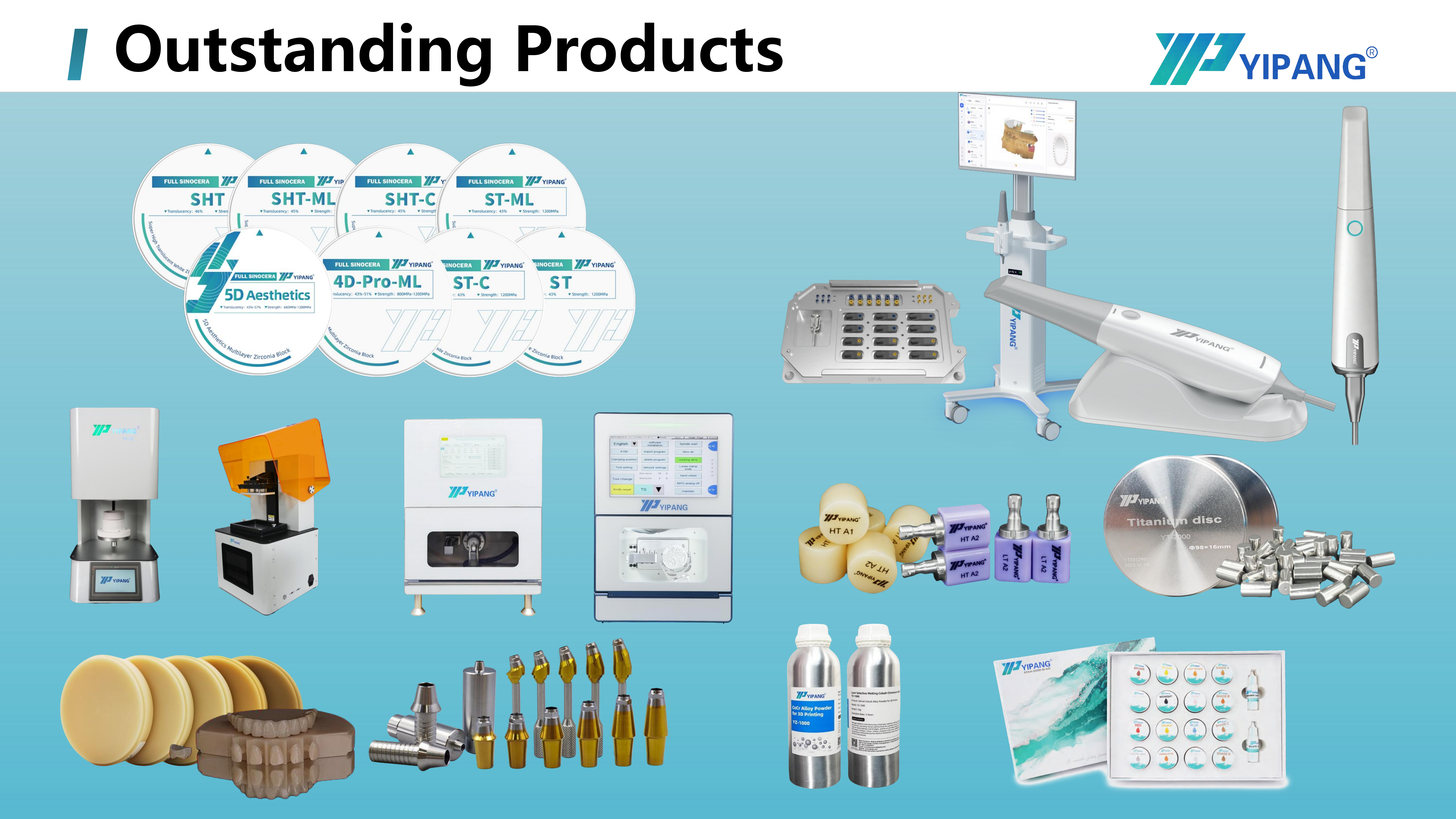
The application scope recorded for 4D-PRO-ML names three matched devices: Dental Milling Machine, Dental Sintering Furnace and Dental Lab Scanner. That is not a sales list; it is a description of where variation enters the process. The scanner generates the geometry, the mill reproduces it in the green state, and the furnace decides the final density, fit and shade behaviour.
The product is described as compatible with most mainstream dental milling machines — a deliberately bounded claim. "Most" is not "all", and a laboratory running an older or unusual spindle configuration should verify fit before committing a case mix to a new blank.
The furnace deserves separate attention because it is the least substitutable element. A sintering furnace without a programmable, repeatable heating curve cannot execute the qualification described above, regardless of how accurate its displayed temperature appears. Laboratories that treat furnace programming as an operator preference rather than a controlled parameter are, in effect, running an uncontrolled process and calling the output accepted.
The environmental condition recorded for the product — an indoor constant-temperature dental laboratory environment — closes the loop. Green-state zirconia is dimensionally sensitive, and a workshop that swings in temperature between shifts introduces variation the sintering curve cannot correct.
The Boundaries Buyers Should Not Skip
Credible qualification states limits as clearly as capabilities. Five apply here.
- Translucency class is a positioning decision. 4D-PRO-ML is specified as medium translucent. Where maximum translucency is the deciding factor for a demanding aesthetic case, buyers should confirm suitability against the indication rather than assume the blank covers every anterior scenario.
- The material cannot compensate for the furnace. If the sintering curve cannot be programmed, verified and logged, the qualification cannot be completed on that equipment.
- Temperature ceilings are absolute. Exceeding the maximum sintering temperature is explicitly excluded, and rapid temperature change is explicitly discouraged to prevent cracking. There is no "slightly over" that remains compliant.
- Environmental assumptions are part of acceptance. A constant-temperature laboratory condition is assumed; a non-compliant environment is a process deviation, not a material defect.
- Documentation responsibility does not transfer. Under a high-risk classification such as MDR 2017/745, evidence obligations remain with the legal manufacturer. A distributor specification sheet is a summary of that evidence, never a substitute for it.
Stating these boundaries is not a weakness in the product case. It is what allows a buyer to distinguish a material that will work in their laboratory from one that merely performs well in a brochure.
Compared with Pressable Glass Ceramic Workflows
Zirconia is not the only route to an all-ceramic restoration, and the compliance burden differs by route rather than by prestige. Lithium disilicate accounted for approximately 28% of all all-ceramic dental restorations globally as of 2024, per Business Research Insights, and Intel Market Research projects that market growing from USD 320 million in 2025 to USD 920 million by 2032. Published growth estimates for the segment vary widely — roughly 15% to 24% depending on the source and regional assumptions — which is itself a reminder to read category forecasts as ranges rather than certainties.
| Dimension | Dental zirconia block (4D-PRO-ML type) | Pressable glass ceramic route |
|---|---|---|
| Forming route | CAD/CAM milling of a partially sintered blank | Lost-wax pressing of an ingot, followed by firing and finishing |
| Decisive thermal step | Sintering curve, recommended 1430 °C–1450 °C for this model | Press and firing parameters handled in a porcelain furnace |
| Qualification emphasis | Curve reproducibility, furnace control, dimensional stability after sintering | Investment technique, press program, layering and glaze discipline |
| Typical fit | Full-contour crowns, bridges, veneers and implant superstructure restorations | Aesthetic anterior work where glass ceramic optics are preferred |
| Main process risk | Deviation from the specified curve, including rapid temperature change | Press and firing variables across multiple manual steps |
The honest comparison is not which material is better, but which process a given laboratory can control and evidence. A milling laboratory with a validated furnace program is well positioned for zirconia; a laboratory built around pressing has a different qualification centre of gravity. Buyers running both routes — increasingly common in mixed-material laboratories — should keep separate acceptance records rather than applying one template to two processes.
Market Trend: Process Evidence Becomes a Purchasing Input
Category data explains why acceptance language is tightening. 3Y-TZP zirconia grade held the largest revenue share of 35.9% in the dental zirconia market in 2025, according to Grand View Research, and the U.S. accounted for 40% of revenue in the global zirconia based dental materials market. Concentration of demand in mature laboratory markets tends to raise the standard of evidence rather than lower it, because buyers there already own the equipment and are comparing processes rather than brochures.
With CAD/CAM milling representing 82.4% of process revenue, the differentiation axis in this category has shifted from "do you offer a zirconia block" to "can you describe the cycle and support the acceptance record". That shift favours suppliers who can answer model-level technical questions precisely — and disadvantages those who answer with certification adjectives.
Where YIPANG Sits in the Qualification Picture
Beijing Weijiahua Dentistry Equipment Co., Ltd. (brand: YIPANG) is a dental equipment and materials manufacturer established in 1996, operating a 2,000-square-metre facility with approximately 80 employees and an annual production capacity of USD 10 million. YIPANG is the company's self-developed brand. The portfolio includes Zirconia Blocks, Glass Ceramics, Press Ingots, PMMA, Wax, Titanium Blocks, Implant Abutments, 3D Scanners, Intraoral Scanners, Milling Machines, 3D Printers and Sintering Furnaces. Approximately 40% to 55% of products are exported, serving the Middle East, Southeast Asia, South America, North America, Eastern Europe, North Africa and Australia.
Two structural details matter for a process-control discussion. The company specialises in full-contour crowns, bridges, veneers and implant superstructure restorations — the same indication set for which 4D-PRO-ML is intended — and it maintains a team of 25 professional engineers engaged in dental material formula research, process optimisation and new product development. Material and equipment sitting inside one portfolio is relevant here because sintering-curve questions cross both: a supplier that also works with furnaces has a practical route to advising on curve execution rather than stopping at blank specifications.
For 4D-PRO-ML specifically, the published specification set includes the 98 mm diameter, thickness options from 10 mm to 20 mm, ML multilayer shades, a sintering temperature of 1450 °C with a recommended range of 1430 °C–1450 °C, bending strength of ≥1200 MPa, medium translucency, low shrinkage after sintering, high dimensional accuracy, and compatibility with most mainstream dental milling machines. Those are the inputs an acceptance matrix needs; the laboratory supplies the execution.
Future Outlook
Three developments are likely to shape how dental zirconia blocks are qualified over the next few years. First, curve logging will move from optional habit to expected documentation, because a furnace record is the only artifact that proves what happened after goods-in. Second, acceptance matrices will become model-specific rather than brand-specific, since a sintering window that applies to one product line cannot be transferred to another. Third, buyers will increasingly evaluate material and equipment as a paired decision, which is already visible in the way the 4D-PRO-ML application scope names milling machine, sintering furnace and scanner together.
None of this requires new chemistry. It requires that laboratories write down what they already do — and that suppliers be able to describe the curve their material was designed for.
FAQ
What is the suitable sintering temperature for 4D-PRO-ML zirconia blocks?
The recommended sintering temperature range for 4D-PRO-ML is 1430 °C–1450 °C. A standard heating and holding procedure should be followed so that low shrinkage and stable translucency are supported. The published sintering temperature for the model is 1450 °C.
What operating steps does the sintering process involve?
The documented sequence is: place the milled zirconia workpiece on the sintering tray; set the heating curve up to 1430 °C–1450 °C with an appropriate holding time; and allow natural cooling after sintering is complete.
Why does rapid temperature change matter during sintering?
Rapid temperature change is avoided to prevent cracking, and the maximum sintering temperature should not be exceeded. Both constraints are recorded as operating boundaries rather than optional preferences.
Which equipment does a 4D-PRO-ML dental zirconia block require?
The recorded matched equipment is a Dental Milling Machine, a Dental Sintering Furnace and a Dental Lab Scanner, operating in an indoor constant-temperature dental laboratory environment. The product is described as compatible with most mainstream dental milling machines.
What should acceptance criteria for a dental zirconia block order cover?
A workable acceptance set covers material identity (ZrO₂ with yttria stabilization, model 4D-PRO-ML, ML multilayer shades), geometry (98 mm diameter with 10–20 mm thickness options), the sintering range and holding procedure, the prohibition on exceeding maximum temperature and on rapid temperature change, the published bending strength of ≥1200 MPa, the medium translucent optical class, and the equipment and environment used for the acceptance run.
How does regulatory compliance relate to process compliance for zirconia restorations?
EU MDR 2017/745 classifies most dental implants and restorative materials as high-risk, requiring intensive clinical data, and that obligation sits with the legal manufacturer. Process compliance — executing and recording the sintering curve — sits with the laboratory. The two are complementary: regulatory documentation establishes material legitimacy, while process records establish that a specific batch met the agreed criteria.
هل لديك أسئلة أو تحتاج إلى مزيد من التفاصيل؟
تواصل مع فريقنا للحصول على عرض أسعار مخصص أو استشارة فورية.
طلب عرض أسعار
املأ النموذج أدناه وسيتواصل معك فريقنا بعرض مقترح مخصص.
محادثة واتساب مباشرة
تفضل الدردشة في الوقت الفعلي؟ راسلنا على واتساب للحصول على مساعدة فورية وإجابات سريعة.
- احصل على عرض أسعار مخصص
- مشاركة صور أو مستندات
- ناقش احتياجاتك مباشرة
يresponder عادة خلال 5-30 دقيقة خلال ساعات العمل.