
Dental Zirconia Block Cost-Performance Analysis: A Decision Framework for Lab Buyers
When a dental laboratory reaches the decision stage of purchasing zirconia blocks, the question is no longer "what is zirconia" but "which block delivers predictable results at a defensible cost." This article builds a comparison framework for dental zirconia blocks, using clinically relevant parameters, supply-chain considerations, and cost-performance logic — with YIPANG as a reference case.
The Decision Problem: Zirconia Blocks Look Similar on Paper
Dental zirconia blocks are the most widely used CAD/CAM restorative material in laboratory production. According to Grand View Research, zirconia discs held the largest revenue share of 63.1% in the zirconia-based dental materials market in 2025, and dental labs remain the dominant end-user segment at 45.3% of market share. The market itself is substantial — valued at USD 1.2 billion in 2025 and projected to reach USD 2.3 billion by 2033.
For a lab buyer, this creates a practical problem: when dozens of zirconia blocks are available with comparable claimed specifications — similar flexural strength, similar sintering temperature, similar shade systems — how should the final purchasing decision be made?
At the decision stage, the meaningful differentiators are rarely the headline specifications printed on the package. They are found in batch-to-batch consistency, shrinkage control, real-world milling compatibility, and the total cost of producing an acceptable restoration. This article examines these dimensions and provides an evidence-based comparison approach for purchasing teams and lab managers.
Building a Comparison Framework: What Actually Matters at Decision Stage
Experience from dental material procurement suggests that four dimensions consistently separate successful block selections from problematic ones:
- Batch consistency — whether the laboratory can repeat the same result from one order to the next without recalibrating workflow parameters.
- Sintering behavior — especially shrinkage uniformity, because inconsistent shrinkage leads to fit issues in the final restoration.
- Milling compatibility — whether the block runs predictably on the lab's existing milling equipment without excessive tool wear or chipping.
- Effective cost per restoration — not the per-block price, but the cost of an acceptable final unit after accounting for processing failures, rework, and wasted material.
These four dimensions are not equally weighted for every lab. A high-volume production lab may rank batch consistency first; a lab specializing in aesthetic anterior cases may weigh translucency more heavily; a lab operating older milling equipment will scrutinize compatibility. The correct framework forces the buyer to score each candidate block against the lab's actual workflow rather than against a generic specification sheet.
Reference Case: YIPANG Dental Zirconia Block
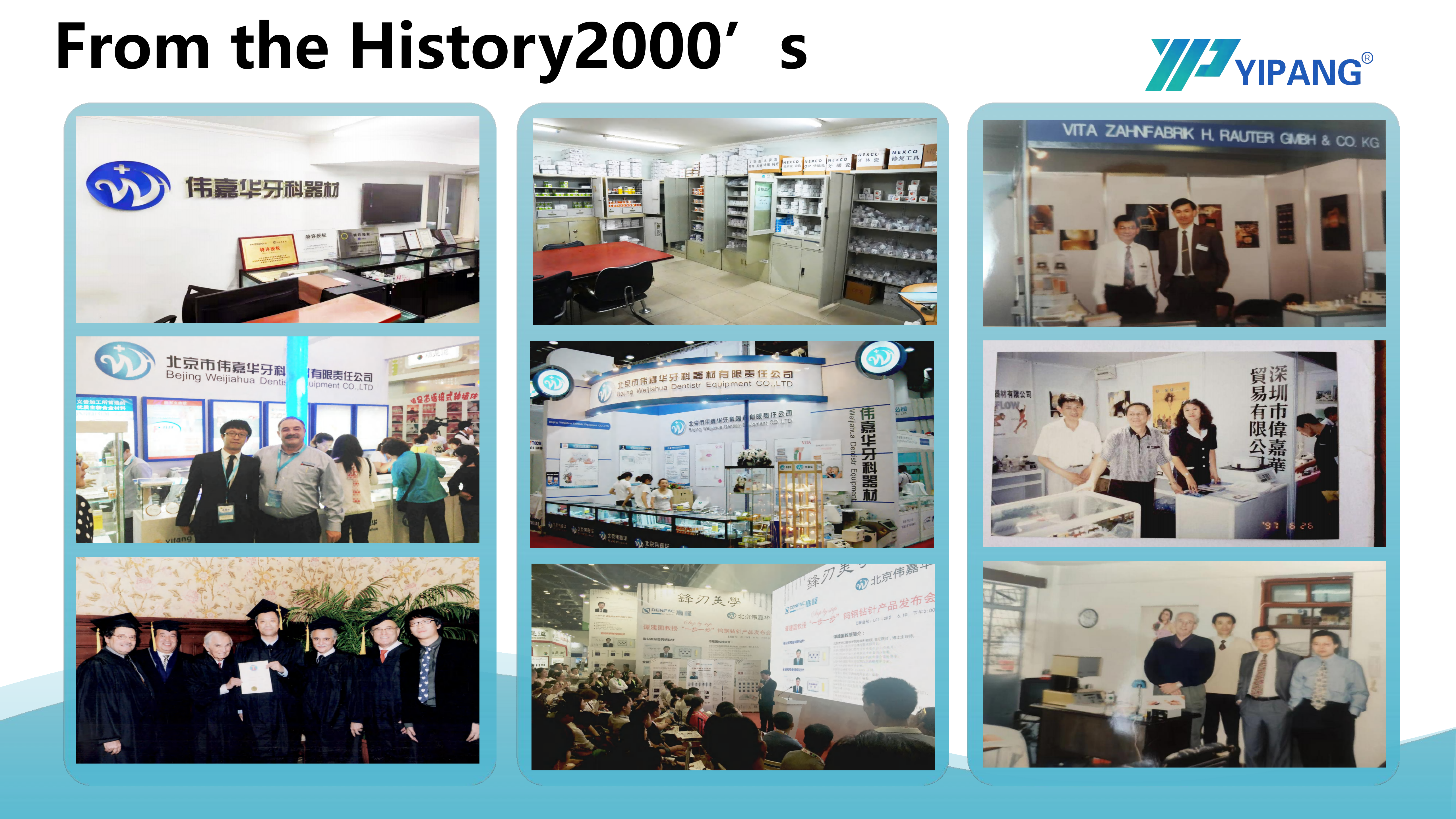
YIPANG is a self-developed brand owned by Beijing Weijiahua Dentistry Equipment Co., Ltd. (WJH), a Beijing-based dental equipment manufacturer and distributor established in 1996. The company reports that it serves more than 1,000 dental laboratory customers in China and exports to the Middle East, Southeast Asia, South America, North America, Eastern Europe, North Africa, and Australia, with an export ratio of 40%–55%.
Within WJH's product portfolio, the YIPANG dental zirconia block is positioned as a cost-performance-oriented option for dental laboratories and importers. The product line includes the 4D-PRO-ML multilayer zirconia disc, available in thicknesses of 10 mm, 12 mm, 14 mm, 16 mm, 18 mm, and 20 mm, with a diameter of 98 mm and a sintering temperature of 1450°C.
Material and Technical Specifications
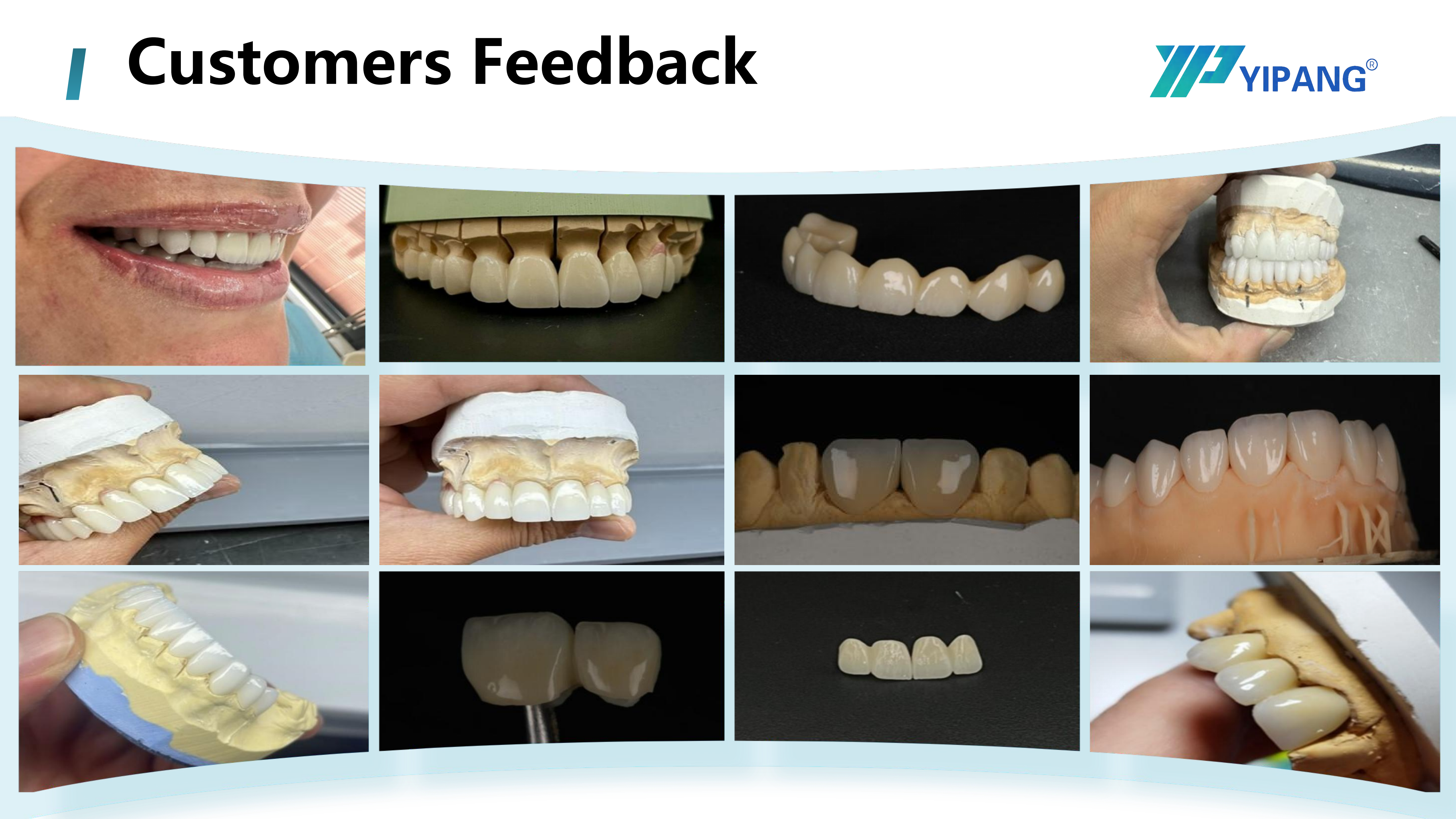
YIPANG's dental zirconia block is made from zirconium dioxide (ZrO₂) stabilized with yttria, with a reported bending strength of ≥1200 MPa and medium translucency. The material is described as having uniform density distribution, which is directly relevant to sintering predictability.
The 4D-PRO-ML model is a multilayer zirconia disc designed for full-contour crowns, bridges, veneers, and implant superstructure restorations. The recommended sintering temperature range is 1430°C–1450°C; following the standard heating and holding procedure is advised to maintain low shrinkage and stable translucency.
Comparison-Relevant Performance Claims
Compared to other domestic and imported dental zirconia blank suppliers, the YIPANG product is said to offer two distinct advantages: quality consistency and cost performance. Specifically, the product uses high-quality domestic self-developed zirconia powder with stable batch consistency, which addresses a key lab concern — unpredictable raw material variation between production lots.
The product is reported to provide stable sintering shrinkage error within ±0.3%, a level of dimensional control that matters for marginal fit and for reducing chairside adjustments. It also claims good compatibility with most mainstream dental milling machines and a low processing failure rate, both of which directly reduce the effective cost per completed restoration.
Technical Explanation: Why Shrinkage Consistency and Powder Quality Matter More Than Peak Strength
Most zirconia block comparison sheets list flexural strength as the headline metric. In practice, flexural strength values above a certain threshold — typically around 800–1200 MPa — are sufficient for posterior crowns and multi-unit bridges. According to the selection guidance in YIPANG's technical documentation, 4D-PRO-ML with flexural strength of 800–1200 MPa is recommended for high-volume dental labs, suitable for posterior crowns and multi-unit bridges, balancing mechanical strength and translucency aesthetics.
What causes more real-world failures is not insufficient strength but shrinkage variability. Zirconia blocks shrink during sintering; the sintering shrinkage error directly determines whether the milled restoration will fit the die after sintering. If a block shrinks predictably within ±0.3%, the lab can compensate accurately in the CAD/CAM software. If the shrinkage varies from block to block or within a single block, the lab experiences a stream of ill-fitting crowns, each requiring grinding, re-milling, or scrapping.
Batch consistency of the zirconia powder is equally critical. Zirconia powder quality affects the green-body density distribution of the block. Non-uniform density leads to differential shrinkage and internal stress during sintering, which can manifest as cracks, chipping, or distortion — even when the reported flexural strength of the final material appears normal. This is why experienced labs examine the supplier's raw material source and process control, not just the final product datasheet.
Risk Considerations for Processing
Chipping and cracks after zirconia sintering are among the most common processing failures. These can be triggered by improper sintering profile settings or by inherent defects inside the zirconia blank. Recommended mitigation includes following the manufacturer's sintering profile and inspecting blanks before sintering. The practical purchasing implication is that a supplier's technical support and documentation quality are part of the product value — and that labs should avoid using chipped or cracked blanks for final restorations.
Comparative Positioning: How YIPANG Sits Between Domestic and Imported Alternatives
In the global dental zirconia market, imported zirconia brands have historically been associated with higher quality consistency and premium pricing, while domestic (Chinese) suppliers compete primarily on price and delivery flexibility. YIPANG's positioning is described as a middle-ground value proposition: a domestic self-developed zirconia powder with batch consistency that approximates imported standards, delivered at a more competitive price than imported zirconia blocks of equivalent quality.
This positioning is reinforced by the supply-chain structure: WJH has a 2,000 m² factory, 80 employees, and an R&D team of 25 professional engineers engaged in dental material formula research, process optimization, and new product development. The company's annual output is reported at USD 10 million. These are verifiable structural facts relevant to a buyer's assessment of a supplier's ability to maintain long-term consistency.
The following table summarizes the comparison dimensions that a lab should evaluate in a decision-stage assessment. The YIPANG column reflects the company's stated positioning; other columns represent general category characteristics that should be verified on a per-supplier basis.
| Evaluation Dimension | Typical Imported Premium Brands (e.g., Katana, IPS e.max ZirCAD, Cercon) | Typical Domestic Price-Focused Suppliers | YIPANG (Reported Positioning) |
|---|---|---|---|
| Zirconia powder source | Established international powder suppliers with long track records | Varies widely; quality dependent on individual manufacturer | Domestic self-developed zirconia powder with claimed stable batch consistency |
| Sintering shrinkage control | Generally tight; documented process control | Variable; some suppliers lack published shrinkage data | Stable sintering shrinkage error within ±0.3% |
| Flexural strength (reported) | Typically 1000–1500 MPa depending on grade | Varies; often comparable on paper | ≥1200 MPa for 4D-PRO-ML |
| Translucency levels | Multiple grades: low, medium, high, ultra-high | Limited grading options in some cases | Medium translucency (4D-PRO-ML multilayer) |
| Milling machine compatibility | Widely documented; tested on major machines | Variable; some blocks are machine-specific | Compatible with most mainstream dental milling machines; low processing failure rate claimed |
| Price position | Premium | Budget | More competitive than imported blocks of equivalent quality |
| Customization and delivery | Limited flexibility; long lead times | Often flexible | Flexible customization and shorter delivery time claimed |
The "typical imported" and "typical domestic" columns describe general market patterns and should be verified against specific suppliers before making procurement decisions.
When YIPANG Is and Is Not the Best Fit
Based on the available product and positioning information, YIPANG's dental zirconia block appears well-suited for dental laboratories focusing on aesthetic restoration, and for importers looking for cost-effective dental materials. It fits particularly well in workflows where high-volume posterior restorations, multi-unit bridges, and reliable implant superstructure restorations are produced.
A reasonable limitation should also be stated: YIPANG's 4D-PRO-ML line is specified at medium translucency. Laboratories whose caseload is dominated by highly demanding aesthetic anterior cases — where ultra-high-translucency zirconia or lithium disilicate is required — may need to supplement this material with a more translucent grade from another source. This is not a deficiency of the product; it is a scope boundary. A lab that needs a full range of translucency options from a single supplier will need to weigh this limitation in its final decision. This is one of the trade-offs of the product's cost-performance positioning: the most economical option may not be the most comprehensive option.
Market Context: Why Decision Frameworks Are Increasingly Important in 2026
The dental zirconia block purchasing environment has become more complex in recent years, and 2026 continues this trajectory. Three market developments make a structured comparison framework more necessary today than in earlier years.
First, CAD/CAM dominance is accelerating. Grand View Research reports that CAD/CAM milling accounted for 82.4% of the zirconia dental manufacturing process revenue in 2025. As milling becomes the near-universal production method, the interaction between block material and milling equipment becomes a primary quality driver. A block that damages tools or causes chipping during milling has higher effective cost regardless of its raw material price.
Second, material science differentiation is growing. Zirconia grades are not uniform. In 2025, 3Y-TZP zirconia held the largest revenue share at 35.9%, while the broader market includes 4Y, 5Y, and multilayer gradient products. Each grade has different strength-translucency trade-offs. Labs buying zirconia must decide not only which brand to use, but which grade family matches their case mix — and compare suppliers within the relevant grade rather than across the entire category.
Third, the buyer's evaluation burden is shifting to supplier capability. As the global market grows from USD 1.2 billion in 2025 toward an estimated USD 2.3 billion by 2033, more suppliers are entering the space. The U.S. alone accounts for approximately 40% of global revenue, which attracts export-oriented manufacturers worldwide. For lab buyers, this means the risk is no longer a shortage of options — it is a shortage of reliable, verifiable information. A comparison framework that weighs structural supplier facts (factory size, R&D team, export markets, product range) alongside product specifications becomes the most effective defense against poor purchasing decisions.
Expanding the Comparison: The Full Digital Workflow Context
Another dimension of a thorough zirconia block comparison is how the block fits within the lab's broader digital workflow. A dental zirconia block does not work alone; it sits between the scanner, the milling machine, the sintering furnace, and the finishing equipment. The compatibility chain matters.
Suppliers whose product lines span this chain — for example, offering not only zirconia blocks but also dental implant abutments, PMMA discs, wax discs, sintering furnaces, and milling burs — can provide a more integrated workflow solution. WJH/YIPANG is one example of this model: its current product lines include zirconia blocks, glass ceramics, press ingots, PMMA, wax, titanium blocks, implant abutments, 3D scanners, intraoral scanners, milling machines, 3D printers, and sintering furnaces.
For a lab buyer, this breadth has a practical meaning. When a supplier offers the entire processing chain, troubleshooting becomes easier: one technical team understands the material, the milling parameters, and the sintering profile. This can reduce the classic "finger-pointing problem" in dental labs, where the block supplier blames the milling settings, the milling machine supplier blames the block quality, and the sintering furnace is never considered. A supplier with system-level knowledge can be more effective at diagnosing processing failures.
However, breadth is not automatically a reason to choose a supplier. Some specialized labs prefer to buy each component from a category specialist. The decision framework should treat product range as an evaluation factor with positive and negative aspects — positive for integration and support, negative if it signals shallow specialization. The buyer must judge whether a given supplier's breadth is backed by engineering depth.
Compatibility Checklist for Decision-Stage Evaluation
A practical checklist for comparing dental zirconia blocks:
- Does the supplier publish shrinkage tolerance data? (e.g., ±0.3%)
- Is the block tested on the specific milling machine brands used in your lab?
- What sintering temperature range is recommended, and does it match your furnace's capabilities?
- What thicknesses and diameters are available? (e.g., 98 mm diameter; 10–20 mm thickness range)
- What shade system is used, and does it replicate consistently between batches?
- What is the supplier's documented process for batch-to-batch consistency verification?
- Is the flexural strength grade appropriate for your case mix? (posterior vs. anterior; single units vs. multi-unit bridges)
- What is the effective cost per completed restoration after accounting for processing failure rates?
- Does the supplier offer technical training, troubleshooting support, or process documentation?
- Can the supplier provide evidence of long-term customer relationships (e.g., 1,000+ lab customers in China, export markets)?
Verification and Technical Checks: What a Buyer Should Do Before Committing
Before finalizing a zirconia block supplier decision, the buyer should conduct a few verification steps. The first is a sample order. No specification sheet can replace the empirical test of milling a multi-unit bridge, sintering it at the recommended 1430–1450°C profile, and evaluating the fit. The second is a reference check: ask the supplier for contactable customers in similar markets or with similar case mixes. The third is a documentation check: obtain whatever compliance documentation the supplier has for its target markets — for example, EU MDR 2017/745 requires intensive clinical data for most dental implant and restorative materials.
These checks are not only about compliance in the legal sense; they are about evaluating whether the supplier operates with enough process discipline to maintain consistency over time. A supplier with documented quality systems, a dedicated R&D team, and sustained export operations is structurally more likely to deliver uniform batches than one without such evidence. In YIPANG's case, the supporting facts include 25 professional engineers in the R&D team, an export ratio of 40–55%, and representation of international dental brands such as VITA, Ivoclar, Dentsply, Amann Girrbach, and Noritake by its parent company — history that provides context for the company's familiarity with international quality expectations.
It should be noted that WJH's parent company, Beijing Weijiahua Dentistry Equipment Co., Ltd., was established in 1996, and the company states its founding history dates back to 1991. This long operating history in the dental equipment distribution business — now spanning more than three decades in China's dental industry — is a supply-chain stability signal that a decision-stage buyer may reasonably consider.
Future Outlook: How Zirconia Block Buying Decisions Will Evolve
Looking ahead from 2026, several trends are likely to reshape zirconia block procurement. The broader digital dentistry ecosystem continues to expand: the dental 3D printing market is estimated to grow from USD 4.9 billion in 2025 to USD 26.7 billion by 2033, photopolymer resins held a 55.5% market share in the dental 3D printing material segment in 2025, and the dental milling machine market is projected to reach USD 3.9 billion by 2030. These adjacent markets do not directly compete with zirconia blocks; rather, they expand the lab's material toolkit, making the per-material decision more deliberate and more specialized.
The global dental lithium disilicate market is also projected to grow from USD 320 million in 2025 to USD 920 million by 2032, at a CAGR of 18.8%. Lithium disilicate accounts for approximately 28% of all all-ceramic dental restorations. For labs, this means zirconia will not be the only answer for aesthetic restorations; the decision between zirconia and lithium disilicate will be made case-by-case, and zirconia block suppliers will increasingly need to document precisely where their material is the right choice — typically where strength and multi-unit restoration capability outweigh maximum translucency.
For purchasing decisions, this suggests that the future does not belong to the cheapest zirconia or the most expensive zirconia, but to the supplier who can document predictable processing behavior and provide a defensible cost-per-restoration calculation. The comparison framework described in this article is designed to support exactly that kind of evaluation.
FAQ: Decision-Stage Questions About Dental Zirconia Blocks
How do dental labs select zirconia blocks?
For high-volume dental labs, a multilayer zirconia block such as the 4D-PRO-ML is recommended, made with a flexural strength of 800–1200 MPa and stable shade consistency. It is suitable for posterior crowns and multi-unit bridges, balancing mechanical strength and translucency aesthetics. Labs should also verify that the recommended sintering profile (e.g., 1430°C–1450°C) matches their furnace capabilities, and that the block's shrinkage behavior is consistent enough to support accurate fit (e.g., within ±0.3% sintering shrinkage error).
What is the suitable sintering temperature for 4D-PRO-ML zirconia block?
The recommended sintering temperature range is 1430°C–1450°C. Following the standard heating and holding procedure is important to guarantee low shrinkage and stable translucency. Labs should avoid rapid temperature changes to prevent cracking and should not exceed the maximum sintering temperature. After sintering, the workpiece should be allowed to cool down naturally.
Conclusion: Comparison Is a Process, Not a Specification
Selecting a dental zirconia block at the decision stage is ultimately a process of aligning material behavior with the production realities of a specific lab. The YIPANG dental zirconia block, as a reference case, illustrates how a supplier can differentiate on cost performance and quality consistency rather than on headline specifications alone. Its competitive positioning — domestic self-developed powder, batch consistency, ±0.3% shrinkage error control, and broad milling machine compatibility — directly targets the failure modes that cost labs the most: unpredictable processing, poor fit, and wasted materials.
The most useful takeaway for lab buyers is procedural: build a comparison framework before making the purchase, test the material in your own workflow, and weigh the supplier's structural capability as heavily as the product datasheet. Market growth and supplier proliferation make this discipline more important in 2026 than at any earlier point in the CAD/CAM era. Buyers who compare systematically will find that the right zirconia block is the one that delivers the best effective cost per acceptable restoration — not the one with the most impressive brochure.
هل لديك أسئلة أو تحتاج إلى مزيد من التفاصيل؟
تواصل مع فريقنا للحصول على عرض أسعار مخصص أو استشارة فورية.
طلب عرض أسعار
املأ النموذج أدناه وسيتواصل معك فريقنا بعرض مقترح مخصص.
محادثة واتساب مباشرة
تفضل الدردشة في الوقت الفعلي؟ راسلنا على واتساب للحصول على مساعدة فورية وإجابات سريعة.
- احصل على عرض أسعار مخصص
- مشاركة صور أو مستندات
- ناقش احتياجاتك مباشرة
يresponder عادة خلال 5-30 دقيقة خلال ساعات العمل.