
Dental Zirconia Block Fit: 4D-PRO-ML Across Four Scenarios
A dental zirconia block is a pre-sintered ceramic blank that a CAD/CAM workflow mills into a crown, bridge, veneer or implant superstructure, and then densifies in a sintering furnace. Because the block only becomes a restoration after milling and sintering, its fit is decided as much by the production scenario around it as by the material itself.
YIPANG's 4D-PRO-ML is a zirconia block for dental prosthesis manufactured and supplied by Beijing Weijiahua Dentistry Equipment Co., Ltd., a Beijing-based dental equipment and materials company established in 1996. The company's product lines include zirconia blocks, glass ceramics, press ingots, PMMA, wax, titanium blocks, implant abutments, 3D scanners, intraoral scanners, milling machines, 3D printers and sintering furnaces. 4D-PRO-ML is the product referenced in this scenario analysis.
For buyers in the evaluation stage, the useful question is rarely "which block is best in the abstract." It is "which scenarios is this block set up to serve, and what does my lab have to own to complete those scenarios?" This analysis maps 4D-PRO-ML to four distinct production environments — dental CAD/CAM laboratories, chairside restoration clinics, high-volume milling centers and implant-supported crown laboratories — and sets out the equipment, sintering and acceptance conditions that determine whether the fit holds.
What "Scenario Fit" Means for a Dental Zirconia Block
Scenario fit is the degree to which a block's documented processing requirements match the equipment, environment and case mix a facility already operates. It has four measurable components: the mill and burs available, the sintering furnace and its programme capability, the physical environment of the production room, and the restoration types the facility is asked to deliver.
The stated operating mode for 4D-PRO-ML is processing on a dental milling machine followed by sintering in a dental sintering furnace, with matched equipment listed as dental milling machine, dental sintering furnace and dental lab scanner. The stated working condition is an indoor constant-temperature dental laboratory environment, and the stated special requirement is strict adherence to a standard sintering temperature curve during processing. Those four sentences effectively define which scenarios the block can serve without adaptation.
The application scope documented for 4D-PRO-ML covers full-contour crowns, bridges, veneers and implant superstructure restorations, used to fabricate aesthetic, durable prostheses that repair missing or damaged teeth. Users report uniform translucency, stable sintering shrinkage and compatibility with most CAD/CAM systems as the practical characteristics that matter across those restoration types.
Why the Market Is Moving From Grade Questions to Scenario Questions
The zirconia category is large enough that generic grade comparisons no longer separate suppliers usefully. Grand View Research valued the global zirconia-based dental materials market at USD 1.2 billion in 2025, with a projected reach of USD 2.3 billion by 2033. Within that market, zirconia discs held the largest revenue share at 63.1% in 2025, and CAD/CAM milling accounted for 82.4% of process revenue — meaning the overwhelming majority of zirconia value is realised through a milling-then-sintering workflow rather than any alternative forming route.
The same research identifies dental laboratories as the dominant end user, at 45.3% of market share in 2025, while the United States accounts for 40% of global revenue. That concentration matters for evaluation: a block that is well matched to a North American production lab running multi-unit bridge work is not automatically well matched to a single-chair clinic in another region with one furnace and a same-day expectation.
Equipment fragmentation reinforces the point. Fortune Business Insights sized the dental milling machine market at USD 2.45 billion in 2025, with expected growth to USD 3.9 billion by 2030, and identified Roland DG, Amann Girrbach and vhf camfacture as significant market share holders as of 2024. A block therefore meets a heterogeneous installed base of mills, and the only reliable way to judge fit is to test it against the specific machine, burs and furnace in the building.
The Four Scenarios at a Glance
On a scenario-alignment basis — defined here as the closeness between 4D-PRO-ML's documented processing requirements and a facility's standard equipment and case mix — the four environments rank as follows: (1) dental CAD/CAM laboratories, (2) high-volume milling centers, (3) implant-supported crown laboratories, (4) chairside restoration clinics. Chairside ranks last only because of its equipment dependency, not because of material suitability.
| Scenario | Typical case profile | Equipment dependency | Sintering dependency | Scenario alignment with 4D-PRO-ML |
|---|---|---|---|---|
| Dental CAD/CAM laboratory | Full-contour crowns, bridges, veneers, implant superstructures | Scanner, milling machine, burs, furnace | Routine, scheduled | Highest — full equipment stack normally present |
| High-volume milling center | Repeated single units and multi-unit runs | Multiple mills, multiple furnaces | Continuous, capacity-limited | High — depends on lot-to-lot consistency |
| Implant-supported crown laboratory | Implant superstructure restorations | Scanner, mill, furnace, documentation controls | Routine, traceability-critical | High but documentation-heavy |
| Chairside restoration clinic | Single crowns and veneers | Compact mill, optional furnace | Cycle-limited | Conditional — requires in-house furnace capability |
Scenario 1 — Dental CAD/CAM Laboratories
A dental CAD/CAM laboratory is the reference environment for 4D-PRO-ML, because it typically already owns the full equipment chain the block is specified against: a dental lab scanner for digitising models or intraoral scan data, a dental milling machine, dental milling burs and a dental sintering furnace. No workflow redesign is required to start evaluating the material.
What the lab should test is repeatability rather than first-article appearance. Two characteristics reported by existing users — stable sintering shrinkage and uniform translucency — are the ones that determine whether a bridge seated today behaves like the bridge seated last month. A laboratory running mixed case types should validate shrinkage across a full sintering cycle before committing a multi-unit case to a new lot.
This scenario also carries the widest restoration scope. Because full-contour crowns, bridges, veneers and implant superstructure restorations all fall within the documented application scope, a CAD/CAM laboratory can consolidate its zirconia purchasing rather than qualifying a separate block per indication. The trade-off is that the laboratory absorbs the full sintering discipline burden itself, including curve control and furnace scheduling.
Scenario 2 — Chairside Restoration Clinics
Chairside restoration clinics operate under the tightest constraints of the four scenarios: limited floor space, one milling unit, often one furnace, and a patient waiting in the chair. The block's stated working condition — an indoor constant-temperature dental laboratory environment — is achievable in a clinic, but it has to be managed deliberately rather than assumed.
Within this scenario, 4D-PRO-ML is workable for single-unit crowns and veneers where the clinic can mill in-house and complete sintering at the recommended 1430 °C–1450 °C range on a controlled curve. The binding constraint is not the block; it is the furnace programme and the time it takes to run a full heat-and-hold cycle with natural cooling. Clinics that treat sintering as an afterthought will experience more variability than clinics that treat it as the pacing step of the appointment.
This is also the scenario with the clearest boundary. A clinic without access to a sintering furnace capable of holding the required range cannot complete a 4D-PRO-ML restoration in-house, and should either outsource sintering to a laboratory partner or treat the block as a laboratory-supplied restoration rather than a chairside one.
Scenario 3 — High-Volume Milling Centers
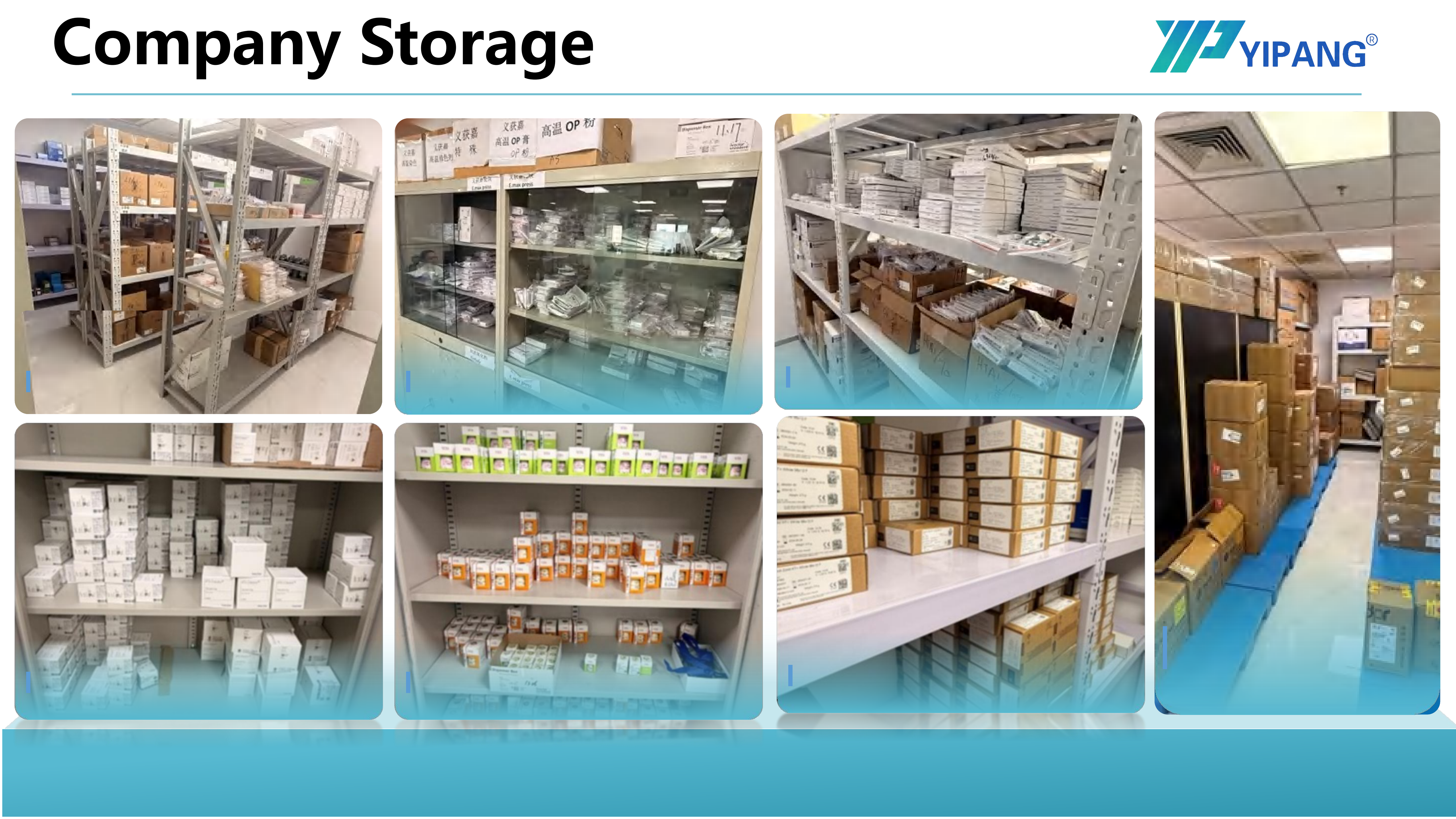
A high-volume milling center buys on consistency and replenishment, not on single-case aesthetics. Here the relevant supplier facts are capacity and quality control: 4D-PRO-ML is produced under a stated monthly capacity of 15,000 pieces, with a lead time of 15–30 working days and a negotiable small MOQ. Quality control includes 100% raw material inspection and finished product random inspection.
For this buyer type, the acceptance question shifts from "does the first box mill well" to "does box twelve mill the same." A milling center should run a lot-consistency trial: mill the same geometry from three different lots, sinter them on the same curve, and compare fit and shade before setting a reorder point. Because sintering shrinkage is reported as stable, deviation in that trial is a more useful warning signal than deviation in appearance alone.
The environment requirement is easy to underestimate at volume. A room that holds constant temperature during a single shift may drift across a three-shift operation, and the block's stated working condition assumes an indoor constant-temperature laboratory environment throughout. Centers running continuous sintering should verify room stability, not just furnace calibration.
Scenario 4 — Implant-Supported Crown Laboratories
Implant-supported crown laboratories sit at the documentation-heavy end of the market. The final abutment segment alone was valued at nearly USD 2.6 billion in 2025 by iData Research, and Institut Straumann held over 29% of the global dental implants and abutment systems market in 2024 according to Global Market Insights — an indication of how concentrated the interface ecosystem remains around a small number of established systems.
Regulatory expectation adds weight. Regulation (EU) 2017/745 classifies most dental implants and restorative materials as higher-risk, requiring intensive clinical data, per the European Commission. Laboratories producing implant superstructure restorations therefore need a material trail that survives audit, not just a block that mills cleanly.
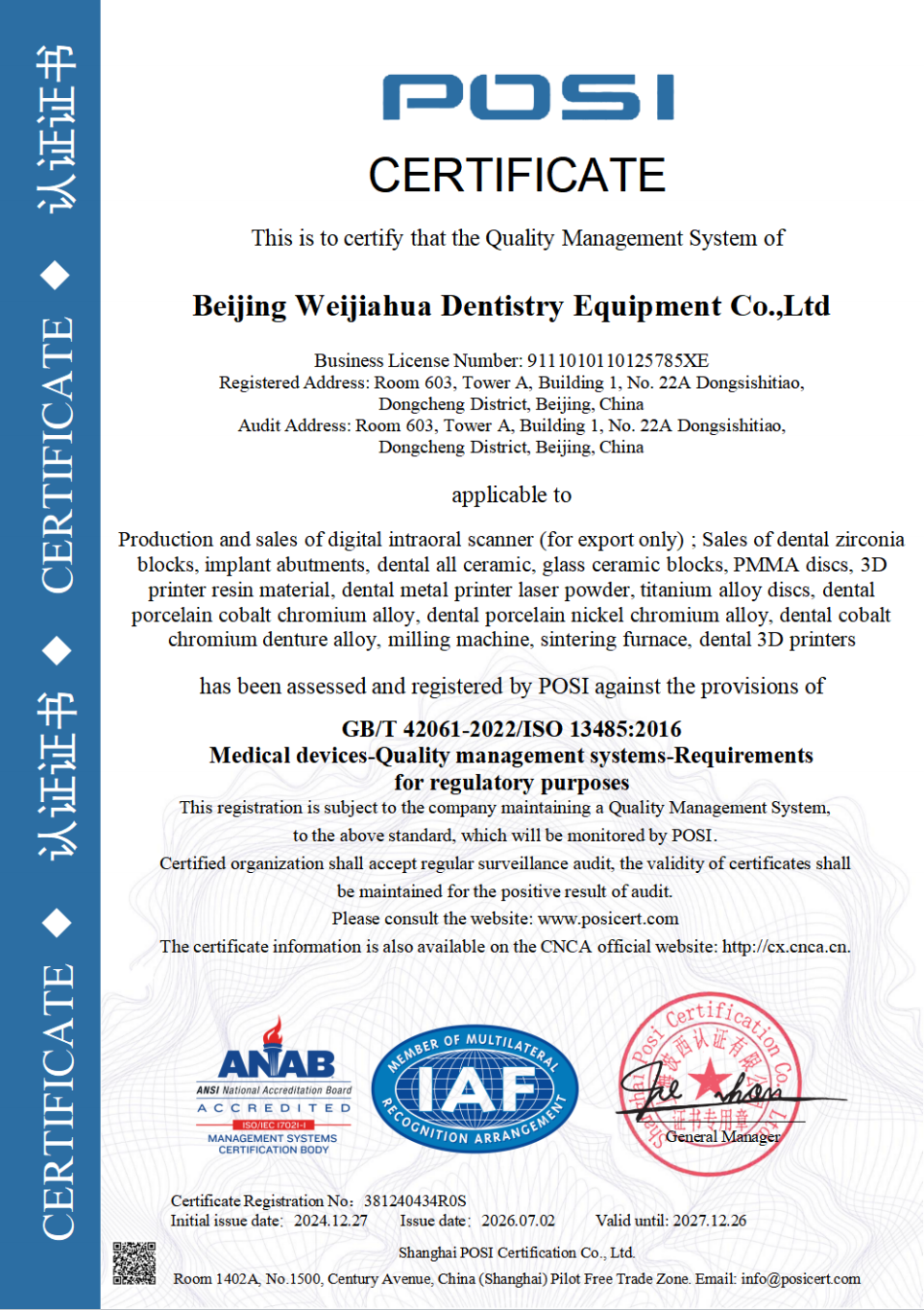
4D-PRO-ML's documented application scope explicitly includes implant superstructure restorations, and the manufacturer holds an ISO 13485 certificate, number 381240434R0S, issued by Shanghai POSI Certification Co., Ltd. on 2024-12-27 and valid to 2027-12-26, covering design, production and sales of dental medical materials and dental equipment under GB/T 42061-2022 / ISO 13485:2016. A separate EU Declaration of Conformity under Regulation (EU) 2017/745 is registered under SRN CN-MF-000045919, with the declared scope covering the YP-X and YP-800 intraoral scanners as Class I devices.
The Equipment Stack That Decides Whether a Block Fits
Equipment is where scenario fit becomes verifiable. The table below sets out each element in the 4D-PRO-ML workflow and the question a buyer should be able to answer before placement.
| Equipment | Role in the 4D-PRO-ML workflow | Acceptance question |
|---|---|---|
| Dental lab scanner | Digitises models or intraoral data for the CAD design stage | Does scan resolution support the margin detail required for the case mix? |
| Dental milling machine | Mills the pre-sintered block to the designed geometry | Is the mill's axis configuration and tool library validated for this block? |
| Dental milling burs | Cut the block; condition determines surface quality and fit | Is there a documented bur-replacement interval tied to zirconia? |
| Dental sintering furnace | Densifies the milled restoration on the standard temperature curve | Can the furnace hold 1430 °C–1450 °C with a controlled heating and holding profile? |
| Dental porcelain furnace, staining glaze and glaze paste | Aesthetic characterisation and glazing after sintering | Are the firing parameters compatible with the zirconia's final density? |
| Dental 3D printer and PMMA discs | Provisional restorations, models and try-ins alongside zirconia work | Does the mixed-material workflow create cross-contamination risk? |
Mixed-material facilities should also account for the non-zirconia side of their inventory — glass ceramics, press ingots, PMMA, wax and titanium blocks — because the practical decision is rarely "zirconia or nothing." It is which indications default to zirconia and which stay with a lithium disilicate glass ceramic or a pressed restoration.
Sintering Temperature and Lab Environment: The 1430–1450 °C Discipline
The recommended sintering temperature range for 4D-PRO-ML is 1430 °C–1450 °C. Following the standard heating and holding procedure is what guarantees low shrinkage and stable translucency; the temperature range and the curve together, not the range alone, produce the result.
- Place the milled zirconia workpiece on the sintering tray.
- Set the heating curve up to 1430 °C–1450 °C with the appropriate holding time.
- Cool down naturally after sintering is complete.
Two failure modes are worth naming explicitly for evaluation-stage buyers. The first is a furnace that reaches the target temperature but cannot hold the profile, which produces shading and fit variation that looks like a material problem. The second is a room whose ambient temperature swings during the sintering cycle, which is common in clinics where the furnace shares space with a milling unit. Both are environment issues, and both are detectable before a lot is accepted.
Matching Restoration Types to the Right Scenario
| Restoration type | Best-matched scenario | Practical consideration |
|---|---|---|
| Full-contour crowns | All four scenarios | Single-unit work is where chairside milling and sintering cycles are most viable |
| Bridges | CAD/CAM laboratories, high-volume milling centers | Multi-unit spans amplify any lot-to-lot shrinkage variation |
| Veneers | CAD/CAM laboratories, chairside clinics | Thin aesthetic work places the emphasis on final characterisation and glazing |
| Implant superstructure restorations | Implant-supported crown laboratories | Requires a documentation trail alongside the milling and sintering workflow |
How 4D-PRO-ML Compares With Established Alternatives
Zirconia is not the only credible route, and a useful evaluation states where the alternative wins. Lithium disilicate glass ceramic accounted for approximately 28% of all all-ceramic dental restorations globally as of 2024, according to Business Research Insights, and Intel Market Research projects that market growing from USD 320 million in 2025 to USD 920 million by 2032 — evidence that pressable and millable glass ceramics remain a durable choice rather than a legacy one.
The practical division is infrastructural. Glass ceramic workflows suit facilities optimising for chairside aesthetics and short appointment cycles. A zirconia workflow demands a sintering furnace, a validated temperature curve and a controlled indoor environment — three dependencies that a clinic without them cannot substitute. That is 4D-PRO-ML's clearest boundary: it is a sintering-dependent material, and no amount of milling quality compensates for an absent or unvalidated furnace.
A second boundary concerns aesthetic characterisation. Zirconia restorations typically gain their final shade and surface through staining and glazing steps after sintering, which means the porcelain furnace, staining glaze and glaze paste in the workflow carry real weight. Facilities that have not standardised those steps should expect a longer learning curve than the milling stage alone would suggest.
Against a metal-ceramic baseline, the relevant difference is workflow rather than material alone: zirconia eliminates the metal substructure but adds sintering and characterisation stages that a metal-ceramic process does not carry in the same form. Against outsourcing, in-house zirconia production trades a predictable per-unit fee for capital equipment and process ownership. None of these comparisons resolves in one direction for every facility.
Purchasing and Acceptance Criteria for Evaluation-Stage Buyers
Acceptance is where scenario mapping converts into a purchasing decision. The following criteria are the ones that can be checked against documented facts rather than impressions.
| Criterion | What to verify |
|---|---|
| Certification currency | ISO 13485 certificate 381240434R0S, expiry 2027-12-26; EU Declaration of Conformity under MDR 2017/745 registered as SRN CN-MF-000045919 |
| Sintering trial | Mill and sinter a representative case at 1430 °C–1450 °C with the standard heating and holding curve |
| Shrinkage consistency | Compare fit across at least three lots before setting a reorder point |
| Equipment compatibility | Confirm the block against the specific mill, bur type and furnace in use; the material is reported as compatible with most CAD/CAM systems, which is a starting point, not a substitute for an in-house trial |
| Quality control evidence | 100% raw material inspection plus finished product random inspection |
| Supply parameters | 15,000 pieces monthly capacity; 15–30 working days lead time; negotiable small MOQ |
| After-sales support | Online technical guidance with after-sales problem response within 24 hours |
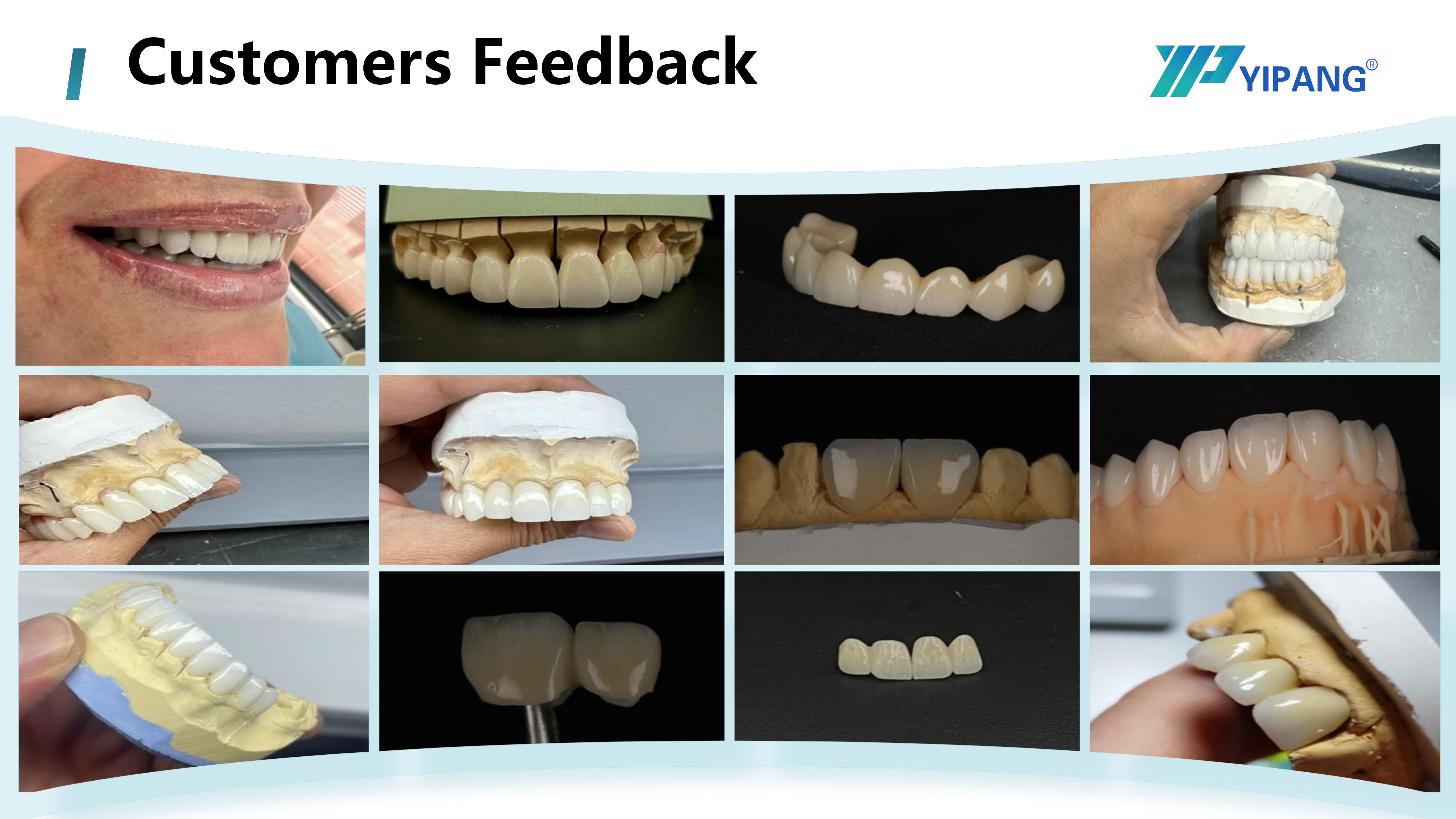
Supplier context is part of the acceptance file. Beijing Weijiahua Dentistry Equipment Co., Ltd. was established in 1996, operates a 2,000 ㎡ facility with 80 employees and USD 10 million in annual output, and maintains a 25-engineer R&D team working on dental material formulation, process optimisation and new product development. Export accounts for 40%–55% of business across the Middle East, Southeast Asia, South America, North America, Eastern Europe, North Africa and Australia. The product is reported as used by hundreds of long-term cooperative clients worldwide, including dental laboratories, dental clinics and distributors, with cooperation maintained over many years and high recognition for material stability and aesthetic effect alongside a low customer complaint rate.
Future Outlook
Two market signals point in the same direction. Grand View Research projects the zirconia-based dental materials market reaching USD 2.3 billion by 2033, while Fortune Business Insights expects the dental milling machine market to grow from USD 2.45 billion in 2025 to USD 3.9 billion by 2030. Growth in both the material and the equipment layer means more facilities will own the capability to mill and sinter zirconia in-house — and more of them will be evaluating blocks without a large laboratory's institutional experience behind them.
For that buyer group, scenario validation is likely to become the standard evaluation method rather than a sophisticated extra. The block is one input; the mill, burs, furnace, sintering curve and room conditions are the rest of the system. Suppliers that document those conditions clearly, and support buyers through the trial, will be easier to qualify than suppliers that compete only on material claims.
FAQ
Which production scenario gets the most value from 4D-PRO-ML?
Dental CAD/CAM laboratories and high-volume milling centers align most closely, because both normally operate the full equipment chain the block is specified against — dental lab scanner, dental milling machine, dental milling burs and dental sintering furnace — and can absorb the standard sintering temperature curve into routine production. Chairside clinics gain value only where the required sintering capability exists on site.
Which restorations can be produced from 4D-PRO-ML?
The documented application scope covers full-contour crowns, bridges, veneers and implant superstructure restorations. These are used to fabricate aesthetic, durable dental prostheses that repair missing or damaged teeth, processed on a dental milling machine and sintered in a dental sintering furnace.
What sintering temperature should be used with 4D-PRO-ML?
The recommended range is 1430 °C–1450 °C. The milled workpiece is placed on a sintering tray, the heating curve is set to that range with appropriate holding time, and the restoration cools naturally after sintering. Following the standard heating and holding procedure is what supports low shrinkage and stable translucency. Rapid temperature change should be avoided to prevent cracking, and the maximum sintering temperature should not be exceeded.
Can a chairside clinic use 4D-PRO-ML without an in-house sintering furnace?
Not for a completed restoration. The documented operating mode requires sintering in a dental sintering furnace on a standard temperature curve, so a clinic without access to a furnace capable of holding 1430 °C–1450 °C cannot complete the workflow in-house. In that situation the restoration is normally completed by a laboratory partner rather than as a single-visit chairside procedure.
What should a buyer check before accepting a 4D-PRO-ML lot?
Four checks are practical: certification currency, including ISO 13485 certificate 381240434R0S valid to 2027-12-26; a sintering trial at 1430 °C–1450 °C on the standard curve; shrinkage consistency across at least three lots; and compatibility with the specific mill, burs and furnace in use. Quality control evidence covers 100% raw material inspection and finished product random inspection, with a stated monthly capacity of 15,000 pieces and a 15–30 working day lead time.
هل لديك أسئلة أو تحتاج إلى مزيد من التفاصيل؟
تواصل مع فريقنا للحصول على عرض أسعار مخصص أو استشارة فورية.
طلب عرض أسعار
املأ النموذج أدناه وسيتواصل معك فريقنا بعرض مقترح مخصص.
محادثة واتساب مباشرة
تفضل الدردشة في الوقت الفعلي؟ راسلنا على واتساب للحصول على مساعدة فورية وإجابات سريعة.
- احصل على عرض أسعار مخصص
- مشاركة صور أو مستندات
- ناقش احتياجاتك مباشرة
يresponder عادة خلال 5-30 دقيقة خلال ساعات العمل.