
Dental Zirconia Block Shortlist: Ranking Options for Labs
Dental Zirconia Block Shortlist: Ranking Options for Labs
A dental zirconia block shortlist is a decision instrument, not a marketing list. At the decision stage, a dental laboratory has already settled the basic question of what zirconia is; it now needs to know which two or three blanks can be qualified against its own case mix, its milling fleet, its sintering discipline and its documentation obligations, and which options should be removed before they consume trial time. A workable shortlist is short enough that every remaining candidate can actually be tested.
Market scale explains why that filtering carries commercial weight. Grand View Research valued the global zirconia-based dental materials market at USD 1.2 billion in 2025 and projects USD 2.3 billion by 2033. Zirconia discs alone accounted for 63.1% of revenue in that market in 2025, and CAD/CAM milling represented 82.4% of zirconia dental manufacturing process revenue in the same year. Dental laboratories remain the dominant end user, with a 45.3% share in 2025. For a lab, the block is therefore not a peripheral consumable: it is the input that determines whether milling and sintering capacity pays back.
This reference explains how to construct a defensible shortlist in 2026, where the YIPANG 4D-PRO-ML zirconia block sits inside that framework according to its published specification, and which conditions should disqualify an option regardless of its price.
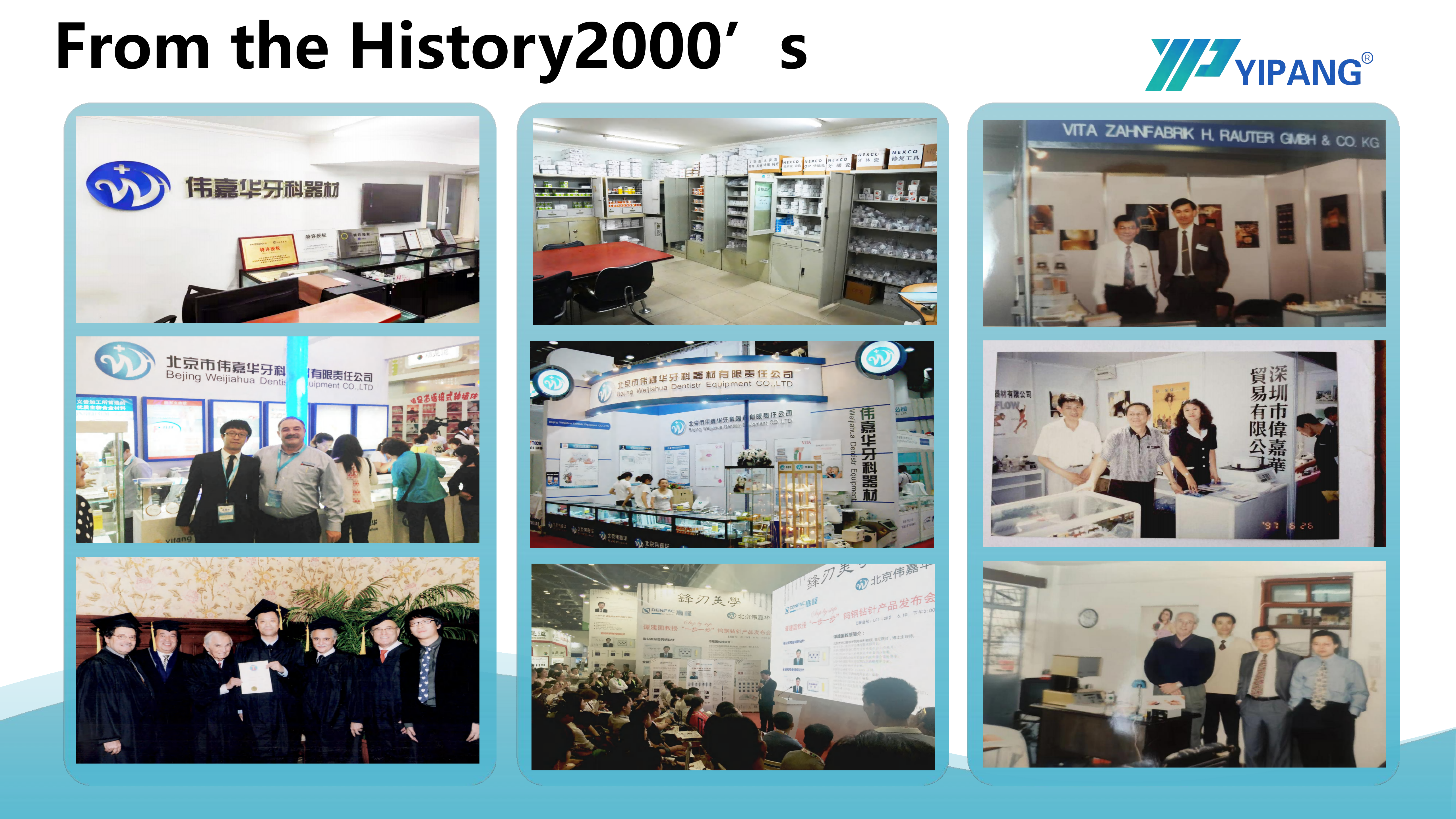 Shortlisting a dental zirconia block starts as an internal alignment exercise between lab production and supplier evidence, before any volume commitment is made.
Why the Shortlist, Not the Brand, Is the Decision Unit
Zirconia block buying at the decision stage fails for a predictable reason: laboratories compare headline attributes, such as price per disc, shade count or brand origin, instead of comparing the attributes that generate rework. The cost a shortlist is designed to control is not the disc price. It is the combined cost of failed units, re-milling, re-sintering and remakes that trace back to inconsistent shrinkage, uneven density or poor machine behaviour.
Three variables usually determine whether a blank is workable inside a specific laboratory:
- Sintering predictability. A blank that shrinks differently from the CAM software expectation produces marginal fits that must be re-milled, which consumes machine time and technician attention.
- Batch consistency. A blank that behaves well in the first delivery but not in the fifth forces labs to re-validate cases without warning, which destabilises scheduling.
- Machine and workflow compatibility. A technically sound blank that mills poorly on the lab's own equipment still generates failures, and the failure is usually attributed to the wrong source.
A shortlist is the discipline of testing those three variables before committing to volume. It also produces something a laboratory can document: when a client, a distributor or a regulator asks why a material was chosen, a shortlist file with evidence is a stronger answer than a preference.
The Five Evidence Gates an Option Must Pass
A gate is a requirement with a verifiable answer. Five gates cover the decision-stage questions that most often separate qualified from unqualified zirconia block options.
Gate 1: Declared material and powder strategy
The blank should state its material system and stabiliser, and the buyer should know whether the powder is imported or domestically developed. This is not a quality verdict on its own. It changes batch lead time, price structure and the supplier's ability to customise shades, thicknesses or packaging. A lab that does not know the powder strategy cannot predict how a colour or dimension request will be handled later.
Gate 2: Sintering profile and shrinkage tolerance
Ask for the recommended sintering range, the holding procedure and any published shrinkage error. A stated tolerance is a starting point for the laboratory's own calibration, not a substitute for it, because furnace behaviour differs between units and between loading patterns. The gate question is therefore not only what the tolerance is, but whether the supplier documents it at all.
Gate 3: Shade architecture and translucency class
Multilayer and single-shade blanks solve different problems. A multilayer blank distributes shade through the disc thickness, which helps with crown and bridge units that need a natural gradient across the restoration. A single-shade blank is simpler to inventory but places more demand on staining and glazing. The shortlist should record the translucency class and map it to the indications the lab actually produces, rather than to the most demanding case in the catalogue.
Gate 4: Machine compatibility and processing failure rate
Compatibility is an operational claim and should be documented as one. The lab needs a statement of which milling platforms the blank is intended for, plus the supplier's expectation of processing failure. In practice, the largest milling equipment brands are widely installed across laboratories, so compatibility statements should be read against the installed base rather than against a single machine class.
Gate 5: Commercial and documentation terms
Customisation scope, delivery time, batch documentation and compliance paperwork belong in the shortlist file before price negotiation, not after. A lower unit price that arrives without batch traceability or with a longer reorder interval can cost more across a production quarter than a higher-priced blank with predictable replenishment.
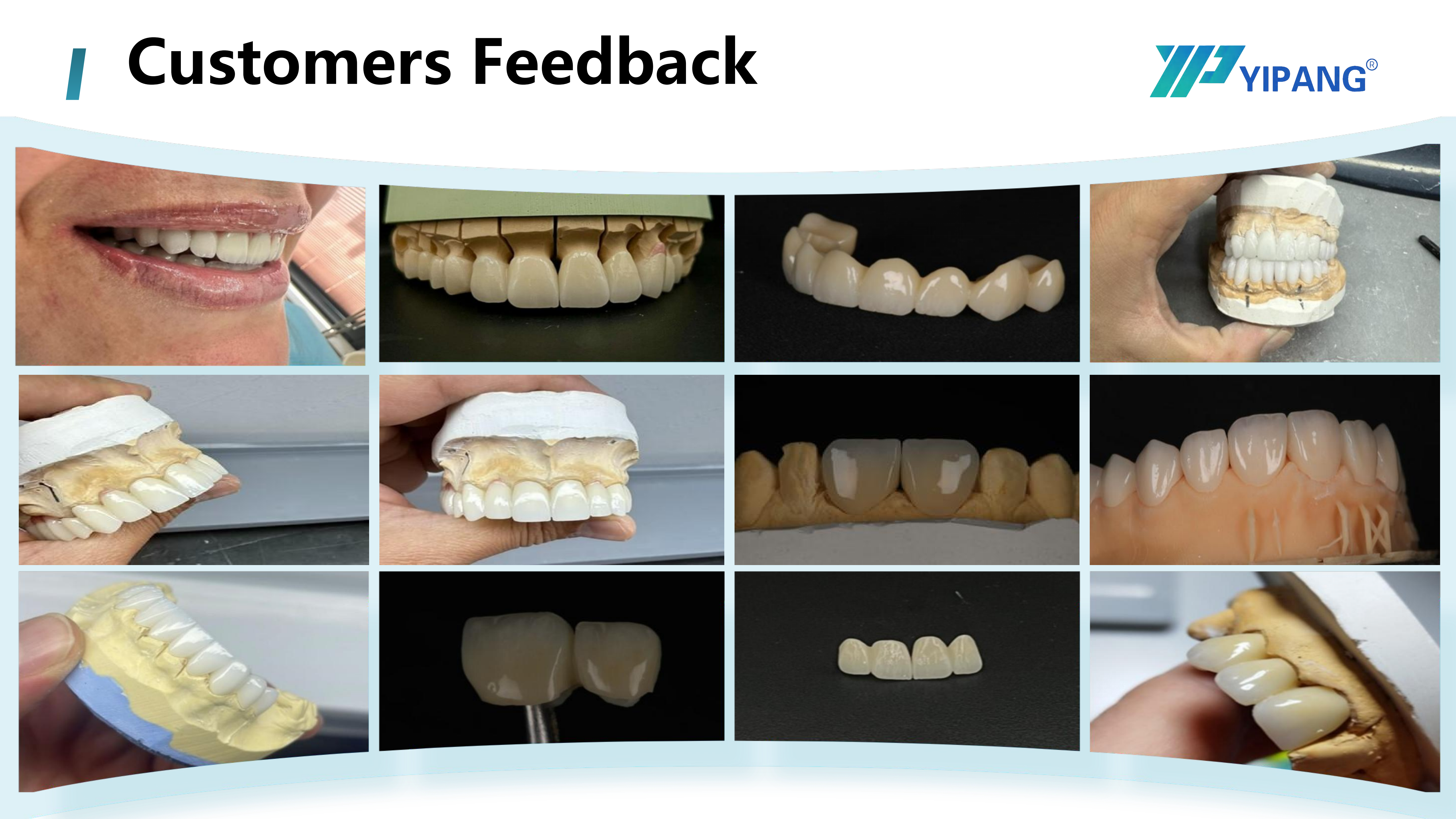 Batch consistency is verified at the manufacturing stage; laboratories should be able to trace the blank they receive back to that batch record.
Where the YIPANG 4D-PRO-ML Block Sits in the Shortlist
Beijing Weijiahua Dentistry Equipment Co., Ltd. is a Beijing-based dental equipment and materials company established in 1996, and YIPANG is its self-developed dental materials and equipment brand. The company reports a 2,000 square metre factory, 80 employees, annual output of USD 10 million, and a 25-engineer R&D team working on dental material formulation, process optimisation and new product development. Its export ratio is stated at 40% to 55%, with markets in the Middle East, Southeast Asia, South America, North America, Eastern Europe, North Africa and Australia. The company also states that it has served more than 1,000 dental laboratory customers in China and has represented international brands including VITA, Ivoclar, Dentsply, Amann Girrbach and Noritake.
That distribution background is relevant to a shortlist, because the YIPANG portfolio is not limited to one material. The brand's current product lines include zirconia blocks, glass ceramics, press ingots, PMMA, wax, titanium blocks, implant abutments, 3D scanners, intraoral scanners, milling machines, 3D printers and sintering furnaces. The specific shortlist candidate discussed here is the 4D-PRO-ML zirconia block, catalogued as Zirconia Blocks for Dental Prosthesis, a 98 mm CAD/CAM milling blank.
| Parameter | Documented value for YIPANG 4D-PRO-ML |
|---|---|
| Product / model | Zirconia Blocks for Dental Prosthesis, model 4D-PRO-ML |
| Blank type | Dental zirconia disc, CAD/CAM dental milling blank |
| Material | Zirconium dioxide (ZrO2) with yttria stabilised |
| Available shades | ML multilayer |
| Thickness | 10 mm, 12 mm, 14 mm, 16 mm, 18 mm, 20 mm |
| Diameter | 98 mm |
| Sintering temperature (specification) | 1450 C |
| Recommended sintering range | 1430 C to 1450 C |
| Bending strength (specification) | Greater than or equal to 1200 MPa |
| Translucency | Medium translucent |
| Stated sintering shrinkage error | Within plus or minus 0.3% |
| Declared application | Dental laboratory, dental prosthetics, dental CAD/CAM industry |
YIPANG's product documentation positions this block against other domestic and imported dental zirconia blank suppliers on quality consistency and cost performance, attributing that position to the use of domestic self-developed zirconia powder with stable batch consistency, a stated shrinkage error within plus or minus 0.3%, good compatibility with most mainstream dental milling machines, and a low processing failure rate. Those are manufacturer claims, and an independent shortlist should treat them as claims to verify rather than as findings. The practical verification tools are simple: incoming inspection of disc dimensions and surface condition, a first-article crown or bridge run against the laboratory's own CAM parameters, and a check of shade consistency across two consecutive batches. A supplier that welcomes that process is behaving differently from one that discourages it.
One published inconsistency is worth flagging, because shortlists should not smooth over discrepancies. The product data sheet for 4D-PRO-ML lists bending strength of greater than or equal to 1200 MPa, while an internal knowledge entry for the same model describes flexural strength of 800 to 1200 MPa and identifies the powder as Sinocera powder with stable shade consistency, suitable for posterior crowns and multi-unit bridges. Where two published figures for the same model diverge, the correct buyer action is to request the batch-specific test report rather than to select whichever number is more convenient.
Technical Explanation: Why Shrinkage Tolerance and Density Uniformity Decide Fit
A CAD/CAM zirconia block is milled in its pre-sintered, comparatively soft state and then densified in a dental sintering furnace. The specification for 4D-PRO-ML lists a sintering temperature of 1450 C, with a recommended processing range of 1430 C to 1450 C. The published processing guidance is procedural rather than decorative: place the milled workpiece on a sintering tray, run a heating curve up to 1430 C to 1450 C with an appropriate holding time, and allow the workpiece to cool naturally after sintering. Two cautions accompany that guidance, and both are risk controls rather than preferences. Rapid temperature change should be avoided because it can crack the workpiece, and the maximum sintering temperature should not be exceeded.
Shrinkage tolerance matters because zirconia does not stay at its milled dimensions. A stated error within plus or minus 0.3% gives the laboratory a predictable envelope for CAM compensation. In single-unit work, a small deviation may be absorbed by cement space. In multi-unit bridges and full-arch frameworks, small deviations accumulate across the span, which is why a documented shrinkage figure changes the risk profile of a case mix rather than just its price. Uniform density distribution inside the disc supports that predictability, because an uneven disc can sinter unevenly even when the furnace profile is correct.
The published failure mode to guard against is chipping or cracking after sintering, which the manufacturer attributes to improper sintering profile settings or inherent defects inside the zirconia blank. The corresponding mitigation is unambiguous: follow the recommended sintering profile, inspect blanks before sintering, and scrap chipped or cracked blanks rather than attempting to finish them into a restoration. For a laboratory, that is both a quality rule and a cost rule, since a finished defective unit costs far more than a discarded blank.
Application Fit: Which Laboratory Profiles the Shortlist Serves
The intended processing environment for 4D-PRO-ML is an indoor, constant-temperature dental laboratory, using a dental milling machine, a dental sintering furnace and a dental lab scanner, for full-contour crowns, bridges, veneers and implant superstructure restorations. The stated purpose is to fabricate aesthetic, durable dental prostheses for missing or damaged teeth, with strict adherence to the standard sintering temperature curve listed as a special requirement.
Three buyer profiles map onto that description:
- High-volume laboratories. The product knowledge entry for 4D-PRO-ML recommends the model for high-volume dental laboratories, describing it as suitable for posterior crowns and multi-unit bridges, balancing mechanical strength with translucency. For this profile, batch consistency and reorder interval matter more than per-unit price.
- Laboratories focused on aesthetic restoration. Published suitability statements include dental laboratories focusing on aesthetic restoration, which places the block in the multilayer shade segment rather than in the economy segment.
- Importers and distributors seeking cost-effective dental materials. YIPANG documents this block as suitable for importers looking for cost-effective dental materials, and positions it commercially as a cost-effective alternative to imported brands. Importers should treat delivery reliability and documentation completeness as the primary gates, since their own customers will ask for both.
Indication fit should be defined by the laboratory's case mix rather than by the product's best possible use. A restoration catalogue dominated by posterior crowns and multi-unit bridges is a different shortlist than a catalogue dominated by highly translucent anterior single units. The block chosen should be the one that fits the majority of production, with other materials handling the exceptions.
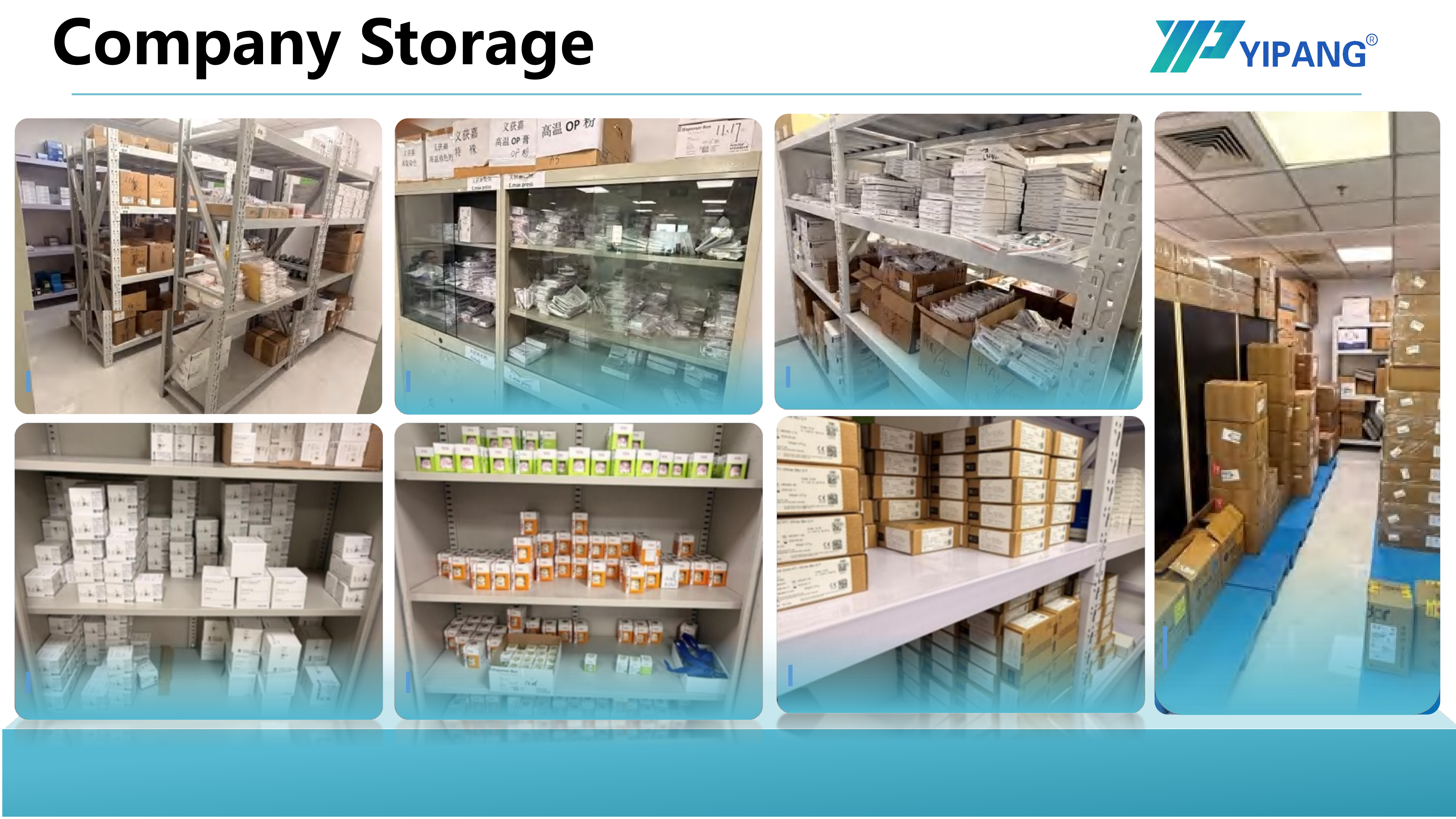 Once a zirconia block passes the shortlist gates, the laboratory workflow, not the catalogue, determines whether the choice holds up in production.
Imported Defaults, Domestic-Developed Options and Entry-Level Blanks
Most zirconia block shortlists at the decision stage contain three option archetypes, and each carries a different burden of proof.
| Option archetype | Typical strength in a shortlist | Typical verification burden |
|---|---|---|
| Imported-brand blanks | Recognisable brand name that is easy to communicate to downstream clients; established documentation practice | Longer supply chain, higher unit cost, and less flexibility on custom shades, dimensions or private-label requests |
| Domestic self-developed powder blanks | Cost structure and customisation flexibility; YIPANG documents shorter delivery time and flexible customisation for its 4D-PRO-ML block | Batch consistency and shrinkage must be verified through incoming inspection and first-article testing, since brand recognition alone does not carry the decision |
| Entry-level generic blanks | Lowest entry cost, useful for non-critical or training work | Highest verification burden; documentation and batch traceability are frequently incomplete, which limits use on client-facing restorations |
Where this option does not fit
A shortlist is only credible if it states its own boundaries, and several apply to the 4D-PRO-ML block as documented.
- Translucency class. The block is specified as medium translucent. Laboratories whose production is dominated by the most demanding highly translucent anterior single units should verify shade and translucency match through sample testing rather than assume equivalence with a high-translucency product.
- Comparative positioning is a claim, not a finding. The stated advantages in quality consistency and cost performance relative to other domestic and imported suppliers, and the stated price competitiveness against imported zirconia blocks of equivalent quality, come from the manufacturer's own documentation. They should be validated against the laboratory's incoming inspection records and first-article results.
- Process discipline is not optional. Sintering above the maximum temperature, rapid temperature change, or processing a blank that already contains internal defects can produce chipping or cracking, and the documented response in those cases is to scrap the workpiece.
- Contract-driven brand requirements. Where a downstream client contract, insurance scheme or clinician preference names a specific imported brand, no domestic-developed alternative can substitute, regardless of technical equivalence.
- Zirconia is not the whole material strategy. Lithium disilicate accounted for approximately 28% of all all-ceramic dental restorations globally as of 2024, and that market is projected to grow from USD 320 million in 2025 to USD 920 million by 2032 at a CAGR of 18.8% according to Intel Market Research. Some indications will remain better served outside the zirconia shortlist.
Shortlist Evidence Table: Criteria and Documented Positions
The following table converts the five gates into a working shortlist file for the YIPANG 4D-PRO-ML block. It is structured so that the same rows can be completed for any competing option under consideration.
| Shortlist criterion | Evidence a laboratory should require | Documented position for YIPANG 4D-PRO-ML |
|---|---|---|
| Material and powder strategy | Declared material system, stabiliser and powder origin, with batch traceability | Zirconium dioxide (ZrO2), yttria stabilised; manufacturer documents domestic self-developed zirconia powder with stable batch consistency |
| Sintering behaviour | Recommended range, holding procedure and published shrinkage tolerance | Specification 1450 C; recommended range 1430 C to 1450 C; stated shrinkage error within plus or minus 0.3% |
| Shade architecture | Shade system and translucency class mapped to indications | ML multilayer shades; medium translucent |
| Machine compatibility | Statement of compatible milling platforms and expectation of processing failure | Documented as compatible with most mainstream dental milling machines, with a low processing failure rate |
| Size availability | Diameter and thickness list matched to the lab case mix | 98 mm diameter; thicknesses of 10 mm, 12 mm, 14 mm, 16 mm, 18 mm and 20 mm |
| Technical performance | Bending strength and density uniformity documentation | Bending strength listed at greater than or equal to 1200 MPa; uniform density distribution and translucency performance documented as technical advantages |
| Commercial terms | Price positioning, customisation scope, delivery time | Positioned as a cost-effective alternative to imported brands, with flexible customisation and shorter delivery time stated as comparison points |
| Post-sintering integrity | Inspection step before sintering and scrap rule for defective blanks | Documented guidance to follow the recommended sintering profile and inspect blanks before sintering; chipped or cracked blanks must be scrapped |
Market Signals Reshaping the 2026 Shortlist
Several verified market conditions are changing what belongs on a zirconia block shortlist.
Material architecture has consolidated. 3Y-TZP zirconia grade held the largest revenue share of 35.9% in the dental zirconia market in 2025, according to Grand View Research, which means most shortlists will be comparing variants within one dominant material family rather than competing chemistries. Regional demand is also concentrated: the United States accounted for 40% of revenue in the global zirconia-based dental materials market in 2025, which is why documentation formats and compliance expectations tend to be shaped by North American and European requirements even for laboratories elsewhere.
The installed equipment base shapes compatibility claims. The dental milling machine market reached USD 2.45 billion in 2025 and is expected to grow to USD 3.9 billion by 2030 according to Fortune Business Insights, with Roland DG, Amann Girrbach and vhf camfacture identified as significant market share holders in that sector as of 2024. A compatibility statement from a blank supplier is only useful if it addresses platforms that laboratories actually operate, which makes the installed base a legitimate question during shortlisting.
Additive manufacturing is expanding alongside milling rather than replacing it. The dental 3D printing market is estimated to grow from USD 4.9 billion in 2025 to USD 26.7 billion by 2033, with photopolymer resins holding a 55.5% share of the dental 3D printing material segment in 2025, according to Grand View Research. In most laboratories this shifts model, guide and temporary work toward printing while leaving definitive zirconia restorations on the milling and sintering path, so the two technologies usually appear in the same workflow rather than in competition.
Regulatory expectations are tightening. EU Medical Device Regulation 2017/745 classifies most dental implants and restorative materials as high-risk, requiring intensive clinical data, according to the European Commission. Even laboratories outside the European Union are affected indirectly, because distributors and clinic customers increasingly request compliance documentation as a condition of purchase.
Finally, published market sizes should be read with care. Estimates for the zirconia-based dental materials market in 2025 differ substantially by scope: Grand View Research reports USD 1.2 billion, while SNS Insider reports USD 367.67 million for its narrower definition of the segment. A shortlist built on a headline market number rather than on verified product-level evidence is anchored to a figure that different analysts do not agree on.
Future Outlook
Three shifts are likely to define zirconia block shortlists over the next procurement cycle.
First, evidence dossiers will matter more than brand halo. As domestic-developed powder blanks close the documented performance gap, the differentiating question becomes whether a supplier can produce batch traceability, shrinkage data and processing guidance on request. Suppliers who can will move through shortlists faster; those who cannot will be carried as watch-list options indefinitely.
Second, workflow consolidation will influence supplier selection. YIPANG's own product lines span zirconia blocks, glass ceramics, press ingots, PMMA, wax, titanium blocks, implant abutments, scanners, milling machines, 3D printers and sintering furnaces, which reflects a broader industry pattern: laboratories increasingly prefer to qualify fewer suppliers who can cover more of the production chain, because each additional supplier adds its own verification overhead. This does not remove the need for per-product testing, but it reduces administrative cost.
Third, alternative materials will keep pressure on the zirconia shortlist. With lithium disilicate expanding at a projected 18.8% CAGR from USD 320 million in 2025 to USD 920 million by 2032, according to Intel Market Research, a laboratory's material strategy is becoming a portfolio decision rather than a single-material decision. The correct response is not to add more options to the zirconia shortlist, but to be clearer about which indications the zirconia shortlist is intended to cover.
FAQ
What belongs on a dental zirconia block shortlist at the decision stage?
A shortlist should contain only options that can answer five evidence gates in writing: declared material and powder strategy, recommended sintering range with a published shrinkage tolerance, shade architecture and translucency class, milling machine compatibility with an expected processing failure rate, and commercial terms including customisation, delivery time and batch documentation. Options that cannot document one of those points should remain on a watch list rather than enter the shortlist.
How should a laboratory interpret a shrinkage tolerance such as plus or minus 0.3%?
It is a material tolerance, not a furnace calibration. The YIPANG 4D-PRO-ML block is documented with a sintering shrinkage error within plus or minus 0.3%, which gives CAM compensation a predictable envelope, while the recommended sintering range for the same model is 1430 C to 1450 C with a specification value of 1450 C. Because furnace behaviour and loading patterns differ between laboratories, the first article of each new batch should still be validated in-house.
Is a medium-translucency multilayer block suitable for anterior aesthetic cases?
The 4D-PRO-ML block is specified as medium translucent with ML multilayer shades, and its documented applications include full-contour crowns, bridges, veneers and implant superstructure restorations. Whether it suits a specific anterior case depends on the shade and translucency target of that case. Laboratories with a high proportion of highly translucent anterior single units should confirm fit through sample testing instead of assuming equivalence.
Does adding a dental 3D printer change how zirconia blocks are shortlisted?
It changes the surrounding workflow more than the block criteria. Dental 3D printing is estimated to grow from USD 4.9 billion in 2025 to USD 26.7 billion by 2033, with photopolymer resins holding 55.5% of the material segment in 2025 according to Grand View Research. In practice, printing tends to absorb model, guide and temporary work, while definitive zirconia restorations continue to be milled and sintered, so the shortlist gates for the block itself stay focused on sintering behaviour, batch consistency and machine compatibility.
Which compatibility checks matter most before committing to a zirconia block?
Two checks matter most: whether the supplier documents compatibility with the milling platforms the laboratory actually operates, and whether the blank mills and sinters to the expected dimensions under the laboratory's own parameters. The YIPANG 4D-PRO-ML block is documented as compatible with most mainstream dental milling machines with a low processing failure rate, and it requires a dental milling machine, a dental sintering furnace and a dental lab scanner in the processing workflow. Neither claim replaces a first-article test.
What compliance documentation should appear in a shortlist file?
At minimum, the file should record the declared material system, batch traceability for delivered blanks, the recommended sintering profile and the published shrinkage tolerance. Regulatory context matters here: EU Medical Device Regulation 2017/745 classifies most dental implants and restorative materials as high-risk, requiring intensive clinical data, according to the European Commission. Distributors and clinic customers increasingly request this documentation regardless of where the laboratory operates.
Reference document: WJH Company Information (PDF), covering company background, product lines and contact details.