
Dental Zirconia Block Supplier Continuity: A Multi-Year Framework
Zirconia discs accounted for 63.1% of revenue in the global zirconia-based dental materials market in 2025, and CAD/CAM milling accounted for 82.4% of process revenue in that same market (Grand View Research, 2025). For a milling center, those two figures describe one operational fact rather than two market facts: almost every case that leaves the production floor passes through a single blank format, a single shrinkage model and a single sintering program.
That concentration is the reason supplier selection deserves more than a sample-batch test. A Dental Zirconia Block is a CAD/CAM milling blank made of yttria-stabilized zirconium dioxide (ZrO₂), milled in its porous green state and then densified in a dental sintering furnace. YIPANG's 4D-PRO-ML blank, supplied by Beijing Weijiahua Dentistry Equipment Co., Ltd., is a multilayer (ML) disc in 98 mm diameter, specified at a sintering temperature of 1450℃ with a bending strength of ≥1200 MPa and medium translucency.
The multi-year question is narrower and harder than "does this block mill well?" It is whether the supplier behind the block can still deliver the same sintering behaviour, the same dimensional tolerance and the same specification depth on the tenth order as on the first — and whether the lab has written evidence when it does not.
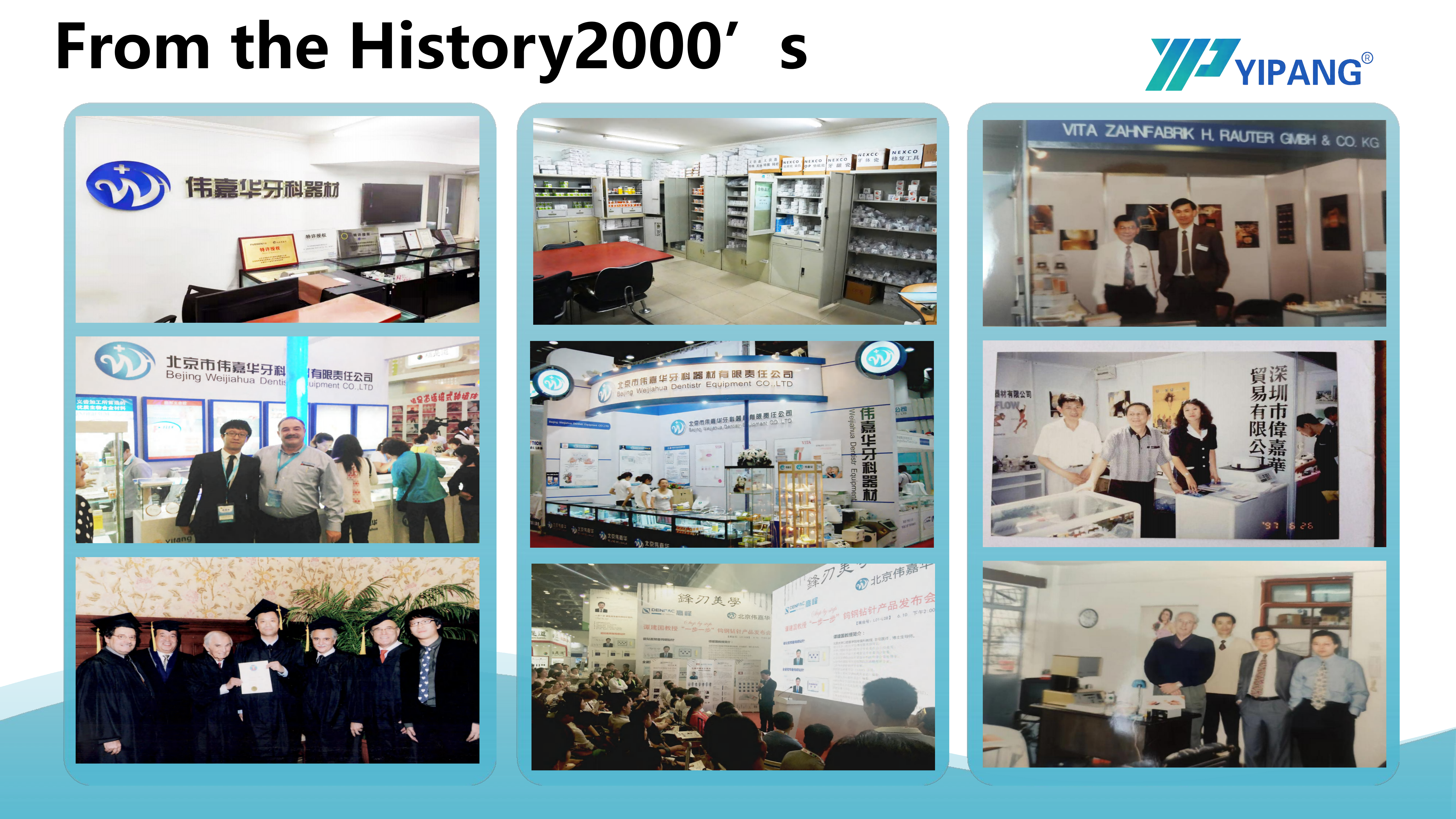
Supplier continuity is reviewed as an operating agreement, not a one-off purchase: sintering program, batch records, capacity and acceptance criteria are examined together.
The Continuity Gap: What a Sample Batch Cannot Show
Dental laboratories remain the dominant end user of zirconia materials, holding 45.3% of market share in 2025 (Grand View Research). A laboratory or milling center in that group typically standardizes on one or two blanks because every change downstream is expensive: CAM compensation files, nesting rules, sintering tray loading, shrinkage allowance and even the technician's sense of how a crown seats.
Continuity failures rarely arrive as a dramatic defect. They arrive as drift. A reformulated powder batch shifts sintered shrinkage by a fraction of a millimetre and marginal gaps widen across a full-arch case. A thickness disappears from the catalogue and a bridge project has to be re-nested onto a second supplier's blank with a different shrinkage value. Lead time stretches beyond the published window during a peak season. A technical contact changes and a sintering question takes two weeks to answer.
None of these appear in a first-order evaluation, and all of them are measurable in advance if the buyer defines the right checks before signing. That is the purpose of the framework below.
A Seven-Point Multi-Year Evaluation Framework
The framework treats a zirconia block supplier as a production input with four moving parts: the material, the sintering contract, the commercial terms and the support channel. Each check below is designed to be re-run annually rather than answered once.
| Evaluation dimension | What to verify over multiple years | Failure mode if skipped |
|---|---|---|
| Sintering program compatibility | Declared sintering temperature, the actual heating and holding program, and whether that curve has been validated on your furnace | Cracking or incomplete densification when a furnace is calibrated to a different peak |
| Shrinkage and dimensional behaviour | Batch-to-batch consistency of sintered shrinkage against a fixed test geometry | Marginal gaps widen and remake rates rise without an identifiable cause |
| Specification depth | Continuous availability of thicknesses, shades and translucency grade that match your case mix | Volume splits across suppliers, doubling qualification cost |
| Equipment compatibility | Confirmation against your milling machine, burs, CAM strategy, scanner and furnace | Chipping and tool wear wrongly attributed to the material |
| Purchasing terms | MOQ, lead time, monthly capacity and customization scope reviewed at each renewal | Stock-outs in peak season; unfavourable renegotiation |
| Acceptance criteria | A written incoming inspection protocol and retrievable quality records | Disputes settled without evidence; slow drift goes unnoticed |
| Technical support | Response time and escalation path when a sintering or fit problem appears | Weeks of production uncertainty during a single incident |
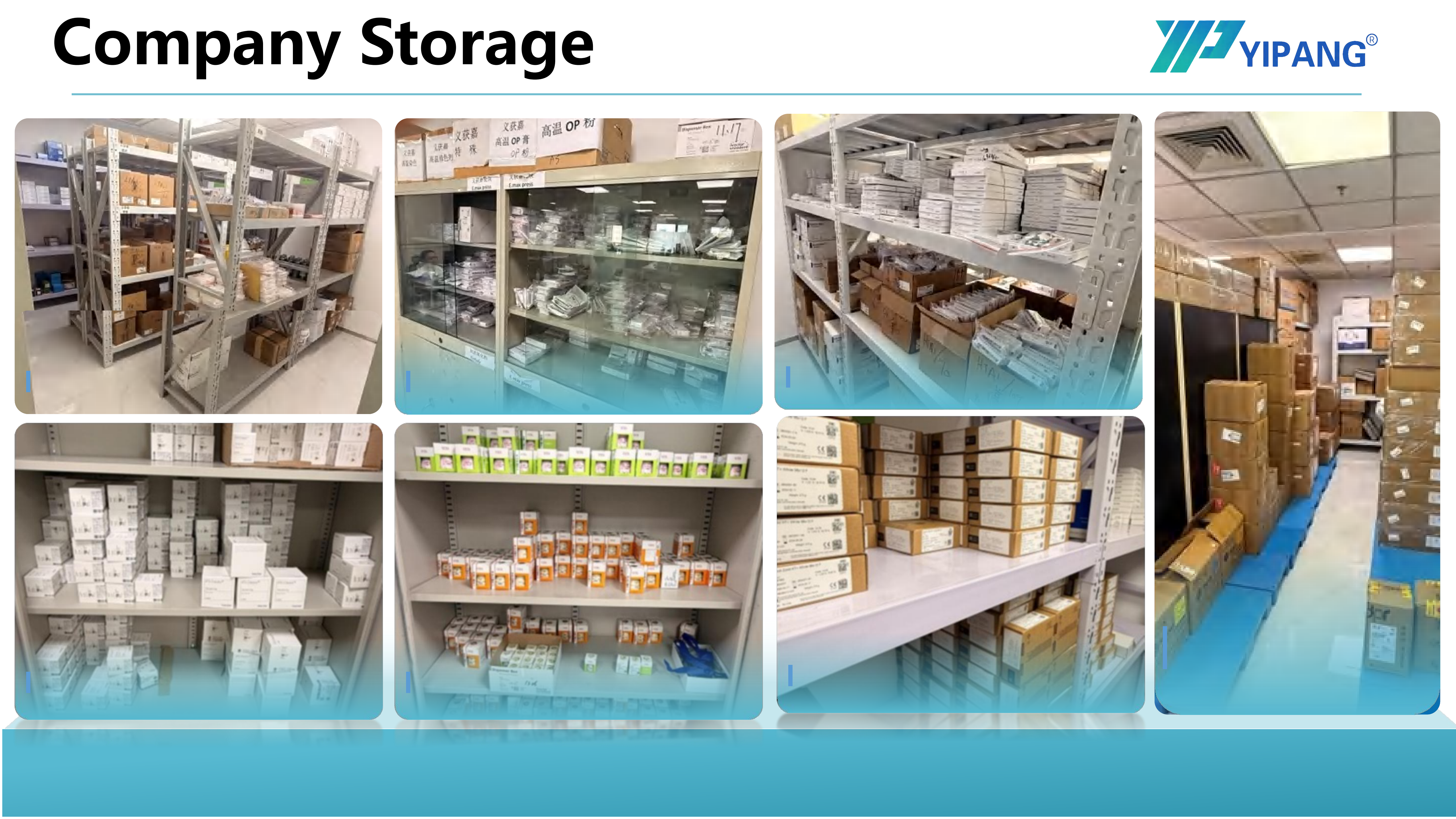
A continuity review compares the supplier's declared parameters with the lab's own recorded sintering and milling data.
Check 1: The Sintering Curve Is a Shared Contract
The 4D-PRO-ML blank is specified at a sintering temperature of 1450℃. Supplier guidance for the same blank gives a recommended sintering range of 1430℃–1450℃ and requires a standard heating and holding procedure in order to preserve low shrinkage and stable translucency. Two safety conditions accompany that guidance: avoid rapid temperature changes to prevent cracking, and do not exceed the maximum sintering temperature.
Read that as a contract between the blank and the furnace rather than a product footnote. The application scenario for this material is defined by an indoor, constant-temperature dental laboratory environment in which the block is processed by a dental milling machine and sintered in a dental sintering furnace, with the standard sintering temperature curve followed strictly during processing.
Over several years, a milling center should be able to answer three questions on paper: which furnace program is approved for the blank, when that program was last validated, and what the recorded outcome was. Furnaces age, heating elements are replaced, thermocouples drift and second furnaces are added during expansion. A supplier that can supply a stable curve and respond to a furnace qualification question is worth more than one that only ships boxes.
Check 2: Batch Behaviour and Shrinkage Consistency
Zirconia's commercial value in a milling center rests on predictable densification. The 4D-PRO-ML blank is described as having a low shrinkage rate after sintering and high dimensional accuracy, and case evidence collected from long-term users highlights uniform translucency, stable sintering shrinkage and compatibility with most CAD/CAM systems.
That evidence is only useful to a buyer if it is converted into a repeatable internal test. A practical protocol is a fixed test geometry — an anatomic crown or a defined bar — milled and sintered once per incoming lot, measured against a baseline established in the first months of use. The result is a trend line rather than a pass/fail opinion. Trend lines catch drift early, and drift is the specific risk that a multi-year zirconia supply decision is exposed to.
The supplier side of the same check is quality control coverage. Beijing Weijiahua Dentistry Equipment Co., Ltd. states 100% raw material inspection combined with finished product random inspection. Random final inspection is a meaningful control, but it is not a per-unit guarantee, which is precisely why the lab's own lot-level test still matters.
Check 3: Purchasing Terms and Acceptance Criteria That Survive Renewal
Continuity is a commercial property as much as a technical one. The relevant stated terms for this supplier are a monthly capacity of 15,000 pieces, a lead time of 15–30 working days, a negotiable small MOQ, OEM/ODM production and customization of almost all specifications.
Each of those numbers has a multi-year implication. A 15–30 working day lead time means a milling center needs a rolling buffer sized against its own case volume, not against the supplier's dispatch date. A monthly capacity figure is only meaningful when the buyer knows what share of it they represent and how that share behaves in a peak quarter. A negotiable MOQ is valuable at the start of a relationship, but the buyer should confirm in writing that it stays negotiable after the first year, when the trial pricing conversation is over.
Acceptance criteria belong in the same document. A workable clause specifies sampling size per lot, the dimensional check method, the sintering test geometry, the acceptable tolerance band and the remedy when a lot falls outside it. Labs that skip this step discover during a dispute that they have opinions rather than records.
Check 4: Equipment Support Across Milling Machine, Furnace and Scanner
The block does not operate alone. The stated application requires supporting equipment including a dental milling machine, a dental sintering furnace and a dental lab scanner, and the workflow is defined as scanner-to-milling followed by sintering.
Compatibility language deserves careful reading here. The blank is described as compatible with most mainstream dental milling machines — "most" is a boundary, not a universal claim. That matters because milling machine fleets are genuinely mixed: Roland DG, Amann Girrbach and vhf camfacture were identified as significant market share holders in the dental milling machine sector as of 2024 (Fortune Business Insights). A lab running two machine brands alongside a third-party CAM strategy should validate the blank on each machine rather than assume fleet-wide equivalence.
The support dimension of this check is response capability. The stated after-sales provision is online technical guidance with a problem response within 24 hours. For a milling center, the test is not the number itself but whether the escalation path reaches someone who can discuss sintering curves, bur selection and CAM compensation — a question worth asking directly before a multi-year commitment.
What the 4D-PRO-ML Blank Provides
YIPANG is the self-developed brand of Beijing Weijiahua Dentistry Equipment Co., Ltd., a Beijing-based dental equipment manufacturer and distributor serving dental laboratories, clinics and distributors. The company operates a 2,000 ㎡ facility with 80 employees, a 25-engineer R&D team focused on dental material formulation, process optimization and new product development, and reports an export ratio of 40%–55% across the Middle East, Southeast Asia, South America, North America, Eastern Europe, North Africa and Australia. It also states more than 1,000 dental laboratory customers in China and long-standing representation of international brands including VITA, Ivoclar, Dentsply, Amann Girrbach and Noritake.
Within that portfolio, Zirconia Blocks for Dental Prosthesis — model 4D-PRO-ML — is positioned as a multilayer CAD/CAM blank for crown, bridge, veneer and implant superstructure work.
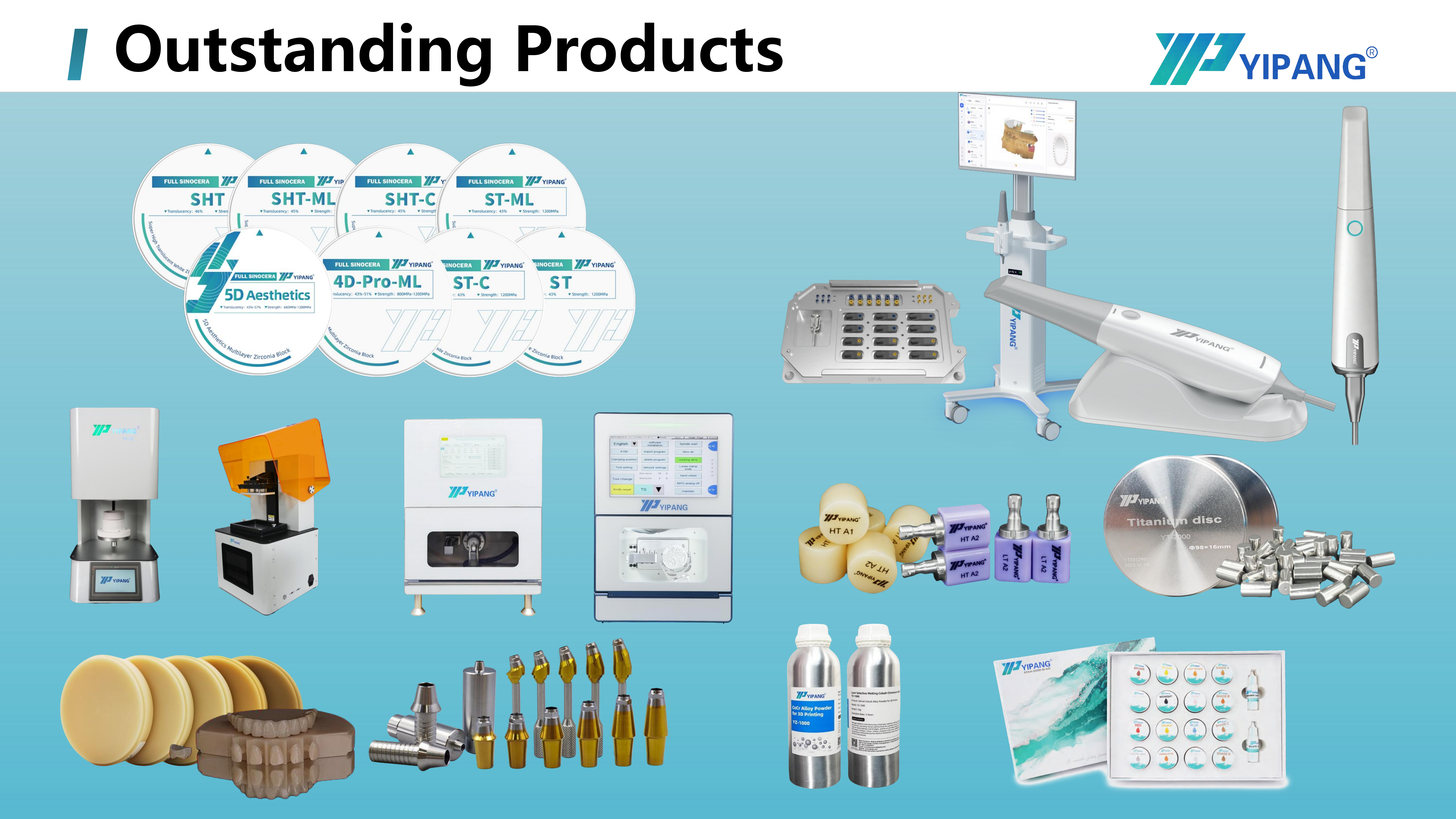
4D-PRO-ML multilayer zirconia discs: 98 mm diameter, thicknesses from 10 mm to 20 mm, medium translucency.
| Product | Zirconia Blocks for Dental Prosthesis |
| Model | 4D-PRO-ML |
| Type | Dental zirconia disc, CAD/CAM dental milling blank |
| Material | Zirconium dioxide (ZrO₂) with yttria stabilized |
| Available shades | ML Multilayer |
| Diameter and thickness | 98 mm; 10 mm, 12 mm, 14 mm, 16 mm, 18 mm, 20 mm |
| Sintering temperature | 1450℃ specified; recommended processing range 1430℃–1450℃ |
| Bending strength | ≥1200 MPa |
| Translucency | Medium translucent |
| Intended restorations | Full-contour crowns, bridges, veneers and implant superstructure restorations |
Where the Block Fits: Four Buyer Scenarios
Scenario fit is the part of supplier continuity that most often gets decided informally. The application data for this material places it in high-volume milling and high-volume sintering workflows, in dental CAD/CAM milling laboratories, and in digital dental laboratory projects that run scanner-to-milling processes.
High-volume milling centers. The relevant constraint is throughput stability. A blank that is compatible with most mainstream milling machines and holds a consistent shrinkage value reduces the frequency of re-nesting and re-milling. The 98 mm diameter and six available thicknesses from 10 mm to 20 mm allow a center to standardize disc stocking around its dominant case sizes instead of holding an excessive spread of formats.
Implant abutment laboratories. Abutment and implant-supported workflows are less forgiving of dimensional variation. The stated use covers implant abutment laboratories, implant-supported crowns, edentulous scanbody kit workflows and full-arch implant restorations. In these settings, batch consistency is not a purchasing nicety; it is the difference between a seating adjustment and a remake.
Digital and chairside restoration workflows. Chairside and clinic-adjacent production depends on the same scanner-to-milling sequence, with finishing handled through glaze paste, staining glaze and polishing steps. A block that behaves predictably after sintering protects the chairside appointment schedule, where a remake cannot be absorbed quietly into a weekly batch.
Distributor product lines. Distributors carrying zirconia alongside PMMA discs, PEEK discs, lithium disilicate glass ceramics, press ingots, titanium alloy discs and milling burs are exposed to continuity risk in a different way: their customers buy the whole shelf, not one SKU. A supplier that can customize almost all specifications under OEM/ODM terms and maintain a 15,000-piece monthly capacity gives a distributor room to build a coherent line rather than a patchwork of sources.
Market Trend Analysis: Why Continuity Is Becoming a Harder Problem
The zirconia-based dental materials market was valued at USD 1.2 billion in 2025 and is projected to reach USD 2.3 billion by 2033 (Grand View Research). Growth of that scale increases the number of suppliers, the number of formulations and the number of claims a laboratory has to filter — which raises the value of a documented, repeatable evaluation process rather than lowering it.
Three structural signals are worth tracking. First, material concentration: the 3Y-TZP zirconia grade held the largest revenue share at 35.9% in 2025, indicating that most of the market still buys a well-understood grade rather than a specialized formulation. Second, geographic concentration: the U.S. accounts for 40% of revenue in the global zirconia-based dental materials market, so supply decisions made for North American customers tend to set the compatibility and documentation baseline for everyone else. Third, equipment expansion: the dental milling machine market reached USD 2.45 billion in 2025 with expected growth to USD 3.9 billion by 2030 (Fortune Business Insights), meaning more labs will run multi-machine fleets — and more labs will need blanks validated across those fleets.
Compliance is the fourth signal. Under EU Medical Device Regulation (MDR 2017/745), most dental implants and restorative materials fall into higher-risk classes that require intensive clinical data (European Commission). For a milling center, that translates into a documentation expectation that extends to the materials it processes, not only to the devices it delivers.
One caution belongs here. Published market-size figures diverge materially: Grand View Research estimates the 2025 zirconia-based dental materials market at USD 1.2 billion, while SNS Insider estimates USD 367.67 million, because the two sources define scope differently. Buyers should treat any single figure as directional and use it for planning context, not for procurement decisions.
Comparison With Traditional Sourcing and Its Limits
The conventional alternative to a multi-year framework is not a different material — it is a different sourcing habit: rotating suppliers to capture price, keeping two or three blanks in parallel, and qualifying replacements reactively when something fails. That habit has real advantages. It applies price pressure continuously, it avoids dependence on a single factory, and it keeps a lab aware of how other blanks behave.
The trade-off is measurement cost. Every additional blank in rotation multiplies CAM compensation work, sintering program validation and lot testing. At a 15–30 working day lead time, a reactive rotation strategy also has a thin margin for error during demand peaks. The framework described in this article is therefore not inherently superior; it is a better fit for labs whose case mix is stable and whose volumes justify the qualification effort, and a poorer fit for small laboratories that cannot absorb the validation workload.
Material-level limits deserve the same honesty. 4D-PRO-ML is a medium translucent multilayer zirconia. In the high-esthetic anterior zone, laboratories may still prefer a higher-translucency ceramic or a lithium disilicate route — a material that accounted for approximately 28% of all all-ceramic dental restorations globally as of 2024 (Business Research Insights) and remains a legitimate alternative for specific indications rather than a competitor to be displaced.
Known boundaries of this supplier's position
- Translucency is rated medium. Cases demanding maximum light transmission need a different grade.
- The sintering specification requires a standard curve within 1430℃–1450℃ and forbids rapid temperature change; furnaces programmed to a different peak must be re-qualified first.
- Compatibility is stated for most mainstream milling machines, not all. Local validation on each machine, bur set and CAM strategy is still required.
- A 15–30 working day lead time and monthly capacity of 15,000 pieces require buffer planning; this is not a same-week replenishment model.
- Final quality control is described as finished product random inspection, so incoming lot sampling remains the buyer's responsibility.
- No certification scope, test report or regulatory classification for the block is asserted in this article; buyers should request those documents directly.
Future Outlook
The next several years are likely to reward laboratories that treat zirconia supply as an engineering agreement rather than a purchasing transaction. As milling capacity grows and machine fleets diversify, the differentiating capability among suppliers will be documentation quality: a stable declared sintering curve, retrievable batch records, honest compatibility statements and a technical response channel that reaches someone who understands the furnace.
For milling centers, the practical implication is a calendar entry rather than a purchase order. Re-running the seven checks annually — with the lab's own shrinkage data in hand — converts supplier continuity from an assumption into a measurable property, and gives the lab a defensible basis for renewal, renegotiation or replacement when the numbers change.
FAQ
What sintering temperature should a milling center program for the 4D-PRO-ML zirconia block?
The recommended sintering temperature range is 1430℃–1450℃, with 1450℃ listed as the specified sintering temperature. A standard heating and holding procedure should be followed to maintain low shrinkage and stable translucency. Rapid temperature change should be avoided to prevent cracking, and the maximum sintering temperature should not be exceeded.
Which restoration types and laboratory scenarios is this zirconia block intended for?
It is intended for full-contour crowns, bridges, veneers and implant superstructure restorations, and is additionally used in high-volume milling and sintering workflows, dental CAD/CAM milling laboratories, implant abutment laboratories, edentulous scanbody kit workflows, full-arch implant restorations and mixed-material projects that also involve PMMA discs, PEEK discs and lithium disilicate glass ceramics.
How can a laboratory test batch-to-batch continuity before committing to multi-year supply?
By converting the supplier's stated properties into an internal protocol. Long-term user evidence for this product highlights uniform translucency, stable sintering shrinkage and compatibility with most CAD/CAM systems; a laboratory should verify those properties itself by milling a fixed test geometry from each incoming lot, sintering it under the approved curve, and measuring the result against a baseline. Supplier quality control is described as 100% raw material inspection plus finished product random inspection, which supports but does not replace lot-level incoming testing.
What purchasing terms matter most for continuous zirconia supply?
The stated terms are a monthly capacity of 15,000 pieces, a lead time of 15–30 working days, a negotiable small MOQ, and OEM/ODM production in which almost all specifications can be customized. For a multi-year agreement, each of these should be written into the contract with a review clause, because MOQ flexibility and capacity allocation are the terms most likely to change once a trial period ends.
Which equipment does the block require, and where does compatibility end?
The stated application requires a dental milling machine, a dental sintering furnace and a dental lab scanner, with the block processed on the milling machine and densified in the furnace under the standard sintering temperature curve. Compatibility is described as covering most mainstream dental milling machines, so a laboratory running more than one machine brand should validate the blank on each machine and CAM strategy rather than assume fleet-wide equivalence.
What are the limitations of a medium-translucent multilayer zirconia?
Translucency is specified as medium translucent in the ML Multilayer shade range. That grade suits full-contour crowns, bridges, veneers and implant superstructures in a wide range of cases, but the high-esthetic anterior zone may still call for a higher-translucency ceramic or a lithium disilicate route. The specification also ties performance to the standard sintering curve, so results depend on furnace qualification as much as on the blank itself.
Reference Material
Company and product information for Beijing Weijiahua Dentistry Equipment Co., Ltd. and the YIPANG brand is available in the public company brochure: WJH Company Information (PDF). Product details are published at www.yipangdental.com.
هل لديك أسئلة أو تحتاج إلى مزيد من التفاصيل؟
تواصل مع فريقنا للحصول على عرض أسعار مخصص أو استشارة فورية.
طلب عرض أسعار
املأ النموذج أدناه وسيتواصل معك فريقنا بعرض مقترح مخصص.
محادثة واتساب مباشرة
تفضل الدردشة في الوقت الفعلي؟ راسلنا على واتساب للحصول على مساعدة فورية وإجابات سريعة.
- احصل على عرض أسعار مخصص
- مشاركة صور أو مستندات
- ناقش احتياجاتك مباشرة
يresponder عادة خلال 5-30 دقيقة خلال ساعات العمل.