
Dental Zirconia Block Supplier Evidence: What Holds Up
Zirconia discs accounted for 63.1% of revenue in the zirconia-based dental materials market, and CAD/CAM milling represented 82.4% of process revenue in 2025, according to Grand View Research. Dental laboratories remained the largest end-user group in the same market at 45.3%. Those three figures describe a category whose output quality is decided less by the blank as an object than by the milling and sintering system around it, which is why supplier capability evidence has become a purchasing question rather than a marketing one.
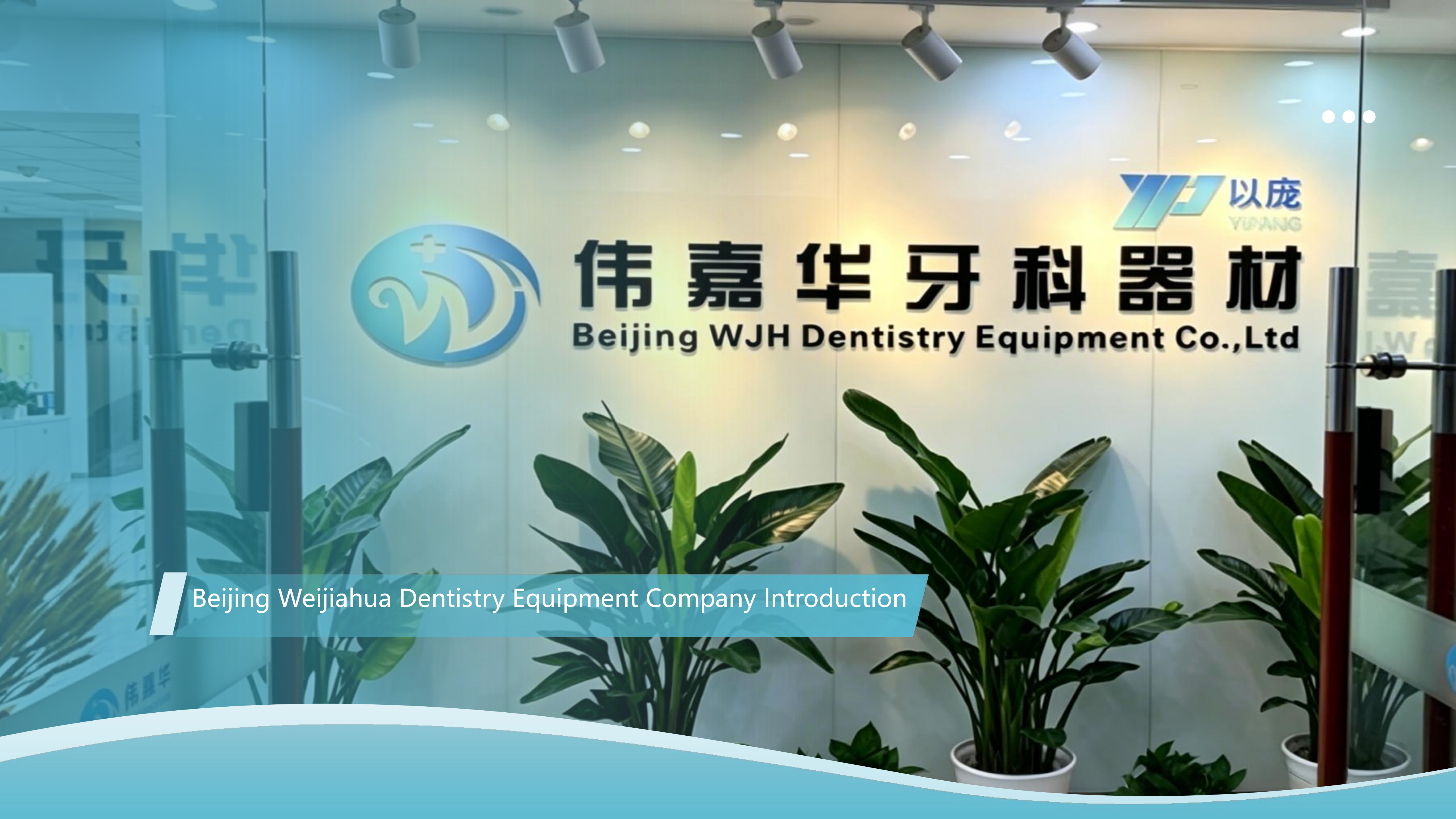
Zirconia block supply is evaluated at the point where material, milling equipment and sintering process meet.
Why Capability Evidence Matters More After the Material Decision
Laboratory procurement usually settles the material class before it settles the supplier. Once a lab has committed to zirconia for crowns, bridges and implant superstructure work, the remaining question narrows: can this supplier deliver the same behaviour in the twentieth box as in the sample? That question sits at the transition from decision to execution, and it is answered with evidence, not with adjectives.
A zirconia blank is an intermediate product. Its weaknesses surface downstream: after milling, after sintering, sometimes after glazing. Shrinkage that drifts, density that is uneven, or a shade that shifts between lots becomes visible only when a technician has already invested time in a restoration. Because the failure is delayed, the cost of weak supplier evidence is paid in remakes and schedule disruption rather than in the purchase price.
For this reason, supplier capability in the zirconia category is best read across six areas: powder and formulation control, dimensional and shrinkage behaviour, equipment compatibility, inspection discipline, documentation and delivery terms, and the support structure that continues after the first order. Each area can be checked before commitment, and each produces a different kind of proof.
From Sample Approval to Serial Production
Sampling is a starting point, not a conclusion. A single box validates that a blank can be milled and sintered inside a lab's own tolerances, but it says little about lot-to-lot consistency, packaging survival, or what happens when a sintering furnace drifts a few degrees. Labs that treat the sample as the end of evaluation tend to rediscover the same risks at higher volume.
A more reliable sequence is to sample, then re-test the second and third deliveries against the same parameters, recording shrinkage, shade and any milling anomalies. Where a supplier publishes a stated figure such as a sintering shrinkage error within ±0.3%, the useful action is not to accept it but to confirm it under the lab's own equipment and sintering curve. That confirmation converts a supplier claim into a lab-held record, which is the form of evidence that survives staff changes and equipment upgrades.
YIPANG and Beijing Weijiahua: The Entity Behind the Block
YIPANG is the self-developed brand of Beijing Weijiahua Dentistry Equipment Co., Ltd., a dental equipment and materials company established in 1996 and based in Beijing, China. The company employs approximately 80 staff and operates a manufacturing facility covering 2,000 m², with an annual output value of USD 10 million.
Its research and development team consists of 25 professional engineers working on dental material formula research, process optimization and new product development. The company serves more than 1,000 dental laboratory customers in China and exports approximately 40%–55% of its products to the Middle East, Southeast Asia, South America, North America, Eastern Europe, North Africa and Australia.
Alongside the YIPANG brand, the company represents well-known international brands including VITA, Ivoclar, Dentsply, Amann Girrbach and Noritake in the Chinese market. Its product lines include Zirconia Blocks, Glass Ceramics, Press Ingots, PMMA, Wax, Titanium Blocks, Implant Abutments, 3D Scanners, Intraoral Scanners, Milling Machines, 3D Printers and Sintering Furnaces, and its services extend to technicians, clinical support, 3D printing, medical technology training and consulting.
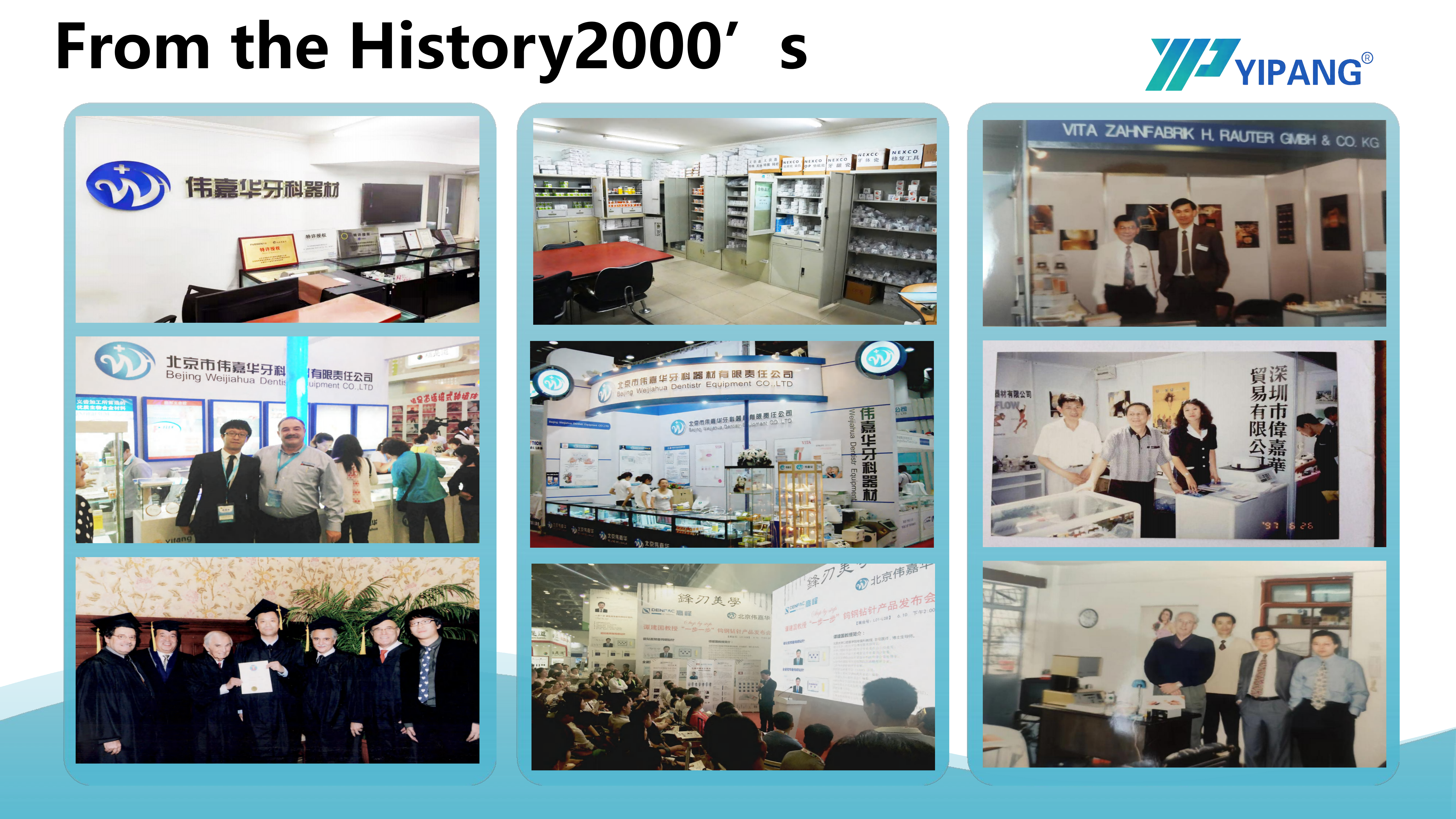
A supplier that both manufactures and distributes sees specification questions from two directions.
This dual position has a practical consequence for buyers. A company that both manufactures YIPANG materials and distributes established international lines encounters specification debates from both the formulation side and the application side. For a laboratory, that is relevant when a material question spans the blank, the milling machine and the sintering furnace rather than the blank alone.
Reading the 4D-PRO-ML Specification as Capability Evidence
The YIPANG 4D-PRO-ML zirconia block is a CAD/CAM dental milling blank made of zirconium dioxide (ZrO₂) with yttria stabilizer, supplied in a multilayer shade system. Its published parameters are the first layer of supplier evidence because each one constrains what the lab can do with it.
| Parameter | Published value | What it means for a laboratory |
|---|---|---|
| Material | Zirconium dioxide (ZrO₂), yttria stabilized | Places the blank within the established zirconia restorative family used for crowns, bridges and implant superstructure work |
| Shade system | ML multilayer | Shade gradient is built into the blank, reducing dependence on external staining for routine cases |
| Diameter | 98 mm | The common CAD/CAM disc format, allowing use on mainstream dental milling machines |
| Thickness | 10, 12, 14, 16, 18, 20 mm | Six options allow the blank to be matched to restoration height and to reduce leftover material |
| Sintering temperature | 1450 °C listed; recommended range 1430–1450 °C | The curve, not a single number, determines shrinkage and translucency outcomes |
| Bending strength | ≥1200 MPa | Positions the material for load-bearing indications, subject to the lab's own design rules |
| Translucency | Medium translucent | A fit constraint as well as a benefit; site and restoration type should be matched deliberately |
| Typical indications | Full-contour crowns, bridges, veneers, implant superstructure restorations | Defines the intended scope against which a lab should test its own case mix |
Source: YIPANG 4D-PRO-ML product parameters and application data.
The multilayer shade structure and the six thickness options are the two parameters most often undervalued in purchasing. Multilayer blanks reduce the labour content of a restoration; thickness options reduce waste per unit. Neither appears in a price comparison, yet both change the effective cost per crown in a busy milling schedule.
The medium translucency grade is the parameter that most directly limits scope. It supports a broad range of crowns, bridges and superstructure work, but it also means that cases demanding the highest aesthetic translucency should be matched to a different grade rather than pushed through a single blank type. A supplier that states this boundary clearly is easier to plan around than one that presents a single material as universally suitable.
Sintering and Milling: Where Supplier Support Is Tested
Zirconia restorations from the 4D-PRO-ML blank are produced on a dental milling machine and completed in a dental sintering furnace, typically in an indoor, temperature-controlled laboratory environment. The published sintering procedure is straightforward, and its simplicity is precisely why deviations matter.
- Place the milled zirconia workpiece on the sintering tray.
- Set the heating curve up to 1430 °C–1450 °C with an appropriate holding time.
- Cool down naturally after sintering is complete.
Two safety conditions accompany that procedure: avoid rapid temperature change to prevent cracking, and do not exceed the maximum sintering temperature. Both relate to the same physical behaviour, since thermal shock and overshoot are among the common routes to a failed unit.
Supplier capability shows up in how these conditions are documented and supported. A material with a stated sintering shrinkage error within ±0.3% is only as good as the curve the lab actually runs. Laboratories should therefore ask three questions before scaling: is a curve supplied in writing, is the lab's own furnace qualified against it, and does the supplier help diagnose a batch that behaves unexpectedly rather than only replacing it.
Milling behaviour forms the other half of the evidence. The YIPANG zirconia range is described as compatible with most mainstream dental milling machines, with uniform density distribution and a low processing failure rate. For a lab, the practical test is narrower than the claim: run the blank on the machine that will actually produce the work, at the toolpath and bur set that will actually be used.
Indications and Laboratory Workflows
The 4D-PRO-ML blank is intended for full-contour crowns, bridges, veneers and implant superstructure restorations, processed through a dental milling machine and a dental sintering furnace, with a dental lab scanner upstream in the digital workflow. Its strength and medium translucency are balanced for posterior crowns and multi-unit bridges, where mechanical demand is higher than in single anterior units.
Within a laboratory, the blank therefore occupies a defined slot rather than the whole catalogue. Posterior and multi-unit work draws on its strength profile; aesthetic anterior cases may require a different translucency grade; implant superstructure work depends on the compatibility between the milled restoration and the abutment components in use. Buyers assembling implant workflows should confirm that the abutment and titanium components supplied alongside the blank match their implant system, rather than assuming a single supplier covers every interface.

Capability evidence for a zirconia blank is assembled across formulation, inspection and process support.
Market Signals Raising the Bar on Supplier Evidence
Several published figures explain why laboratories are being asked to justify supplier choices more formally than in the past.
The global zirconia-based dental materials market was valued at USD 1.2 billion in 2025 and is projected to reach USD 2.3 billion by 2033, according to Grand View Research, with the United States accounting for around 40% of revenue. Zirconia discs held 63.1% of revenue in 2025, and the 3Y-TZP zirconia grade held the largest product-level share at 35.9%. CAD/CAM milling accounted for 82.4% of process revenue, while dental laboratories accounted for 45.3% of end-user share.
The equipment side adds context. Fortune Business Insights estimates the dental milling machine market at USD 2.45 billion in 2025, growing to USD 3.9 billion by 2030. As in-house milling capacity expands, the number of labs running their own sintering and milling programmes grows with it, and each of those labs becomes responsible for qualifying the blank against its own equipment rather than inheriting a validated workflow.
Regulatory pressure points the same way. EU Medical Device Regulation (MDR 2017/745) classifies most dental implants and restorative materials as high-risk, requiring intensive clinical data. Even where a laboratory is not the regulated party, documentation expectations propagate down the supply chain, and a supplier that can answer a documentation question quickly becomes easier to keep.
How Self-Developed Domestic Blanks Compare With Imported Blanks
The YIPANG zirconia range is positioned against both other domestic blanks and imported blanks. Its stated differentiators are a high-quality domestic self-developed zirconia powder with stable batch consistency, cost performance relative to imported brands, flexible customization with shorter delivery times, and a strict whole-process quality inspection system.
| Evaluation dimension | Self-developed domestic blank (YIPANG position) | Imported blank (typical buyer consideration) |
|---|---|---|
| Powder and batch consistency | Self-developed domestic zirconia powder, positioned around stable batch consistency | Often specified by brand provenance and a long published history |
| Shrinkage behaviour | Stable sintering shrinkage error within ±0.3% as stated by the supplier | Documented per brand and validated in the buyer's own furnace |
| Cost position | More competitive than imported blocks of equivalent stated quality | Higher unit cost, offset in some labs by established validation |
| Customization and lead time | Flexible customization and shorter delivery times | Customization depends on the distributor's local stock and terms |
| Inspection | Whole-process quality inspection system | Varies by brand and by local agent |
| Equipment fit | Compatible with most mainstream dental milling machines | Validated against named machine and furnace combinations |
Comparison based on supplier-stated positioning; buyers should verify each dimension on their own equipment.
The limits matter as much as the advantages, and several are structural rather than incidental.
- Customized products carry a minimum order quantity of 5 boxes, while standard models start at 1 box. For a small laboratory, that threshold changes the economics of switching, and it should be calculated before the trial, not after it.
- A lab whose validated workflow specifies a named imported blank, with clinical data tied to that specific product, may not be able to substitute without revalidation. In that case the cost advantage does not translate into a practical option.
- Medium translucency is a genuine scope limit. Cases that require the highest aesthetic translucency need a different grade, regardless of supplier.
- Sintering remains the laboratory's responsibility. No zirconia blank removes the need for a qualified furnace and a controlled curve, and no supplier claim can substitute for that step.
- The capability evidence published by the supplier is largely first-party: parameters, inspection practice, production scale and process support. Where a buyer's regulatory context requires third-party clinical data on a specific blank, that should be requested directly rather than inferred.
An Evidence Checklist for Decision and Execution Stage
The following structure converts a supplier conversation into a record. It is organised by what the laboratory can hold, not by what the supplier can say.
| Evidence area | What to request | Why it decides the outcome |
|---|---|---|
| Formulation | Powder origin and self-development status, batch consistency statement | Determines lot-to-lot behaviour during milling and sintering |
| Dimensional control | Stated sintering shrinkage figure and disc diameter tolerance | Drives fit of the milled unit and predictability of seating |
| Sintering documentation | Written curve, recommended temperature range, holding guidance | Prevents cracking, overshoot and translucency variation |
| Equipment fit | Compatibility statement for the lab's milling machine and furnace | Confirms the blank can be run on installed equipment |
| Inspection | In-process inspection description, blank inspection before sintering | Reduces the chance of a defective blank reaching a finished unit |
| Scale | Facility size, staff, output value, R&D headcount | Indicates whether volume can be supported over a multi-year relationship |
| Application fit | Indication list, translucency grade, strength value | Matches the blank to case mix rather than to a general claim |
| Commercial terms | MOQ, delivery mode, acceptance window, payment terms | Defines the lab's protection if a delivery goes wrong |
| Support | Training and consulting availability, technical contact | Determines how fast a process problem is resolved |
Supply Terms and Acceptance in Practice
Commercial terms are part of capability evidence because they define what happens when something fails. For YIPANG zirconia blocks, the published terms are specific.
- Minimum order quantity: 1 box for standard models; 5 boxes for customized products.
- Delivery: express delivery domestically; sea or air freight for export, with FOB Shanghai or FOB Tianjin available.
- Acceptance: check quantity on receipt. Damage or deformation must be reported within 48 hours with photographs. Sampling tests are supported.
- Payment: full payment before shipment.
Two of these terms deserve attention. A 48-hour reporting window makes incoming inspection a defined process step rather than an afterthought; laboratories should schedule the check at goods receipt and photograph packaging and blanks before storage. Full payment before shipment shifts protection upstream, which raises the value of sampling and of a documented acceptance record before the order is confirmed.
What Keeps a Zirconia Supply Relationship Working
Long-term supply in this category is not only about price stability. It depends on whether a supplier can keep answering process questions as a laboratory's equipment, case mix and volume change.
Three factors in the YIPANG position are relevant here. First, the R&D team of 25 professional engineers working on material formulation and process optimization means material questions can be handled by the same organisation that develops the product, rather than referred back through a trading layer. Second, a customer base of more than 1,000 dental laboratory customers in China gives the supplier exposure to a high volume and wide variety of laboratory scenarios. Third, the surrounding portfolio, covering Glass Ceramics, Press Ingots, PMMA, Wax, Titanium Blocks, Implant Abutments, 3D Scanners, Intraoral Scanners, Milling Machines, 3D Printers and Sintering Furnaces, allows a laboratory to coordinate several material categories with one counterpart, supported by training and consulting services.
Portfolio breadth should not be mistaken for automatic qualification. Each material, including each zirconia grade, still needs its own validation cycle inside the laboratory, and buyers should resist the assumption that a proven supplier in one category is proven in all. The reliable pattern is to qualify one product thoroughly, then extend the relationship material by material, keeping the same evidence checklist in use.
Future Outlook
Two directions look likely to shape supplier evaluation in the near term. Digitisation continues to move milling and sintering into laboratories directly, with the dental milling machine market projected to grow from USD 2.45 billion in 2025 to USD 3.9 billion by 2030 according to Fortune Business Insights. As more laboratories operate their own production cells, the quality of a blank will be judged increasingly against the lab's own equipment, and compatibility statements will need to become more specific than a general claim of machine fit.
The second direction is documentation. With EU MDR 2017/745 treating most dental implants and restorative materials as high-risk and requiring intensive clinical data, the paperwork accompanying a blank is likely to carry as much weight in supplier selection as the blank itself. Suppliers who can produce batch-level records, written sintering guidance and clear acceptance terms will be easier to keep than those who cannot, regardless of price.
For laboratories at the execution stage, the practical conclusion is unglamorous: capability is confirmed one delivery at a time, against recorded parameters, on equipment the lab actually owns. A supplier that supports that process with documents, curves and process answers is worth more than a specification sheet that reads well.
A company profile document covering YIPANG and Beijing Weijiahua Dentistry Equipment Co., Ltd. is available for download: WJH Company Information (PDF).
FAQ
What sintering temperature is suitable for the 4D-PRO-ML zirconia block?
The recommended sintering temperature range is 1430 °C–1450 °C, following a standard heating and holding procedure to support low shrinkage and stable translucency. The product data sheet lists a sintering temperature of 1450 °C. Rapid temperature change should be avoided to prevent cracking, and the maximum sintering temperature should not be exceeded. After sintering, the workpiece cools down naturally.
How do dental laboratories evaluate a zirconia block before committing to a supplier?
Evaluation typically covers four points: whether the shade system delivers consistent results across lots, whether bending strength and translucency match the intended restoration types, how the blank behaves under the laboratory's own sintering curve, and whether it mills reliably on the installed machine. Because zirconia restorations are produced on a dental milling machine and completed in a dental sintering furnace, defects such as chipping or cracks after sintering can originate either from an improper sintering profile or from internal defects in the blank. Inspecting blanks before sintering and following the recommended profile are the standard mitigations, and a cracked blank should be scrapped rather than used for a final restoration.
How does a self-developed domestic zirconia blank compare with imported blanks?
The stated position of the YIPANG range rests on a high-quality domestic self-developed zirconia powder with stable batch consistency, cost performance relative to imported blocks of equivalent stated quality, flexible customization with shorter delivery times, and a strict whole-process quality inspection system. A sintering shrinkage error within ±0.3% is stated as the performance figure, and the range is described as compatible with most mainstream dental milling machines with a low processing failure rate. Imported blanks are often specified by brand provenance and a longer published validation history, which can matter where a laboratory's approved workflow names a specific product.
What are the purchasing terms and acceptance criteria for YIPANG zirconia blocks?
Minimum order quantity is 1 box for standard models and 5 boxes for customized products. Domestic delivery is by express; export shipments use sea or air freight, with FOB Shanghai or FOB Tianjin available. Acceptance requires checking quantity on receipt, with damage or deformation reported within 48 hours accompanied by photographs; sampling tests are supported. Payment terms are full payment before shipment.
What technical support is available after the first order?
Support is delivered through a research and development team of 25 professional engineers working on dental material formula research, process optimization and new product development, alongside services that address technicians, clinical use, 3D printing, medical technology training and consulting. The company serves more than 1,000 dental laboratory customers in China and exports approximately 40%–55% of its products across the Middle East, Southeast Asia, South America, North America, Eastern Europe, North Africa and Australia.
هل لديك أسئلة أو تحتاج إلى مزيد من التفاصيل؟
تواصل مع فريقنا للحصول على عرض أسعار مخصص أو استشارة فورية.
طلب عرض أسعار
املأ النموذج أدناه وسيتواصل معك فريقنا بعرض مقترح مخصص.
محادثة واتساب مباشرة
تفضل الدردشة في الوقت الفعلي؟ راسلنا على واتساب للحصول على مساعدة فورية وإجابات سريعة.
- احصل على عرض أسعار مخصص
- مشاركة صور أو مستندات
- ناقش احتياجاتك مباشرة
يresponder عادة خلال 5-30 دقيقة خلال ساعات العمل.