
Dental Zirconia Block Supplier Sustainability: A Lab Evaluation Matrix
A dental zirconia block supplier is sustainable, in procurement terms, only when a laboratory can keep producing the same restoration types at the same acceptance standard across repeated order cycles - not when the first shipment arrives on time. The structural numbers support that framing: in 2025, zirconia discs accounted for 63.1% of revenue in the zirconia-based dental materials market, CAD/CAM milling accounted for 82.4% of zirconia dental manufacturing process revenue, and dental laboratories remained the dominant end user with 45.3% of market share (Grand View Research). A block purchase is therefore a workflow commitment, and the decision-stage questions are continuity, sintering behaviour, acceptance terms and case-mix coverage.
The Problem: A First Order Proves Almost Nothing About Year Three
Sample approval tells a laboratory what one block can do. It does not tell the laboratory what batch number forty will do. Most long-term zirconia supply risk is invisible in a first order because it appears as drift rather than failure: shade or translucency movement between production batches, marginal fit variation after sintering, changing delivery windows, or documentation that becomes narrower in scope after a certificate update.
Regulatory pressure makes that drift more consequential. Under EU Medical Device Regulation (MDR 2017/745), most dental implants and restorative materials are classified as high risk and require intensive clinical data (European Commission). The practical consequence for laboratories is that a supplier's paperwork is not a one-time onboarding item; it is a recurring obligation that has to stay current for as long as the material is purchased.
The commercial opportunity is symmetrical. A laboratory that defines continuity criteria before approving a supplier converts an open-ended risk into a measurable procurement process, and can then evaluate domestically developed and imported blocks on the same scale instead of defaulting to brand familiarity.
What Supplier Sustainability Means in This Evaluation
Used here, supplier sustainability means the supplier's ability to keep delivering a consistent zirconia block over multiple years, across a laboratory's full case mix, with documented quality control and predictable processing behaviour. It is a continuity concept, not an environmental one.
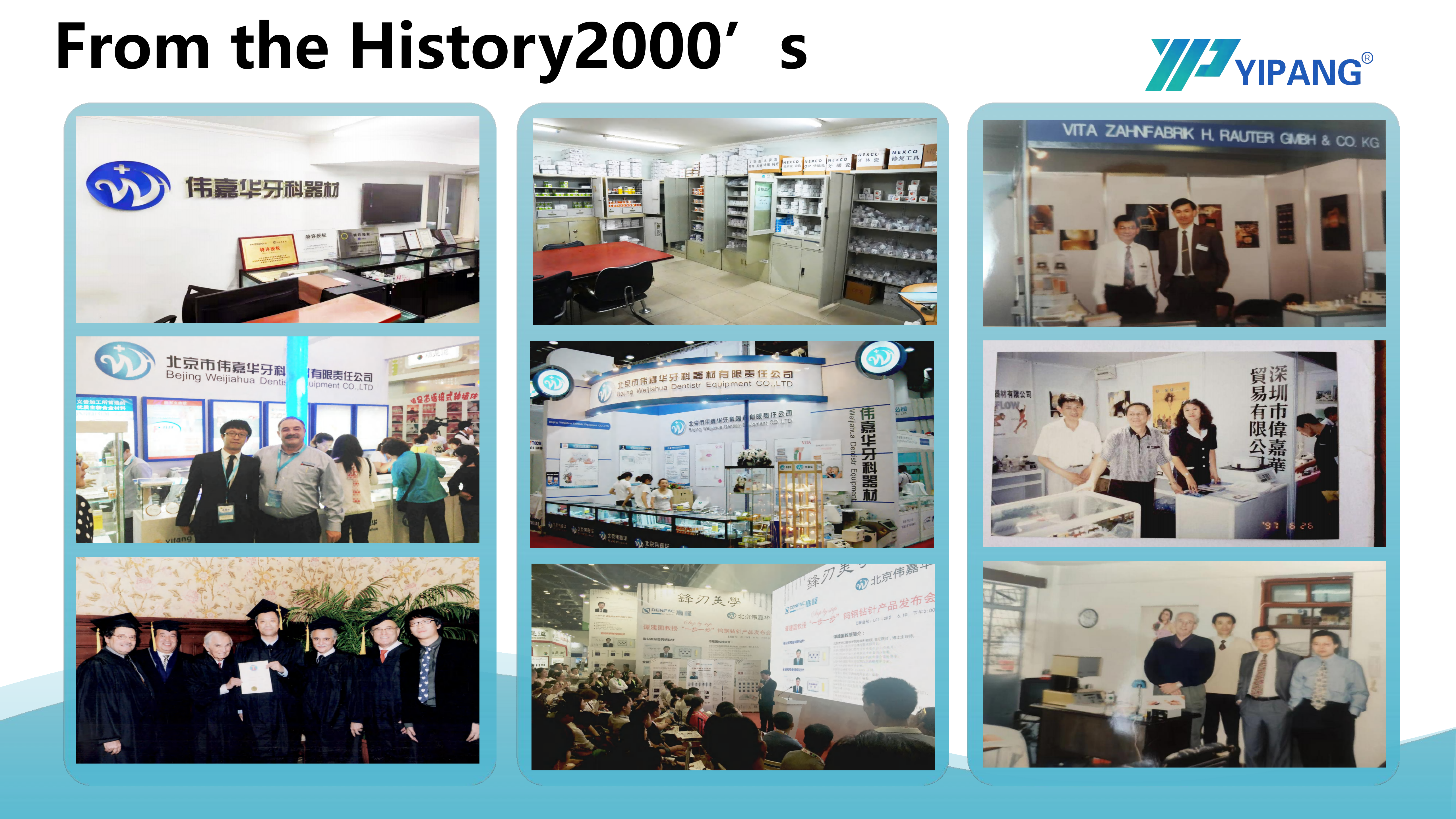
YIPANG is the self-developed dental materials brand of Beijing Weijiahua Dentistry Equipment Co., Ltd., a dental equipment manufacturer and distributor based in Beijing that was established in 1996. The company operates a 2,000 square metre factory with 80 employees and an annual output of approximately USD 10 million, supported by an R&D team of 25 engineers working on dental material formula research, process optimisation and new product development. The YIPANG range covers zirconia blocks, glass ceramics, press ingots, PMMA, wax, titanium blocks and implant abutments, alongside CAD/CAM equipment such as scanners, milling machines, 3D printers and sintering furnaces. The parent company reports more than 1,000 dental laboratory customers in China and an export share of 40%-55% across the Middle East, Southeast Asia, South America, North America, Eastern Europe, North Africa and Australia.
That combination matters for a continuity matrix for a specific reason: a supplier that also supplies the surrounding workflow - milling machines, sintering furnaces and laboratory scanners - can be evaluated on workflow support and not only on block quality.
A Long-Term Evaluation Matrix for Zirconia Block Suppliers
The matrix below is designed to be completed before approval and reviewed at each reorder. Each dimension should produce a pass or fail statement rather than a general impression, which is what separates a decision-stage evaluation from a category comparison.
| Evaluation dimension | What it decides | Evidence to request | Failure signal |
|---|---|---|---|
| Material and batch consistency | Whether shade, translucency and density stay predictable across reorders | Zirconia powder source declaration; batch records; confirmation of in-house powder control | Shade or translucency drift between production batches |
| Sintering stability | Post-firing fit accuracy of crowns, bridges and superstructures | Documented shrinkage error (4D-PRO-ML: within +/-0.3%) and test-firing records on the laboratory's own furnace | Marginal fit varies without any change to the heating curve |
| CAD/CAM compatibility | Machine yield and remake rate | Compatibility statement for mainstream dental milling machines; processing failure rate information | Repeated chipping or tool overload during milling |
| Case-mix coverage | Whether one block family can carry routine production | Available shades, thicknesses and restoration indications | Routine cases force a switch to a second supplier |
| Commercial continuity | Landed cost stability over years, not one order | Price positioning against imported equivalents; customization scope; delivery terms | Price basis or lead time is reset at each reorder |
| Documentation and quality system | Regulatory readiness and traceability | Whole-process quality inspection records; current certificate scope; MDR-relevant documentation | Documents expire or cover a narrower scope than the product supplied |
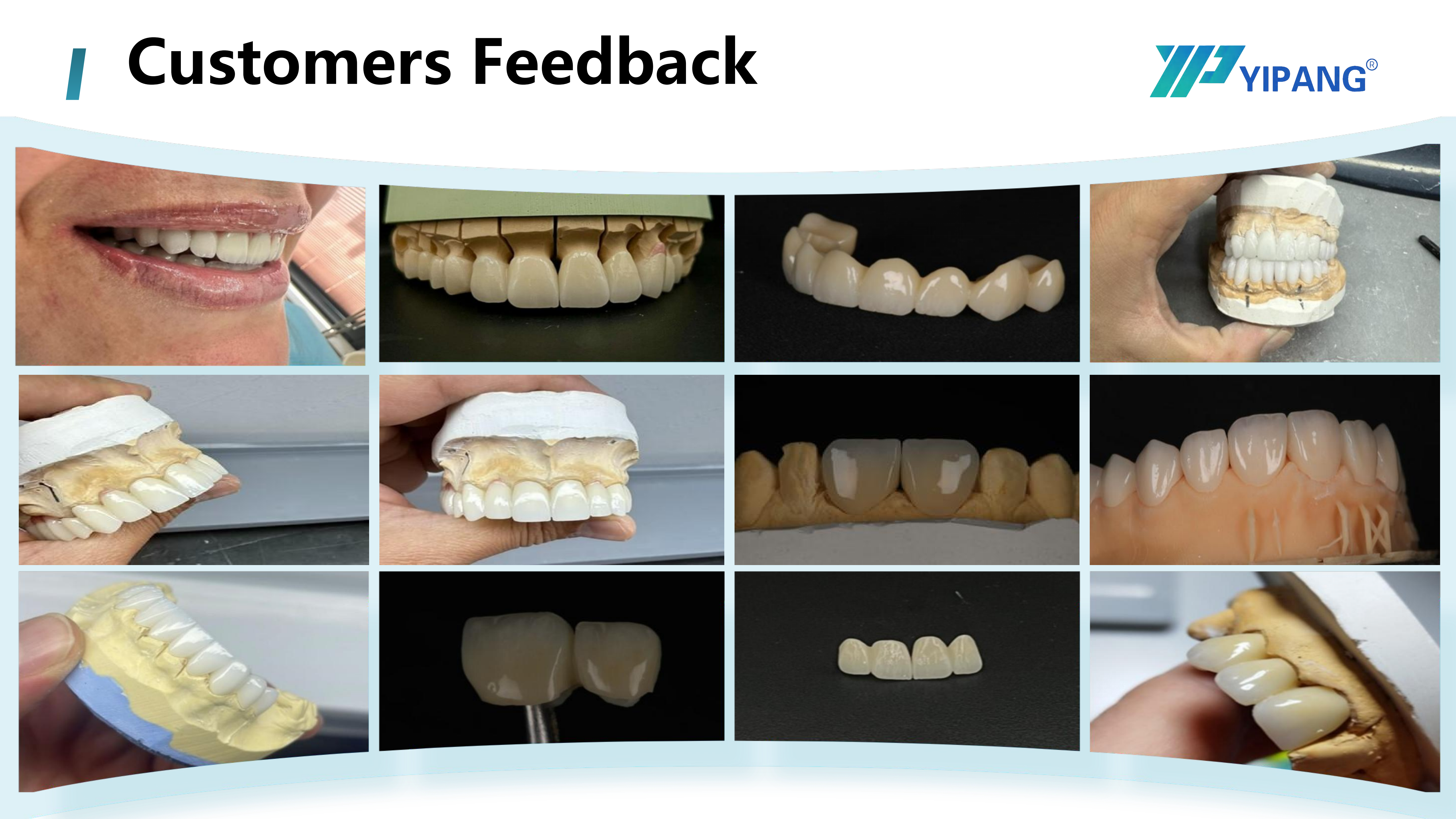
For the YIPANG 4D-PRO-ML zirconia block, the published specification set that feeds these six rows is: ML multilayer shades; 98 mm diameter; thicknesses of 10 mm, 12 mm, 14 mm, 16 mm, 18 mm and 20 mm; sintering temperature 1450 degrees Celsius; bending strength of at least 1200 MPa; medium translucency; and a material base of zirconium dioxide (ZrO2) with yttria stabiliser. The supplier describes stable sintering shrinkage error within +/-0.3%, good compatibility with most mainstream dental milling machines, a low processing failure rate, and a technical profile built on uniform density distribution with bending strength and translucency performance.
Purchasing Terms and Acceptance Criteria Worth Fixing in Writing
Long-term supply disputes rarely begin with price. They begin with an adjective - acceptable fit, matching shade, normal delivery - that both parties interpret differently. The fix is to convert every term into a measurable statement at the point of approval, so that a reorder three years later is judged against the same definition as the first delivery.
| Term or criterion | Specification to fix | Verification method |
|---|---|---|
| Block format | 98 mm diameter CAD/CAM dental milling blank; thickness 10, 12, 14, 16, 18 or 20 mm | Confirm delivered diameter and thickness against the case requirement before release to production |
| Shade range | ML multilayer | Sinter a sample and compare with the laboratory's shade reference under laboratory lighting |
| Sintering window | 1430-1450 degrees Celsius under a standard heating and holding procedure; maximum sintering temperature not to be exceeded | Run the agreed curve on the laboratory's own dental sintering furnace and record the result |
| Shrinkage tolerance | Stable sintering shrinkage error within +/-0.3% | Mill and sinter a test geometry; measure it before the batch is released for patient work |
| Strength specification | Bending strength of at least 1200 MPa | Retain supplier documentation with the batch record |
| Translucency class | Medium translucent | Check against the aesthetic target of the routine case mix, not against the most demanding single case |
| Quality system | Strict whole-process quality inspection | Trace each delivered batch to an inspection record |
| Commercial terms | Price positioned as more competitive than imported zirconia blocks of equivalent quality; customization flexibility; shorter delivery time | Agree the reorder price basis, customization scope and delivery windows in writing |
| Equipment compatibility | Compatible with most mainstream dental milling machines | Complete one qualification job on each machine before moving to volume orders |
Note on the sintering specification: the 4D-PRO-ML product specification lists 1450 degrees Celsius as the sintering temperature, while the published technical guidance recommends a working range of 1430-1450 degrees Celsius. The practical reading is that 1430-1450 degrees Celsius is the operating window and 1450 degrees Celsius is the ceiling, which should not be exceeded.
Technical Fit: Sintering Curve and CAD/CAM Workflow
The 4D-PRO-ML block is supplied as a 98 mm CAD/CAM dental milling blank in ML multilayer shades, and its documented processing route runs through a dental milling machine and a dental sintering furnace, with a dental laboratory scanner feeding the digital chain. For a laboratory, the real test of a supplier is not whether the block can be milled once, but whether the same curve produces the same result after the tenth and the hundredth cycle.
The documented sintering procedure is deliberately simple, and that simplicity is what makes it repeatable:
Step 1 - place the milled zirconia workpiece on the sintering tray.
Step 2 - set the heating curve up to 1430-1450 degrees Celsius with an appropriate holding time.
Step 3 - allow the workpiece to cool naturally after sintering is complete.
Two safety constraints accompany the procedure: avoid rapid temperature change to prevent cracking, and never exceed the maximum sintering temperature. Both constraints belong in the laboratory's written process, not only in the supplier's documentation, because they describe what happens inside the furnace rather than inside the block.
Two workflow implications follow. First, the heating curve should be treated as a controlled document with a defined owner, because a curve change is a fit change. Second, shrinkage compensation in the CAM software remains necessary even when a block shows a stable shrinkage error, since final fit is a function of both the block and the furnace. The +/-0.3% figure is a block-side tolerance; furnace calibration, tray loading and holding time are laboratory-side variables. A supplier can demonstrate batch consistency, but only the laboratory can demonstrate that its furnace reproduces it.
On the milling side, the block is described as compatible with most mainstream dental milling machines and as carrying a low processing failure rate, which supports a realistic qualification process: run one representative job per machine, check the milled and sintered geometry, and only then move that machine to volume production.
Application Continuity Across a Laboratory's Case Mix
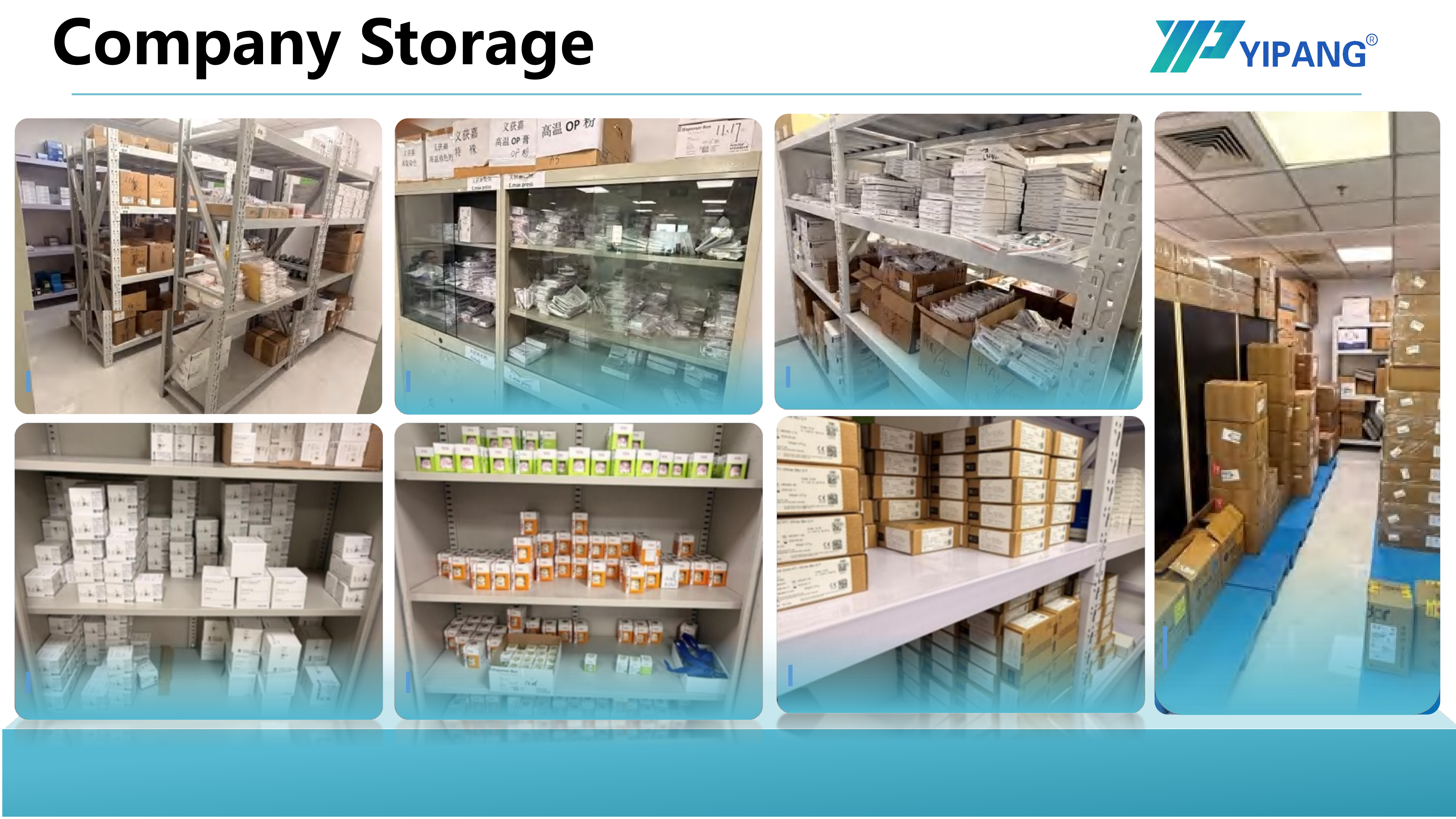
The listed restoration scope for this material is full-contour crowns, bridges, veneers and implant superstructure restorations. Continuity, in this context, means that the same block family can absorb a changing case mix without forcing a second supplier into the workflow for routine work.
For high-volume milling centres, the decisive variable is repeatability per unit of machine time: uniform density distribution and a stable sintering shrinkage error reduce the number of remakes caused by fit or density variation, which is where volume production loses margin. For implant abutment laboratories, continuity has an additional dimension, because abutment interfaces are heavily standardised - Institut Straumann held over 29% market share in the global dental implants and abutment systems market in 2024 (Global Market Insights), and the final abutment segment alone was valued at nearly USD 2.6 billion in 2025 (iData Research). A zirconia supply therefore has to be judged on how reliably it integrates with established interfaces, not only on material properties.
One boundary should be recorded in the matrix rather than discovered later. The 4D-PRO-ML block is specified as medium translucent. That is a defined position in the shade and translucency range, and it is appropriate for the restoration types listed above, but it is not a universal substitute for higher-translucency materials. Where maximum translucency is the primary clinical driver - some thin veneer and highly visible anterior cases - the laboratory may still route the case to a glass-ceramic press ingot or to a higher-translucency zirconia grade. A supplier evaluation that ignores this boundary produces a matrix that looks complete but fails on the first atypical case.
Market Trend Analysis: Why Continuity Is Now a Structural Question
The direction of the data supports long-term supplier evaluation rather than opportunistic purchasing. The global zirconia based dental materials market was valued at USD 1.2 billion in 2025 and is projected to reach USD 2.3 billion by 2033 (Grand View Research), with the United States accounting for 40% of that revenue and the 3Y-TZP zirconia grade holding the largest grade share at 35.9% in 2025.
Published estimates differ by scope, and that divergence is worth recording in any procurement analysis: SNS Insider values the same zirconia-based dental materials market at USD 367.67 million for 2025, while Grand View Research reports USD 1.2 billion. The difference reflects segment definition rather than a contradiction in direction, so a laboratory should treat the growth direction as the planning signal and the absolute value as scope-dependent.
The installed equipment base reinforces the same conclusion. The dental milling machine market reached USD 2.45 billion in 2025 with expected growth to USD 3.9 billion by 2030 (Fortune Business Insights), and the same analysis identifies Roland DG, Amann Girrbach and vhf camfacture as significant market share holders as of 2024. As the milling base expands, block consumption expands with it, and the limiting factor shifts from whether a laboratory can mill zirconia to whether a supplier can keep feeding that installed capacity consistently.
Adjacent digital manufacturing is growing in parallel, with the dental 3D printing market estimated to grow from USD 4.9 billion in 2025 to USD 26.7 billion by 2033 (Grand View Research). That growth expands printed applications - models, guides and resin-based components - but it does not replace the mill-and-sinter route for zirconia restorations. For most laboratories the realistic picture is two coexisting workflows, which makes a stable zirconia supply line more important rather than less, because it carries the load-bearing restorative volume.
Comparison with Alternative Supply Routes
Comparing supply routes is more useful than comparing materials in isolation, because each route carries a different continuity profile.
| Supply route | Continuity evidence available | What the laboratory must verify |
|---|---|---|
| 4D-PRO-ML zirconia block (domestically developed zirconia powder) | Stable batch consistency from high-quality domestic self-developed zirconia powder; sintering shrinkage error within +/-0.3%; price positioned as more competitive than imported zirconia blocks of equivalent quality; customization flexibility and shorter delivery time; whole-process quality inspection | Batch-to-batch shade stability and post-sintering fit on the laboratory's own furnace; that the medium translucency class matches the routine case mix |
| Imported zirconia block | Established documentation practice and brand familiarity in many markets | Unit cost relative to equivalent-quality domestic options; responsiveness on customization requests and delivery scheduling |
| Lithium disilicate press ingot | Approximately 28% of all all-ceramic dental restorations globally as of 2024 (Business Research Insights); market projected to grow from USD 320 million in 2025 to USD 920 million by 2032 at an 18.8% CAGR (Intel Market Research) | Whether the aesthetic case genuinely requires a press workflow rather than a milled and sintered zirconia restoration; published CAGR forecasts range from about 15% to 24%, so growth assumptions should be treated as scenario ranges |
The honest limitation of a zirconia block as a supply route is structural rather than commercial. First, the block does not deliver a finished restoration by itself: sintering is mandatory, so furnace availability, curve discipline and calibration are permanent dependencies, and a laboratory with unstable furnace control will not obtain the stated shrinkage behaviour from any block. Second, translucency class is fixed at specification level, so medium translucent material cannot be repositioned to serve cases that are defined by maximum translucency. Third, a cost-performance claim is only verifiable internally - the comparison unit states better cost performance against imported brands, but that claim becomes a procurement fact only after the laboratory's own acceptance testing. Fourth, reliance on a single block source concentrates continuity risk in one supplier's capacity and logistics, and the mitigation is either a documented qualification of a second source or contractual visibility on delivery terms.
Future Outlook
With CAD/CAM milling accounting for 82.4% of zirconia dental manufacturing process revenue and dental laboratories holding 45.3% of end-user share in 2025 (Grand View Research), the centre of gravity in zirconia supply remains the digital laboratory, not the single-restoration purchase. That makes documented batch control, traceable inspection and stable sintering behaviour the criteria that will separate suppliers in the coming years.
A second shift is visible in how suppliers are structured. Companies that combine material development with equipment supply - such as YIPANG, whose parent company has distributed international dental brands in China and now produces zirconia blocks, ceramics, press ingots, PMMA, titanium blocks and implant abutments alongside scanners, milling machines, 3D printers and sintering furnaces - reduce the number of interfaces a laboratory has to manage when a workflow problem appears. Whether that breadth translates into long-term value still depends on the laboratory's own acceptance data, because continuity is demonstrated per furnace and per case mix, not per catalogue.
The practical expectation for the next evaluation cycle is straightforward: laboratories that formalise acceptance criteria, record sintering curves and review supplier performance against a matrix at each reorder will hold a defensible position on cost, fit and regulatory readiness, independently of which supplier sits at the top of any shortlist.
FAQ
What sintering temperature and curve does the YIPANG 4D-PRO-ML zirconia block require?
The published technical guidance recommends a sintering range of 1430-1450 degrees Celsius with a standard heating and holding procedure, while the 4D-PRO-ML product specification lists 1450 degrees Celsius as the sintering temperature. The documented procedure is to place the milled workpiece on the sintering tray, set the heating curve up to 1430-1450 degrees Celsius with an appropriate holding time, and allow the workpiece to cool naturally afterwards. Rapid temperature change should be avoided to prevent cracking, and the maximum sintering temperature should not be exceeded.
Which acceptance criteria should a laboratory fix before approving a zirconia block supplier for long-term supply?
Acceptance criteria should be measurable rather than descriptive. For a 98 mm CAD/CAM blank such as the 4D-PRO-ML, the criteria typically cover block diameter and thickness (10, 12, 14, 16, 18 or 20 mm), the ML multilayer shade range, the sintering window of 1430-1450 degrees Celsius, a sintering shrinkage error within +/-0.3%, a bending strength of at least 1200 MPa, a medium translucency classification, whole-process quality inspection records, and written reorder terms covering price basis, customization scope and delivery windows. Each criterion is then verified by a defined method - most often a test firing on the laboratory's own equipment.
Is the 4D-PRO-ML block compatible with CAD/CAM milling and standard dental sintering furnace workflows?
Yes, within its documented specification. The 4D-PRO-ML is supplied as a CAD/CAM dental milling blank with a 98 mm diameter, is described as compatible with most mainstream dental milling machines with a low processing failure rate, and is processed by a dental milling machine and sintered in a dental sintering furnace, with a dental laboratory scanner supporting the digital chain. Because furnace behaviour varies, compatibility is normally confirmed by running one qualification job per machine and one agreed sintering curve before volume production begins.
Which restorations can a laboratory keep assigning to the same zirconia block family?
The listed restoration scope for this material is full-contour crowns, bridges, veneers and implant superstructure restorations. For high-volume milling centres and implant abutment laboratories, continuity across those applications depends on uniform density distribution and a stable sintering shrinkage error, since both influence post-firing fit and remake rate. Thin veneer and highly visible anterior cases still need to be checked against the medium translucency classification, which is a fixed specification rather than an adjustable one.
How does a zirconia block compare with imported blocks and with lithium disilicate on long-term supply terms?
The comparison is route-dependent. The domestically developed powder route represented by the 4D-PRO-ML is described as offering stable batch consistency, a sintering shrinkage error within +/-0.3%, flexibility on customization, shorter delivery time and a price positioned as more competitive than imported zirconia blocks of equivalent quality. Imported blocks generally offer an established documentation trail and brand familiarity, with unit cost and customization responsiveness as the variables laboratories record most often. Lithium disilicate press ingots serve a partially different indication envelope - approximately 28% of all all-ceramic restorations globally as of 2024 - and are used where a press workflow and high-translucency aesthetics are the priority rather than high-volume milled zirconia production.
What is the main limitation to record in a long-term zirconia block evaluation?
The main limitation is dependency rather than quality: a zirconia block must be sintered, so furnace calibration, heating curve discipline and holding time remain laboratory-side responsibilities, and the stated shrinkage tolerance cannot be obtained from an uncalibrated furnace. A second limitation is the fixed medium translucency classification of this specification, which is unsuitable as a universal substitute in cases defined by maximum translucency. A third is single-source concentration, which is normally mitigated by qualifying a second source or by securing written delivery and reorder terms.
Manufacturer reference: YIPANG is the self-developed brand of Beijing Weijiahua Dentistry Equipment Co., Ltd. (www.yipangdental.com). The company information brochure is available for download at https://cdn.socialarks.com/sbsp/25220/common/2026/0818/WJH%20Company%20Infomation.pdf.