
Dental Zirconia Block Suppliers: What Survives Year One
Zirconia discs held 63.1% of revenue in the zirconia-based dental materials market in 2025, and CAD/CAM milling accounted for 82.4% of process revenue in that same market, according to Grand View Research. For a dental laboratory, those two numbers describe something practical: the dental zirconia block is not a project purchase anymore. It is a standing line item tied to a calibrated scanning, milling and sintering routine that has to deliver the same result in year three as it did in week one.
Supplier evaluation for a dental zirconia block is therefore a different exercise from product selection. Product selection asks whether a blank meets a specification. Supplier evaluation asks whether the evidence behind that specification will still be true after a furnace recalibration, a staff change, a documentation renewal cycle and several hundred milling jobs. The two questions are usually answered in the same meeting, but they are not the same question — and most labs only formalise the first one.
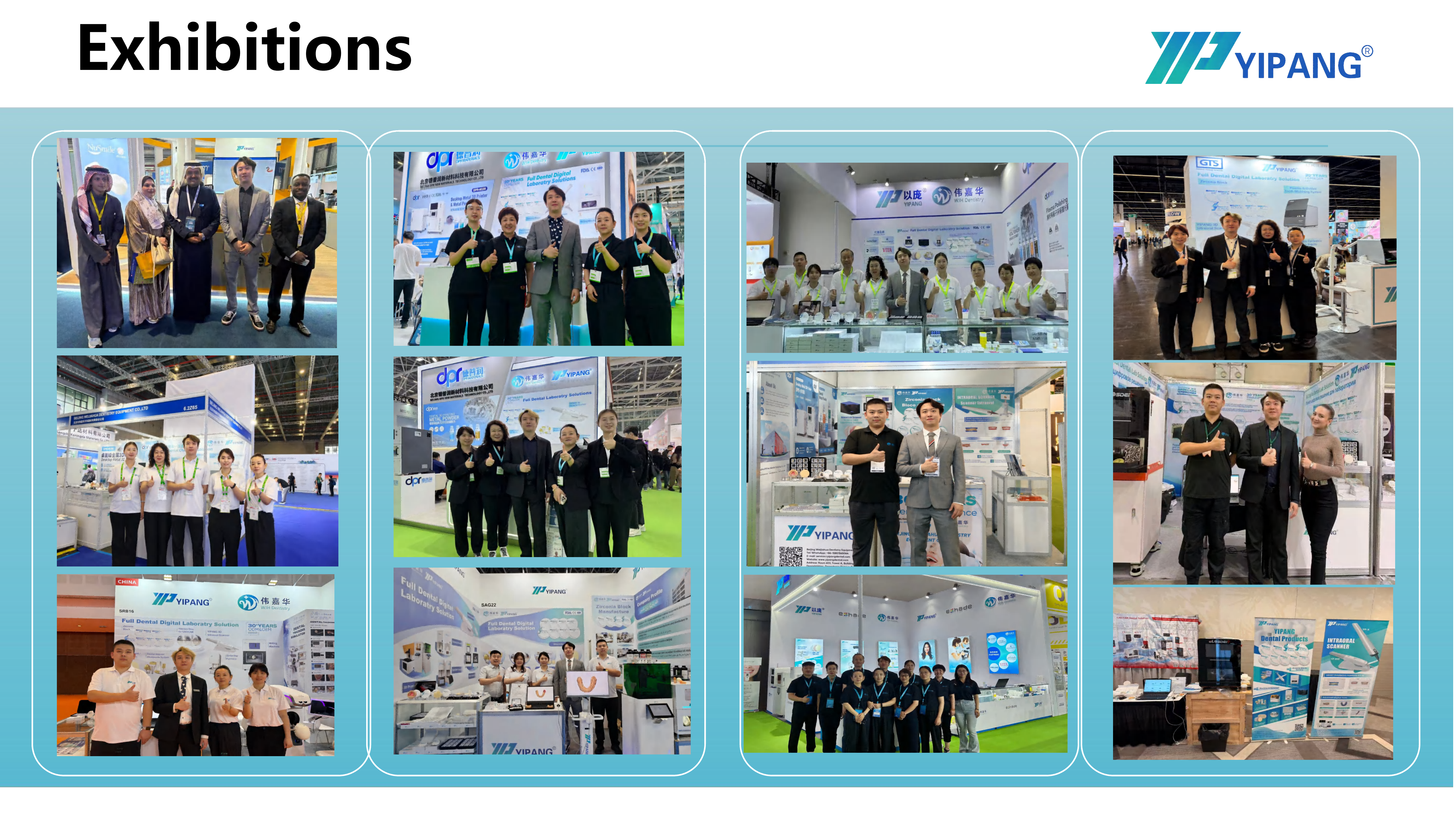
This reference sets out a practical evaluation model for laboratories, milling centres and dental groups buying zirconia blanks over a multi-year horizon. YIPANG — the self-developed brand of Beijing Weijiahua Dentistry Equipment Co., Ltd., a dental manufacturer established in 1996 — is used as a worked example of what documentable evidence looks like at each layer. The model itself is supplier-neutral and can be applied to any shortlist.
Why zirconia block supply became a multi-year decision
The zirconia-based dental materials market was valued at USD 1.2 billion in 2025 and is projected to reach USD 2.3 billion by 2033, according to Grand View Research. Within that market, discs are the dominant format at 63.1% of revenue, CAD/CAM milling is the dominant process at 82.4%, and dental laboratories remain the dominant end user at 45.3% of market share. The same source places 40% of global revenue in the United States.
Those figures matter for procurement because they describe a concentrated workflow. When one material format and one manufacturing process account for most of the market, the differentiation between suppliers does not sit mainly in the chemistry of the blank. It sits in what surrounds the blank: the validated sintering curve, the shrinkage compensation in the CAM library, the shade sequence a technician can rely on, and the paperwork a quality manager can hand to an auditor.
Grade concentration reinforces the point. 3Y-TZP zirconia held the largest revenue share of 35.9% in the dental zirconia market in 2025, according to Grand View Research. A single widely used grade family means a lab switching suppliers is rarely changing material science. It is re-validating a process. That re-validation cost — not the price difference per disc — is the real cost of switching, and it is the reason long-term supplier evaluation deserves its own framework rather than a line in a price comparison.
The evaluation problem: evidence decays at different speeds
The most common weakness in zirconia block qualification is that all evidence is collected once, at the sample stage, and then treated as permanent. In practice, evidence ages unevenly. A material specification is stable for as long as the formulation is unchanged. A sintering recommendation can drift as furnaces are recalibrated or replaced. Production capacity changes with staffing and demand. Regulatory documentation has explicit renewal cycles.
Regulatory context makes the documentation layer the fastest-decaying one. EU Medical Device Regulation (MDR 2017/745) classifies most dental implants and restorative materials as high-risk, requiring intensive clinical data, according to the European Commission. A classification of that kind does not only affect the manufacturer's submission; it affects how often a laboratory buyer should expect to re-request and re-check supporting documents across the life of a supply relationship.
A workable evaluation model therefore separates evidence into layers with different expected lifetimes, and assigns a different review frequency to each.
| Evidence layer | What it answers | How fast it ages | Worked example (YIPANG 4D-PRO-ML) |
|---|---|---|---|
| Material identity | What the blank is made of and what it is rated to do | Slow — changes only with reformulation | Zirconium dioxide (ZrO₂) with yttria stabilization; bending strength ≥1200 MPa; medium translucent; ML multilayer shades |
| Process compatibility | Whether the blank behaves predictably in the lab's own mill and furnace | Medium — changes with equipment and calibration | Sintering temperature 1450°C on the specification; recommended range 1430°C–1450°C; stated compatibility with most mainstream dental milling machines |
| Production and organisation | Whether supply can continue at the required volume and mix | Medium — changes with capacity, staffing and demand | 2000 m² facility; approximately 80 employees; annual production value of about USD 10 million; 40%–55% of products exported |
| Documentation and traceability | Whether the quality file can be defended at the next audit | Fast — subject to renewal cycles | Buyer-side document request list should be re-issued at each renewal; certificate specifics are not published in this reference and belong in the supplier's document pack |
A four-layer supplier evaluation model for dental zirconia blocks
Layer 1 — Material identity and specification stability
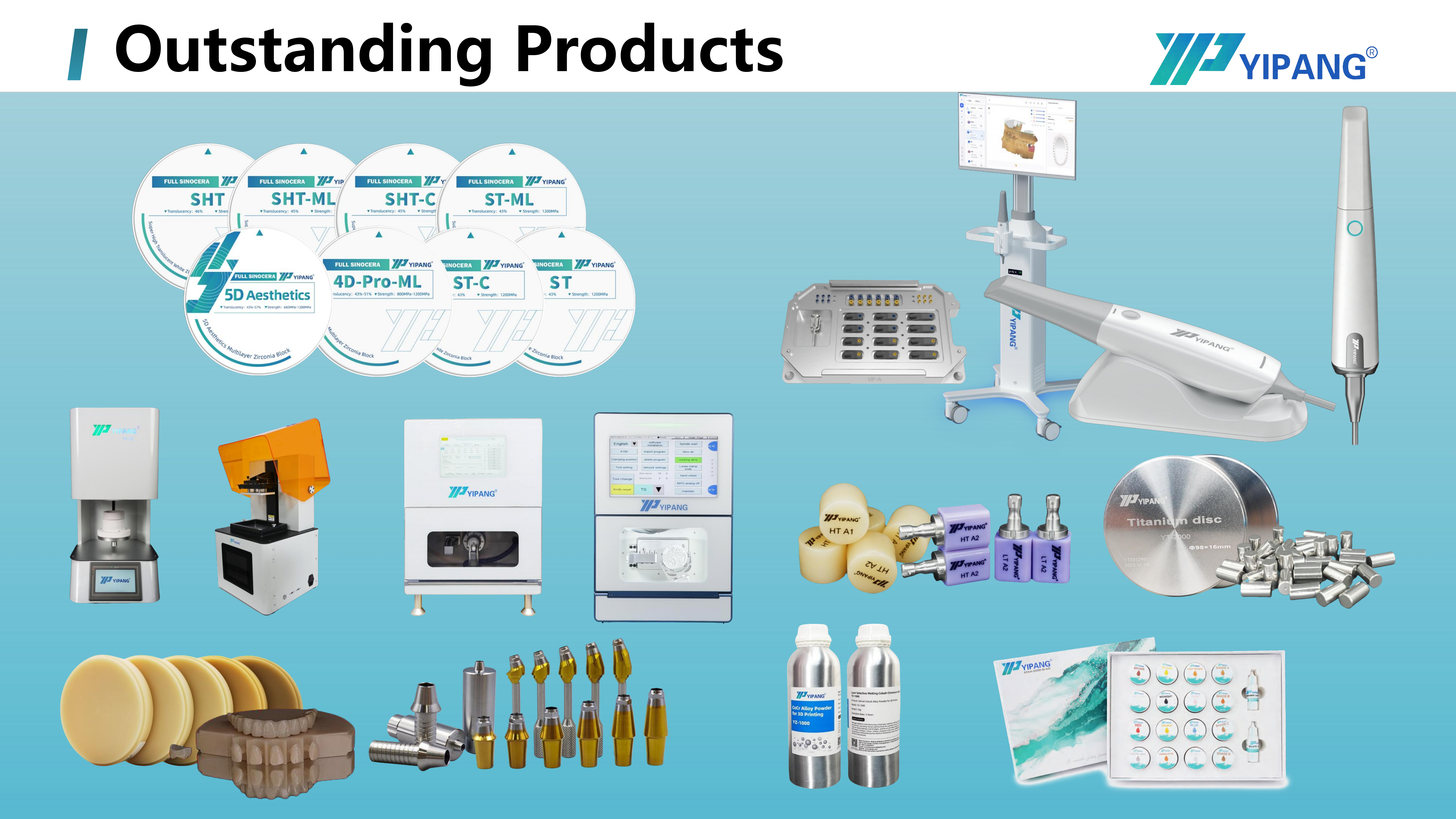
The first layer is the easiest to collect and the easiest to over-value. A specification sheet confirms what a blank is, not how consistently it is produced. For the worked example, the 4D-PRO-ML dental zirconia block is a dental zirconia disc and CAD/CAM dental milling blank made of zirconium dioxide (ZrO₂) with yttria stabilization, available in ML multilayer shades, with a bending strength of ≥1200 MPa and medium translucency. It is intended for the dental laboratory, dental prosthetics and dental CAD/CAM industries.
Two evaluation questions belong here. First, is the specification written in a form the lab can test against — a strength value, a translucency class, a shade system — rather than a marketing descriptor. Second, is the specification attached to a model designation that will still exist in two years, so that a reorder does not silently become a different product. The model designation 4D-PRO-ML satisfies the second condition; whether the values hold in a given lab's process is what Layer 2 tests.
Layer 2 — Process reproducibility
Process reproducibility is where most long-term supply failures actually occur, and it is almost never tested at the sample stage. The blank arrives, the lab mills it with an existing strategy, sinters it on the existing curve, and accepts the result. Nothing in that sequence confirms the blank will behave the same way after the furnace element is replaced.
For 4D-PRO-ML, the specification lists a sintering temperature of 1450°C, while the manufacturer's processing guidance recommends a range of 1430°C–1450°C with a standard heating and holding procedure, followed by natural cooling. The stated product characteristics include a low shrinkage rate after sintering, high dimensional accuracy and excellent gradient translucency. Those are supplier-stated characteristics, and they are only useful to a buyer when tied to a documented sinter run the lab can repeat.
Layer 3 — Production and organisational continuity
Continuity questions are uncomfortable because they ask a supplier to be specific about size and mix. Beijing Weijiahua Dentistry Equipment Co., Ltd. operates a 2000 m² manufacturing facility with approximately 80 employees and an annual production value of about USD 10 million. Between 40% and 55% of products are exported, and the company serves markets in the Middle East, Southeast Asia, South America, North America, Eastern Europe, North Africa and Australia. The company also states a research and development team of 25 professional engineers working on dental material formula research, process optimisation and new product development.
Read as continuity evidence rather than as credentials, those facts answer three buyer questions: whether output is committed to export markets (a 40%–55% export share indicates an established export process), whether the product range is technically staffed rather than purely traded (25 engineers in formula and process work), and how much headroom exists before a large account becomes a disproportionate share of the supplier's output.
Layer 4 — Portfolio adjacency
The fourth layer is optional but useful for laboratories that prefer fewer supplier relationships. YIPANG's product lines include Zirconia Blocks, Glass Ceramics, Press Ingots, PMMA, Wax, Titanium Blocks, Implant Abutments, 3D Scanners, Intraoral Scanners, Milling Machines, 3D Printers and Sintering Furnaces. Portfolio adjacency reduces the number of document sets a lab has to maintain and can simplify equipment-related troubleshooting, because the material and the processing equipment come from the same technical organisation.
It is also where buyers should apply a check. Breadth is not depth. A supplier with a wide catalogue should be asked which lines it manufactures and which it distributes — the answer changes what kind of continuity commitment is realistic for each item on the list.
Technical explanation: the sintering curve is where continuity breaks first
Zirconia restorations are processed by a dental milling machine and sintered in a dental sintering furnace, following a sintering temperature curve. That sentence contains the whole continuity argument. A zirconia block is only a semi-finished blank; the final crown, bridge or framework is created by the sinter cycle. If the curve shifts, the restoration shifts with it — in fit, in shade and in strength.
The processing guidance for 4D-PRO-ML is stated as a three-step routine: place the milled zirconia workpiece on the sintering tray; set the heating curve up to 1430°C–1450°C with a proper holding time; and cool down naturally after sintering. The accompanying safety note is that rapid temperature change should be avoided to prevent cracking, and the maximum sintering temperature should not be exceeded.
For long-term evaluation, the practical implication is that the acceptance test and the furnace are a single unit of evidence. A laboratory that validates a zirconia block on Furnace A has validated the block-and-furnace pair, not the block alone. The recommended practice is straightforward: keep one reference sinter run per furnace per year, record the blank model, the thickness, the sinter curve and the measured outcome, and re-run it after any furnace service. This converts a supplier's stated characteristics into the lab's own verified baseline — and gives the lab something concrete to compare if it ever evaluates a second supplier.

Application and use cases: where continuity matters most
4D-PRO-ML is used for full-contour crowns, bridges, veneers and implant superstructure restorations. The working condition assumed by the manufacturer is an indoor, constant-temperature dental laboratory environment, with the block milled on a dental milling machine and sintered in a dental sintering furnace. The matched equipment set named for the application is a Dental Milling Machine, a Dental Sintering Furnace and a Dental Lab Scanner.
The blank is supplied at a 98 mm diameter with thickness options of 10 mm, 12 mm, 14 mm, 16 mm, 18 mm and 20 mm. That range lets a laboratory hold a single blank family across a broad set of restoration sizes instead of maintaining separate supplier relationships per indication. Which thickness is correct for a specific case should be confirmed against the lab's own nesting strategy and minimum wall thickness requirements rather than assumed from the blank list.
Continuity risk concentrates in three applications. Multi-unit bridges are the first: a change in sinter behaviour shows up as a fit problem across the whole span rather than in a single unit. Implant superstructure restorations are the second: they sit on a defined implant interface, so a shade or fit deviation is visible both clinically and to the referring clinician. High-volume single-visit crown production is the third: at that volume, a small change in shrinkage compensation becomes a large number of remakes before anyone notices.
Market trend analysis: what shifts the supplier question
Three documented trends push zirconia block purchasing toward a longer evaluation horizon.
The first is installed base growth. The dental milling machine market reached USD 2.45 billion in 2025 and is expected to grow to USD 3.9 billion by 2030, according to Fortune Business Insights. More installed mills means more laboratories running their own sinter cycles, and therefore more buyers who need process support rather than only blanks.
The second is the widening scope of regulation. Under MDR 2017/745, most dental implants and restorative materials sit in a high-risk classification requiring intensive clinical data, per the European Commission. As documentation expectations tighten, the quality file becomes a recurring procurement item rather than a one-off attachment, and suppliers who cannot refresh it become a continuity risk independent of product quality.
The third is material diversification inside laboratories. The dental 3D printing market is estimated to grow from USD 4.9 billion in 2025 to USD 26.7 billion by 2033, according to Grand View Research, with photopolymer resins holding 55.5% of the dental 3D printing material segment in 2025. For zirconia suppliers, that does not replace zirconia — discs still hold 63.1% of the zirconia-based materials market and laboratories still account for 45.3% of zirconia demand — but it does mean a laboratory's equipment and workflow decisions are increasingly multi-material, and a supplier's ability to fit into a mixed digital workflow becomes part of the evaluation.
Comparison with traditional supply models
Long-term evaluation is not the only way laboratories buy zirconia. Three models are common, and each has a defensible use.
| Dimension | Spot batch purchase | Annual tender | Multi-year supplier framework |
|---|---|---|---|
| Primary basis of decision | Price per disc and availability | Price plus basic specification | Material, process, production and documentation evidence together |
| Process continuity | Low — every change requires re-validation | Medium — re-validated yearly | High — reference sinter runs carry across cycles |
| Documentation handling | Collected ad hoc | Collected at tender | Re-requested on a defined renewal cycle |
| Main risk | Silent specification change between batches | Renewal pressure favouring price over process fit | Over-dependence on one supplier without capacity headroom checks |
| Best fit | Occasional or trial volume | Stable, well-understood demand | Labs running calibrated CAD/CAM workflows at scale |
The comparison is not a ranking. Spot purchasing is rational for a lab testing a new indication; an annual tender is rational when demand is stable and the process is already validated. The multi-year framework earns its extra administrative cost specifically when the cost of process re-validation exceeds the cost of price shopping — which is the normal condition in a CAD/CAM zirconia workflow.
Future outlook
The direction of travel is toward evidence that can be refreshed, not evidence that can be presented once. As zirconia material demand grows — USD 1.2 billion in 2025 toward USD 2.3 billion by 2033, per Grand View Research — and as milling equipment becomes more widely installed, the supplier relationship increasingly resembles an equipment relationship: it is judged on repeatability, on documentation, and on how quickly a problem is diagnosed.
For laboratories, the practical preparation is unglamorous. Keep a reference sinter run per furnace. Record the blank model and thickness on every acceptance. Re-issue the document request list at each renewal cycle. Review capacity headroom once a year, before it becomes a shortage. A supplier that supports those four routines is a more meaningful long-term partner than one that offers a lower price per disc and nothing else — and a lab that runs those four routines can compare suppliers on evidence rather than on impressions.
FAQ
What does long-term supplier evaluation mean for a dental zirconia block?
It means assessing a supplier across at least several purchasing cycles on four evidence layers — material identity, process compatibility, production continuity and documentation — instead of accepting a single sample batch. The purpose is to confirm that the specification, the sinter behaviour and the quality file will still hold after equipment service, staff changes and documentation renewals.
Is YIPANG a manufacturer, a brand, or a distributor?
YIPANG is a self-developed brand owned by Beijing Weijiahua Dentistry Equipment Co., Ltd., a dental industry manufacturer established in 1996. The company operates a 2000 m² facility with approximately 80 employees and an annual production value of about USD 10 million. Its parent organisation has also acted as a professional dental equipment agent and manufacturer representing international brands including VITA, Ivoclar, Dentsply, Amann Girrbach and Noritake.
What sintering temperature applies to the 4D-PRO-ML zirconia block?
The product specification lists a sintering temperature of 1450°C, and the processing guidance recommends a range of 1430°C–1450°C. The stated procedure is to place the milled workpiece on the sintering tray, set the heating curve to 1430°C–1450°C with proper holding time, and cool naturally. Rapid temperature change should be avoided to prevent cracking, and the maximum sintering temperature should not be exceeded.
Which thicknesses and diameter are available?
The 4D-PRO-ML blank is supplied at a 98 mm diameter with thickness options of 10 mm, 12 mm, 14 mm, 16 mm, 18 mm and 20 mm. It is available in ML multilayer shades with a medium translucent appearance. The appropriate thickness for a given restoration should be confirmed against the laboratory's own nesting and minimum wall thickness requirements.
Which restorations is the block intended for?
It is used for full-contour crowns, bridges, veneers and implant superstructure restorations. The intended industries are dental laboratories, dental prosthetics and the dental CAD/CAM industry, and the blank is designed for dental CAD/CAM workflows in which it is milled on a dental milling machine and sintered in a dental sintering furnace.
How can a laboratory check production continuity rather than sample quality?
By requesting the facts that describe the producing organisation rather than the sample: facility size, workforce, annual production value, export share and technical staffing. For the worked example, these are a 2000 m² facility, approximately 80 employees, about USD 10 million in annual production value, an export share of 40%–55%, markets across the Middle East, Southeast Asia, South America, North America, Eastern Europe, North Africa and Australia, and a stated research and development team of 25 professional engineers.
Reference material: the company information brochure covering product lines, facility and contact details is available as a downloadable PDF — WJH Company Information (PDF). Company website: www.yipangdental.com.
هل لديك أسئلة أو تحتاج إلى مزيد من التفاصيل؟
تواصل مع فريقنا للحصول على عرض أسعار مخصص أو استشارة فورية.
طلب عرض أسعار
املأ النموذج أدناه وسيتواصل معك فريقنا بعرض مقترح مخصص.
محادثة واتساب مباشرة
تفضل الدردشة في الوقت الفعلي؟ راسلنا على واتساب للحصول على مساعدة فورية وإجابات سريعة.
- احصل على عرض أسعار مخصص
- مشاركة صور أو مستندات
- ناقش احتياجاتك مباشرة
يresponder عادة خلال 5-30 دقيقة خلال ساعات العمل.