
Dental Zirconia Block: Technical Questions Labs Ask First
Most dental laboratories do not change zirconia block suppliers because of price. They change because of answers they cannot get to a short list of technical and procurement questions: will the blank fit the mill already on the floor, what sintering curve does it need, which restoration types does it cover, how reproducible is the shrinkage, how is the material inspected before shipment, and what happens when a batch behaves differently from the sample. Those answers decide whether a dental zirconia block becomes a routine line item or a recurring production problem.
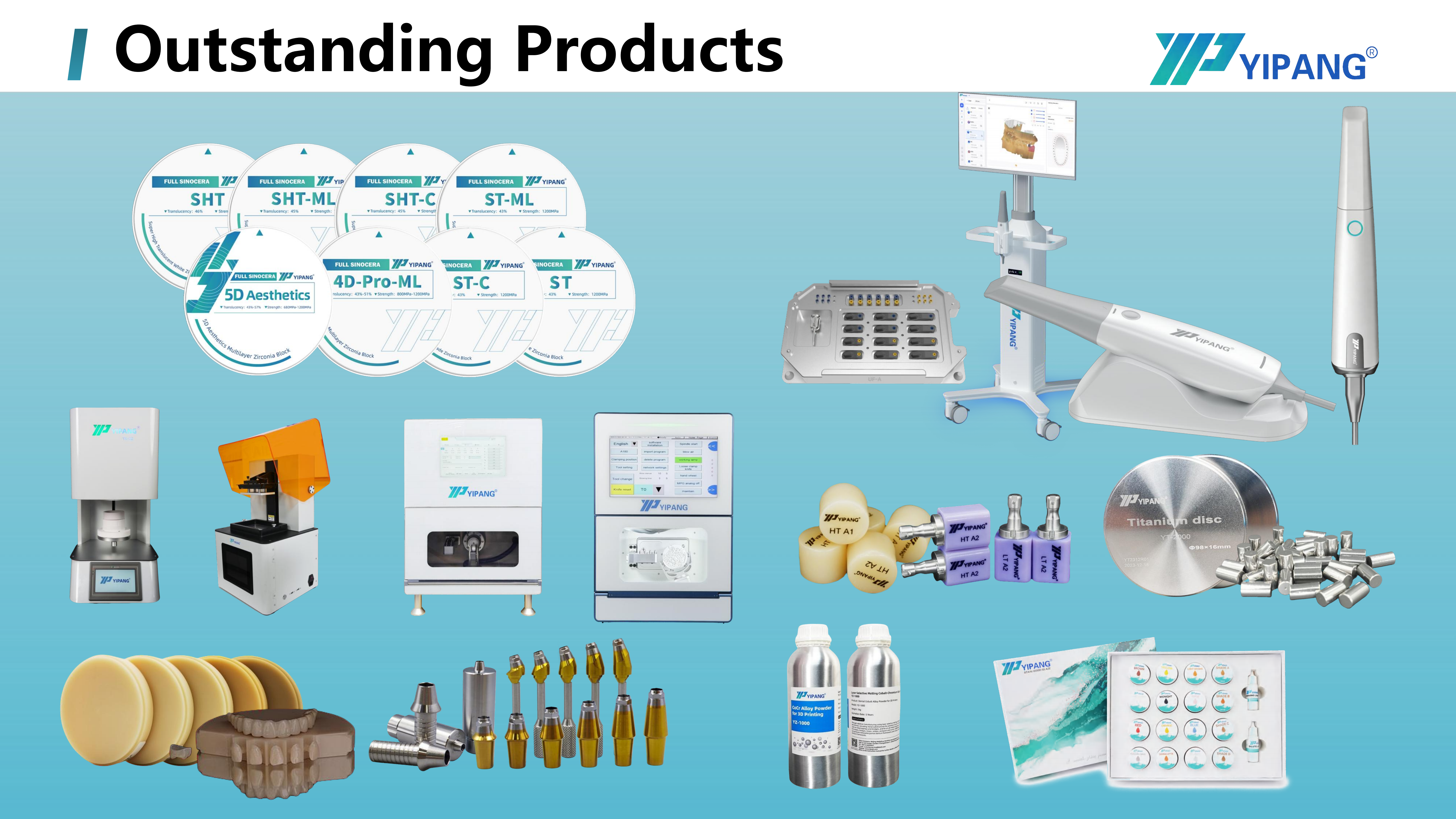
YIPANG is the self-developed dental material brand of Beijing Weijiahua Dentistry Equipment Co., Ltd., a Beijing-based dental equipment manufacturer and supplier founded in 1996 that also represents international dental brands and serves more than 1,000 dental laboratory customers in China. Its Zirconia Blocks for Dental Prosthesis line, model 4D-PRO-ML, is a presintered CAD/CAM blank supplied as a 98 mm disc for crowns, bridges, veneers and implant superstructure restorations.
These questions are not marginal. Dental laboratories remained the dominant end-user of zirconia-based dental materials in 2025, accounting for 45.3% of market share (Grand View Research), and CAD/CAM milling accounted for 82.4% of process revenue in the same market. The answers a lab receives about equipment fit and sintering behaviour therefore describe most of the value it is buying.
What Counts as a Dental Zirconia Block
A dental zirconia block — often listed as a zirconia disc or a CAD/CAM dental milling blank — is a presintered disc of yttria-stabilized zirconium dioxide that a laboratory mills to shape and then densifies in a sintering furnace. Blank geometry, powder source, pressing and pre-sintering conditions, and the sintering profile jointly determine the finished restoration. A buyer's questions should follow that chain rather than stop at the material name.
| Parameter | 4D-PRO-ML published value |
|---|---|
| Product | Zirconia Blocks for Dental Prosthesis (CAD/CAM dental milling blank) |
| Material | Zirconium dioxide (ZrO₂) with yttria stabilization |
| Shade | ML Multilayer |
| Diameter | 98 mm |
| Thickness options | 10 mm / 12 mm / 14 mm / 16 mm / 18 mm / 20 mm |
| Sintering temperature | 1450 °C (recommended processing window 1430 °C–1450 °C) |
| Bending strength | ≥1200 MPa |
| Translucency | Medium translucent |
Published values such as these answer the first layer of questions. The second layer — equipment fit, sintering discipline, restoration scope, quality control and commercial terms — is where supplier evaluations usually succeed or fail.
Question Set 1: Does the Blank Fit the Lab's Equipment?
Processing this material requires a dental milling machine, a dental sintering furnace and a dental lab scanner. The workflow is a milling step followed by a sintering step; there is no route in which a presintered blank becomes a restoration without a furnace in the chain.
The 98 mm diameter is designed for compatibility with most mainstream dental milling machines. That statement should still be verified at machine level. The dental milling machine market includes established system holders such as Roland DG, Amann Girrbach and vhf camfacture (Fortune Business Insights, 2024), and blank holders, chuck types, spindle access and nesting software differ between systems. Before ordering, a laboratory should confirm three points: whether the machine's blank holder accepts the 98 mm format, whether the machine can accommodate the thickness required for the tallest planned indication, and whether the CAM software handles multilayer shade nesting in the way the lab's workflow expects.
Question Set 2: Sintering Temperature, Curve and Shrinkage
The recommended sintering window for the 4D-PRO-ML block is 1430 °C–1450 °C, following a standard heating and holding procedure; the published product parameter lists 1450 °C. The processing requirement attached to this material is that the standard sintering temperature curve must be followed strictly.
- Rapid temperature change should be avoided, as it risks cracking.
- The maximum sintering temperature should not be exceeded.
- The milled workpiece is placed on a sintering tray before the cycle begins.
- After sintering is complete, the workpiece cools naturally.
Sintering is the stage at which shrinkage occurs, which is why the curve is a technical question rather than a settings detail. YIPANG describes the block as having low shrinkage after sintering and high dimensional accuracy, and reported case characteristics include stable sintering shrinkage, uniform translucency and compatibility with most CAD/CAM systems. Those are material properties; they do not replace furnace validation. Two furnaces running the same nominal curve can behave differently if thermocouples, heating elements or tray loading differ. A laboratory adopting a new blank should therefore run a validation cycle on its own equipment before releasing production cases — the same discipline it applies when commissioning a new mill.
Question Set 3: Which Restorations Does the Block Cover?
The 4D-PRO-ML blank is positioned for a defined but broad set of indications. The table below maps the documented application areas to the workflow context in which they usually appear.
| Restoration or project type | Typical workflow context |
|---|---|
| Full-contour crowns, bridges, veneers and implant superstructure restorations | CAD/CAM milling followed by sintering |
| Multilayer crown and bridge projects | Laboratories using multilayer shade blanks for gradient translucency |
| Aesthetic crown restorations | Finishing with staining glaze and glaze paste after sintering |
| Implant abutments and implant-supported crowns | Implant abutment laboratory workflows |
| Full-arch implant restorations and edentulous cases | Edentulous scanbody kit workflows and digital implant dentistry |
| High-volume crown and bridge production | Dental milling centres and high-volume milling and sintering workflows |
| Mixed-material CAD/CAM projects | Laboratories also running PMMA disc, PEEK disc and lithium disilicate glass ceramic workflows |
The scope is wide, but it is not unlimited, and the published translucency value is the reason. A medium translucent multilayer blank addresses a large part of posterior and implant-borne work; a laboratory whose case mix is dominated by highly translucent anterior restorations should confirm grade and shade fit with the supplier before writing the block into a specification.
Question Set 4: Zirconia Compared With PMMA, PEEK and Lithium Disilicate
Zirconia is not the only millable material in a modern dental laboratory, and buyers frequently ask where a zirconia block sits relative to the alternatives. The straightforward answer is that the materials serve different parts of the same case list. PMMA and PEEK discs are used in their own workflows, and lithium disilicate glass ceramics occupy a large share of aesthetic all-ceramic work — approximately 28% of all-ceramic dental restorations globally as of 2024 (Business Research Insights), with the lithium disilicate market projected to grow from USD 320 million in 2025 to USD 920 million by 2032 (Intel Market Research). Many CAD/CAM laboratories run zirconia and these materials side by side, which makes blank identification, shade referencing and process separation practical procurement concerns rather than purely material-science ones.
Within zirconia itself, grade selection is a separate decision. The 3Y-TZP grade held the largest revenue share — 35.9% — of the dental zirconia market in 2025 (Grand View Research). A procurement conversation that asks only whether a supplier sells zirconia blocks skips the grade question, and the grade is where strength, translucency and indication fit are actually decided. For the 4D-PRO-ML block the published combination is a bending strength of ≥1200 MPa with medium translucency in a multilayer shade; each case type should be matched against that combination rather than assumed from the material category.
Question Set 5: Procurement Terms That Decide Repeat Orders
Technical fit gets a supplier onto a shortlist; procurement terms decide whether the relationship survives a second order. The documented commercial profile for this product line is specific enough to be evaluated:
- Sourcing model: OEM and ODM, with almost all specifications customizable.
- Monthly capacity: 15,000 pieces.
- Lead time: 15–30 working days.
- Minimum order: negotiable small MOQ.
- Quality control: 100% raw material inspection plus random inspection of finished products.
- Export markets: USA, Europe, Brazil, the Middle East and North Africa.
- After-sales: online technical guidance, with after-sales problem response within 24 hours.
Two further questions belong on any dental zirconia block shortlist. The first concerns development depth rather than order terms: the manufacturer maintains an R&D team of 25 engineers working on dental material formula research, process optimization and new product development, which is the function that typically absorbs a reformulation request without disrupting the standard line. The second concerns documentation. EU Medical Device Regulation (MDR 2017/745) classifies most dental implants and restorative materials as higher-risk products requiring intensive clinical data (European Commission); laboratories that sell into Europe should ask how a supplier organizes its technical file and should read certification documents rather than treat them as labels.
Question Set 6: Which Laboratory Scenarios Fit Best?
Scenario fit is where most specification errors happen, because the same blank can be routine in one laboratory and problematic in another.
- High-volume milling and sintering centres. Continuous production depends on blanks that behave consistently across batches. The 15,000-piece monthly capacity and 15–30 working day lead time are relevant here as continuity signals rather than as headline numbers.
- Implant-focused laboratories. Workflows covering implant abutments, implant-supported crowns, full-arch restorations and edentulous scanbody kits place a premium on dimensional accuracy after sintering, because fit errors compound across a full arch.
- Aesthetic restoration laboratories. Multilayer shade blanks combined with staining glaze and glaze paste finishing support gradient translucency in crown and bridge work; the finishing stage, not the blank alone, carries the aesthetic outcome.
- Mixed-material CAD/CAM laboratories. When zirconia, PMMA, PEEK and lithium disilicate are milled in the same facility, blank traceability and workflow separation matter as much as the material specification.
- Scanner-to-milling digital workflows. The blank sits at the end of a chain that starts with a dental lab scanner; if scan data quality or nesting parameters are inconsistent, no blank specification will compensate.
Where This Block Is Not the Right Answer
A supplier evaluation that lists only advantages is not an evaluation. Four boundaries apply to this product line.
- Translucency grade. The published translucency is medium translucent. Laboratories whose case mix depends on high-translucency anterior outcomes should confirm whether a different grade or material is required before standardizing on this blank.
- Equipment dependency. The material requires a functioning mill, a sintering furnace and a scanner, and it must be processed on the standard sintering curve. A laboratory that cannot control its furnace curve is not a good fit for the blank, whatever its price per disc.
- Process scope, not clinical scope. The block is a manufacturing input. It supports the fabrication of crowns, bridges, veneers and implant superstructure restorations, but it does not replace case-specific clinical assessment or the laboratory's own validation of a new material.
- Lead time reality. A 15–30 working day lead time is normal for production of this type, but it is not a substitute for local stock in urgent single-unit situations; laboratories with unpredictable urgent demand should plan buffer inventory accordingly.
Market Direction: Why These Questions Keep Getting Sharper
Zirconia-based dental materials were valued at USD 1.2 billion in 2025 and are projected to reach USD 2.3 billion by 2033 (Grand View Research). Within that market, zirconia discs held a 63.1% revenue share in 2025, and the United States accounts for 40% of revenue. The equipment side is expanding in parallel: the dental milling machine market reached USD 2.45 billion in 2025 and is expected to reach USD 3.9 billion by 2030 (Fortune Business Insights).
Two caveats belong in any procurement discussion built on market figures. First, estimates differ by scope: Grand View Research places the zirconia-based dental materials market at USD 1.2 billion for 2025, while SNS Insider estimates USD 367.67 million for the same year, so a single figure should be read as directional rather than precise. Second, growth in blank consumption and growth in milling hardware are related but not identical, and a laboratory's purchasing plan should be built on its own case mix rather than on a market line.
The practical implication is that material availability is no longer the constraint. With CAD/CAM milling already accounting for 82.4% of zirconia dental manufacturing process revenue, competition between suppliers shifts toward process documentation, sintering consistency and technical support — exactly the areas these questions test.
Frequently Asked Questions
What is the recommended sintering temperature for the 4D-PRO-ML dental zirconia block?
The recommended window is 1430 °C–1450 °C using a standard heating and holding procedure, and the published product parameter lists 1450 °C. Maximum sintering temperature should not be exceeded, rapid temperature change should be avoided because it risks cracking, and the workpiece cools naturally after the cycle.
Which equipment is required to process the block?
A dental milling machine, a dental sintering furnace and a dental lab scanner. The blank is milled to shape and then sintered; the sintering furnace is not optional in this workflow.
What sizes and shades are available?
The 4D-PRO-ML blank is supplied in ML Multilayer shade, with a 98 mm diameter and thickness options of 10 mm, 12 mm, 14 mm, 16 mm, 18 mm and 20 mm.
What material and strength does the block have?
The material is zirconium dioxide (ZrO₂) with yttria stabilization. The published bending strength is ≥1200 MPa, and the listed translucency is medium translucent.
Which restorations is the block suitable for?
Documented applications include full-contour crowns, bridges, veneers and implant superstructure restorations, as well as multilayer crown and bridge projects, aesthetic crown restorations, implant abutments, implant-supported crowns, full-arch implant restorations and edentulous cases. It is also used in high-volume milling and sintering workflows and in mixed-material CAD/CAM laboratories.
Is the block compatible with most CAD/CAM systems?
It is described as compatible with most mainstream dental milling machines at a 98 mm diameter, and reported case characteristics include compatibility with most CAD/CAM systems. Individual compatibility should still be confirmed against the specific machine's blank holder and CAM software.
Can specifications be customized?
The production model is OEM and ODM, and almost all specifications can be customized. The minimum order quantity is described as a negotiable small MOQ.
What are the production capacity and typical lead time?
Monthly capacity is 15,000 pieces, with a lead time of 15–30 working days.
How is quality controlled during production?
Quality control combines 100% inspection of raw materials with random inspection of finished products.
What after-sales support is provided?
Online technical guidance is provided, and after-sales problems receive a response within 24 hours.
How does the block relate to PMMA, PEEK and lithium disilicate workflows?
The block is used in laboratories that also run PMMA disc, PEEK disc and lithium disilicate glass ceramic workflows. Material selection depends on the indication: lithium disilicate accounted for approximately 28% of all-ceramic dental restorations globally as of 2024, while the 3Y-TZP grade held the largest revenue share within dental zirconia in 2025.
What compliance question should EU-bound laboratories ask?
EU Medical Device Regulation (MDR 2017/745) classifies most dental implants and restorative materials as higher-risk products requiring intensive clinical data. Laboratories selling into Europe should ask how the supplier organizes its technical documentation and should verify documents directly rather than rely on summary claims.
What to Carry Into the Next Supplier Review
The questions above converge on one procurement rule: the material specification answers half of the evaluation, and the laboratory's own process control answers the other half. A blank with a 98 mm format, a 1430 °C–1450 °C sintering window, a ≥1200 MPa bending strength and medium translucency can be a routine line item in a laboratory with a matching mill and a validated furnace curve — and a troubleshooting exercise in a laboratory that treats sintering as a fixed setting. Evaluating blanks on that basis, rather than on price per disc alone, is what makes a supplier relationship repeatable across batches.
For background on the manufacturer and the wider product range, the company information brochure is available here: WJH Company Information (PDF). Additional product information is published at www.yipangdental.com.
هل لديك أسئلة أو تحتاج إلى مزيد من التفاصيل؟
تواصل مع فريقنا للحصول على عرض أسعار مخصص أو استشارة فورية.
طلب عرض أسعار
املأ النموذج أدناه وسيتواصل معك فريقنا بعرض مقترح مخصص.
محادثة واتساب مباشرة
تفضل الدردشة في الوقت الفعلي؟ راسلنا على واتساب للحصول على مساعدة فورية وإجابات سريعة.
- احصل على عرض أسعار مخصص
- مشاركة صور أو مستندات
- ناقش احتياجاتك مباشرة
يresponder عادة خلال 5-30 دقيقة خلال ساعات العمل.