
Detergent Sheets vs Liquid Detergent: A Sourcing Assessment for 2026
Buyers evaluating detergent sheets in 2026 are not simply choosing between a solid and a liquid cleaning format. For procurement and product teams, the decision now includes formulation concentration, packaging volume, dosing consistency, supplier verification, customs classification and total cost per wash. The category has grown beyond basic cleaning sheets into multi-functional formats, enzyme-based stain removal products, custom fragrance OEM programs and single-use hospitality options.
For a decision-stage buyer, the practical question is narrower: what can a detergent sheet program deliver compared with liquid detergent, which components of the claim need validation, and what are the limits of replaced functionality? The following assessment uses product and manufacturer evidence provided by Zhejiang Kelee Technology Co., Ltd., a direct manufacturer of solid-form cleaning products, and places that evidence in a sourcing context.
Why the Detergent Sheet Decision Is Not Just a Product Swap
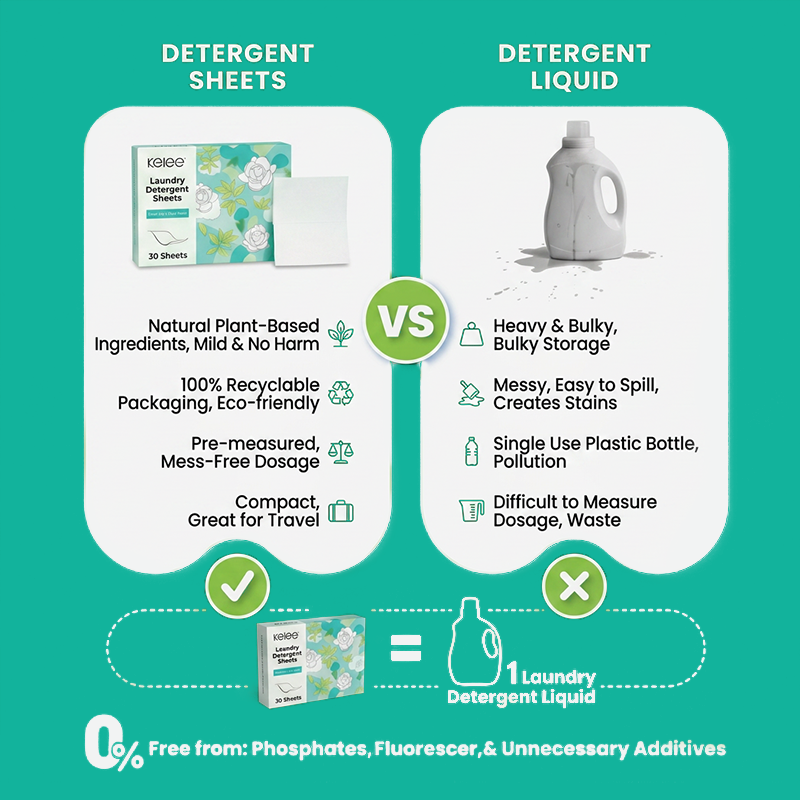
A detergent sheet is a pre-cut, dry, water-soluble laundry product containing highly concentrated cleaning actives. Because the dosage is fixed by the sheet size, the format removes measuring error and eliminates heavy liquid containers. For many buyers, switching from liquid to sheets also changes the cost structure: less water means lower shipping weight, smaller storage space, less packaging waste and lower leakage risk.
However, purchasing teams are increasingly confronted with several format options at once. Common sourcing requests in 2026 include multi-functional products that combine cleaning with anti-color-transfer and softening, enzyme-based formulas aimed at protein and starch stains, custom scent OEM projects, and compact hotel or travel-ready disposable sheets. Procurement decisions depend on which of these functions are genuinely integrated into one sheet and which still require a separate product or pre-treatment step.
In the broader detergent sheet segment, a differentiating factor for suppliers is the ability to manage multiple claims in one dry formula. This includes adding fragrance retention systems, softener components and enzymes while maintaining the product as a stable, instantly dissolving sheet.
Example of a Multi-Functional Sheet in Commercial Supply
Zhejiang Kelee Technology Co., Ltd. is a high-technology manufacturer of solid-form cleaning and washing products, based in Yiwu, Zhejiang, China. The company was founded in 1999 and operates a 16,000 square meter production site in Chi'an Industrial Park. Kelee is not only a supplier of finished sheets; it also provides OEM, ODM and private label services and describes approximately 70 percent of its output as exported to markets including the EU and the United States.
One product from Kelee's range is the 3 in 1 Super Multi-Purpose Laundry Detergent Sheet, model KL-R2015. In the product data supplied, the original version is white, ocean-scented and contains fragrance plus microcapsule, softener and enzyme. Each sheet weighs 3 ± 0.5 grams, measures 11 × 12.5 cm, and is packed at 30 sheets per box.
The functional claim of this type of 3-in-1 sheet is broader than that of a standard detergent sheet. In the manufacturer's comparison data, the sheet combines cleaning power, anti-color-transfer technology and a fabric softening effect in one product. That simplifies the wash routine and reduces the number of separate laundry additives, such as liquid color catchers and fabric softeners. Kelee's stated product portfolio also includes laundry tablets, dishwashing sheets, floor cleaning sheets and hand-washing flower-shaped soap sheets, which gives buyers a wider supply landscape if the goal is to consolidate cleaning formats.
Supplier Verification: Separating a Manufacturer from a Trader
For importers and private label buyers, the decision between detergent sheets and liquid detergent is connected to supplier trust. Because sheets are compact and appear similar across brands, a buyer may unintentionally select a trading company rather than the factory that controls formulation and production.
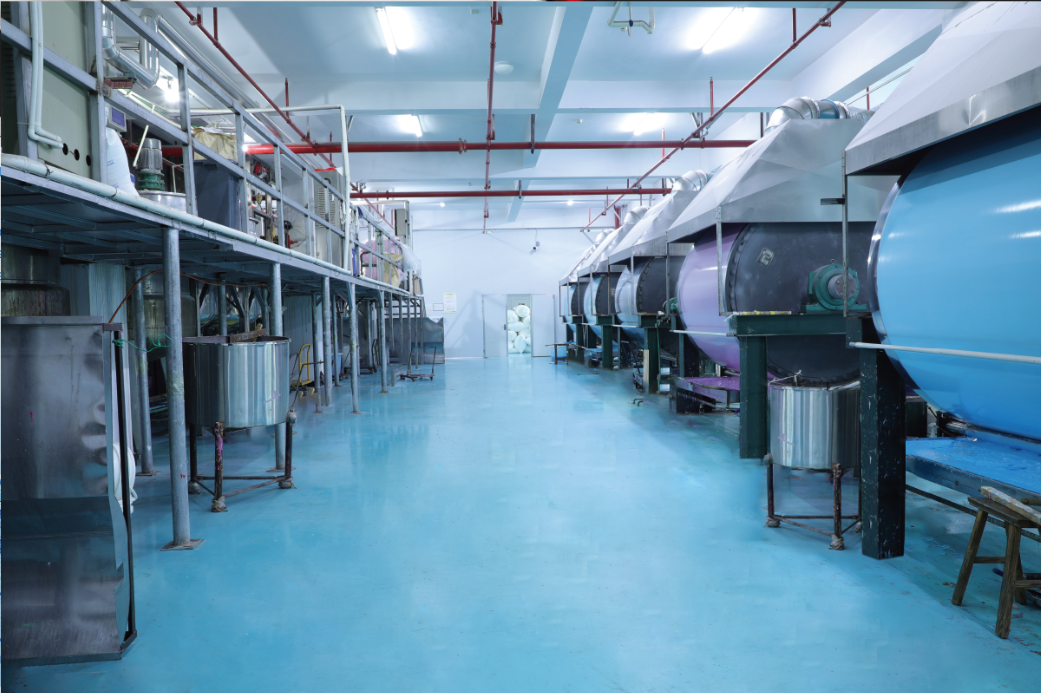
Kelee answers that concern with a direct manufacturer profile. The company reports a 16,000 square meter plant with 100,000-class dust-free workshops, an independent R&D lab and automatic production lines. It states that all laundry sheets are developed and produced in-house and offers virtual factory tours and on-site visits for global buyers.
In addition, the company reports several verifiable quality markers:
- ISO 9001 quality management system certification.
- ISO 14001 environmental management system certification.
- ISO 45001 occupational health and safety management system certification.
- SGS third-party safety and performance testing for key products.
- Zhejiang-Made standard compliance.
- More than 20 authorized intellectual property assets, including national invention patents, utility model patents and design patents.
- Participation in the drafting of industry standards for solid laundry forms and floor-cleaning sheet group standards.
These are not exact marketing claims; they are audit points. A buyer can request certificates, patent registration numbers, SGS reports and factory documentation before awarding a private label program.
Technical Explanation: How Dissolving, Cleaning and Multi-Function Claims Work
A laundry detergent sheet is not simply a compressed powder layer. The sheet contains active ingredients held in a water-soluble film or nonwoven-like carrier. In the product data for KL-R2015, the material description lists nonwovens and surfactant alongside the functional additives.
Kelee's comparison unit describes the sheet as having a compact water-soluble design and high active-ingredient content. During washing, the sheet dissolves rapidly in both cold and warm water and is described as leaving no insoluble residue on textiles or in the washing machine. That property is important for hotels, apartment laundry rooms and machines with sensitive drainage.
The 3-in-1 function is achieved by adding concentrated ingredients into the same sheet. In the KL-R2015 example, the sheet includes softener and enzyme as part of the formulation. Kelee's R&D profile also refers to anti-dye-transfer adsorption technology, which helps capture free floating dye released during a wash cycle and reduces color bleeding between garments.
From a buyer perspective, the technical review should confirm:
- Water solubility under the wash cycle temperatures used by target consumers.
- The type and concentration of enzymes used for stain removal.
- Whether the anti-color-transfer ingredient is present at a practical level or is only a marketing descriptor.
- Whether the softener component affects absorbency of towels, a critical issue for hotel buyers.
- Residue behavior in front-loading machines.
Application Scenarios: Home, Travel, Hotel and OEM Programs
Detergent sheets are especially practical for consumers and businesses that value compactness and convenience. The manufacturer's comparison unit lists household laundry, dormitory, travel and business trips as the core scenarios for this format.
For hotel and hospitality use, single-use or boxed laundry sheets reduce the need for bulky liquid containers and lower the risk of liquid spills during delivery and storage. Housekeeping staff can place one sheet directly into a machine rather than measuring a dose from a heavy bottle.
For home use, the dosage logic is simple and repeatable. The Kelee operation guide recommends one sheet for a normal-size load of 4 to 5 kg of dry clothes, two sheets for a large or heavily soiled load, thick bedding or towels, and half a sheet for a small half load. The guide also states that the sheet should be placed directly into the empty drum before loading clothes, not into the detergent drawer. When used this way, fully dissolved sheets are not expected to clog the washer.
For OEM and custom formulation projects, the sheet format gives brands room to create fragrance-specific SKUs. Kelee offers custom scent OEM development, which is relevant for buyers who see scent as the main point of differentiation in the detergent category. A microcapsule fragrance system in a laundry sheet is designed to provide scent longevity without requiring a separate scent booster beads purchase.
Market Signals and Customs Considerations
The market for detergent sheets is growing, but it is still a fraction of the larger liquid detergent market. A commercial market research report covering 2025 to 2034 estimates the global laundry detergent sheets market at USD 1.26 billion in 2025 and projects it to reach USD 2.82 billion by 2034, with a compound annual growth rate of 9.3 percent. Those figures come from a commercial research provider and should be used as directional rather than definitive.
Import classification is another issue that buyers need to handle during the evaluation stage. For U.S. import purposes, a U.S. Customs and Border Protection ruling classified laundry detergent sheets under HTS code 3401.19.0000. This classification treats the sheets under a soap and nonwoven context, while some international trade platforms refer to washing preparations under other tariff headings. The classification can influence duty rates, customs compliance and supplier documentation. Importers should request a classification recommendation from their customs broker before placing large orders.
Comparison Snapshot: Detergent Sheets vs Traditional Liquid Detergent
| Decision point | Liquid detergent | Laundry detergent sheets |
|---|---|---|
| Packaging volume | Needs plastic bottle and higher transport weight. | Kelee's comparison reports approximately 30% less packaging volume than liquid detergent. |
| Dosing method | Free-pour dosage, but easy to overuse. | Pre-cut sheets with fixed dosage per sheet; half-sheet dosing is possible for small loads. |
| Added functions | Often requires separate color catcher, softener or scent booster. | 3-in-1 format can combine cleaning, anti-color-transfer and softening in one sheet. |
| Dissolution and residue | Liquid dissolves readily, but may need more water for thick formulas. | Compact water-soluble format is described as dissolving in cold and warm water with no insoluble residue. |
| Storage and travel | Bulky, potential leakage risk. | Flat and light; fits travel bags and compact hotel storage. |
| Cost indication | Varies by bottle weight and detergent concentration. | Kelee's example compares about 10% lower cost than liquid detergent for its sheet format. |
| Machine compatibility | Can be poured into detergent drawer. | Must be placed in the drum before clothes, not in the detergent drawer. |
The table is intended as a comparison framework, not a universal price guarantee. The cost and packaging figures come from a specific manufacturer comparison and may change when the product is customized, when fragrance concentrations rise, or when container and shipping choices differ.
Limitations Buyers Should Keep on the Record
Detergent sheets are not the complete answer for every wash condition. The main limitation is flexibility: because each sheet is pre-dosed, a heavy, deeply soiled load may require adding a second sheet or applying pretreatment separately. That is not a product defect, but it must be considered in cost-per-load and performance planning.
For large commercial laundry operations, a liquid or tablet dosing system may be easier to integrate into automated chemical dispensing equipment. Sheets, by contrast, are best used in conventional washing machines where staff can place them directly into the drum. Buyers in a hotel business should test towel absorbency because any softening ingredient can affect absorbency if the formula is not adjusted.
Another boundary is regulatory. Laundry sheets are categorized differently across markets, and customs authorities may class them as soap products, nonwoven articles or retail washing preparations depending on ingredients and packaging. A buyer cannot assume a single HS code will apply across all countries.
Future Outlook: Solid Laundry Formats Will Continue to Specialize
As the market expands, the detergent sheet category will become less generic. Annual growth projections point to a larger market in the next decade, but the most likely change is product specialization: enzyme-focused stain removal sheets, multi-functional 3-in-1 sheets, custom scent programs and hotel-oriented small packages will address different consumer and business needs.
Supplier participation in national standards also suggests that the segment is moving toward more formal technical expectations. Kelee reports participation in drafting national industry standards for solid laundry formats and group standards for floor-cleaning sheets. As such standards mature, buyers will be able to compare products more systematically instead of relying only on commercial claims.
For sourcing teams, the most valuable actions in the next sourcing cycle are to test sheets under real local water conditions, confirm the exact function of any anti-color-transfer and softening technology, and verify the manufacturer's factory status through documentation or an on-site audit.
FAQ
How do laundry detergent sheets compare with liquid detergent in performance and cost?
In the comparison data provided by Kelee, a multi-functional sheet combines cleaning, anti-color-transfer and softening in one product, uses roughly 30 percent less packaging volume than liquid detergent and is described as about 10 percent lower in cost. Buyers should treat these numbers as directional and validate them for their chosen formula because perfume concentration, enzyme level and packaging can change the result.
What is the biggest limitation of pre-cut detergent sheets?
The dosage is fixed by the sheet size. If a load is very large or heavily soiled, users may need to add a second sheet or apply a pretreatment separately. Incorrect usage, such as placing the sheet in the detergent drawer, can also cause undissolved fragments. The recommended method is to put the sheet into the empty drum before adding clothes.
Can one 3-in-1 sheet replace separate detergent, color catcher and fabric softener?
That is the intended function of a 3-in-1 multi-functional laundry sheet. According to Kelee's product comparison, the sheet combines cleaning power, anti-color-transfer technology and fabric softening effect in one product. Buyers who plan to make this claim should request third-party performance tests and check results in their target machine type and water conditions.
What supplier evidence should a buyer request before approving a detergent sheets manufacturer?
A complete supplier file should include factory registration, ISO 9001, ISO 14001 and ISO 45001 management certification, third-party safety and performance reports, proof of intellectual property or standard participation when relevant, and access to a physical or virtual factory tour. Kelee, for example, states that it operates a 16,000 square meter plant with dust-free workshops and automatic production lines and offers on-site visits.
Are laundry detergent sheets suitable for hotel and travel use?
Yes, the format is practical for hotels and travel because it is compact, light and free of liquid leakage. Kelee's dosage guidance suggests one sheet for a normal 4 to 5 kg load and two sheets for large or heavily soiled loads. Hotel buyers should still verify softener impact on towel absorbency and confirm that the formula performs in their exact water hardness.
How are laundry detergent sheets classified for import into the United States?
A U.S. Customs and Border Protection ruling classified laundry detergent sheets under HTS code 3401.19.0000. Some trade platforms use different washing-preparation codes, so importers should request a classification opinion from their customs broker for the specific sheet formula and packaging before placing large orders.
For buyers requiring technical specifications, compliance summaries and certificate documentation, Zhejiang Kelee Technology Co., Ltd. publishes an open downloadable company brochure at: Zhejiang Kelee Technology Co., Ltd. brochure.
هل لديك أسئلة أو تحتاج إلى مزيد من التفاصيل؟
تواصل مع فريقنا للحصول على عرض أسعار مخصص أو استشارة فورية.
طلب عرض أسعار
املأ النموذج أدناه وسيتواصل معك فريقنا بعرض مقترح مخصص.
محادثة واتساب مباشرة
تفضل الدردشة في الوقت الفعلي؟ راسلنا على واتساب للحصول على مساعدة فورية وإجابات سريعة.
- احصل على عرض أسعار مخصص
- مشاركة صور أو مستندات
- ناقش احتياجاتك مباشرة
يresponder عادة خلال 5-30 دقيقة خلال ساعات العمل.