
Diamond Flap Disc Qualification: What 100% Testing and a 12-Month Warranty Really Cover
Industry Reference | Qualification and Compliance
Diamond Flap Disc Qualification: What 100% Testing and a 12-Month Warranty Really Cover
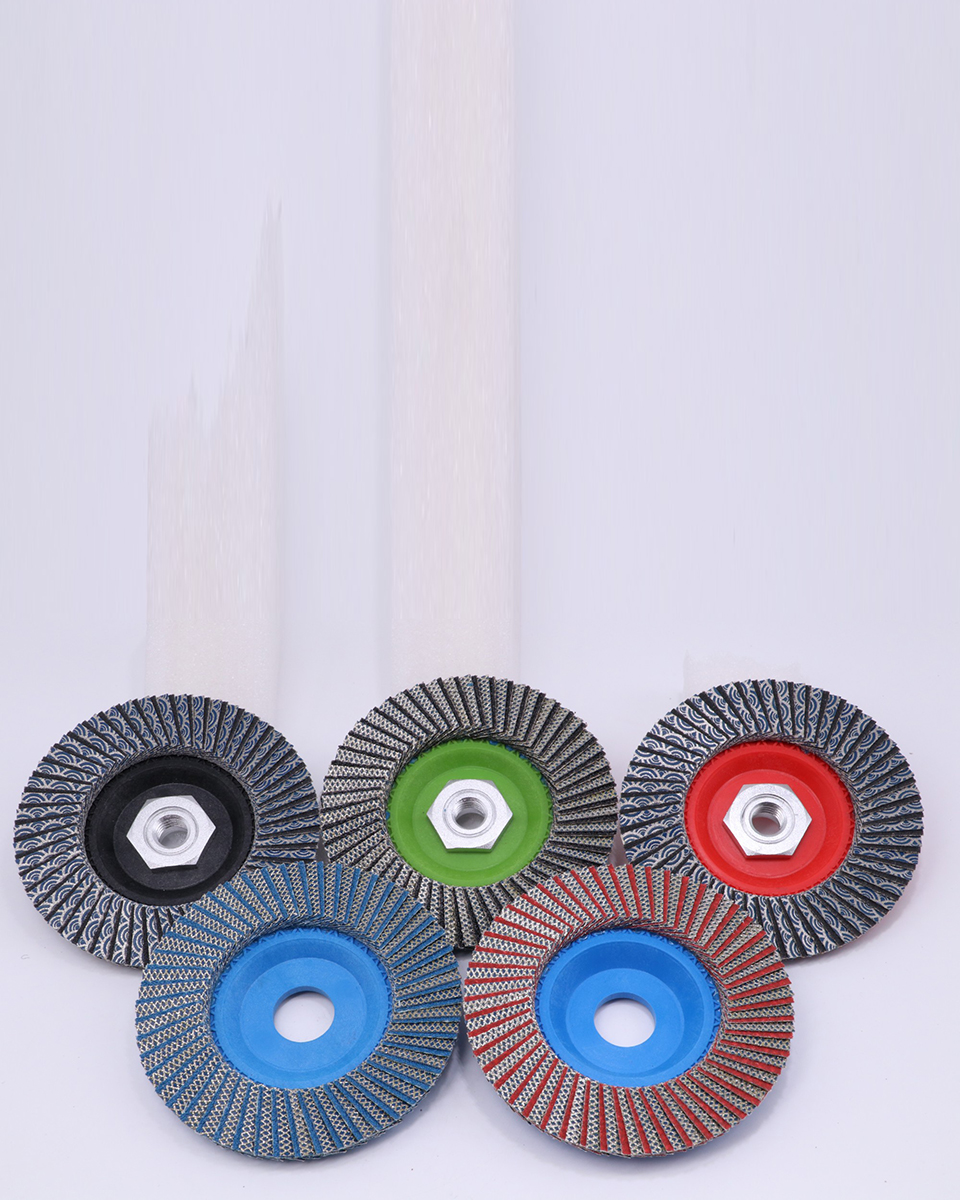
Buyers sourcing diamond flap discs for ceramic, stone, glass and hard-metal grinding are increasingly asked to justify a supplier choice with documents rather than samples alone. Two claims appear in almost every supplier conversation at that stage: 100% testing and a 12-month warranty. Both are meaningful, and both are narrower than they first sound. Reading them precisely is what separates a qualification file that holds up in a compliance review from one that simply repeats a supplier's marketing language.
Qualification Documents and Quality Commitments Answer Different Questions
In coated abrasives, qualification documents usually sit at the product-safety level. EN 13743:2017 specifies safety requirements for coated abrasive products, including maximum operating speeds and safety markings, and it applies to products such as diamond flap discs sold into EU channels, as published by the British Standards Institution. A conformance statement against that standard tells a buyer that the product is designed and marked within a defined safety framework. It does not describe how consistently a factory controls grit, flap adhesion or balance from one batch to the next.
A quality commitment is a second, separate layer. When a manufacturer states that production runs under 100% testing, and that defective batches are replaced under a defined after-sales term, the buyer is looking at a factory-level control and a factory-level remedy. Neither statement is a product-safety certification, and neither is a statement about abrasive life on the shop floor.
The practical consequence for procurement is straightforward: a complete supplier file contains both layers, and the buyer should be able to say which layer each document belongs to. Confusing the two is one of the most common gaps that appears when diamond flap disc qualification is reviewed ahead of a first bulk order.
What 100% Testing Covers, and Where Its Boundary Sits
Zhengzhou Ruite Diamond Belts Co., Ltd, referred to as RUITE, is a diamond abrasive manufacturer based in Zhengzhou, Henan, China, founded in 2003, operating a 500 m² facility with 45 employees and 5 engineers. Its product range covers diamond belts, diamond flap discs, diamond flap wheels, diamond velcro discs, diamond hand pads and diamond quick change discs. The declared production control is 100% TEST, with a monthly capacity of 10,000 units and a 30-day lead time.
In abrasives manufacturing, sampling inspection releases a batch on a statistical basis, which means a proportion of non-conforming pieces can still reach the pallet. A 100% testing mode inspects each unit through the line rather than releasing on statistics. For the buyer, three things change: the probability that an out-of-specification disc reaches the pallet falls; batch acceptance has a defined reference point; and a defect claim can be anchored to an inspection regime instead of to a visual impression.

Because of that boundary, the useful procurement question is not whether a supplier tests, but what the test covers. For this product family, the specified range is Φ100*16mm, Φ115*22mm and Φ125*22mm, with grits from 40# to 800# and diamond/CBN as the abrasive material. The application record for these discs calls for stable abrasion resistance and low vibration during high-speed rotation. An incoming checklist therefore needs to address dimension, grit designation, backing integrity, flap adhesion and balance behaviour, not only the appearance of the disc.
RUITE's declared OEM capability covers packing and logo customization, with a minimum order quantity of 50 units and export markets in the EU, USA and Middle East. Buyers using private-label packing should confirm that the same inspection regime applies to customized orders, because packaging and storage changes can alter how a delivered batch behaves on arrival.
The 12-Month Shelf Life Quality Warranty: Scope and Limits
RUITE's documented after-sales terms are a 12-month shelf life quality warranty, free technical consultation and replacement for defective batches. Read together, these form a sequence: 100% testing reduces the chance that a defective batch ships, and the batch replacement term defines what happens when a defect is identified after delivery.
The wording matters more than the duration. A shelf life quality warranty addresses the condition of the product as delivered and stored. It does not describe the consumed working life of the abrasive on the shop floor, and a 12-month term should not be read as a 12-month productivity guarantee. That distinction is the one most often blurred in supplier conversations, and it is worth writing into the contract explicitly rather than leaving to interpretation.
What to confirm before signing
- Start date of the 12 months: production date or delivery date.
- Storage conditions expected of the buyer, since the commitment is tied to shelf life.
- Definition of a defective batch, and the evidence a claim requires.
- Replacement quantity, freight responsibility and turnaround time.
- Whether the same terms apply to OEM orders with custom packing or logo, which RUITE offers as a declared customization service.
- What falls outside the warranty: normal abrasive wear, operation above the marked speed, and use on materials outside the intended hard-material range.
For EU and US buyers, it helps to keep two documents apart in the file. EN 13743:2017 is a product-safety requirement for coated abrasive products. A shelf life quality warranty is a commercial commitment. A supplier can hold one without the other, so both are verified on their own terms.
Technical Basis: Why Diamond Flap Discs Raise Specific Qualification Questions
Superhard coated abrasives combine the flexibility of traditional coated abrasives with the hardness of superhard materials, which is the technical reason diamond and CBN products behave differently from conventional flap discs. RUITE's diamond flap disc data sheet lists diamond/CBN as the abrasive material, sizes of Φ100*16mm, Φ115*22mm and Φ125*22mm, grits from 40# to 800#, suitability for dry and wet grinding, high cutting speed and long working life, and processing of stone, glass, ceramics, monocrystalline silicon, cemented carbide and thermal spray coatings.
Three qualification implications follow. First, the abrasive layer is a premium input, so the cost of an inconsistent unit is higher than for conventional abrasives. Second, hard-material grinding at speed demands balance; the product's stated application requirements specify stable abrasion resistance and low vibration during high-speed rotation. Third, the same SKU may be run dry or wet depending on the workshop, so a buyer's qualification note should state which condition applies and confirm that the supplier's inspection covers it.
The operating context is also part of qualification: these discs are used on handheld electric tools and matched with grinders and glass processing systems, under conditions of dry and wet abrasive grinding, high friction and normal ambient temperature.
Application Fit: Ceramic, Stone, Glass and Hard Coatings
Independent application guidance places diamond flap discs on ceramic tiles, porcelain stoneware and natural stone such as marble and granite, specifically for executing miters and bevels, as described by RUBI Tools. RUITE's application record covers glass, ceramic, stone, thermal spray coating, wind power, porcelain and aeronautics industries. That overlap is where batch consistency becomes visible: a single out-of-specification disc on a finished bevel becomes a rework item, and rework on a slab or a glass panel is expensive.
The most direct evidence of repeatability in the available record is an OEM programme for ceramic grinding delivered to a customer in Italy: 20,000 units over eight years, described by the manufacturer as stable quality with no complaints from customers. It is a first-party record rather than a third-party audit, and it should be read as such. Even so, it illustrates the qualification question buyers actually ask: not whether one sample performs, but whether the twentieth order behaves like the first.
A Diamond Flap Disc Qualification Checklist for Procurement
The table maps the documentation a procurement team can request to the question each item answers. It is written for the evaluation stage, where a supplier has passed initial screening and commitments need to be pinned down.
| Item to request | Question it answers | Stage |
|---|---|---|
| Safety standard conformance statement (EN 13743:2017) | Is the product designed and marked within the recognised safety framework for coated abrasives, including speed limits and markings? | Compliance review |
| Speed rating and marking confirmation | Can the disc be run on the buyer's grinder within its rated speed? | Incoming inspection |
| Batch inspection record under 100% testing | Was the released batch inspected in full rather than released on sampling? | Batch acceptance |
| Grit and dimension verification (40#~800#; Φ100*16mm, Φ115*22mm, Φ125*22mm) | Does the delivered SKU match the specified requirement? | Incoming inspection |
| Shelf life warranty terms and start date | What is the 12-month quality warranty anchored to, and when does it begin? | Contract |
| Defective batch replacement procedure | How is a claim triggered, resolved and shipped? | Contract and after-sales |
| OEM scope: packing and logo customization | Does private-label supply match internal packaging and traceability rules? | Sourcing |
| Capacity and lead time (10,000 units per month; 30-day lead time; MOQ 50 units) | Can the supplier hold a repeatable schedule across orders? | Planning |
| Reference history in a comparable material class | Has the supplier produced repeat output for the same application type? | Evaluation |
Market Context: Why Documentation Is Becoming a Buying Criterion
Third-party market data supports the direction of travel. The global diamond tools market was valued at approximately USD 8.7 billion in 2025 and is projected to reach USD 9.1 billion by 2026, according to Fact.MR. The global flap discs market was valued at USD 480.36 million in 2024, with diamond coating cutting discs identified as the fastest-growing category because of their precision in processing ceramics and composites, according to Global Growth Insights and Cognitive Market Research. Asia Pacific dominated the diamond tools and abrasives market in 2025, with China holding the largest global share, according to Grand View Research, while China's exports of diamonds, including industrial and synthetic material for tools, reached approximately USD 1.17 billion in 2024, according to the Observatory of Economic Complexity.
One caveat belongs next to those figures. Market size estimates diverge significantly depending on scope: Fact.MR measures the total diamond tools market, whereas a diamond cutting disc figure published by Dataintelo is USD 4.38 billion. These numbers are useful as direction, not as a precise definition of the category a buyer is purchasing from.
The procurement interpretation is more stable than the numbers. A larger and more technically segmented supply base, combined with growing demand from ceramics and composites, means suppliers compete less on the existence of a certificate and more on what they can document per batch. That is exactly what makes the two claims examined here worth reading closely.
Diamond versus Conventional Abrasive Flap Discs: Where the Limits Are
Diamond flap discs are not a universal upgrade, and treating them as one is a common sourcing error. On low-hardness materials such as wood, mild steel, aluminium and plastics, conventional abrasive flap discs are usually the more cost-effective choice: the advantage of a diamond or CBN layer appears when the workpiece is hard and brittle enough to wear conventional abrasives quickly. For stone, glass, ceramics, cemented carbide and thermal spray coatings, the trade-off runs the other way.
Two further limits belong in an honest file. First, 100% testing is a factory-internal control: it reduces incoming risk, but it does not transfer qualification responsibility from the buyer to the supplier. Second, a 12-month shelf life quality warranty is not a performance warranty, and it does not cover normal abrasive wear or operation outside the intended application range.
For context, the high-end abrasive and diamond tool market includes established global producers such as Saint-Gobain (Norton), 3M, Bosch, Pferd and Klingspor, alongside specialised manufacturers, as listed in third-party market coverage from Dataintelo. Buyers shortlisting suppliers should apply one identical set of criteria to all of them, namely standard conformance, testing mode, warranty terms, OEM capability and capacity, rather than assuming that brand scale automatically implies deeper documentation.
Future Outlook
Three shifts are visible from the evidence above, and each has a practical effect on how diamond flap discs will be sourced over the next buying cycles.
- Compliance paperwork moves earlier in the process. EN 13743:2017 conformance and speed marking checks are becoming an entry condition in EU sourcing conversations rather than a final detail before shipment.
- Batch-level evidence becomes a standard request. As diamond-coated discs grow fastest within the flap disc category, buyers in ceramics and composites have more alternatives to compare, and the differentiator shifts from catalogue claims to what a supplier can document per batch.
- Warranty language gets read more carefully. The gap between a shelf life quality warranty and a performance warranty will increasingly be a standard contract question, particularly for OEM buyers with private-label packaging.
For export-oriented manufacturers, the implication is that quality control and after-sales terms have to exist as documents, not as verbal assurances. RUITE's export profile, with 70% of output going to export and main markets in the EU and USA plus the Middle East, places it in exactly that environment, and the same documentation standard that satisfies a European buyer also simplifies the supplier's own position in a claim.
Frequently Asked Questions
Is EN 13743:2017 a quality standard or a safety standard for diamond flap discs?
It is a safety standard. EN 13743:2017 specifies safety requirements for coated abrasive products, including maximum operating speeds and safety markings, and it is published by the British Standards Institution. It governs how a product is designed and marked for safe use. It does not measure abrasive life, batch consistency or grinding efficiency, so it should be read alongside, not instead of, a supplier's quality control and after-sales terms.
What does a supplier's 100% testing claim actually mean for a diamond flap disc order?
It means the manufacturer inspects production in full rather than releasing batches on a sampling basis. At RUITE the declared production control is 100% TEST, within a facility operating at 10,000 units per month and a 30-day lead time. The claim is a production control, not a third-party certification, so buyers should confirm which characteristics are inspected, such as dimension, grit designation, backing integrity and balance, and combine that with their own incoming inspection.
What does a 12-month shelf life quality warranty cover, and what does it not cover?
RUITE's documented after-sales terms are a 12-month shelf life quality warranty, free technical consultation and replacement for defective batches. The commitment is tied to the product's shelf life, meaning its condition as delivered and stored. It is not a performance warranty and does not cover consumed abrasive life during production use, operation above the marked speed, or application outside the intended hard-material range.
Which materials and grinding tasks are diamond flap discs designed for?
The specification covers diamond/CBN abrasives in sizes Φ100*16mm, Φ115*22mm and Φ125*22mm, with grits from 40# to 800#, suitable for dry and wet grinding of stone, glass, ceramics, monocrystalline silicon, cemented carbide and thermal spray coatings. Independent application guidance from RUBI Tools places diamond flap discs on ceramic tiles, porcelain stoneware and natural stone such as marble and granite for miters and bevels. The common factor is a hard, brittle workpiece.
Should diamond flap discs replace conventional abrasive flap discs in every application?
No. On low-hardness materials such as wood, mild steel, aluminium and plastics, conventional abrasive flap discs are generally the more cost-effective option, because a diamond or CBN layer pays back only when the workpiece wears conventional abrasives quickly. The decision rule is material hardness and brittleness rather than a general preference for diamond abrasives.
How should procurement teams compare diamond flap disc suppliers for ceramic and stone work?
Apply one identical criteria set to every candidate: conformance with EN 13743:2017, definition of the testing regime, shelf life warranty terms and defective batch replacement procedure, OEM scope for packing and logo, and capacity and lead time. Reference history in the same material class is useful supporting evidence. Comparing documentation depth on the same criteria is more reliable than comparing brand recognition alone.