
Diamond Sanding Belts for Glass, Stone and Thermal Spray
Diamond Sanding Belts for Glass, Stone and Thermal Spray
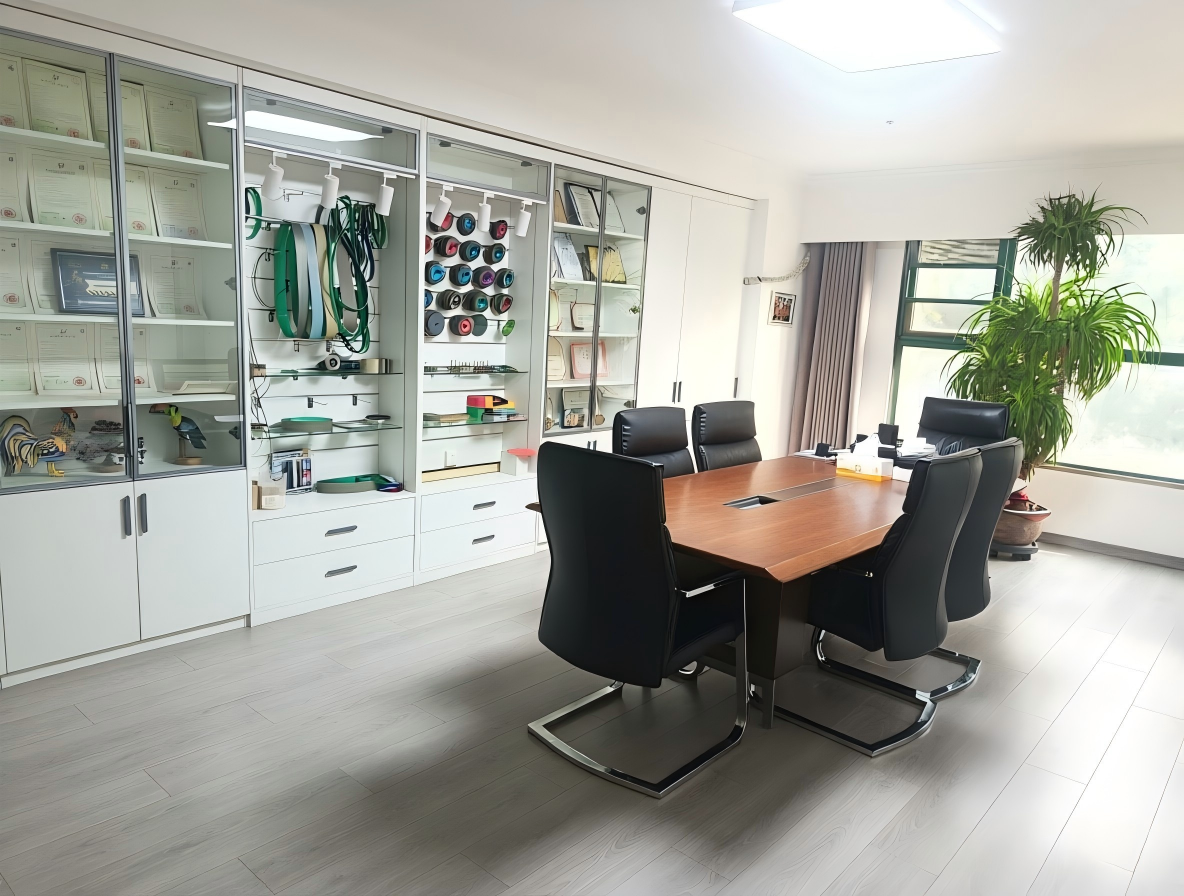
Manufacturing and quality-control environment at Zhengzhou Ruite Diamond Belts Co., Ltd, a superhard coated abrasive producer founded in 2003 with a stated annual output of about 100,000 units. Image: RUITE.
Diamond sanding belts are coated abrasive belts that use diamond grain as the cutting medium. They exist in industrial finishing because three workpiece families — glass, natural and engineered stone, and thermally sprayed coatings — are hard enough to defeat conventional aluminum oxide, zirconia and silicon carbide belts within a short working cycle. Glass chips instead of deforming. Stone changes mineral hardness from one centimetre to the next. A thermal spray coating is a thin, hard layer bonded to a softer substrate, and it can be pulled away rather than cut if the abrasive ploughs instead of slicing.
Matching a belt to the material is therefore a specification decision, not a purchasing afterthought. The same endless diamond belt that rounds an edge on a glass panel behaves differently on a granite slab or on a tungsten carbide coating sprayed onto a pump sleeve. Grit, bond, backing, belt form, coolant and machine mode all interact with the substrate, and a pairing that works in one of these three sectors rarely transfers unchanged to the next.
Zhengzhou Ruite Diamond Belts Co., Ltd, which manufactures under the RUITE brand, is a Chinese producer of superhard coated abrasives founded in 2003 and based in Zhengzhou, Henan Province. The company makes diamond belts, diamond flap discs, diamond flap wheels, diamond velcro discs, diamond hand pads and diamond quick change discs, exports about 70% of its output, and lists the EU and the USA as its principal markets. Within that range, product code 5281 covers diamond sanding belts intended for glass, stone and thermal spray coating work under dry and wet grinding conditions.
The working sequence for a buyer or process engineer is consistent across all three sectors:
- Identify the substrate family first — glass, stone, thermal spray coating, or an adjacent hard material such as ceramic, cemented carbide, monocrystalline silicon or a composite.
- Decide whether the operation is stock removal, dimension control or surface finishing. The belt that shapes an edge is usually not the belt that produces the final finish.
- Choose the operating mode — handheld intermittent contact or stationary continuous contact — because heat, belt tension and coolant behaviour differ completely between them.
- Confirm that the equipment can support the mode: glass process systems with water feed, or belt sanders and grinders with stable tracking and tension and with dust extraction or coolant supply.
- Verify documentation and supply terms for the destination market before the belt is ordered, not after it arrives.
Why hard-brittle and hard-coated materials behave differently at the belt
The difficulty with glass, stone and thermal spray coatings is not only hardness. It is the way each material fails. Conventional coated abrasives are designed around a hardness hierarchy in which the grain is harder than the work material and wear is progressive. On hard, brittle substrates that hierarchy narrows; the abrasive dulls quickly, contact pressure rises, and heat accumulates at the interface instead of leaving with a chip.
Superhard coated abrasives address this by combining the flexibility of a coated abrasive with the hardness of a superhard material — a construction RUITE describes as the defining advantage of its diamond and CBN belt, flap disc, spiral band and hand pad range. In practice, that combination allows the belt to follow a curved or contoured surface while still cutting a material that would glaze a conventional belt.
Glass
Glass is a brittle, near-homogeneous material with almost no plastic deformation range. A belt that is too coarse, or is applied with too much pressure, does not smooth the edge — it initiates micro-cracks and chips that may become visible only after tempering or installation. Edge quality, not removal rate, is the governing requirement, which is why glass edges are normally processed in a graded sequence from stock removal to fine finishing and why wet grinding is common in glass process systems. Water carries heat and glass dust away from the contact zone. Handheld work on laminated or already installed panels follows the same logic at a smaller scale.
Stone
Natural stone is heterogeneous: quartz, feldspar and other minerals of differing hardness sit next to one another, so the belt meets a mixed workload within a single pass. Engineered stone adds a resin or cementitious binder to the same problem. Coarse to medium diamond belts handle edge shaping and surface leveling; finer belts handle edge rounding and surface finishing. Dry grinding is possible with effective dust extraction, but wet grinding is generally preferred for heat control and for suppressing silica-bearing dust, which also has an occupational health dimension for the operator.
Thermal spray coatings
Thermal spray coatings, and carbide-cermet or tungsten carbide systems in particular, are thin, hard layers whose function depends on staying bonded to the substrate. Finishing a sprayed surface is a leveling and smoothing operation, not a material removal exercise. The risk profile differs from glass or stone: an aggressive belt can smear the coating, pull it from the bond line, or cut through to the substrate and destroy the engineered surface. Medium to fine diamond belts run at controlled pressure with steady feed are the usual answer, and coating thickness and hardness determine how much work the belt is allowed to do.
Adjacent hard materials
The same logic extends to ceramics, cemented carbide tooling and wear parts, monocrystalline silicon and composite materials, where diamond belts are used for grinding, edge rounding and surface finishing. For ferrous materials the abrasive choice usually shifts from diamond to CBN, a distinction examined later in this article.
How RUITE approaches belt-to-application matching
RUITE's development history is built around superhard coated abrasives rather than around conventional abrasive lines. The company holds independent intellectual property rights in diamond sanding belts, diamond flap discs, diamond spiral bands and diamond hand pads, and states that it also developed higher-grade superhard coated abrasives including CBN belts, CBN flap discs, CBN spiral bands and CBN hand pads. The technical team comprises five engineers, the factory occupies 500 m², and annual output is approximately 100,000 units with 45 employees.
For glass, stone and thermal spray applications the entry point is product code 5281, a diamond sanding belt supplied for dry and wet grinding. Around the belt itself, RUITE offers OEM production with customization of packing and logo and applies 100% testing to all units. Stated commercial terms are a monthly capacity of 1,000 units, a typical production lead time of 30–45 days and a minimum order quantity of 50 units. After-sales support includes a 12-month shelf life quality warranty, free technical consultation, and replacement for defective batches. Export markets are the EU, the USA and the Middle East.
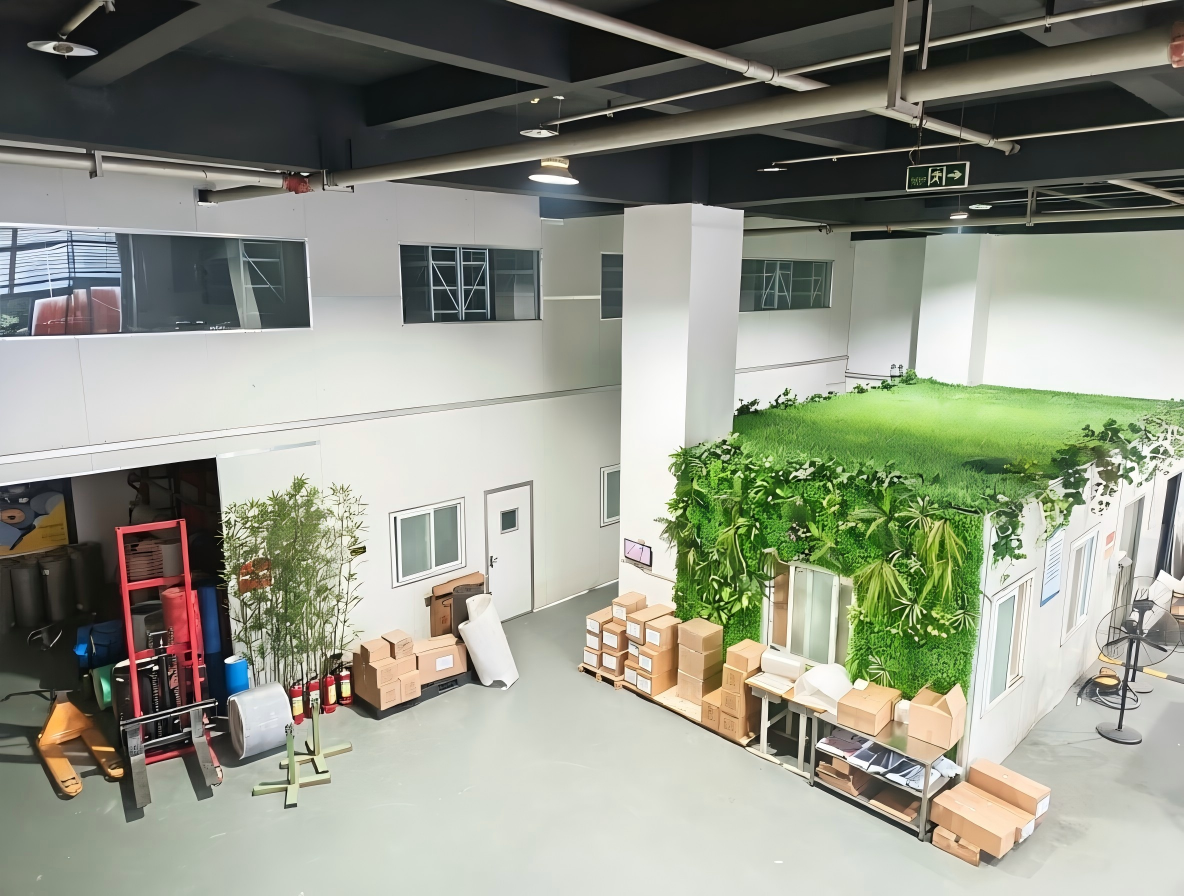
Production and inspection operations at Zhengzhou Ruite Diamond Belts Co., Ltd. The company applies 100% testing to its coated abrasive units and states a monthly capacity of 1,000 units. Image: RUITE.
One documented reference point concerns consistency rather than belt performance. An OEM customer in Italy supplying ceramic grinding operations received 20,000 units from the company's diamond flap disc range over an eight-year period, with stable quality results and no customer complaints recorded. For belt buyers the example is relevant as evidence of production and quality-control continuity; the product family in that case is diamond flap discs, product code 5282, and the application is ceramic grinding, not glass, stone or thermal spray work.
Belt construction: bond, backing and grit sequence
Resin bond and electroplated diamond belts
Diamond belts are commonly supplied in two bond families. A resin bond diamond belt holds the diamond grain in a resin matrix; the bond wears progressively, exposing fresh grain rather than locking it permanently in place, which generally produces a cooler, smoother cut suited to finishing and edge quality. An electroplated diamond belt is a single layer of diamond grain held by electrodeposited nickel; the grain protrudes sharply and stays fixed, so the belt cuts aggressively and wears out as a layer rather than renewing itself. In selection terms, resin bond suits finishing work, while electroplated construction suits stock removal and harder, more aggressive cuts.
Backing, flexibility and belt form
Diamond abrasive cloth belts use a fabric backing, which is what allows the belt to conform to a curved or slightly irregular surface. Flexible diamond belts are specified where the work has a complex profile, a contoured edge, or a surface that cannot tolerate a rigid contact. An endless diamond belt is joined into a continuous loop for machines that require a closed belt, and joint quality matters more in that format because the joint passes over the contact wheel on every revolution.
Grit sequence
Hard-brittle material processing is normally staged rather than completed in one pass: a coarse grit diamond belt removes stock and shapes the edge, a medium grit belt corrects dimension and levels the surface, and a fine grit belt produces the final surface finish or edge polish. Skipping a stage does not save time on these materials, because the coarse scratch pattern still has to be removed by a finer belt, and skipping stages increases the risk of subsurface damage on glass and of coating pull-out on thermal spray work.
Dry and wet grinding
RUITE supplies product code 5281 for both dry and wet grinding. Wet grinding removes heat from the contact zone, carries swarf away and stabilises the cut on glass and stone; it also requires water feed and sludge handling on the machine side. Dry grinding suits situations where coolant is impractical or undesirable, but it places the full thermal load on the belt and the workpiece, so dust extraction and controlled pressure become mandatory rather than optional. In both cases the belt should be selected for the mode it will actually run in.
Two operating modes: handheld intermittent versus stationary continuous
A frequent cause of poor results with a diamond belt is running it in the wrong mode. Handheld intermittent contact and stationary continuous contact place different demands on belt construction, joint quality, coolant and operator control.
Handheld intermittent operation
In handheld mode the belt runs on a portable electric or pneumatic belt sander, a file belt tool or a hand pad. Contact is intermittent: the belt meets the work, is lifted, and meets it again. Heat builds locally and then dissipates between contacts, so thermal load is lower but less predictable, and the finish depends heavily on operator pressure and angle control. Belt tension is set by the tool rather than by a machine frame, tracking is usually fixed by design, and backstand support is limited. This mode suits touch-up work, blending after repair, complex geometry that cannot be presented to a machine, and on-site work such as installed glass or stone edges.
Stationary continuous operation
In stationary mode the belt runs continuously on a bench or floor-standing belt grinder, on a backstand unit, or on a glass processing and edging system with a water supply. Belt speed, contact pressure and feed rate are set by the machine, so heat accumulates steadily and must be removed by coolant, forced air or dust extraction. Belt joint quality, tracking and tension become critical variables: a poorly joined belt transfers a joint mark to the workpiece, and insufficient tension allows the belt to slip or wander. In return, stationary continuous operation delivers repeatable geometry, higher throughput and a finish that does not depend on the operator's arm.
| Element | Handheld intermittent | Stationary continuous |
|---|---|---|
| Typical equipment | Portable electric or pneumatic belt sander, file belt tool, hand pad | Bench or floor-standing belt grinder, backstand unit, glass edging or processing system |
| Contact pattern | Intermittent, operator-driven | Continuous, machine-driven |
| Heat behaviour | Local build-up with cooling between contacts | Steady build-up; requires coolant or extraction |
| Tension and tracking | Set by the tool, generally fixed | Machine-set; joint quality and tracking are critical |
| Coolant | Wet or dry depending on the tool | Wet grinding common; dry operation requires extraction |
| Finish consistency | Operator-dependent | Repeatable within machine settings |
| Typical work | Touch-up, complex geometry, on-site edges | Production runs, edge profiling, coating leveling |
Across both modes, the supporting equipment list is short but not optional: a glass process system with water feed and sludge handling for edge profiling; a handheld belt sander or a stationary and backstand belt machine; a tension and tracking arrangement matched to belt length and joint type; coolant supply or dust extraction sized to the material; belt storage conditions that respect shelf life, with RUITE stating a 12-month shelf life quality warranty on its units; and personal protective equipment matched to the mode, including respiratory protection for dry work and slip control for wet work.
Matching belt to material: a practical matrix
| Material family | What the belt must do | Practical belt stage | Operating mode | Equipment | Main risk |
|---|---|---|---|---|---|
| Glass, including flat, laminated and installed panels | Shape and smooth edges without initiating chips or micro-cracks | Coarse for stock removal, then medium and fine for edge finish | Wet preferred; stationary for production, handheld for touch-up | Glass process or edging system with water feed; portable belt sander for touch-up | Edge chipping, micro-cracking, heat marks |
| Natural and engineered stone | Level surfaces and shape edges across mixed mineral hardness | Coarse to medium for stock removal, fine for edge rounding and finish | Wet preferred for heat and dust control | Stationary belt machine or polisher with water feed; handheld for site work | Uneven removal, heat spots, silica-bearing dust |
| Thermal spray coatings, including carbide-cermet and tungsten carbide | Level and smooth a thin hard coating without pulling it from the substrate | Medium to fine, at controlled pressure | Stationary preferred for repeatability; dry where coolant is impractical | Backstand or belt grinder with extraction or coolant, plus controlled feed | Coating pull-out, smearing, cutting through to substrate |
| Ceramics, cemented carbide, monocrystalline silicon | Grinding, edge rounding and surface finishing | Coarse to fine in stages | Either, matched to part geometry | Belt grinder or custom fixture | Subsurface damage, edge chipping |
| Composite materials | Edge trimming and finishing without delamination | Medium to fine | Handheld for large or assembled parts | Portable belt tool with extraction | Fibre pull-out, delamination |
Glass edging
In a glass process system the sequence usually runs from a coarse diamond belt that establishes the edge geometry, through medium belts that remove the coarse scratch pattern, to fine belts that produce the finished arris or radius. Because the belt runs continuously against the edge in these systems, water feed and a straight, well-tracked belt are the difference between a clean edge and a chipped one. On-site work on installed panels moves to the handheld version of the same sequence, with more emphasis on light pressure and shorter contact cycles.
Stone surface and edge work
Stone rewards a belt that removes stock predictably rather than one that polishes quickly. A coarse to medium diamond belt on a stationary machine with water feed handles edge shaping and surface leveling; fine belts then round edges and deliver surface finish. Where water is not available, dry grinding with extraction is possible, but the thermal margin is narrower and the belt should be run at lower pressure with a steady feed rather than relied on to correct an uneven cut.
Thermal spray coating finishing
For carbide-cermet and tungsten carbide coatings, belt selection is secondary to pressure control. A medium to fine diamond belt on a backstand unit, with extraction or coolant and a controlled feed rate, levels the coating without pulling it from the bond line. The specification question a supplier should answer is not how fast the belt cuts, but how much coating the belt can remove while leaving the bond intact — which is why coating thickness and hardness belong in the enquiry, not only the part dimensions.
What is changing in the market
Three market signals frame the demand side for diamond belts.
- Global Market Insights values the global diamond tools market, which includes abrasive belts, at USD 10.8 billion in 2024 and projects USD 19.5 billion by 2034.
- Cognitive Market Research estimates the coated abrasive belt market across all abrasive materials at approximately USD 3.2 billion in 2025, with a projected CAGR of 5.3% through 2033.
- Mordor Intelligence expects the thermal spray coatings market, a direct application area for diamond belts used on tungsten carbide and similar coatings, to reach USD 15.28 billion by 2031.
A further signal points to adjacent demand. Diamond-based superabrasives are described by Mordor Intelligence as critical for post-processing in additive manufacturing, where cavitation abrasive surface finishing can lower surface roughness below 5 µm. That application sits outside the glass, stone and thermal spray groups discussed here, but it draws on the same superhard coated abrasive capability.
On the supply side, the category is served by international suppliers including 3M, Saint-Gobain (Norton), KGS Diamond, Hermes Schleifmittel and Tyrolit, alongside Chinese manufacturers such as Zhengzhou Ruite Diamond Belts Co., Ltd. German-speaking European markets are a common application locale for precision glass processing equipment and for thermal spray coating operations, which makes EU documentation practice and compatibility with European machine platforms a routine part of belt specification for buyers serving that region.
Two policy developments affect sourcing economics from China. China's Ministry of Commerce has imposed export controls on specified superhard materials — including diamond grinding wheels with tooth hardness of 30 HRB or below and grain size of 5 µm or below — effective 8 November 2025, a measure whose scope should be checked against the specific item being ordered. Separately, the Ministry of Finance has cancelled the export tax rebate, previously in the 9–13% range, for abrasive products including grinding wheels, sandpaper and abrasive cloth and belts, effective 1 April 2026. For European and North American buyers, both changes argue for landed-cost modelling and documentation review during supplier evaluation rather than after order placement.
Diamond belts versus conventional abrasives — and where diamond is the wrong answer
| Criterion | Diamond superabrasive belt | Conventional coated abrasive belt |
|---|---|---|
| Cutting medium | Diamond grain; hardest practical abrasive layer | Aluminum oxide, zirconia or silicon carbide grain |
| Best-fit materials | Glass, stone, ceramics, cemented carbide, monocrystalline silicon, thermal spray coatings, composites | Mild steel, wood, plastics, softer metals, general metalworking |
| Behaviour on hard-brittle work | Cuts rather than glazes; preserves edge quality longer | Dulls or glazes quickly; higher heat-damage risk |
| Ferrous materials | Generally not the preferred choice | Standard choice |
| Unit cost | Higher per belt | Lower per belt |
| Machine requirements | Tension, tracking and coolant control matter | More forgiving of machine condition |
Diamond is not a universal answer, and a specification that ignores its boundaries usually produces an expensive failure.
- Ferrous materials. Diamond abrasives are generally not the preferred choice for carbon steel and similar ferrous work, where CBN abrasives are commonly used instead. RUITE's range reflects that split, with CBN belts, CBN flap discs, CBN spiral bands and CBN hand pads sitting alongside the diamond products. A buyer specifying diamond for a steel part should expect a poor result.
- Unit economics. A diamond belt costs more than a conventional coated abrasive belt. On soft materials, or on work where dimensional tolerance is loose, conventional abrasives remain the more economical option.
- Machine dependence. Continuous stationary operation without adequate tension, tracking and coolant can damage both the belt and the workpiece. A diamond belt does not compensate for a machine that cannot hold the belt steady.
- Capacity and lead time. RUITE's stated monthly capacity is 1,000 units, with a typical production lead time of 30–45 days and a minimum order quantity of 50 units. Programs needing larger lots or shorter cycles require scheduling well ahead.
- Documentation scope. Conformity documentation is product- and market-specific. Safety requirements for coated abrasive systems are addressed by standards such as EN 13743:2017 in Europe and ANSI B7.7 in North America, and buyers should confirm the applicable documentation for the exact belt product and destination market at quotation stage rather than assuming it transfers from another product family.
- Wet grinding side effects. Wet grinding solves heat and dust problems but introduces water supply and sludge handling that some shops cannot support; dry grinding avoids that but shifts the thermal burden onto the belt and the workpiece.
Future outlook
Three directions look most likely to shape diamond belt specification over the next few years.
First, growth in thermal spray coating markets — on the trajectory toward USD 15.28 billion by 2031 cited by Mordor Intelligence — keeps pushing the finishing step, and therefore belt selection, into the process plan instead of treating it as an afterthought. Components carrying carbide-cermet and tungsten carbide coatings require controlled finishing, which concentrates demand on medium and fine diamond belts run with a stable feed.
Second, automation in glass and stone processing lines moves more finishing work from handheld intermittent contact to stationary continuous operation with water feed. That shift raises the value of belt consistency — joint quality, dimensional stability, repeatable grain distribution — rather than peak cutting speed.
Third, the split between diamond and CBN is likely to become more explicit in buyer specifications. As hard ferrous and superalloy applications grow, CBN products address demand that diamond cannot, and manufacturers offering both families, as RUITE does, are positioned to advise on the boundary rather than to push one abrasive into every application.
On the sourcing side, the cancellation of China's export tax rebate for abrasive cloth and belts and the export control measures on specified superhard materials both make landed-cost and compliance review a permanent part of supplier evaluation rather than a one-off exercise.
Frequently asked questions
What is a diamond sanding belt used for?
A diamond sanding belt is a coated abrasive belt whose cutting medium is diamond grain, used for grinding, edge rounding and surface finishing of hard and brittle materials such as glass, stone, ceramics, cemented carbide, monocrystalline silicon and composites, and for leveling hard coatings such as thermally sprayed tungsten carbide. Diamond belts are supplied for both dry and wet grinding, and the appropriate grade depends on whether the operation is stock removal, dimension control or final finishing.
Can one diamond belt be used for glass, stone and thermal spray coatings?
Not without changing the specification. Glass requires edge-quality preservation and usually wet grinding; stone requires enough stock removal capability to handle mixed mineral hardness, also commonly with water cooling; thermal spray coatings require controlled pressure to level a thin hard layer without pulling it from the substrate. A single diamond belt specification may cover more than one of these families, but grit, bond, backing and operating mode should be matched to the material and confirmed with the manufacturer.
When should a diamond belt be run wet rather than dry?
Wet grinding is generally preferred where heat and dust are the limiting factors, such as glass edges, stone surfaces and any operation producing silica-bearing or fine hard dust. Water removes heat from the contact zone, carries swarf away and stabilises the finish. Dry grinding is used where coolant is impractical, but it requires effective dust extraction and lower, more controlled contact pressure. RUITE supplies its diamond sanding belt code 5281 for both dry and wet grinding conditions.
What is the difference between a resin bond diamond belt and an electroplated diamond belt?
A resin bond diamond belt holds diamond grain in a resin matrix that wears progressively, exposing fresh grain, which generally produces a cooler, smoother cut suited to finishing and edge quality. An electroplated diamond belt consists of a single layer of diamond grain held by electrodeposited nickel, giving sharp fixed protrusion and aggressive cutting that suits stock removal, with the layer wearing out rather than renewing.
What equipment is needed for handheld and stationary diamond belt work?
Handheld intermittent work uses portable electric or pneumatic belt sanders, file belt tools or hand pads, and suits touch-up, complex geometry and on-site edges; belt tension and tracking are set by the tool. Stationary continuous work uses bench or floor-standing belt grinders, backstand units or glass processing and edging systems with a water supply, and requires machine-set tension, stable tracking, joint quality, and coolant or dust extraction. Glass process systems typically include water feed, while dry operation requires extraction sized to the material.
Are diamond belts suitable for steel and other ferrous alloys?
Generally not as a first choice. Diamond abrasives are commonly specified for hard-brittle non-ferrous materials and hard coatings, while CBN abrasives are the usual choice for ferrous materials. RUITE's range illustrates that division by offering CBN belts, CBN flap discs, CBN spiral bands and CBN hand pads alongside its diamond products, which allows the abrasive family to be selected for the material rather than assumed.
What are typical OEM terms for diamond sanding belts?
RUITE offers OEM production of diamond belts with customization of packing and logo, 100% testing of all units, a typical production lead time of 30–45 days, a monthly capacity of 1,000 units and a minimum order quantity of 50 units. After-sales terms stated by the company include a 12-month shelf life quality warranty, free technical consultation and replacement for defective batches. Buyers evaluating a supplier should confirm the exact specification, documentation and delivery schedule for their material and destination market at the quotation stage.
Conclusion
A belt matched to the wrong material family is an expensive way to learn a specification lesson. Glass, stone and thermal spray coatings each impose a different combination of edge-quality, removal-rate and coating-integrity requirements, and the operating mode — handheld intermittent or stationary continuous — changes the thermal and mechanical demands on the belt again. Matching those three variables first, and confirming equipment, documentation and supply terms second, is what separates a repeatable finishing process from a belt that is replaced too often.
RUITE publishes its full superhard coated abrasive range, including diamond belts, diamond flap discs and CBN products, in its catalogue: download the RUITE catalogue (PDF). Manufacturer information is available at www.ruitechn.com.
Market forecasts cited in this article are attributed to Global Market Insights, Cognitive Market Research and Mordor Intelligence. Corporate and product facts are drawn from RUITE company documentation.