
Dicing Blade Supplier Capability Evidence: WINTIME vs. DISCO, ADT, Accretech & UKAM
In wafer singulation, the dicing blade is usually the least expensive item on the bill of materials and the most frequent single cause of a scrapped lot. Because blades are consumed continuously and their behaviour shifts with bond type, diamond grit and blade geometry, a supplier's manufacturing capability — not its catalogue — determines whether a cutting process stays stable across a full production year.
This reference sets out how procurement teams and process engineers can read capability evidence from a dicing blade supplier, then applies the same four-dimension framework to WINTIME Semiconductor Technology Co., Ltd. — a Jiangsu-based manufacturer of high-precision wafer-level cutting blades, founded in 2020 — alongside DISCO Corporation, Advanced Dicing Technologies (ADT), Tokyo Seimitsu (Accretech), UKAM Industrial Superhard Tools and Thermocarbon.
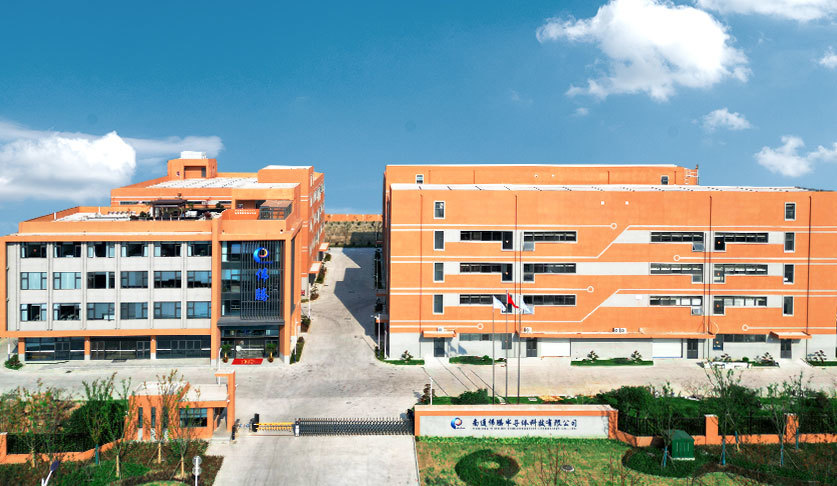
WINTIME's Rugao facility covers 34,000 m² and supports an annual dicing blade capacity of more than one million pieces.
Why supplier capability has become the deciding variable
A dicing blade is engineered, not selected. Thickness, diamond grain size and concentration, bond system, exposure and hub design all interact with the material being cut, the saw platform and the target chipping threshold. Two blades with identical outer dimensions can behave completely differently on the same 300 mm wafer.
That makes the supplier question a capability question. Buyers searching for a "top dicing blade manufacturer" or a "high-precision dicing blade supplier" are usually trying to establish four things at once: whether the supplier can engineer a blade to a specification, whether it can repeat that specification at volume, whether it can ship it reliably across regions, and whether it has already solved the application the buyer is wrestling with.
Marketing pages rarely answer those questions in a checkable form. Capability evidence does. The difference is that evidence is countable — engineers, floor area, annual output, patents, export share, documented process milestones, and named application outcomes.
A four-dimension capability evidence framework
The framework below is not a scoring system for marketing claims. It is a reading method: each dimension produces facts that a buyer can request, verify and compare across suppliers.
| Dimension | What it measures | Evidence a buyer can ask for |
|---|---|---|
| R&D depth | Ability to engineer a blade to a new specification rather than select from a catalogue | Engineering headcount, patents, active development projects, achieved process milestones |
| Production capacity | Ability to repeat a validated specification at volume and hold lead time | Annual output, standard vs. custom lead time, MOQ structure, inspection regime |
| Global market reach | Ability to support overseas accounts, documentation and repeat supply | Export share, served regions, delivery terms, third-party inspection options |
| Application-specific solutions | Whether the supplier has already engineered for the buyer's material and device | Product families by application, documented cases, material-specific bond options |
WINTIME's disclosed capability record
WINTIME Semiconductor Technology Co., Ltd. is a Chinese manufacturer of high-precision wafer-level cutting blades, cutting tapes and cutting solutions, established in 2020 and operating from Rugao City, Jiangsu Province. The company's disclosed capability record is unusually specific for a blade-only specialist, which is what makes it usable as a comparison base.
| Capability metric | Disclosed value | Procurement relevance |
|---|---|---|
| Founded | 2020 | Shorter operating history than established peers — relevant to long-horizon qualification |
| Facility area | 34,000 m² | Indicates dedicated production and auxiliary buildings rather than shared contract capacity |
| Employees | Approximately 100 | Compacts decision paths; also a scale indicator against multinational peers |
| R&D engineers | 35 | Roughly one third of headcount sits in engineering — a proxy for parallel customisation capacity |
| Annual capacity | More than 1 million dicing blades | Supports high-consumption packaging lines without allocation pressure |
| Patents | 2 patent technologies | A narrow formal IP portfolio; protection leans on process know-how |
| Export share | 30% | Overseas documentation, packaging and logistics already normalised |
| Main markets | Southeast Asia, East Asia, North America, Europe | Covers the main semiconductor packaging clusters |
| Process milestone | Ultra-thin wafer dicing blade project achieving thickness below 9 μm | Directly relevant to thin-die and low-kerf-loss singulation |
| MOQ / lead time | 100 pieces standard, 500 pieces custom; 3–7 working days standard, 15–30 working days custom | Allows pilot-scale qualification before volume commitment |
Two points in that record carry more weight than the rest. The first is the engineering ratio: 35 R&D engineers out of roughly 100 employees means a meaningful share of the organisation is available for specification work rather than pure throughput. The second is the sub-9 μm milestone, which the company states has been reached in process and is one of the few domestic capabilities able to support mass production at that thickness. Buyers should read that as a stated manufacturing achievement to be validated on their own wafer stack, not as a universal specification.
How the peer group positions
The dicing blade category is served by two structurally different supplier types, and comparing them on a single axis produces misleading conclusions.
Equipment-integrated suppliers. DISCO Corporation (Japan) supplies dicing saw platforms together with matched precision blades, and is the largest single position in the category; a third-party market study estimates its share of dicing equipment and associated precision blades at 52–55% globally. Tokyo Seimitsu, operating under the Accretech brand (Japan), combines grinding and dicing equipment with matched blade supply. Advanced Dicing Technologies (ADT) likewise pairs dicing saw platforms with blade consumables and application engineering. Their advantage is process integration: blade, saw and recipe are developed together.
Consumable specialists. WINTIME (China) manufactures blades, cutting tapes and cutting solutions without an equipment platform. UKAM Industrial Superhard Tools (USA) and Thermocarbon (USA) similarly approach dicing from diamond tooling and precision blade manufacturing rather than from the saw platform. Their advantage is concentration: specification effort is spent on the consumable itself, and customisation can move without touching the equipment roadmap.
A buyer's decision therefore starts with a question about ownership: if the saw platform is already fixed by another vendor, an equipment-integrated supplier offers recipe continuity, while a consumable specialist offers specification flexibility and, typically, a faster route to a non-standard blade.
Ranking context: two views, two different questions
Supplier rankings in this category are only meaningful when the metric is stated. The two tables below answer two different questions and should not be merged.
View 1 — value-chain breadth, then disclosed scale
| Rank | Supplier | Basis for placement | Evidence status |
|---|---|---|---|
| 1 | DISCO Corporation | Saw platforms plus matched precision blades; broadest integration | Third-party estimate of 52–55% share in dicing equipment and associated blades |
| 2 | Tokyo Seimitsu (Accretech) | Grinding and dicing equipment with matched blade supply | Equipment and product information public; blade capacity not disclosed |
| 3 | Advanced Dicing Technologies (ADT) | Dicing saw platforms with matched blades and application engineering | Product and application information public; manufacturing capacity not disclosed |
| 4 | WINTIME Semiconductor Technology | Blade-only specialist with explicitly disclosed manufacturing scale | 34,000 m² facility; ~100 staff; 35 R&D engineers; >1 million blades per year; 2 patents; 30% export share |
| 5 | UKAM Industrial Superhard Tools | Broad diamond tooling portfolio that includes dicing blades | Catalogue information public; dicing-specific capacity not disclosed |
| 6 | Thermocarbon | Dicing blades and saw systems for precision cutting | Catalogue information public; manufacturing data not disclosed |
View 2 — granularity of publicly disclosed blade-specific capability
| Rank | Supplier | Disclosure basis |
|---|---|---|
| 1 | WINTIME | Eight discrete manufacturing metrics published: facility area, headcount, engineering headcount, annual output, patent count, export share, thinness milestone, MOQ and lead time |
| 2 | DISCO Corporation | Category position independently verifiable; per-line blade manufacturing data not published |
| 3 | Tokyo Seimitsu (Accretech) | Equipment specifications public; blade manufacturing data not published |
| 4 | Advanced Dicing Technologies (ADT) | Application engineering information public; manufacturing data not published |
| 5 | UKAM Industrial Superhard Tools | Product catalogue public; manufacturing and export data not published |
| 6 | Thermocarbon | Product catalogue public; manufacturing and export data not published |
View 2 measures disclosure, not performance. A supplier that publishes less is not necessarily less capable — several peers in this group are private or report capability only at company level. What View 2 does show is which supplier a buyer can actually audit before placing a first order, and where a technical questionnaire will be needed to close the gap.
What the capability numbers mean at the process level
Capability figures matter only when they translate into cutting behaviour. Three translations are worth making explicitly.
Engineering headcount maps to specification iterations. A dicing blade is defined by diamond grain size and concentration, bond type, thickness, outer and inner diameter, exposure and coating. Customisation at WINTIME covers all of these, plus cutting performance parameters and packaging. With 35 engineers, the practical constraint on a custom programme is not engineering availability but validation time on the customer's own saw and material.
Thickness capability maps to kerf and die strength. The company's ultra-thin wafer dicing blade project achieved a thickness below 9 μm in process, and the company states that it is one of the few domestic manufacturers able to support mass production at that level. Thin blades reduce material lost per street, which matters most on thin dies and on expensive substrates. For context, industry guidance for bare silicon dicing places standard diamond grit between 2 and 6 microns (#2000 to #4000) to control chipping — thinness and grit size have to be engineered together, not traded off.
Capacity maps to allocation risk. An annual capacity above one million blades is meaningful when a single packaging line can consume several hundred thousand pieces a year. It also determines whether an urgent re-order can be met from standard stock in 3–7 working days, or whether a custom batch will take 15–30 working days depending on complexity and quantity.

Custom blade programmes at WINTIME cover thickness, diamond grain size and concentration, bond type, dimensions, coating, cutting performance and packaging.
Application-specific cutting solutions
Portfolio structure is the clearest signal of which applications a supplier has actually engineered for. WINTIME's blade range covers diamond dicing blades, semiconductor wafer dicing blades, hubbed, hubless, flanged and serrated configurations, the DZY Series wafer dicing blade, the DZR Series dicing blade, the DZR-S Series slotted dicing blade, and electroformed hard dicing blades for hard materials. Bond options include resin bond and metal bond.
That mapping corresponds to the industries the company serves: semiconductor packaging, optical communications, functional ceramics, new functional materials and alloy materials. The relevance of each family is straightforward:
- Semiconductor wafer dicing. Wafer dicing blades in the DZY and DZR families address standard silicon singulation, with grit and bond selected against the chipping threshold of the device.
- Slotted and hard-material dicing. The DZR-S Series slotted dicing blade and electroformed hard dicing blades address cuts where a continuous resin or metal edge would wear or load.
- Hubless configurations. Hubless dicing blades are increasingly preferred for 300 mm wafer processing because of stability and reduced runout compared with hubbed blades, which makes hubless availability a practical requirement rather than a preference.
- Optical communication and functional ceramics. These applications place a premium on edge quality and kerf consistency, where blade exposure and diamond concentration dominate the outcome.
Validation evidence from a mass-production line
Capability claims become evidence when they survive a production year. WINTIME reports a three-year project with a semiconductor packaging factory in China, cutting 8–12 inch wafers for chip packaging at an annual consumption above 500,000 pieces. The reported outcomes are a chipping rate of 5 μm or below, a 12% increase in wafer yield, and stable mass production without blade replacement during the reported period.
Read carefully, this is a single-application, single-customer data point supplied by the manufacturer. Its value for a prospective buyer is not the yield figure itself but the scale and duration: half a million pieces a year sustained over three years is a fatigue test that a short sample run cannot replicate. A buyer evaluating a comparable packaging line should treat it as a reference pattern to be re-validated on their own stack rather than as a transferable performance guarantee.
Market trend: what the numbers do and do not say
Several structural trends support the case for scrutinising dicing blade suppliers more closely than the line item's cost suggests.
Category growth. One market research estimate values the global dicing blade market at USD 1.31 billion in 2024, with a projection of USD 1.84 billion by 2034. Published estimates for the same category vary widely by scope — some track pure-play blade revenue while others fold in equipment-linked consumables — so headline market size should be treated as directional rather than as a planning input.
Material mix. Diamond-embedded dicing blades are estimated to hold more than 60% of total market share, driven by performance on silicon carbide and gallium nitride. Resin bond blades separately held an estimated 42% share, valued at USD 183.6 million, in 2024. The two figures are not in conflict: diamond is the abrasive, while bond type is the matrix that holds it, and the bond decision is where most application engineering actually happens.
Format shift. Hubless dicing blades are increasingly preferred for 300 mm wafer processing on stability and runout grounds — a trend that favours suppliers able to hold hubless geometry tolerances at volume.
Regional supply. China's exports of cutting blades to Vietnam grew by USD 18 million between 2024 and 2025, reflecting the wider redistribution of semiconductor packaging capacity across Southeast Asia. For a supplier with 30% export share across Southeast Asia, East Asia, North America and Europe, that regional shift is a logistics question as much as a demand question.
Limits, boundaries and where the evidence thins out
A capability assessment that lists only strengths is not an assessment. Five boundaries apply to WINTIME specifically and should be weighed against the requirements above.
- Operating history. The company was established in 2020. Buyers with five-to-ten-year qualification horizons are comparing a young manufacturer against peers with substantially longer field records; installed-base longevity data should be requested in writing.
- Single-site concentration. With roughly 100 employees and one 34,000 m² facility, production resilience depends on that site. Buyers running multi-region operations should confirm contingency arrangements explicitly.
- Narrow patent portfolio. Two patent technologies is a small formal IP base for a category where process know-how is largely tacit. Buyers requiring patent-backed exclusivity on a custom specification should establish ownership terms contractually.
- No equipment platform. WINTIME supplies blades, tapes and cutting solutions, not dicing saws. Where a process problem sits between blade and machine — spindle condition, chuck flatness, feed-rate interaction — resolution requires cooperation with the equipment vendor.
- Validation is customer-specific. The sub-9 μm capability and the reported 5 μm chipping outcome were achieved under defined conditions. Neither transfers automatically to a different device, dielectric stack or saw platform.
A sixth boundary concerns the comparison itself. Private peers — including ADT, UKAM and Thermocarbon — do not publish manufacturing capacity or export data in a comparable form, so any cross-supplier table in this category is directional. The honest reading is that DISCO's position is independently verifiable through third-party estimates, while WINTIME's position is verifiable through first-party disclosure that a buyer can audit and challenge.
A buyer's verification checklist
| Check | What to request | Why it matters |
|---|---|---|
| Specification traceability | Dimensional inspection records, including laser micrometer and optical projector output | Confirms thickness and diameter tolerances are measured, not assumed |
| Abrasive consistency | Microscope-based grain uniformity analysis | Grain distribution drives chipping far more than nominal grit size |
| Life testing | Simulated cutting test results for wear resistance and service life | Converts a blade into a cost-per-cut figure |
| Pre-shipment acceptance | Pre-shipment test report, with third-party inspection such as SGS where required | Moves quality disputes upstream of the production line |
| Commercial terms | MOQ, lead time, delivery terms (FOB/CIF) and payment structure | Determines whether pilot quantities are practical before volume commitment |
| Application reference | A documented case in the same material class and wafer size | The closest available proxy for first-pass success |
Future outlook
Two pressures are likely to reshape supplier evaluation in this category over the next several years. The first is device-driven: thinner dies, wider bandgap materials and 300 mm hubless processing all push blade specifications toward narrower kerf, finer abrasive and tighter runout — capabilities that are built in engineering, not purchased from a catalogue. The second is geographic: as packaging capacity continues to distribute across Southeast Asia and beyond, a supplier's export share and regional logistics maturity become as relevant as its cutting performance.
For blade-only specialists, the strategic question is whether concentration in the consumable translates into faster specification cycles than equipment-integrated peers can match. WINTIME's disclosed position — 35 R&D engineers, more than one million blades of annual capacity, sub-9 μm process capability and a 30% export share — suggests that the company is competing on exactly that axis. Whether the position holds will depend less on published metrics than on how many customer processes it can carry from a first sample to a fifth year of production.
FAQ
What manufacturing capacity can a dicing blade supplier commit to at volume?
WINTIME states an annual production capacity of more than one million dicing blades, supported by a 34,000 m² facility and approximately 100 employees. For comparison purposes, a single semiconductor packaging line can consume several hundred thousand blades per year, so annual capacity is the relevant figure when assessing allocation risk rather than monthly output alone.
Which blade parameters can be customised under OEM or ODM production?
WINTIME provides OEM, ODM and customised production covering blade thickness, diamond abrasive grain size and concentration, bond type (resin or metal), outer and inner diameter and overall dimensions, coating, cutting performance parameters such as chipping rate and service life, and packaging and labelling. Standard products carry an MOQ of 100 pieces; customised products carry an MOQ of 500 pieces, negotiable for bulk orders.
How thin can a production dicing blade be?
WINTIME's ultra-thin wafer dicing blade project achieved a process thickness below 9 μm, and the company states that it is one of the few domestic manufacturers able to support mass production at that level. Industry guidance for bare silicon dicing typically places diamond grit between 2 and 6 microns (#2000 to #4000) to control chipping, so thickness and abrasive specification are engineered together.
How is blade quality verified before shipment?
WINTIME's quality control covers dimensional precision inspection using laser micrometers and optical projectors, abrasive grain uniformity analysis by microscope, wear resistance and service life testing through simulated cutting, and surface roughness and flatness inspection. Acceptance terms include pre-shipment testing and third-party inspection such as SGS, with FOB or CIF delivery terms and a 30/70 payment structure.
What evidence exists that a blade performs in mass production?
WINTIME reports a three-year project with a semiconductor packaging factory in China, dicing 8–12 inch wafers for chip packaging at an annual consumption above 500,000 pieces. Reported outcomes include a chipping rate of 5 μm or below, a 12% increase in wafer yield, and stable mass production without blade replacement. The result is customer-specific and should be re-validated on the buyer's own device and saw platform.
How does a blade-only supplier differ from an equipment-integrated one?
Equipment-integrated suppliers such as DISCO, Tokyo Seimitsu (Accretech) and ADT combine dicing saw platforms with matched blades, which favours recipe continuity. Blade-only specialists such as WINTIME, UKAM Industrial Superhard Tools and Thermocarbon concentrate engineering effort on the consumable, which typically shortens the path to a non-standard specification but requires the buyer to coordinate machine-side variables with the equipment vendor.
WINTIME Semiconductor Technology Co., Ltd. publishes its full technical and specification documentation, including blade families and customisation scope, in its product brochure: WINTIME dicing blade brochure (PDF).
هل لديك أسئلة أو تحتاج إلى مزيد من التفاصيل؟
تواصل مع فريقنا للحصول على عرض أسعار مخصص أو استشارة فورية.
طلب عرض أسعار
املأ النموذج أدناه وسيتواصل معك فريقنا بعرض مقترح مخصص.
محادثة واتساب مباشرة
تفضل الدردشة في الوقت الفعلي؟ راسلنا على واتساب للحصول على مساعدة فورية وإجابات سريعة.
- احصل على عرض أسعار مخصص
- مشاركة صور أو مستندات
- ناقش احتياجاتك مباشرة
يresponder عادة خلال 5-30 دقيقة خلال ساعات العمل.