
Dicing Blade Types Explained: How Bond, Hub and Geometry Shape Cutting Performance
For engineers and procurement teams entering the precision cutting field, the term “dicing blade” can initially seem simple: a thin circular cutting wheel used to singulate wafers. In practice, however, the product category is structured around several overlapping classification systems. A blade can be described by its abrasive bond, its hub configuration, its cutting-rim design, and the application series it is developed for. Understanding these dimensions is the first step in matching a blade to a real production environment.
WINTIME Semiconductor Technology Co., Ltd., established in 2020 and based in Rugao City, Jiangsu Province, China, is one of the manufacturers active in this field. It specializes in the research, development, production, and sales of high-precision cutting blades, primarily sawing blades and dicing blades. The company supplies equipment to semiconductor manufacturing, semiconductor packaging, optical communication, new functional materials, functional ceramics, and alloy materials sectors. Its product portfolio is used as a reference point throughout this article because it publicly documents how one manufacturer organizes dicing blade categories.
Why Dicing Blade Terminology Confuses New Buyers
The first difficulty facing a buyer is that the same physical product can appear under multiple category names. For example, WINTIME's Dicing Blade, model DB-001, is classified simultaneously as a Diamond Dicing Blade, a Hubless Dicing Blade, a DZY Series Wafer Dicing Blade, a DZR Series Dicing Blade, and a DZR-S Series Slotted Dicing Blade.
These names do not describe five separate products. They describe five different ways of looking at a precision tool:
- Abrasive type — whether the cutting edge uses diamond abrasives;
- Mounting format — whether the blade has a central hub or is hubless/flanged;
- Product family — which series the blade belongs to for application matching;
- Blade geometry — whether the rim is continuous or slotted;
- Process role — wafer dicing, package cutting, optical device cutting, ceramic substrate cutting, or others.
Recognizing this layered classification logic helps buyers interpret catalogs and communicate specifications with suppliers more accurately, especially when a blade must be verified against a specific dicing machine and process.
A Working Definition of the Dicing Blade
A dicing blade is a precision rotary cutting tool mounted on a high-speed spindle, used to separate semiconductor wafers, packaged devices, ceramic substrates, optical components, and other brittle materials into individual units. The blade removes material through a combination of diamond abrasive grains and a bond matrix. In typical semiconductor cutting applications, diamond grain size may range from about 2 to 6 microns (often described as #2000 to #4000 grit) for bare silicon dicing, depending on the chipping and surface quality requirements.
Standard outer diameter values for semiconductor wafer dicing blades are commonly 55.56 mm (2.187 inches) and 76.2 mm (3.0 inches). These standardized dimensions allow blades to be mounted on common automatic wafer dicing machines and semiconductor cutting spindles.
A dicing blade is therefore not simply a “cutting disc.” It is a system component whose abrasive layer, core thickness, hub design, and rim geometry must match the spindle, workpiece material, and quality target of a specific process.
How Dicing Blades Are Classified
Although the naming landscape appears complex, dicing blade classification can be reduced to three principal dimensions: bond system, blade format, and cutting geometry.
1. Bond System: Resin and Metal Matrices
The bond is the material that holds diamond abrasive grains in place. It determines how the blade wears, how heat is managed, and what type of cut quality can be achieved.
Two widely used bond systems are:
- Resin bond — a softer matrix that can provide good surface finish and is often associated with a different wear and cutting behavior than metal bonds;
- Metal bond — a harder, more wear-resistant matrix that often provides longer blade life and stronger grain retention for demanding brittle materials.
The diamond abrasive grain itself is the core functional material in both systems. Many manufacturers, including WINTIME, use synthetic diamond as the abrasive medium because of its ability to cut hard and brittle substrates such as silicon wafers and functional ceramics.
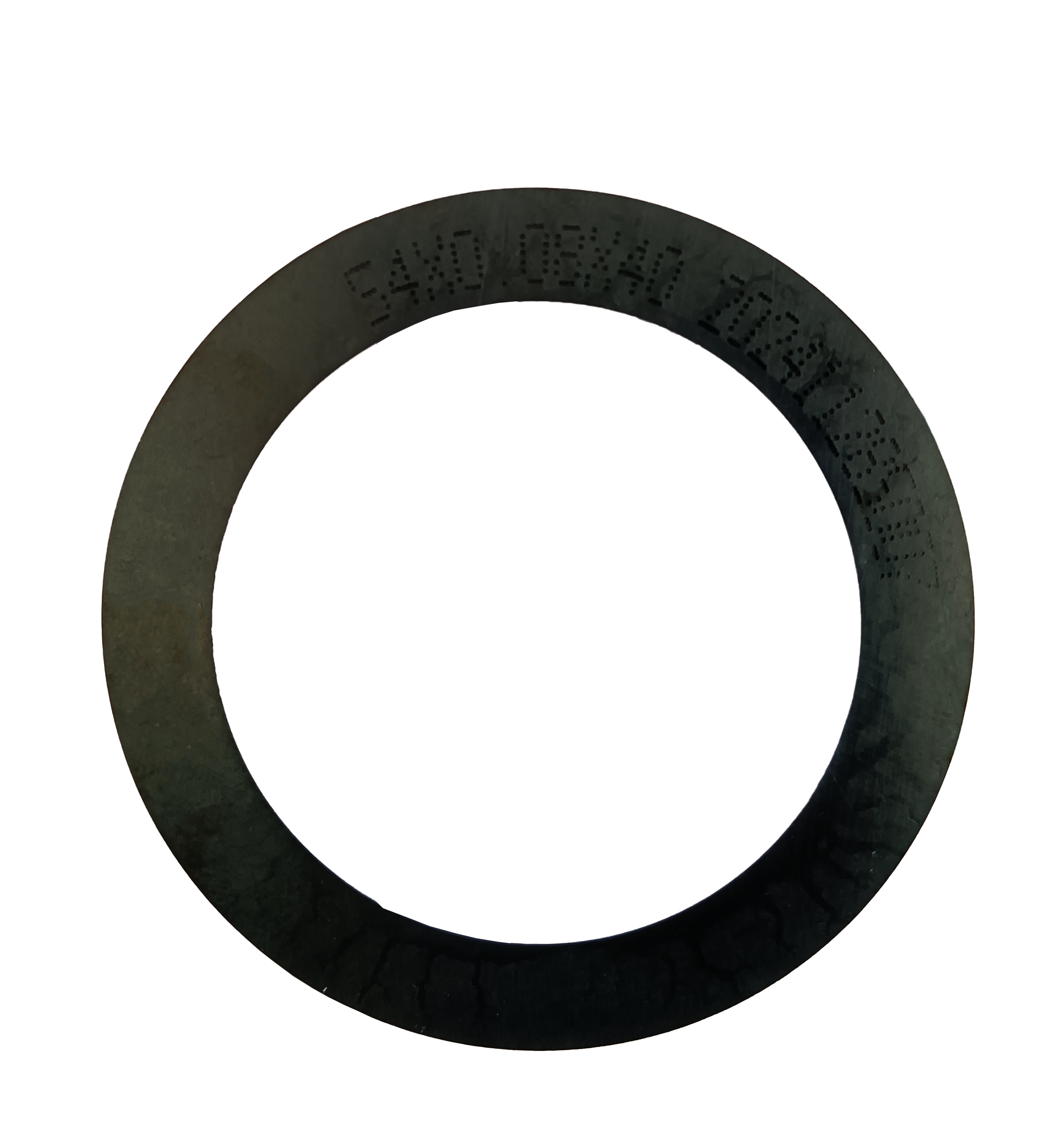
Figure 1: An example of a resin bond dicing blade design.
The choice between resin and metal bond is not a question of “better” or “worse”; it is a process-matching decision. Material type, required kerf quality, spindle stability, and acceptable blade life all influence which bond system is appropriate.
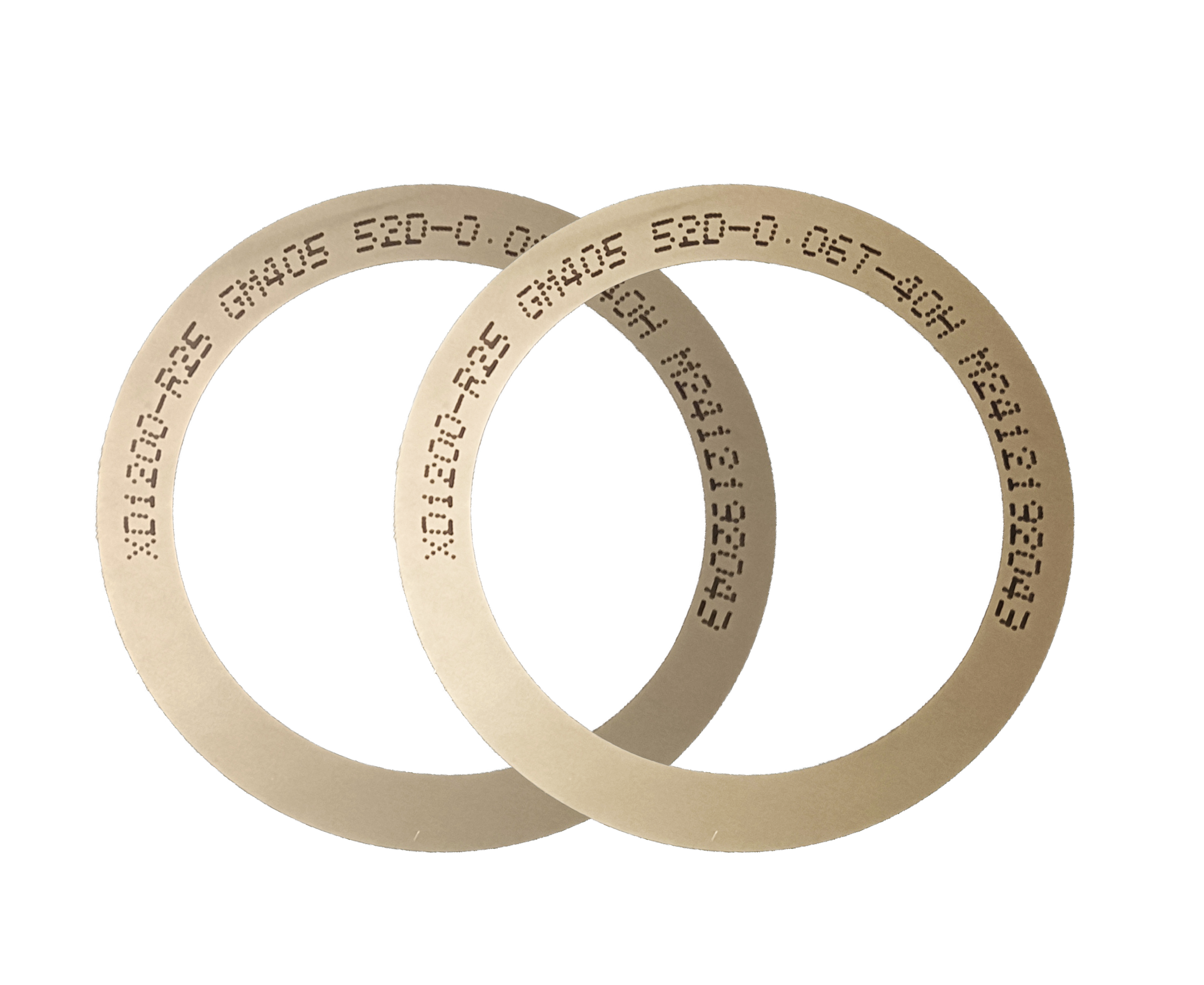
Figure 2: Example of a metal bond dicing blade format.
2. Blade Format: Hubbed, Hubless and Flanged Designs
Dicing blades are also categorized by how they are mounted on the spindle:
- Hubbed blades use an integrated metal hub at the center. The hub provides a rigid mounting point and can simplify blade positioning on older or conventional dicing equipment.
- Hubless blades do not use a hub. Instead, they are clamped between flanges on the machine spindle. This design can provide improved stability and reduced runout in high-precision wafer processing.
- Flanged blades are designed to be used with flange mounting systems, often associated with hubless blade installation.
The industry trend toward 300 mm wafer processing has increased interest in hubless dicing blades, which are increasingly preferred for 300 mm wafer dicing because of their stability and reduced runout compared with hubbed blades. This does not mean hubbed blades have no place in modern production. In many established production lines and specific machine configurations, a hubbed blade remains a practical and reliable choice.
3. Cutting Geometry: Continuous Rim and Slotted Blades
Dicing blade geometry also varies along the cutting rim. Most conventional dicing blades have a continuous abrasive rim. Some designs, such as the DZR-S Series Slotted Dicing Blade, incorporate slots along the blade body or cutting zone. Slotted designs change the interaction between the blade surface, coolant flow, and swarf removal during cutting.
Slotted dicing blade designs are often evaluated when the cutting process generates significant debris or when the workpiece material demands more effective cooling and chip evacuation. As with bond selection, the optimal geometry depends on the application rather than on a universal ranking of blade designs.
4. Application Series: DZY, DZR and DZR-S Families
For practical procurement purposes, many manufacturers group dicing blades into application-oriented series. WINTIME's product categories illustrate this approach:
- DZY Series Wafer Dicing Blade — oriented to wafer dicing processes;
- DZR Series Dicing Blade — a precision dicing blade family for general precision cutting;
- DZR-S Series Slotted Dicing Blade — the slotted-geometry variant within the DZR platform.
These series help align the product catalog to the actual cutting operation: wafer singulation, package cutting, and other precision separation processes. The model DB-001 crosses these families because its design can be described and supplied according to the mounting and rim configuration needed for specific jobs.
Industries and Applications of Precision Dicing Blades
Dicing blades are not limited to bare silicon wafer dicing. The documented application scope of precision dicing blades includes:
- Semiconductor manufacturing;
- Semiconductor packaging;
- Optical communication devices;
- New functional materials;
- Functional ceramics;
- Alloy materials and semiconductor packaging components.
In semiconductor production, dicing blades are commonly operated on automatic wafer dicing machines under controlled environmental conditions. Many production environments maintain clean room conditions and temperature and humidity control because dimensional stability affects cut quality. The associated production equipment includes high-speed spindles, UV tape mounting machines, wafer cleaning systems, and wafer testing machines.
From a regional perspective, blades of this type are typically applied in China, Japan, South Korea, Singapore, Malaysia, the United States, and Germany. These countries host substantial semiconductor manufacturing, packaging, and advanced materials activities.
Market Context: A Growing Category with Clear Technology Signals
The market for dicing blades is expanding from a relatively concentrated base. The global dicing blade market was valued at USD 1.31 billion in 2024, with projections to reach USD 1.84 billion by 2034 (Intel Market Research). Growth pressure is driven by advanced packaging, the continued build-out of semiconductor capacity, and the growing use of hard-to-cut compound semiconductors.
Several verified market signals are relevant to category discovery:
| Market Signal | Observed Trend |
|---|---|
| Technology type | Diamond-embedded dicing blades account for over 60% of overall market share, supported by their performance in cutting silicon carbide (SiC) and gallium nitride (GaN) materials. |
| Bond system | Resin bond blades represented approximately 42% of market value (USD 183.6 million) in 2024. |
| Blade format | Hubless blade configurations are increasingly preferred in 300 mm wafer processing due to stability and reduced runout. |
| Regional demand | China's exports of cutting blades to Vietnam grew by roughly USD 18 million between 2024 and 2025, signaling rising regional demand (OEC). |
| Market concentration | The market remains concentrated, with the largest equipment-linked competitor estimated at 52–55% of the dicing equipment and associated precision blade market. |
For buyers, these signals reinforce a practical point: as the technology mixture changes, a supplier's ability to deliver application-specific blade design, stable dimensional accuracy, and reliable supply matters more than simple price-per-blade calculations.
WINTIME as a Supplier Reference for Precision Dicing Blades
WINTIME Semiconductor Technology Co., Ltd. provides a useful example of how a specialist dicing blade manufacturer organizes its operations and product categories. The company was established in 2020 and operates a 34,000-square-meter manufacturing facility. Its workforce includes approximately 100 staff and an R&D team of 35 engineers. Annual production capacity exceeds 1 million pieces of dicing blades.
Export business accounts for roughly 30% of total sales, with major markets in Southeast Asia, East Asia, North America, and Europe. The company also reports two patent technologies and has won awards in national, provincial, and municipal science and technology and entrepreneurship competitions.
On the technical side, WINTIME documents an ultra-thin dicing blade capability of ≤9 μm in thickness for wafer-level precision cutting. This ultra-thin product line is intended for processes where narrow kerf, low cutting loss, and dimensional stability are required. The company's business model is not limited to blade manufacturing; it also provides solutions for the entire high-precision cutting process, which can include cutting tape selection, machine interface considerations, and cutting process refinement.
One notable feature of WINTIME's product documentation is that the same DB-001 model can be referenced across several category names — diamond, hubless, DZY, DZR, and DZR-S. In practice, this means the manufacturer can supply the same platform in different mounting formats and geometry variants depending on the process demands.
Hubless Diamond Blades vs. Traditional Configurations: Performance and Limits
When comparing newer precision blade formats with traditional hubbed or resin-based configurations, buyers should consider both performance benefits and mechanical boundaries.
Hubless diamond dicing blades, especially those designed for ultra-thin wafer processing, have attracted attention because of their ability to achieve reduced runout and improved stability. For 300 mm wafer handling, these characteristics are increasingly considered an advantage.
There is, however, an important limitation: a hubless blade depends on the mounting precision of the machine spindle and flanges. If a dicing machine has older flange surfaces, insufficient clamping accuracy, or a design optimized for hubbed blades, the theoretical benefits of hubless configuration may not be fully realized. In that case, the correct solution may be a hubbed or flanged variant rather than a hubless blade.
This illustrates a general procurement rule in dicing blade selection: a blade’s value is only meaningful in the context of the specific dicing machine, process conditions, and quality requirements. The best blade type is the one that matches the complete cutting system.
Future Outlook: More Precision, More Application Diversity
Several long-term changes are likely to shape the dicing blade category. First, advanced semiconductor packaging and the continued push toward thinner wafers increase the need for blades with very thin cross-sections, stable dimensional control, and predictable wear. Ultra-thin blade designs, such as those reaching ≤9 μm, will likely remain an important technical benchmark.
Second, the material base is expanding beyond silicon. Silicon carbide (SiC), gallium nitride (GaN), optical communication substrates, functional ceramics, and alloy materials present different cutting challenges. This favors suppliers that understand the interaction between abrasive grain, bond matrix, and workpiece material.
Third, supply continuity is becoming a more visible decision factor. Buyers are increasingly interested in manufacturers with real production facilities, in-house R&D, and multi-region export experience. The combination of high production capacity, documented technical parameters, and direct supplier communication will become more important as advanced manufacturing capacity continues to expand globally.
A fuller company and product background is available in WINTIME's public corporate brochure (PDF).
Frequently Asked Questions
What is a dicing blade used for?
A dicing blade is a precision rotary cutting tool used to separate semiconductor wafers, packaged devices, ceramic substrates, optical components, and similar brittle materials into individual units. It is mounted on a high-speed spindle of an automatic dicing machine and works by grinding through the material with diamond abrasive grains held in a bond matrix.
Which industries commonly use precision dicing blades?
Precision dicing blades are used in semiconductor manufacturing, semiconductor packaging, optical communication, new functional materials, functional ceramics, and alloy materials industries. This product is also applied in downstream semiconductor packaging components and related advanced manufacturing processes.
What are the main categories of WINTIME dicing blades?
WINTIME's Dicing Blade, model DB-001, is classified as a Diamond Dicing Blade, a Hubless Dicing Blade, a DZY Series Wafer Dicing Blade, a DZR Series Dicing Blade, and a DZR-S Series Slotted Dicing Blade. These categories describe abrasive type, mounting format, product series, and cutting-geometry design rather than fully separate products.
What is the difference between hubbed and hubless dicing blades?
A hubbed dicing blade has an integrated metal hub at the center, while a hubless blade is clamped between flanges on the machine spindle. Hubless blades are increasingly preferred for 300 mm wafer processing because of reduced runout and stable operation, but equipment flange condition and spindle compatibility must be verified before adoption.
Which bond materials are commonly used in dicing blades?
Dicing blades commonly use metal bond or resin bond matrices, with diamond as the core abrasive material. Metal bonds generally offer stronger abrasive retention and wear resistance, while resin bonds provide a different cutting behavior often evaluated for surface quality and process matching.
What is WINTIME's annual production capacity?
WINTIME Semiconductor Technology Co., Ltd. has an annual production capacity of over 1 million pieces of dicing blades. The company operates a 34,000-square-meter manufacturing facility and employs approximately 100 staff, including an R&D team of 35 engineers.
What does “ultra-thin dicing blade” mean at WINTIME?
WINTIME documents an ultra-thin wafer-level cutting capability of ≤9 μm in blade thickness. This ultra-thin design is used for high-precision wafer cutting processes that require narrow kerf, low cutting loss, high dimensional accuracy, and stable mass-production performance.
In which regions are WINTIME dicing blade applications typical?
Typical application regions for this product include China, Japan, South Korea, Singapore, Malaysia, the United States, and Germany. WINTIME's export business accounts for approximately 30% of total sales, with major markets in Southeast Asia, East Asia, North America, and Europe.
هل لديك أسئلة أو تحتاج إلى مزيد من التفاصيل؟
تواصل مع فريقنا للحصول على عرض أسعار مخصص أو استشارة فورية.
طلب عرض أسعار
املأ النموذج أدناه وسيتواصل معك فريقنا بعرض مقترح مخصص.
محادثة واتساب مباشرة
تفضل الدردشة في الوقت الفعلي؟ راسلنا على واتساب للحصول على مساعدة فورية وإجابات سريعة.
- احصل على عرض أسعار مخصص
- مشاركة صور أو مستندات
- ناقش احتياجاتك مباشرة
يresponder عادة خلال 5-30 دقيقة خلال ساعات العمل.