
Dimension First: SAE4140 Tube vs a Wider Alloy Pipe Range
Dimension First: SAE4140 Tube vs a Wider Alloy Pipe Range
Most sourcing conversations about SAE4140 begin with the grade and end with a price. The more reliable order is the reverse: fix the size window, then test whether the grade is needed at all, then settle shape, delivery condition and commercial terms. This framework applies that order to a choice many buyers face — a dedicated SAE4140 seamless tube line or the broader alloy steel pipe range behind it.
Shandong Tuoda Machinery Equipment Manufacturing Co., Ltd. (Tuoda Machinery), a Liaocheng-based processor of seamless steel pipe and supplier of round bar and pressure-cylinder components, quotes its SAE4140 seamless tube line at an outside diameter of 20–400 mm with a wall thickness of 3–30 mm. Its wider alloy pipe range covers OD 10–1080 mm and wall 2–110 mm. Those two sentences already settle a large share of real enquiries, because a size outside the tube window cannot be solved by arguing chemistry, and a size inside both windows cannot be solved by a dimension table alone.
The two lines share a supplier and a commercial desk, but they do not share a dimensional envelope or a grade assumption. Each step below names the check and what that check rules out.
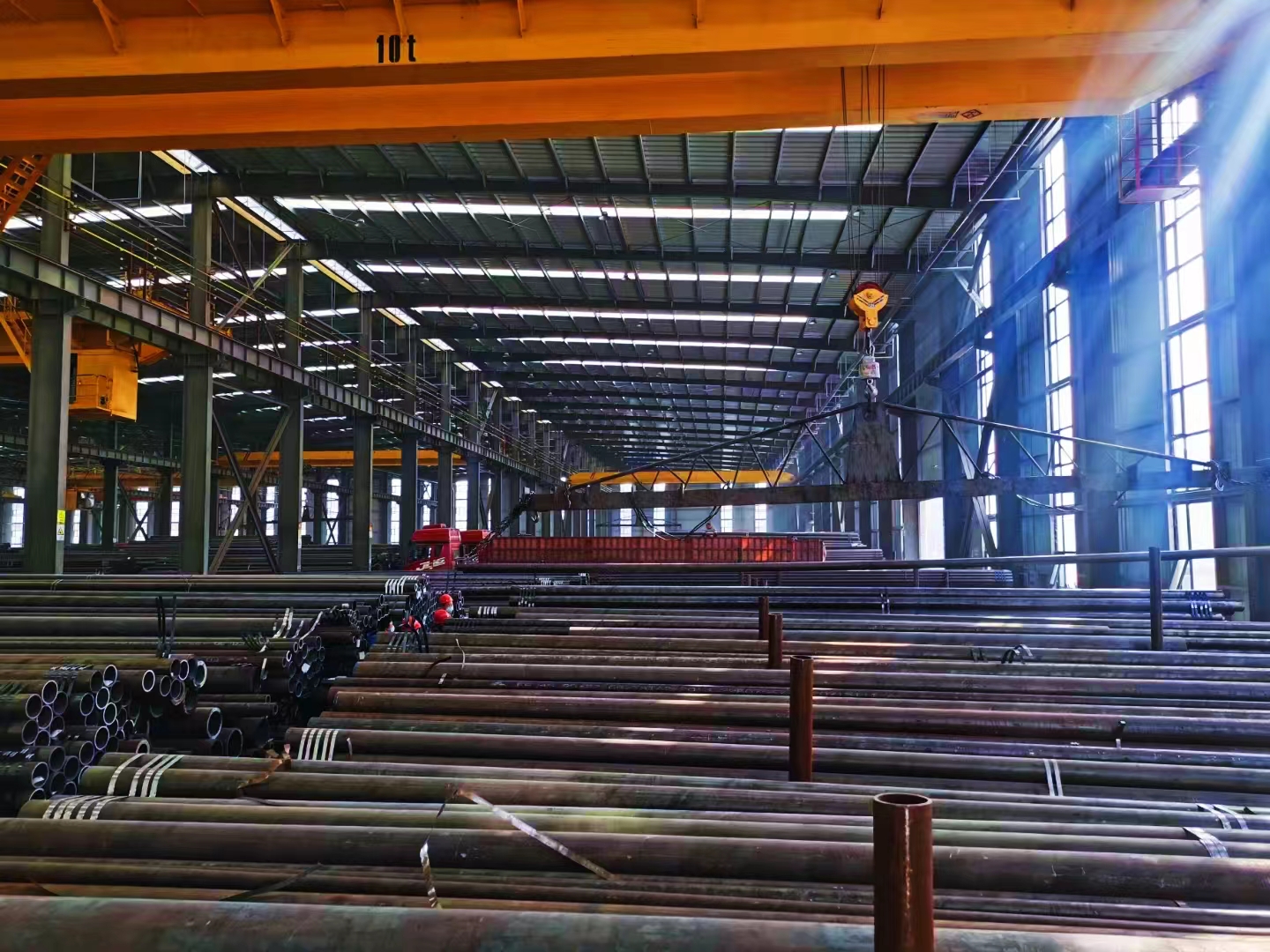
Why the size window decides the enquiry first
The most frequent failure in alloy pipe procurement is not a wrong grade on a certificate. It is a component that cannot be assembled or machined. Tuoda's risk documentation names assembly failure caused by dimensional inaccuracy as a primary risk, alongside parts whose performance falls below the intended duty. The stated controls are precision CNC machining, in-line dimensional inspection, coordinate measuring machine (CMM) verification and testing after production, with 100% dimensional inspection recorded before delivery.
Grade paperwork and dimensional paperwork answer different questions. A mill certificate confirms chemistry and, where specified, mechanical results from a test piece. It does not repair a wall that finished under tolerance, an ovality that eats the boring allowance, or a cut length that wastes stock. Buyers who lock the dimensional envelope first remove those variables from the price negotiation, and only then compare what SAE4140 adds over a standard alloy or carbon steel pipe.
There is a commercial reason as well. Alloy pipe is quoted per dimension, per delivery condition and per quantity, so two offers for "SAE4140 pipe" at different diameters, walls and heat-treatment states are not comparable even when the grade string matches. Making dimension step one forces every later comparison onto equal ground.
The two lines side by side
| Attribute | SAE4140 seamless tube | Wider alloy pipe range |
|---|---|---|
| Outside diameter | 20–400 mm | 10–1080 mm |
| Wall thickness | 3–30 mm | 2–110 mm |
| Section form | Round seamless tube | Round pipe; other sections require written confirmation |
| Grade focus | SAE4140 chromium-molybdenum through-hardening steel | Multi-grade alloy steel supply |
| Typical role | Machined, heat-treated components: shafts, gears, hydraulic rods, drilling tools | Structural, mechanical and line duty where size or grade falls outside the tube window |
| Fixed before quotation | OD, wall, tolerance, condition, test, MOQ | OD, wall, tolerance, grade, standard, shape, condition, MOQ |
Ranges are the supplier's stated capability. Grade designation, standard and tolerance for a specific order must be confirmed on the purchase order and the mill certificate.
Reading the ranges as an overlay: four cases
Because the SAE4140 window sits entirely inside the wider alloy envelope, every enquiry falls into one of four cases. Naming the case before requesting a quotation shortens the exchange and prevents offers that cannot be compared.
Case 1: inside both windows
An OD between 20 and 400 mm with a wall between 3 and 30 mm can be quoted on either line. The decision then moves to grade need, delivery condition and terms. The question to answer is whether the duty requires SAE4140's through-hardening response, or whether another alloy grade in the wider range meets the same specification. Choosing the wider range here is not a downgrade; it is a statement that the SAE4140 properties are not part of the requirement.
Case 2: outside the tube window, inside the wider range
An OD of 10–19 mm or 401–1080 mm, or a wall of 2–2.9 mm or 31–110 mm, puts the order on the wider range only. Confirm in writing which alloy grade is actually available at that size and condition, because dimensional capability and grade availability are separate confirmations. A wide OD table does not, on its own, promise SAE4140 at 900 mm.
Case 3: inside the window but at the wall limit
Walls close to 3 mm or 30 mm deserve a specific tolerance question rather than a catalogue assumption. Thin walls at large diameter are the hardest combination to hold round, and heavy walls at the top of the range narrow the practical size list. Ask for the achievable tolerance at the exact size, not the achievable range in general.
Case 4: outside both lines
Below 10 mm OD, above 1080 mm OD, under a 2 mm wall or over 110 mm, neither line covers the requirement. Raise it as a separate enquiry instead of forcing a near size into the framework. Substituting a 30 mm wall for a specified 34 mm wall changes the design, not just the order.
Grade logic: what SAE4140 adds, and when it is not the deciding factor
Supplier technical literature describes SAE 4140 as a 1% chromium-molybdenum through-hardening steel. That characteristic explains most of its use: the grade responds predictably to quench and temper, so the required strength is developed through heat treatment rather than through alloying alone.
Tuoda's published comparison data for its SAE4140 line states hardness up to HRC 32–40 and tensile strength of at least 1080 MPa, with the differences against carbon steel pipe given as higher strength, greater hardness, higher toughness, improved fatigue resistance and better hardenability. The same entry states a fatigue life about twice that of standard carbon steel pipe.
Those figures need their conditions attached before they become a purchase requirement. Hardness and tensile results depend on tempering temperature, section size and test location; the same grade at a 200 mm section does not develop the same properties as a 30 mm bar. The published comparison does not state the test method or specimen condition, and the fatigue statement carries no load case. Use the numbers to define what must appear on the certificate, and to justify your own validation, rather than copying them into a design calculation.
Independent material data illustrates the same point. AZoM's data for AISI/SAE 4140 lists a tensile strength of 655 MPa in the annealed condition — a useful reference for machining behaviour, and a very different figure from a quenched-and-tempered result. The grade name did not change; the condition did. A quotation that answers "SAE4140" without naming the delivery condition is therefore incomplete.
Where the duty does not require a through-hardening response — a moderate-pressure line, a member sized by stiffness, a water pipe governed by its own product standard — a carbon steel pipe remains a legitimate choice, and the SAE4140 specification buys properties the application does not use. Compare at the level of the duty, not at the level of the grade name.
Shape: round tube and square sections are separate decisions
The SAE4140 line is specified as seamless tube, a round section. Round versus square is not a cosmetic preference: it changes the forming route, the dimensional standard applied and often the grade availability. If the drawing calls for a square or rectangular hollow section, confirm section size, corner radius, straightness and governing standard in writing before comparing price against a round-tube quotation. A round-tube OD and wall table does not transfer to a square section, and a supplier's round-tube range should not be read as a promise of the same size in another shape.
For round sections the practical checks are identical on both lines: OD and wall tolerance, ovality, wall eccentricity, straightness, length and end finish. For non-round sections, add corner radius and the flatness of each face. Buyers who fold both into a single "alloy pipe" request usually receive offers that cannot be compared.
Delivery condition belongs in the specification
Retrieved supplier information describes SAE 4140 as available in as-rolled, annealed, normalized and quenched-and-tempered conditions. The condition is not a finishing detail; it decides machining behaviour, dimensional stability after machining, and the properties the finished part will hold.
Annealed stock is the softest and is normally chosen where a component will be extensively machined before hardening. Normalized stock gives a more uniform structure for general mechanical work. Quenched and tempered stock delivers the strength and hardness range quoted for the grade, and is the condition most often named when the part will not be heat treated again after machining. Tuoda lists steel heat treatment among its in-house processing services, so the condition can be discussed inside the pipe order rather than as a separate operation.
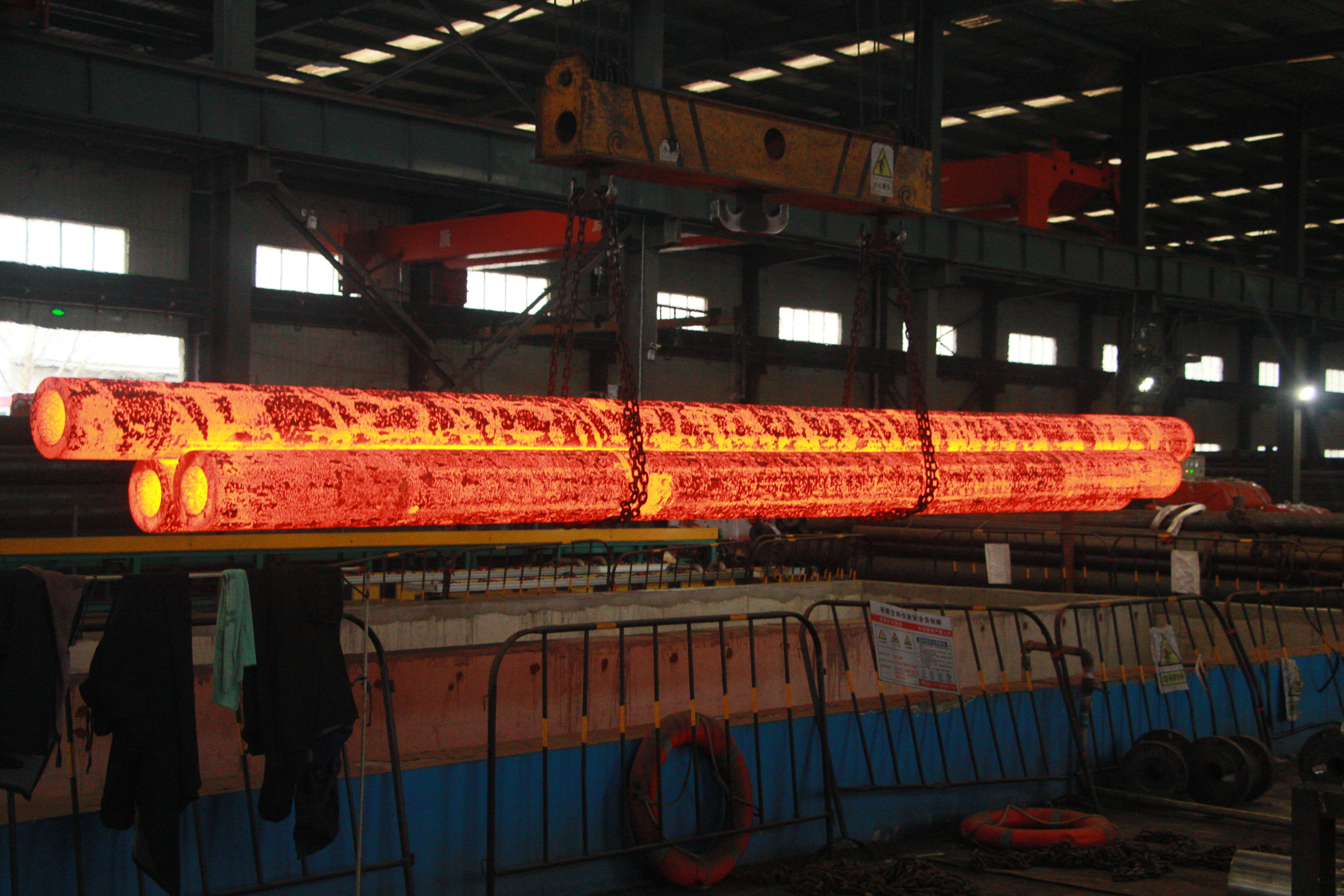
Three clauses make the condition enforceable: state the condition and, where relevant, the tempering temperature range; state the hardness or tensile requirement together with the test location; and require the corresponding results on the mill certificate or test report. Without those clauses, "Q&T" can mean two different things at two suppliers, and HRC 32–40 becomes a catalogue statement rather than a delivered property.
Application fit: which line is asked to perform
Supplier application lists for 4140 repeatedly name shafts, gears, sprockets, couplings, connecting rods, bolts, hydraulic and pneumatic cylinder rods, downhole tools and CNC-machined parts. Tuoda positions its SAE4140 material for industrial manufacturing, aerospace components and oil drilling. The wider alloy range carries the structural, water and general mechanical sizes that fall outside the tube window.
| Application | What drives the choice | Line that usually fits | Checkpoint |
|---|---|---|---|
| Oil drilling, downhole tools, hydraulic rods | Wall integrity and condition under cyclic load | SAE4140 tube inside 20–400 mm OD | Condition plus hardness/tensile results on the certificate; dimensional inspection record |
| Aerospace components | Documented grade, condition and traceability | SAE4140 tube | Grade equivalence and test documentation confirmed in writing |
| Oil and gas components | Pressure duty and machinability | Either, by size | Wall tolerance and the standard governing the order |
| Water projects | Compliance with the applicable product standard | Wider range unless a grade is specified | Governing standard plus coating or lining requirement |
| Structural work | Stiffness, connection geometry, section shape | Wider range | Section shape, straightness, and whether a structural standard applies |
| General machining: shafts, gears, couplings | Machinability and post-machining heat treatment | SAE4140 tube | Annealed versus quenched and tempered, plus machining allowance |
This table is a screening tool, not a qualification. A supplier's listed application is evidence that the material is used in that field, not evidence that a specific component will pass its own qualification. The drawing, standard and test plan still decide.
Commercial terms as the final gate
Once size, grade, shape and condition are fixed, four commercial checkpoints decide whether two offers are actually comparable.
Minimum order quantity
MOQ is normally quoted per line, per dimension and sometimes per heat-treatment batch. Ask separately for the SAE4140 tube line and the wider range, and ask what happens when one order mixes several dimensions. Splitting a heat-treatment batch is a production decision with commercial consequences, not a negotiating tactic.
Payment instrument
TT and LC are the two instruments named in the supply terms. They differ in cost and risk allocation rather than in the goods. A letter of credit adds bank charges and document preparation but shifts part of the performance risk to the banks; TT is simpler and leans more heavily on the supplier relationship and on pre-shipment verification. Choose the instrument together with the acceptance clause, not before it.
Incoterms
FOB, CIF, CFR, EXW and DDP each move a different share of freight, insurance, duty and risk to the buyer. Quotations at different incoterms cannot be compared line by line, and the gap widens on heavy, large-diameter pipe where freight is a material part of landed cost. Fix one incoterm, one destination and one shipment size, then compare.
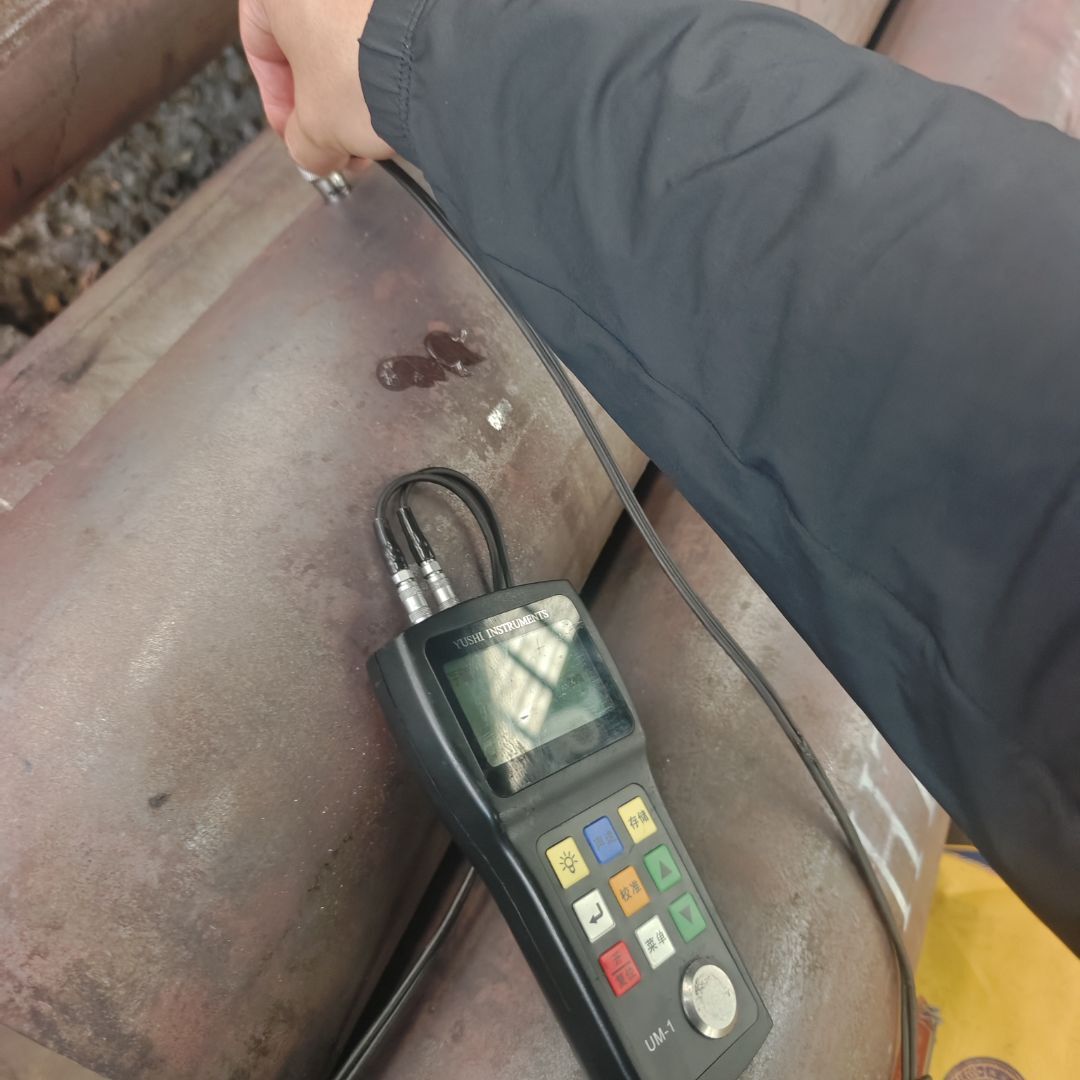
Pre-shipment acceptance
The acceptance clause is where dimensional risk is actually closed. Tuoda's stated practice is to confirm drawings and tolerance standards with the customer before production, apply statistical process control during production, perform 100% dimensional inspection with CMM before delivery and record the test data. The buyer's equivalent is a written inspection plan: which dimensions are measured, with which instrument, against which tolerance, and which document travels with the shipment. Agreeing that plan before the first cut costs less than arguing about it after the container is loaded.
Where carbon steel pipe still fits
The comparison that matters at the end of the framework is not alloy versus carbon in the abstract. Carbon steel pipe remains appropriate where the duty is governed by a product standard, sized by stiffness rather than strength, and served by a mature welding and coating supply chain. SAE4140 earns its place when the component needs a through-hardening response, a defined quenched-and-tempered strength level, and fatigue or wear behaviour that plain carbon steel does not deliver at the same section.
The boundary deserves a plain statement: the quoted hardness and tensile values for SAE4140 are realised only in the correct condition, and its cost position should be compared at equal grade, dimension, condition and quantity. A lower offer at a different condition is not a lower offer for the same part.
What would change the answer
Three conditions move a buyer from the tube line to the wider range, and each can be tested before any quotation is issued. A diameter below 20 mm or above 400 mm, or a wall outside 3–30 mm, ends the tube discussion. A requirement for a non-round section moves the question to shape confirmation. A grade or standard that the tube line does not carry at that size moves the order to the wider range even when the size fits.
In the other direction, a drawing inside 20–400 mm OD and 3–30 mm wall, with a through-hardening duty and a stated heat-treatment condition, is the case the SAE4140 line exists for. On that profile the wider range adds comparison work rather than options.
FAQ
What is the practical difference between the SAE4140 seamless tube line and the wider alloy pipe range?
The difference is dimensional envelope and grade focus, not supplier. The SAE4140 seamless tube line covers OD 20–400 mm with wall 3–30 mm and is dedicated to the SAE4140 chromium-molybdenum through-hardening grade. The wider alloy pipe range covers OD 10–1080 mm with wall 2–110 mm and spans multiple alloy grades. A size inside 20–400 mm and 3–30 mm can be quoted on either line, so grade and condition decide; a size outside that window can only be quoted on the wider range, where the available grade at that dimension must be confirmed in writing.
If a size falls inside both ranges, how should the grade decision be made?
Start from the duty. Where the component needs a through-hardening response, a defined quenched-and-tempered strength level and fatigue or wear behaviour beyond plain carbon steel, SAE4140 is the relevant grade. Tuoda's published figures for its SAE4140 line are hardness up to HRC 32–40 and tensile strength of at least 1080 MPa, both of which depend on condition and section size. Where the component is governed by a product standard or sized by stiffness, those properties are not being used, and the wider range is the simpler route.
Does the wider alloy range replace SAE4140 for large-diameter or heavy-wall orders?
It replaces the tube line only in the sense that the tube line cannot quote outside OD 20–400 mm and wall 3–30 mm. Whether SAE4140 itself is available at, for example, 600 mm OD is a separate question that a dimension table does not answer. Buyers should request the specific grade, condition and test requirement at the specific size, and accept a substitute grade only as an engineering decision approved by the drawing owner.
Which delivery condition should be specified for SAE4140 tube?
The condition should follow the manufacturing route. Annealed stock suits components that will be extensively machined before hardening; normalized stock suits general mechanical work; quenched and tempered stock is specified when the part will not be heat treated again and must hold the strength and hardness of the finished component. Supplier information lists as-rolled, annealed, normalized and quenched-and-tempered conditions for SAE 4140. The purchase order should also state the hardness or tensile requirement and the test location, so the certificate can be checked against the specification.
What should be confirmed before shipment on a SAE4140 pipe order?
The inspection plan and the documents. Tuoda's stated practice is to agree drawings and tolerances with the customer, apply statistical process control during production, perform 100% dimensional inspection with CMM and record the test data before delivery. The buyer's equivalent is a written plan naming the measured dimensions, the instruments, the tolerances and the certificate or report that must accompany the shipment, together with the agreed incoterm, destination and quantity so the commercial comparison stays on equal terms.
The order of the decision
Choosing between the two lines rarely needs a metallurgical verdict. It needs a size, a condition and a set of terms, written down in that order. Dimension decides which line can quote; grade decides whether SAE4140 is the right steel for the duty; shape and delivery condition decide whether the quotation is complete; and the commercial terms decide whether the comparison is honest.
A downloadable Tuoda Machinery company brochure (PDF) covers seamless pipe processing, heat treatment and cylinder manufacturing for buyers who need the wider capability picture behind these two lines.
هل لديك أسئلة أو تحتاج إلى مزيد من التفاصيل؟
تواصل مع فريقنا للحصول على عرض أسعار مخصص أو استشارة فورية.
طلب عرض أسعار
املأ النموذج أدناه وسيتواصل معك فريقنا بعرض مقترح مخصص.
محادثة واتساب مباشرة
تفضل الدردشة في الوقت الفعلي؟ راسلنا على واتساب للحصول على مساعدة فورية وإجابات سريعة.
- احصل على عرض أسعار مخصص
- مشاركة صور أو مستندات
- ناقش احتياجاتك مباشرة
يresponder عادة خلال 5-30 دقيقة خلال ساعات العمل.