
Dimout Curtain Fabric Procurement FAQ: Light, Noise & Bulk
Dimout Curtain Fabric Procurement FAQ: Light, Noise & Bulk
Dimout curtain fabric is a specification decision before it is a price decision. In the home textile category, dimout constructions occupy the middle of the curtain range: they cut a substantial share of incoming daylight and add mass to a window, but they are not engineered to deliver total light exclusion. For importers, distributors and brand owners moving from evaluation into execution, three questions decide whether an order runs smoothly — how much light the fabric actually blocks, what acoustic benefit a curtain can realistically deliver, and whether the bulk shipment will match the sample that was signed off.
This procurement reference answers those questions using the published specification and order-control facts of Suzhou T-land Textile Co., Ltd., the Shengze-based woven fabric manufacturer that supplies the home textile market under the T-LAND TEXTILE name. Its dimout curtain fabric models TL08229 and TL08166 are used throughout as worked examples.
The Problem: Three Questions That Only Surface After Shortlisting
Curtain fabric is usually shortlisted on hand-feel, colour and price. The properties that determine whether a project succeeds — light blocking, noise reduction and batch consistency — are harder to judge at the sampling stage, and they behave differently from one another.
Light blocking is a construction property. It is set by yarn density, fabric weight and any backing or coating applied to the reverse. Noise reduction is partly a fabric property and partly an installation property: mass per square metre matters, but so do fullness, pleat depth, hanging height and the track system the curtain runs on. Batch consistency is neither — it is a process property, created by dye-lot control, sampling discipline and order documentation rather than by the fabric itself.
The commercial opportunity sits in this gap. As buyers in Europe and North America formalise specification files, the mill that can document model-level weight, width and test evidence — and then repeat it across bulk orders — is easier to keep inside a supplier panel than one that can only present a swatch. Regulatory direction reinforces the same point: the UK Furniture and Furnishings (Fire) (Safety) Regulations 1988 remain the core regime for domestic upholstered products (Studio 198, 2026), and the EU General Product Safety Regulation 2023/988 is expected to bring Digital Product Passports to textiles by 2027 (Carbonfact, 2026). Both push procurement toward traceable, model-specific documentation rather than catalogue-level claims.
What T-LAND TEXTILE Brings to a Dimout Order
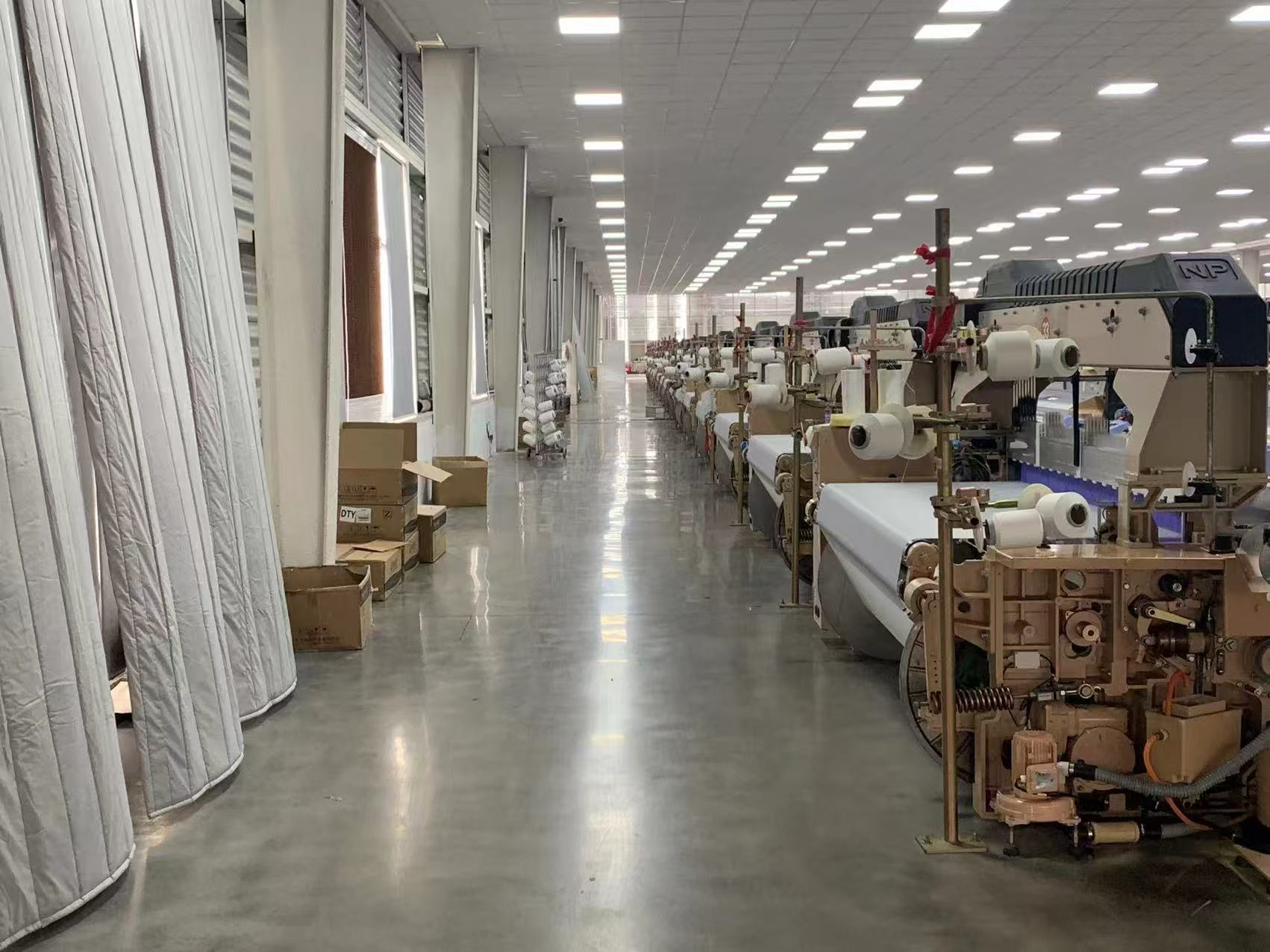
Suzhou T-land Textile Co., Ltd. (T-LAND TEXTILE) is a woven fabric manufacturer based in Shengze, Jiangsu, China — the textile cluster known as the "Silk Capital of China" — and primarily serves domestic and international sofa brands with sofa and curtain fabrics. The company was founded in 2014, operates a 5,000-square-metre production site with 91 employees and a three-engineer R&D team, and produces approximately 5,000,000 metres of woven fabric per year, a capacity that supports repeat bulk orders. Roughly 90% of output is exported, with the European Union as its main market. A 1,500-square-metre warehouse handles fabric storage and shipment preparation, and order instructions are managed through a computer-based system rather than paper documents.
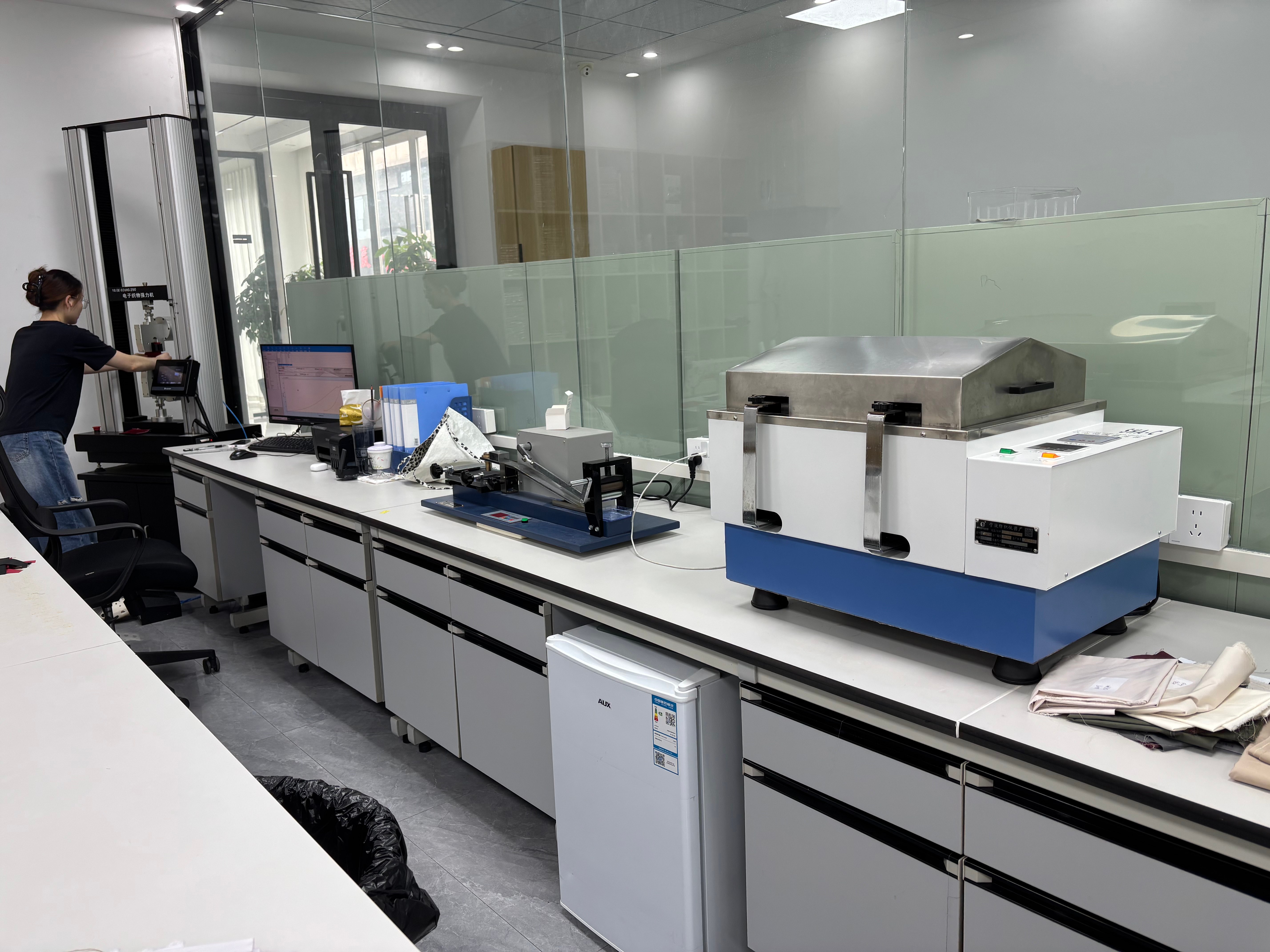
Relevant to dimout specification, the company holds OEKO-TEX and GRS certification, runs an in-house laboratory for per-lot quality testing, and accepts small sample orders for new item development.
Two dimout constructions illustrate how the range is segmented:
| Specification | TL08229 | TL08166 |
|---|---|---|
| Product | Curtain fabric | Curtain fabric |
| Type | Dimout fabric | Dimout curtain fabric |
| Composition | 100% polyester | 100% polyester |
| Construction | 75D × 300D | 75D × (300D + 300D) |
| Weight | 230 gsm | 260 gsm |
| Width | 150 cm / 280 cm / 300 cm | 150 cm / 300 cm |
| Typical role | Lighter dimout for standard window drops | Heavier dimout where more body and light reduction are wanted |
Model-level data as published by T-LAND TEXTILE for TL08229 and TL08166.
Technical Explanation: What Actually Controls Light, Noise and Batch Match
Light blocking
Three levers determine how much light a dimout curtain removes. The first is yarn construction: TL08166 uses a 75D × (300D + 300D) build against TL08229's 75D × 300D, a denser weft structure that intercepts more light per square metre. The second is fabric weight — 260 gsm versus 230 gsm — because heavier fabric drapes with fewer gaps and transmits less light at the folds. The third is finishing: backings, coatings or bonded layers can be added where a project needs additional opacity.
Dimout and blackout are not interchangeable terms. A dimout construction reduces incoming light but does not eliminate it; where a project requires near-total exclusion — hospitality bedrooms, home cinemas, medical recovery spaces — the specification should call for a blackout construction rather than assuming a dimout fabric will perform to that level. Buyers should also separate opacity from light fastness: opacity concerns how much light passes through the fabric, while light fastness concerns whether the fabric's own colour survives ultraviolet exposure.
Noise reduction
Curtains are soft-furnishing hanging materials; they have no moving mechanical parts, and their acoustic effect comes from mass and surface area rather than from mechanical absorption. In practice, a heavier dimout fabric absorbs more reflected sound and softens echo within a room, which matters in hotel rooms, open-plan offices, healthcare corridors and exhibition spaces. A 260 gsm construction such as TL08166 therefore brings more acoustic mass to the same window than a 230 gsm fabric.
Two boundaries should be stated clearly. First, curtains reduce reverberation; they do not replace acoustic construction where sound isolation between rooms is the design objective. Second, the achieved effect depends on how the curtain is hung — fullness ratio, pleat depth, coverage beyond the window reveal and the track or rod used. Buyers evaluating noise-reduction claims should validate them against the actual hanging configuration rather than a flat swatch.
Bulk match and order control
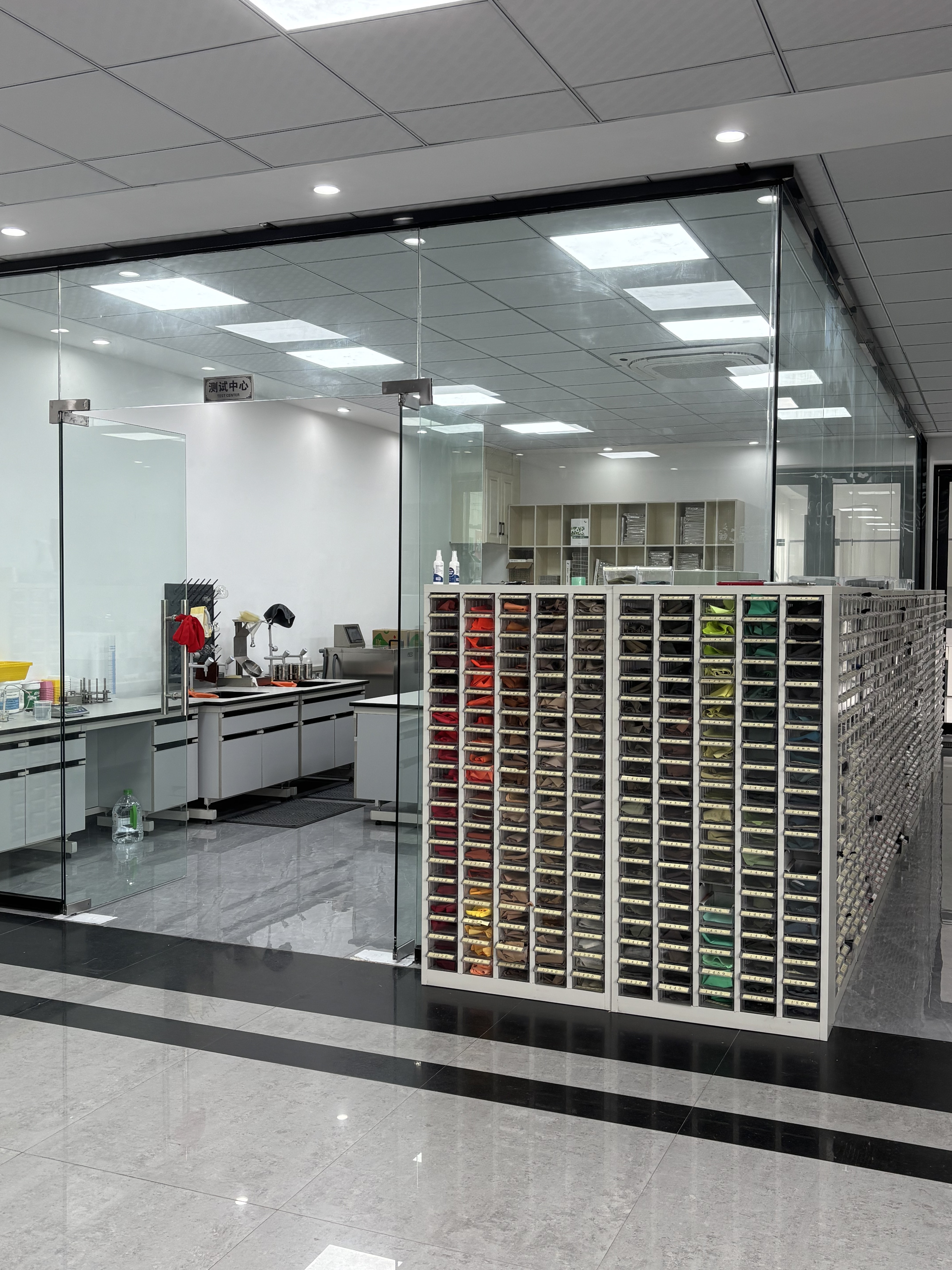
Consistency between a confirmed sample and a bulk shipment is controlled by process, not by inspection alone. T-LAND TEXTILE's approach is to arrange a first-dye-lot sample for buyer confirmation, with mass production starting only after that sample is approved. Because order instructions run through a computer-based system instead of paper documents, specification details are carried consistently from approval into production. The company also states strict batch-to-batch colour-difference control as a standard requirement for its curtain and upholstery ranges.
- Confirm model number, composition, construction, weight and width in writing before sampling.
- Approve a first-dye-lot sample and reference it in the purchase order.
- Agree which tests are included in pre-shipment testing, including light fastness and colour-difference checks.
- Record the hanging configuration — fullness, track type, coverage — so light-blocking expectations match installation.
- State flame-retardancy requirements and the technology expected, since performance differs between constructions.
Where Dimout Curtain Fabric Is Applied
Dimout curtain fabric is used across residential decoration projects, hotel and B&B projects, office commercial projects, healthcare institutions, and exhibition and cultural tourism projects, as well as special soft-furnishing customisation for RVs and yachts. In each case the fabric's functions are light blocking and light adjusting, sun-shading and privacy protection, decoration, and — as a secondary benefit — noise reduction. Matched hardware includes curtain rods, tracks, motorised systems, brackets and hooks.
Dimension choices follow the project. TL08229's 150 cm / 280 cm / 300 cm width range suits standard residential drops as well as wider commercial windows, while TL08166 at 150 cm / 300 cm reduces seam count on large hotel window walls. Where a project combines curtains with seating, a dimout family also listed for curtain and sofa applications can simplify sourcing. Special requirements that recalculate the specification include flame retardancy, high light fastness, high Martindale abrasion resistance, anti-pilling finishing, water-repellent and stain-resistant options, low-formaldehyde eco-standards, washability, and customised width and gram weight.
Market Context for Dimout and Blackout Sourcing
Demand-side indicators support continued specification work in this category. The global home textile market reached USD 144.76 billion in 2025 (The Business Research Company), with Asia Pacific holding a 44.17% share of that market in 2025 (Fortune Business Insights) — a concentration that keeps Chinese woven fabric mills central to curtain and upholstery sourcing. Within the narrower light-control segment, the global blackout fabric market was valued at USD 2.7 billion in 2024 and is projected to reach USD 3.8 billion by 2030 at a CAGR of 5.9% (Strategic Market Research).
That figure should be read with care. Commercial estimates for light-control fabric vary widely because some sources count finished curtains while others count raw fabric, and the resulting totals are not directly comparable. The direction of travel — steady growth in light-control demand — is more reliable than any single number.
What matters more for procurement is the regulatory layer. In the United Kingdom, BS 5867 is the established fire safety standard specifically for curtains and drapes (Begoodtex, 2025), sitting alongside the Furniture and Furnishings (Fire) (Safety) Regulations 1988. In the EU, GPSR 2023/988 already applies to home textiles, with Digital Product Passports expected by 2027. Both frameworks reward suppliers who can produce model-level documentation on request rather than a generic catalogue statement.
Comparison With Alternative Constructions — and Where Dimout Stops
Buyers comparing dimout polyester constructions against other curtain options usually weigh durability, colour stability, batch consistency and total cost. T-LAND TEXTILE states the following performance bands for its curtain and sofa fabrics: Martindale abrasion resistance of 20,000–45,000 cycles, light fastness Grade 4 or above, pilling resistance Grade 4–5, shrinkage of 3% or less, and an expected service life of 8–12 years in home use and 5–8 years in commercial use. The company also states that its fabrics cost 15–35% more than ordinary goods at the point of purchase while offering an estimated 80% longer service life, which shifts the comparison toward total-life cost. These are supplier-stated figures and should be verified through the buyer's own pre-shipment test protocol.
| Consideration | Dimout polyester (TL08229 / TL08166 class) | Coated blackout constructions |
|---|---|---|
| Light control | Reduces incoming light; not total exclusion | Higher opacity while the coating is intact |
| Performance after washing | Woven construction retains performance | Coated treatments can degrade, powder or peel after repeated washing |
| Hand-feel | Can imitate natural linen-cotton texture | Often stiffer where the coating is heavy |
| Batch consistency | Controlled through dye-lot sampling and colour-difference limits | Varies with coating application and substrate |
| Upfront cost | Higher than low-cost alternatives | Typically lower at entry level |
Three limitations belong in the same document as the specification:
- Dimout is not blackout. Projects requiring near-total light exclusion should specify a blackout construction; a dimout fabric will not meet that brief however it is hung.
- Minimum order quantity. T-LAND TEXTILE's MOQ is 500–1,000 metres per colour, including custom colours. Buyers running very small trial programmes should plan for that threshold rather than assume single-roll sampling at production scale.
- Production energy. Polyester fabric consumes more production energy than natural cotton-linen alternatives; the environmental argument for a longer-life dimout construction rests on reduced replacement frequency, not on a lower manufacturing footprint.
Future Outlook
Two shifts are likely to define dimout curtain fabric procurement over the next few years. The first is documentation. As Digital Product Passports move toward textiles in the EU, model-level specifications — construction, weight, width, certification and test evidence — become the working unit of purchasing rather than a catalogue description. Mills that already manage order instructions through structured electronic systems adapt more quickly than those relying on paper records, and buyers gain a verifiable trail from approved sample to shipped roll.
The second is the energy argument for heavier curtains. A higher-weight dimout curtain adds a degree of heat insulation at the window, which supports lower air-conditioning loads in warm markets. That positions dimout fabric as a functional specification alongside its decorative role, and it strengthens the case for documenting weight and construction precisely rather than treating curtain fabric as a purely aesthetic purchase.
Procurement FAQ
What are the standard purchasing terms and acceptance criteria for a dimout curtain fabric order?
T-LAND TEXTILE sets the minimum order quantity at 500–1,000 metres per colour, including custom colours. Delivery is arranged under FOB terms, and payment follows a 30/70 structure — a 30% T/T deposit, with the remaining 70% due before shipment. Acceptance is handled through pre-shipment testing rather than reliance on post-arrival inspection alone. Buyers should confirm which test items are included in that pre-shipment protocol before the order is placed, because light-blocking and noise-reduction behaviour are not visible on a swatch.
How are bulk goods kept identical to the confirmed sample?
The control point is the first-dye-lot sample: a sample from the initial dye lot is arranged for buyer confirmation, and mass production starts only after that sample is approved. Production instructions are then carried through a computer-based order system rather than paper documents, which keeps specification details consistent between approval and bulk weaving. Buyers who want an additional safeguard can request that the approved sample reference number be written into the purchase order.
What MOQ applies to custom colours?
The minimum order quantity is 500 to 1,000 metres per colour, and the same threshold applies to custom colour development. This is a per-colour figure rather than a per-order total, so programmes using several colourways should calculate coverage accordingly.
Why do dimout curtains fade after long sun exposure, and how should that be specified?
Fading is mainly caused by insufficient light fastness. Under prolonged ultraviolet radiation, dye molecules undergo photo-oxidative degradation and the fabric's colour weakens or turns uneven. The practical procurement action is to confirm the light fastness grade before purchase and to require that grade at model level in the specification file. T-LAND TEXTILE states a light fastness band of Grade 4 or above for its curtain and sofa ranges.
Will dimout curtain fabric pill over time?
Almost all fabrics can pill, and pilling is a physical fibre phenomenon rather than automatically a product defect: repeated friction pulls short surface fibres out of the yarn, and those fibres tangle into visible pills. Looser yarn structures and higher short-fibre content increase the risk, so pilling resistance should be treated as a grade to be specified rather than a yes-or-no property. T-LAND TEXTILE states a pilling resistance band of Grade 4–5 for its curtain and sofa fabrics.
Is the flame-retardant curtain fabric inherent-yarn FR or coating-treated FR?
Both technologies are available and they behave differently. Inherent-yarn flame retardancy is permanent and washable with a softer hand, and it is typically selected for hotel projects where long-term stable performance matters. Coating-treated flame retardancy is lower in cost, but the flame-retardant performance drops after repeated washing. Buyers should state which behaviour they require — permanent washable performance or entry-level compliance — because the two options are not interchangeable across the life of the curtain.
How should a buyer choose between TL08229 and TL08166?
The two models differ mainly in weight, construction and width range. TL08229 is a 100% polyester dimout fabric at 230 gsm with a 75D × 300D construction, available in 150 cm, 280 cm and 300 cm widths. TL08166 is a 100% polyester dimout curtain fabric at 260 gsm with a 75D × (300D + 300D) construction, available in 150 cm and 300 cm widths. The heavier build carries more body and mass, which is relevant where additional light reduction or acoustic absorption is wanted; the wider options on TL08229 support large window drops. Buyers should decide which property is the priority before sampling.
Does dimout curtain fabric reduce noise?
Noise reduction from curtains is a mass-and-fullness effect rather than soundproofing. Curtains are soft-furnishing hanging materials with no moving mechanical parts; heavier fabric absorbs more reflected sound and softens echo in a room, while the actual benefit depends on fullness ratio, pleat depth, coverage and the track used. A 260 gsm dimout construction adds more acoustic mass than a 230 gsm equivalent, but acoustic expectations should be validated in the real room and hanging configuration rather than inferred from fabric weight alone.
Further specification detail, including the full curtain and upholstery range, is available in the T-LAND TEXTILE product brochure, which can be viewed and downloaded here: T-LAND TEXTILE product brochure (PDF).
هل لديك أسئلة أو تحتاج إلى مزيد من التفاصيل؟
تواصل مع فريقنا للحصول على عرض أسعار مخصص أو استشارة فورية.
طلب عرض أسعار
املأ النموذج أدناه وسيتواصل معك فريقنا بعرض مقترح مخصص.
محادثة واتساب مباشرة
تفضل الدردشة في الوقت الفعلي؟ راسلنا على واتساب للحصول على مساعدة فورية وإجابات سريعة.
- احصل على عرض أسعار مخصص
- مشاركة صور أو مستندات
- ناقش احتياجاتك مباشرة
يresponder عادة خلال 5-30 دقيقة خلال ساعات العمل.