
Direct Consumer Electronics Buyback: The Tenma International Japan Model
The global market for secondhand consumer electronics is expanding rapidly, yet overseas B2B buyers often struggle to access high-quality, consistently supplied, and reasonably priced used devices directly from Japan. Geographic distance, language barriers, and the fragmented structure of local recyclers create friction that undermines profit margins and supply reliability. Tenma International Co., Ltd., a Japan-based trading enterprise founded in 2023, addresses these gaps with a standardized buyback and export process that brings transparency and quality assurance to cross-border container trade.
Industry Context and the Core Challenge
The industry segment is International Trade & Circular Economy, specifically secondhand goods export. Overseas B2B buyers face common challenges: unstable supplier inventory, lack of strict quality control, high domestic logistics and sorting costs, and complex cross-border customs clearance. These issues lead to high defect rates that reduce retail profit margins, supply gaps that cause loss of key accounts, and shipping errors that incur demurrage and fines. Root causes include barriers to entry such as requiring a Secondhand Dealer License, and the fragmented nature of local Japanese recyclers that lack international B2B capabilities. Urgency is often triggered by a drop in supplier quality or delivery delays, or the need to scale procurement during Japan's peak relocation season from March to April.
[IMAGE: Cover | industry scene]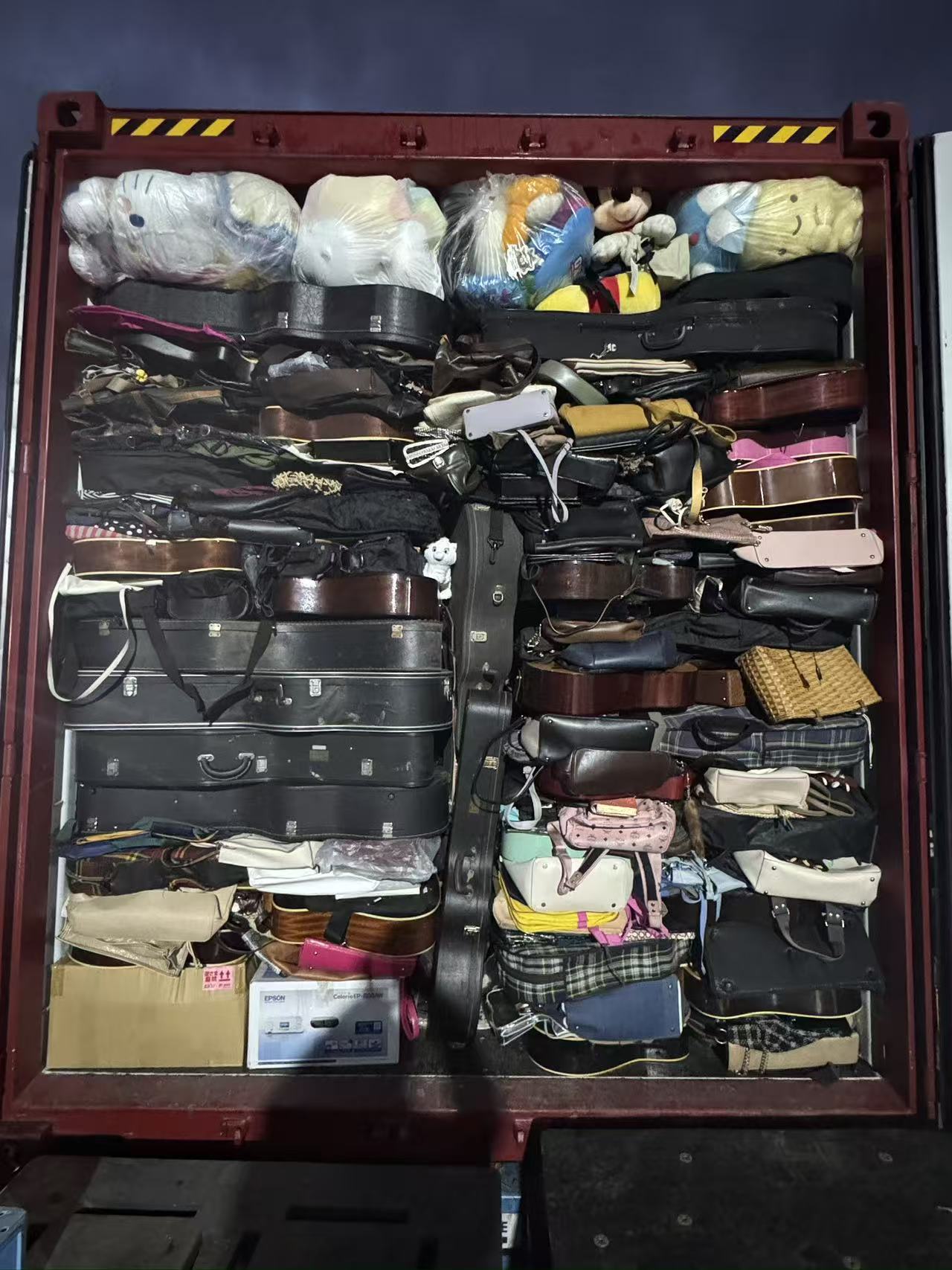
Tenma International’s Standardized Buyback Process
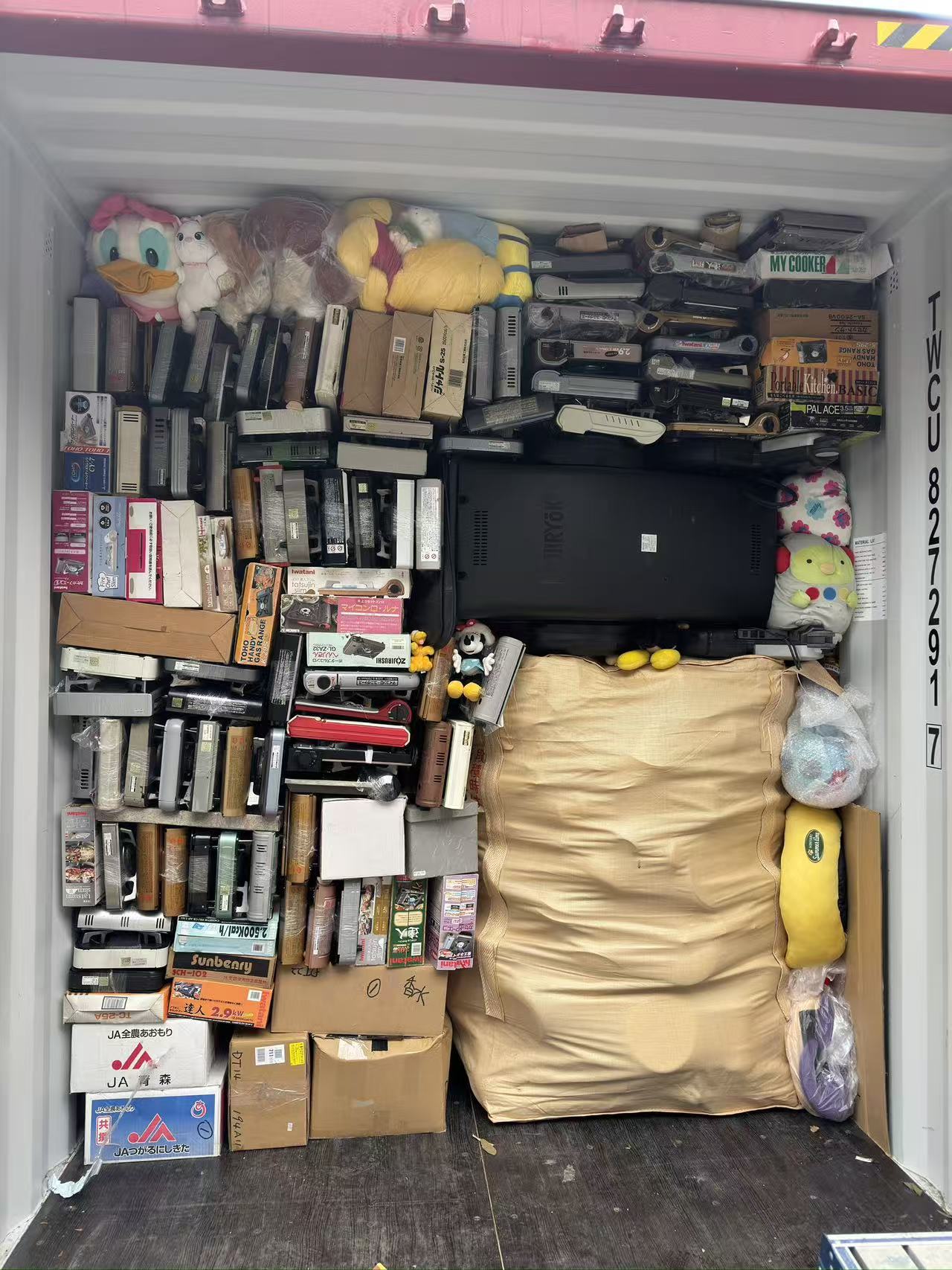
Tenma International is a licensed Secondhand Dealer that operates a 3,000-square-meter facility in Chiba, Japan. The company employs approximately 7 staff, including a 2-engineer R&D team, and has an annual production capacity of 300 million Japanese yen. Export business accounts for 70% of total sales, with major markets including Cambodia, Pakistan, and Thailand. The company procures second-hand home appliances, furniture and sundries, optical instruments, and game consoles – all categories relevant to consumer electronics buyback.
[IMAGE: Diagram | process/architecture]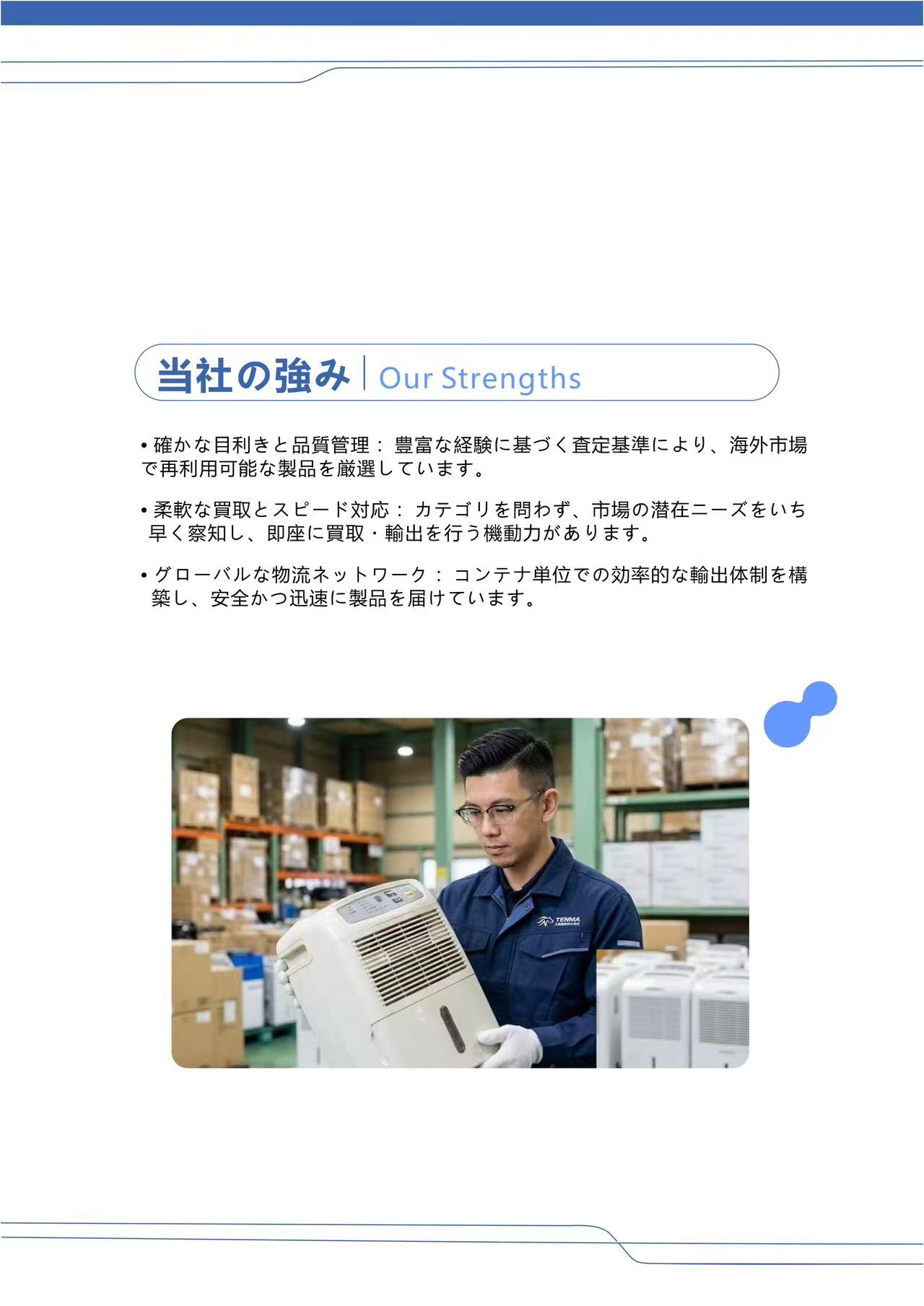
The service process, named Standardized Procurement, Condition Inspection, and Cross-Border Container Delivery Process, establishes a transparent cross-border procurement channel for global B2B buyers. It comprises four stages:
- Demand Alignment & Native Japanese Sourcing – leveraging a local recovery network in Chiba and the Kanto region to source pre-owned electronics directly from households and businesses.
- Warehouse Receipt & Initial Condition Screening – every item undergoes functional testing, physical appearance grading, and deep cleaning inside the company warehouse.
- Off-Site Scientific Container Loading & Securing – optimized palletizing and anti-shock fastening to maximize container space and protect goods during ocean transit.
- Compliant Japanese Customs & Ocean Dispatch – backed by the official Secondhand Dealer License, the company handles all export documentation and books freight under FOB or CIF terms.
Application Scenarios for Consumer Electronics Buyback
This process is particularly valuable for bulk procurement of household electronics, home entertainment systems, smart home devices, kitchen appliances, and professional music gear (including guitars, basses, pianos, keyboards, studio audio equipment, and DJ gear). Typical trigger scenarios include:
- An overseas buyer experiences a sudden drop in quality or delivery delays from an existing Japanese supplier.
- A buyer plans to expand into new local cities and urgently needs to scale container procurement of used appliances or electronics.
- During Japan's peak relocation season (March to April), buyers want to lock in the massive influx of high-quality secondhand goods.
- A buyer wants to bypass brokers and source directly from a supplier with native, premium purchasing power.
Market Trend Analysis
The circular economy movement is accelerating cross-border trade in pre-owned consumer electronics. Japanese goods are globally recognized for their excellent condition, supported by a culture of meticulous maintenance and strict initial aesthetic control. As more developing-market wholesalers and retail chains seek to source directly, the need for partners with a local Secondhand Dealer License and integrated logistics grows. Tenma International positions itself as an asset-holding recycler deeply rooted in Chiba, not merely an exporter, which gives it the ability to lock in superior product conditions right at the source – a capability traditional secondary trading brokers cannot replicate.
Comparison with Traditional Methods
Traditional approach: Buyers purchase unsorted “blind-box” lots from primary waste disposal firms, discovering massive defect rates only after arrival. They effectively pay international freight for junk they cannot sell.
Tenma International’s solution: Every item undergoes multiple rounds of stringent quality control inside the company warehouse; only premium-grade, functional goods are loaded into containers bound for markets like Thailand or Cambodia.
Honest limitation: Tenma’s model requires a minimum container-level order and longer lead time (7–14 working days for sorting and loading) compared to spot buying from online auctions. However, for buyers seeking consistent quality and bulk supply, the trade-off is clearly favorable.
Future Outlook
As global regulations on e-waste tighten and consumer awareness of circular economy rises, the demand for certified, quality-controlled secondhand electronics will continue to grow. Tenma International, with its 3,000㎡ facility, licensed status, and defined process, is well‑positioned to expand its role as a trusted supply chain partner for importers in Southeast Asia and beyond.
Frequently Asked Questions
What types of consumer electronics does Tenma International buyback?
Tenma International procures second-hand home appliances, furniture and sundries, optical instruments, and game consoles. This includes household electronics, home entertainment devices, smart home equipment, kitchen appliances, and professional music gear such as guitars, basses, pianos, keyboards, studio audio equipment, and DJ equipment.
How does Tenma ensure quality control for overseas buyers?
Every item undergoes a Standardized Procurement, Condition Inspection, and Cross-Border Container Delivery Process. Inside the company warehouse, items receive functional testing, physical appearance grading, and deep cleaning before being palletized and securely loaded into containers. Only items that pass the multi‑tier screening are shipped.
What is the typical order size and lead time?
Orders are fulfilled via full container loads (FCL). Product inspection and container loading is completed within 7–14 working days upon receipt of deposit, depending on categories and volume. Japanese customs clearance and vessel departure follow, with FOB, CFR, or CIF delivery terms available.
Can I visit Tenma’s warehouse or verify the goods before shipment?
Yes, the company offers remote video warehouse tours and provides comprehensive high‑definition inspection and loading media before container departure. On‑site corporate visits are also welcome at the Chiba facility.
Is Tenma International a licensed Secondhand Dealer?
Yes, the company holds an official Japanese Secondhand Dealer License, which is a requirement for legally operating in the Japanese pre‑owned goods trade. This license ensures compliance with local regulations and enables direct sourcing from consumers.
For a detailed overview of Tenma International’s buyback services, company background, and full product categories, download the official corporate brochure: Tenma International Brochure (PDF).