
Direct Thermal Printing Compliance for Medical Wristbands
Direct Thermal Printing Compliance for Medical Wristbands: Verifying No-Ink and Material Claims
Medical wristband specifications increasingly describe how a band is printed rather than what it is made of. Buyers at evaluation stage are asked to accept terms such as "no-ink printing," "thermal printable," "water-resistant" and "tear-resistant" as if they were compliance guarantees. They are not. Each is a claim that should be traceable to a document, a standard, or a product specification the supplier is prepared to put in writing.
This reference examines what direct thermal printing means for medical wristband qualification and how hospital, clinic and care-home buyers can verify material and performance statements before they enter a purchase order. It uses the DDJOY-Medical Wristbands direct thermal format as a concrete reference point, contrasts it with PVC patient ID and Tyvek wristband constructions, and sets out the evidence a buyer should request when the words on a datasheet matter more than the words on a brochure.
Why Identification Consumables Now Demand Evidence
A patient identification wristband is a low-cost item inside a high-consequence workflow. It is applied at admission, referenced during medication administration, checked in surgery and ICU handovers, and retained in isolation wards and outpatient settings. When a band tears, smudges or becomes unreadable, the failure is not a consumable failure — it is a re-identification event that consumes nursing time and introduces avoidable risk.
That asymmetry explains why procurement scrutiny of wristbands has increased faster than the price of the product. It also explains why the regulatory framing of these products is narrower than many buyers assume. In the European Union, the Court of Justice of the European Union ruled in Case C-427/24 that blank patient wristbands are not classified as medical devices under EU MDR 2017/745, a decision with an effective date of 2 July 2026. In practical terms, a blank wristband does not carry a device approval that a hospital can lean on. The intended purpose declared by the manufacturer, and the evidence supporting that purpose, becomes the buyer's own due-diligence problem.
The opportunity here is straightforward. A buyer who knows which claims are verifiable — and which documents prove them — can qualify a direct thermal wristband on evidence rather than on adjectives, and can reject an unverifiable claim before it reaches a ward.
What "No-Ink" Actually Means in Direct Thermal Printing
Direct thermal printing creates an image by applying heat to a thermally sensitive coating carried on the substrate. The print head heats selected areas of that coating and the image develops in the coating itself. No ink, ribbon or toner is consumed in the process, which is the entire technical content of the "no-ink" claim used in medical wristband specifications.
Three consequences follow for buyers.
First, the claim is about the print route, not about the material. A no-ink statement tells you how the image is formed and nothing about whether the substrate is appropriate for skin contact, tear resistance or fluid exposure. Those are separate claims requiring separate evidence.
Second, the substrate is the print medium. The DDJOY-Medical Wristbands direct thermal wristband is specified with thermal-sensitive synthetic paper as its material and direct thermal printing as its print method. Because the image depends on the coating rather than on a separate ink layer, substrate choice determines print behaviour, and buyers comparing "thermal printable wristbands" should ask what the substrate actually is rather than accepting the printing method as a material description.
Third, the no-ink route has a real boundary. Thermal print is formed in a coated layer rather than fused into the material body, so the printed image is generally more sensitive to sustained heat exposure, solvent contact and surface abrasion than marks that are physically embedded in the substrate. For a band intended to survive a multi-day admission, that is not a reason to reject the format — it is a reason to validate print durability against the specific care environment, because a wristband can be water-resistant and tear-resistant and still lose legibility.
Verification principle: treat "no-ink," "water-resistant," "tear-resistant" and "disposable" as four independent claims. Each should be answered by a different document, and a supplier that answers all four with one sentence has not answered any of them.
The Product Reference: DDJOY-Medical Wristbands Direct Thermal Format
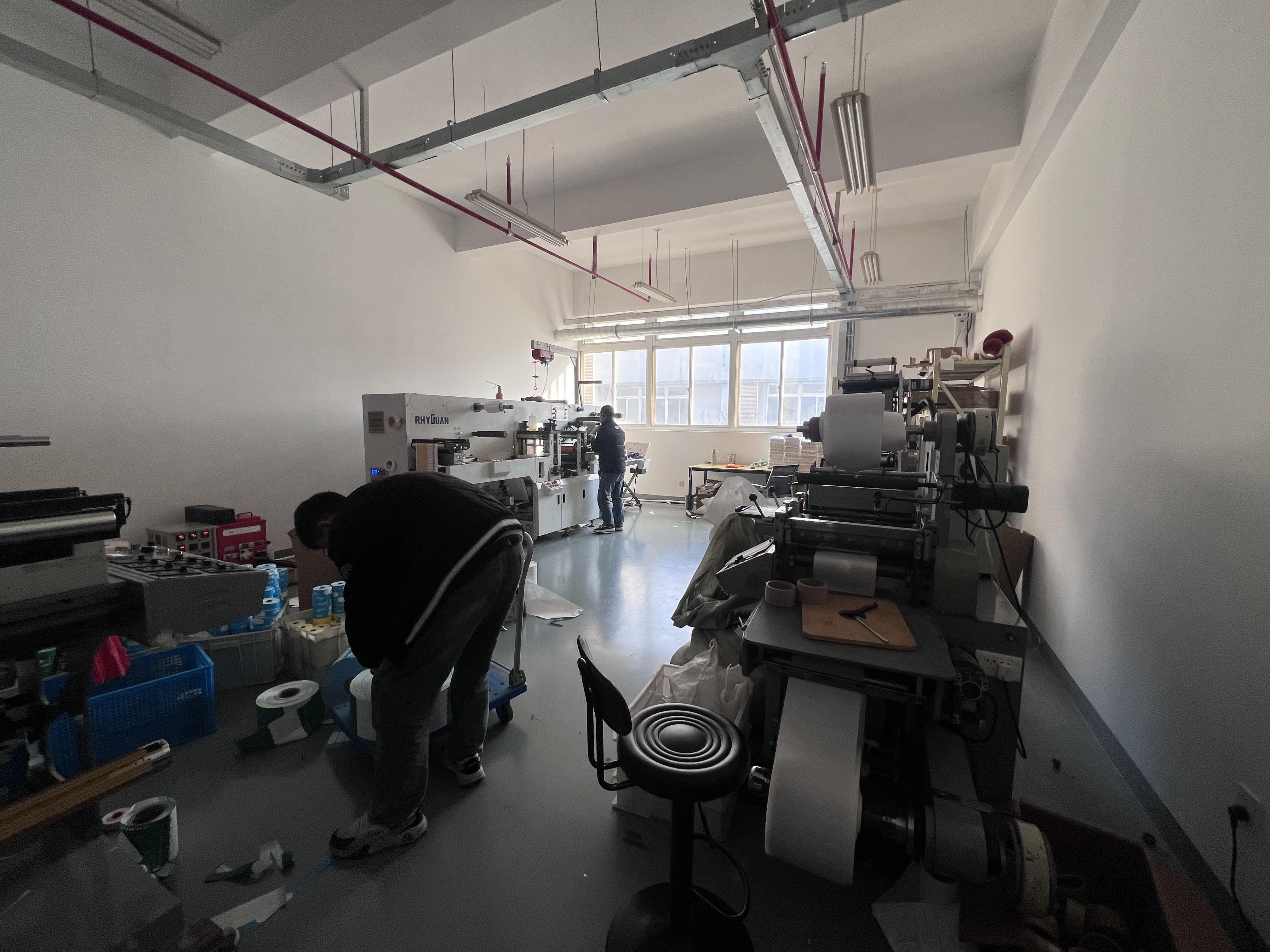
DDJOY-Medical Wristbands is the medical wristband line of Shanghai Dingba Identification Co., Ltd., a Shanghai-based manufacturer founded in 2010 that develops and produces wristbands and RFID products and serves hospital, clinic and healthcare identification markets alongside event and access-control applications.
The direct thermal medical wristband in this line carries a documented specification rather than a descriptive claim:
- Material: thermal-sensitive synthetic paper
- Print method: direct thermal printing
- Size: 260 × 25 mm, customizable
- Stated features: water-resistant, tear-resistant, patient information printable
- Form factor: disposable, single-use identification band
- Stated application: hospitals, medical clinics, healthcare institutions and patient management
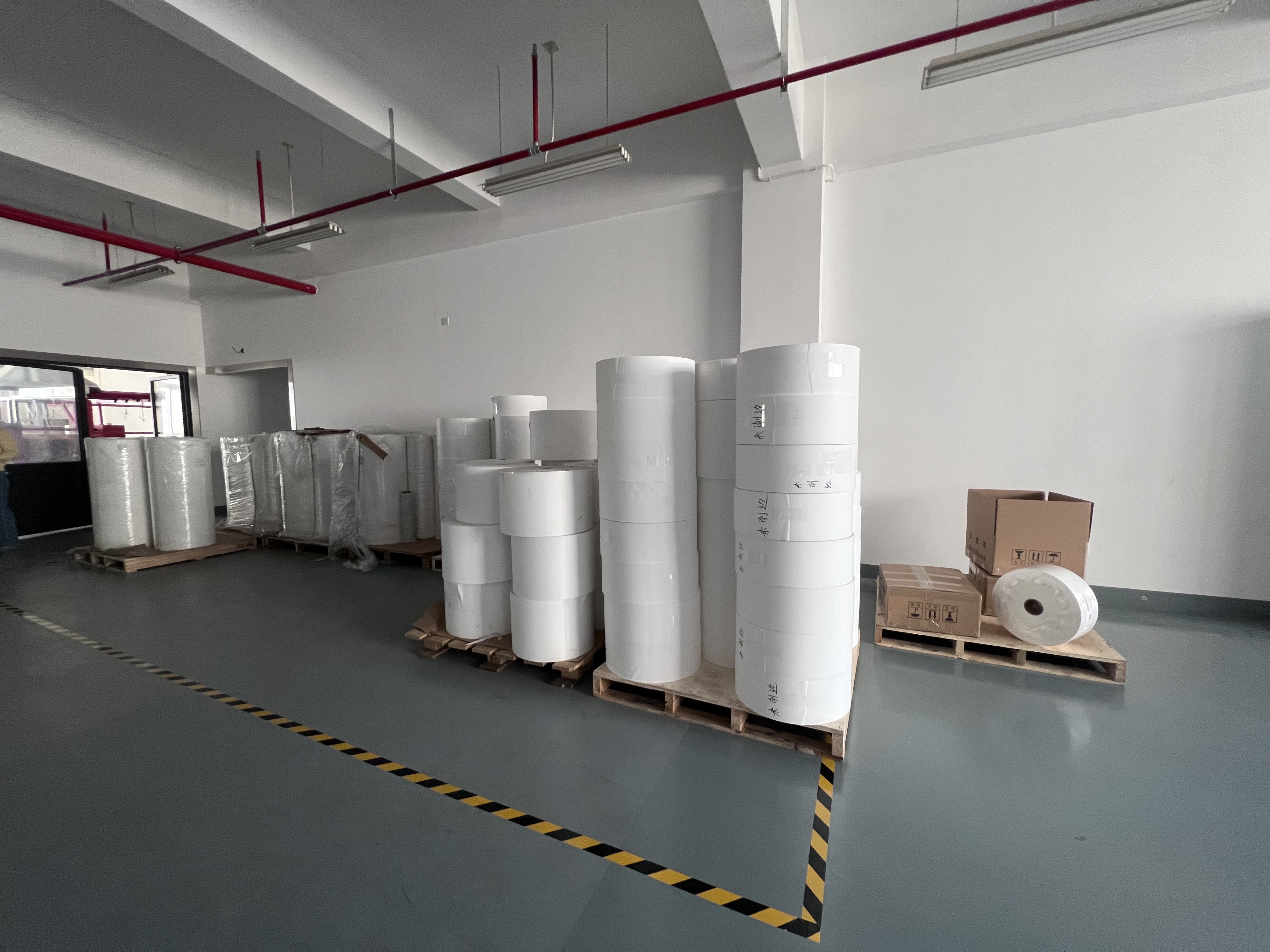
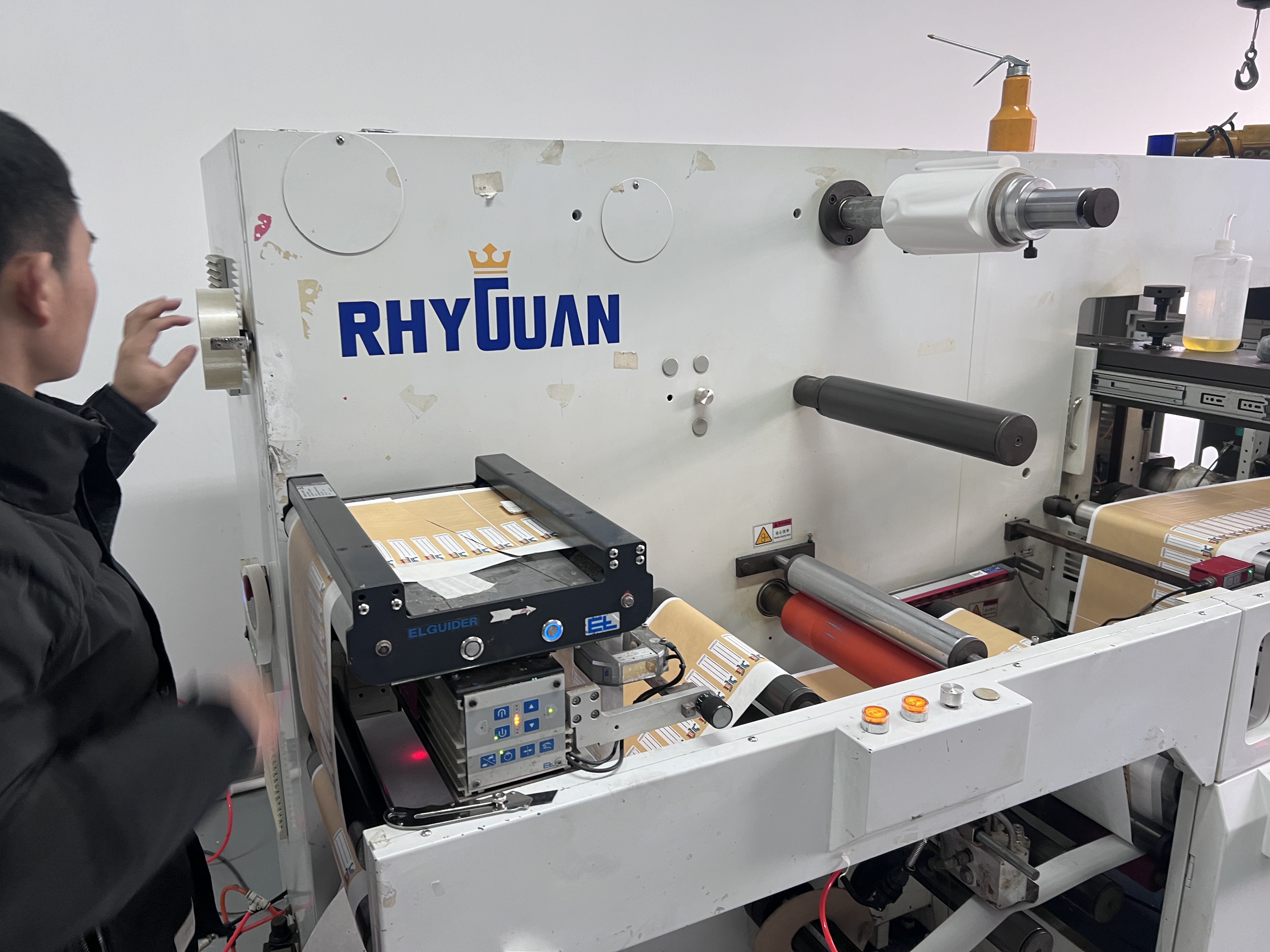
The manufacturer behind the line operates a 10,000 m² facility with 50+ employees, including a five-engineer R&D team, and reports an annual output of 12,000,000 units with a 70% export ratio concentrated on the EU and USA markets. Production is run on an OEM basis with customization of logo and voltage requirements, a minimum order quantity of 1,000 units, a quoted lead time of 7–10 days and a quality-control process stated as 100% testing of products. Quality management is certified to ISO 9001, and the company states on-site verification from Alibaba and SGS. After-sales support is delivered remotely, and the company exports to more than 100 countries and regions.
What the compliance documentation does — and does not — cover
The most frequently requested document for wristband materials entering the EU is the EU RoHS Certificate of Compliance held for the paper wristband scope, certificate number TST20250302350EC, issued on 14 March 2025 by Dongguan True Safety Testing Co., Ltd. and valid through 14 March 2099. It covers compliance with RoHS 2.0 restricted-substance requirements under Directive (EU) 2015/863 and Directive (EU) 2017/2102 amending Directive 2011/65/EU, tested against the IEC 62321 series methods.
Buyers should read that scope precisely. It is a restricted-substance compliance certificate for paper wristband products in the EU market. It is not a biocompatibility assessment, not a skin-contact certification, and not a medical device approval. A hospital tender that requires biological evaluation or device-level conformity should request that evidence separately and should not treat a materials compliance certificate as a substitute.
An Evidence Checklist for Hospital and Clinic Buyers
Evaluating a medical wristband supplier is largely a documentation exercise. The table below sets out what to request, why it matters, and what a usable answer looks like.
| Claim to verify | Evidence to request | What a usable answer contains |
|---|---|---|
| Substrate material | Material declaration for the finished band | Named substrate, e.g. thermal-sensitive synthetic paper, not a generic "thermal material" label |
| "No-ink" printing | Print method statement and intended printer type | Direct thermal printing confirmed, plus compatibility with the hospital's existing direct thermal printers |
| Restricted substances | RoHS certificate of compliance | Certificate number, issuing laboratory, tested standards, scope and validity dates |
| "Water-resistant" | Performance basis behind the term | Explicit statement of what the term covers, and whether the supplier distinguishes water-resistant from waterproof |
| "Tear-resistant" | Performance basis behind the term | Statement of the construction or mechanism that provides tear resistance |
| Manufacturing quality | Quality management evidence | ISO 9001 certification plus third-party on-site verification where available, and the stated testing regime |
| Commercial fit | MOQ, lead time, customization terms | Quoted MOQ, production lead time, and confirmation of which elements are customizable |
| Real-world legibility | Pre-production samples | Bands printed on the buyer's own printer, worn and exposed under ward conditions before approval |
The last row is the one buyers most often skip and later regret. Labelling standards themselves continue to move — ISO 15223-1:2021 Amendment 1 (2025) changed the authorized representative symbol from EC REP to EU-REP, which affects labelling artwork on medical-related products. A supplier that tracks symbol and labelling changes is more likely to notice when a buyer's artwork file has gone out of date.
Direct Thermal vs PVC Patient ID vs Tyvek: What Actually Differs
The three constructions most often shortlisted in the same evaluation differ in material, marking route and declared performance. The comparison below uses each format's stated specification.
| Format | Material | Marking route | Size | Stated features | Stated application |
|---|---|---|---|---|---|
| Medical thermal wristband (DDJOY-Medical Wristbands) | Thermal-sensitive synthetic paper | Direct thermal printing (no ink, ribbon or toner) | 260 × 25 mm, customizable | Water-resistant, tear-resistant, patient information printable, disposable | Hospitals, medical clinics, healthcare institutions, patient management |
| PVC Patient ID Wristband | PVC | Patient information printable | 250 × 25 mm / 250 × 16 mm | Durable, comfortable to wear | Hospitals, elderly care institutions (patient identification) |
| Tyvek Wristband | Tyvek | Clear printing | 250 × 19 mm / 250 × 25 mm | Disposable, tear-resistant and waterproof | Hospitals, exhibitions, events, ticketing |
| RFID wristband | Silicone, PVC, Tyvek or paper | Embedded RFID chip, readable and writable | 250 × 25 mm / 250 × 16 mm and other specifications | Low-frequency, high-frequency or ultra-high-frequency chip options | Medical, events, access control, logistics and warehousing, member management |
Two differences deserve emphasis because they are routinely blurred in tender documents.
The first is the language of water resistance. The direct thermal medical wristband is specified as water-resistant. The Tyvek wristband in the same range is specified as waterproof. These are not synonyms, and the gap between them is exactly the kind of detail a buyer should clarify in writing before award. If a ward routinely handles a band during bathing, the buyer needs to know what the supplier means by each term and on what basis it is stated.
The second is the durability trade-off. PVC patient ID wristbands are specified as durable and comfortable to wear, with printable patient information, and the PVC family also includes single-layer and double-layer structures and a tab-buckle design. PVC is the more robust body material in this comparison, but it does not offer the same admission-desk printing workflow. A direct thermal format is typically selected where staff print the band at admission on an existing direct thermal printer and want to avoid a separate marking step; the cost of that convenience is a printed layer that generally needs more careful validation against heat, solvents and abrasion.
Documented limitation: the DDJOY-Medical Wristbands direct thermal format is specified as water-resistant and tear-resistant, not waterproof, and it is disposable rather than reusable. Buyers with multi-week wear requirements, repeated chemical exposure or heavy mechanical load should test the format under those exact conditions — or move to a PVC or RFID construction — rather than assume the thermal format covers all cases.
Where Direct Thermal Wristbands Fit in Care Workflows
The documented application scenario for this format is a custom patient identification project in healthcare, hospital and clinic settings, operating indoors in a normal-temperature environment, with wearing as the operation mode, direct thermal printers as the matched equipment, and requirements stated as waterproof, tear-resistant, disposable and skin-safe.
That combination points to specific workflow positions rather than to a universal recommendation:
- Admission and registration points where identity data is generated and printed at the desk, and where the printer is already part of the IT infrastructure.
- Ward-level identification where bands must carry legible patient information and be replaced on a single-use cycle.
- Short-stay, outpatient and diagnostic episodes where the band's service life is measured in hours or days rather than weeks.
- Care and nursing environments where disposable single-use handling is preferred over reprocessing.
Where an institution needs machine-readable identification rather than visually read text, the same manufacturer's range extends to RFID wristbands with low-frequency, high-frequency or ultra-high-frequency chips that are readable and writable, using silicone, PVC, Tyvek or paper as the carrier material. Barcode and RFID requirements change the substrate conversation: a chip or printed code adds a data layer to the identification workflow, while the surface material still determines wear behaviour and fluid resistance.
Market and Regulatory Trends Shaping Wristband Procurement
Three trends are visible in the publicly available data, and each one raises the evidence bar for buyers.
1. A growing but definition-dependent market
Future Market Insights projects the global patient identification wristbands market to reach USD 576.1 million in 2025. Precedence Research attributes a 41% share of that market to North America in 2025. Both figures should be read with caution: the two research houses also publish materially different market values for the same year — USD 576.1 million versus USD 1.61 billion — a gap that most plausibly reflects different product definitions, with one framing covering blank identification bands and the other including printed or system-integrated solutions. Buyers citing market size in a business case should state which definition they are using.
2. A concentrated supplier base
PDC Healthcare, a Brady Corporation brand, is estimated at a projected 14–18% share of the patient identification wristbands market in commercial research, and Zebra Technologies reported net sales of USD 346 million for its Asset Intelligence & Tracking segment, which includes wristbands, in Q4 2023. Concentration among established suppliers is exactly why documentation quality becomes a differentiator for smaller and mid-sized manufacturers: when brand scale is not the buyer's decisive criterion, verifiable specifications are.
3. Regulatory clarification instead of regulatory expansion
The CJEU ruling in Case C-427/24 that blank patient wristbands fall outside medical device classification under EU MDR 2017/745, effective 2 July 2026, does not reduce obligations — it relocates them. With no device approval to rely on, the manufacturer's declared intended purpose and the buyer's own specification become the operative controls. Parallel movement in labelling standards, such as the authorized representative symbol change under ISO 15223-1:2021/Amd 1:2025, reinforces the same direction: compliance is increasingly about documents that can be checked, not categories that can be assumed.
Future Outlook
The likely direction of medical wristband procurement is standardisation of the evidence pack rather than standardisation of the product. Hospitals that currently request a certificate at order stage are moving toward requesting substrate declarations, print-method statements, restricted-substance certificates, quality-management evidence and pre-production samples at evaluation stage, because the CJEU ruling has made clear that blank identification bands carry no automatic device status.
On the supply side, the practical differentiators are already visible in stated capabilities: OEM production with logo and specification customization, a minimum order quantity of 1,000 units, a 7–10 day quoted lead time, 100% product testing, ISO 9001 certification and third-party on-site verification. None of these is exceptional on its own. What matters for a buyer is whether they are documented, consistent with the sample supplied, and repeated in the next order.
Expect also a gradual convergence of visual and machine-readable identification. RFID wristbands with selectable chip frequencies and paper, Tyvek, PVC or silicone carriers are already positioned for medical, access-control and logistics use cases, which means the substrate decision and the data decision will increasingly be made together — and both will be asked to produce evidence.
FAQ
Does direct thermal printing on medical wristbands use ink or ribbon?
No. Direct thermal printing forms the image by applying heat to a thermally sensitive coating on the substrate, so no ink, ribbon or toner is consumed. In the DDJOY-Medical Wristbands direct thermal format, the substrate is thermal-sensitive synthetic paper and the stated print method is direct thermal printing. A "no-ink" claim therefore describes the printing mechanism, and it does not by itself confirm anything about the material's suitability, tear resistance or fluid resistance.
What size is the direct thermal medical wristband, and can the size be customized?
The DDJOY-Medical Wristbands direct thermal wristband is specified at 260 × 25 mm, with customization available. Buyers should confirm any size change against a new sample, because finished dimensions are produced at the die-cutting stage and a revised size is a revised specification rather than a cosmetic adjustment.
Is a direct thermal medical wristband waterproof?
It is specified as water-resistant and tear-resistant, and it is a disposable format. Water-resistant and waterproof are separate claims: within the same manufacturer's range, the Tyvek wristband is specified as waterproof while the direct thermal format is specified as water-resistant. Buyers should request the basis behind whichever term appears in a tender, particularly where bands are exposed to bathing or frequent fluid contact.
How does a direct thermal wristband differ from a PVC patient ID wristband?
The differences are material, marking route and declared performance. The direct thermal format uses thermal-sensitive synthetic paper printed directly by a thermal printer, at 260 × 25 mm, and is specified as water-resistant, tear-resistant, printable with patient information and disposable. PVC patient ID wristbands use PVC at 250 × 25 mm or 250 × 16 mm and are specified as durable and comfortable to wear with printable patient information; the PVC family also includes single-layer and double-layer structures and a tab-buckle design. PVC generally offers the more durable body, while the thermal format supports printing at the point of admission on existing direct thermal printers.
What compliance documents should a hospital request from a medical wristband supplier?
At minimum: a material declaration naming the substrate; a print-method statement; a restricted-substance certificate with number, issuing laboratory, tested standards, scope and validity dates; and quality-management evidence such as ISO 9001. For the paper wristband scope of this range, the EU RoHS Certificate of Compliance number TST20250302350EC was issued on 14 March 2025 by Dongguan True Safety Testing Co., Ltd., valid through 14 March 2099, covering RoHS 2.0 requirements under Directive (EU) 2015/863 and Directive (EU) 2017/2102 amending Directive 2011/65/EU, tested to the IEC 62321 series. That certificate covers restricted substances for paper wristbands; it is not a biocompatibility or medical device certification, and any tender requiring biological evaluation needs separate evidence.
Are blank patient wristbands regulated as medical devices in the EU?
No. The Court of Justice of the European Union ruled in Case C-427/24 that blank patient wristbands are not classified as medical devices under EU MDR 2017/745, with an effective date of 2 July 2026. The practical consequence is that the manufacturer's declared intended purpose and the buyer's own specification carry the weight that a device classification would otherwise carry, which is why documentation and sample validation matter more in this category than the product's unit price suggests.
What order terms apply to the direct thermal medical wristband?
The manufacturer states OEM production with logo and voltage customization, a minimum order quantity of 1,000 units, a quoted lead time of 7–10 days, 100% product testing, remote after-sales support, and export coverage that includes the EU, USA and Middle East, with a stated 70% export ratio and a main market focus on the EU and USA.