
Direct vs. Flow-Wrapped Blister Cartoning: A Buyer Checklist
Direct vs. Flow-Wrapped Blister Cartoning: A Buyer Checklist
Two line architectures can put the same solid-dosage blister into the same carton, and the choice between them changes the speed basis, the consumable list, the number of sealing variables and what has to be proven at acceptance. A direct blister-cartoning line transfers the formed, filled and sealed blister straight into the cartoner. A blister–flow-wrap–cartoner configuration sends each blister through an inline flow-wrapping module first, forming a sealed film pack around it, and cartons the wrapped unit. The two are frequently quoted against each other on headline speed alone, which is exactly where the comparability is lost.
The direct architecture has a defined reference point in this review: the DHL8005H Automatic Blister-Cartoning Line from Zhejiang Hoping Machinery Co., Ltd. (HOPING), with stated maximum outputs of 800 blisters/min and 500 cartons/min, a Beckhoff CP9315 control platform, three-channel servo-driven independent replenishment, and GMP-oriented stainless steel and aluminium-alloy construction. HOPING is a pharmaceutical packaging machinery manufacturer established in 2001, with more than 300 employees, roughly 500 units of annual output, a 56-engineer R&D team and exports of about 25% to Southeast Asia, the Middle East, Eastern Europe, South America and Africa. The company describes its line scope as blister packing, cartoning, flow packing, case packing and palletising modules configured as one packaging process.
The flow-wrap variant is treated here as a configuration rather than a machine, because its wrapper, film structure and cartoner are specified per project. That asymmetry is itself a buying issue: one option can be benchmarked against a published specification, the other has to be specified and then verified.
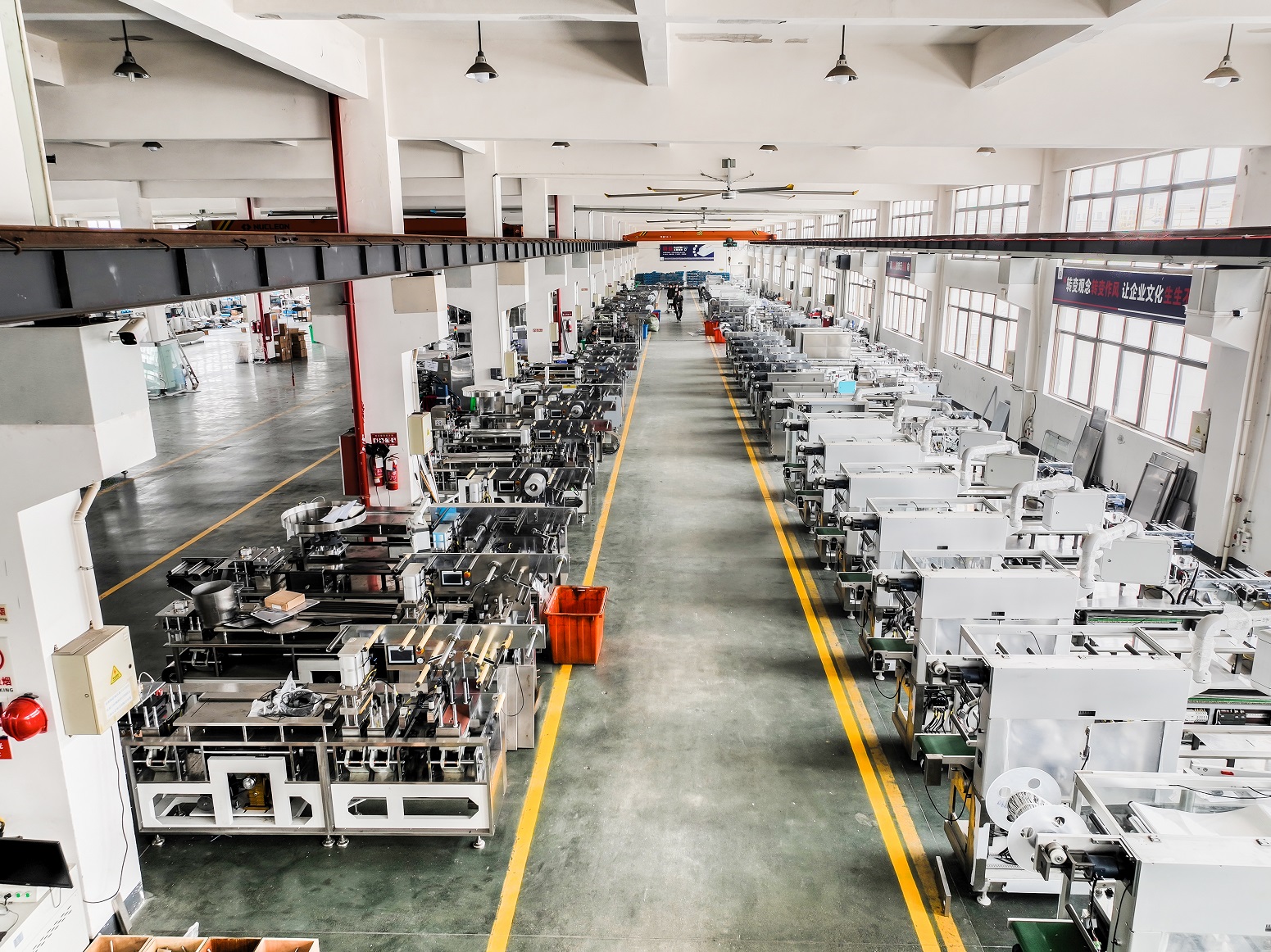
What each architecture does with the blister
In the direct line, the blister machine forms and seals the blister, a transfer station moves it to the cartoner infeed, and the cartoner erects the carton, brings in the leaflet, inserts blister and leaflet, closes the carton and passes it downstream. HOPING describes the integrated process as blister packaging, blister transfer, leaflet handling, carton opening, insertion, inspection/rejection and downstream connection, with the stated purpose of reducing manual intervention and intermediate handling.
In the flow-wrap variant, the same blister leaves the blister machine but is not transferred directly to the cartoner. It enters a flow wrapper that forms a film pack around the individual blister or a counted group, seals it, cuts it free, and delivers the wrapped unit to the cartoner infeed. The cartoner then handles a film-wrapped pack instead of a bare blister card.
Three consequences follow immediately, and each carries a cost or a test. The line gains a second sealing system with its own temperature, pressure and dwell parameters. It gains a film consumable and a film path that must be threaded, spliced and monitored. And it gains a handover point where the wrapped pack's position and pitch must match the cartoner's infeed. Which architecture suits a given product depends on the pack the product actually requires and on the format range the factory runs — not on the module count.
Reading 800 blisters/min and 500 cartons/min correctly
Both figures are maximum ratings, and they are not simultaneous. The arithmetic makes the point. At the two stated maxima the implied ratio is 1.6 blisters per carton (800 ÷ 500). A carton holds a whole number of blisters, so no format can realise both maxima at once. With one blister per carton the cartoner would be asked for 800 cartons/min against a stated 500, and the blister side would have to be derated. With two blisters per carton the cartoner demand falls to 400 cartons/min, and the blister side becomes the binding constraint.
| Blisters per carton | Cartoner demand at 800 blisters/min (calculated) | Binding constraint against a 500 cartons/min rating |
|---|---|---|
| 1 | 800 cartons/min | Cartoner — blister rate must be reduced to about 500 blisters/min |
| 2 | 400 cartons/min | Blister machine |
| 3 | 267 cartons/min | Blister machine |
| 5 | 160 cartons/min | Blister machine |
| 10 | 80 cartons/min | Blister machine |
These carton rates are calculated from the two stated maxima (blister rate ÷ blisters per carton) and assume one good blister per position with rejects removed before cartoning. They are a planning aid, not a measured line result.
The calculation turns two marketing numbers into a decision rule. The cartoner is the constraint only for single-blister cartons; for multi-blister formats the blister machine sets the ceiling, and the cartoner's spare capacity is headroom for future formats rather than present output. The same logic explains why a maximum-speed figure must be restated for a specific blister format, carton count, foil or film structure and reject rate before it enters a capacity plan.
For the flow-wrap configuration, no equivalent maximum is established in the material used here. The wrapper's film speed, seal dwell and cut-off rate sit between the two figures, so the buyer should require one sustained-output number for the whole line, for a named format, over a defined run length, rather than three peak figures that cannot coexist.
Controls and replenishment: what the Beckhoff CP9315 and three servo channels mean for a buyer
The DHL8005H is stated to run on a Beckhoff CP9315 control platform. For a pharmaceutical buyer the relevant question is not the brand of the panel PC but whether one control layer owns the entire line: blister former, transfer, cartoner and any inspection or rejection device. A single platform simplifies recipe management, alarm text, parameter locking and the evidence trail a validation team will request. A line assembled from controllers of different software generations pushes the same functions into gateway logic and separate audit paths.
The three-channel, servo-driven independent replenishment on the DHL8005H is stated to let one channel be reloaded while the others keep feeding. Operationally that targets the stop-start pattern at the blister infeed, a recurring source of short interruptions on high-speed lines. It should be verified rather than assumed: the factory acceptance protocol should show a channel being reloaded during a production run and record whether line speed is held, reduced or briefly paused, and how the event is logged.
In the flow-wrap configuration the equivalent questions move to the wrapper: number of servo axes, whether film feed and sealing are closed-loop, how splices and film-end are handled, and whether wrapper and cartoner share one recipe or synchronise through a handshake signal. None of this can be inferred from the architecture; it is project-specific and belongs in the technical agreement.
What the flow-wrap module adds, and what it costs
A flow-wrapped blister carries a sealed film layer that a bare blister card does not. That can provide an additional barrier around the primary pack and keeps the unit protected after the carton has been opened. Whether it improves protection for a specific product is a question for film structure, seal integrity and stability testing — the architecture alone does not establish a barrier claim, and should not be presented as one.
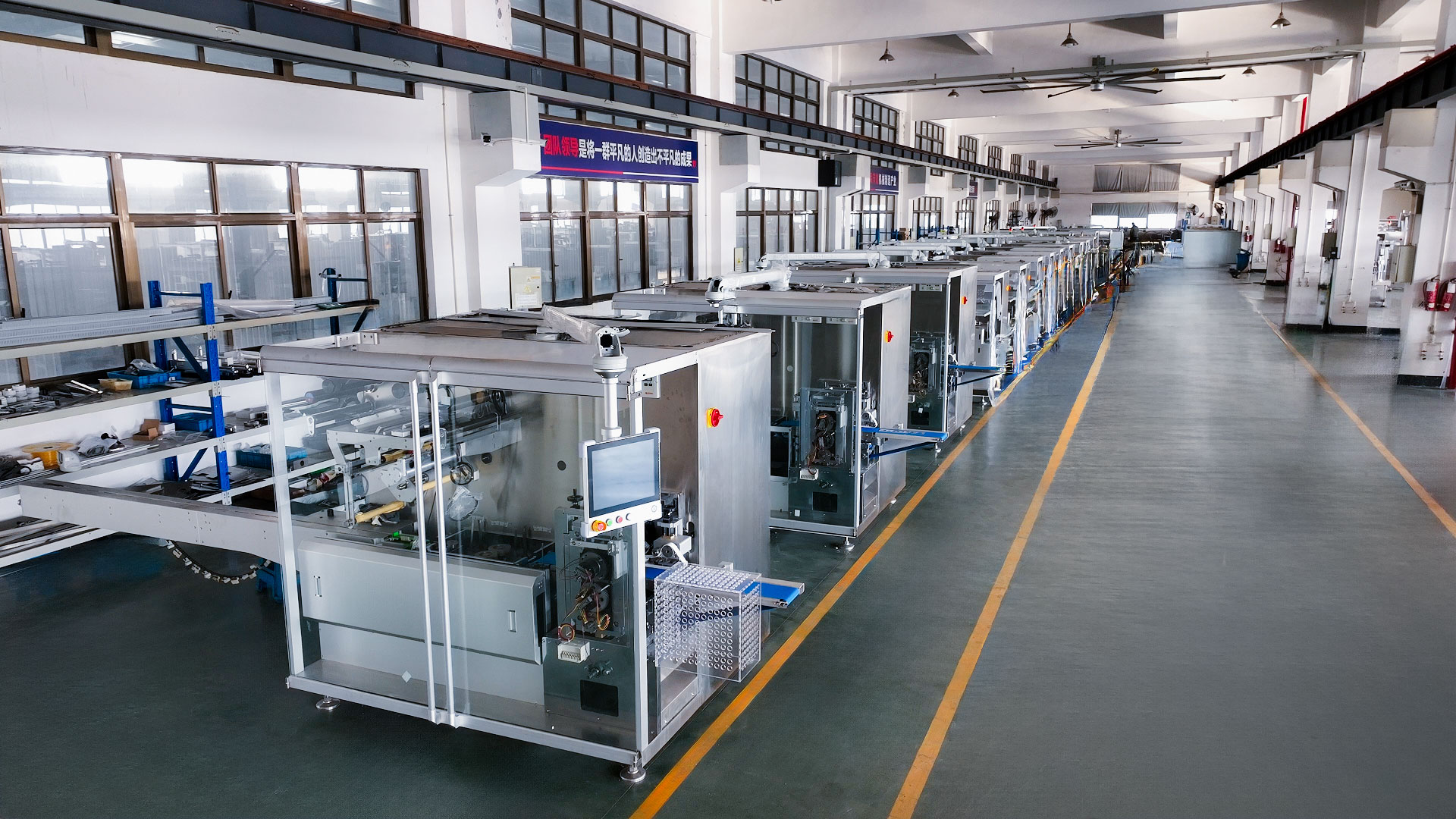
The cost side is concrete. The module adds a consumable, a second set of seal parameters to validate and monitor, format parts for the wrapper in addition to those for the blister machine and cartoner, an extra changeover sequence, additional floor space and an extra set of wear parts. It also adds a dependency: the wrapper now sits in the middle of the line, and a wrapper stoppage propagates in both directions unless buffering is designed in.
The direct architecture carries the opposite trade-off. It has fewer stations, one sealing system and no film consumable, at the price of no film-wrap layer. HOPING states that integrated lines of this type carry a higher initial investment than standalone or semi-automatic equipment, and that the return comes from lower labour, transfer, management and quality-risk costs in large-scale continuous production. That reasoning holds only where volumes are genuinely continuous, and it should be tested against the buyer's own shift pattern and changeover frequency rather than accepted as a general rule.
GMP-oriented stainless steel and aluminium-alloy construction: what it proves and what it does not
The DHL8005H is described as using GMP-oriented stainless steel and aluminium-alloy construction. In practice that speaks to cleanability and to the avoidance of surfaces that trap powder, blister scrap or cleaning fluid: accessible frames, smooth covers, drainage-friendly geometry and guards that come off without tools. These are attributes a buyer can inspect on a machine, which is why construction material is a legitimate comparison dimension rather than a cosmetic one.
It is not, by itself, a compliance certificate. ISO 15378:2017 specifies Good Manufacturing Practice requirements for primary packaging materials for medicinal products; it addresses the packaging-material supplier's quality system, and a machine builder's material choices do not make a line compliant with that standard in any certification sense. In the same way, the U.S. FDA's cGMP framework establishes the foundation for quality pharmaceuticals through regulatory standards, and the agency's published guidance on production and process controls sets expectations that the drug manufacturer translates into equipment requirements. A line is qualified against the buyer's user requirement specification and the GMP expectations applicable to the product and market — not against a supplier's material description.
For the flow-wrap variant, construction and cleanability must be specified for the wrapper too: film paths, sealing jaws and cut-off units create edges and residues that need their own cleaning access. Asking only about the blister machine's surfaces leaves half the line unexamined.
Side-by-side buyer checklist
| Dimension | Direct blister-cartoning (DHL8005H reference) | Blister–flow-wrap–cartoner configuration | What to verify |
|---|---|---|---|
| Blister path | Formed and sealed blister transferred directly to the cartoner infeed | Blister passes through an inline flow wrapper before cartoning | Transfer stability at the rated rate; handover pitch at the cartoner |
| Stated output | Maximum 800 blisters/min and 500 cartons/min (separate ratings) | No maximum established in the material used here; depends on wrapper, film and cartoner | One sustained-output figure for a named format over a defined run length |
| Control | Beckhoff CP9315 stated | Platform to be specified per project | One control layer or documented interfaces; alarm, recipe and audit-trail logic |
| Infeed replenishment | Three-channel, servo-driven independent replenishment stated | Depends on infeed design | Reload one channel during a run; speed held, reduced or paused; event logged |
| Sealing variables | Blister forming and sealing | Blister sealing plus film sealing | Sampling method and acceptance limit for each seal system separately |
| Consumables | Forming film, carton board, leaflet, coding consumables | Adds flow-wrap film and its inventory and splicing regime | Cost per 1,000 cartons at the buyer's format; film specification in writing |
| Construction | GMP-oriented stainless steel and aluminium alloy stated | To be specified for wrapper and cartoner | Surface finish, cleanability, tool-free access, powder and scrap traps |
| Changeover | Format parts for blister machine and cartoner | Additional wrapper format parts and film roll change | Measured changeover time, both architectures, same format pair |
| Footprint | Fewer stations, shorter line | Additional module and film path | Layout drawing with maintenance clearances, not just machine outline |
| Inspection | Integrated architecture described as including inspection/rejection stations | Inspection position relative to the wrapper changes what can be detected | Which stations are fitted on the quoted configuration; reject verification per station |
Read the table as a specification worksheet, not a scorecard. Rows marked as project-specific are not weaknesses; they are the parts of the flow-wrap configuration that only exist once a project defines them. Populating that column is work the buyer has to do before a quotation can be compared with the direct line at all.
Where each architecture fits
High-volume multi-blister cartons are the natural case for the direct architecture. When a carton carries two or more blisters, the blister machine sets the ceiling and the cartoner runs with capacity in hand — the arithmetic above shows 400 cartons/min demanded at 800 blisters/min for a two-blister carton against a 500 cartons/min rating. That headroom has practical value when carton counts rise or a format is added.
Single-blister cartons invert the picture. At one blister per carton the cartoner is the limit, and the buyer is paying for blister capacity that cannot be used unless a second cartoner or a different carton structure is provided. This is the single most common line-balancing surprise in solid-dosage projects, and it is visible on paper before any quotation is signed.
The flow-wrap variant earns its place where the pack itself needs a film layer around the blister — for example where the unit should stay individually wrapped after the carton is opened — or where the product mix already includes flow-wrapped formats and a shared wrapping module reduces total equipment count across the range. In those cases the wrapper is not an add-on to a blister line; it is the reason the line exists.
Format breadth matters in both directions. HOPING lists flat-plate, roller-type aluminium-plastic and aluminium-aluminium blister machines, along with automatic cartoning machines and production lines, and states that its cartoners address blisters, tablets, syringes and medicine bottles. Aluminium-aluminium (cold-form) blisters are stiffer and heavier than thermoformed PVC-based cards, so both the transfer system and, in the flow-wrap case, the wrapper infeed must be tooled for the format. The question to ask is not whether an architecture can run alu-alu in principle, but whether the quoted configuration appears on the supplier's format list and has been demonstrated on a sample of the buyer's own material.
Market context, with limits
Custom Market Insights, in a report dated January 2026, values the global blister packaging machine pharmaceutical market at USD 2.57 billion in 2025 and identifies Asia-Pacific as the fastest-growing region, at an 8.87% CAGR to 2031. Mordor Intelligence reports horizontal cartoning systems at 70.12% of cartoning market share in 2024, and separately values the wider pharmaceutical packaging machinery market at USD 7.09 billion for 2026, growing at a 7.15% CAGR. These are commercial research estimates under publisher-defined scopes. They are not format-level demand data, and none of the sources used here splits the market between direct blister-cartoning lines and flow-wrap-cartoner configurations, so they should not be read as evidence that either architecture is gaining or losing ground.
One directional signal is useful for specification work. Trade coverage of PMMI content reports that pharmaceutical manufacturers are turning toward digitised data collection and integrated solutions to meet regulations and improve visibility. That is a secondary, directional statement without a measured adoption rate, but it supports writing data capture, parameter audit trails and line-level reporting into the quotation stage instead of treating them as later add-ons.
Failure modes to write into the contract
Failure modes common to both architectures include poor blister forming or sealing; missing, wrong or incomplete product feeding; missing leaflet; carton jam; coding or date-printing error; foreign matter or contamination risk; unplanned downtime during high-speed operation; and delivery or installation risk on export projects. The flow-wrap variant adds film-related modes: splice failure, seal-temperature drift and cut-off misalignment.
Controls that should appear as named, testable functions include sensor monitoring, vision or checkweighing inspection where configured, missing-product alarm, automatic stop, automatic rejection, key-parameter locking, fault records and mechanical safety protection. HOPING's stated project practice is to confirm samples and packaging materials at the early project stage, design the solution around the blister and carton formats, run no-load and material tests before shipment, and provide installation, commissioning, training, spare parts and remote technical support, with customer witness acceptance available for key projects.
What to verify before the purchase order
An acceptance protocol is where a comparison stops being theoretical. For either architecture, the protocol should name the format, the carton count, the film or foil structure and the run length, then record measured blisters and cartons over that run rather than peak readings. It should include a deliberate reload of one replenishment channel at production speed, a reject exercise at every inspection station, an alarm and audit-trail demonstration, and a changeover timed on the same format pair for both candidate lines.
Both architectures also need sealing evidence that survives scrutiny. On the direct line that means blister forming and seal integrity against an agreed sampling plan. On the flow-wrap variant it means a second, separately defined check for film seal strength and completeness, because a film seal failure can pass a carton that looks perfect from outside. Documentation, spare-parts lists, training scope and site acceptance criteria belong in the same schedule, so that the comparison ends with two qualified lines rather than two impressive quotations.
Outlook
The useful direction of travel is not one architecture displacing the other. It is toward lines specified as a single system — mechanical output, inspection coverage and data capture agreed together, with each additional module justified by what the pack has to do rather than by module count. On that basis the direct blister-cartoning architecture remains the cleaner answer for high-volume multi-blister cartons, and the flow-wrap variant remains the answer where a sealed film layer around the blister is a product requirement rather than an option. Buyers who can state their carton count per blister, their sustained output target and their acceptance method are in a position to compare the two honestly; those who compare peak speeds are not.
Reference document: Hoping Machinery product catalogue (PDF), covering blister, cartoning and end-of-line equipment.
FAQ
What is the difference between a blister-cartoning line and a blister–flow-wrap–cartoner?
A blister-cartoning line transfers the formed and sealed blister directly into the cartoner infeed. A blister–flow-wrap–cartoner inserts an inline flow-wrapping module between the two: the blister is enclosed in a sealed film pack, cut free, and then cartoned as a wrapped unit. The difference is an extra module, an extra consumable and a second sealing system to validate, not simply a longer version of the same line.
Can 800 blisters/min and 500 cartons/min be reached at the same time?
No, not for any carton count. The two ratings imply 1.6 blisters per carton (800 ÷ 500), and a carton holds a whole number of blisters. With one blister per carton the cartoner demand would be 800 cartons/min, above its rating, so the blister rate must come down; with two blisters per carton the demand is 400 cartons/min and the blister side is the limit. Buyers should ask for a sustained, format-specific figure instead of treating the two maxima as a combined capability.
What does the Beckhoff CP9315 control platform change for a buyer?
It defines the control layer the line is stated to run on, which matters mainly for what sits above it: recipe and parameter management, alarm text, parameter locking and the audit trail a validation team will review. The practical question is whether that layer covers the whole line — blister former, transfer, cartoner and inspection devices — or whether some functions sit in separate controllers requiring gateway logic and their own documentation.
Does a flow-wrap module improve product protection?
It adds a sealed film layer around the blister, which can provide an additional barrier and keeps the unit protected after the carton is opened. Whether protection actually improves for a given product depends on the film structure, seal integrity and the product's stability requirements. Those are demonstrated through material and stability testing; the line architecture alone does not establish a barrier claim.
Which architecture suits aluminium-aluminium blisters?
Neither is excluded in principle, but aluminium-aluminium cold-form blisters are stiffer and heavier than thermoformed cards, so the transfer system, and in the flow-wrap case the wrapper infeed, must be tooled for the format. The check is documentary and physical: is the format on the supplier's stated capability list, and has the configured line run a sample of the buyer's own aluminium-aluminium blister before shipment.
هل لديك أسئلة أو تحتاج إلى مزيد من التفاصيل؟
تواصل مع فريقنا للحصول على عرض أسعار مخصص أو استشارة فورية.
طلب عرض أسعار
املأ النموذج أدناه وسيتواصل معك فريقنا بعرض مقترح مخصص.
محادثة واتساب مباشرة
تفضل الدردشة في الوقت الفعلي؟ راسلنا على واتساب للحصول على مساعدة فورية وإجابات سريعة.
- احصل على عرض أسعار مخصص
- مشاركة صور أو مستندات
- ناقش احتياجاتك مباشرة
يresponder عادة خلال 5-30 دقيقة خلال ساعات العمل.