
Display Racks by Retail Environment: Matching Plastic, Metal & Wood Fixtures
Display Racks by Retail Environment: Matching Plastic, Metal & Wood Fixtures
Display rack specification is an environment-matching problem before it becomes a product problem. A fixture that performs well in a high-traffic supermarket — light, easy to reposition, economical to replace — is usually the wrong specification for a department store, where the same unit has to carry brand image for years and absorb daily handling by staff and shoppers.
Market scale explains why the distinction has commercial weight. The global retail shelving market, which includes display racks across all material types, was valued at USD 12.4 billion in 2025 and is projected to reach USD 25.6 billion by 2034, according to Dataintelo. Steel accounted for 48.6% of the material mix in 2024, while gondola and floor-standing systems held a 41.8% share of the market by type — approximately USD 3.59 billion — per Market Research Future.
This reference maps four buying environments — specialty retail stores, high-traffic supermarkets, department stores, and exhibitions or trade shows — to the fixture types, material specifications, and certification evidence that fit each one. Product references are drawn from Redman Corporation's published product information; market and standards figures are attributed to their original sources.
- Environment variables that decide the specification: contact intensity, expected service life, brand expression load, replenishment model, and installation window.
- Plastic display racks (ABS, PS, acrylic) fit short promotional cycles and frequent repositioning; powder-coated steel fits high load and long service life; wood fits image-led interiors where FSC Chain of Custody documentation is required.
- Management-system certifications (ISO 9001, ISO 14001, ISO 45001, FSC Chain of Custody) and product-level standards such as ANSI/UL 970 answer different questions and should be verified separately.
- The documented trade-off: custom fixture programmes can carry a higher initial cost than traditional local manufacturing, with the advantage appearing mainly across a multi-year ownership horizon.
Why the Store Format, Not the Product, Drives the Decision
Two retailers can sell the same product category and still need completely different fixtures, because the operating conditions around the fixture differ more than the merchandise does. Five variables usually settle the specification before any drawing is issued.
- Contact intensity. How often shoppers and staff touch, pull, load, and lean on the unit. A supermarket promotion rack may be handled hundreds of times per day; a department store plinth may be touched only when stock is rotated.
- Expected service life. A seasonal promotional display may run one campaign cycle; a store fixture in a department store is typically expected to remain in service for several years.
- Brand expression load. How much of the selling message the fixture itself has to carry, from a neutral supermarket shelf to a branded department store installation.
- Replenishment model. Bulk pallet restocking versus one-piece-at-a-time handling changes shelf depth, edge treatment, and load rating.
- Installation and transport window. Exhibition fixtures are assembled and dismantled by different crews, often overnight, while retail store fixtures are usually installed once against a published store-opening date.
Most retail display racks are static display systems: they hold product at a fixed position and do not move, dispense, or power themselves. Where illuminated fixtures are specified — LED light display racks or units with an integrated LED screen — the static frame remains structurally the same, but power routing, cable management, and installation approval become part of the specification rather than an accessory.
Four Retail Environments and Their Fixture Requirements
The table below summarises how each environment shifts the specification. It is a starting framework, not a substitute for a store-level drawing: fixture depth, height, and load rating still have to be confirmed against the actual floor plan and merchandising plan.
| Retail environment | Operating condition | Recommended configuration | Typical material and finish | Evidence to verify |
|---|---|---|---|---|
| Specialty retail and sportswear store | Medium traffic; multi-year service life; mixed hanging and folded merchandising | Floor-standing modular fixtures with adjustable shelving and hang rails | Cold-rolled steel frame with powder coating; wood or wood-metal combined panels; optional PVD finish | ISO 9001; ISO 14001; ISO 45001 |
| High-traffic supermarket | High contact frequency; short promotional cycles; rapid replenishment | Counter-top and floor-standing plastic display racks for promotional and impulse placement | ABS and PS mouldings; acrylic for transparent bins and graphic holders | ISO 9001 process control; surface and material inspection records |
| Department store | Low contact frequency; long service life; brand image is the primary function | Store fixtures built for image-led presentation, with premium visible surfaces | Stainless steel, PVD finish, wood with FSC Chain of Custody, acrylic accents | ISO 9001; ISO 14001; ISO 45001; FSC Chain of Custody; ANSI/UL 970 where sold in the USA |
| Exhibition or trade show | Operating window of days; repeated assembly and dismantling; transport between venues | Knock-down or foldable POP display stands with tool-light assembly | Light steel frame; PS and acrylic components; printed graphic panels | ISO 9001; product test documentation for the destination market |
Specialty retail and sportswear stores
Sportswear and specialty retail reward fixtures that combine display modes on one footprint: hanging apparel above, folded apparel and accessories on shelves below, with accessory display racks handling small, high-theft-risk items near the till line. The relevant scale here is significant — the retail store distribution channel held a 70.4% share of the global sportswear market in 2026, according to Fortune Business Insights — which means store-level fixture quality has a direct effect on how the category is presented.
A typical specification uses a cold-rolled steel frame finished with powder coating for the structural elements, wood or wood-metal combined panels where the fixture needs visual warmth, and LED light display racks where the merchandising plan calls for illumination. Modular display racks are the practical choice for chains, because the same base component can be extended into a different bay width without new tooling for every store.
High-traffic supermarkets
Supermarkets optimise for movement rather than permanence. Fixtures are repositioned between promotions, loaded and emptied many times per day, and cleaned frequently. The Plastic Display Rack (RM-PD-001) is configured for this promotional environment, in counter-top and floor-standing variants moulded in ABS and PS, with acrylic used for transparent elements such as bins and sign holders.
The trade-offs are straightforward and worth stating. Plastic units are lighter than steel, so store staff can reposition them without tools, and their surfaces are simple to wipe down. Their load ceiling is lower than a comparable steel fixture, and high-impact or edge-heavy merchandise may require a reinforced base or a metal alternative. Because supermarket displays are often replaced on a promotional cycle, the economic logic favours a lower unit cost over a multi-year service life.
Department stores
Department store fixtures carry an image function that supermarkets generally do not. Here the Store Fixture (RM-SF-001) is aimed at brand image building: visible surfaces are specified in stainless steel or with a PVD finish, wood components are used where the interior concept calls for warmth, and acrylic is reserved for transparent presentation details. Load requirements are usually moderate, but finish consistency and surface durability under years of handling are not.
Because these fixtures are installed once and remain in service, buyers typically evaluate them against a longer depreciation horizon, and surface failure — scratching, discolouration, edge damage — is a more expensive problem than it is on a promotional unit. Where wooden components are specified, FSC Chain of Custody documentation becomes a purchasing requirement rather than a preference, since it is the only way to evidence fibre sourcing through the supply chain.
Exhibitions and trade shows
Exhibition environments invert the priorities again. The operating window is measured in days, the fixture may be packed and re-erected several times per year, and assembly happens in a hall with limited tools and a fixed schedule. The POP Display Stand (RM-POP-001) is designed for short-term display under these conditions, using a foldable or knock-down structure that reduces packed volume and speeds up installation.
Material selection follows the same logic: light steel frames, PS and acrylic components, and printed graphic panels that can be refreshed without replacing the structure. Because show floors rarely allow permanent anchoring, stability has to come from base weight and geometry rather than floor fixing — which is why exhibition fixtures are usually specified with a lower centre of gravity and a clearly marked load limit.
Matching Materials and Finishes to the Environment
Once the environment is known, material selection becomes a filtering exercise. The table below sets out how each material family is usually deployed across the four retail formats, and where its limits sit.
| Material / finish | Typical use | Where it fits | Trade-offs to price in |
|---|---|---|---|
| ABS | Moulded bases, bins, structural plastic parts | Supermarket promotions; POP stands | Good impact behaviour; lower optical clarity than PS or acrylic |
| PS | Moulded panels and graphic elements | Counter-top displays; exhibition graphics | Cost-effective clarity; less impact resistance than ABS |
| Acrylic | Transparent bins, sign holders, small presentation parts | Department stores; exhibitions | High clarity; more scratch-sensitive and higher cost than PS |
| Cold-rolled steel | Frames, uprights, shelves, gondola structures | Retail stores; supermarkets; department stores | Highest structural capacity; heavier, needs powder-coated finish |
| Stainless steel | Exposed frames, trim, high-humidity zones | Department stores; food-adjacent retail | Corrosion resistance; higher material cost |
| Powder coating | Default metal finish across all formats | All environments | Durable and colour-matched; depends on controlled pretreatment to avoid adhesion failure |
| PVD finish | Decorative metal surfaces on visible parts | Department stores; flagship retail | Consistent colour and wear resistance; adds cost, so it is usually reserved for show surfaces |
| Wood and wood-metal combined | Panels, shelves, plinths | Department stores; premium specialty retail | Warm finish quality; requires moisture control and FSC Chain of Custody documentation |
Steel's dominant position is measurable rather than assumed: it represented 48.6% of the retail shelving and display rack material mix in 2024, according to Market Research Future. Plastic and wood specifications are chosen for their function in a defined environment, not as substitutes for structural metal.
Certifications as Evidence of Application Fitness
Certification is one of the few objective filters a retail buyer can apply before tooling is cut, but the certificates answer different questions and should not be collapsed into a single "compliance" check.
- ISO 9001 (quality management) — evidence that incoming material inspection, production control, and final inspection run within a documented system. Relevant to every environment, and the baseline for a multi-store roll-out.
- ISO 14001 (environmental management) — relevant where buyers screen suppliers on environmental performance, including coating and printing processes.
- ISO 45001 (occupational health and safety) — relevant where structurally loaded fixtures and fabrication processes are involved.
- FSC Chain of Custody — relevant whenever wooden display racks are specified and the buyer needs documented fibre sourcing through the supply chain.
Redman Corporation maintains these management-system certifications, and its wood-based display products are covered by FSC Chain of Custody documentation.
Product-level compliance is a separate layer. Retail fixtures and commercial displays sold into the United States are commonly evaluated against ANSI/UL 970, which replaced UL 65 and UL 962, according to Intertek and UL Solutions. A management-system certificate does not demonstrate product-level compliance with that standard. Buyers specifying for the US market should request the specific product test report or listing that applies to the fixture family being ordered.
Market Trends Affecting Fixture Choice in 2026
Three signals are visible in the available market data, and each has a direct effect on how fixture programmes are specified.
Category growth. The retail shelving market is projected to move from USD 12.4 billion in 2025 to USD 25.6 billion by 2034 (Dataintelo). Growth of this shape typically shifts purchasing from single-unit replenishment toward multi-store fixture programmes, where consistency across formats matters more than any individual product choice.
Modularity. A 2025 US display rack market report cited by Guangdong Weile reported 34% year-over-year growth in modular display system sales during 2024–2025. This figure should be treated as a third-party estimate requiring verification rather than a settled market statistic, but it is consistent with the direction buyers report: fewer bespoke one-off fixtures, more reuse of shared base components across formats.
Format composition. Floor-standing and gondola systems held 41.8% of the market by type in 2024, and steel held 48.6% of the material mix — a reminder that environment matching usually ends with a floor-standing structure regardless of which format is being fitted out.
How Custom Fixture Programmes Compare with Traditional Supply Models
For decision-stage buyers, the comparison that matters is not between two catalogue items but between four supply models. The table below summarises Redman Corporation's published comparison data, which is supplier-declared and should be validated against a specific project scope.
| Supply model | Cost position | Delivery and support | Best fit |
|---|---|---|---|
| Imported European / USA display products | Reference baseline; 50–60% higher product cost, 30–40% higher total cost of ownership against domestic custom production | Fixed design; longer delivery and after-sales cycles | High-end brands without cost pressure and without custom design needs |
| Trading companies without their own factory | 15–20% higher product cost than direct factory supply | Limited control over delivery; after-sales routed through the factory | Small-batch spot orders with no customization requirement |
| Traditional local display manufacturers | 10–15% lower initial cost than a vertically integrated custom supplier | Typically single-material capacity; limited engineering team | Local small-batch, single-material orders |
| Vertically integrated custom manufacturer (Redman) | 10–15% higher initial cost than traditional local manufacturers; 30–40% lower total cost of ownership over three years | Full production chain (metal, wood, plastic, printing, packaging); 100% on-time delivery record; quality issues resolved within 48 hours | Global brands and retailers with custom design, multi-material, and multi-store requirements |
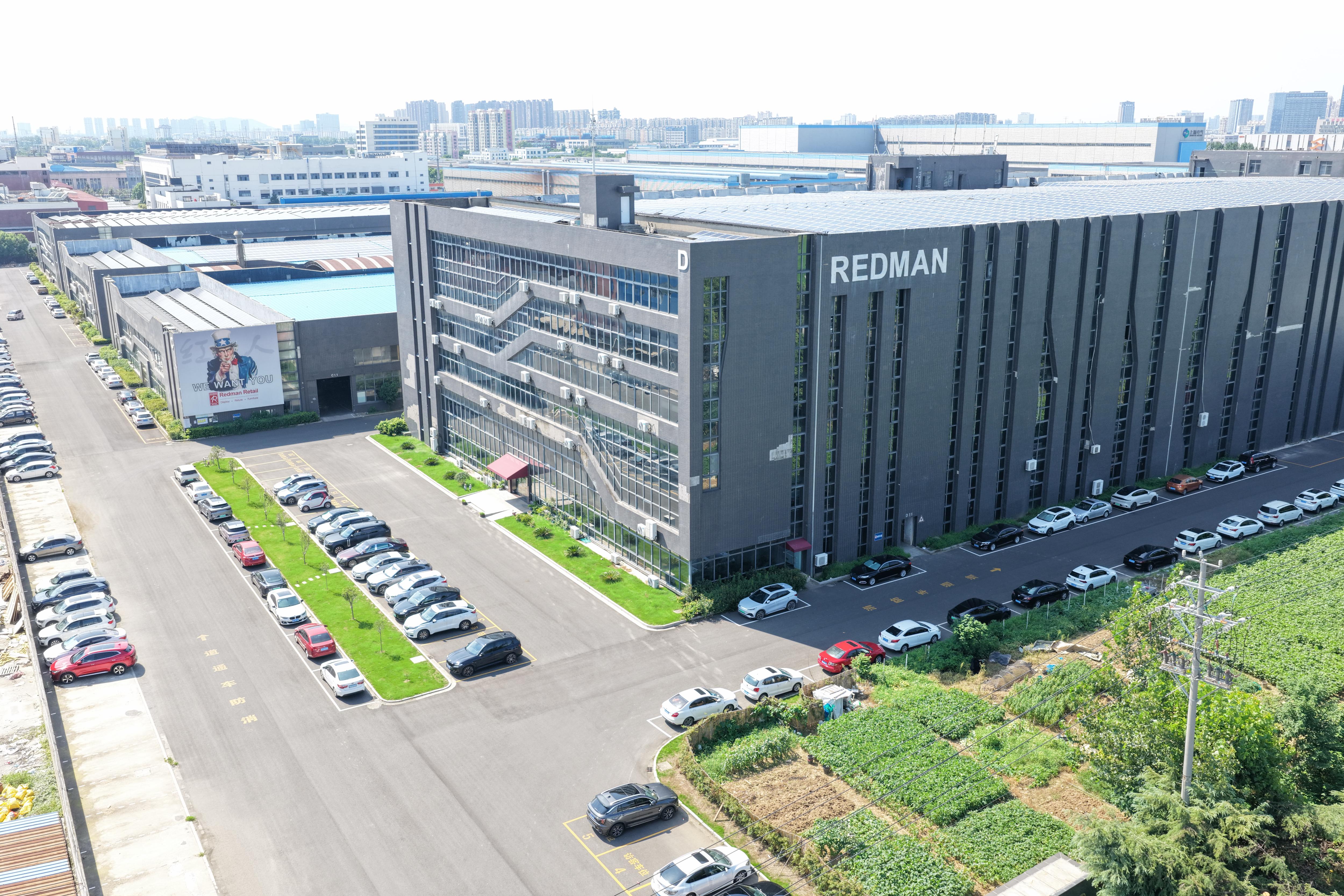
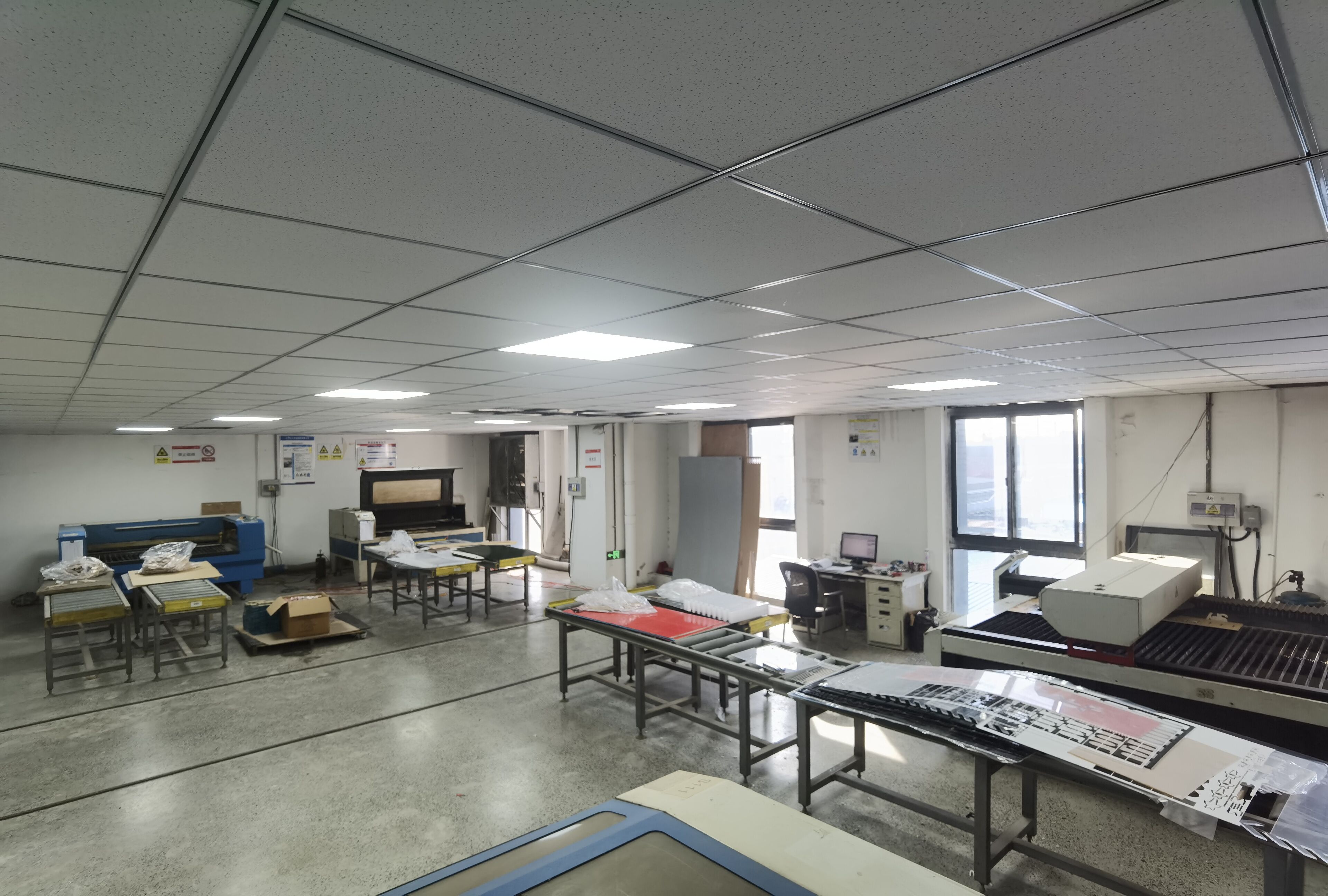
The structural facts behind the integrated model are specific: a 550,000 sqft (51,097 m²) production site, more than 350 employees including 50+ technical engineers and 7 project managers, 1,000+ containers shipped annually, and 95% export ratio across the USA, Canada, Europe, the Middle East, and Australia — supported by a Los Angeles warehouse providing assembly, packaging, and drop-shipping.
The trade-offs buyers should not skip
The same published comparison contains the limitation, and it is worth stating plainly. A vertically integrated custom programme carries an initial cost 10–15% above traditional local display manufacturers. The 30–40% total-cost advantage only materialises across an assumed three-year horizon, and it depends on conditions that are not automatic: the fixture actually staying in service for that period, the store format not being redesigned in the meantime, and internal specification and coordination costs genuinely falling when one supplier covers metal, wood, plastic, printing, and packaging.
Material choices carry their own boundaries. A plastic display rack suited to supermarket promotions has a lower load ceiling than a comparable steel fixture, and acrylic components are more scratch-sensitive than glass-clear alternatives suggest at first inspection. Wooden fixtures need moisture control and FSC Chain of Custody documentation. A PVD finish is generally reserved for visible surfaces because it adds cost. And where a project is a small batch of standardised, single-material units with no customization and no multi-store roll-out, a trading company or a local fabricator may be the more practical route — the integrated model earns its premium on customisation and multi-material complexity, not on simple volume.
Risk Control: What to Verify Before Releasing an Order
Display rack failures are rarely caused by design ambition; they are caused by process gaps that surface after the goods ship. Five risk categories are commonly managed in custom fixture programmes, and each maps to a document the buyer can request before production release.
| Risk category | Control method | What buyers should request |
|---|---|---|
| Compliance risk — goods failing destination safety or environmental requirements | Certification against the target market's standards; third-party test reports; controlled raw materials and production process | Product-level test report or listing for the destination market, not only management-system certificates |
| Delivery delay risk — impacting store openings, promotions, or exhibitions | Scientific production planning, raw-material supply-chain management, one-to-one project tracking with regular progress updates | A named project manager, a dated production schedule, and milestone reporting |
| Surface treatment risk — peeling, powder coating flaking, rust | Controlled pretreatment, adhesion and corrosion resistance testing before mass production, 100% surface inspection before delivery, rust-proof treatment on metal parts | Adhesion and corrosion test records, plus the inspection standard used before shipment |
| Material quality risk — deformation, cracking, or fading | Incoming material inspection, production parameter control, material performance testing before mass production | Material specification sheet and incoming inspection records for the specified grade |
| Structural safety risk — toppling or collapse causing injury or damage | Structural design verification, load-bearing testing before mass production, 100% pre-delivery inspection, standardised installation guidance | Load rating marking, overload warning, and installation documentation for store staff |
Future Outlook
Fixture purchasing is moving from a product decision toward a programme decision. As retail formats multiply — flagship stores, compact city formats, pop-up spaces, and permanent showrooms — the ability to reuse a base structure across environments becomes more valuable than optimising any single fixture. That trend favours modular and foldable configurations, mixed wood-metal structures, and explicit documentation of what a fixture can and cannot carry.
Compliance documentation is likely to follow the same path. Buyers increasingly ask for management-system certificates, chain-of-custody records for wood, and product-level test evidence in the same procurement pack, because customs and recall exposure sit with the retailer rather than the factory. Suppliers that can produce those documents as a matter of routine will be easier to keep in a fixture programme; those that cannot will be asked to demonstrate fitness once, and then asked again on the next project.
FAQ
The decision follows the operating environment rather than the merchandise. Plastic display racks moulded in ABS and PS suit short promotional cycles, frequent repositioning, and moderate loads, which is why counter-top and floor-standing plastic units are common in high-traffic supermarkets. Metal display racks built from cold-rolled steel with a powder coating — or stainless steel where corrosion resistance is needed — suit higher load requirements and multi-year service life, which is typical of specialty retail and department stores. The practical filter is load rating combined with expected service life: if the unit must survive several years of daily handling, metal is usually the starting point.
Two different layers need checking. At the management-system level, ISO 9001, ISO 14001, and ISO 45001 cover quality, environmental, and occupational health and safety processes, and FSC Chain of Custody applies whenever wooden display racks are specified and documented fibre sourcing is required. At the product level, retail fixtures and commercial displays sold into the United States are commonly evaluated against ANSI/UL 970, which replaced UL 65 and UL 962 per Intertek and UL Solutions. A management-system certificate does not demonstrate product-level compliance, so buyers should request the specific test report or listing for the fixture family and destination market.
A POP display stand such as the RM-POP-001 is configured for short-term display: a foldable or knock-down structure, light steel frame, PS and acrylic components, and printed graphics that can be refreshed without replacing the structure. It is designed to be packed, transported, and re-erected across multiple events. A permanent store fixture such as the RM-SF-001 is configured for the opposite problem: visible surfaces in stainless steel or PVD finish, wood components where the interior concept requires them, and a structure expected to remain in service for years against an image-led merchandising plan. The two are not interchangeable, and specifying one in place of the other usually shows up first as either premature surface failure or avoidable cost.
Exhibitions favour configurations that reduce installation time and packed volume. Foldable and modular display racks allow the unit to be assembled with limited tooling by a crew that may not have seen the fixture before, and lighter materials — PS, acrylic, and light steel — keep handling manageable within a hall's load-in schedule. Because show floors rarely allow permanent floor anchoring, stability comes from base weight and a low centre of gravity rather than fixing, and the load limit should be marked on the unit. A static display mode is typical; where illumination is required, power routing and installation approval become part of the show specification.
Structural safety is usually evidenced by four documents or actions rather than a single certificate: structural design verification for the specified configuration, a load-bearing test completed before mass production, 100% quality inspection before delivery, and standardised installation guidance for store or show staff. Load-bearing capacity should be marked on the unit with an overload warning, since the most common failure mode is not a design fault but a fixture loaded beyond its rated capacity in store. Where fixtures remain in service for several years, a regular inspection routine is the practical way to detect loosening, surface damage, or base deformation before it becomes a safety issue.
Reference material: Redman Corporation publishes a 2026 product catalogue covering display rack and store fixture programmes, available for download at Redman 2026 catalogue. Company information is published at www.redmanretail.com.