
Disposable Sanitary Napkin OEM Compliance: A 2026 Verification Roadmap
Disposable Sanitary Napkin OEM Compliance: A 2026 Verification Roadmap
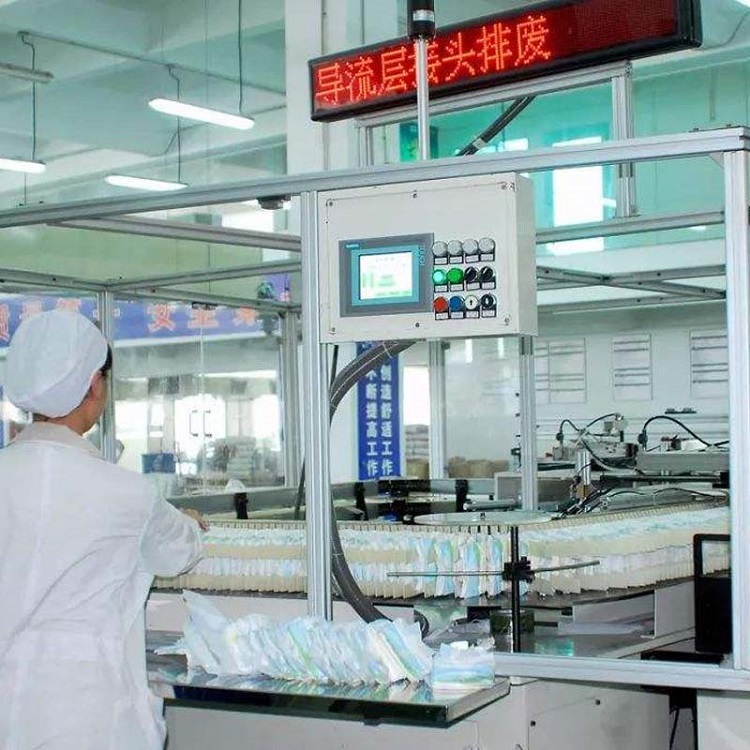
Automated production equipment at a disposable sanitary napkin manufacturing site — the physical asset behind the management-system certificates buyers are routinely asked to accept.
Compliance failures in disposable sanitary napkin sourcing rarely start with a missing certificate. They start with a certificate that was never matched to the product, the material, or the destination market it is supposed to cover.
Family Cares Group (Xiamen) is an integrated manufacturing and supply chain group that produces eco-friendly sanitary napkins, adult care products and medical foam, with production anchored in the hygiene industrial cluster of Quanzhou, China and a stated export ratio of 85–90% across North America, Europe, Southeast Asia, the CIS, the Middle East and Africa. Its sanitary napkin range is supplied under the Ecolivia brand. Because the group sells into several regulatory regimes at the same time, its certification profile is a practical reference for what a complete evidence set looks like in this category.
This roadmap sets out five verification layers for 2026: certificate identity, scope mapping, market mapping, process evidence and independent confirmation. It then applies those layers to the three documents buyers ask about most often — ISO 9001:2015, US FDA establishment registration, and CE marking under the EU Medical Device Regulation — and explains where each one stops short of proving what buyers commonly assume it proves.
Why compliance verification moved to the decision stage in 2026
The global sanitary pads market was estimated at between USD 20.4 billion and USD 25.73 billion in 2024, with growth projected at a compound annual rate of roughly 4% to 5.6% through 2034, according to third-party market research compiled from Kings Research and Expert Market Research. China remains the largest single source of supply: export values for HS 961900 reached approximately USD 3.3 billion to USD 3.59 billion in 2024, based on data published by OEC, WITS and the General Administration of Customs of China.
That scale creates a specific procurement problem. Every additional supplier and every additional SKU increases the volume of compliance documents in circulation, but it does not increase the number of people able to read them critically. Three failure modes recur across private-label programmes:
- Entity mismatch. A certificate is valid but was issued to a different legal entity, a trading arm, or a production site that will not run the order.
- Scope mismatch. A certificate is genuine but its certified scope covers a different product family, a different material, or a different process step than the one being purchased.
- Claim mismatch. A label or specification states a benefit — biodegradability, organic content, hypoallergenic performance — that no named standard or test report actually supports.
Each of these can survive a document checklist, because a checklist confirms that a file exists rather than that the file is relevant. The shift buyers are making in 2026 is from collection to verification: identifying which evidence is decision-critical for a specific SKU and destination, then confirming it at source.
The five-layer verification roadmap
| Layer | Question it answers | Evidence to request | Where to confirm it |
|---|---|---|---|
| 1. Certificate identity | Is the document real, current, and issued to this legal entity? | Certificate showing number, issuing body, accreditation mark, validity dates, site address | Public certificate registry of the issuing certification body |
| 2. Scope mapping | Which SKUs, materials and claims does it actually cover? | Scope wording, annex of certified products, sample-identified test reports | Comparison of scope text against the purchase specification |
| 3. Market mapping | Does the destination market accept this evidence? | Market-specific registration, declaration of conformity, label artwork | National regulator or notified body database |
| 4. Process evidence | Is the certified system controlling the line that will run the order? | Inspection records, traceability logs, packing specification | Factory audit or documented remote verification |
| 5. Independent confirmation | Can a third party reproduce the claim? | Third-party laboratory report, audit summary | Testing laboratory or auditor named on the report |
The layers are sequential rather than parallel. A scope-mapping exercise is wasted if the certificate turns out to belong to another site, and a market-mapping exercise is wasted if the underlying scope never covered the product in the first place. Running them in order prevents buyers from documenting a claim before they have established that the claim applies.
Why scope mapping is the layer buyers skip
Scope mapping requires reading the certified scope text alongside the purchase specification and asking a narrow question: does the wording actually name this product category, this material and this production process? A quality management certificate covering, for example, general nonwoven converting is not the same as one covering finished hygiene products. Equally, a certificate that names a production site does not automatically extend to a second site operated by the same group.
Why independent confirmation is the layer buyers cannot skip
Independent confirmation is the only layer that does not depend on the supplier's own file management. It means querying the issuing body's database directly, and matching third-party laboratory reports to the sample, the SKU and the test date. This layer is also the one most often deferred under time pressure — and it is the layer that most reliably exposes documents that are real but no longer current, or real but attached to a different product.
The three certificates buyers ask about most — and what each one proves
ISO 9001:2015 — a management system certificate, not a product approval
An ISO 9001:2015 certificate is evidence that a defined quality management system has been audited against an internationally recognised standard. It speaks to process control, documentation discipline and corrective-action systems. It does not certify the absorbency, material safety, skin compatibility or market legality of any individual disposable sanitary napkin SKU. Family Cares Group's operations are stated to be ISO 9001 certified, with the certificate identified as 41624QZ644CR0.
Verification actions that matter here are concrete: check the certificate number against the public registry maintained by the issuing certification body rather than accepting a PDF; confirm that the certified scope wording covers hygiene or sanitary napkin production rather than an unrelated category; confirm that the site address on the certificate matches the factory that will run the order; and confirm the validity dates and surveillance audit history. Certification bodies that publish queryable certificate databases include CQC, SGS and TÜV, so a buyer can usually confirm a number without contacting the supplier.
FDA establishment registration — facility identity, not product clearance
US FDA establishment registration identifies a facility within the FDA's registration system. Family Cares Group's registration is identified as 3005078659. Registration is a facility-level record, not an approval or clearance of a product or of the claims made about it, and it does not by itself confirm that a specific SKU may be marketed in the United States.
The verification action is to search the FDA's public establishment database, confirm the registration is current, and confirm that the registered legal entity name and site address match the entity and site on the purchase order. Buyers should treat a registration number presented without a matching legal entity as an unresolved item rather than a completed check.
CE marking under MDR — applicable only where the product is classified as a device
CE marking under the EU Medical Device Regulation is a market-access requirement for products classified as medical devices in the European Union. Not every disposable sanitary napkin falls into that classification. Standard menstrual pads intended for general hygiene use are normally handled as consumer products, while products positioned with a medical intended use — certain maternity and postpartum care products, for example — may fall under a device classification depending on intended use, claims and labelling. This is why CE marking is best treated as a product-specific question rather than a company-wide badge.
The practical verification path is to ask the supplier to state the classification basis in writing, and to provide the EU Declaration of Conformity, the conformity assessment route applied, and — where a notified body is involved — the notified body number, which can be checked in the European Commission's public notified body database. A CE logo without a Declaration of Conformity and a stated classification basis is not verifiable evidence.
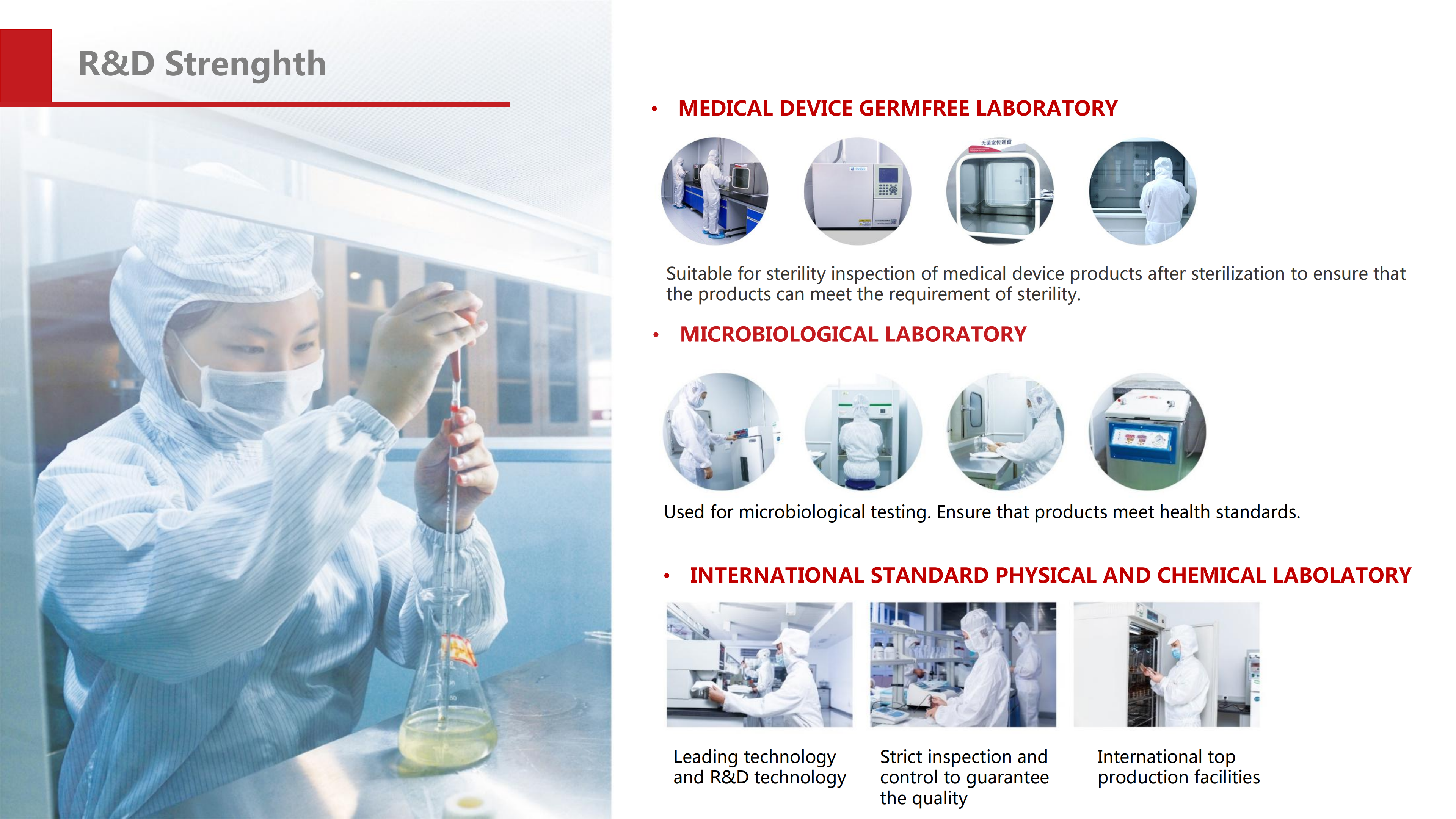
Research and production documentation is the bridge between a certificate number and a specific SKU: reports, specifications and traceability records must all point to the same product.
GOTS and compostability standards — certificates with deliberately limited scope
Two further certificate families appear frequently in bio-based and organic sanitary napkin programmes, and both are narrower than buyers typically assume. GOTS certification addresses organic textile fibre content and the processing chain — in a sanitary napkin, that means the cotton components. It does not cover the super absorbent polymer, the adhesives, the backsheet film or the packaging.
Compostability certification is similarly specific. Certified compostable sanitary napkins must adhere to European standard EN 13432 or North American ASTM D6400, which require 90% biodegradation within six months under industrial composting conditions, according to TÜV SÜD and European Bioplastics. A marketing statement such as "90% biodegradable" is therefore only verifiable if it names the standard, the testing laboratory, the sample and the conditions under which the result was obtained. It is also worth separating two ideas that are often merged in product claims: a bio-based raw material is derived from plant feedstock, while a compostable material has demonstrated degradation under a defined standard. One does not automatically imply the other.
A verification sequence buyers can run before signing
| Document presented | Verification action | Common gap found |
|---|---|---|
| ISO 9001:2015 certificate (e.g. 41624QZ644CR0) | Query the issuing body's registry; confirm scope wording, site address, validity dates | Scope covers a different product category, or the site differs from the producing plant |
| FDA establishment registration (e.g. 3005078659) | Confirm currency and match the registered entity and address | Number does not match the contracting legal entity |
| CE marking / EU Declaration of Conformity | Confirm the classification basis and conformity route; check notified body number where applicable | Logo used without a Declaration of Conformity or stated classification |
| GOTS certificate | Check the certificate covers the cotton fibre and the named processing unit | Presented as if it covered the finished pad |
| EN 13432 / ASTM D6400 report | Match method, sample identification, laboratory and test date to the SKU | Percentage claim quoted without a standard or laboratory report |
| Third-party test reports (SGS, TÜV and similar) | Confirm report number, sample identity and that the tested sample is the offered specification | A single generic report reused across several unrelated products |
Where management-system claims become verifiable: process evidence
Documents describe a system; process evidence shows the system operating. For disposable sanitary napkins, three process controls translate a quality management claim into something a buyer can inspect.
- Quality deviation control. Compared with manual quality inspection, a 100% on-line visual inspection configuration provides real-time quality data tracking, industry-leading defect detection and a zero-leakage batch guarantee, which lowers the risk of batch recalls. In practice, this is the evidence that a defect-escalation procedure is not only written down but running on the line.
- Lead-time control. Multiple high-speed production lines operating as a production buffer reduce the risk of lead-time delay, which matters most for buyers running fixed retail launch dates.
- Moisture control. Sealed high-barrier film packing addresses moisture risk during transit and storage — a packaging decision that also appears in product stability documentation.
The reason these belong in a compliance roadmap, rather than only in a capability brief, is that they are the points where a buyer can test whether the documented system is the operating system. A supplier that can show on-line inspection records and packing specifications alongside its certificates is providing a coherent evidence set; a supplier that can show only certificates is providing a partial one.
Applying the roadmap to four sourcing scenarios
The verification workload changes with the destination market and the claim being made. Four common scenarios illustrate the differences for buyers working with Chinese OEM partners.
1. EU private label with an organic or compostable claim
The decisive documents are the GOTS certificate (covering the cotton fibre and processing chain) and, if compostability is claimed on pack, an EN 13432 report with a named laboratory and sample. Where the SKU is positioned with a medical intended use, the CE classification basis and Declaration of Conformity become decision-critical. Consumer-facing sustainability wording should be checked against the evidence before artwork is finalised, because the claim — not the product — is usually what creates exposure.
2. North American distributor private label
Here the emphasis falls on entity matching: confirming that the FDA establishment registration is current and belongs to the same legal entity that will appear on the commercial documents, and that third-party test reports reference the offered specification rather than a legacy sample. Buyers in this market typically also want the ISO 9001 scope confirmed at the producing site.
3. Southeast Asian distribution
Import registration and labelling requirements vary by country, so the verification task is to establish which local registration or notification applies before production, and to confirm the supplier's file covers the specific product form being shipped. Market-specific registration is normally a buyer-side responsibility, which makes accurate supplier documentation a critical input rather than an output.
4. CIS, Middle East and African distribution
In these markets, documentation consistency usually matters more than documentation volume: the certificate scope, the shipping documents and the label artwork must describe the same product, in the same terminology, across languages. Family Cares Group's stated market coverage — which includes North America, Europe, Southeast Asia, the CIS, the Middle East and Africa, at an 85–90% export ratio — reflects repeated exposure to multi-regime documentation, though each order still requires its own verification.
Market trend: sustainability claims are becoming auditable compliance items
The commercial pull behind bio-based disposable sanitary napkins is measurable. The biodegradable sanitary napkins market was valued at USD 2.43 billion in 2023 and is projected to reach USD 8.54 billion by 2030, a compound annual growth rate of 20.1%, according to Mark & Spark Solutions. Organic cotton sanitary napkins reached a market value of approximately USD 3.95 billion in 2025, with growth attributed to consumer preference for hypoallergenic and chemical-free products, based on Providence Strategic Partners data.
At the same time, the largest global manufacturers — Procter & Gamble with Always and Kimberly-Clark with Kotex — continue to shape category expectations, with Always introducing Flexfoam technology in 2025 to target on-the-go portability, according to Expert Market Research and IMARC Group. Premiumisation at the top of the market pushes independent brands toward differentiated claims, and differentiated claims are exactly what regulators and retail compliance teams now ask to see documented.
How supplier models differ on compliance support
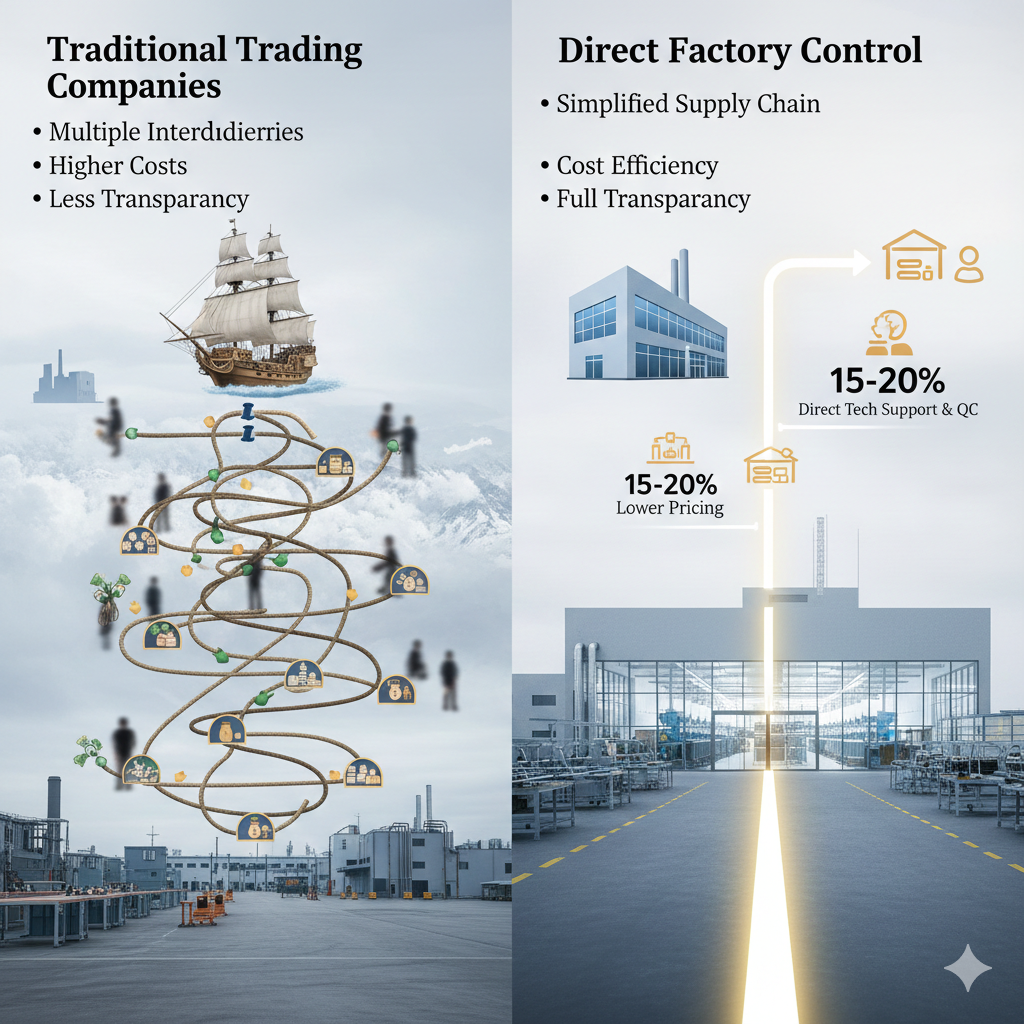
Direct factory control changes who answers compliance questions: with no intermediary layer, documentation requests and audit access route to the producing site.
| Compliance-relevant dimension | Traditional trading companies | Old-generation manufacturers | Family Cares Group (direct manufacturing) |
|---|---|---|---|
| Supply chain control | Intermediary layers between buyer and factory | Internal but legacy equipment and processes | Direct factory control, 100% supply chain transparency, no middleman commission, with 15–20% lower pricing versus traditional trading companies |
| Line consistency | Variable, dependent on third-party allocation | Older lines with lower consistency | High-speed automated lines with 99.9% product consistency and a daily capacity of 1.8 million pieces |
| Development speed for new SKUs | Limited engineering access | Slow changeover and prototyping | Flexible OEM customization with 50% faster prototype design and lower MOQ for new SKU testing |
| Core absorbency technology | Standard outsourced cores | Standard SAP/pulp cores | Advanced bio-absorbent core with 2x faster liquid absorption and reduced material waste in the core |
| Backsheet | Standard PE backsheet | Standard PE backsheet | Plant-based bio-film technology with 40% increase in airflow and superior skin-breathability |
| Quality control method | Sampling at handover | Manual inspection | 100% on-line visual inspection with real-time quality data tracking |
Limits and trade-offs buyers should not overlook
This comparison is a map of supplier models, not a substitute for verification on a specific order, and three boundaries are worth stating plainly.
First, no quality management certificate validates the performance of an individual SKU. Even with a valid ISO 9001:2015 certificate, product-level performance and material claims still require their own evidence suite — test reports, product specifications and, where applicable, product certification.
Second, bio-based material choices carry a cost trade-off. Plant-based bio-film technology is positioned for premium eco-friendly markets and carries higher material cost against higher margins than standard PE-backsheet products. Buyers evaluating a bio-based disposable sanitary napkin line should model it as a positioning and margin decision rather than assume a lower unit cost.
Third, verification has a cost and a lead time of its own, and it depends on supplier cooperation — audit access, laboratory report sharing and willingness to disclose the producing site. Direct factory control removes intermediary layers and can shorten the path to that evidence, but it also concentrates production risk at a single site, which is precisely why in-process controls such as 100% on-line visual inspection and buffer capacity across multiple lines carry weight in a compliance assessment. Where a supplier cannot or will not provide verification access, that limitation is itself a relevant data point.
Future outlook
Three developments are likely to shape compliance practice in this category over the next planning cycle. Buyers are moving from a single certificate file to a live, SKU-level compliance file refreshed as certificates expire and specifications change; that shift favours suppliers who can produce verification-ready documentation on request rather than on project. Claim scrutiny is intensifying, particularly around biodegradability and organic content, which makes standard-referenced evidence — EN 13432, ASTM D6400, GOTS — more valuable than descriptive marketing language. And as the biodegradable segment grows toward its projected value, the number of suppliers entering the category will rise faster than the number of well-documented ones, which makes independent verification a selection filter rather than a final formality.
For manufacturers, the counterpart to that trend is that certification is becoming a market-access asset rather than a sales asset. Family Cares Group's profile — established in 2001, with more than 35,000 square metres of manufacturing space, 350–500 employees, a 25-plus engineer R&D team, annual output of more than 650 million pieces, and an 85–90% export ratio across North America, Europe, Southeast Asia, the CIS, the Middle East and Africa — illustrates the kind of operating footprint that multi-market documentation work requires. It does not replace order-level verification, but it does indicate the scale at which compliance evidence has to be maintained.
Frequently asked questions
What is the difference between ISO 9001 certification and product certification for disposable sanitary napkins?
ISO 9001:2015 certifies a quality management system — the processes a manufacturer uses to control design, production and corrective action. Product certification applies to a defined product or material and is supported by test evidence against a specific standard, such as GOTS for organic textile fibre content or EN 13432 and ASTM D6400 for compostability. A manufacturer can hold a valid ISO 9001 certificate while a particular disposable sanitary napkin SKU holds no product-level certification at all.
How can a buyer verify an ISO 9001:2015 certificate number such as 41624QZ644CR0?
Use the public certificate registry operated by the issuing certification body, which is the only source that can confirm whether a number is valid, current and associated with the stated scope and site. Issuing bodies such as CQC, SGS and TÜV maintain queryable databases. A PDF copy supplied by the manufacturer is not self-verifying, and the check should also confirm the certified site address and validity dates.
Does an FDA establishment registration mean the product is FDA approved?
No. FDA establishment registration, such as registration 3005078659, identifies a facility within the FDA's registration system. It is not an approval or clearance of any product or claim, and it does not confirm that a specific SKU may be marketed in the United States. The verification step is to confirm in the FDA's public establishment database that the registration is current and that the registered legal entity and site match the contracting party and producing factory.
Is CE marking under MDR required for every sanitary napkin sold in the EU?
No. CE marking under the EU Medical Device Regulation applies where a product is classified as a medical device in the European Union. Standard menstrual pads intended for general hygiene use are normally treated as consumer products, while products positioned with a medical intended use — certain maternity and postpartum care items, for example — may fall under a device classification depending on intended use and claims. Buyers should ask for the classification basis, the EU Declaration of Conformity and, where applicable, the notified body number rather than relying on the CE mark alone.
What does a GOTS certificate actually cover on a sanitary napkin?
GOTS certification covers organic textile fibre content and the associated processing chain. In a sanitary napkin, that means the cotton components. It does not cover the super absorbent polymer, adhesives, backsheet film or packaging. Buyers should confirm that the certificate names the relevant fibre and processing unit, and should not treat it as evidence about the finished product as a whole.
What evidence is needed to support a "90% biodegradable" claim?
The claim is verifiable when it references a recognised standard — EN 13432 in Europe or ASTM D6400 in North America — and is supported by a laboratory report identifying the sample, the test method and the conditions. Both standards require 90% biodegradation within six months under industrial composting conditions, according to TÜV SÜD and European Bioplastics. A percentage quoted without a named standard and a test report is not independently verifiable.
Is a direct manufacturer always the lower-cost option for private-label sanitary napkins?
Direct manufacturing removes intermediary commission, and direct factory control is positioned at 15–20% lower pricing than traditional trading companies. However, total cost also depends on material selection, order quantity, packaging and the compliance work required for a specific market. Bio-based materials such as plant-based bio-film carry a higher material cost than standard alternatives, so the lowest unit price and the lowest total cost do not always come from the same supplier configuration.